
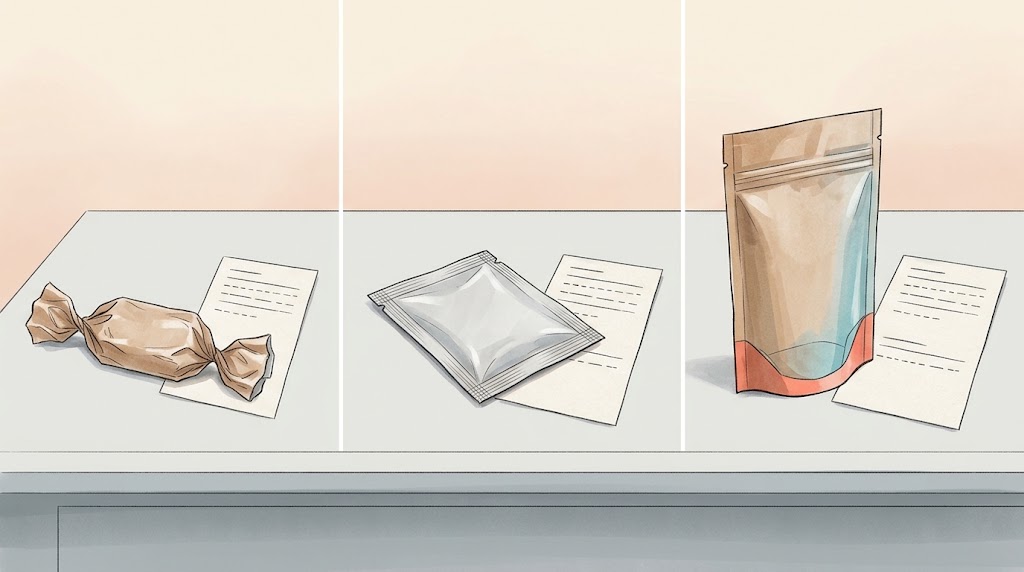
Candy wrappers and bags are not automatically recyclable. For most U.S. households, flexible candy packaging should stay out of curbside recycling unless the local program explicitly accepts it. Some packages qualify for a separate collection route. Read the disposal instructions for the exact wrapper or bag, confirm the destination accepts it, and follow its preparation rules. Paper appearance, a plastic number, or a familiar brand name cannot settle the question.
This guide focuses on U.S. disposal decisions, with a specific British Columbia example to show why instructions change across borders. Program information was checked in September 2026. The later sections help candy brands evaluate packaging specifications and customer instructions before ordering printed bags.
Start with the package left in your hand
After opening an assortment of candy, you may have a large outer bag, several small sealed packets, individual twist wrappers, and a cardboard display box. Treat them as separate items. A direction for the box does not automatically cover the pieces inside it.
Keep the outer package until you have read any disposal panel. Small wrappers may carry little information, while the bag may identify multiple components. Look for words describing the item, the collection method, the applicable country, and any preparation steps. If those details are missing, a photograph of the complete pack will be more useful to the brand than a description such as “the red candy bag.”
The How2Recycle label explanation distinguishes the packaging component, material, disposal designation, special instructions, and geographic qualifier. Read those fields together. An instruction for a tray, carton, or outer wrap has a specific scope; do not extend it to every object sold with the product.
For an ordinary household decision, you do not need to identify every polymer yourself. You need a reliable instruction that applies to the actual discarded component. If the program says no, or neither the brand nor the collector can confirm acceptance, keep the item out of that recycling stream and follow local waste guidance.
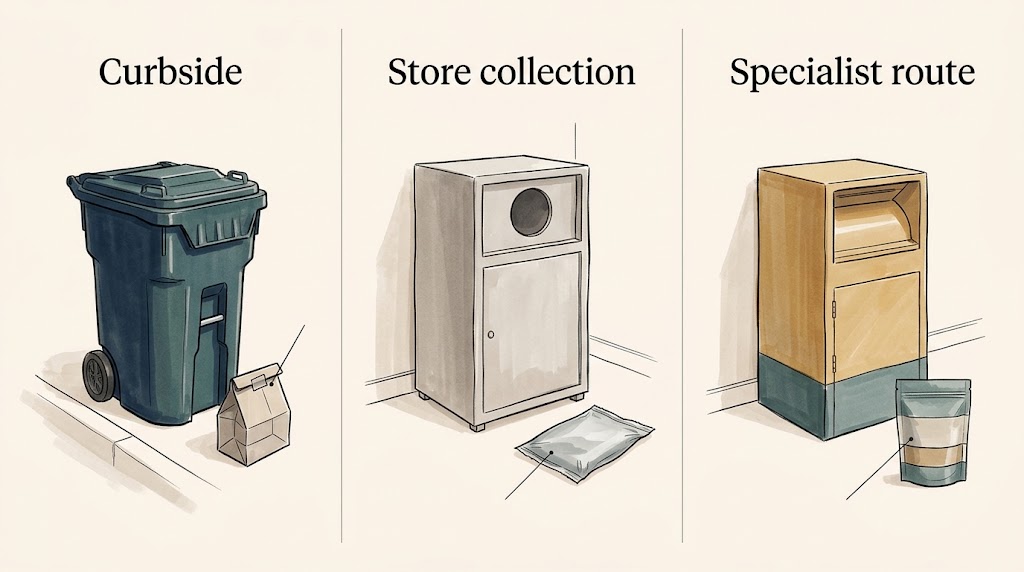
Curbside, store collection, and specialist routes are different
The curbside answer
A municipal recycling bin accepts a defined list of materials and formats. “We collect plastic” is incomplete information when you are holding a flexible candy wrapper. Look for the packaging category in the collector's current instructions, rather than relying on the color of the bin.
For a concrete U.S. example, Frederick County, Maryland lists plastic or foil candy wrappers and snack bags among items excluded from its curbside program. That is a usable answer for that service, not a claim about every recycling system in the country.
Ask a precise question when the list is unclear: “Does your residential collection accept this empty flexible candy pouch?” Include front and back photographs and any disposal wording. A question about plastic number five alone could produce an answer intended for rigid tubs rather than flexible film.
Store collection is a separate check
A store bin for bags and wraps does not accept every package that bends. How2Recycle's U.S. Store Drop-off guidance focuses on eligible polyethylene-based films, directs readers to the package's Store Drop-off label, and requires accepted items with product residue to be clean and dry. It specifically warns that broad examples do not make every package in those categories eligible.
Check that the retailer still operates the collection and that the bag meets its rules before making the trip. A remembered bin location or an old social-media post is not enough. If a candy pouch lacks a clear applicable instruction, do not add it to a shopping-bag collection simply because both packages feel flexible.
A different region can have a different answer
Recycle BC's accepted-material list includes crinkly candy bags and plastic candy wrappers in its flexible-plastics category, collected at depots or designated flexible-plastic bins where applicable. The same list excludes compostable and biodegradable packaging from that category. This illustrates why “all candy wrappers are unrecyclable” is too broad, while “put candy wrappers in household recycling” is also unreliable.
For any specialist collection, read the current accepted-items list before saving a large quantity. Check who can participate, where material goes, whether a purchase or fee is required, and what the organizer says about preparation. Do not assume a school collection, paid mail-back service, and municipal depot follow the same rules.
Why are candy wrappers not recyclable in some programs?
The difficulty can involve both the package and the collection system. A candy bag may combine materials to provide printable surfaces, sealing, handling strength, and product protection. A recycling process needs a compatible input, and a collection service must be able to handle that input in the form consumers discard it.
The Association of Plastic Recyclers' PE flexible-packaging guidance evaluates the complete design, including base resin, layers, printing, adhesives, and attachments. Its framework distinguishes preferred features, features needing testing, and incompatible combinations. A favorable description of one film therefore does not establish the result for a fully printed pouch with all its components.
“Multilayer” and “mixed material” also require care. More than one layer does not necessarily mean more than one polymer family. Conversely, a package advertised using one main material name may still contain coatings, closures, or other additions that need evaluation. Ask for the construction of the finished item instead of turning either term into an automatic verdict.
Small hard-candy wrappers introduce a separate practical question: does the receiving program accept that loose format? A material listing for large bags may not answer that. Do not shred wrappers, hide them inside bottles, or bundle unrelated materials to make them resemble an accepted item. Use the preparation method the receiving program actually specifies.
A refusal from one collection system does not establish that recovery is physically impossible everywhere. It establishes that the item should not enter that route. For consumers, that distinction prevents contamination; for buyers, it prevents a technically interesting material proposal from becoming an unsupported disposal promise.
Plastic, shiny film, and paper are clues, not instructions
Plastic candy wrappers can look transparent, cloudy, printed, or metallic. Those appearances do not reveal a complete formulation. Neither does a quick stretch or scrunch test provide a documented identification of the finished wrapper. Use the manufacturer's material information and the receiving program's description when a decision depends on composition.
The EPA's common-recyclables guidance explains that a resin-identification symbol identifies plastic type and does not necessarily mean a community collects the item. A number inside a triangle is therefore not a replacement for a disposal direction.
A shiny inner surface needs the same caution. Do not describe every reflective candy wrapper as ordinary aluminum foil or place it with metal containers on that assumption. The packaging record must identify what produces that appearance. Consumers should not have to separate bonded layers to follow a direction that was never verified for the original pack.
Brown packaging can be equally misleading. A paper exterior may be part of a structure containing plastic films. The relevant question is whether the collection program accepts that finished construction, not whether one surface resembles a paper grocery bag. The real project below shows why a material record can change the question you ask.
For a candy brand, these distinctions should enter the purchasing discussion early. When comparing custom candy bag configurations, describe the intended collection route alongside the product and filling requirements. Asking only for a “natural-looking” bag leaves the disposal question unanswered.
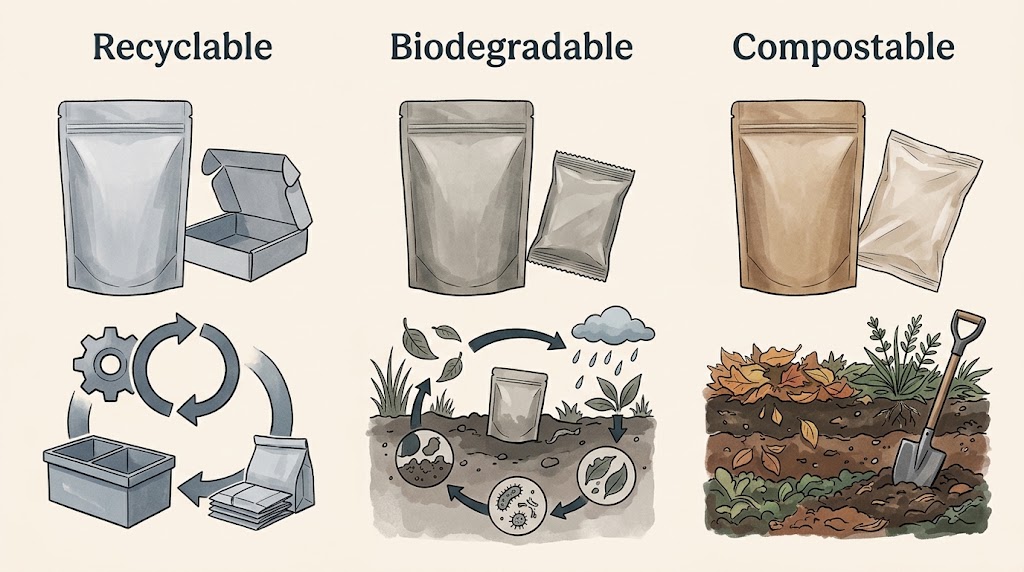
Recyclable, biodegradable, and compostable mean different things
These terms describe different attributes. They should not be exchanged for one another in a label, sales email, or customer-service answer. A packaging team can make the discussion clearer by recording which attribute is being proposed and what evidence would support it.
Are candy wrappers biodegradable?
Do not assume they are. “Biodegradable” needs a defined environment and timescale; it is not a direction to leave a wrapper outdoors. Plant-derived material is not enough to answer this question. The EPA's plastics and composting FAQ distinguishes feedstock origin from biodegradation and explains that biobased plastics can have different disposal options.
For procurement, ask which exact wrapper was evaluated, whether the printed and converted version is covered, and what disposal conditions the evidence describes. A statement about a raw material does not tell a customer what to do with a completed candy bag. Avoid assigning a fixed decomposition time to an unidentified wrapper.
Are candy wrappers compostable?
Only treat a wrapper as suitable for a composting route when its specific claim is supported and the destination accepts it. Commercial and home composting are separate claims. BPI's certification information describes distinct commercial and home programs and a searchable product catalog. Check the applicable listing and product scope rather than treating any compost-related logo as interchangeable.
A food-scrap service may have its own packaging restrictions. Ask the operator before including a certified wrapper, and follow the stated conditions for a home-compostable item. An unavailable compost route does not make compostable plastic suitable for a conventional plastic recycling bin; EPA explicitly warns against that substitution.
Check brand questions by product, size, and market
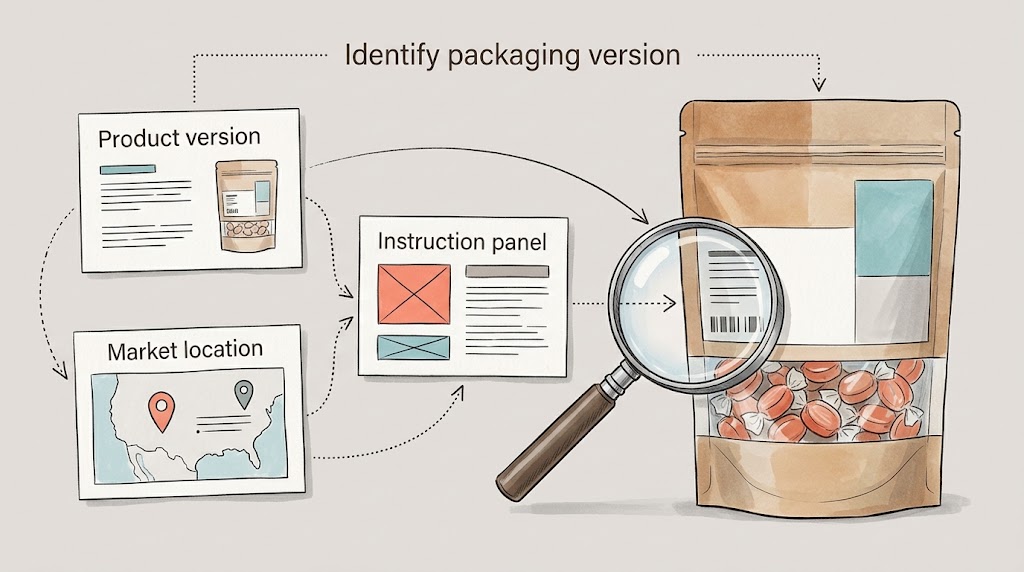
Searches such as “are Skittles bags recyclable?” sound specific, but a brand name can still describe several different packages. The useful identity is narrower: product line, pack size, country of purchase, packaging component, and current disposal panel. Keep the barcode or product code available if you contact the brand.
For example, the U.S. SKITTLES Original single-pack page identifies a 2.17 oz product and links to other sizes and formats. Snackworks separately identifies a SOUR PATCH KIDS 8 oz product. Those are useful product references, but the page text reviewed for this guide did not establish a verified local collection route for either specific finished bag.
That evidence gap should stay visible. It is not proof that every package from either brand is recyclable, nor proof that every version is excluded everywhere. Start with the label on the bag you actually bought, then confirm the instruction with the relevant collector. Use the manufacturer's official consumer support when the component or wording remains unclear.
A practical inquiry can be short: identify the product and size, state where it was purchased, attach both sides of the package, and ask which instruction covers the empty bag. Then ask the local program whether that format is accepted. This produces a more useful answer than forwarding a broad sustainability statement.
For repeat purchases, keep a dated note linking the product to the collector's answer. Recheck it if the pack changes or the collection service updates its rules. A redesign may affect the label, construction, or instructions even when the familiar front branding remains similar.
Emptying, cleaning, and collecting without creating another problem
Confirm eligibility before spending time washing a pile of wrappers. If a route accepts the package, follow its directions for remaining food, moisture, labels, and closures. Cleaning cannot turn an excluded construction into an accepted one.
Sugar dust and loose crumbs may be easy to empty, while sticky candy residue can require a different approach. Ask the collector if its published instructions do not address the condition of your packaging. Avoid inventing a universal cleaning procedure for all candy films or assuming a wrapper must be spotless to meet a rule that says something more specific.
At a workplace or event, agree on the destination before putting out a collection container. Write the accepted category plainly and place a sample or photograph beside it if the receiving program permits that approach. A generic recycling symbol above a mixed pile of wrappers invites people to add items the organizer has not checked.
Assign someone to check the contents and confirm where the collected material will go. If you cannot identify an active destination, do not advertise the activity as a recycling program. Saving wrappers for crafts is a reuse activity; describe it that way rather than reporting the material as recycled.
For a candy business, customer instructions should also explain what to do when the advertised route is unavailable. Do not leave the consumer with a logo and no workable next step. A clear local-disposal fallback is more useful than implying that every shopper has access to the same service.
A real kraft candy pouch: why the specification matters
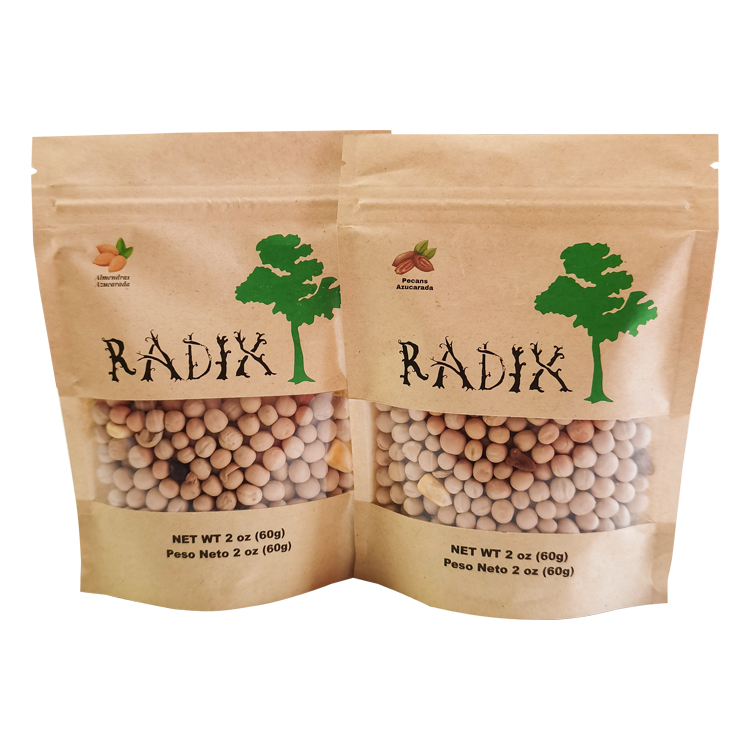
Mylarbag's published candied-nut pouch project lists Puerto Rico, digital printing, a stand-up format, and kraft paper/PET/CPP. Its recorded size is 11.2 × 15 + 2.5 cm. The photographs show a brown surface, a clear display window, and printed graphics.
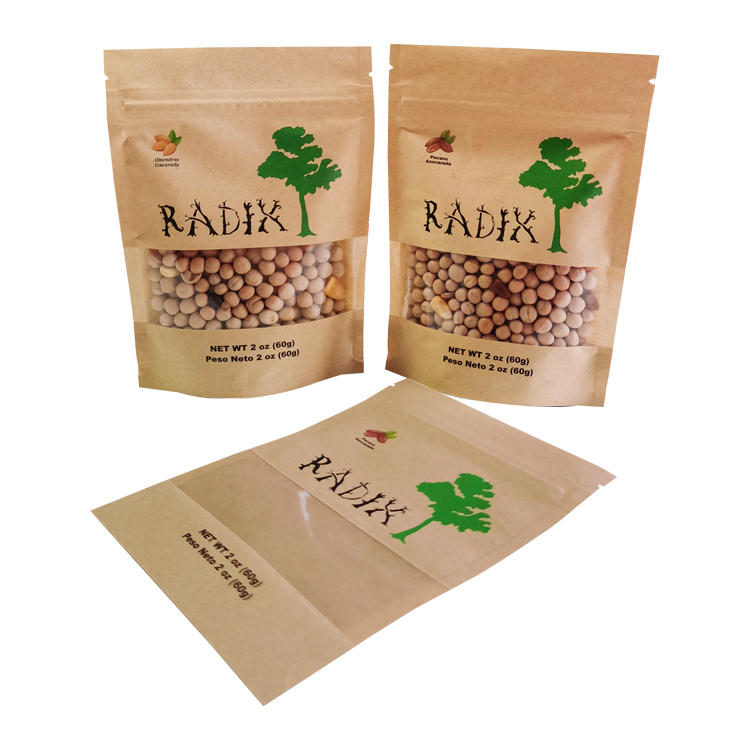
The useful lesson is specific: this record identifies more than paper, so paper appearance alone cannot decide disposal. The photograph does not reveal a certification, the complete additive formulation, or a collection operator's acceptance decision. None of those missing details should be inferred from the window or the brown finish.
A buyer using this project as a visual reference should separate the features they want to retain from the environmental claim they want to investigate. The window, standing format, and printed presentation can go into the design brief. The proposed material and disposal instruction need their own evidence review for the new order and destination.
If the buyer wants to change the structure, the original project's dimensions and photographs do not validate the replacement. Request samples of the proposed version and review filling, sealing, presentation, and product protection separately. This keeps a useful real project from becoming an unsupported promise about a different bag.
What a candy brand should collect before approving a claim
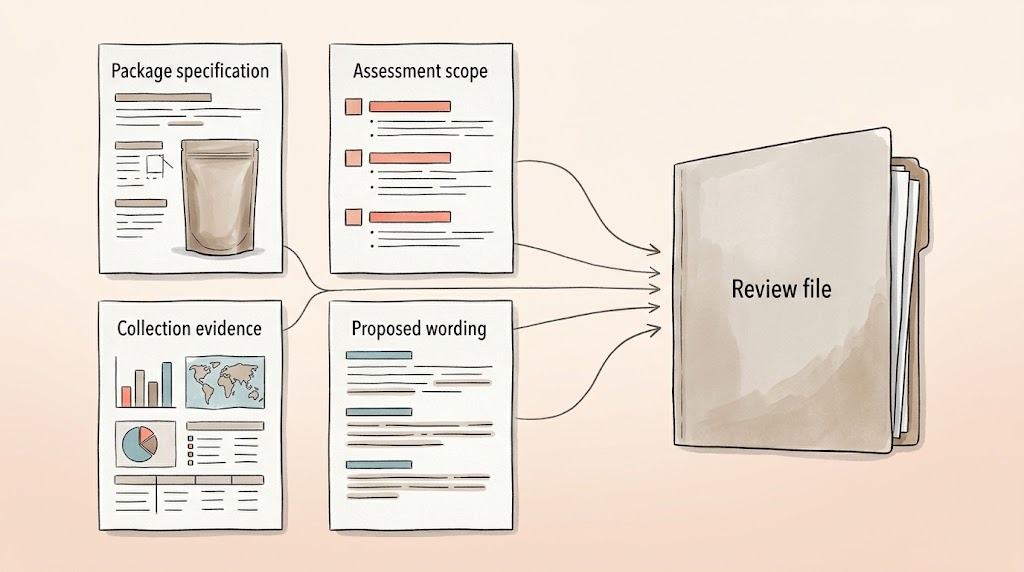
Build a small evidence file around the finished package. Name the exact artwork and construction version so the team can tell whether a document applies to the order being approved. Keep a material declaration separate from a recycling assessment, and keep both separate from food-contact and product-protection documentation.
The FTC's Green Guides summary advises against broad, unqualified environmental benefit claims and says recycling claims should be qualified when appropriate facilities are not available to at least 60 percent of consumers or communities where the item is sold. That access threshold is not the percentage of plastic in a bag. The summary also calls for evidence supporting compostability claims.
Use this as a reason to review the actual claim and selling market, not as a complete legal approval checklist. Applicable state requirements and the current claim language still need review before printing. A material supplier's short description does not provide that review by itself.
Make ownership explicit. Purchasing can obtain the specification, while another named person verifies the proposed consumer wording. An artwork approver should be able to trace the printed instruction to the relevant evidence without searching through unrelated quotations.
Keep uncertainty in the working file until it is resolved. “Assessment requested” is a useful internal status; it is not a phrase to replace with a recycling logo on the final artwork. If the route depends on a particular market or program, carry that condition through the website, sales sheet, and pack rather than shortening it away in one channel.
Recommended packaging configuration: specify the route first
For a new retail candy project, start with the product form, fill quantity, sales region, and intended display format. A stand-up pouch with a window may be a useful configuration to evaluate when visibility matters, as the published project demonstrates. It does not establish which material should be used for your environmental objective.
If the brief calls for compatibility with a named film collection, ask the supplier to propose and document a complete candidate structure against that requirement. Include the closure, printing, finish, and label in the review. Do not approve a general “mono-material” description as a substitute for an assessment of the final package or access to collection.
For a composting objective, identify the required conditions and destination before choosing the wording. Ask which finished product the evidence covers and whether an applicable receiving facility accepts it. Keep this evaluation distinct from a recycling brief; the two routes are not interchangeable options for the same disposal label.
Alongside that work, request a sample trial with your candy and filling process. Record handling, seal formation, opening, presentation, and the product checks needed for your intended use. An environmental assessment cannot establish storage performance, and a successful filling trial cannot establish recyclability.
Bring these requirements to the discussion of candy packaging options for your market. A useful quotation identifies the proposed construction, unresolved questions, and documents required before artwork approval. It should let you compare candidates against the same brief instead of choosing the strongest-sounding environmental phrase.
Frequently asked questions
Can you recycle candy wrappers at home?
Use curbside recycling only when your local service explicitly accepts that wrapper format. Many U.S. flexible packages require a different route or are excluded from available collections. Read any component-specific disposal panel and check the collector's current list. Do not put loose wrappers inside an accepted carton to make them part of its recycling instruction. If no applicable recycling option is confirmed, follow the local waste-disposal direction.
Are hard candy wrappers recyclable?
The candy being hard does not determine the wrapper's disposal route. A twist wrapper, sealed individual packet, and outer retail bag are separate formats. Check the direction for the piece you are discarding, including whether the program accepts small loose wrappers. Clear appearance and easy tearing are insufficient evidence. Keep the outer pack available if it carries the only explanation of how its inner components should be handled.
Can you recycle gummy bear bags?
Possibly through a route that accepts the exact bag, but “gummy bear bag” is not a material specification. Check its disposal panel and the receiving service's rules. Follow the stated preparation requirement for sugar or sticky residue only after confirming acceptance. A zipper, window, or familiar pouch shape does not establish eligibility. If you are asking the brand for help, include the product size and country of purchase.
Are Sour Patch Kids bags recyclable?
Do not apply one answer to every Sour Patch Kids package. For the U.S. 8 oz product page reviewed here, the available text did not provide enough package-specific collection evidence to verify a recycling route. Check the disposal instructions on your current pack and confirm them locally. Brand sustainability goals do not replace a direction for that bag. Identify the size and product code if you contact consumer support.
Are Skittles bags recyclable?
Check the specific size, format, and market. The official U.S. 2.17 oz single-pack page is a product reference, but the text reviewed did not establish a disposal route for the finished wrapper. It cannot settle the answer for another pouch size. Follow the current pack's applicable instruction and verify acceptance with the collector; SKITTLES Contact & Help is an official route for unresolved product questions.
Can a compostable candy wrapper go into plastic recycling?
Do not use conventional plastic recycling as the fallback for a compostable wrapper. Check the stated composting conditions and the receiving program's accepted-items list. Home and commercial claims need separate attention. If the intended composting route is unavailable, ask the local waste service for disposal guidance. A leaf graphic, paper-like appearance, or plant-based material description does not supply the missing instructions.
Discuss a candy packaging specification
Planning a new bag or reviewing an environmental claim? Send Mylarbag your packaging brief with the candy type, target fill, destination market, preferred format, and any proposed disposal wording. Include a current bag or sample photograph if available. Ask for a defined construction and the relevant supporting documents so your team can review the package, product requirements, and customer instructions before printing.