
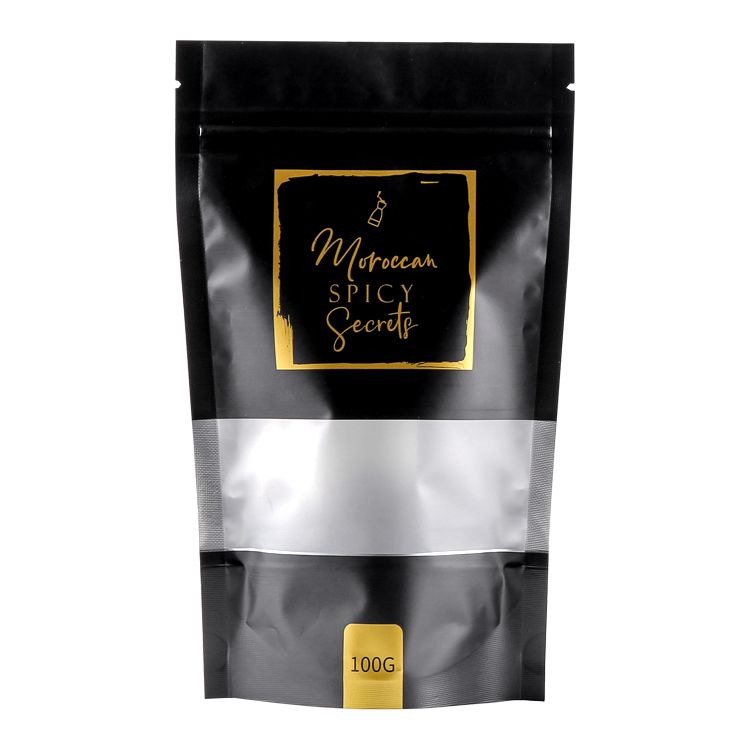
Stand-up pouch
A bottom gusset creates the base for a retail pack. A self-sealing strip can be added for repeated use.
Explore stand-up pouchesSPICE & SEASONING PACKAGING
We make custom spice packaging bags for powders, whole spices and seasoning blends, with the pouch format, material and print specified for your product.
Free design and free layered print-ready files are included. You can start with your product and a rough quantity.
FROM DESIGN TO DELIVERY
From deposit payment.
From balance payment.
Taxes included; destination specified in your quote.
Custom sample fees are refunded when you place an order.
Production and shipping are separate stages. Your quotation sets out the order and delivery arrangements.
YOUR PRODUCT
A powder blend, coarse salt and a long vanilla bean need different filling space and handling. We use your ingredient, intended fill weight and packing method to develop the pouch specification.
| Your product | How we configure the pouch |
|---|---|
| Ground spices and fine powders | Allow room for filling and a clean heat-seal area above the product. |
| Whole spices, peppercorns and cinnamon pieces | Size the opening and usable volume for the pieces, with material selection informed by their edges and handling. |
| Seasoning blends and coarse salts | Match the product-contact layer and pouch construction to the blend, particle size and intended pack. |
| Vanilla beans and other long ingredients | Provide usable length for the longest pieces, with space for the closure and final seal. |
These are printed outer packaging pouches. Filter bags placed in a cooking pot are a different product. Wet sauces and pastes need a separate material and filling-process specification.
POUCH FORMAT
We supply custom pouches for retail packs, portions and wholesale orders. The photographs below show our own packaging projects; the food-bar, collagen and tea bags illustrate the available formats.
A bottom gusset creates the base for a retail pack. A self-sealing strip can be added for repeated use.
Explore stand-up pouches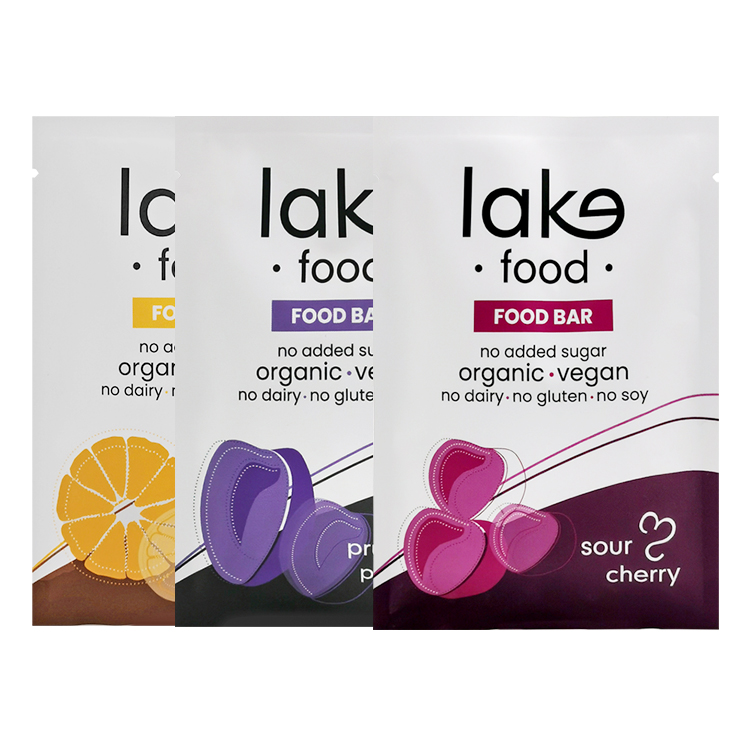
A compact format for portions, samples or recipe servings, with the fill direction, tear notch and seal space specified for the pack.
Explore flat pouches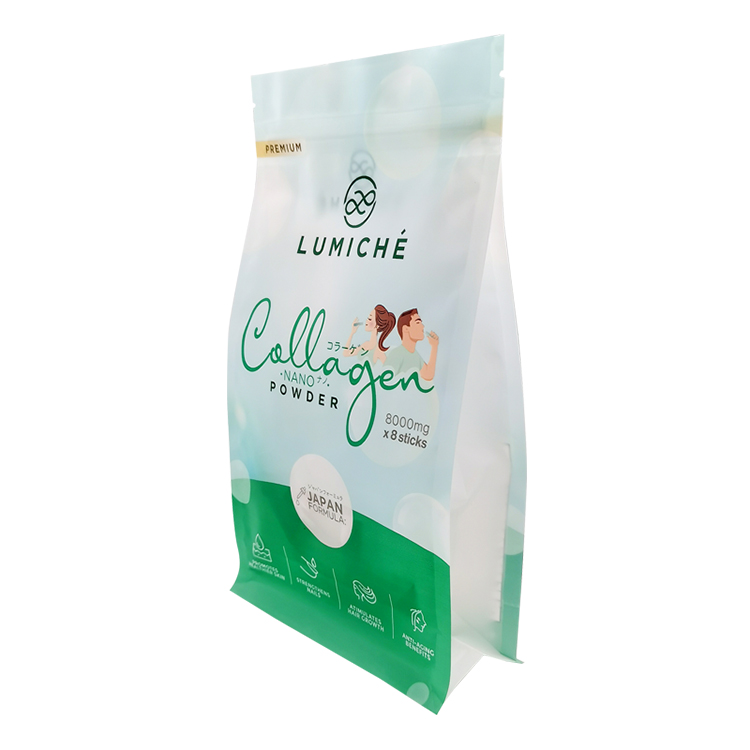
A defined base and separate panels provide room for the product and brand information.
Explore flat-bottom pouches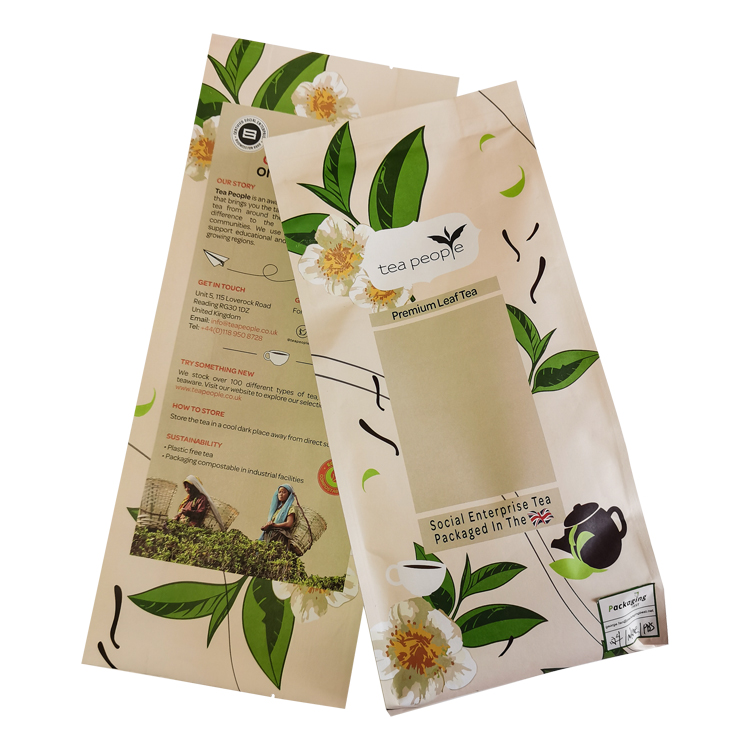
Expandable side panels suit a taller pack. Opening width, filled dimensions and final closure are set for your product.
Explore side-gusset pouches| Format | Useful starting point | Details we specify |
|---|---|---|
| Stand-up pouch | Retail seasoning packs and repeated use | Bottom gusset, self-sealing strip and front label area. |
| Flat pouch / outer sachet | Portions, samples and recipe servings | Fill direction, tear notch and seal space. |
| Flat-bottom pouch | Structured brand presentation | Base, panels and usable volume. |
| Side-gusset pouch | Taller retail or wholesale packs | Expanded sides, opening and final closure. |
Kraft paper describes a material layer or appearance, rather than a pouch shape. A clear window is a feature within the selected structure.
OUR PACKAGING PROJECTS
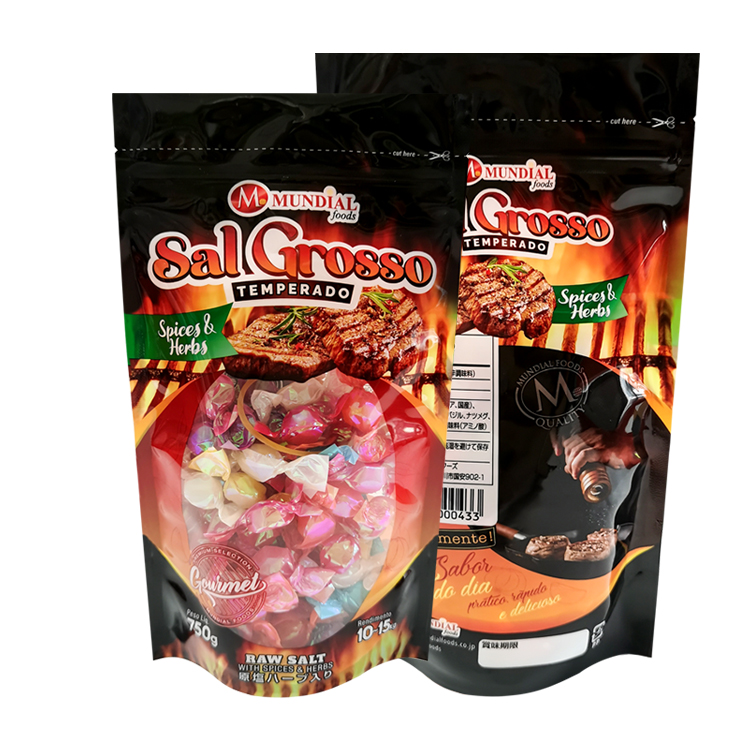
These projects show how we combine format, material and print for different ingredients. Each photograph is paired with that project’s specification.
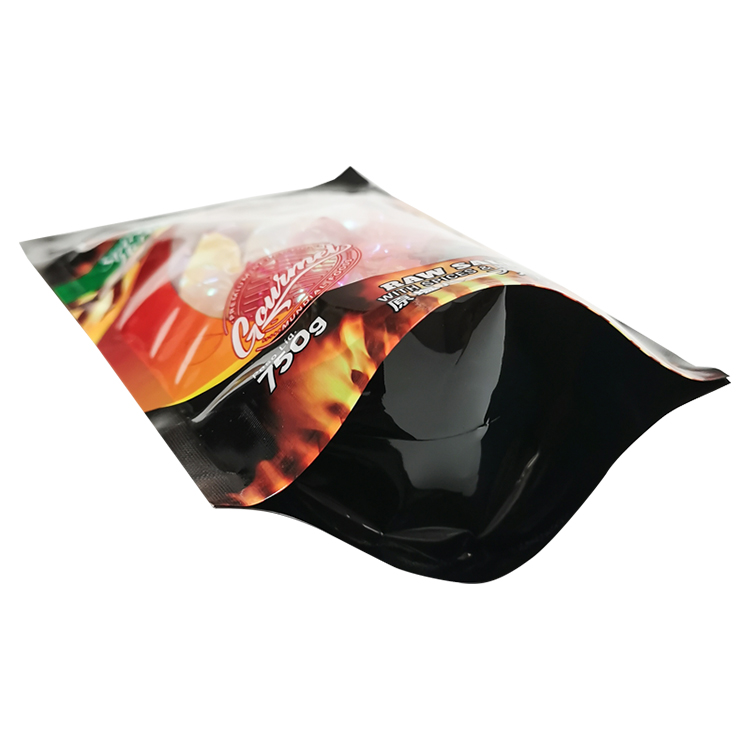
Japan
A printed stand-up pouch with a large clear window for the coarse-salt product line.
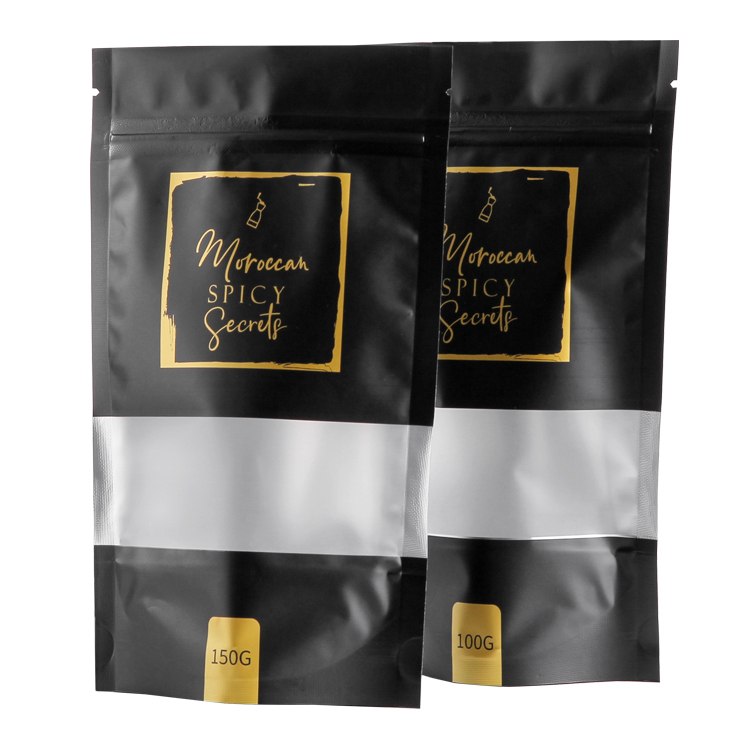
Belgium
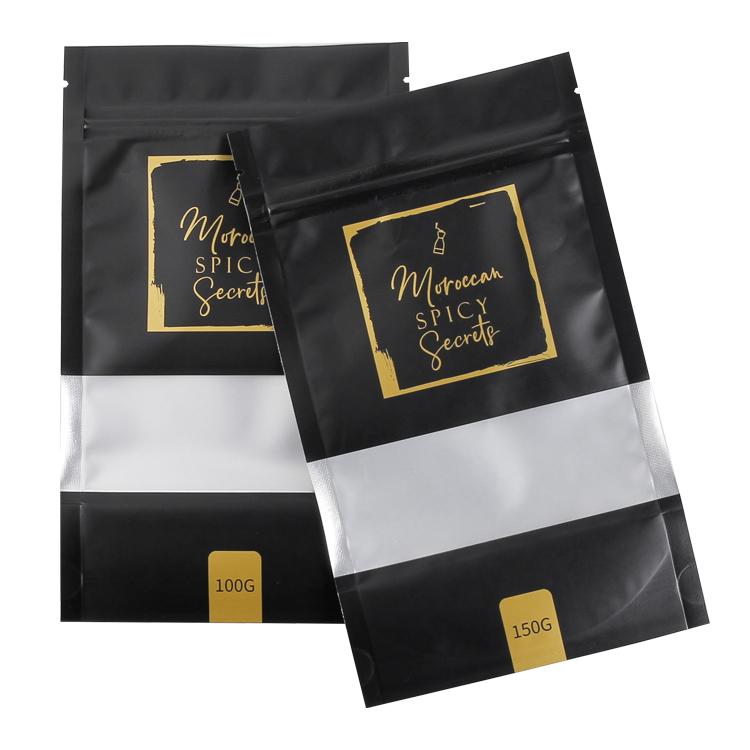
A matte printed stand-up pouch with a clear strip window and a resealable opening.
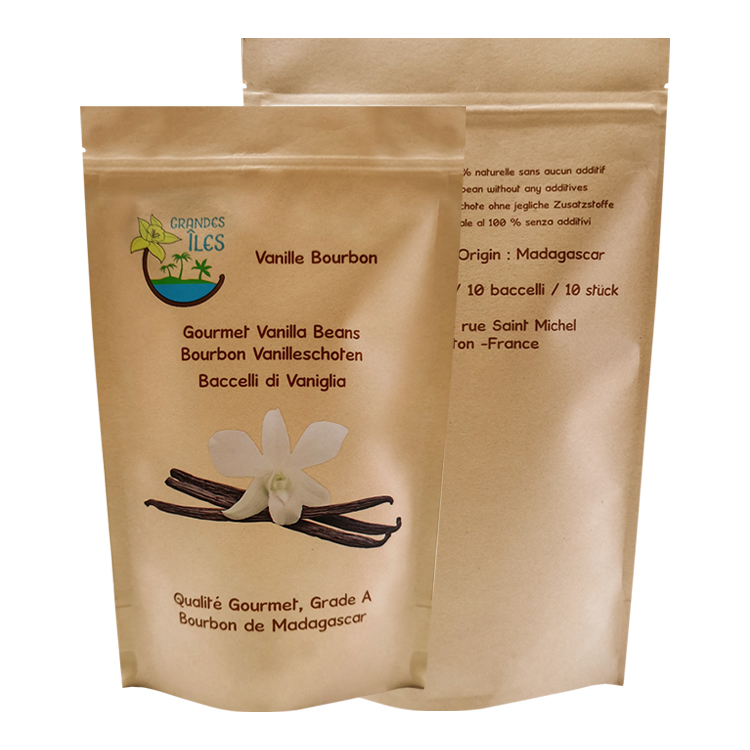
France
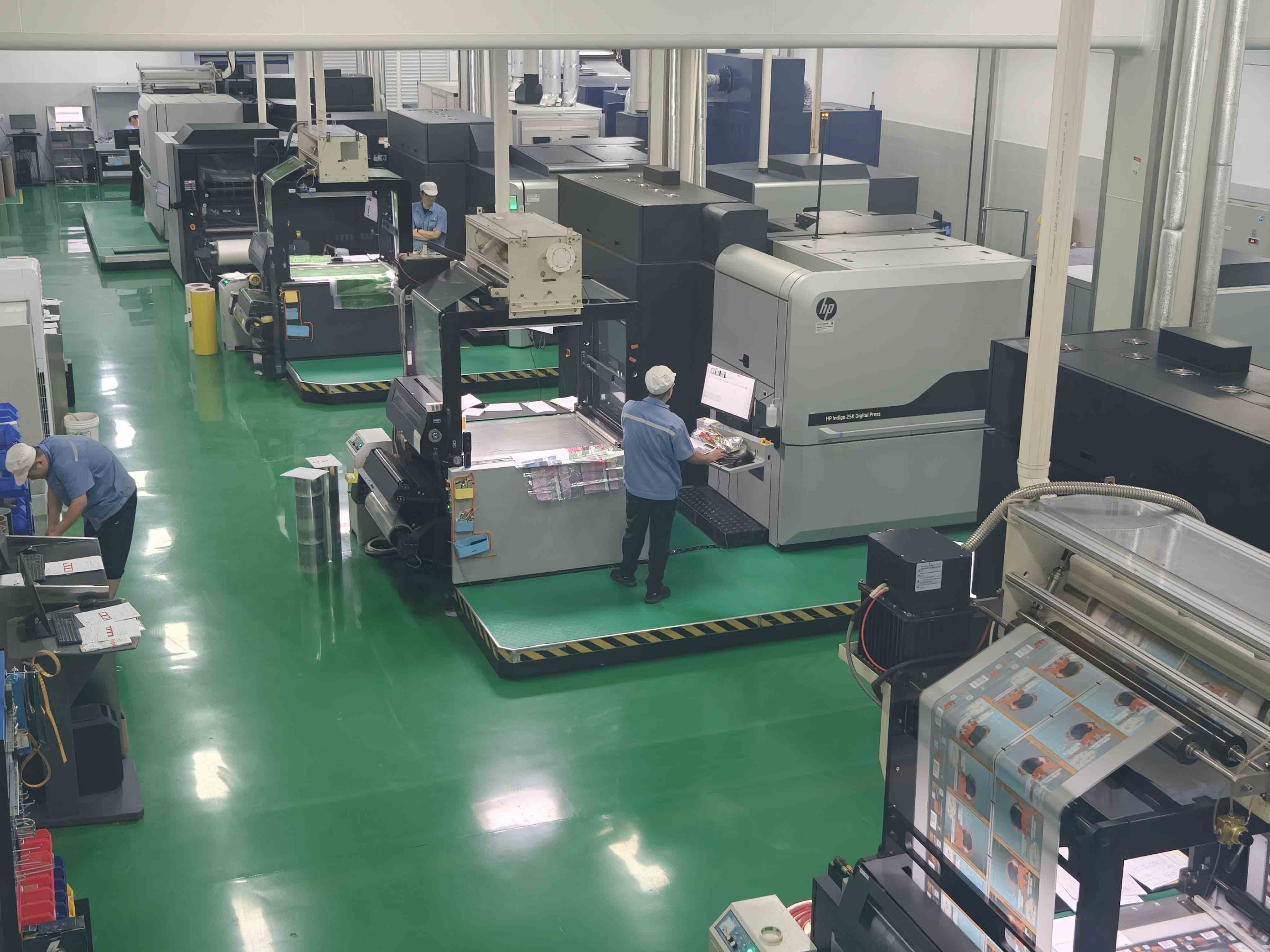
A kraft-paper pouch with printed front and back panels for a vanilla-bean product line.
The dimensions and materials belong to these individual projects. We specify your pouch for your ingredient, fill weight and packing process.
MATERIAL STRUCTURE
We build the pouch specification around the product-contact layer, barrier layers, outer surface and sealing requirements. A material name on its own does not define the performance of the finished pack.
Moisture and oxygen sensitivity, aroma, storage conditions and your intended shelf-life target guide material selection.
The formulation and particle edges matter for product contact and handling. Samples let you assess the proposed pouch with your own product.
Windows show the product; opaque areas can provide light shielding. The window layout belongs in the full barrier specification.
Shelf life depends on the food, filling process, seal and storage conditions as well as the packaging. Testing should use the intended product and finished pack.
FILLING & RECLOSURE
We configure the opening, tear notch and self-sealing strip around how the pouch will be filled and opened. The final heat seal and the reclosure have different jobs.
Leave enough space above the product to keep powder and particles out of the final heat-seal area.
The heat seal closes the filled pack. A self-sealing strip, often called a zipper, does not replace this seal.
The strip lets the user close a multi-use pouch again. Its use does not establish the shelf life of the opened food.
For machine filling, we use your equipment requirements and a sample-fill trial to assess fit. For roll film, share the film width, print repeat, sealing method and equipment requirements.
WINDOW & PRINT LAYOUT
We can combine printed panels with a clear window, or use an opaque pouch when light shielding is part of the specification. The layout gives each flavour a recognisable place in the range.
A window can show peppercorns, coarse salt or a spice blend. We position it alongside the required printed area and barrier design.
We leave space for ingredients, net weight, instructions, batch details and the wording required for your market.
Different names and pack sizes can share the same design system while keeping the essential product details distinct.
You provide and approve the product wording. Our design team prepares the artwork for the selected pouch size and printing process.
INCLUDED DESIGN SUPPORT
You do not need finished artwork to start. Our dedicated designer develops your spice pouch design, with unlimited revisions and layered production files included.
Send your logo, product wording and any existing pack or reference. We can develop the layout from a rough idea.
We arrange the artwork for the pouch dimensions, print areas and flavour variants. You approve the wording and final design.
We prepare the free layered print-ready files for the agreed pouch size and printing specification.
The layered file keeps the artwork elements organised for production. The final file setup follows the agreed print process.
PRINTING & SAMPLES
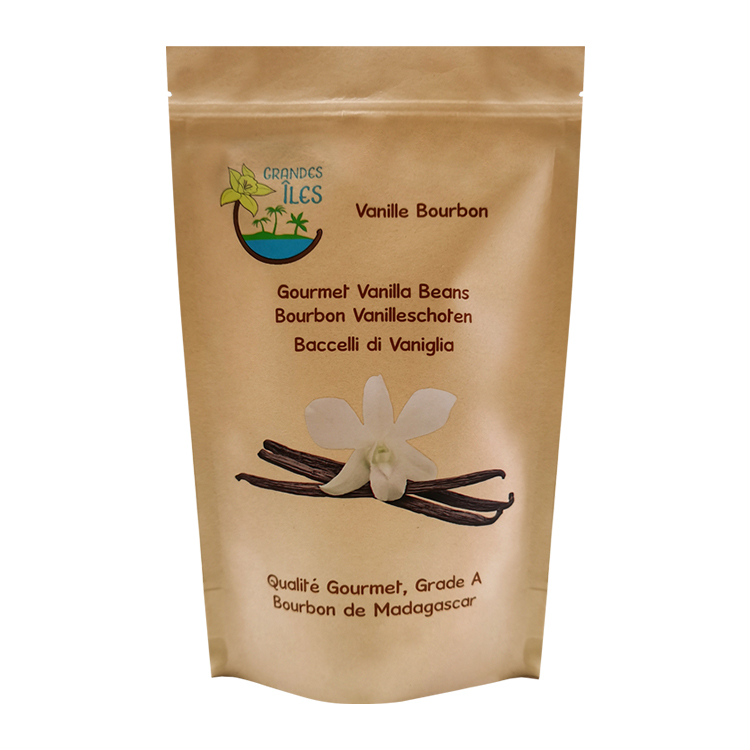
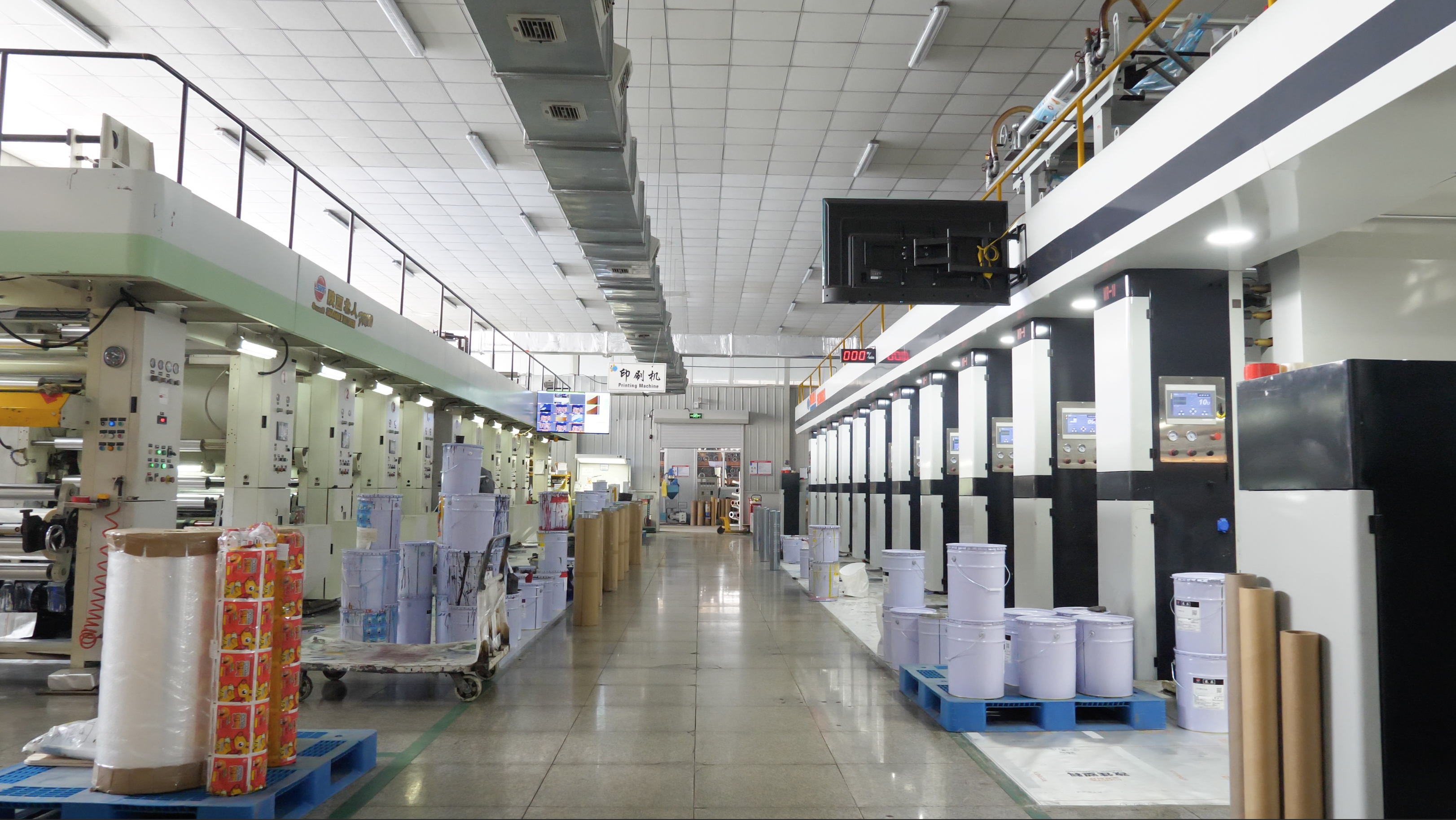
We offer digital and gravure printing. The number of designs, quantity per design and expected repeat orders help us select the printing route and prepare your quotation.
We agree the material, finish and artwork approval process with the printing method. The three spice projects above were gravure printed.
See an existing pouch with a similar material or format. Use it to assess the feel, print presentation and handling.
Custom sample fees are refunded when you place an order. A sample can support filling and sealing trials with your product.
MATERIAL OPTIONS
We offer eco-friendly material options for spice packaging. The choice needs to work for your ingredient and the collection or composting route available in the destination market.
Film, paper, closures, inks and other components all belong in the assessment.
A kraft-paper look does not by itself make a laminated pouch plastic-free, recyclable or compostable.
We can discuss the proposed construction, supporting documentation and sample requirements for your market.
OUR FACTORY
We manufacture custom food packaging and supply export projects, including the seasoning and vanilla pouches shown above. Our own factory photographs show the equipment behind the packaging service.
Our factory holds relevant food-packaging certifications. Documents are shared privately on request for your intended use and destination market.
Material, dimensions, printing, closure and sample requirements are agreed for your pouch before production.
COMMON QUESTIONS
Details on the pouch, artwork, samples and delivery.
These pouches are printed outer packaging for spices, herbs and seasoning products. They are not specified as filter bags for boiling water or as bags for direct heating. A bag that goes into a cooking pot needs a separate material and use specification.
Yes. We make pouches for whole spices, fine powders and seasoning blends. Your ingredient, intended fill weight and packing method help us set the dimensions, material and opening. Fine powders also need a clean area for the final heat seal.
Kraft paper is a material layer or visual finish; stand-up describes the pouch format. A kraft-paper pouch can have a bottom gusset and stand up. Its full material structure, including the inner layers, determines how it is specified for the food.
We can discuss a structure for oily ingredients and strong aromas. The product-contact layer, complete film structure, seal and storage conditions need to suit your formulation. We use your product information and sample requirements to define the specification.
Yes, a window can display peppercorns, coarse salt or a blend. Its size and position need to fit the print layout and barrier requirements. A clear area does not provide the same light shielding as an opaque area.
Yes. A flat outer sachet can be a starting point for a single portion or recipe serving. We set its dimensions around the product volume, filling direction, tear notch and final seal space.
Yes. We use the longest pieces and intended fill to set the usable pouch length, with additional space for the closure and final heat seal. A sample-fill check helps assess whether the ingredients fit and can be handled comfortably.
The self-sealing strip, often called a zipper, is for reclosure after opening. The initial heat seal closes the filled pack before first use. Powder or particles should be kept out of that heat-seal area during filling.
We do not assign one shelf-life period to every spice pouch. Your ingredient, moisture and oil content, filling process, seal and storage conditions all affect the result. Shelf-life validation should use your product in the intended finished pack.
We offer eco-friendly material options. Any recyclable or compostable claim needs to match the complete pouch, including its closures and printed components, and the destination market’s available collection or treatment route. We can discuss the relevant construction and documentation.
Yes. Our designer can build a consistent layout across your spice names and pack sizes. You provide and approve the product details for each version; we prepare the artwork for the agreed dimensions and print process, with free layered print-ready files included.
The pouch needs to match the filling equipment. Opening width, dimensions, loading method and seal area can differ between machines. We use your equipment requirements and sample-fill results when agreeing the specification.
Check usable volume, the opening, closure and final heat-seal area with your own product. For whole ingredients, also check fit and handling; for powders, check filling and whether the seal area stays clear. A sample-fit check is separate from shelf-life validation.
Yes. Free design includes a dedicated designer, unlimited revisions and free layered print-ready files for the agreed pouch size and printing specification. You can start without finished artwork. You provide and approve the product wording and final design.
Comparable pouch samples are free. Custom sample fees are refunded when you place an order. Tell us the format or material you want to see so we can discuss the appropriate sample arrangements.
Yes. Our factory holds relevant food-packaging certifications, and documents are shared privately on request. Let us know the intended packaging use and destination market so we can provide the relevant documents for your project.
Minimum quantity and cost depend on the pouch format, dimensions, material, print method, number of designs and quantity per design. Send the details you have, even if the size or material is still undecided, and we can prepare a quotation around your requirements.
Production takes 7–12 calendar days from deposit payment. Shipping takes 7–10 calendar days from balance payment. These are separate stages; the quotation sets out the arrangements for your order and destination.
Yes. We offer DDP door-to-door delivery with taxes included. Include the delivery destination in your enquiry so the quotation can set out the shipping arrangements.
YOUR NEXT PACKAGING ORDER
Tell us what you are packing and the quantity you have in mind. We can help define the pouch specification if the details are still open.