
Some cat food bags and pouches may be recyclable through a specific collection route, but you should not assume that every flexible pack belongs in a household recycling bin. The accurate answer depends on the pack’s actual construction, its closures and labels, how clean it is, and—most importantly—the current rules of the program available where the consumer lives. Dry-food bags, paper-look bags and single-serve wet-food pouches may look similar on a shelf, yet they can follow very different end-of-life paths.
For most U.S. households, the safest first step is to read the package and check the local program before placing a flexible bag or pouch in curbside recycling. EPA notes that plastic bags, wraps and films may be recyclable, but they do not belong in household recycling bins; retail or grocery collection may be available for materials a local program accepts. That guidance is broad, not a promise that a particular cat-food package is eligible. EPA’s recycling guidance should be read together with the program’s current instructions.
This article explains how to make the decision without guessing. It is written primarily for a U.S. consumer audience, with a separate note for UK searches, and includes a brand-side section for people developing custom cat-food packaging.
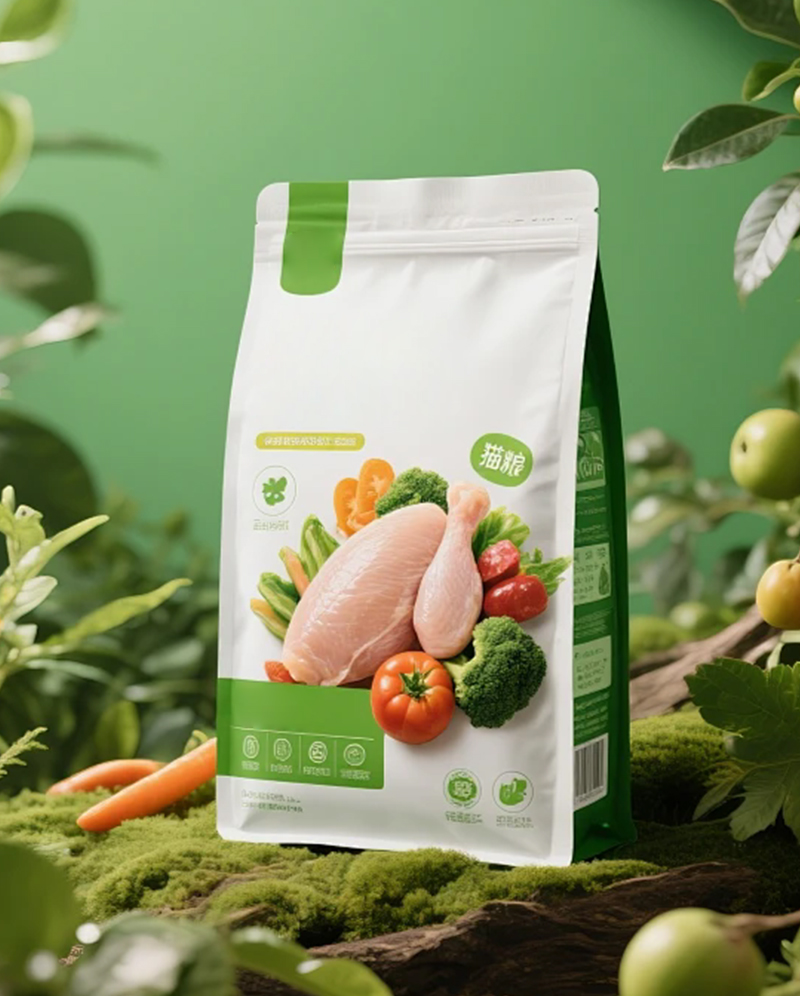
The direct answer in one table
The table is deliberately cautious because a package is not recyclable simply by category. A responsible end-of-life claim applies only to a defined pack in a defined condition, where a collection and processing route is available to the consumer in that location.
Why a cat-food bag is not the same as a cereal box
The word “bag” hides a lot of material variation. Some pet-food packages are made from flexible film. Some use multiple layers to balance print, stiffness, sealing and product-protection needs. Some have a zipper, a handle, a window, a metallized appearance or paper on the outside. Some wet-food formats are narrow sealed pouches designed for a particular filling and processing system.
That variation matters because collection systems do not simply sort items by their product category. They operate around their own equipment, accepted-material lists and operating conditions. An item can be technically capable of being recycled in one setting and still be excluded from the bin or drop-off route available to a particular household.
Three common mistakes follow from judging only by appearance:
- “It looks like paper, so it goes with paper.” A paper-looking exterior does not tell you whether the finished pack includes plastic, adhesive, barrier layers, coatings or other components that change its collection route.
- “It has a recycling symbol, so curbside accepts it.” A resin code or recycling-themed graphic can describe a material; it is not a local collection instruction.
- “It is plastic film, so every store bin accepts it.” Retail film programs define what they collect. A bag must fit the program’s current accepted-material rules, including any rules for zippers, labels, food residue and composite structures.
EPA’s public guidance makes the practical distinction clearly: plastic bags, wrap and film should not be placed in household recycling bins, while retail and grocery stores often accept some film materials. The word “some” is the operative word. Call or check the exact program before using a store collection bin.
First identify whether you have a dry-food bag or a wet-food pouch
The user question is often “Are cat food bags recyclable?” even when the item in hand is a single-serving pouch. They should be dealt with separately.
Dry cat-food bags
Dry-food packaging is often a larger flexible bag. It may have a resealable closure, a gusset, a handle, a window or a paper-like finish. Empty it completely and inspect the package for written disposal guidance. Do not rely on a blog, a brand name or a photo of a similar bag.
The most useful questions are:
- Does the package itself provide a disposal instruction for your country?
- Is the material a flexible film, a paper-based structure, or a mixed construction?
- Does your curbside provider accept this precise category?
- Does a nearby retail program list food bags or flexible packaging of this type?
- Does the program ask consumers to remove a zipper, cut off a closure, or leave a component attached?
Do only what the relevant program says. It is easy to turn generic advice—such as “remove the zipper”—into an incorrect instruction for a different program. EPA’s page gives sandwich-bag zippers as an example for plastic-film recycling, but local and store programs can impose their own rules.
Wet cat-food pouches
Wet-food pouches are often small, sealed flexible packages. They may contain multiple materials and may be designed for a particular processing and storage system. Their size, contents and construction make them especially unsuitable for a blanket curbside claim.
Emptying a pouch does not automatically make it accepted. A local program may not take flexible pouches at all; a brand may operate a take-back solution in only some places; and a general retail-film drop-off may or may not accept the exact type of pouch. Follow the pack’s current instruction or the collection program’s own acceptance list.
If no accepted route is available, the honest answer is that the pouch should not be placed in recycling merely in the hope that it will be sorted later. Wish-cycling can contaminate a collection stream and complicate processing.
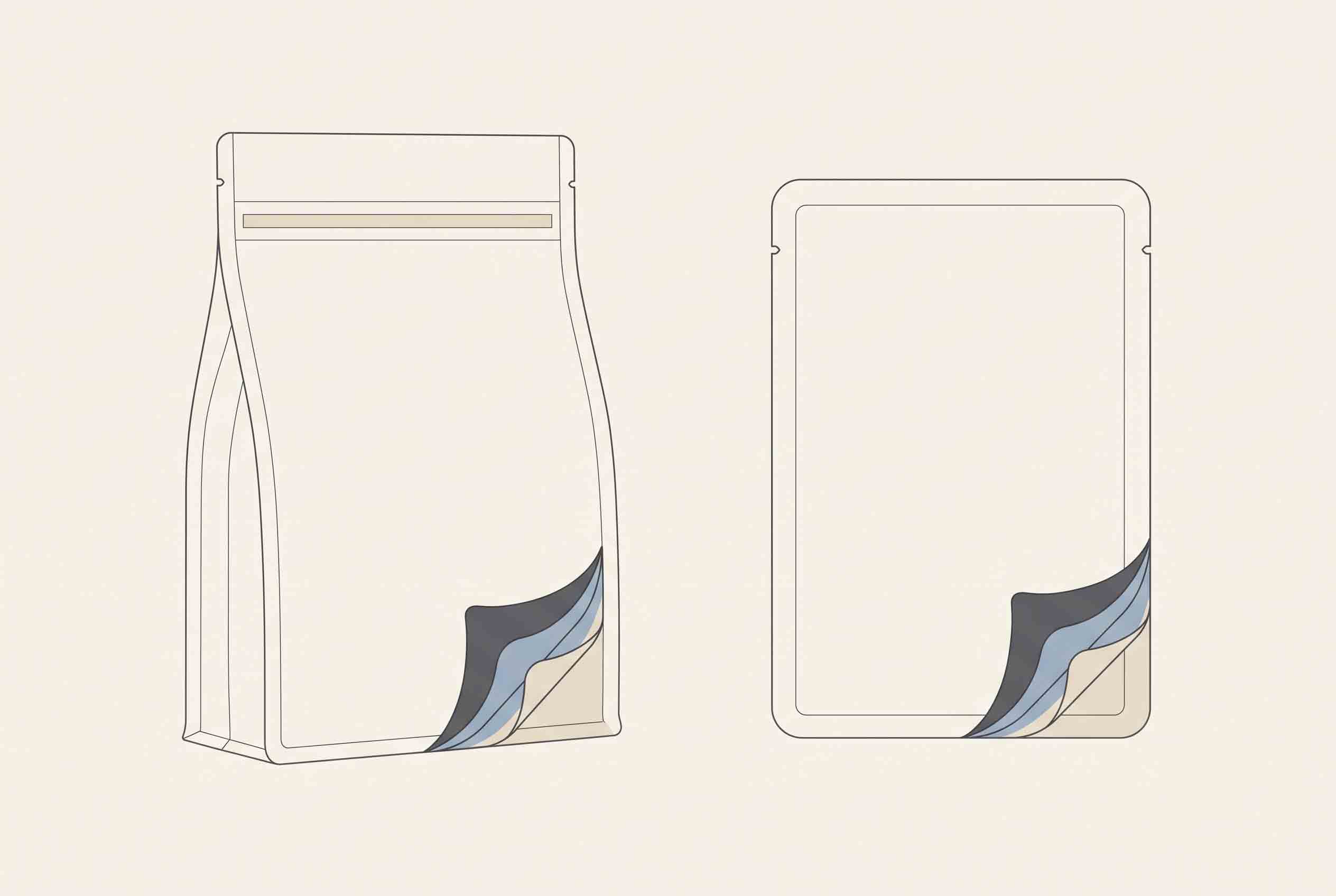
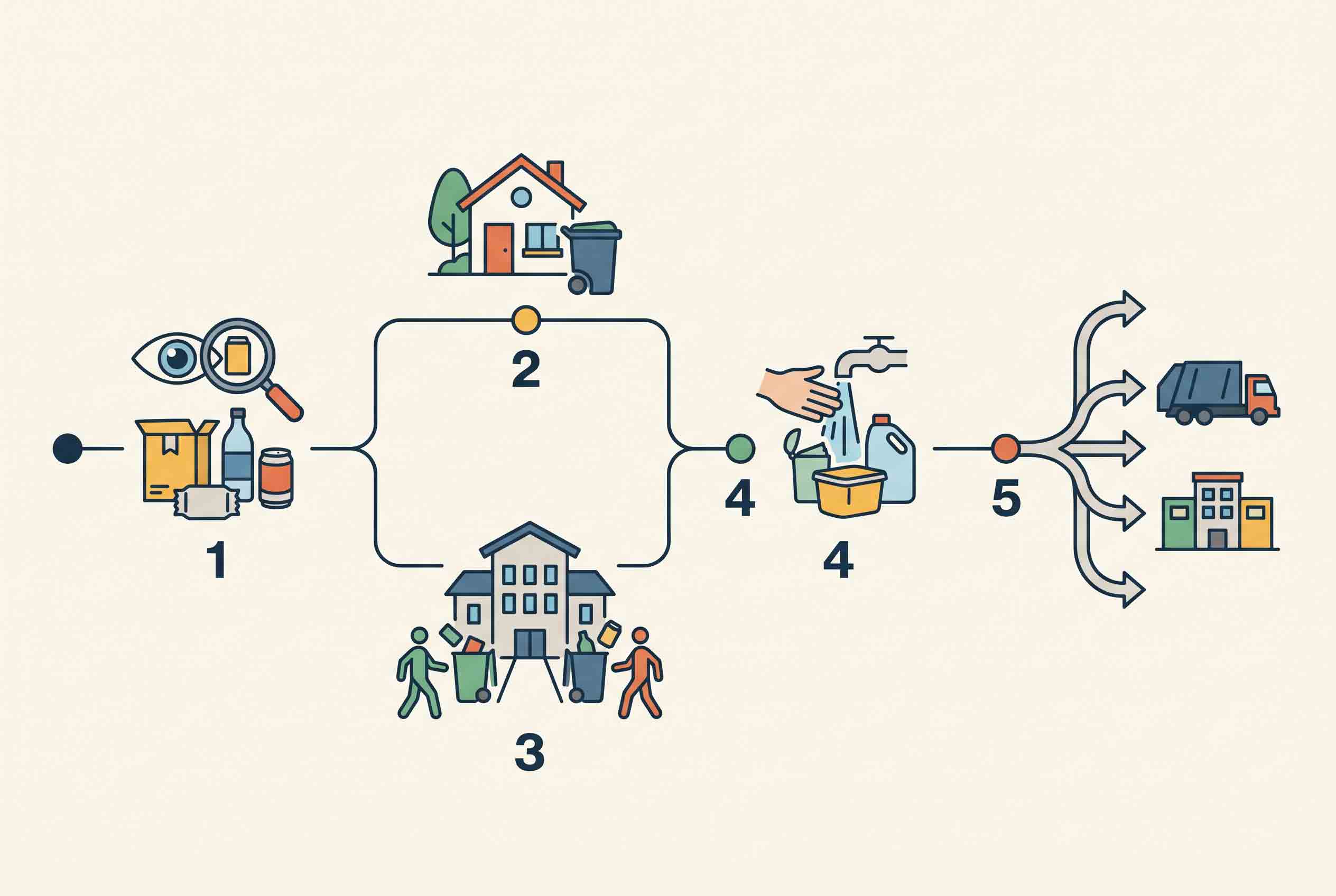
A five-step consumer check before disposal
This process is more dependable than searching a brand name followed by “recyclable.”
Step 1: Empty the package
Remove as much remaining food as practical. A collection program may have its own requirement for residual product and cleanliness. Do not rinse, cut, separate or dismantle the pack unless its instructions tell you to do so; extra steps can make a material unsuitable for the particular route.
Step 2: Read the full pack, not just the front
Look at the back, bottom gusset, side seal and any recycling panel. Note the country or market for which the instruction was printed. A U.S. pack, a UK pack and a pack imported from another market may use different labels and programs.
Step 3: Check your local curbside list
Search the named municipal or hauler program, not a general social-media answer. If flexible film, pouches, composite packs or pet-food bags are not listed, do not assume they are accepted.
Step 4: Check a named drop-off or take-back program
If the package refers to a retailer, brand program or specialist collector, verify that the location still participates and that your item is on the accepted list. Programs change, and acceptance lists can be narrower than a large collection bin suggests.
Step 5: Follow the program’s preparation rule exactly
The program may ask for a particular level of emptying, component removal or grouping. It may also say not to include certain items. Its current instructions override generic online advice.
What brand-name recycling searches can—and cannot—tell you
Searches such as “Are Purina cat food bags recyclable?”, “Can I recycle Friskies cat food bags?”, “Are Hill’s cat food bags recyclable?” or “Where do I recycle Meow Mix bags?” are understandable. They are usually attempts to get an immediate yes/no answer for a package already in a home.
They should not produce an evergreen generic answer. Large brands sell different product formats and can change materials, instructions, markets and take-back relationships. A claim about one size, country or production period can be wrong for another. The correct route is to:
- read the instructions on the exact bag or pouch;
- use the brand’s current product or sustainability information if it identifies that exact format;
- check the local collection program;
- contact the brand or program when the item is not clearly listed.
The same caution applies to questions about foil-looking bags, plastic bags or paper bags. A surface appearance is not a complete material specification.
Are empty cat-food bags easier to recycle?
“Empty” is necessary for many programs, but it is not the same as “accepted.” The package must still match a collection route’s material requirements. A clean empty flexible pouch can be excluded; a correctly prepared flexible bag can be accepted only through a retail program; a paper-looking pack may require a different assessment.
The valuable habit is not to look for an answer that makes every item recyclable. It is to preserve the distinction between:
- material composition — what the package may contain;
- design assessment — whether a package was designed with a particular recycling stream in mind;
- collection access — whether the consumer can place it in a real local program;
- processing outcome — what happens after collection.
All four need to line up before a confident consumer-facing claim is appropriate.
Compostable is not a synonym for recyclable
Recycling and composting are different routes. A package described as compostable should not be placed in a plastic-film collection bin unless the program explicitly says so. Likewise, a pack designed for a recycling route should not be put into compost because it is “plant based” or has a natural-looking exterior.
For consumers, the practical instruction is simple: use only the route written for the exact package and available locally. For brands, the practical instruction is harder: do not make a compostability claim without defining the relevant standard, certification, collection/infrastructure conditions, market and final package configuration, including closures, inks and labels.
Make a one-time local recycling note for repeat purchases
If a household buys the same cat-food format regularly, it is worth recording the verified disposal route once rather than searching from the beginning every month. Keep the note specific: product name or pouch format, country/city, the program checked, date checked, and the preparation instruction. “Pet food bags are recyclable here” is too broad to be useful when a dry bag and a wet pouch have different constructions.
Recheck the note when any of these changes:
- the brand changes the package or its printed disposal instruction;
- the household moves or changes collection providers;
- the retailer changes the signage or accepted-material list;
- a local authority issues updated collection guidance;
- the package gains a zipper, spout, paper component or another visible feature.
This habit is more accurate than saving a general search-result answer. It also teaches the correct consumer behaviour: recycling is a local service decision, not a label that remains identical for every product and place forever.
Do stores recycle cat-food bags and pouches?
Some stores host collection points for selected plastic bags, wraps and films. That does not mean the store accepts all cat-food bags or pouches. A bin may be run by a third-party program with its own excluded items; it may be intended for a narrow set of clean polyethylene films; or it may be removed without notice.
Before taking a bag to a store:
- Find the program’s own current accepted-material list.
- Check whether food bags, pet-food bags or multilayer pouches are explicitly covered.
- Ask the store only if it can confirm the current program rather than simply pointing to a bin.
- Follow any instruction about closures, labels and cleanliness.
EPA’s guidance is useful because it tells households not to use curbside bins for plastic bags, wrap and film and points to possible retail acceptance. It does not certify a particular cat-food bag for a retailer’s collection program.
A note for UK searches
Terms such as “Are cat food bags recyclable UK?” and “Can I recycle cat food pouches in the UK?” require a UK-specific answer. Collection systems, labelling conventions and retailer schemes differ from U.S. programs. Do not apply the U.S. curbside/retail-film guidance above as if it were a UK rule.
The practical sequence remains similar:
- check the instruction on the UK-market package;
- check the local council’s current collection guidance;
- check a named retailer or specialist scheme if the pack identifies one;
- follow the scheme’s preparation instructions and exclusions.
For a brand selling in more than one country, make disposal labels market-specific. A single global “recycle” icon can create more confusion than help when access and program rules differ.
What should cat-food brands do before using a recyclable-packaging claim?
This is the part consumers rarely see. A responsible brand should treat a recycling claim as a product decision, not a decorative badge. The company needs to document the finished pack’s construction, not merely the main film. Zippers, handles, windows, inks, coatings, labels and adhesives can be relevant to a design assessment and collection instructions.
Then the brand should define:
- the target country and, where necessary, target regions;
- the exact finished configuration and its closures;
- the intended collection route;
- any preparation instruction the consumer must follow;
- the substantiation, review and approval process for the claim;
- how changes in material, printer, component or market will trigger a review.
An internal term such as “mono-material option” can describe a development direction; it does not, by itself, show that the finished pack is accepted by a household recycling program. Consumer guidance should state the practical disposal route available in the market where the pack is sold.
When a cat-food brand is evaluating custom format options, Mylarbag’s cat food pouch page can be a starting point for a specification discussion. The key inputs are the product, the market, the intended end-of-life route, and the evidence required to support any claim. A material shown online should not be treated as an approved recycling claim without product- and market-specific review.
What not to do with empty bags and pouches
- Do not put flexible bags and pouches into curbside recycling because a general web page called them recyclable.
- Do not place a wet pouch in a store film bin without confirmation that the bin accepts that type of pouch.
- Do not assume a metallized or foil-looking surface is recyclable with metal.
- Do not treat a paper-looking surface as proof that the full pack belongs with paper.
- Do not put a recyclable package into compost or a compostable package into film collection unless the local route specifically instructs it.
- Do not rely on an old brand FAQ, a shopper review or another country’s pack.
- Do not make a brand claim based only on a material supplier’s generic description.
A real-world packaging note: visible facts are not performance proof
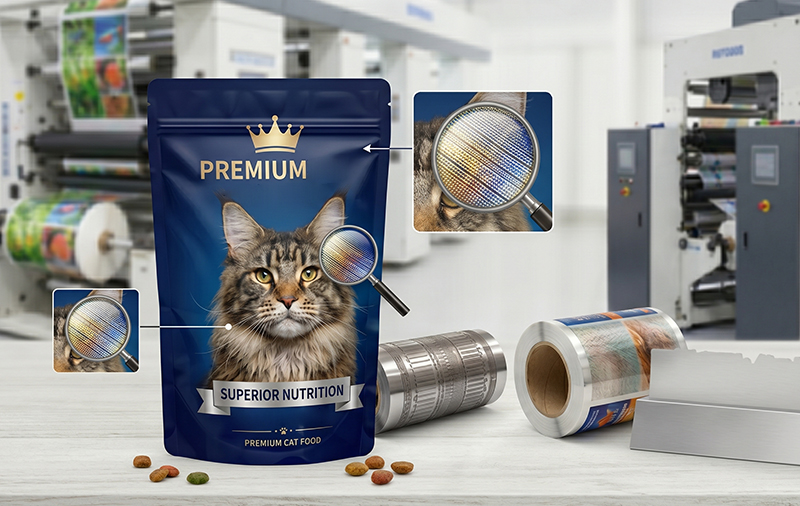
The Mylarbag Pet Food & Treats project collection shows published pet-related packaging formats. A project photo can show visible features such as pouch type, a window, a printed finish, or a stated pack size. It does not establish the recyclability, local collection eligibility, shelf life, or material suitability of a different product.
That distinction helps avoid misleading inferences. Recyclability depends on the complete finished pack, its condition, local collection criteria, and the available processing route. It should not be inferred from a photo or from the fact that a pouch is used for pet food.
Frequently asked questions
Can you recycle dry cat-food bags?
Sometimes a specific program may accept a specific dry-food bag, but do not assume it belongs in curbside recycling. Read the exact package and check the current local curbside or drop-off program. In the United States, EPA says plastic bags, wrap and film do not go in household recycling bins, though retail collection may be available for accepted materials.
Are cat-food pouches recyclable?
There is no universal answer. A wet-food pouch may use multiple materials and may be excluded from curbside and general retail-film programs. Use the package’s instructions and a verified local or brand-specific route.
Are foil cat-food bags recyclable?
A foil-looking surface does not identify the full package construction or its accepted recycling route. Do not place it with metal recycling unless your local program explicitly accepts the exact item.
Are paper cat-food bags recyclable?
Only if the finished package fits the local paper-recycling rules. A paper exterior can be combined with film, coatings, seals or other layers. Check the package and the local program rather than judging by appearance.
Where can I recycle cat-food pouches?
Start with the instructions on the exact pouch, then check your local authority/hauler, the brand’s current program and any named specialist collector. Do not use a store collection bin unless its published rules accept the pouch type.
Are cat-food bags compostable?
Not automatically. Compostability is a separate claim from recyclability and depends on the specific finished package, its certification/conditions and the collection or composting route available locally.
Sources and scope
- U.S. EPA: How Do I Recycle Common Recyclables
- U.S. EPA: Recycling Basics
- Association of Plastic Recyclers: PE Flexible Guidance
- Mylarbag: Custom Cat Food Pouches
- Mylarbag: Pet Food & Treats Projects
Scope note: This article is a consumer disposal guide, current as of September 2026, not a guarantee that any package will be collected or recycled. Rules, participating locations and accepted materials change. Always follow the current instructions of the package and local collection program.