
Some dog food bags can enter a recycling program; many cannot. The answer depends on the exact bag construction, the instructions printed on that pack, residue and contamination rules, and the collection options where the customer lives. “Plastic” is not enough information, and one brand’s programme does not automatically apply to every product it sells.
That is why the reliable first step is not to search for a generic yes or no. Check the bag in hand.
Why the answer is often conditional
Dry pet-food bags can be designed to meet several objectives at once: hold a heavy fill, resist ordinary handling, carry printed information, and protect the product through distribution. Some constructions combine layers or components that local systems may not accept together. A bag may also carry a brand-specific or store-specific collection instruction rather than a curbside instruction.
For this reason, do not place a bag in curbside recycling merely because it feels like paper or plastic. Look for a specific disposal instruction on the pack, then check the local authority or programme named in that instruction. If there is no applicable local route, follow the local disposal guidance rather than relying on a generic online list.
A five-step check for a used dog food bag
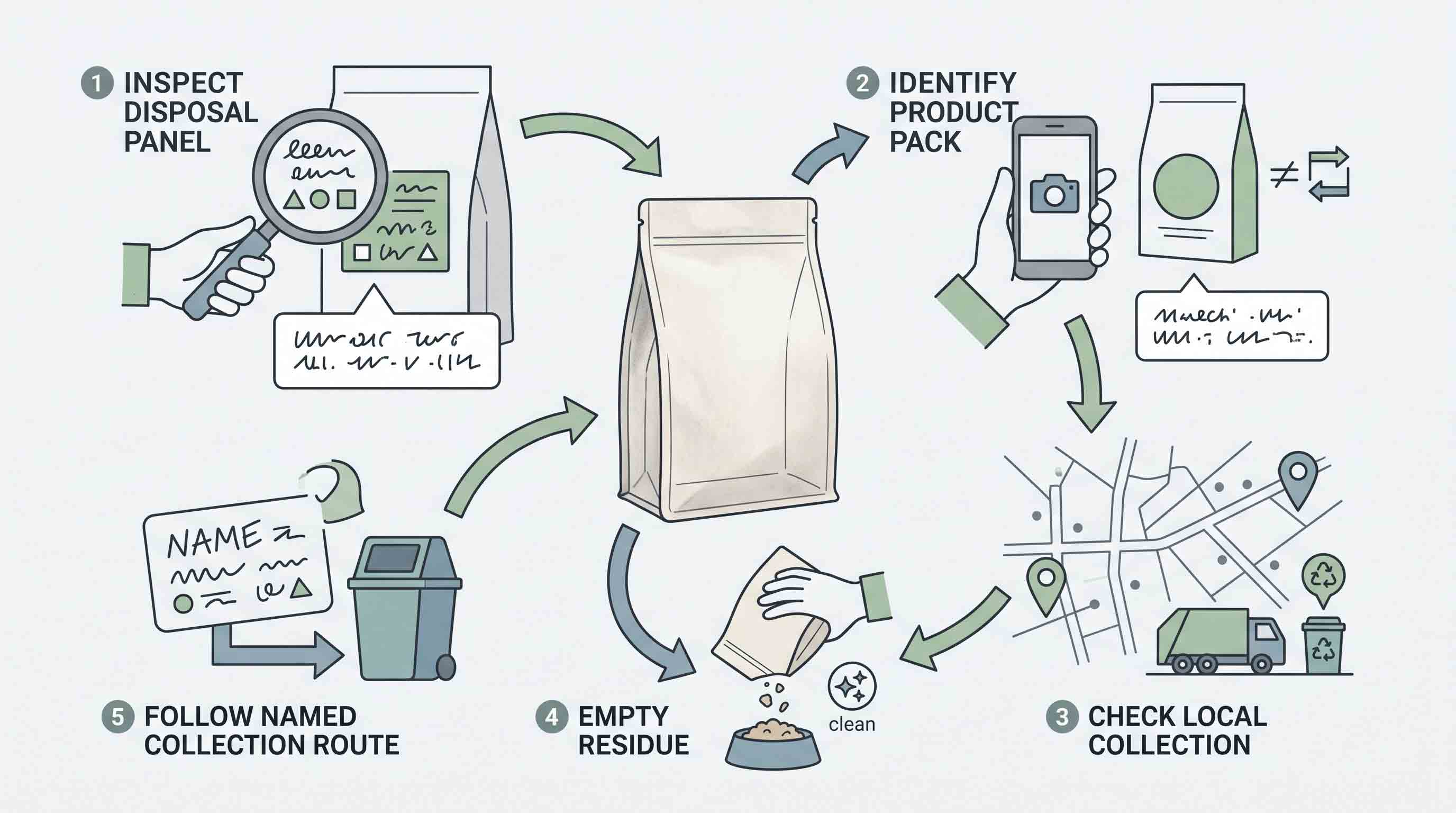
- Read the entire disposal panel. Look for material and collection guidance, not only a recycling symbol.
- Identify the exact product line. A company can use different bags for different sizes, markets, or recipes.
- Check your local programme. Curbside, store drop-off, mail-back, and specialist routes have different accepted materials.
- Follow cleaning guidance. Emptying loose food and dealing with residue as requested by the programme helps prevent contamination. Do not assume washing is appropriate unless the programme says so.
- Keep the claim specific. If the bag is labelled for a particular collection route, use that route; do not rewrite the claim as “recyclable everywhere.”
Direct answer for U.S. households
Do not place a dog-food bag in a household curbside recycling bin unless the local programme specifically accepts that exact type of packaging. EPA’s current guidance says plastic bags, wraps, and films are recyclable in some routes but should not go in the household bin; retail and grocery stores may accept qualifying material. That does not mean every pet-food bag qualifies. The current bag instruction and the local collection programme decide the answer.
If a qualifying store-drop-off programme is identified, follow its instructions exactly. EPA notes that sealable zippers may need to be removed from some plastic-film items. Do not apply that detail automatically to every dog-food bag: first confirm that the bag itself is accepted by that programme, then follow the current instructions for components and residue.
This gives the article a usable answer without inventing a brand list: no automatic curbside recycling; verify the exact bag; then use only the collection route that accepts it.
Source: EPA: How Do I Recycle Common Recyclables?.
What about Blue Buffalo, Hills, Iams, Kirkland, Pedigree, Purina, Royal Canin, and Science Diet bags?
The brand name alone is not a recycling instruction. A given brand can use different packaging across product lines, bag sizes, dates, and markets. This article intentionally does not provide a static brand-by-brand list because such lists age quickly and can send readers to the wrong disposal route. The correct action is to inspect the current pack and verify the programme serving the reader’s location.
That distinction also matters for SEO and customer trust: a useful answer is not “all brand X bags are recyclable.” A useful answer is a repeatable method that helps the reader check a particular bag.
Read the package before you read a brand roundup
Search results often make recycling sound easier than it is. A page may name a brand, a bag colour, or a retailer, then imply that the answer applies everywhere. That is risky because the current bag can change, a brand can use several constructions, and a collection programme can change its accepted-material rules. A list can be useful only when it identifies a dated, specific programme and tells the reader to verify the current pack and their location.
The packaging in a customer’s hand is the primary evidence. It may display a material code, a programme name, an instruction such as store drop-off, or no recycling direction at all. Treat that information as the first branch of the decision. If it refers to a programme, visit the programme’s current guidance. If it does not, check with the local authority or waste provider rather than assuming a curbside bin accepts every flexible material.
Clean-out and collection: follow the named programme
Dog food creates a practical collection issue: loose kibble, crumbs, oils, and damaged packs are common. Do not publish a universal cleaning method. Some programmes may ask for a bag to be empty and dry; another route may have different instructions. The correct action is to follow the current collection guidance and avoid contaminating a stream with food residue or unaccepted materials.
For customers, this is a short task: empty the bag as directed, check the exact programme, and take it to the correct location if one is available. For brands, it is a content responsibility. Marketing copy should direct users to a maintained instruction source rather than relying on a static claim that will age badly.
The consumer answer in one sentence
If a shopper asks, “Can I recycle this dog food bag?”, the most responsible answer is: check the disposal instruction on this exact bag and verify the collection route where you live. The rest of this article explains why that is not evasive; it is the only answer that stays accurate across changing bags and programmes.
What this article does not say
It does not say that a particular brand’s bag is recyclable today, that every multi-layer pouch has no recycling route, or that a bag with a natural-looking surface has a lower environmental impact. Those statements require information about a current, defined pack and market. The article gives readers a durable verification method instead.
The reader who asks whether a dog-food bag is recyclable is normally standing between the product and a disposal decision. They do not need an aspirational sustainability story first. They need to know which bag is being discussed, where it was purchased, what the printed instruction says, and which local route is actually available. Start with those facts.
Brands can be useful without overreaching. Link to a maintained disposal page, explain what the current claim covers, and make it easy for customers to identify the exact product. If a route is unavailable in a particular location, say so clearly. That is not a weakness in the content; it is the difference between information that sounds positive and information that a customer can act on.
For packaging development, retain the same discipline behind the scenes. The intended environmental outcome should be written into the project brief, evaluated against the full pack configuration, and reviewed before public launch. A material direction may be promising, but the brand should only publish the claim it can support for the actual bag and market.
While consumers need clear disposal instructions, brands require a structured approach to validate them. The consumer's practical challenge and the brand's packaging project evidence are two sides of the same issue.
How brands should describe packaging environmental claims
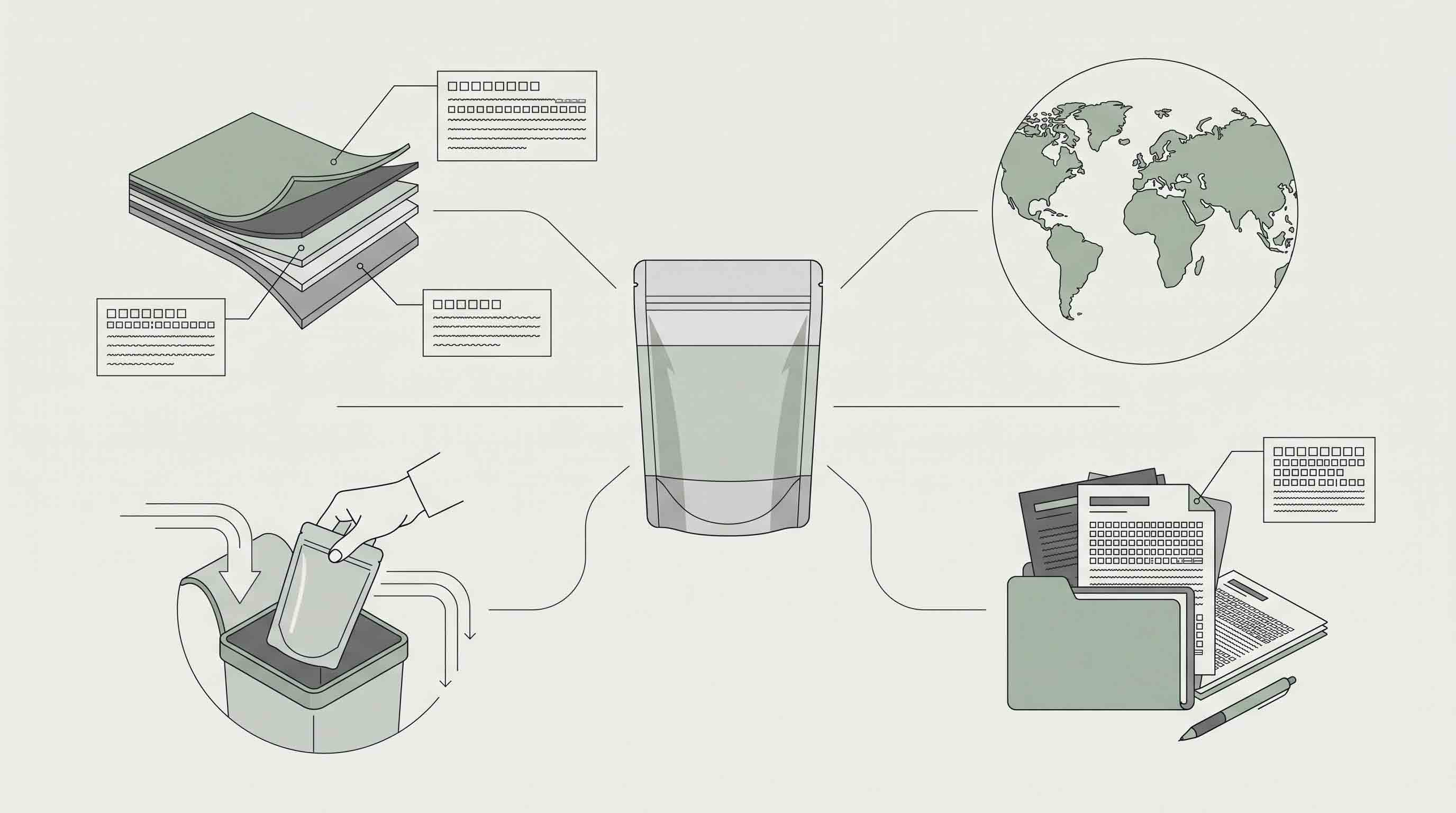
For a dog-food brand, the consumer question points back to a design decision made much earlier. A claim such as recyclable, store-drop-off recyclable, recycled content, or compostable should be tied to a defined material construction, a defined market, and the documentation that supports the statement. It should not be inferred from a kraft-looking surface, a green design, or a single material word in a supplier conversation.
If an environmental direction is part of a new pouch project, build it into the brief from day one. Ask what end-of-life route is intended, which countries or regions are in scope, what claim language is permitted, and whether the pouch includes components such as closures or windows that affect the assessment.
Can a brand say “eco-friendly” instead? That phrase does not tell a shopper what to do with the package. Specific, substantiated information is more useful and easier to review.
Recyclability is different from product protection
There is no honest shortcut that says a bag with an environmental claim will automatically fit every dog-food product. Product characteristics, target storage conditions, and the needed packaging validation still matter. A brand should test the actual product in the selected structure and review the intended claim separately. The right outcome may be a different material direction, a modified pack format, or a more limited claim—depending on the project evidence.
Four terms that should not be collapsed into one claim
A precise claim is more useful to a customer than a broad one. It tells them what they can actually do with the pack. It also gives a brand a statement it can verify and maintain as packaging or programmes change.
Design questions for a dog-food brand with a stated end-of-life goal
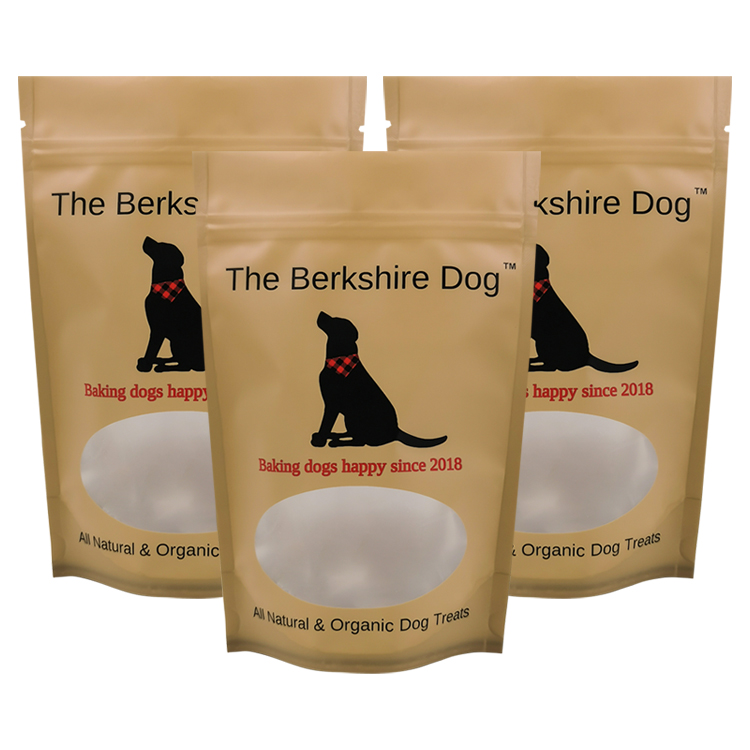
Environmental goals should enter the packaging brief alongside product and sales requirements. Before design starts, document the following:
- The target market. A claim that is suitable in one country may not be useful or permitted in another.
- The intended collection route. Is the goal curbside, store drop-off, a specialist programme, or a claim limited to a defined business-to-business stream?
- The exact pack configuration. Closures, windows, inks, labels, and structural layers may be relevant to the assessment.
- The evidence file. Identify which document supports the wording and who is responsible for keeping it current.
- The consumer instruction. Write a plain-language action that matches the actual route rather than an aspirational message.
This method protects both the shopper and the brand. A customer should not have to guess whether the word “eco” means place this bag in a bin, return it to a store, use a specialist service, or simply dispose of it normally.
Why this matters for B2B packaging buyers
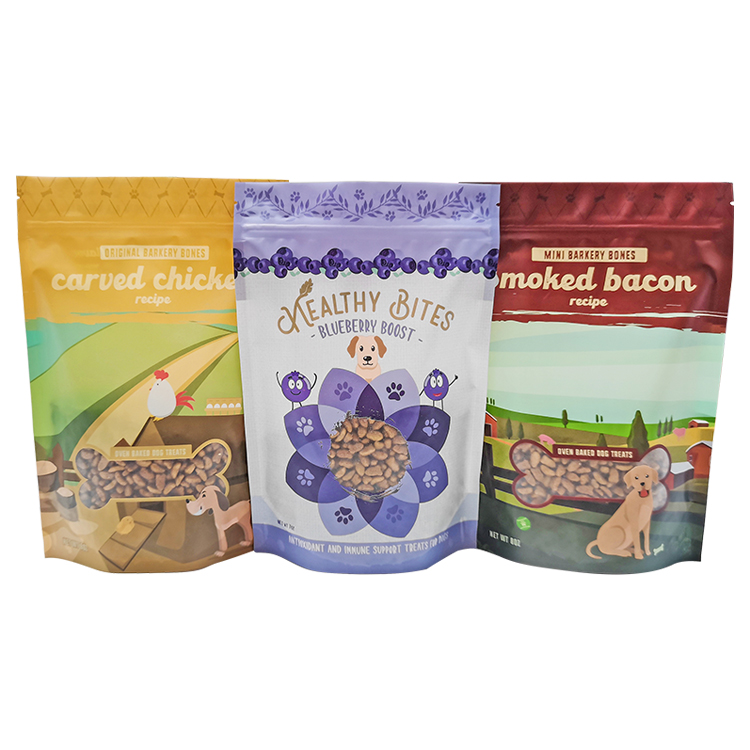
An environmental packaging brief is not a request for a colour or a finish. It is a request with practical consequences for materials, printing, components, marketing copy, and customer instructions. The buyer should therefore tell the supplier what the brand hopes customers can do after use, where the product will be sold, and what evidence is required before a claim appears on the pack.
That level of clarity improves the supplier conversation. It allows the team to distinguish between a material that may be evaluated for a project and a consumer-facing statement that is ready for publication. It also avoids a frequent source of disappointment: choosing a visual “green” direction, then discovering it does not support the intended collection route or claim wording.
For readers who simply want to dispose of an empty bag, the same clarity reduces confusion. Check the current pack, verify the local option, and follow the relevant instruction. The best disposal route is the one that accepts the exact item in the reader’s area, not the one that appears most often in generic search results.
Brands should review this content with the same care they use for other product information. The exact words on the pouch, the website, and customer-service guidance should tell the same story. When they do, readers can act confidently and the brand does not need to rely on broad, untestable sustainability language.
That alignment should be checked before launch and whenever a bag, market, or collection instruction changes. It is a small task with a direct effect on clarity and trust.
It also helps prevent a customer from treating an old online sentence as a disposal instruction for a newer or different pack. Clear scope is more valuable than a long list of names.
That is the standard this article applies throughout.
It keeps the discussion grounded in a real bag, a real location, and a real available route. Readers receive an answer they can use immediately, while brands receive a framework for maintaining accurate packaging communication as products and programmes evolve.
A procurement note for new pouch projects
When asking a supplier about a sustainability direction, put the goal in writing. State the target market, the desired customer action after use, any evidence or certification requirement, and whether the claim needs approval from the brand’s legal or regulatory team. Ask for project-specific documents before finalising public copy. Do not write the marketing claim first and then search for a structure that might support it.
The same disciplined order applies to windows, zippers, labels, and inks: each may be part of a design decision, but none should be silently assumed to have no impact on the finished claim.
A content checklist for brand teams
Recycling content should be maintained like any other product information. A good internal checklist prevents a marketing page, a bag, and a customer-service answer from drifting apart.
This makes the claim more durable. It also makes a future change easier: the brand can update one defined instruction rather than untangle a broad statement repeated across product pages, advertisements, and social posts.
A decision path for a customer-service team
Customer-service teams should not be left to improvise a recycling answer. Give them a short internal path: first ask for the product name, size, market, and current bag information; next check the approved instruction for that exact configuration; then direct the customer to the named programme or local authority if the route is location-specific. If the bag cannot be identified, avoid guessing from a photograph or a brand name alone.
This protects customers from well-meant but incorrect advice. It also gives the brand useful feedback: repeated questions about a bag may signal that the on-pack instruction is unclear, too small, or not easy to find.
What a packaging supplier can and cannot confirm
A packaging supplier can discuss a proposed pouch construction, visible features, sample process, and documents it has been authorised to share. It cannot decide whether every household has access to a collection route, whether a retailer still accepts a material, or whether a consumer will dispose of the pack correctly. Those questions belong to the relevant programme, municipality, and brand communication.
That division of responsibility is useful in a custom project. The brand should state its target market and intended claim; the packaging team can identify the project data that needs to be checked. Nobody should fill a gap in the evidence with an absolute phrase such as “100% recyclable everywhere.”
Keep the page current
Revisit recycling instructions whenever the bag construction, claim wording, collection partner, or target market changes. A dated review note helps the team know that the statement was checked against the current configuration instead of copied forward indefinitely. This is particularly important for brand-specific searches, where a reader may be holding a different bag from the one that an older article discussed.
For readers, the practical takeaway remains simple: a recycling decision belongs to the exact pack, its current instructions, and the local route available today.
Before sharing a recycling tip
Check its date, target country, product scope, and source. A tip that lacks those details may be a useful conversation starter, but it is not dependable disposal guidance for a current bag.
If the answer is uncertain, it is better to say so and send the reader to the appropriate programme than to give an attractive but unreliable yes-or-no answer.
That method earns more trust than a permanent list of claims a brand cannot maintain.
It is the practical standard for this category.
Related project note
Exploring custom dog food and treat packaging options presents recyclable and compostable directions as possible project options. In a blog article, they must still be described conditionally: a configuration may be evaluated against the product, market, and available evidence. The page itself should receive the commercial internal link because it is where a brand can begin a project discussion; the article remains an information page, not a guarantee that any current dog-food bag has a specific end-of-life route.
Recommended packaging configuration
For a new dog-food or dog-treat project with an environmental objective, ask to evaluate a pouch structure against the real product, target market, intended collection route, and required evidence before using any public claim. Mylarbag can discuss available pouch directions through its dog treat packaging page; the final claim must remain configuration- and market-specific.
FAQ
Can I put a dog food bag in my curbside bin?
Only if the specific bag and your local programme say it is accepted. A recycling symbol or plastic feel alone is not enough.
Why are pet-food bags made from more than one material?
Packaging may be designed around product protection, print, strength, and consumer use. The visible outer surface does not identify every layer or determine local recycling acceptance.
What should a brand place on a recyclable dog-food pack?
Use only claim language supported for the exact pack and market, and give the consumer a clear, current instruction that matches the available collection route.
Can you recycle dog food bags at the store?
Sometimes, but only where the exact bag and the store’s programme are accepted. Check the current instructions on the bag and the store/programme guidance before taking it there.
Are dry dog food bags recyclable?
Not automatically. Dry dog-food bags use different constructions, and acceptance varies by programme and location.
Can dog treat bags be recycled?
Use the same process: check the specific pack’s instructions, confirm the local programme, and do not assume a dog-treat pouch follows the same route as another package.
CTA: Developing a dog-food pack with a defined end-of-life goal? Discuss the product, target market, and claim requirements with Mylarbag.