
Some peanut bags can be recycled, but the answer depends on the exact package. Look for package-specific disposal instructions, identify the complete pouch construction and attached features, empty and dry the bag, then verify a local collection route for that format. A brown paper look, shiny interior or resin number cannot settle the question. In the U.S., flexible film generally does not belong in an ordinary household recycling bin.
This guide addresses dry peanuts and dry nut snacks sold in flexible retail packaging, with U.S. collection guidance as its starting point. A paper box, a rigid jar and the flexible inner pouch are different items and can receive different instructions. Local programs and on-pack labels can change, so use the directions for your specific package and location before discarding it. For brands choosing a new bag, the same checks belong in the specification and artwork approval process, not in a generic promise that every “eco” pouch will be recycled.
Why “peanut bag” is too broad to be a recycling category
Peanuts can be sold in a plain plastic film bag, a printed stand-up pouch, a paper-faced laminate, a metallized-looking snack wrapper, a pouch inside a cardboard box or a rigid container. Two bags in the same aisle may have similar graphics and entirely different layers. Even two sizes from one brand can have different windows, zippers or film suppliers. The package is the unit you must assess.
Begin by separating product identity from material identity. “Dry roasted peanuts” tells you what was packed; it says little about whether the empty bag is PE film, paper bonded to other films or a combination with a metallic barrier. A recycling triangle or number may identify a resin in one component. The U.S. EPA explains that a resin symbol does not mean a community collects that package. The package-specific disposal label, when present, is a much better starting point.
Here is a useful first-sort table. Its middle column is a question to investigate, not a recycling verdict based on appearance.
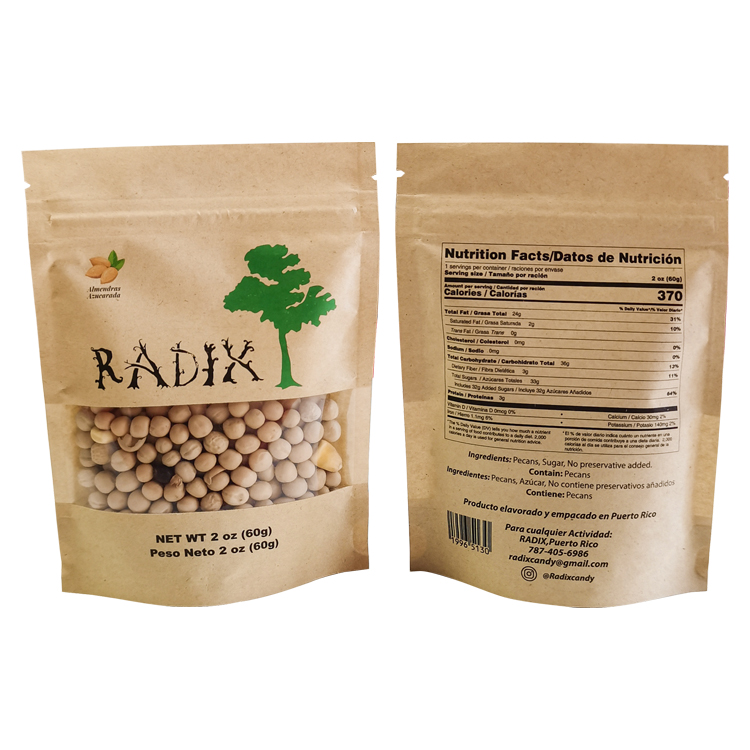
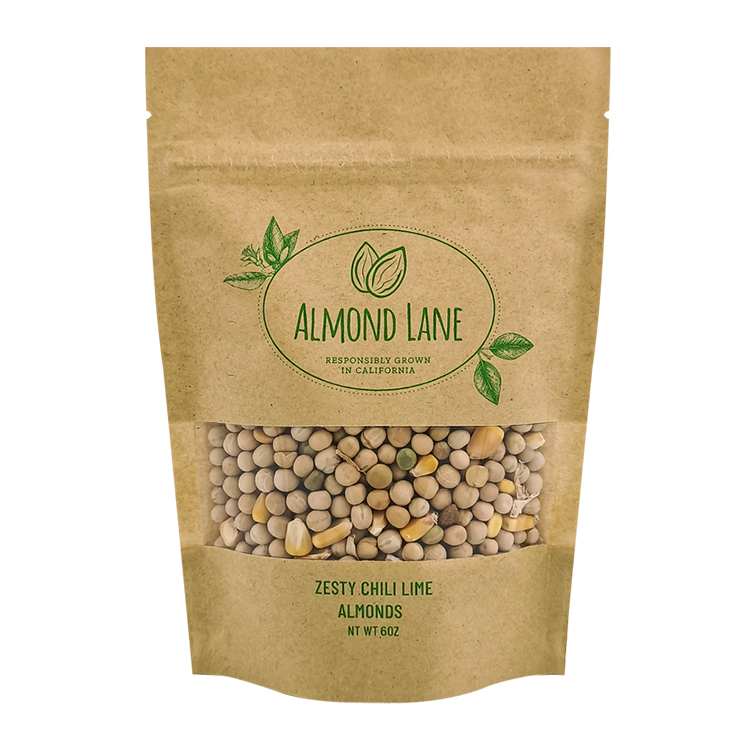
One real example illustrates the problem. A published U.S. nuts-and-seeds stand-up pouch lists a kraft paper/PET/PE construction and shows a horizontal clear window. The photograph looks like a brown paper bag; the listed construction has more than paper. Neither that listing nor the photograph supplies a package-specific recycling designation or a local collection decision.
Read the package's actual disposal instructions first
If the peanut bag carries a clear How2Recycle or comparable package-specific instruction for your country, read all of it. A designation may apply to the pouch, the separate paper carton, an insert or another component. “Store Drop-off” is not the same instruction as “Widely Recyclable”; “Check Locally” is not permission to put a pouch in the curbside cart without checking. A “Not Yet Recyclable” or “Do Not Recycle” designation means that package belongs in the disposal route specified by the label, rather than being wishfully placed in a recycling stream.
How2Recycle states that its labels are assigned for individual packages after review. If your bag has no such label, its absence does not prove it is unrecyclable. It means a consumer needs the manufacturer's package-specific information and local program rules; How2Recycle itself says it cannot designate an unlabeled package without the full specifications. Conversely, a label on a different bag from the same brand does not automatically apply to yours.
The How2Recycle label explorer shows how its categories differ and how separate components may be labeled. Use it to understand a designation that is actually on the pack, not to self-assign a logo or recycling claim to an unreviewed pouch.
Look past paper texture and a foil-looking lining
A flexible pouch is commonly built to solve several tasks at once: print, stiffness or shelf appearance on the outside; resistance to the product and environment; and a sealable inside. A clear window may use a different region of a film or construction from an opaque panel. The visual description “foil inside” is particularly weak: metallic appearance does not tell you whether a layer is aluminum foil, metallized polymer or a decorative surface. It also does not tell you what the other layers are.
For recycling, the question is the finished pouch, including adhesives, coatings, prints, windows, closures and any other components that remain attached. Some combinations of unlike materials cannot be handled by the collection route that takes simple PE film. That is a reason to request a package assessment, not a reason to declare every multilayer pouch impossible to recycle everywhere. Specialized collection programs may differ, and the rules for an aluminum can or a loose sheet of foil do not transfer to foil bonded inside a snack bag.
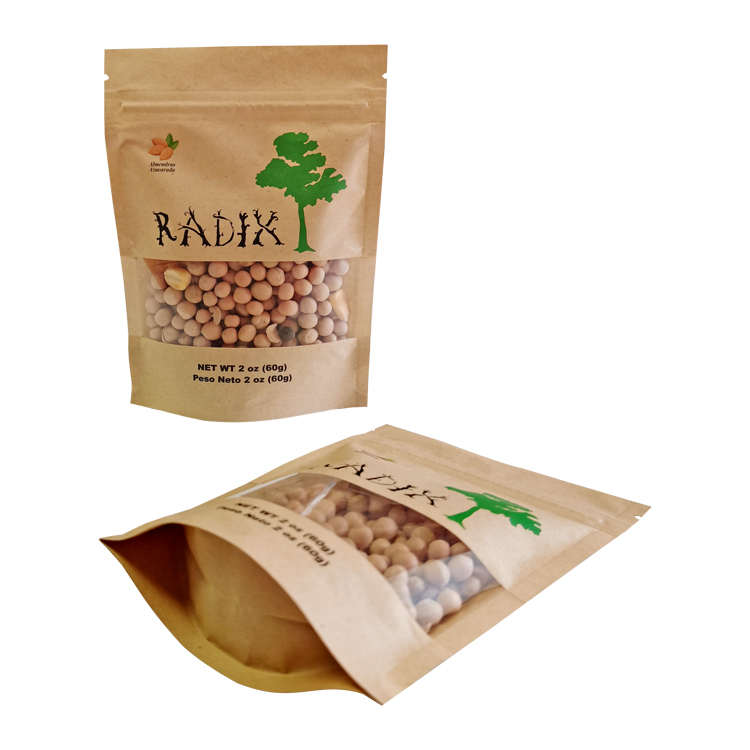
A second published candied-nut pouch project lists kraft paper/PET/CPP, digital printing and a stand-up format. The front photograph shows the window and brown face; an angled photograph shows that it is a converted pouch. Those are useful facts for a buyer asking for the complete layer specification. They are not evidence that the pouch can enter a paper mill, a PE film drop-off bin or any particular municipal stream.
If a seller describes a different candidate as “mono-material PE,” request the actual film specification and finished-bag component list. A predominantly PE design may be intended for an eligible film route, but “mono” on a quote does not settle the effect of a bonded paper face, non-PE zipper, window construction, large label or barrier treatment. A supplier should be able to distinguish the proposed production specification from a general photograph of another project.
A five-check decision for an empty peanut pouch
Use the same sequence for a bag found in a kitchen and for a proposed new SKU. The consumer can answer some questions from the package; the brand must hold the missing technical records.
- Identify the exact component. Is this the primary pouch, a removable sleeve, a cardboard box or a separate insert? Do not transfer a box instruction to the pouch.
- Read the package-specific instruction. Check the destination country and whether the label names the whole bag or only one part. If you see “Check Locally,” do that check rather than guessing.
- Check the complete construction when needed. Look for an actual specification or ask the brand. Include the window, zipper, sealable layer and attached labels. Do not diagnose the bag by tearing a corner open and examining its color.
- Prepare it as the collector requires. Remove nuts and loose crumbs; make sure the bag is clean and dry enough for the relevant route. If oil or coating remains and the collector rejects soiled film, do not add it to the bin.
- Confirm an accepting local route. Ask the municipal program or participating store whether it takes that specific flexible package. If no route can be confirmed, follow local disposal guidance; do not place an uncertain pouch in curbside recycling “just in case.”
The fifth check matters most for a consumer. The EPA's general recycling guidance says plastic bags, wraps and films should not go in the ordinary U.S. household recycling bin and advises checking local retailers or other collectors. That statement describes a possible route for eligible film. It does not make every peanut pouch eligible for that route. A store with a film bin may refuse foil laminates, food-soiled packs or specific formats; verify the participating location and its current rules.
When does U.S. store drop-off apply?
How2Recycle's U.S. Store Drop-off guidance describes a route for qualifying flexible polyethylene-based packaging with the appropriate package label. It explicitly cautions that not all plastic film qualifies and that a list of common applications does not make every example in each category acceptable. Packages that contacted food should be clean and dry before drop-off. This is a U.S. program description, not a worldwide rule or a recycling designation for a particular Mylarbag product.
For an unlabeled PE-looking peanut bag, contacting the brand and collector is better than assuming. The brand can identify the film and attached parts; the collection operator can say whether that exact construction is accepted. If either answer is missing, the bag is unverified for that stream. This is especially important for a shiny, bonded snack pouch: it might contain PE somewhere without being an eligible PE film package as a whole.
The distinction between collection channels is worth making explicitly:
Country matters as well. How2Recycle publishes different U.S. and Canadian instructions for some formats, and an individual Canadian municipal program may accept items a U.S. curbside program will not. If you sell in more than one market, review artwork and disposal instructions by market. A U.S. store-drop-off statement should not be carried onto a Canada-facing or European bag without a separate assessment.
The window, zipper and printing are part of the bag
The base film is only one line on a purchasing sheet. A clear window, zipper track, tear-off strip, spout, large adhesive label or opaque ink coverage can affect sorting or processing. Which detail matters and how much depends on the actual collection stream and package assessment. There is no reliable rule that says every transparent window is good or every zipper is bad. Ask the assessor or recycler to evaluate the bag as sold and emptied.
The published Philippines raw-nut pouch family shows several differently printed SKUs and shaped clear windows. The product page lists an abbreviated mixed-material string, but it does not document a finished-package recyclability result. The photograph is useful for spotting the features to ask about: each window's construction, pouch film, zipper and print treatment. It is not a recycling label.
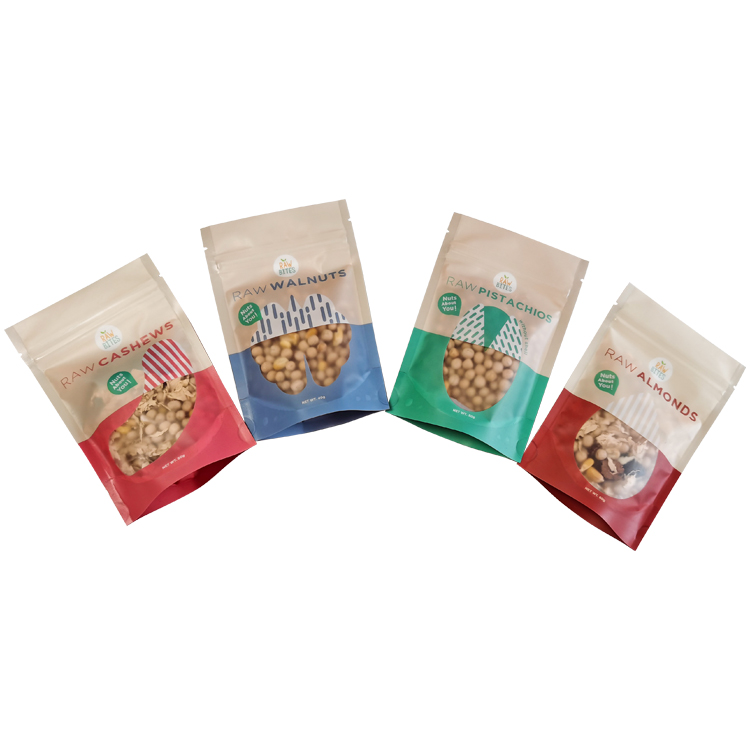
For a buyer, the right question is not “Do you use recyclable film?” but “Which finished SKU and revision has been assessed, including its zipper, window, inks and labels, for which country and collection stream?” If the answer is a resin code on a loose material roll, it does not yet answer the consumer's disposal question. This is one place where the material article and the recycling article separate: knowing what layers are present starts the investigation; knowing the designated route finishes it.
Empty, clean and dry are real conditions for nut packs
Nuts leave fragments, salt, flavoring dust and sometimes oil. A bag that looks empty may still have visible food lodged near the bottom gusset or zipper. Check the on-pack preparation instruction and the accepting collector's current condition rules. Tipping out the last nuts and shaking out loose pieces is often enough to make the problem visible. Do not tell consumers to rinse a laminate or peel apart its layers unless the actual program specifically instructs it; washing cannot turn an incompatible material combination into eligible PE film.
“Clean and dry” is a condition for an eligible stream, not a recipe that makes an ineligible pouch recyclable. How2Recycle's Store Drop-off page explicitly applies it to food-contact film. The EPA likewise stresses keeping food and liquids out of recycling. If substantial oily residue remains and the route requires clean film, keep that bag out of that collection stream. Follow the collector's disposal guidance instead of contaminating other material.
If a peanut brand is choosing a new pack, include ordinary consumer emptying in the design review. A deep gusset, a narrow mouth or a complicated tear strip may affect how easily someone can remove leftover nuts. That is a practical use test; it does not by itself establish recyclability. Photograph a normally emptied sample and ask the assessor or collector whether the expected residue and features change its designation.
What a brand should request before printing a recycling claim
The most useful supplier response is a component-level record for the exact finished pack, followed by a market-specific assessment. Ask for the full material names and layer arrangement, not just “kraft,” “mylar,” “high barrier” or “eco film.” Ask which features are bonded and which components can be separated without pretending a consumer will dismantle the laminate. Then review collection access and the exact wording intended for that destination market.
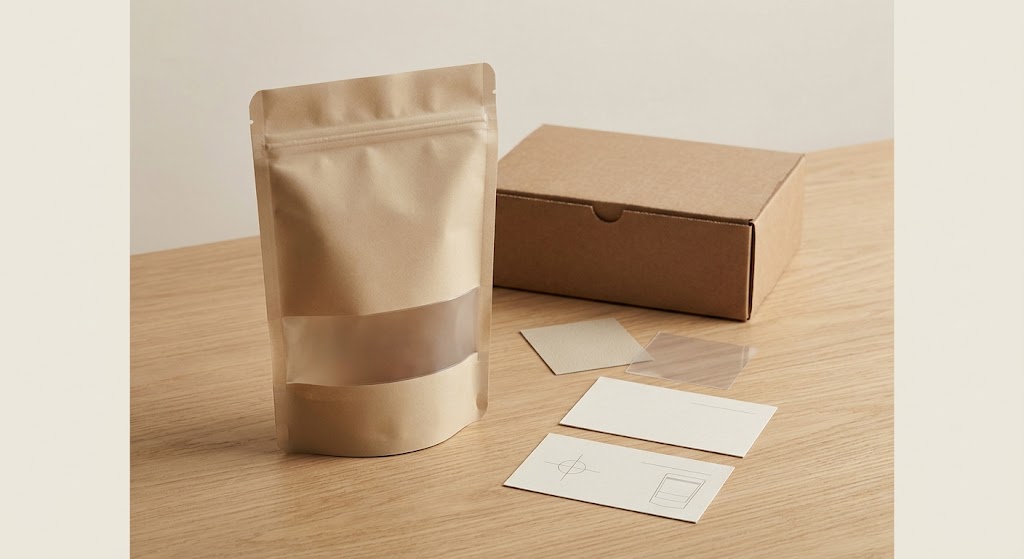
A printed recycling instruction can become stale if the bag changes. A substitute inner sealant, another window film or a new zipper supplier may look identical on a retail shelf while changing the assessed construction. Put a hold point into the revision process: any material or feature change that affects the finished package goes back to the assessor and artwork owner before the next run. Keep the approval record with the SKU, material revision and destination market so customer service can answer a specific consumer question rather than sending a generic “all our bags are green” reply.
Use environmental language that the evidence actually supports
For U.S. claims, the FTC's Green Guides summary says recyclable claims should be qualified when appropriate facilities are unavailable to at least 60% of the consumers or communities where the item is sold. Limited access calls for clearer qualification. This is a marketing-claim framework, not permission to print “100% recyclable” merely because a film can technically be reprocessed somewhere. Other applicable state, country and retailer rules still require separate review.
Avoid copying a sustainability statement from a related product page onto a new peanut pouch. A paper-looking outer face does not establish paper recycling; a PE sealant in a paper/PET/PE laminate does not make the whole bag eligible for PE film drop-off; a recycled-content claim is different from a recyclable-package claim; and compostable material must not be put into a plastic recycling stream. The EPA's plastic guidance explicitly warns against mixing compostable plastics into conventional plastic recycling.
If the finished pouch has been assessed, write consumer instructions at the level of that result: identify the relevant component, the market, the preparation step and the collection route. If the assessment is pending, leave a draft placeholder in the internal artwork review, not an unsupported symbol on the consumer-facing proof. A clearer, narrower instruction is more useful than a prominent claim that cannot tell a peanut buyer what bin to use.
Recommended packaging configuration: compare two real briefs
A brand planning roasted-peanut retail packs can ask the supplier to price and sample two distinct specifications: its current construction and a proposed PE-family film design for package-specific assessment. If a window or zipper is needed, include it in both finished sample briefs. State the target fill, roast or seasoning, expected distribution and markets, and the intended consumer disposal route. A candidate described as PE-family is only a starting design direction; it is not an automatic How2Recycle designation.
Evaluate the samples against the product separately from the recycling claim: filled shape, seal quality, nut-dust or oil contamination, graphics, window visibility and the barrier evidence needed for that actual product and storage plan. Ask what changed between constructions. A switch that improves one end-of-life possibility but fails the filled-package requirements is not a ready-to-order substitute. Likewise, a good food-pack result does not establish collection access.
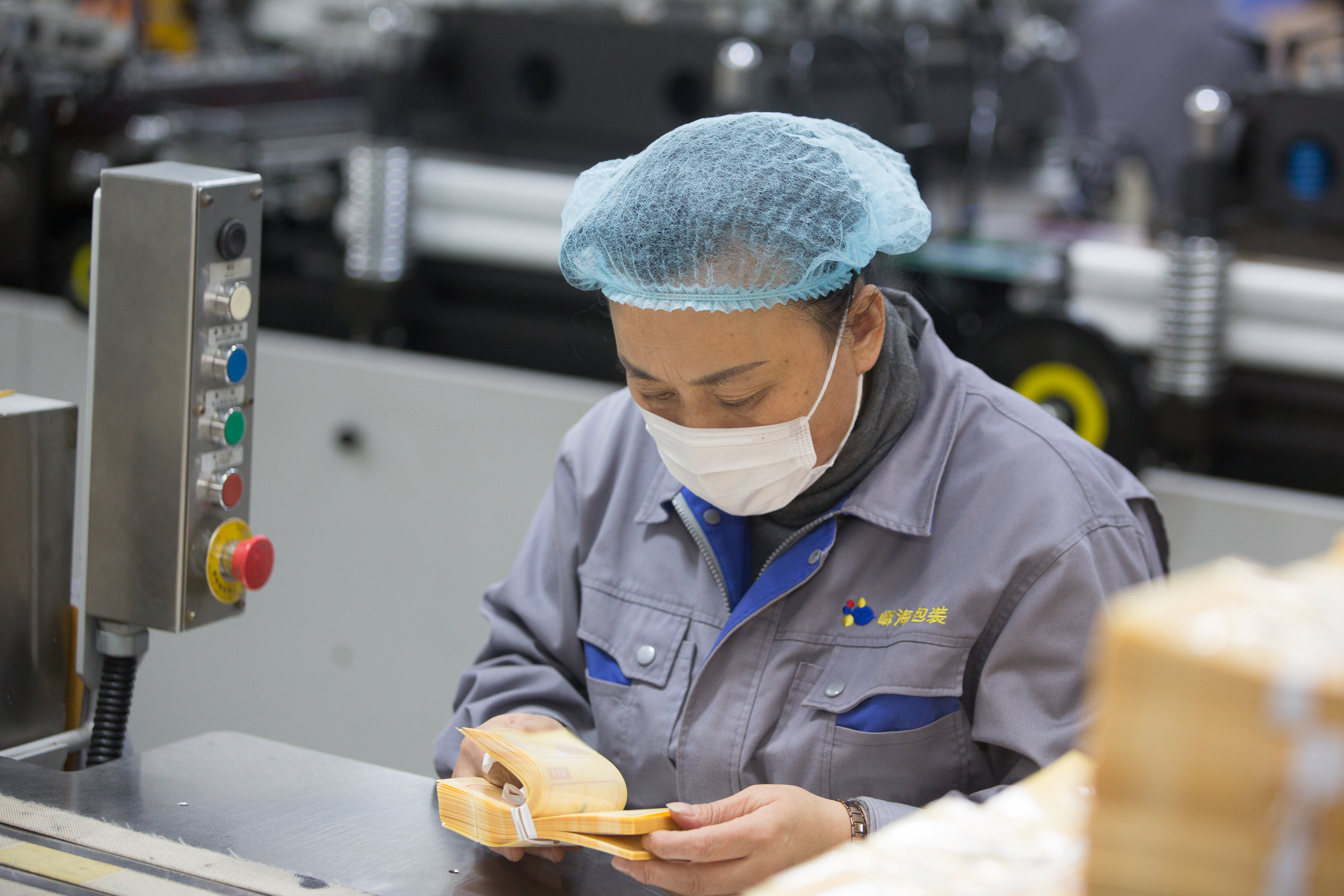
The nuts packaging collection is a useful place to discuss pouch formats and request project-specific options. When comparing quotes, ask for the proposed full structure and available review documents instead of treating the site's broad sustainability copy as certification for a pictured customer pouch. The following photograph shows a real worker handling packaging samples; it is manufacturing context, not a recycler test or evidence that the nut projects passed an environmental assessment.
What to put in the first packaging inquiry
Send the peanut product type and a physical sample, intended net weight and fill method, expected storage and shipping conditions, market or markets, required window and zipper, artwork status and the current pouch's construction if known. Ask for the proposed material revision, separate performance evidence, package-specific recyclability assessment path, consumer preparation wording and sample quantities for testing. These are concrete questions a supplier can answer or flag for further verification. Do not ask for a blanket shelf-life guarantee or an unsupported “recyclable everywhere” logo.
Frequently asked questions
1. Are shiny peanut bags recyclable?
The shine does not answer it. It can come from different materials or finishes, and the remaining layers and attached features matter too. Look for an instruction on that exact package and ask the brand for its full construction if none is present. A foil-looking snack bag should not be put in a U.S. store film bin merely because it feels like plastic. Check the accepting program; if there is no confirmed route, follow local disposal instructions.
2. Can a brown paper peanut pouch go in paper recycling?
Only if the finished pouch and local paper program support that route. A brown face may be a paper layer bonded to plastic films; the published nut examples above list kraft paper/PET/PE and kraft paper/PET/CPP. Those structures should not be treated as ordinary loose paper simply from a photograph. A separate, empty cardboard carton may have its own recyclable route, independent of the inner pouch.
3. Does a PE zipper make the whole nut pouch recyclable?
No. It can be a compatible design choice for a particular PE-based structure, but the rest of the bag, attachments, residue and available route still have to be evaluated. A PE zipper attached to a paper/PET laminate does not change the entire laminate into PE film. Check the finished-pack assessment and its actual consumer instruction.
4. Can I put an empty peanut bag in curbside recycling?
Do not assume so in the U.S. The EPA says plastic bags, wraps and films generally should stay out of household recycling bins and points people to stores or other local collectors for eligible material. Your city may publish its own rules; follow them for the exact package. A store drop-off label points to a separate participating collection route, not an ordinary curbside bin.
5. What if the peanut pouch is greasy or full of crumbs?
Remove the contents and check the collector's clean-and-dry requirement. Shake out loose fragments and inspect the folds and zipper. If the remaining oil or food cannot be removed to the standard the collector requires, do not put that pouch in its film bin. Cleaning a bag cannot override a material or construction that the program rejects.
6. Does a recycling symbol or “mono-material” on a supplier quote guarantee acceptance?
No. A symbol may identify one resin without describing the entire package or local collection. “Mono-material” may describe a design intention or a base film; the final pouch still includes its zipper, window, coating, printing and labels. Ask for the final revision's package-specific assessment, country-specific instructions and actual collection route before approving a consumer-facing claim.
The useful answer is package-specific
The safest recycling advice names the exact peanut pouch and the collection path available to the buyer. Start with its label, then the full construction, preparation instructions and local acceptance. For a new design, make the supplier's technical review and the brand's artwork approval meet at the finished filled bag. If you are comparing a current pouch with a proposed alternative, bring both specifications and product samples to a nuts packaging inquiry; ask for evidence you can review before any environmental claim goes on the print file.