
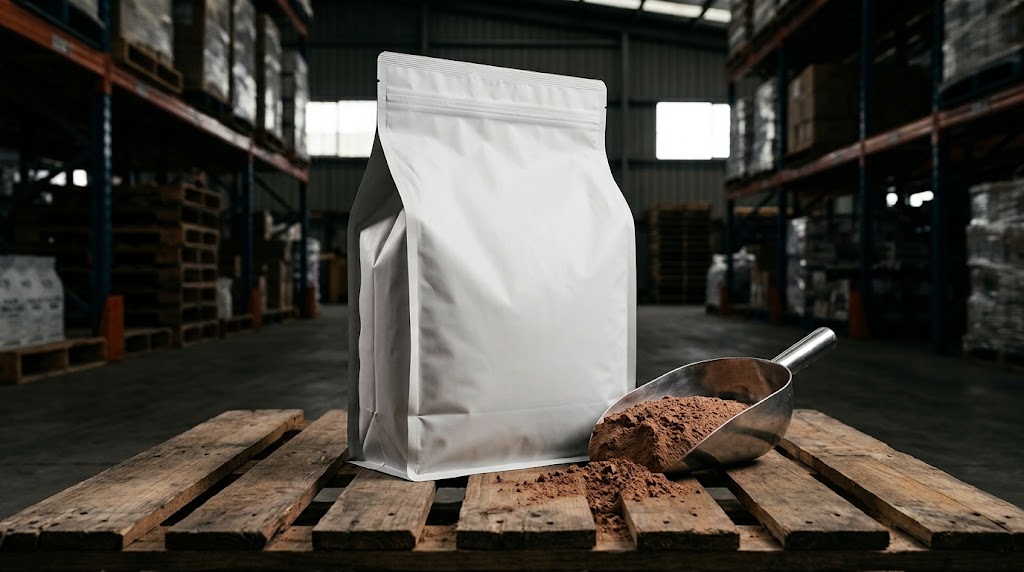
For supplement brands scaling their product lines, moving from a standard 1lb (450g) pouch to bulk 2kg, 3kg, or even 5kg large protein powder bags is a major milestone. It signals that your customers are buying in bulk, your brand loyalty is strong, and your production volume is increasing. However, from a packaging engineering standpoint, scaling up is not simply a matter of making the bag larger.
Packaging 5kg of ultra-fine whey isolate or heavy mass gainer introduces complex physical challenges. The internal burst pressure during transport multiplies. The center of gravity shifts entirely. A standard stand-up pouch that perfectly held 1lb of powder will become a top-heavy, unstable, bursting hazard when loaded with 5kg of product.
For B2B buyers, contract manufacturers, and procurement directors, choosing the wrong bag structure for heavy powders leads to catastrophic consequences: pallets arriving with ruptured bags, retailers complaining about pouches tipping over on shelves, and massive profit losses due to unsellable, compromised powder.
In this ultimate 3000-word B2B guide, we will dissect the engineering behind large-capacity protein powder packaging bags. We will compare the two reigning champions of heavy-duty flexible packaging—the Side Gusset Bag and the Flat Bottom (Box) Pouch—analyze real-world case studies, and take you inside the Mylarbag.net laboratory to show you exactly how we test for extreme load-bearing strength.
1. The Hidden Risks of Scaling Up Protein Powder Packaging
When a brand decides to launch a "Family Size" or "Bulk Gainer" SKU, the first instinct is often to request a quotation for a larger version of their current stand-up pouch (SUP). This is a critical mistake.
The Problem with Standard Stand-Up Pouches for Bulk Weights
A traditional stand-up pouch features a single bottom gusset. When filled with 500g of powder, the bottom gusset expands outward, creating an oval-shaped base that easily supports the light vertical weight.
However, when you fill that exact same structural design with 3kg or 5kg of powder, physics takes over:
- The Top-Heavy Effect: The bag becomes tall and bloated. Because the oval base is relatively narrow compared to the massive volume of powder above it, the center of gravity is raised significantly. The bag becomes extremely susceptible to tipping over forward or backward.
- The "Belly" Expansion: Heavy powders exert outward pressure. A standard SUP will bulge aggressively at the center (the belly), warping your beautiful brand artwork and making it impossible to pack the bags efficiently into square shipping cartons.
- Gusset Stress: The entire 5kg vertical load rests squarely on the two delicate corner seals where the bottom gusset meets the side panels. During transit vibrations, these corners are highly prone to pinhole leaks and blowouts.
To safely package anything over 1.5kg, brands must graduate to structurally reinforced pouch types: The Side Gusset Bag and the Flat Bottom Pouch.
2. The Physics of Heavy Powders: Center of Gravity and Burst Pressure
Before choosing between a side gusset and a flat bottom bag, it is vital to understand what happens inside the bag once it leaves the filling machine.
Internal Burst Pressure
Protein powder, particularly whey isolate and casein, has a very high bulk density. When packed into cartons, stacked on pallets, and shipped across the ocean, the bags at the bottom of the pallet bear the weight of everything above them. This compression forces the air and powder inside the bag to violently seek an exit. If the structural integrity of the pouch (the tensile strength of the film and the sheer strength of the heat seals) is weaker than the internal pressure, the bag will rupture.
Shifted Center of Gravity
Retailers hate products that will not stand up straight. A bag that slumps over or leans backward looks cheap and damages the visual merchandising of the supplement aisle. The stability of a bag is dictated entirely by its footprint (the surface area of the base touching the shelf) in relation to its height. A larger, flatter, and more rigid footprint lowers the center of gravity, locking the bag into a perfectly vertical presentation.
3. Structural Breakdown 1: The Side Gusset Pouch (The Workhorse)
The side gusset bag (often referred to as a quad-seal bag if all four corners are sealed) is the traditional heavyweight champion of the flexible packaging industry. It is most commonly seen in the 1kg to 5kg coffee wholesale market and the pet food industry, but it is highly prevalent in sports nutrition for bulk gainers.
How It Works
Unlike a stand-up pouch that has a gusset at the bottom, a side gusset bag features deep folds (gussets) running up both the left and right sides of the bag. When filled, these side panels expand outward, turning the bag from a flat sleeve into a rectangular brick.
Pros of Side Gusset Pouches for Large Protein
- Maximum Volume Efficiency: Side gusset bags expand perfectly into rectangular shapes, allowing you to maximize internal volume without making the bag overly tall.
- Superior Shipping Density: Because they form a brick-like shape, side gusset bags stack flawlessly inside square corrugated shipping cartons. You are not shipping "dead air," which drastically reduces freight costs.
- Cost-Effective Bulk Solution: Generally, the manufacturing process for side gusset bags is slightly faster and utilizes slightly less material than an 8-side seal flat bottom bag, making it a very cost-effective option for 5kg economy sizes.
Cons of Side Gusset Pouches
- Zipper Integration is Difficult: Adding a standard press-to-close zipper to a side gusset bag is complex and often clumsy for the end-user, as the side gussets interfere with the zipper track. Brands usually have to settle for a tin-tie (which is not airtight) or leave it unsealed for the consumer to roll up.
- Less Shelf Stability than Flat Bottom: While more stable than a stand-up pouch, the bottom of a side gusset bag is still formed by folding and sealing, meaning the footprint is not perfectly flat. It relies on the weight of the powder to flatten the bottom.
4. Structural Breakdown 2: The Flat Bottom (Box) Pouch (The Premium Standard)
The Flat Bottom Pouch (also known as a Box Pouch or 8-Side Seal Bag) is the absolute pinnacle of premium large-capacity packaging. It combines the volumetric efficiency of a side gusset bag with the perfect stability of a rigid cardboard box.
How It Works
The flat bottom bag is manufactured using three separate webs of film (one for the front/back/sides, and a completely separate, heavily reinforced piece of film just for the bottom plate). This creates an astonishing 8 separate heat-sealed edges (hence, 8-side seal).
Pros of Flat Bottom Pouches for Large Protein
- Unrivaled Shelf Stability: The perfectly flat, reinforced bottom acts exactly like the base of a box. Even when holding 5kg of powder, the bag sits flawlessly upright on retail shelves, ensuring your branding is perfectly visible.
- Five Panels of Uninterrupted Branding: You get a dedicated front panel, back panel, two side panels, and the bottom panel. None of the artwork is distorted by folds or "bellies."
- Perfect Zipper Compatibility: Because the top of the bag operates independently of the side gussets, we can easily integrate wide-mouth powder-proof zippers, Velcro-style zippers, or pocket zippers across the entire top opening.
Cons of Flat Bottom Pouches
- Slightly Higher Manufacturing Cost: Creating an 8-side seal requires complex, highly calibrated pouch-making machines and more raw material, making the unit cost higher than a standard side gusset. However, for premium supplements, the ROI on perceived value far outweighs the cost difference.
5. Deep Dive Case Study: Transitioning to 8-Side Seal for Collagen Stick Packs in the Philippines
To illustrate the dramatic impact of upgrading your bag structure, let's examine a recent B2B project from our Mylarbag.net case library (Case #104).
The Client: A rapidly growing health and wellness brand in the Philippines specializing in premium marine collagen powder and secondary packaging for collagen stick packs. The Challenge: The client originally launched their 1.5kg bulk collagen powder in a standard stand-up pouch. As they expanded to retail pharmacies, they faced severe backlash. The heavy, dense collagen powder caused the standard pouches to slump over on the shelves. Worse, the humid Philippine climate required an aggressive moisture barrier, and the bottom corners of their stand-up pouches were developing microscopic pinholes during local truck transport, leading to powder clumping and spoilage. The Solution: We collaborated with their procurement team to completely overhaul their structure to a Custom Matte Flat Bottom Pouch with 8-Side Seal.
Engineering the Upgrade:
- Structural Shift: By upgrading to the 8-side seal Flat Bottom structure, the 1.5kg weight was distributed evenly across a perfectly flat, reinforced rectangular base. The bags instantly stood at military attention on the pharmacy shelves, completely solving the visual merchandising issue.
- Material Optimization (MATOPP/PET/PE): We layered a Matte OPP outer film (for a luxurious, non-reflective premium feel) over a highly robust PET core and a heavy-duty food-grade PE sealing layer. This structure provided immense tensile strength, ensuring the 8 sealed edges could withstand massive burst pressure during transit.
- Wide-Mouth Access: We integrated a premium top zipper. Because the flat bottom structure keeps the bag rigid, consumers could easily reach a large scoop into the bag without getting their knuckles coated in fine collagen powder.
The Result: The brand successfully eliminated 100% of their packaging-related return requests. The rigid, box-like feel of the flat bottom pouch instantly elevated their perceived brand value, allowing them to confidently maintain a premium retail price point in a highly competitive market.
6. Factory Quality Control: How We Ensure 5kg Bags Survive Global Shipping
At Mylarbag.net, we do not rely on guesswork when engineering large-capacity protein bags. Producing an 8-side seal pouch that holds 5kg requires microscopic precision during the heat-sealing process. If the sealing temperature is too low, the 8 edges will split under pressure. If it is too high, the polymer structure degrades and becomes brittle.
To guarantee that your bulk protein bags survive trans-pacific ocean freight and rough warehouse handling, we subject every production batch to brutal, scientific laboratory testing.
Tensile Strength & Seal Peel Testing
The most vulnerable parts of a large capacity bag are the side seams. We use high-precision Tensile Strength Testers to physically rip the seams apart and measure the exact Newton force required to cause a failure.
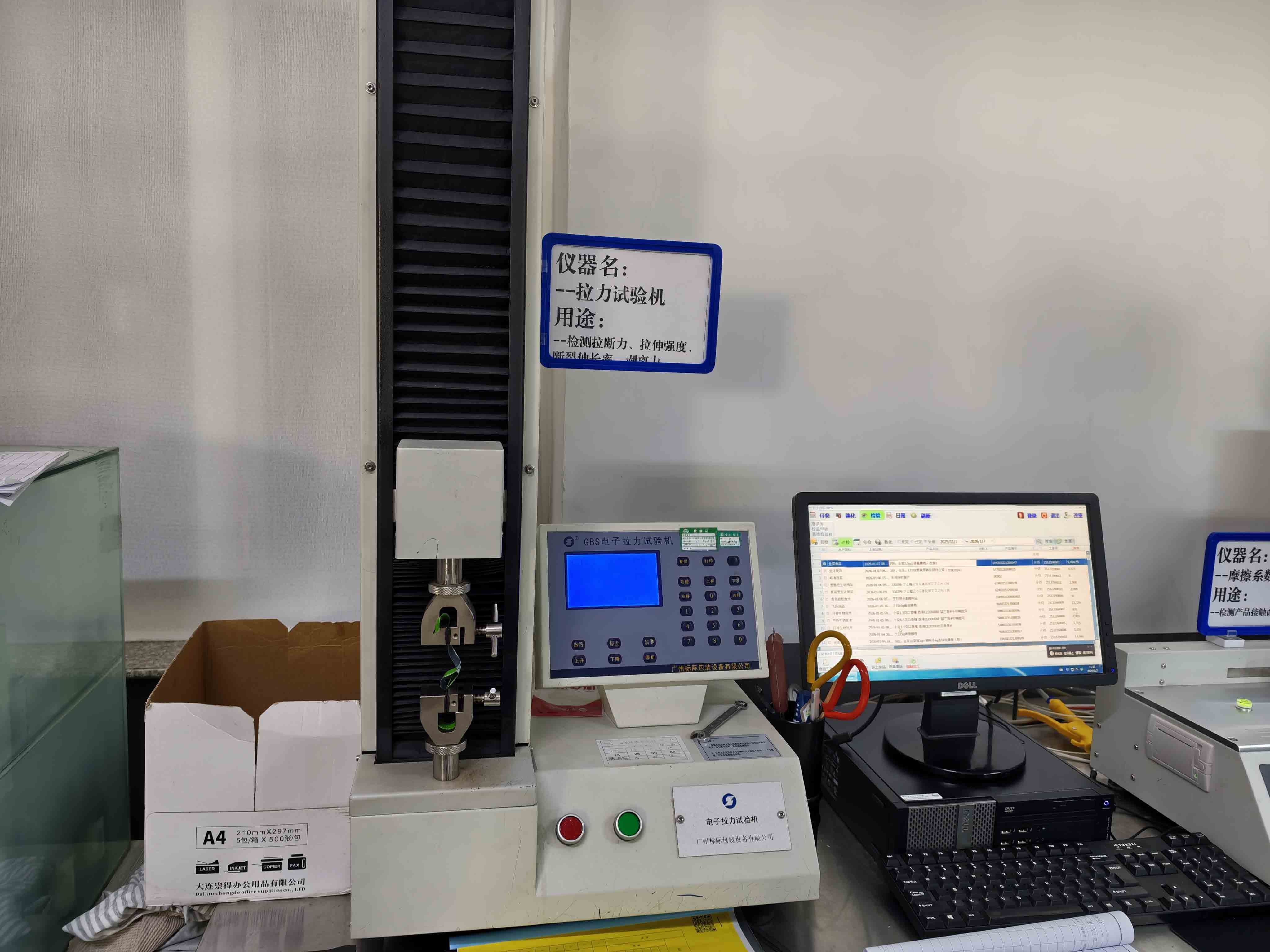
Our standards dictate that the heat seal must actually be stronger than the film itself. Under extreme tension, the film must stretch and deform before the seal ever gives way. This guarantees that your 5kg protein bags will never split at the seams when stacked on a pallet.
Impact & Puncture Resistance Testing
When a warehouse worker drops a heavy box of protein powder, the hydraulic shock inside the bag is immense. Furthermore, sharp edges from measuring scoops packed inside the bag can puncture the film from the inside out.
To prevent this, we utilize Falling Dart Impact Testers.
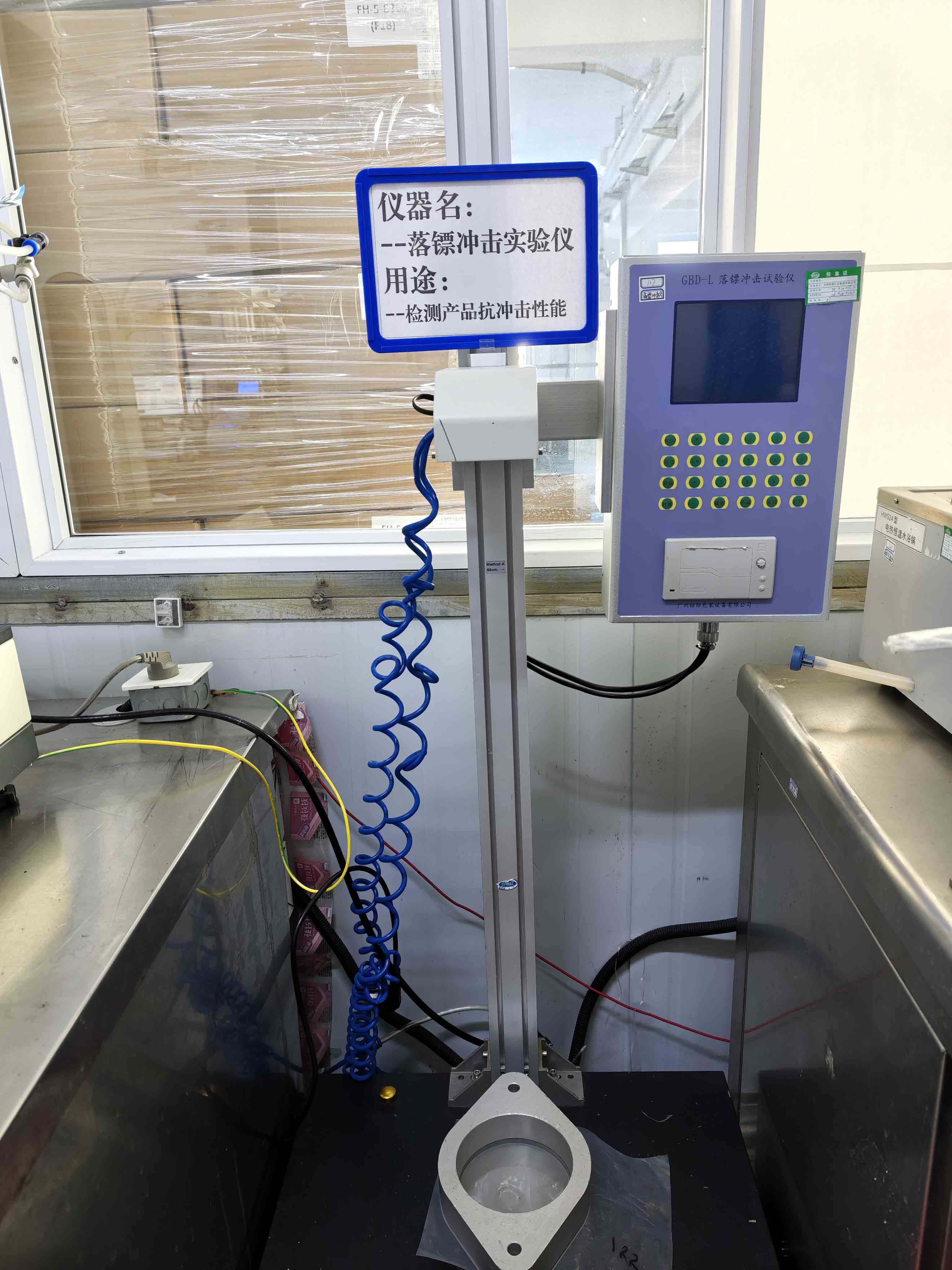
By carefully selecting highly elastic inner PE layers and combining them with rigid PET or Nylon (BOPA) outer layers, we engineer a composite film that absorbs shock like a trampoline, preventing ruptures even under severe physical abuse.
7. Material Engineering for Large Bags (MATOPP/PET/PE Structures)
When you are ordering large-capacity protein bags, the thickness (micron/mil count) and the lamination structure are just as important as the bag shape.
A standard 1lb bag might use a 100-micron structure. For a 2kg to 5kg bag, you must upgrade the thickness to at least 130 to 160 microns. But thickness alone isn't enough; you need the right polymers.
The Standard Heavy-Duty Formula: MATOPP / PET / PE
For premium protein brands, this is the gold standard for large flat bottom pouches:
- Outer Layer (MATOPP - Matte Oriented Polypropylene): Provides a stunning, high-end, glare-free aesthetic. It resists fingerprints and scratches, ensuring the heavy bag looks pristine even after being handled multiple times by consumers.
- Middle Core (PET - Polyethylene Terephthalate): This is the structural backbone. PET has incredible dimensional stability and tensile strength. It prevents the bag from stretching or warping under the massive weight of the powder.
- Inner Sealing Layer (Heavy-Duty PE - Polyethylene): The thickest layer of the structure. PE acts as the food-contact layer, the moisture barrier, and most importantly, the heat-sealing agent. For 5kg bags, we use specially formulated, high-viscosity LLDPE (Linear Low-Density Polyethylene) that melts into an unbreakable 8-side seal.
Upgrading to Foil (AL) or VMPET
If your product is highly sensitive to oxygen (e.g., vegan proteins with high lipid content that can go rancid) or if it has a shelf life requirement of over 18 months, we inject an Aluminum (AL) or Metallized PET (VMPET) layer into the core. This drops the Oxygen Transmission Rate (OTR) and Moisture Vapor Transmission Rate (MVTR) to absolute zero, turning your large bag into an impenetrable fortress against degradation.
8. Enhancing UX on Large Bags: Handles and Wide-Mouth Zippers
If you opt for the Flat Bottom Pouch for your 5kg protein powder, you unlock several user experience (UX) upgrades that can heavily differentiate your brand from competitors using cheap packaging.
The Wide-Mouth Powder-Proof Zipper
Reaching into a narrow 5kg bag to fish out a plastic scoop is a terrible consumer experience. Because the Flat Bottom Pouch maintains a rigid, box-like opening, we can install a wide-mouth flange zipper (powder-proof zipper) across the entire top span of the bag. This allows customers to comfortably reach in with their entire hand, scoop cleanly, and seal the bag with a satisfying click, completely unobstructed by side gussets.
Heavy-Duty Die-Cut Handles
A 5kg bag is incredibly heavy. Asking a consumer to grip the slick, matte exterior of a massive bag to pour or transport it is a recipe for dropping it. By extending the top sealing margin of the Flat Bottom Pouch, we can implement reinforced, die-cut ergonomic handles. This simple addition instantly transforms a cumbersome bulk product into a highly portable, consumer-friendly package, drastically improving brand perception.
9. Cost vs. ROI: Which Pouch Type Should B2B Brands Choose?
When consulting with B2B supplement brands, the decision always comes down to the unit economics versus the desired brand positioning.
Choose the Side Gusset Bag if:
- You are packaging economy or mass-gainer proteins where the primary selling point is "price per gram."
- Your main sales channel is wholesale or B2B (e.g., selling bulk 5kg bags to gyms or smoothie bars where shelf appearance does not matter).
- You are heavily optimizing for freight density and need the absolute lowest packaging unit cost to maintain tight margins.
Choose the Flat Bottom (8-Side Seal) Pouch if:
- You are selling a premium whey isolate, luxury vegan blend, or high-end collagen powder where the retail price is over $60.
- You rely heavily on retail shelf presence (pharmacies, GNC, Vitamin Shoppe) and need the bag to act as a flawless, rigid billboard for your brand.
- You want to eliminate all consumer complaints regarding zipper functionality and messy scooping experiences.
- You want the ultimate safeguard against transportation ruptures.
While the Flat Bottom Pouch may cost a few cents more per unit to manufacture due to the complex 8-side seal engineering, the Return on Investment (ROI) is generated immediately through zero shipping losses, premium retail placements, and skyrocketing repeat customer rates driven by a superior user experience.
10. Conclusion & Call to Action
Scaling your protein powder SKUs to 2kg, 3kg, or 5kg capacities requires a fundamental shift in packaging strategy. Relying on oversized stand-up pouches will only lead to shelf instability, compromised brand aesthetics, and devastating shipping ruptures.
By engineering your bulk packaging around the physics of heavy powders—utilizing rigid Flat Bottom Box Pouches or high-volume Side Gusset structures—you safeguard your product's integrity and elevate your brand above the competition.
At Mylarbag.net, our state-of-the-art pouch-making lines and rigorous laboratory testing ensure that your heavy-duty packaging will never fail, no matter how far it ships. Ready to upgrade your large-capacity packaging? Explore our structurally engineered protein powder packaging bags and custom flat bottom pouches today, and let our B2B experts guide you to the perfect bulk solution.
11. Comprehensive FAQ
Can a standard stand-up pouch hold 5kg of protein powder? While it is technically possible to manufacture an oversized stand-up pouch, it is highly discouraged for fine powders over 2kg. The bottom gusset cannot adequately support the massive vertical weight, resulting in a top-heavy bag that bulges at the center, tips over easily on shelves, and is highly prone to corner-seal blowouts during shipping.
What is the difference between a Side Gusset bag and a Flat Bottom pouch? A Side Gusset bag has two deep folds on the sides and relies on the weight of the product to flatten the bottom. It is highly cost-effective and space-efficient. A Flat Bottom pouch (8-side seal) uses a separate, reinforced piece of film for the base, creating a perfectly flat, rigid bottom similar to a cardboard box. It offers superior shelf stability and allows for 5 panels of uninterrupted printing.
Why do large protein bags burst during shipping? Bursting is usually caused by excessive internal pressure during palletization combined with weak heat seals or insufficient film thickness. Heavy powders trap air; when compressed, the air forces its way through the weakest point (usually the corner seals). Upgrading to a 130+ micron structure and utilizing strict tensile strength testing during manufacturing prevents this.
Can I get a resealable zipper on a Side Gusset bag? It is possible, but not optimal. Because the side gussets fold inward at the top, they interfere with traditional press-to-close zippers, making it difficult for the consumer to create an airtight seal. If a premium zipper experience is required for bulk powder, the Flat Bottom Pouch is the heavily preferred structure.
What is the best material structure for a 5kg whey protein bag? For extreme durability and a premium aesthetic, a MATOPP / PET / PE structure is the industry standard. The Matte OPP provides a scuff-resistant luxury finish, the PET core provides immense tensile strength to prevent stretching under heavy loads, and the heavy-duty LLDPE inner layer ensures unbreakable 8-side heat seals.
Are large Flat Bottom pouches recyclable? Yes. Through advancements in polymer engineering, we can manufacture large Flat Bottom and Side Gusset pouches using Mono-PE (Polyethylene) structures (e.g., MDO-PE / PE). This renders the entire heavy-duty bag 100% recyclable at store drop-off locations without sacrificing the necessary burst strength or moisture barriers.