
Do not assume a cat food pouch can be frozen, warmed or microwaved just because it is a pouch. The exact product label and the manufacturer’s current instructions decide whether a filled pouch may be chilled, frozen, heated or opened and refrigerated. A pouch’s material appearance, a metallic surface, a “high barrier” description or the fact that another brand uses a similar format is not a microwave or freezer approval.
If a product’s instructions allow warming, follow them exactly. If they do not say the pouch itself is microwave-safe, do not microwave the pouch. If instructions call for transferring food to another vessel before warming, use an appropriate vessel and follow the product’s handling directions. AAFCO’s consumer guidance says unused leftover wet pet food should be refrigerated or discarded; the exact label remains the source for the product’s time and temperature instructions.
This guide explains the decision process for retail wet cat-food pouches. It does not give food-processing, nutritional, medical or product-safety approval for an individual brand.
This complete handling guide offers comprehensive insights into evaluating packaging instructions and maintaining safe practices when considering freezing or microwaving wet pet food pouches. Ensuring compliance with the manufacturer's exact specifications is crucial for preserving product integrity and safety. Consumers must always prioritize reading the specific label directions over making generic assumptions based solely on the material appearance or format of the pouch.
Start with the product’s storage category
The first question is not “What is the pouch made of?” It is “How is this exact food intended to be stored and used?” A flexible pouch can contain products that are:
- shelf-stable while unopened under the conditions printed by the manufacturer;
- refrigerated before opening;
- sold frozen;
- intended for a particular thermal process before sale;
- packed as a single serving;
- meant to be used in more than one serving after opening.
Those categories cannot be merged into one home-handling rule. An unopened shelf-stable pouch is not automatically freezer-safe. A refrigerated pouch is not automatically safe to microwave in its original pack. A pouch used for a heat-processed product does not necessarily permit consumer microwave heating. Manufacturing processing, freezer storage and microwave reheating are separate conditions.
Use the product label to identify:
AAFCO’s product-handling guidance provides a broad consumer principle: refrigerate or discard unused leftover wet pet food. That is not a replacement for product instructions, especially for the time limit, container, temperature and whether a particular pouch can be frozen or heated.
Can you freeze cat food pouches?
Only freeze an unopened or opened cat-food pouch if the exact product manufacturer says that freezing is appropriate. Freezing can affect the food, the package and the way the product should be used after thawing. The fact that a pouch survives normal retail distribution does not establish that it has been evaluated for home-freezer use.
Why “pouch” is not enough information
Pouches differ in their layers, seals, closures, fill volumes, headspace and intended process. Food may expand or change texture during freezing and thawing. A package designed around a particular shelf-stable, refrigerated or frozen distribution system has to be assessed as that complete system—not as an empty film sample.
Before freezing, check these points
- Does the label explicitly allow freezing?
- Is the pouch unopened and in good condition?
- Does the manufacturer provide a thawing or post-thaw instruction?
- Is there enough room in the freezer to keep the pouch away from crushing or sharp items?
- Will the food still be identifiable by its original label and lot/date code?
If the label is silent, contact the product owner rather than treating an online claim about another pouch as approval. Do not freeze a pouch to “make it last longer” when the product already has a specified storage system.
What about opened pouches?
Opened wet food is no longer in the same state as unopened product. Follow the exact product’s after-opening instruction. AAFCO says leftover wet food should be refrigerated or discarded; that does not create a blanket instruction to freeze leftovers. If a brand specifically permits freezing in an appropriate container, follow its method. If not, do not invent a new storage route.
Can you microwave cat-food pouches?
Do not microwave a cat-food pouch unless the label explicitly says the pouch itself is microwave-safe and gives a method. A product may allow the food to be warmed while still requiring it to be transferred to a different vessel. “Can warm the food” and “can microwave the pouch” are not the same instruction.
Never heat a sealed pouch in a microwave unless the product owner expressly directs that method. Heat can create pressure, uneven hot areas and problems with a package not designed for microwave use. A tear notch, a spout or a pouch that was used in a commercial heat process is not evidence of consumer microwave suitability.
A cautious decision table
This is intentionally more cautious than a casual “yes, pouches are microwaveable” answer. Packaging used for food is designed around a specified product and process. Consumer heating must be part of that specification.
How to warm cat food without making package assumptions
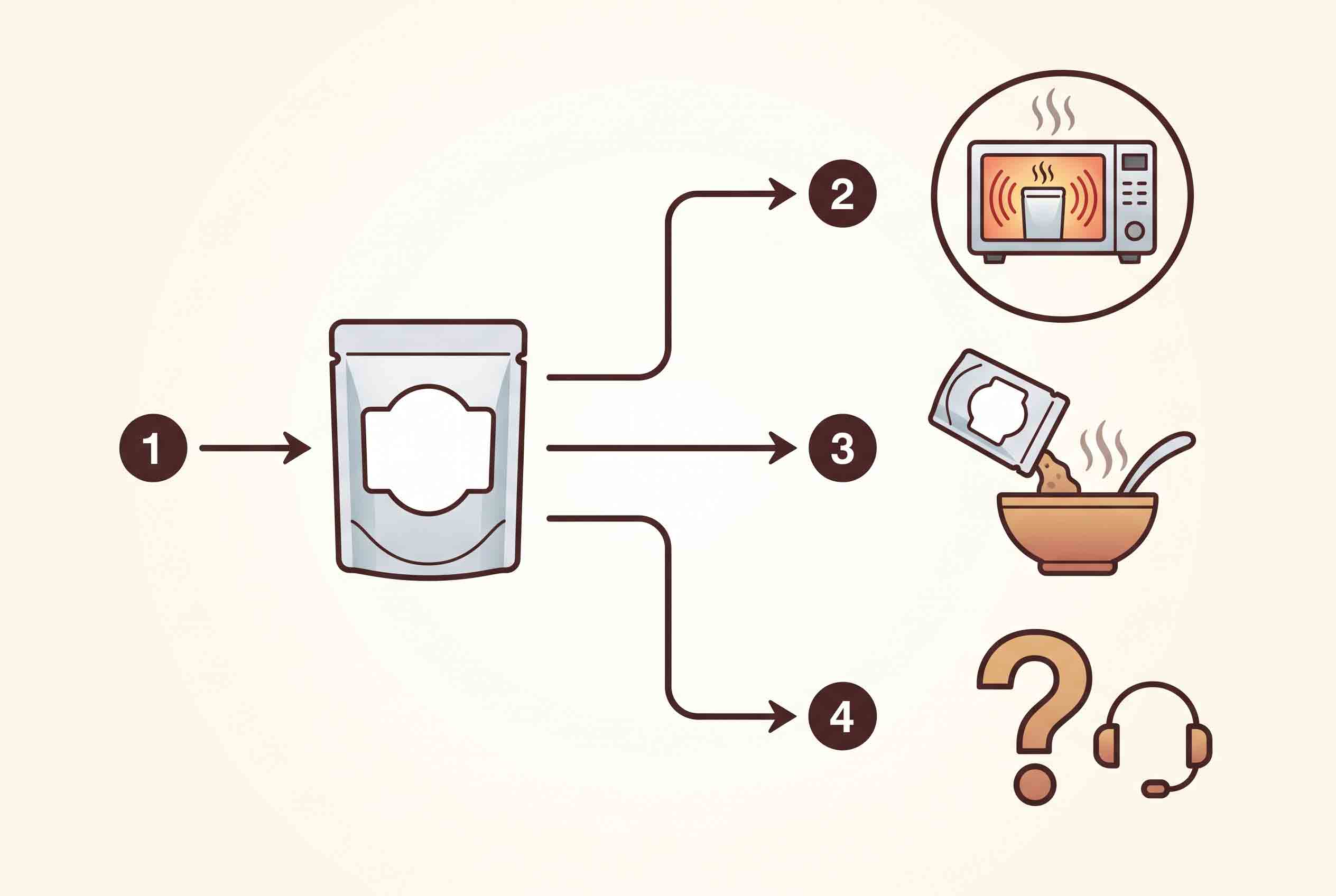
Some consumers want food at a different serving temperature. The correct approach starts with the product’s instructions, not a general opinion about cats or pouches. If warming is allowed:
- read the full label before opening;
- use the stated method and vessel;
- avoid overheating;
- stir or otherwise handle food only as the product instructions make appropriate;
- check the food carefully before serving so there are no unexpectedly hot areas;
- follow the after-opening/leftover directions rather than returning food to an unknown storage condition.
When checking the product's instructions, look specifically for guidance regarding the temperature of the vessel and the method of heat application. If a manufacturer permits warming by placing a transferred portion into a warm-water bath, they will often specify the water should not be boiling. Direct heat methods, such as placing a dish on a stove element or using high-wattage microwave settings, can create uneven hotspots in the food, which might present a risk to the cat. A gentle, incremental warming method, assuming it is explicitly permitted by the product owner, is usually intended to gently bring refrigerated food closer to room temperature rather than cooking it. Always stir the transferred food thoroughly to distribute the temperature evenly before offering it to the animal. Additionally, do not assume that a method appropriate for one brand's pate or shredded recipe applies to another brand's gravy-based product; different textures absorb and retain heat differently, making strict adherence to the exact product label essential for safe handling.
Do not turn this into medical advice. A product page, a veterinarian or the manufacturer may give product-specific guidance for the animal and food. This article’s point is narrower: package material does not replace the instruction.
How long do cat-food pouches last?
There are three different questions hidden in that phrase.
The pouch cannot answer these questions by appearance. A shelf-stable product, a chilled product and a raw/frozen product can have different rules. AAFCO’s general advice is to refrigerate or discard unused wet food, but it does not give an all-brands, all-formulations time limit for opened pouches.
For readers asking “How long does an opened cat-food pouch last in the fridge?” the honest answer is: use the product’s written instruction. If it is missing or unclear, ask the manufacturer. Do not rely on a fixed number copied from another brand or a general pet blog.
How to store an opened cat-food pouch
The first choice is always the label. If it instructs you to refrigerate an opened pouch, do so according to the stated method. The pouch may need to be covered, resealed with a product-specific accessory, or transferred to a suitable container; only the product owner can define the intended option.
A careful routine is:
- Keep the original pouch until the product is used so its label and lot/date are available.
- Follow the after-opening storage instruction immediately.
- Avoid leaving a partly used pouch in a warm area while deciding what to do.
- Keep the product separated from household contamination sources.
- Use or discard leftovers according to the exact instruction.
- Do not treat a folded top, clip or zipper as proof that a pouch can be stored for a fixed time.
Getting all food out of a pouch
Do not puncture or tear a pouch in a way that makes handling unsafe or creates sharp edges. Open it using the feature or method intended by the manufacturer. If food remains, follow the brand’s serving instructions. The goal is not to remove every trace at the cost of turning the pack into an unsafe or messy object.
What are cat-food pouches made of?
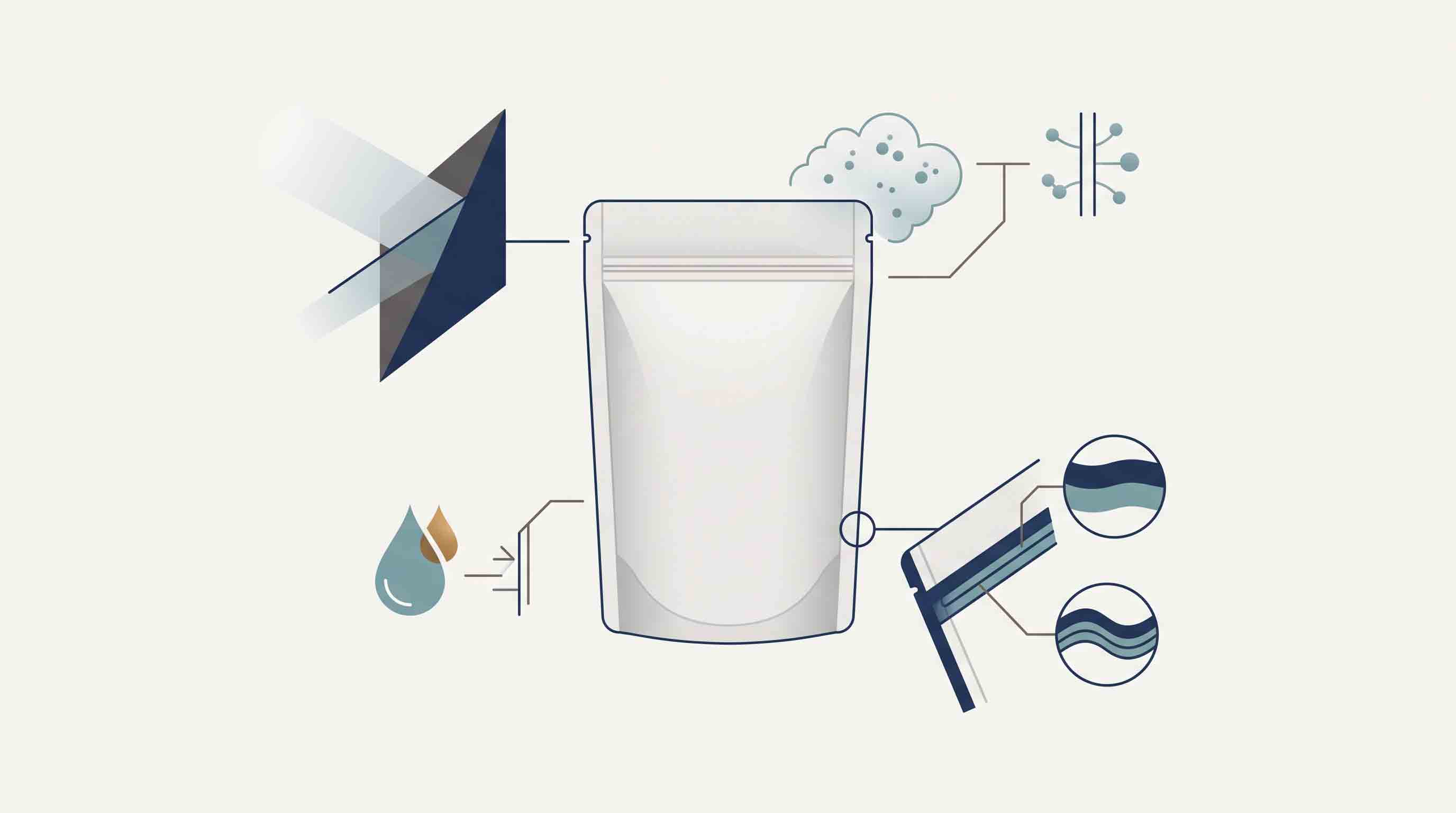
There is no single universal pouch construction. Flexible food pouches can use different layers and components to provide printable surfaces, structure, sealing, product protection, appearance and processing compatibility. They can also include tear features, spouts, zippers or caps. The complete structure is often proprietary or product-specific.
This is why a short material label cannot answer all handling questions:
- A material description does not establish microwave suitability.
- A metallic-looking surface does not tell a consumer whether a pouch is safe to heat.
- A pouch used in a commercial thermal process is not automatically intended for microwave reheating.
- A recyclable-material discussion does not establish freezer, heat or food-process suitability.
- A pouch’s empty-film capability does not prove that the filled product meets storage or shelf-life requirements.
For a packaging buyer, the right question is not “What film is best for every cat food pouch?” It is “What does this product, process, target market and use case require, and how will the final filled package be validated?”
A product owner’s responsibilities are broader than the pouch
For cat-food brands selling in the United States, FDA describes requirements around animal-food safety and labelling. The package is part of the label and part of the product system, but it does not take over responsibility for the formulation, process, substantiation or food-safety plan. FDA’s pet-food overview and FDA’s animal-food safety information provide useful starting context.
That means a brand developing a wet pouch should decide, and document:
- product category and intended storage condition;
- filling and any thermal or other process;
- pouch, seal and closure requirements;
- labelling and lot/date coding;
- after-opening and consumer-use instructions;
- validation responsibilities for the food/package/process combination;
- what evidence supports any safety, shelf-life, recyclability or convenience claim.
The consumer-facing label must communicate the usable result. A vague “premium pouch” claim does not tell a household whether it can freeze, microwave or refrigerate leftovers.
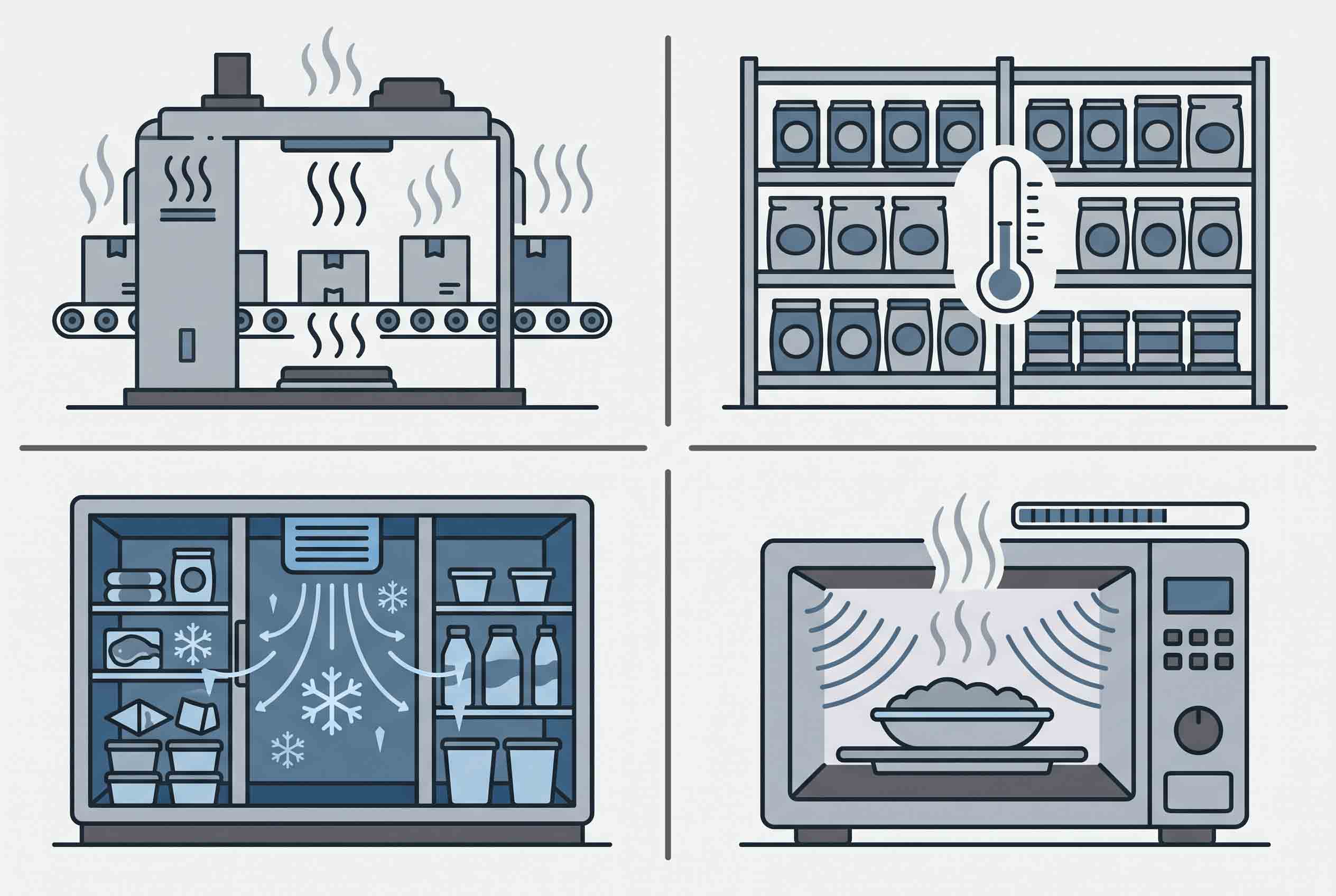
Retort, shelf stability, freezing and microwaving are different subjects
These words often get mixed together in packaging conversations. They should be separated.
Retort or commercial thermal processing
This refers to a defined manufacturing process and a package/process system. It is not a synonym for “safe in any heat situation.” The product owner and processor must define the process and validate it.
Shelf stability
This is a product outcome under specified storage conditions. It depends on the product and its complete process/package system. An empty pouch cannot promise it.
Freezer use
This is a storage condition. It can affect product and package behaviour and needs product-specific instruction.
Microwave use
This is a consumer heating condition. It requires explicit directions for the filled pouch or for a transfer method.
Keeping the terms separate improves both technical work and consumer clarity. It also prevents a brand from accidentally making a claim that the final product has not been designed or validated to support.
The packaging-development checklist for wet cat-food pouches
When a brand wants a custom wet-food format, use this checklist before requesting a quote:
For a general custom-format conversation, Mylarbag’s cat food pouch page can help frame format choices. It is not a substitute for the food, process and label validation listed above.
Common mistakes to avoid
Heating a pouch because it resembles another brand’s pouch
Appearance is not a heating instruction. Follow the exact label.
Treating commercial heat processing as microwave permission
They are different conditions with different design and validation questions.
Freezing leftovers by default
Freezing may be appropriate only if the product owner says so. Opened-food handling instructions control.
Assuming a small pouch is a single serving for every cat
Product amount and feeding use are separate matters. Use the label and qualified advice, not the package size alone.
Discarding the pouch before reading it
The pouch may carry the only product-specific instruction, lot/date code and contact information.
Making “microwave safe” or “retort safe” a generic packaging claim
Those terms need a defined final product, process, condition and evidence. They should not be inferred from a material family or a product photo.
What to ask when the pouch has no clear instruction
Contact the product owner with the complete product name, pouch size, country of purchase and lot/date code if available. Ask one precise question at a time: “May this unopened pouch be frozen?”, “May this filled pouch itself be microwaved?”, or “What is the after-opening refrigerator instruction?” Avoid asking whether the pouch is “safe” in general, because storage, heating and process suitability are different questions.
Keep a record of the response with the product information. If the answer is unavailable, choose the conservative path: do not freeze or microwave the pouch, and handle opened wet food according to the available label and AAFCO’s general refrigerate-or-discard guidance. That approach may be less convenient, but it does not create a package-use claim that the product owner did not provide.
Why the pouch should remain identifiable after opening
An open pouch can look nearly identical to another recipe once it is placed in a refrigerator. Keeping the pouch or a clearly retained label with the leftovers avoids confusion over flavour, formula, lot/date code and after-opening instruction. This is particularly useful in households that use different foods for different cats or alternate between several pouch formats.
If food is transferred as the label directs, keep the original pouch alongside the covered container until the food is used or discarded. Do not rely on memory for the product’s storage period, warming instruction or serving amount. If a question arises about the condition of the food, the original product identity and lot/date information are more useful than an unlabelled container.
This is not a claim that every transferred leftover is appropriate to keep. It is a traceability habit that works alongside—not instead of—the exact product instructions.
Frequently asked questions
Can you freeze cat-food pouches?
Only if the exact product manufacturer says freezing is appropriate. A pouch format alone does not establish freezer suitability, thawing instructions or post-thaw use.
Can you microwave cat-food pouches?
Only if the label specifically says the pouch itself is microwave-safe and gives a method. If it does not, do not microwave the pouch. Follow any direction to transfer food to another vessel before warming.
Can I warm cat food in the pouch?
Use the exact product instructions. “Warm the food” does not necessarily mean “heat the pouch.” The label may specify another method or say nothing about warming.
How long does an opened cat-food pouch last in the fridge?
Follow the product’s after-opening instruction. AAFCO’s general guidance is to refrigerate or discard unused leftover wet food, but no universal fridge duration applies to all pouches.
What are cat-food pouches made of?
They can use different flexible-material layers and components depending on the product, process and desired features. There is no single pouch construction, and material appearance alone does not determine heating, freezing or recycling instructions.
Are cat-food pouches retort safe?
Do not assume so. Retort is a specific product/package/process application. A pouch is only appropriate when the responsible product owner and processor have specified and validated the final system.
Sources and scope
- AAFCO: Product Handling Safety
- FDA: Pet Food
- FDA: Food Safety Modernization Act and Animal Food
- AAFCO: How to Understand a Dog or Cat Food Label
- Mylarbag: Custom Cat Food Pouches
Scope note: This article is current as of September 2026. It does not approve a product for freezing, microwaving, retort processing, storage or feeding. The exact product label, manufacturer and responsible qualified professionals control those decisions.