
A 30 lb bag of dog food does not contain one fixed number of cups. Pounds measure weight; cups measure volume. Kibble density, shape, piece size, formulation, and moisture level all change how much volume a given weight occupies. A sensible consumer estimate may be useful for planning, but the food label and a direct measurement remain more accurate than a generic online conversion.
For packaging brands, the lesson is even more important: a 30 lb fill weight is not a pouch specification. It is only one input to a package-development project.
Short answer: cups and pouch dimensions need different checks
If you are a consumer planning storage, a 30 lb bag’s cup count must be estimated using the actual measured grams-per-level-cup of your specific kibble formula. There is no fixed universal conversion because every recipe is different.
If you are a brand developing a new product, a 30 lb net weight cannot directly determine your custom pouch dimensions. You must use the actual physical product to conduct a filled-sample fit check before ordering packaging. This ensures the bag performs correctly on the shelf and in the customer's home.
Calculate cups from the specific food, not a generic conversion
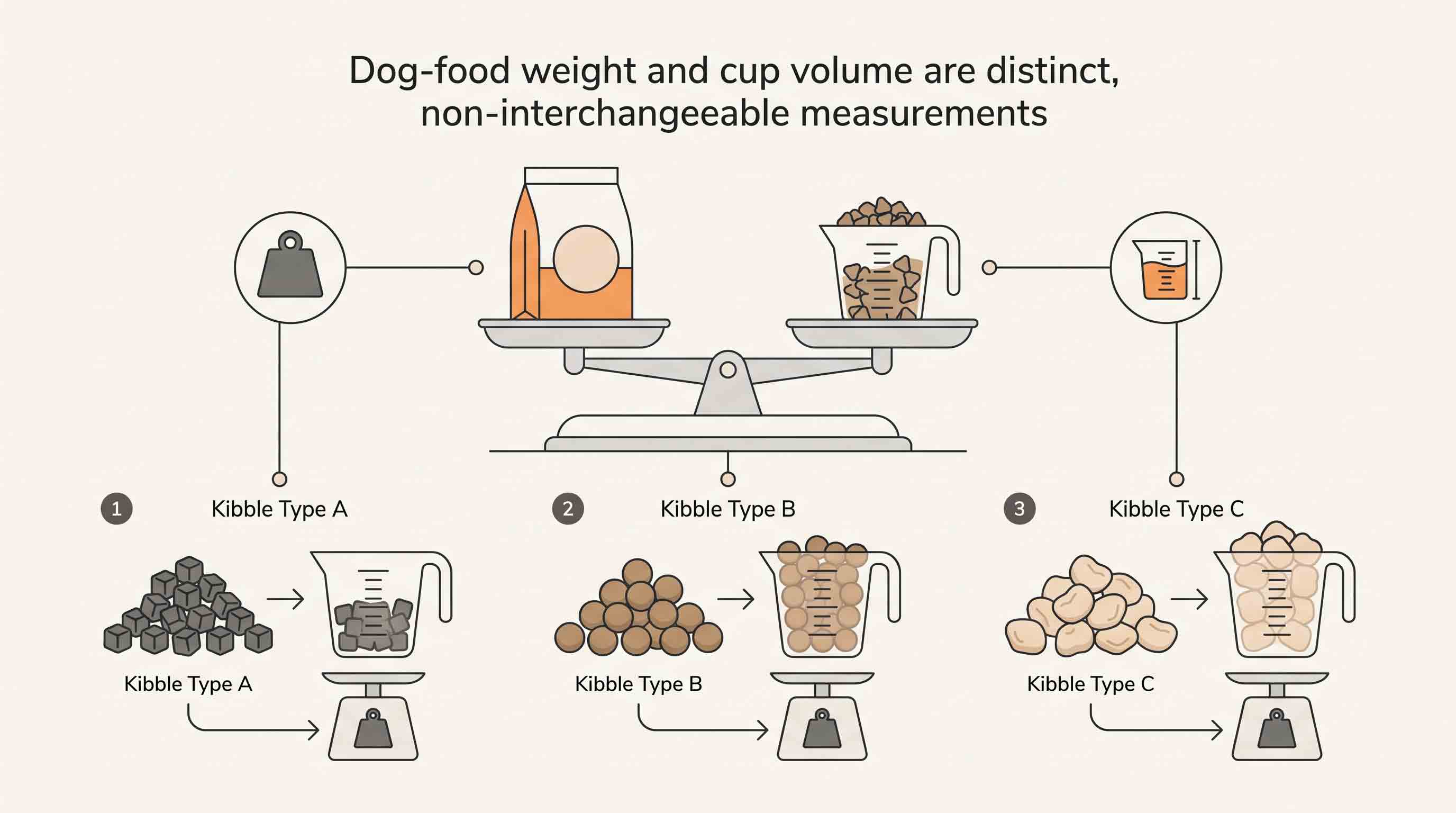
There is no authoritative universal number of cups in a pound of dry dog food. Kibble density and shape vary by formula, so a generic cups-per-pound table can look precise while giving the wrong answer for the bag in front of the reader. The reliable calculation uses the actual food:
Approximate cups in the bag = net food weight in grams ÷ measured grams of that food per level cup
Convert pounds to grams first when needed: bag weight in lb × 453.6 = net grams. Then weigh one level cup of the specific kibble, preferably more than once, and use the average. If the manufacturer publishes a product-specific weight-per-cup value, use that value rather than an internet average. This calculation estimates package volume; it is not a feeding recommendation.
Illustrative 30 lb calculation
The following table is strictly an illustrative mathematical example to demonstrate how kibble density changes the total cups in the same weight of food. You must use your own product's measured grams-per-cup or the manufacturer's published weight.
This calculation is for volume estimation only and is never a feeding recommendation. Always refer to the brand's label.
For feeding, use the manufacturer’s current directions and seek veterinary advice for the individual animal. AAFCO notes that feeding directions are guidelines and may need adjustment to an individual pet’s needs.
Source: AAFCO: Reading Labels.
How big is a 30 lb dog food bag?
There is no standard physical dimension for a 30 lb dog-food bag. Two bags with the same net weight can have different width, height, gusset, and overall shape because the kibble has a different bulk density or the brand chose a different pack format. A tall side-gusseted bag and a wider flat-bottom pouch might both hold a similar nominal weight but behave differently on a shelf or pallet.
If you are a shopper, measure the actual bag you use for storage planning. If you are a brand, provide a filled product sample and treat its dimensions as project data—not as a universal dog-food-bag chart.
Consumer cup estimates need a clear boundary
The cup table in this article is intentionally a range. It is a planning aid for common search questions, not advice about how much a specific dog should eat. The product’s feeding information and a veterinarian’s advice are separate matters. A bag may contain a certain approximate number of cups and still be inappropriate for a particular animal’s needs or feeding plan.
The same boundary applies to “how long does a bag last.” Divide the verified product quantity by the brand’s stated daily use only for a rough household planning estimate. Do not turn that calculation into a freshness period or a nutrition recommendation.
A note for households comparing bag sizes
Shoppers can use the cup range in this guide to compare an approximate amount of kibble across common bag weights, but the original bag is still the reference for a particular food. If a cupboard, storage bin, or feeding routine is being planned, measure the actual bag and use the product’s serving guidance. The table is not a substitute for either.
Use weight and volume differently
Consumers commonly ask how long a bag lasts because they want to relate the bag to cups per day. Brands use the same weight figures for a different purpose: they need to choose a pouch, plan cartons, set label area, and understand the customer’s opening experience. The two questions overlap in vocabulary but should not be answered with the same shortcut.
For example, a 5 lb training-treat pack may be impractical even if its volume technically fits a pouch, because a customer may prefer a reclose feature and manageable opening. Conversely, a larger bag may need a more stable base and more room for mandatory information. That is why sample filling is part of package development.
The four measurements a packaging team needs
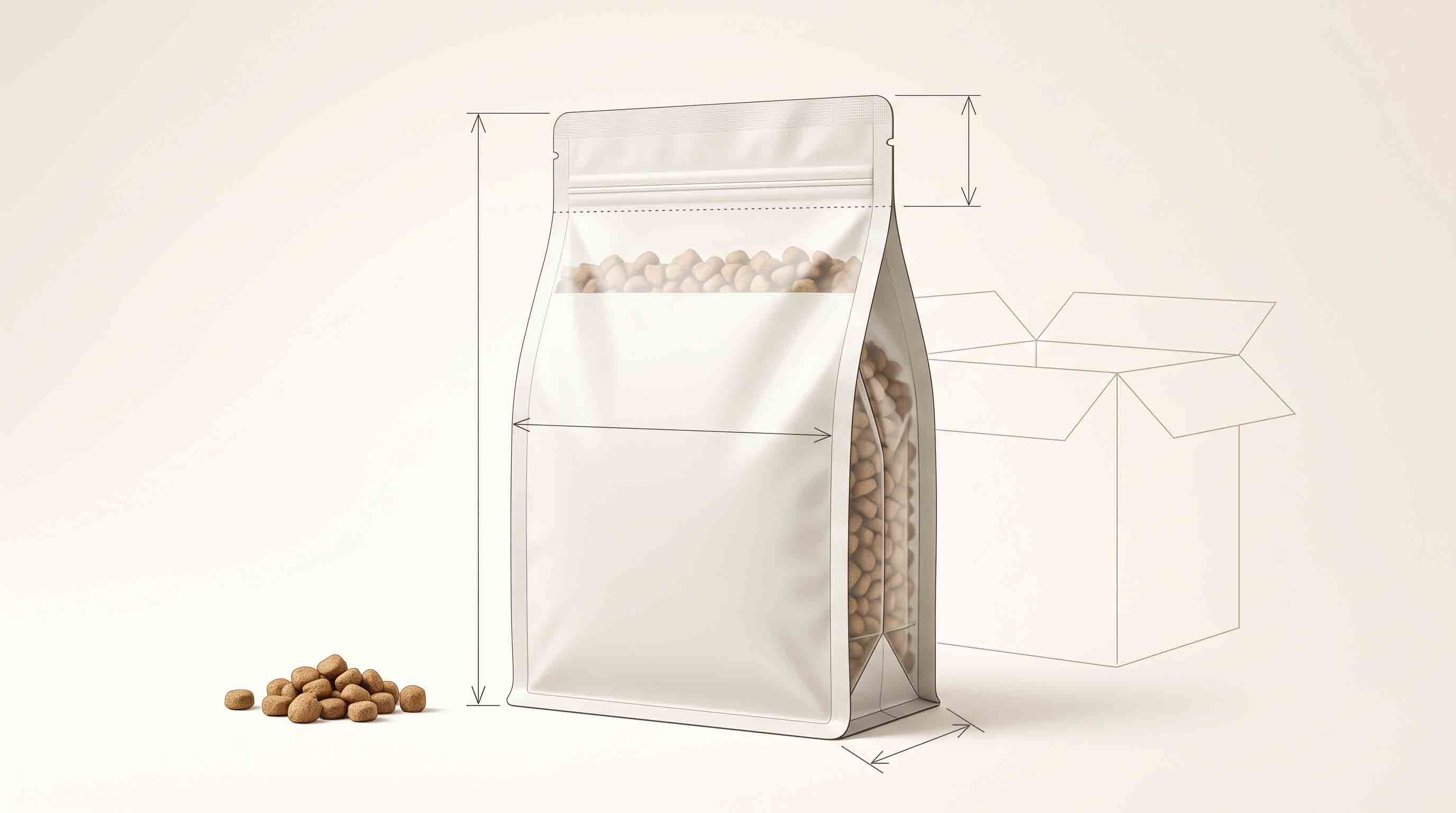
- Net fill weight. This is essential, but it does not establish dimensions.
- Bulk density. Weigh a known volume of the actual kibble. Repeat the check if the recipe or piece shape changes.
- Filled volume and headspace. Evaluate how the product sits in the selected pouch after filling.
- Finished pack dimensions. Record width, height, gusset or depth, plus the space used by seals and closure.
This process gives the brand something better than an internet average: a pack that can be sampled, transported, shelved, and quoted as a real configuration.
How brands convert a target fill into a pouch brief
The word “size” causes confusion because it can mean a net weight, a cup estimate, an external pouch measurement, or a retail shelf space. A packaging brief for custom dog food and treat packaging options separates them. Start by collecting the finished product and write down its net weight. Next, measure representative samples of its bulk density and evaluate the product in a trial pouch. Finally, record the filled pouch dimensions rather than the empty-pouch dimensions alone.
The useful specification is not “a pouch for 30 pounds.” It is “a pouch confirmed with this dry kibble at this net fill, with this filled profile and this intended use.” That wording gives a future purchaser or co-packer a real starting point.
Why one brand’s bag dimensions do not transfer to another
Two recipes can have the same declared net weight but different piece shapes, fat levels, air spaces, or densities. Two brands can also make different commercial decisions: one may use a tall pouch to create a narrow shelf footprint; another may use a wider, lower format for stability or panel space. The physical bag is the result of those choices, not a simple conversion from pounds.
This is why a search phrase such as “how big is a 24 lb bag of dog food” has two audiences. A household may need to know if a bag fits in a cupboard. A product team may need to choose a package. The first needs an actual product measurement; the second needs a sampling process. The article answers both without pretending an average dimension will be accurate enough for procurement.
Create a size family before adding flavours
For brands launching more than one product, develop a deliberate size family. The family may use the same base format across several fills or may use related formats with a shared design grid. What matters is that each size has been tested with its actual product and that consumers can understand the relationship between them.
Consider the following questions:
- Is the smallest pack a trial product, a travel pack, or a regular repeat-use pack?
- Will the mid-size pack be the main retail unit?
- Does the largest pack need a different base or handling direction?
- Can product information be reused without making the back panel crowded?
- Are the filled dimensions consistent enough to simplify cartons and displays?
Do not force every fill into one pouch merely to create visual consistency. A consistent pack family should make the range easier to use, not hide a poor product fit. This approach is especially useful for brands that plan a range of sizes. A consistent visual system can be built across the line while each individual fill receives its own fit check. The result is a practical family of packs, not a collection of unrelated dimensions copied from an online chart.
Searches about 15 lb, 25 lb, 30 lb, and 40 lb bags often begin with a simple household question: how much food is in the bag, and will it fit where I store it? The answer is product-specific. The same language matters to a packaging team for a different reason: it reveals that bag size is a combination of net weight, physical volume, format, and user experience. Treat these as separate fields in a project brief. Record the declared fill by weight, then measure the actual product volume and a filled sample. Add the pouch’s finished external dimensions, not just a flat drawing. Finally, confirm whether the customer will scoop, pour, carry, or repeatedly reclose the bag. This sequence turns a vague size request into something a packaging supplier can sample and quote.
A practical filled-sample session
The best size guide for a new dog-food product is a filled sample session. Prepare several representative pouches or format directions, the actual kibble, a scale, a simple ruler or measuring device, and the proposed label copy. Fill each sample as the intended line would fill it, then photograph and record the result. Do not judge only the empty pouch on a desk.
An empty-pouch drawing is essential for artwork and procurement, but it cannot show everything a filled sample reveals. It will not fully show product settlement, the pressure created by the fill, the way a gusset opens, or the panel that becomes most visible on shelf. Use the drawing to start the design; use a filled sample to confirm that the design belongs to the real product.
When recording a sample, note the orientation in which it was measured. A pouch may look different standing upright, lying in a carton, and sitting partly empty in a consumer’s cupboard. Include photographs where helpful, but do not infer technical performance from appearance alone. The record should state what was observed and what remains to be validated.
At the review, ask:
- Does the product settle in a way that makes the front panel look intentional?
- Is there enough space above the fill for the intended seal and closure?
- Does the bag stand, sit, or hang as the sales plan requires?
- Can the required product information be read when the pack is full?
- Will the filled shape fit the proposed carton without excessive compression?
- Can a consumer handle and open the pack in the expected way?
If several formats are being evaluated, use the same product and fill target for each. This turns a subjective comparison into a decision based on the brand’s actual packaging task. The final specification should be easy to hand to a packaging supplier: product sample, target fill, measured result, intended format, artwork needs, and the sales or logistics conditions that influenced the choice. When those inputs are clear, a size discussion becomes fast and useful rather than a chain of guesses about pounds and cups.
When a brand makes that distinction early, its design, purchasing, and logistics decisions become easier to explain and repeat. It also keeps a useful consumer estimate from becoming a misleading procurement rule. The same care applies to any future size table. State the condition behind the figure, name whether it refers to weight, volume, or filled dimensions, and point readers back to the actual product when precision matters. That protects the usefulness of the article as a range changes over time.
Size is also a customer-use choice
Brands sometimes focus only on whether the product fits. The product also has to be comfortable to buy, carry, open, pour or scoop, and store. A very large pouch might reduce unit packaging, but may be inconvenient for a small household. A smaller pouch may be easier to use but require more retail units. These are commercial decisions, not simple geometry. The sample review should include both the product team and someone thinking about the customer’s everyday use.
Do not mix product weight with shipping weight
The number on the retail pack is usually the product’s net quantity. Logistics planning needs more information: the mass of the filled bag, any secondary packaging, cartons, pallets, and protective materials. A procurement team should keep these records separate. Otherwise a calculation intended for a 30 lb retail fill can be mistakenly used as a 30 lb shipping unit, which leads to incorrect freight, warehouse, or pallet assumptions.
Record the result as a reusable specification
After a successful filled-sample review, create a one-page size record. Include the product name and version, the net fill, the sample date, filled pouch width/height/gusset, closure position, observed headspace, and the sample’s carton fit. Attach the approved dieline and note any market-specific label constraints. This document is more valuable than a generic size chart because it explains exactly what was tested.
When a product changes, compare the new version against this record. If the kibble becomes larger, denser, or more irregular, repeat the fill check. If the product is unchanged but the market or artwork changes, check that essential information still fits the same usable panels. A pack family can grow consistently without pretending all weights or recipes occupy the same volume.
When to repeat the fit check
Repeat the fit check whenever the product itself changes, not only when the printed design changes. A different kibble shape, a new inclusion, a revised fill, or a new closure can affect filled dimensions and consumer handling. Keeping this small validation step in the launch plan is cheaper than treating every revision as artwork-only. It also gives a product team confidence that a new size is based on evidence from its own food rather than an unrelated bag chart.
Keep a physical reference
Retain an approved filled sample or a set of precise photos with the specification. It helps designers, buyers, and operations teams understand the pack more clearly than a number alone. That reference should be updated when the product or package changes, so the team does not accidentally work from an outdated configuration. It is a small discipline that protects both the buyer and the customer experience, supports clear reorders, and makes future format comparisons much more reliable.
A compact decision tree for brands
Start with the product: Do you have a representative sample and target net fill? If not, define those first.
Then check volume: Does the sample fit a plausible pouch format with the required headspace and display profile? If not, try a different format or dimensions.
Then check information: Does the filled pouch have enough usable panel space? If not, revise the format or artwork hierarchy.
Finally check movement: Does the pouch fit the intended carton, shelf, and handling route? If not, review the pack and shipment together.
This sequence is more reliable than beginning with an internet chart. It also produces information that can be reused for a repeat order, a new flavour, or a future pallet calculation.
Related project note
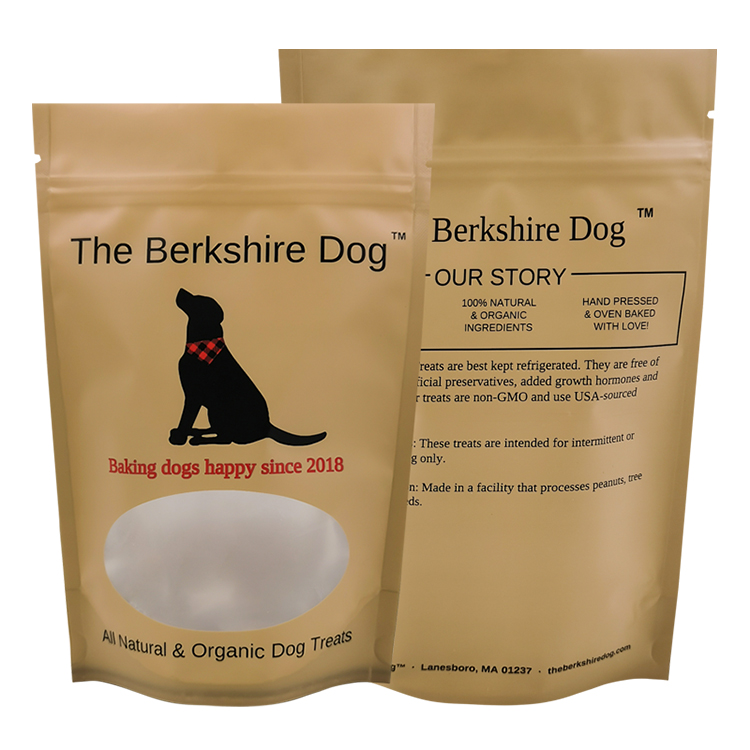
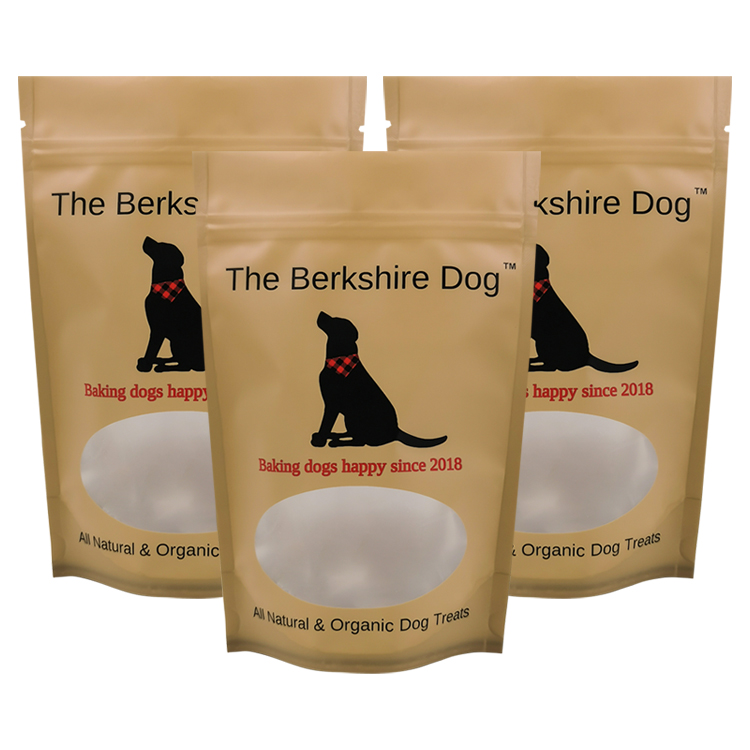
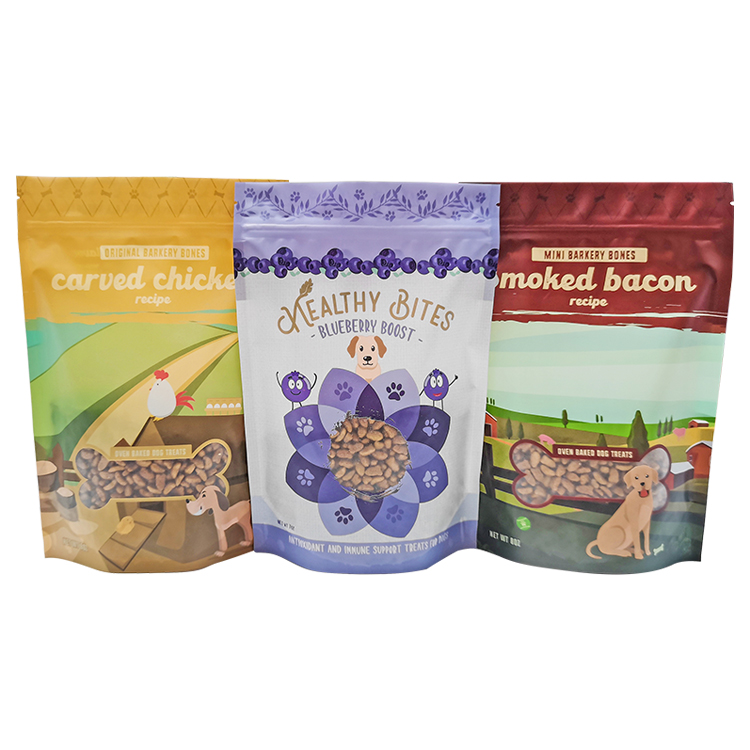
Mylarbag’s public dog-treat cases include smaller stand-up pouch configurations; the flat-bottom pouch page presents a heavier-capacity format direction. They are useful references for format and visible pouch construction. The pictures cannot establish how much a different kibble will fit. A new size must be confirmed with a new sample.
Recommended packaging configuration
For smaller dog-food or treat packs, a stand-up pouch may be evaluated for its shelf presence and repeat-use format. For heavier or information-rich packs, assess a flat-bottom pouch with the real fill. The primary dog food and treat packaging page is the right place to start a project-specific size conversation.
FAQ
Is a 5 lb dog food bag always smaller than a 5 lb treat bag?
Not necessarily in physical dimensions. The products can have different bulk densities and the brands may use different pouch formats.
Can a packaging supplier choose the pouch size from the weight alone?
Weight is an essential input, but it is not enough. The supplier needs product-volume information or a sample, together with the intended format and use case.
Should a size guide list exact pouch dimensions?
Only when those dimensions apply to a verified product configuration. Generic dimensions can mislead a brand into ordering a pouch that does not fit its own product.
How many cups are in a 30 lb bag of dog food?
There is no one reliable cup count for every 30 lb food. Convert the bag to grams, then divide by the measured or manufacturer-stated grams per level cup for that specific kibble. Use the food label for feeding directions; this calculation estimates volume only.
How many cups are in a 40 lb bag of dog food?
Use the same product-specific formula: (40 × 453.6) ÷ grams per measured cup. A larger bag does not make a generic cups-per-pound conversion more reliable, because the formula and kibble density still control the result.
What size bag should a dog-food brand order?
The answer comes from the actual product’s net weight, bulk density, filled sample, sales route, required label area, and intended consumer use. Do not select a custom pouch from nominal weight alone.
CTA: Need a size discussion based on an actual dog-food sample? Send Mylarbag your target fill and product details.