
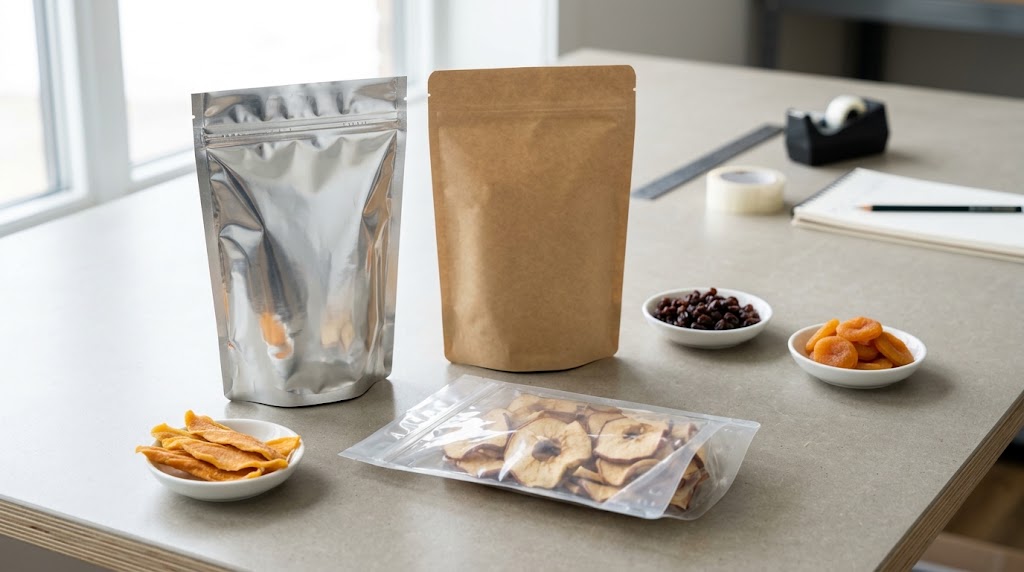
Can you store dried fruit in Mylar bags? Yes, a properly specified food-contact flexible pouch can be a candidate for human-edible dried fruit. The useful question is which complete pouch protects the particular fruit under its real storage and use conditions. Identify every layer, the food-contact surface, the water-vapor and oxygen data at stated test conditions, the window and zipper design, and the initial heat seal. Then fill and seal samples with the real product. A name, reflective color or thickness cannot prove that a bag is suitable, extend a date or make an inadequately processed fruit safe.
This article concerns conventional dried or dehydrated fruit such as mango strips, raisins, apricots, dates and apple slices. Chewy and crisp products need different quality targets. Freeze-dried fruit has its own moisture and breakage questions and belongs in a separate study. The discussion is for brands and packaging teams evaluating retail bags, rather than a set of home-dehydration instructions or a universal shelf-life calculation.
First, Define What “Mylar Bag” Means
The phrase is widely used in bag searches, but it does not describe a complete package. Mylar Specialty Films identifies Mylar® as a PET-film trademark. A merchant may use “Mylar bag” loosely for a flexible laminate that includes PET, metallized PET, foil, a heat-sealable inner film or several other layers. A silver-looking bag is not necessarily made of Mylar® branded film, nor is its silver appearance proof that it contains an aluminum-foil sheet. Ask the converter for the actual construction rather than infer it from the retail name.
For a bag buyer, a structure is a sequence with a purpose. An outer layer carries print and contributes to handling. A middle layer may affect stiffness, light exposure, water-vapor or oxygen barrier. The inner layer touches the fruit and must also work with the chosen sealing process. Adhesives, coatings, inks, window material and zipper components can matter to the finished article. Their precise roles and food-contact status depend on the supplier's actual bill of materials and intended use, not a generic diagram.
The answer is therefore conditional: a qualified pouch can be used, provided the food producer has an appropriate product and process, the supplier supplies the correct material and contact information, and the filled pouch meets the agreed storage and handling checks. “Can” does not mean “every bag sold under the term will perform alike.”
Separate three decisions before requesting samples
- Food decision: What is the fruit's approved state at packing, including relevant water-activity or other product measures, and what texture, color and flavor changes are acceptable?
- Material decision: Which documented construction, contact surface, barrier and window are suitable for that fruit and its intended market?
- Finished-pack decision: Will the actual bag, filled and heat-sealed on the intended line, remain intact and keep the fruit within its agreed quality and safety criteria along the real route?
The FDA's water-activity technical guide explains why the food's water activity matters to stability. It is the food business's job to establish the appropriate product and process controls. Packaging can limit exposure after the food is packed; it cannot replace those controls. A soft dried mango and a deliberately crisp apple slice can have different acceptability criteria even if the pouch drawings look identical.
Compare Actual Constructions, Not Colors
A useful shortlist starts with the desired fruit experience and the specified storage route. A transparent panel may help show attractive whole pieces. A metallized structure may be considered when an opaque presentation and different barrier are needed. A foil laminate may be considered for a demanding protection target, but its converted seams and handling still matter. A kraft-looking pouch may have a functional plastic or metallized laminate inside it. None is the universal “best dried-fruit Mylar bag.”
| Candidate appearance or structure | Potential role in a fruit-pouch shortlist | What must be checked before selection |
|---|---|---|
| Transparent polymer laminate | Show the fruit; support a clear retail presentation | Full layer structure, food-contact surface, measured WVTR/OTR where relevant, light exposure and sealed-bag trial |
| Metallized film laminate, often called VMPET | Opaque or reflective option for an application requiring a particular barrier and look | Exact coating/laminate, reported units and test conditions, flex and converting effects, seals and any different window film |
| Aluminum-foil laminate | Candidate when a very high intact-panel barrier or opacity is justified | Actual foil layer versus a metallic print, folds and pinholes, sealant, filling geometry and complete-pouch integrity |
| Paper-look composite | Provide a kraft visual while other layers do functional work | The inner structure, contact layer and barrier data; do not infer function or disposal route from the paper exterior |
| Mixed opaque and transparent window | Show fruit while retaining opaque brand panels | Window composition, joining area, light exposure and the performance of the whole filled pouch |
These are categories to investigate, not performance rankings. Data for one thickness, supplier or measurement condition should not be silently transferred to another. An opaque pouch may protect against display light while hiding a visible product issue; a window makes product visible but adds another material and joint. The decision depends on the fruit's actual sensitivity, display need, inspection plan and cost of failure.
Why the inside matters as much as the outside
The inner face is where fruit, sugar, coating and small fragments meet the bag. It is also the surface that must form a repeatable heat seal. A design review should identify the actual sealant and food-contact materials, not stop at the printed exterior. Check compatibility with the intended food and conditions through the documentation applicable to the selling market. Consider whether sticky pieces or fines can reach the seal, whether sharp dried edges rub a window or crease, and how the pouch behaves when partly emptied.
For material options, Barrier Layers and Plastic Films can start a discussion with a supplier. Treat broad promotional figures or phrases such as “blocks everything” as claims requiring an exact structure, specimen, method, units and conditions. A displayed number without a report matched to the proposed construction is not a specification for your fruit. In particular, an advertised “zero” transmission is not a reason to declare an entire converted bag perfectly impermeable.
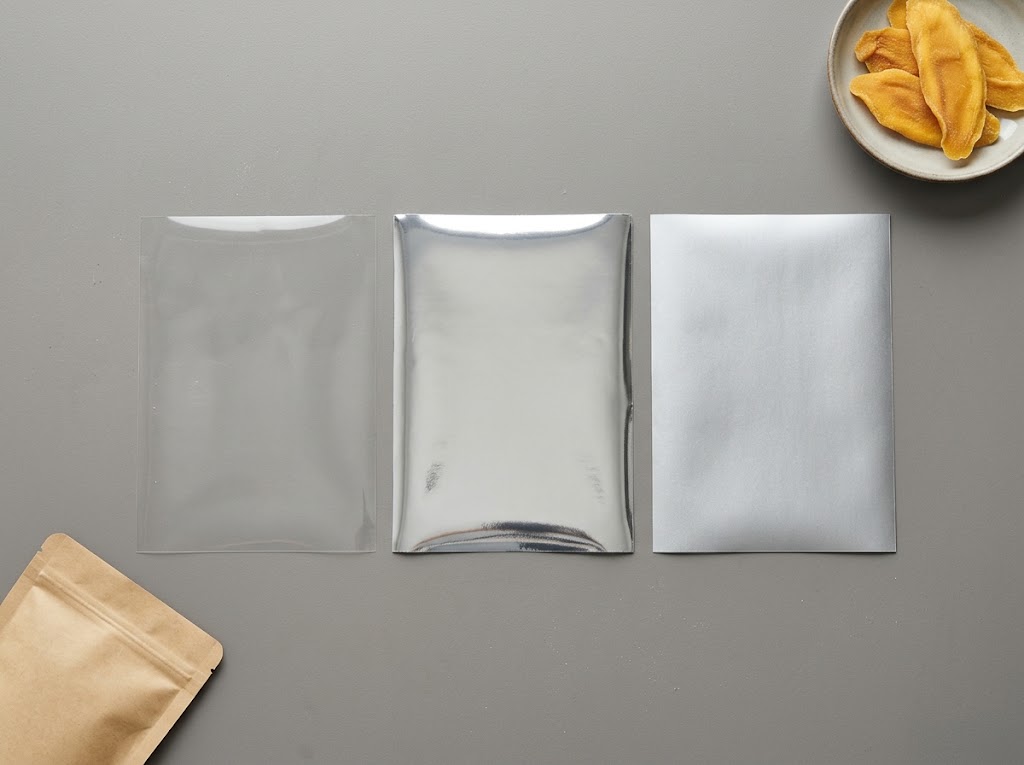
Make the illustrative material image honest
A visual comparison can show clear, reflective and opaque sample appearances. It cannot reveal microscopic layers or prove numerical transmission. The table and supplier documents carry those facts. If a diagram is used, identify only a verified layer stack from the actual supplier; do not let an AI image invent a foil thickness or suggest all paper-looking bags share the same lining.
Read WVTR and OTR Without Losing the Test Conditions
WVTR is water-vapor transmission rate for the tested material. OTR or oxygen-gas transmission rate addresses a different permeant. For fruit where the desired bite changes with moisture, the moisture side of the decision deserves direct attention. For fruit whose color, flavor or particular ingredients are sensitive to oxygen, oxygen data may also matter. Neither number is a complete safety evaluation or a retail expiry date.
ASTM F1249-25 covers a procedure to determine water-vapor transmission through film and sheeting. ASTM F1927-20 addresses oxygen-gas transmission through barrier materials at a stated temperature and controlled relative humidity. Each supplier result should state its method, specimen, construction, units, temperature, humidity, sample date and lot when available. Check whether the reported value is a measurement, an upper limit, a typical number or a marketing range. Ask whether any comparison was made under the same method and conditions.
Do not compare a number in g/(m²·day) to another lacking area or time, and do not treat an OTR value in gas volume/(m²·day) as a moisture figure. Extra pressure terms may appear in an oxygen unit; preserve the supplier's exact reporting convention. The test method and environmental conditions matter as much as the bare number. A lower reported film transmission at a specified condition can be useful for screening, but a real fruit bag also has cut edges, folds, seams and sometimes a different window material.
| Evidence offered | What it can help answer | What it cannot answer alone |
|---|---|---|
| Named material layers and thicknesses | What the supplier proposes to convert | Whether the actual bag is sealed, compliant or adequate for the fruit |
| Flat-film WVTR report | Moisture transmission of the sampled material under stated conditions | Leakage at a top seal, window joint or gusset; a date claim |
| Flat-film OTR report | Oxygen transmission of the sampled material under stated conditions | Water-vapor performance or actual headspace after filling |
| Food-contact documentation | Suitability of identified substances or materials for specified food/use conditions in the relevant market | Quality retention or integrity of the whole filled bag |
| Filled-pouch integrity and seal checks | How production samples behave under the defined method | Every future bag's performance unless process control and sampling support it |
| Fruit-in-pack storage trial | Whether representative fruit meets stated criteria along a defined route | Universal performance for different fruit, recipe, size or storage route |
The line between flat film and finished pack is a practical one. A window may have a different WVTR from an opaque panel. A zipper may be attached through a different seal geometry. A fruit strip can become trapped in the top seal. After distribution, folds and abrasion can change an individual package. Test reports are valuable, but preserve the level at which each observation was made.
Do not treat “foil,” “metallized” and “silver” as synonyms
Aluminum foil is a distinct sheet layer. Metallized PET carries a deposited metal coating on a polymer film. A silver surface might also be a decorative effect. These constructions have different material definitions and require their own reports. On a purchase brief, write the intended structure by layer rather than “silver Mylar.” Ask the supplier to identify foil versus metallized film explicitly and supply the exact structure for the sample bag. A convincing-looking inner surface does not settle that question.
Likewise, thickness is a dimension, not a standalone barrier guarantee. A thicker bag of one polymer is not necessarily the same as a thinner laminate with another barrier layer. Compare the actual reports and complete packs. If a supplier substitutes a layer, changes a window or changes a sealant after trial approval, re-evaluate which evidence still applies.
Design a Bag That Can Be Filled and Sealed
The packaging format affects both the useful volume and the chance of a clean, reliable seal. A three-side-seal flat pouch can suit a small portion; a stand-up pouch offers multi-serving display and may carry a zipper; a larger gusseted bag can hold a different volume. The right size comes from the actual fruit, not a generic “200 g” chart. Long mango strips, whole dates, raisins and apple rings settle and press against the walls differently. Test dimensions with representative pieces and the target net weight.
Leave room above the intended fill for the first heat seal. Check how a person reaches into the bag after opening, and whether the remaining fruit leaves the zipper usable. Keep fruit fragments, sugar and coatings out of the sealing zone. Evaluate the side seams, corner transitions, bottom fold and window junction as well as the straight top area. A production sample should be filled and sealed on equipment and settings relevant to the proposed run.
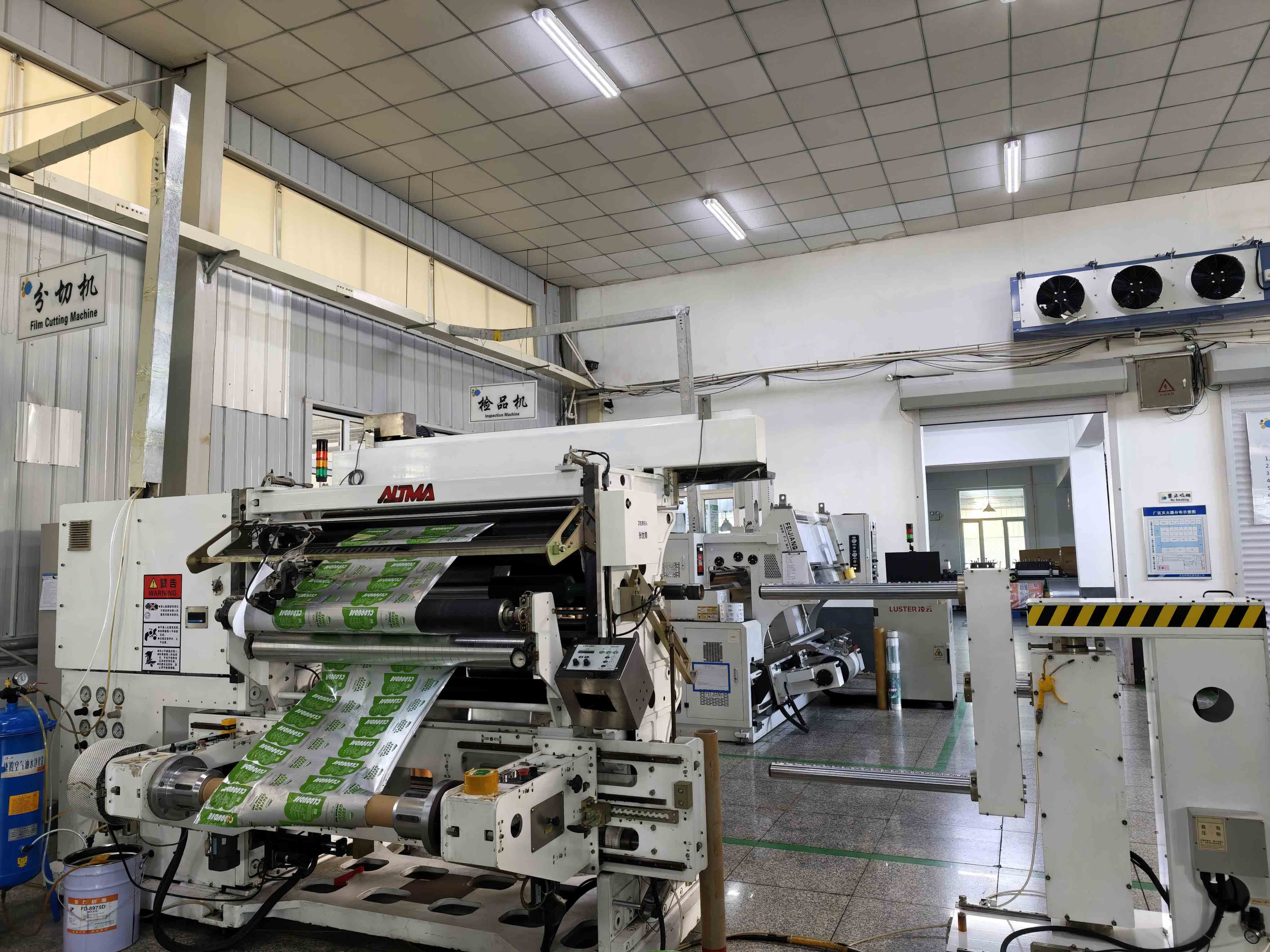
Initial heat seal versus consumer zipper
An unopened retail bag relies on a qualified initial heat seal and its converted perimeter. The zipper is a convenience for use after that original closure has been opened. If a zipper is required, place it below the top heat seal and intended tear line, with enough material for a consumer to open the bag without tearing through the track. Test the design before committing artwork or a large order. A pouch can have a zipper and still be poorly sealed initially; it can also have a sound initial seal but a frustrating zipper after opening.
ASTM F88/F88M-23 measures the strength of a sampled seal in flexible barrier materials. It helps assess a sealing process and the force to separate the tested strip. It does not inspect every millimeter of a full bag or prove the absence of a small channel elsewhere. For selected nonporous packages, ASTM F3039-23 describes destructive dye-penetration procedures that locate certain leaks and yield a go/no-go observation; they are not a general quantitative measure of all leak sizes. Choose integrity methods appropriate to the actual pouch and acceptance plan, with the test owner deciding how to handle sampled units.
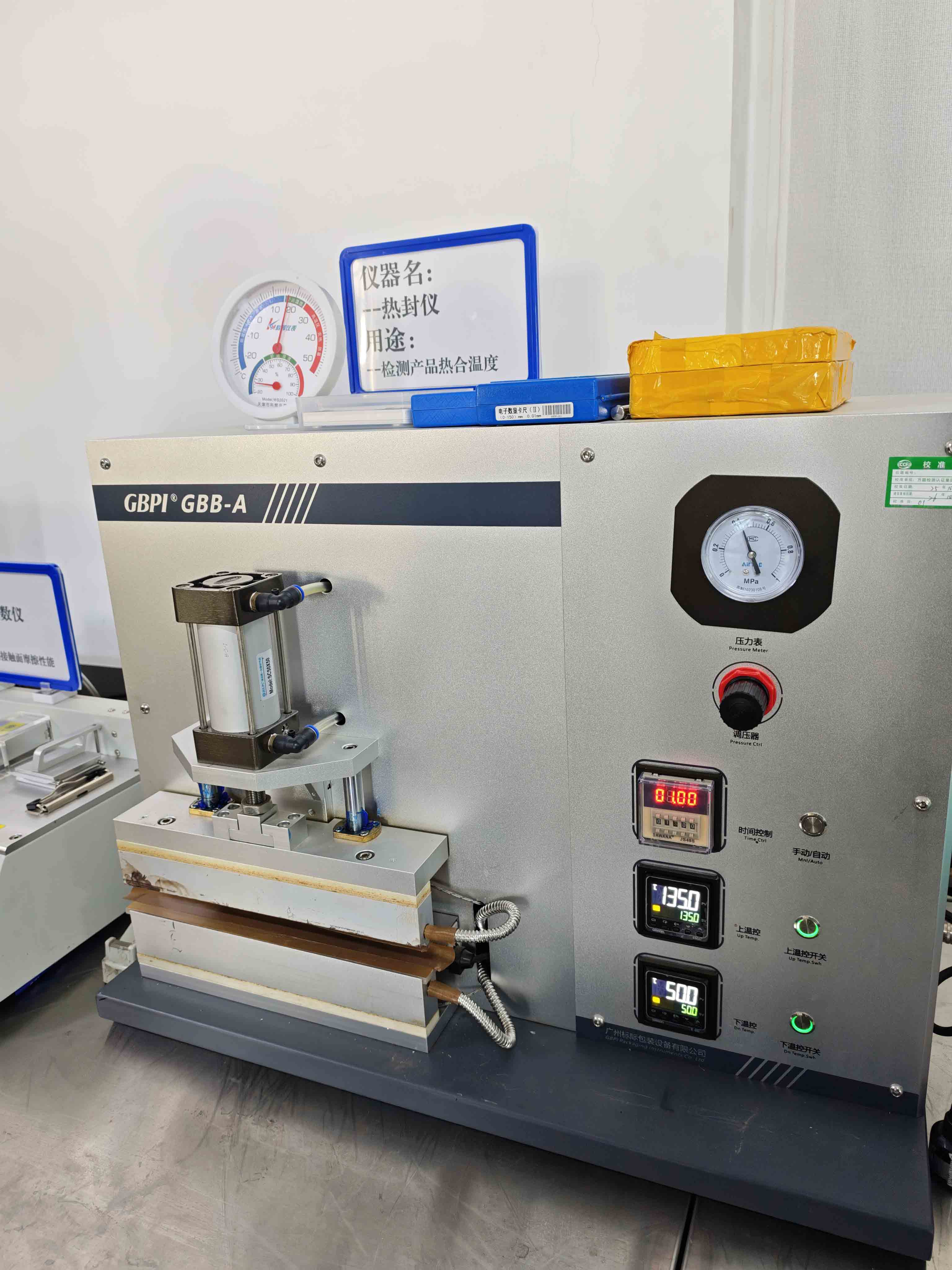
The seal window depends on the actual inner material, equipment and settings. Ask for a documented trial over the expected production range rather than one perfect hand-made sample. Retain examples from start-up, normal running and adjustments, including rejects. If fruit contamination, a fold or a weak zipper end appears, investigate the process before citing a film's barrier number as proof of protection.
Handle Desiccants, Oxygen Absorbers and Gas Flushing as Separate Decisions
These options sometimes appear alongside “Mylar bag” advice. They should start with a defined product concern, not a default packet count. A desiccant is intended to manage moisture in a particular system; it cannot correct fruit that failed its approved release state or an open seal. An oxygen absorber addresses oxygen in an appropriately designed closed pack; it does not report WVTR or prevent every moisture change. Gas flushing requires attention to the fruit, package, equipment, seal and how the intended atmosphere is checked over time.
If any active component is proposed, document the supplier's identity, capacity, compatibility, handling instructions and applicable food-contact and labeling assessment for the intended market. Consider whether it can contact the edible fruit or be mistaken for food, and how it is retained in a consumer pack. The food business should review safety, quality and actual trial results. This article does not prescribe a desiccant quantity, oxygen-absorber size, flushing gas or universal headspace target.
A simple and well-sealed portion pack may be a better comparison than a complex large pouch with accessories that consumers repeatedly open. Conversely, a multi-serving bag might be required for the selling unit. Run the comparison with the real product and consumer-use pattern. Do not transfer conclusions from a powder pack or from freeze-dried fruit to whole chewy pieces without a fresh evaluation.
Match Food-Contact Documents to the Actual Pack
“Food grade” on a product listing is too broad to resolve a specific package. Ask for the complete structure, the identity of the food-contact side, and documentation tied to the actual materials, fruit type, intended time and temperature of contact, and destination market. In the United States, the FDA's explanation of regulatory status for food-contact components makes clear that a material's status depends on the relevant substances and authorized conditions of use. Its food types and conditions-of-use tables illustrate why use details matter. The applicable assessment in another sales market may require different documents.
Do not assume that an approval for a similarly named polymer covers a different supplier, formulation or use condition. Keep the sample's material code and revision linked to its supporting documents. A change to the sealant, adhesive, coating, window or print arrangement can require review. Packaging performance and food-contact suitability are separate gates: a technically strong barrier is not automatically suitable for the food, and a suitable contact material is not automatically protective enough for the desired texture.
| Document or sample request | Why it belongs in the approval file |
|---|---|
| Exact layer sequence, nominal thicknesses, material and revision codes | Identifies the thing actually proposed and makes substitution visible |
| Food-contact declarations and supporting scope for the intended market/use | Connects the contacting article to the intended fruit and conditions |
| WVTR and OTR reports with methods, units and conditions | Allows a controlled material comparison rather than an adjective-based choice |
| Drawings of zipper, tear line, window and seal areas | Shows what film data alone does not describe |
| Filled samples made with the real fruit | Exposes fill, abrasion, settling and closure issues |
| Agreed acceptance criteria and test records | Makes a pass or failure interpretable by the responsible teams |
The result is a traceable pouch brief. It does not have to be a huge binder, but it should allow a colleague to answer which version was tested and which version was ordered. If the answer is only “the silver one,” the specification is not ready.
A Real Adjacent Project: Useful Structure, Limited Claim
Mylarbag's published 200 g kraft-paper-look stand-up pouch project for superfoods lists a MATOPP/kraft paper/VMPET/PE construction and digital printing. The visible artwork is for superfood products including açaí berry powder, bee pollen and camu camu. This is a real adjacent pouch project, not a whole dried-fruit customer case. The project page does not provide a measured filled-fruit WVTR, OTR, seal result or texture outcome.
Its value here is as a purchasing exercise. The words “kraft paper” describe a visible layer, while the listed VMPET and PE point the buyer to questions about a barrier layer and an inner sealing/contact layer. That nominal sequence does not tell us the grade, thickness, report conditions or suitability for a particular dried mango strip. A 200 g powder package does not prove capacity for 200 g of whole fruit. To adapt the format, send representative fruit, request a fresh structure and filled sample, and evaluate the complete pouch. Treat any proposed material function as a hypothesis until the actual supplier's documents and trials support it.
This example also shows why a real case should be used carefully. It can establish that a particular format and named construction were publicly listed. It cannot be turned into a fabricated story about reduced clumping, extra months of freshness or a fruit brand's sales. The packaging team's first-hand experience is strongest when the limits of a record are visible.
Validate the Filled Bag in a Short, Ordered Program
Define the fruit's acceptable starting state and intended route before comparing films. Select candidate structures for a specific reason, then keep the fruit lot, filling quantity and storage conditions comparable wherever possible. Test the first seal and completed pack. Store representative unopened units, and run a separate repeated-open/reclose arm for a zipper pouch. Record changes against same-lot baseline samples at planned checkpoints. If the fruit's safety or quality criteria fail, investigate both product and package, not just the marketing name of the film.
| Stage | Concrete question | Evidence to retain |
|---|---|---|
| Product release | Is the fruit in its approved condition before bagging? | Lot, recipe version, appropriate product measures, piece range and photos |
| Material screen | What is the exact laminate and does its reported barrier match the stated need? | Construction, food-contact scope, WVTR/OTR reports and test conditions |
| Filled sample | Does the fruit fit without crushing or reaching the sealing area? | Actual fill mass, dimensions, photos and rejected examples |
| First-seal setup | Can the line make a repeatable closure across normal settings? | Equipment/setup record, sampled seal and selected integrity checks |
| Storage and distribution | Does the completed unopened pack remain suitable on the intended route? | Exposure history, pack condition and product trend at checkpoints |
| Opened-pack use | Can a consumer open, remove fruit and reclose the pack as intended? | Defined use sequence, zipper observations and separate product trend |
| Change control | Will the approved evidence still apply after a revision? | Material, window, zipper, fruit or process revision record |
The National Center for Home Food Preservation's dried-food guidance discusses moisture reabsorption and repeated opening in a household context. It helps explain why an opened pouch deserves its own use trial. Its household storage-time ranges must not be copied into a commercial date claim. A commercial producer establishes the appropriate date and instructions from its own process, product, pack and distribution evidence.
A concise supplier brief that leads to usable samples
State: “We need a retail pouch for our conventionally dried [fruit and recipe], with [piece size range], [target net weight], [desired chewy or crisp texture], [one-use or resealable use pattern], [fill equipment], [planned storage/distribution conditions], [market], and [display-window preference]. Please propose the full structure and contact side, provide relevant WVTR/OTR reports with conditions, show the seal and zipper geometry, and supply samples for filled trials.” Replace the bracketed fields with actual approved information; do not use imagined numbers.
The customized dried fruit packaging page can help identify formats to sample. A good inquiry asks for evidence linked to the proposed structure and fruit. After a successful small trial, preserve the exact specifications in the order. A request for “thick silver Mylar bags” cannot communicate the same testable requirements.
Frequently Asked Questions
Can you store dried fruit in any Mylar bag?
No universal approval follows from the name. A particular flexible pouch can be evaluated if its actual food-contact construction, barrier, dimensions and seal suit the fruit and market. Test filled units against the producer's criteria under intended storage and use. A generic online photo, film thickness or reflective interior is insufficient to answer for an unknown bag.
Is Mylar the same as aluminum foil?
No. Mylar® is identified by its trademark owner as PET film. A pouch may combine a PET film with an aluminum-foil layer, use metallized PET, or use another construction. These are not interchangeable descriptions. Ask for the actual layer sequence and sample documentation rather than infer the material from a silver appearance.
Does a kraft-paper dried-fruit bag have a moisture barrier?
It might, if the kraft appearance is part of a documented laminate with a suitable barrier layer. Paper on the outside does not specify what lies inside or how the window and seals perform. Ask for the whole structure and WVTR report at stated conditions, then test the converted filled pouch. Do not assume paper appearance establishes recyclability or storage performance.
Is metallized film always better than clear film for fruit?
Not automatically. A candidate may offer a different barrier and light exposure, while a clear pack offers product visibility. Performance depends on the exact structure, conditions, window, converted pouch and fruit target. A clear option may be sufficient for one product and unsuitable for another. Compare actual samples and evidence rather than a material category alone.
Do aluminum-foil pouches guarantee a long shelf life?
No. An intact foil panel may be selected for a demanding barrier target, but seams, folds, pinholes, filling, storage and the fruit's starting state still matter. A supplier cannot derive a date from the foil word. The food producer needs a product-specific safety and quality assessment and a trial of representative finished packs on the intended route.
What WVTR or OTR number should I request?
Request a report for the exact candidate structure under stated method, units, temperature and humidity. First identify the product change the bag must limit. There is no single correct number for all chewy and crisp fruit. Film results screen candidates; whole filled bags and fruit quality trials determine whether a proposal works for the intended product.
Is the WVTR of the film the WVTR of the entire zipper pouch?
No. A flat specimen does not include the top heat seal, gussets, zipper weld, windows or handling damage. It is still valuable as a material comparison when conditions match. Add relevant filled-pouch integrity and storage checks instead of assigning the film figure to every part of the finished package.
Can a zipper replace the initial heat seal?
For the unopened pack, do not treat a consumer zipper as a tested substitute for the specified initial heat seal. The zipper supports reclosure after the first opening. Its position should allow the user to remove the top strip without damaging the track, and repeated use should be evaluated with the real fruit and fill level.
Is “food grade” enough documentation for dried fruit?
No. Identify the actual contacting materials and applicable evidence for the intended food, contact time and temperature, and destination market. A generic statement or approval for another material version may not cover the proposed pack. Match the samples, material revision and supporting documents before approval.
Should I put an oxygen absorber or desiccant in the bag?
Only after the food team identifies the target risk and reviews the complete product, component, pack and applicable requirements. Moisture and oxygen are different concerns. An insert does not correct an unsuitable fruit starting state or a leaking seal. Specify any active component and evaluate its handling, compatibility and consumer use in the actual trial.
How do I know whether a dried-fruit pouch seal is good?
Inspect representative filled bags and use methods selected for the actual structure and acceptance plan. A sampled seal-strength measurement can help assess consistency, while a suitable integrity check addresses specified leak paths. Neither a smooth appearance nor one strip result proves every bag sound. Keep production setup, changes and rejects with the evidence.
Can a 200 g powder-pouch case prove that 200 g of dried fruit will fit?
No. Powders and whole fruit occupy and move through a bag differently. The cited superfood project documents a related stand-up format and nominal structure only. Fill the proposed size with the actual fruit, leave sealing clearance and assess display and consumer access before confirming capacity.
Does this guidance also apply to freeze-dried fruit?
The discipline of identifying materials, contact layers and whole-pack tests applies, but the product's starting state, crispness target, moisture sensitivity and breakage behavior need separate evaluation. Do not carry over the chewy-fruit examples, film choice or storage conclusion as if the foods were interchangeable.
Scope and trademark note: This guide does not establish a universal storage time, food-safety threshold, legal authorization or supplier-specific barrier number. The food producer owns the product and label decisions. Mylar® is a trademark of Mylar Specialty Films for PET film; its use here also addresses the common search phrase “Mylar bags” without claiming that every pictured or proposed pouch contains that branded film.