
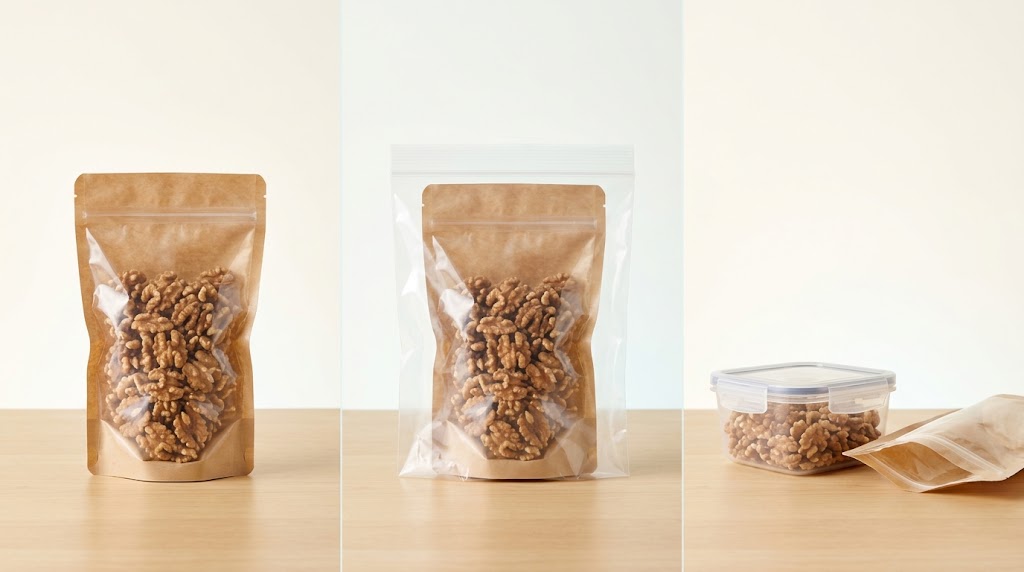
Yes, some unopened bags of dry nuts can go straight into the freezer, but the retail package is not automatically a suitable freezer container. Follow the product label first. If the bag is intact, well sealed and appropriate for freezing, it may be sufficient; if its material or history is uncertain, add an airtight freezer overwrap. Once opened, transfer or repackage the remainder in a clean, dry, odor-tight container. Keep moisture away as the nuts come back from the cold.
That answer needs one important scope limit. Here “nuts” means dry retail kernels or dry nut snacks, not fresh chestnuts, boiled peanuts, nut-containing pastries, wet fillings or a product whose label requires a separate refrigerated or cooked-food procedure. Those products may have different food-safety needs. Freezing can help preserve the eating quality of suitable nuts; it is not a kill step for harmful bacteria. The University of California's nut-handling guidance explicitly says refrigeration and freezing do not destroy Salmonella and that harmful bacteria cannot be detected by looking, smelling or tasting.
The nuance behind the direct answer is documented. California Walnuts' consumer guidance says walnuts bought in sealed packaging may be kept in their original packaging in a refrigerator or freezer, and it advises transferring them to an airtight container after opening. That is a useful real example, not a certificate for every paper-look, windowed, zippered, thin or damaged nut pouch. For a different brand and construction, the responsible questions are: Is the bag still factory sealed? Does the manufacturer allow freezing? Will the complete package resist air, moisture, odor and damage during the intended storage and handling? The rest of this guide shows how to decide.
Decide between original bag, overwrap and transfer
Start with the unopened versus opened state. An unopened factory seal may be more protective than a repeatedly reclosed consumer zipper; the two are not interchangeable. Next inspect the bag, read the storage directions and consider how long it will stay in the freezer, how crowded the freezer is and whether it sits near strongly scented food. When facts about the original retail bag are missing, a clean freezer-suitable secondary enclosure is a practical precaution. It does not repair spoiled food or establish a new expiry date.
The first row is not an automatic yes for every plain plastic or “Mylar” bag. A printed material name rarely tells a shopper the complete oxygen and water-vapor transmission of the filled pouch, the quality of its actual heat seal, or whether its film and ink were qualified for the freezer journey. Nor does the presence of a zipper prove that the initial top seal was closed properly. A shopper can inspect obvious damage and follow instructions; a brand must do finished-package tests before making a freezer-use claim.
This distinction matters when reading online advice. Many articles correctly say that nuts themselves can be frozen, then jump to “leave them in their retail bag.” Those are separate decisions. The University of Minnesota Extension's freezing guidance explains, for frozen foods generally, that limiting air exposure and using packaging designed for freezing can protect quality. Its examples are not a laboratory result for a named nut pouch, but they support checking the complete enclosure rather than assuming any thin wrapper is equivalent to a freezer bag.
A quick five-question check before the freezer
1. What exactly is inside? Plain dry walnut halves, roasted peanuts and coated nut mixes do not have identical surface, oil, moisture and texture behavior. The phrase “dry nuts” does not extend this article to fresh chestnuts or wet boiled peanuts. Follow special label instructions for mixed snacks, chocolate, syrup coatings or foods with other perishable ingredients.
2. Has the bag been opened or damaged? Inspect the first heat-seal band, side seams, corners, window region and any point where a hard kernel or carton edge may have scuffed the film. A slight bend in a stand-up gusset is normal geometry; a pinhole, separated seam or water-stained pack is a different question. If the bag is already open, clean and dry a suitable secondary container rather than pretending a zipper is the same as the unopened pack.
3. What does the label say? “Store in a cool dry place” does not certify freezer suitability, and a printed best-before date set for one storage condition does not automatically become a new date at 0°F/−18°C. If the brand gives an explicit freezing or after-opening instruction, use it. If it does not, you can protect the closed bag with overwrap for home quality management, while recognizing the manufacturer has not made a confirmed freezer-life promise.
4. What protection will the freezer environment demand? The package may sit against frozen sharp-edged foods, be handled repeatedly, and share space with fish, onions or other odors. Keep it away from crushing and odor transfer. The UC publication notes that shelled nuts absorb moisture and external flavors and calls for clean, moisture-free, odor-tight packaging. An exterior freezer bag or rigid container is especially sensible when the original bag offers uncertain protection.
5. How will you use the nuts later? A small bag used once is easier to leave unopened until needed. A large bag brought repeatedly between a warm kitchen and freezer needs a portioning plan. Consider dividing the dry nuts into clean freezer-suitable portions after the initial opening, retaining the lot/date information. Do not repeatedly expose the same master bag to humid kitchen air merely to take one handful.
What the original pouch material can and cannot tell you
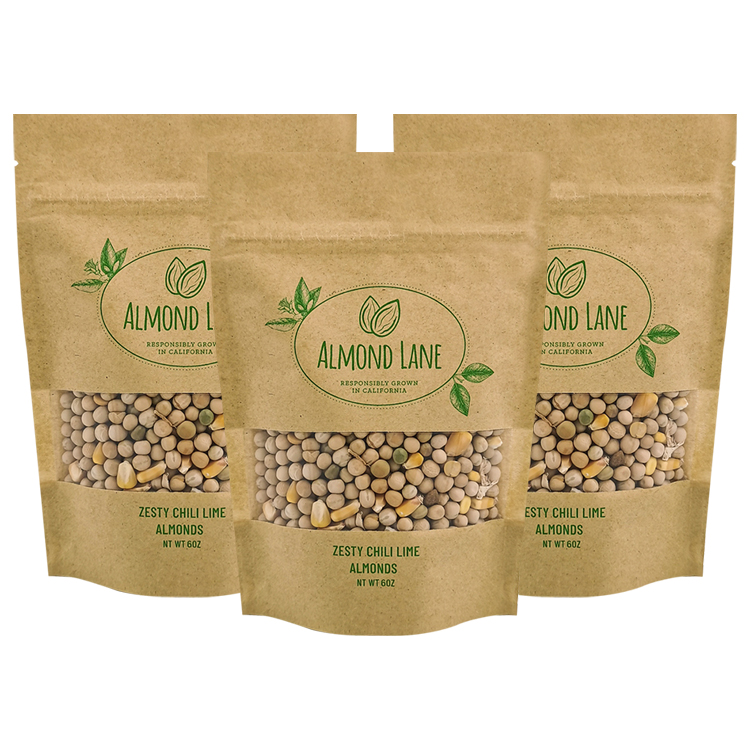
A retail nut pouch can combine a paper-look exterior, plastic film, a barrier layer, a clear viewing window and a heat-seal layer. The complete design may change from one customer project to another. Mylarbag's published US 6 oz nut-and-seed project lists a stand-up pouch, digital printing and kraft paper/PET/PE, with a horizontal window visible in the photos. Those are public configuration fields. The project does not publish frozen-flexibility tests, oxygen/water-vapor values for the finished windowed pouch, freezer storage trials or an approval to print a freezer duration on a new customer's label.
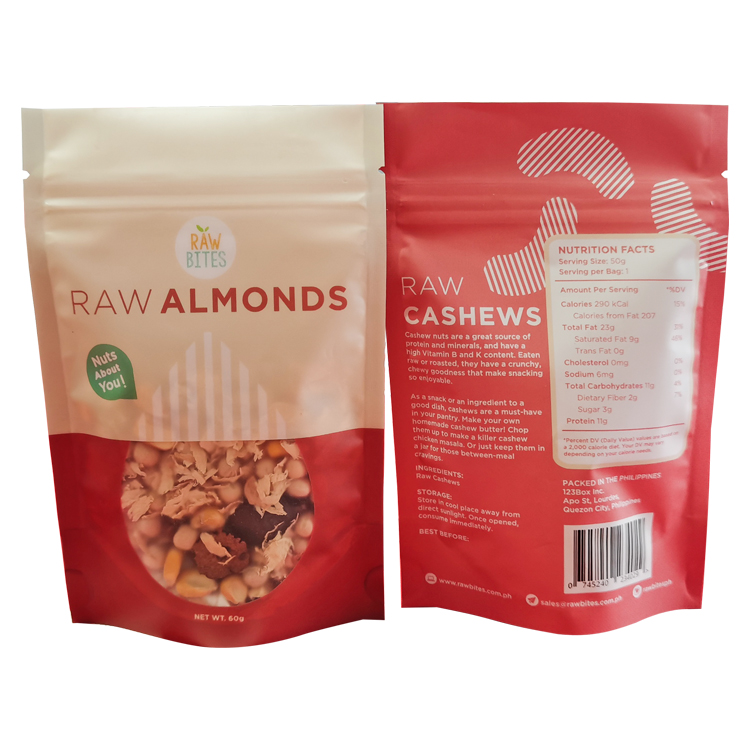
Similarly, Mylarbag's Philippines raw-nut project shows stand-up packs for several nut products and shaped windows. The page's shorthand material string is not a reliable basis to invent an exact complete layer order, and the image cannot prove the zipper remains tight or film remains sound after freezing. The existence of a clear window is a prompt to ask about the window region's actual construction, not to declare it either leaky or freezer-ready by appearance.
The close-up of a real Philippines front and back panel also shows where storage wording and a “BEST BEFORE” field may be printed. It is valuable for understanding the consumer communication problem: if a brand intends “freeze unopened, transfer after opening, keep dry while warming,” those directions must be tested and then conveyed legibly. The photographed case has no published freezer result, and its printed field is not evidence for any particular frozen duration.
Do not translate the US or Philippines material listing into a freezer rule for another SKU. A brand owner should ask the pouch supplier for the proposed structure, sealant, window and printing specification for the particular project, then test the actual filled and sealed bag. For a shopper who cannot obtain that information, leaving an apparently sound unopened pouch intact while adding a freezer-suitable secondary enclosure is a practical, reversible choice. It avoids pouring a good product out of its factory seal solely because an online list says all retail pouches are too thin.
Protect the package while it is frozen
Set the freezer to 0°F/−18°C or colder and use an appliance thermometer where possible; FoodSafety.gov gives that household freezer target. A stable freezer environment is different from a bag repeatedly warming near the door. Keep the nuts away from strong-smelling foods and from heavy or sharp-edged packages that can abrade the film. If there is uncertainty about odor protection or rough handling, put the unopened retail pouch inside a suitable closed freezer bag or rigid outer container. Record the date placed in the freezer, but do not overwrite the original lot or manufacturer's date.
A freezer overwrap is a secondary enclosure, not an excuse to leave the inner pouch torn. If the inner bag has leaked, it may already have been exposed before you noticed. If it is wet, visibly moldy, heavily abraded or smells wrong, freezing cannot rewind that history. Likewise, an outer carton offers some handling protection but does not turn a loose inner seam into a seal. If the only concern is uncertainty about a sound package's long-term odor or air protection, an overwrap can reduce additional exposure without breaking the original seal.
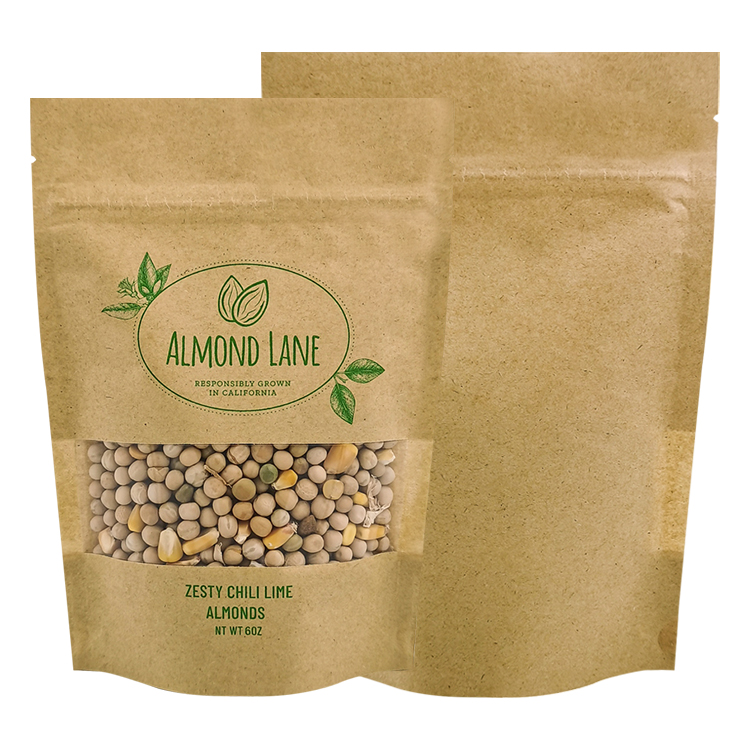
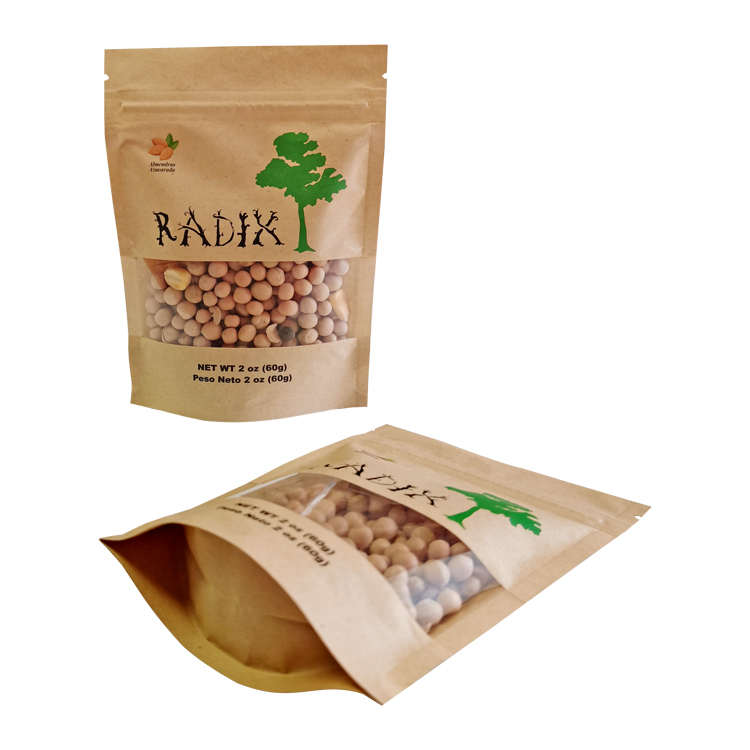
The Puerto Rico candied-nut case demonstrates another flexible stand-up format with a visible window and publicly listed kraft paper/PET/CPP. One project image shows the same style standing and laid down. It is useful for thinking about carton contact, window position and how the bag is handled, but it does not show frozen candied nuts or prove that a sugar coating would keep the same texture after a freeze-and-warm cycle. A candied SKU would require its own food and package trial.
Freezer burn is often discussed as though it is a special infection. It is a quality description for drying of poorly protected frozen food, not a new way to disinfect or sterilize nuts. The University of Minnesota Extension's freezing page explains the general role of air, wrapping and moisture loss in freezer burn for frozen foods. Nuts have a different water content and quality profile from the fruit and vegetables illustrated there, so do not diagnose a specific nut-pack failure from a generic freezer-burn picture. A stale, oxidized or odor-tainted nut can be disappointing even without visible frost; careful package and flavor checks are more useful.
Coming out of the freezer: keep moisture off the nuts
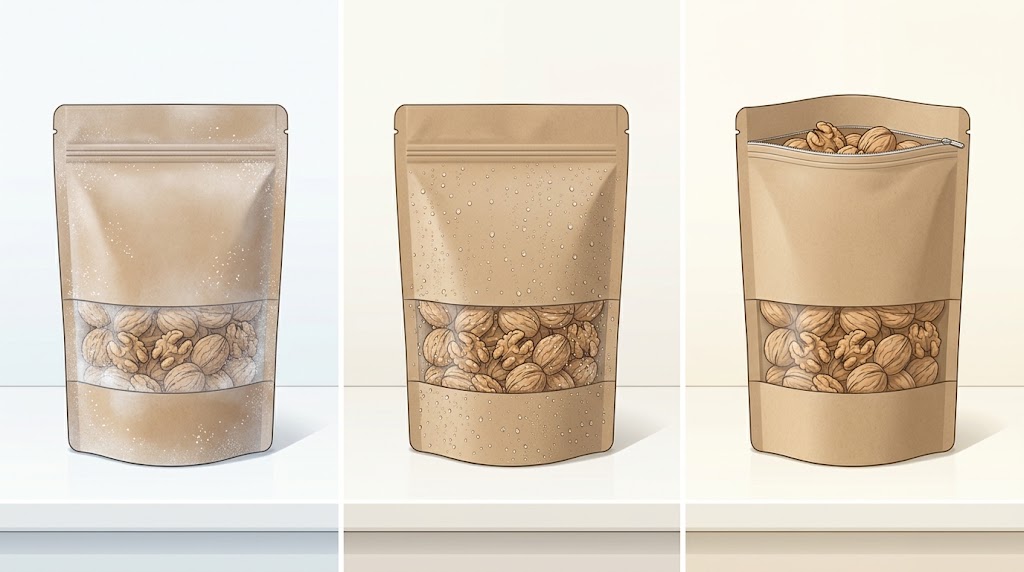
A very cold surface exposed to warm, humid air may collect condensation. On the outside of a sound, closed pouch, that moisture can be wiped away without touching the nuts. Opening a still-cold pouch in a humid kitchen gives room air direct contact with cold kernels and the inner surface; that is the avoidable route. This is a moisture-control inference from the physics of condensation and from the Almond Board's cold-storage warning that roasted nut products need protection from condensation when removed from cold warehouses. UC Extension's dried-food guide likewise warns that containers moved into a warm kitchen can collect condensation and reintroduce moisture. Neither source supplies a universal waiting time for every size of retail nut bag.
For an unopened, shelf-stable dry-nut pouch that you intend to empty at room temperature, a practical routine is: take the closed bag or closed outer container out of the freezer; leave it closed in a clean, dry place while it loses the freezer chill; wipe any exterior moisture away; then open with dry hands and use or repackage the contents promptly. This keeps humid room air out of the interior during the coldest stage. Do not apply this room-temperature routine to products whose label requires refrigeration or special thawing—follow the actual food's instructions. If you need only a small amount of dry nuts, taking a portion from frozen for immediate recipe use may be simpler than warming and re-freezing the entire supply, provided the remaining package is promptly protected.
The instruction to keep a dry-nut pack closed while it warms is meant to reduce condensation reaching the product, not to guarantee that every package stayed dry inside. If you see water droplets or frost inside a supposedly sealed pouch, a broken seam, abnormal clumping, mold or unusual odor, treat that as a package/product question rather than wiping the outside and declaring success. The UC nut-handling publication distinguishes quality deterioration from pathogens that normal senses cannot detect; do not taste a suspect wet or moldy sample to “clear” it.
Can you put a warmed pack back in the freezer?
For dry nuts that remained clean, dry and properly protected, a brief trip out of the freezer is primarily a quality-management question; avoid turning it into a blanket safety approval for unknown foods. Repeatedly opening, warming, exposing to humid air and re-freezing the same big bag can work against the quality benefit of cold storage. Divide a large supply into smaller protected portions once and use a working portion, following the brand's directions. If a mix contains perishable ingredients, if liquid entered the pack, or if the package was left under uncertain conditions, the relevant food-safety advice is product-specific and should not be inferred from rules for plain dry nuts.
What to do if the original bag has a problem
Notice where the problem appears. Exterior frost on a closed outer container is different from droplets inside the nut pouch. A crumpled carton is different from a pinhole at a sharp kernel. An off odor picked up after prolonged freezer storage can arise from exposure to surrounding foods or the product's own oxidation, and cannot by itself locate a microscopic leak. The table below gives first checks rather than remote diagnoses.
If a branded pack is defective, keep its lot code, original date and photographs of the actual damage when contacting the retailer or producer. Avoid relying on a photo of a different sample or declaring the entire line defective from one bag. A producer should compare retained samples and packing records, inspect the filled package and consider handling history. Consumers can reasonably use a protective overwrap for a good bag; they cannot verify the manufacturer's full freezer qualification from home.
For brands: specify the frozen journey, not just a film name
If a nut brand wants to say “freeze in the original package,” it must define what that means for its own product. Is the pouch sold frozen from the start, kept at ambient temperature and optionally frozen at home, or taken repeatedly from a freezer for portioning? What is the intended freezer temperature and duration? What happens in distribution, including cartons, drops and friction between hard kernels and film? Is the pack windowed? Is the initial seal intact and is a zipper intended only for later consumer use? These choices lead to different samples and tests.
Build a qualification plan around filled, sealed, production-representative packs. Check that the proposed film, print and seal construction retains functional integrity through the intended cold storage and realistic handling. Evaluate package leak/integrity, seals and corners, any window region, abrasion and carton fit. Separately follow the actual nut product for flavor, odor, crunch, coating behavior and relevant analytical measures through storage and after a defined warm-up. Record the test temperatures and acceptance criteria before interpreting the results. An empty flat laminate swatch, room-temperature barrier datasheet or single cold bag that looks normal cannot establish consumer quality at the proposed end date.
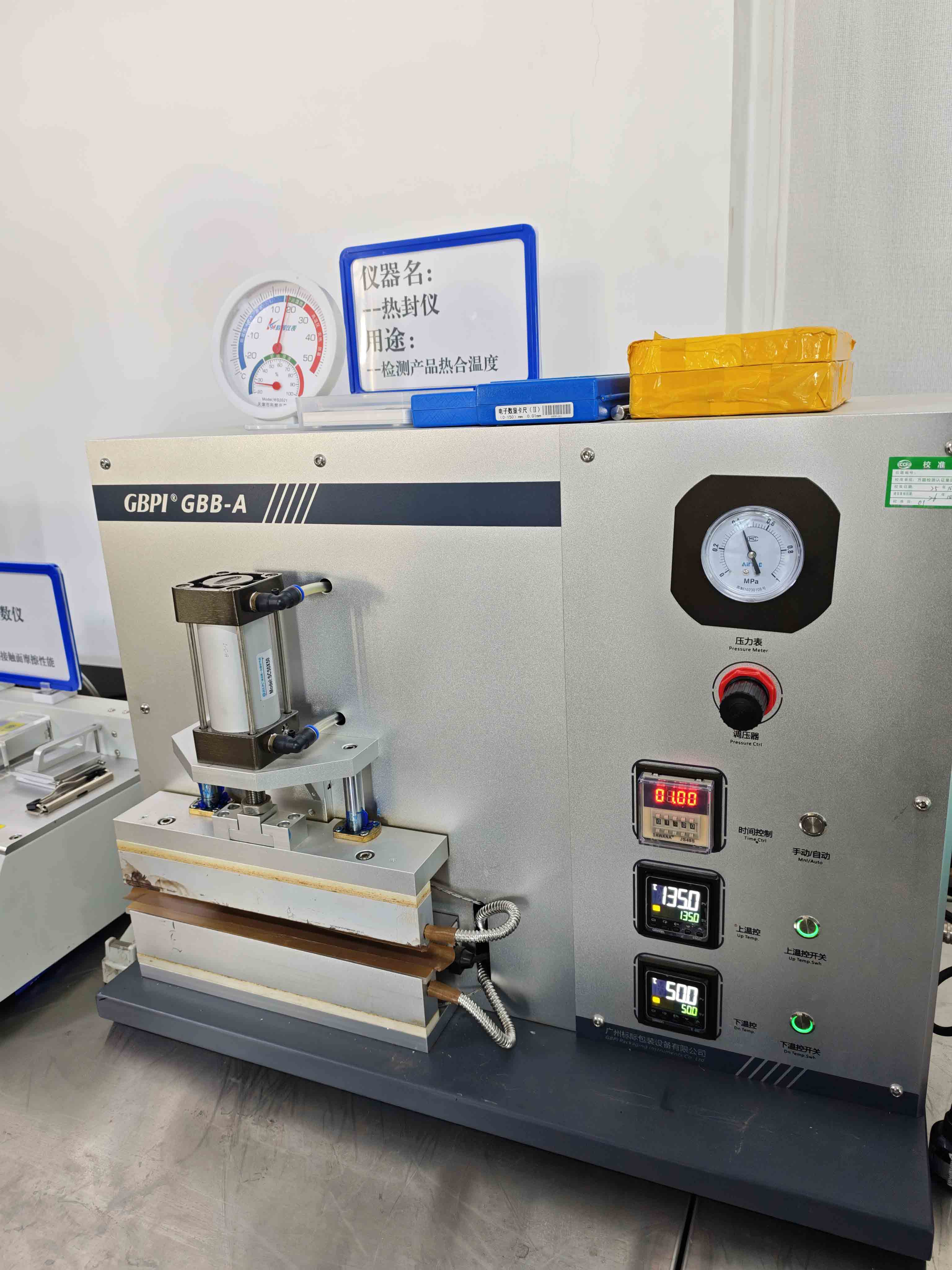
Mylarbag's real heat-seal testing equipment illustrates one part of package development. Seal-setting and material checks can support choosing a candidate bag, but they do not by themselves certify how long a particular nut recipe lasts frozen. A brand should provide the nut type, process, intended fill, cold-chain route, closure and window requirements, expected consumer handling and quality criteria so the test package represents the real use.
Recommended Packaging Configuration
For a dry nut SKU whose brand plans to recommend original-pack freezing, begin with a production-representative stand-up or flat pouch sized to the actual fill and able to take a clean first seal. Evaluate an appropriate moisture/odor and oxygen-protection construction, including its window if one is requested; ask for full material and relevant test information rather than relying on appearance. Plan a protective carton and a legible label that distinguishes the unopened pack from after-opening storage. A zipper can serve portioning convenience after opening, but qualification must examine both the first seal and the consumer route. If the proposal uses nitrogen or vacuum, specify and verify the actual process separately rather than assuming it makes the pouch freezer-ready.
The nuts packaging collection provides real format examples for a first discussion. For a project-specific candidate, contact Mylarbag with the actual nut recipe and form, target net weight, destination market, intended ambient or frozen distribution, freezer conditions, window/closure preference, artwork and what freezer-use wording you hope to support. Request samples and a testing plan. The supplier can quote and make a structure for evaluation; the food brand must approve storage instructions and any duration from evidence on its own finished product.
Frequently asked questions
1. Can I freeze an unopened store-bought bag of nuts as is?
Sometimes. California Walnuts explicitly permits its category of sealed walnut packages to be stored in the original package in a freezer. For another brand, start with its label and inspect the factory seal and bag. If freezer suitability or long-term protection is unclear, keep the original seal closed and add a clean freezer-suitable airtight overwrap or container. Do not transfer nuts out of a sound factory pack merely because its exterior looks like paper; appearance does not reveal the complete construction.
2. Is a resealable zipper pouch the same as an unopened sealed bag?
No. Once the first seal is broken, the remaining nuts face repeated room air, handling, moisture and odor exposure. A zipper may help only if it is clean and fully closed. California Walnuts advises moving walnuts from an opened bag into an airtight container for cold storage. For other nut products, follow their directions and use an appropriate dry, odor-tight secondary container if the original reclosure is uncertain. Retain the label, lot and date.
3. Does a “Mylar” or foil-looking nut bag need another freezer bag?
The name or appearance alone cannot answer. Complete laminate, window, seams, puncture resistance, freezer handling and actual fill matter. A sound unopened pouch with tested manufacturer freezer directions may be sufficient; a thin or uncertain retail bag can benefit from a sealed outer freezer enclosure. The second bag is a practical extra layer against air, odors and mechanical damage, not proof of an extension to the printed shelf-life date.
4. Should frozen nuts come to room temperature before opening?
For a suitable shelf-stable dry-nut pack being emptied in a warm, humid room, keeping it closed while it loses its freezer chill is a sensible way to limit condensation directly on cold nuts. Wipe moisture from the outside first. There is no universal number of minutes; pack size and humidity vary. If the product label requires refrigeration or special thawing, follow that instead. For recipe use, you may only need a small frozen portion, leaving the remaining supply promptly sealed and cold.
5. How long do nuts last in the freezer in their original bag?
There is no single number for every nut, preparation and retail bag. UC's consumer guidance gives broad freezer quality ranges and a table that varies by nut and in-shell/shelled form; it does not certify a particular Mylarbag project or original package. The brand's date was set under its stated conditions, and only its own product/pack validation can support a different printed frozen period. Cold storage can preserve quality without repairing an already stale or damaged product.
6. Can freezing make a damp or suspect bag safe again?
No. The UC guidance warns that freezing does not destroy Salmonella and that harmful bacteria cannot be identified by ordinary senses. Visible mold, wet contents, a split seal or a recall calls for the appropriate product-specific response, not a freezer “reset.” Keep the original label and lot for the seller or brand when investigating a defect, and do not taste a suspect bag to decide whether it is safe.
The practical answer
You can freeze some unopened dry-nut bags in their original packaging, especially when the brand expressly permits it and the pack is sound. Otherwise, inspect the pack and consider a suitable closed freezer overwrap. After opening, change to a clean, dry, odor-tight storage routine. Control moisture when moving suitable dry nuts from cold to warm by keeping the package protected until you are ready to open it. For a brand, the words “freezer suitable” need finished-pack and food-quality evidence for the actual recipe and journey—not a material nickname or an attractive product photograph.