
Shredded cheese is not a block of cheese placed in a larger bag. Cutting creates much more exposed surface. Fine pieces travel through the filler, collect near the mouth of a pouch, and can get caught in a heat seal or zipper. A pack that looks fine at the end of the line can later show clumps, condensation, changed headspace, or a leak. Each symptom has more than one possible cause.
The short answer: a commercial shredded-cheese line prepares and portions the cheese, fills a package selected for that product and machine, manages the intended air or modified atmosphere, and makes a verified first seal. A reclosable zipper may be added for consumer use after opening. The producer then checks the filled package and the cheese through the intended refrigerated distribution and shelf-life period. Product formulation, packaging material, sealing, and cold chain have to be evaluated together.
This guide is written for dairy brands, co-packers, and packaging buyers. It concentrates on the shred-specific decisions that a general cheese-packaging guide cannot cover in detail. The cheese producer owns its formulation, process, sanitation program, label, and shelf-life validation; the pouch converter supplies a specified package and relevant material information.
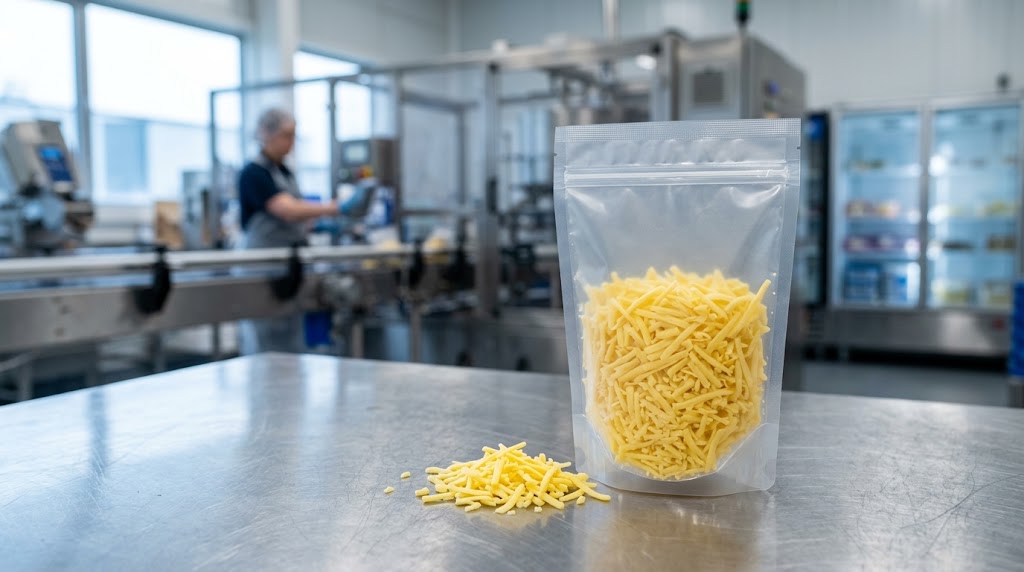
Illustrative cover image. It does not represent a measured shelf-life result or a documented cheese customer project.
A Practical Map of the Packaging Process
The exact line varies by cheese, plant, throughput, and equipment. Still, the handoffs are easy to map. A brand needs to know where cheese quality ends, where the pack begins, and where a joint check is required.
Do not assume every brand adds the same anticaking ingredient or uses the same gas blend. A low-moisture mozzarella shred for foodservice, a retail Cheddar blend, and a freshly shredded specialty cheese can have different product and use requirements. The package should be specified after those differences are described, not before.
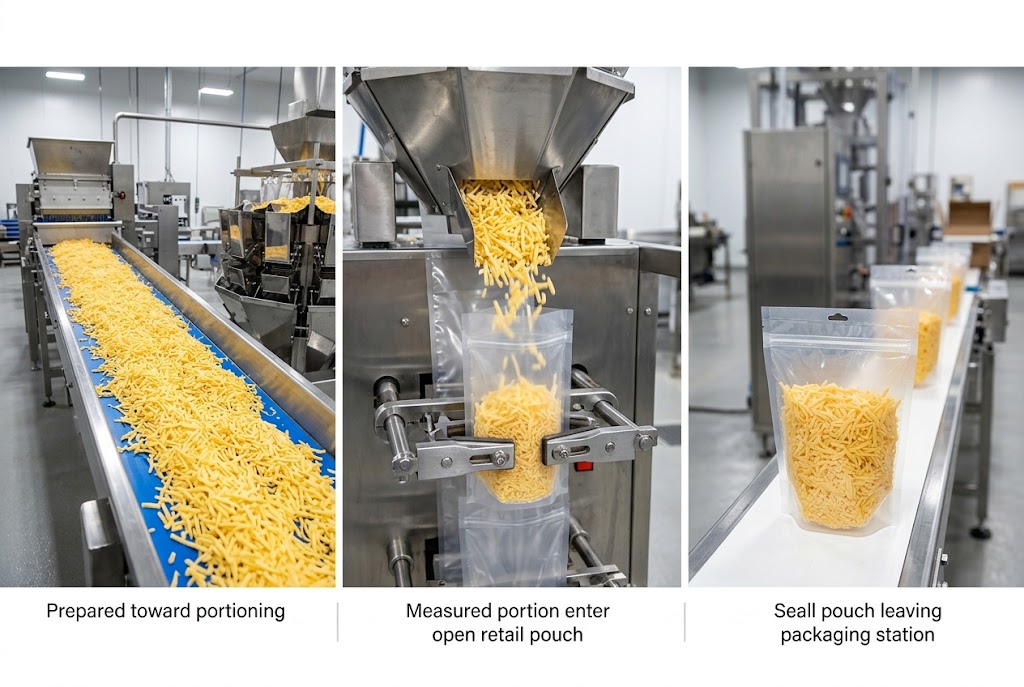
Illustrative process map. No equipment configuration is prescribed here.
Why Do Shreds Clump or Stick to the Bag?
“Sticking” can describe several observations. The shreds may fuse to each other, leave a few oily particles on the inner film, form a damp mass at a cold corner, or lodge in the zipper. Those are different investigations. Before requesting an “anti-static cheese bag,” ask the quality team to photograph the problem, identify its location, and compare affected lots with unaffected ones.
Shredded-cheese producers may use anticaking agents to improve separation and handling. A Journal of Dairy Science study of shredded Cheddar compared several anticaking treatments and consumer responses. It supports the fact that product treatment can influence shred appearance and use; it does not establish a universal recipe or prove that a packaging film can replace a formulation decision. Ingredients and permitted uses must be assessed by the food producer for its market.
Cheese condition at cutting and filling also matters. Warm or wet surfaces, released fat, variable shred size, and compression can change how the product flows and packs. Temperature changes during storage may reveal visible moisture on the product or inside the package. A pouch with a clear window makes some observations easier, but the window is not necessarily their cause. Any explanation should be tested against the particular recipe, lot, and storage history.
Separate a product texture problem from a package integrity problem. If the cheese becomes a solid mass but the unopened pack remains intact, a leak investigation may still be useful, yet formulation and handling deserve their own work. If a seal channel is visible, correct the closure process even if the shreds remain free-flowing. The food and packaging teams should share evidence rather than assigning a cause from a photograph alone.
Choose a Retail Pouch Around the Fill and Use Pattern
A shredded-cheese pouch must open on the line, accept a loose fill, retain enough room for the first seal, fit the display and shipping system, and support the way a consumer pours the product. The same printed dimensions can yield different usable volumes when a gusset, zipper, headspace, and top-seal allowance are added. Make filled samples at the intended weight and check them in the carton and refrigerator display.
A stand-up pouch can provide a wide printed face and a reclosable zipper. A flat pack or rollstock format may suit another line or portion size. Foodservice bulk shreds have different handling and repeated-use needs from a small retail bag. A high-quality mock-up without actual cheese cannot establish whether the base stands, the zipper is easy to grip, or loose shreds block the sealing jaws.
The published Mylarbag cheese-bag page offers custom pouch configurations for shredded cheese. Use the stand-up pouch options to discuss dimensions, print, and zipper placement, then request a trial construction. A retail cheese bag is not automatically the right format for every portion, and a generic size chart is not a production drawing.
Give the top of the pouch enough space
Lay out, from bottom to top, the filled product level, zipper track, consumer opening route, tear notch, untouched grip area, and final factory heat-seal band. Those zones must not collide. If a line needs a larger opening to fill quickly, a decorative narrow-neck shape may be impractical. If the top seal sits too close to the zipper, the jaws can distort the track or leave too little film for opening. Ask for a marked dieline and inspect a filled prototype from both sides.
Do a real user trial after the unopened pack has passed. Ask people to open it, pour a serving, align the zipper, reclose it, and store it as instructed. A zipper that feels strong in an empty sample can collect cheese particles in use. Reclosing does not recreate the factory atmosphere or reset the printed use-by date.

Real factory image: pouch converting. The cheese producer's filling and gas-flush equipment must be evaluated separately.
MAP: Define a Starting Atmosphere and Watch It Change
Modified atmosphere packaging replaces some of the original air with a specified gas mixture. A producer might investigate carbon dioxide, nitrogen, and a low initial oxygen target, but the correct process belongs to the particular cheese and validation program. The package must retain the intended atmosphere well enough for the product goal, while the line reliably establishes that atmosphere at production speed.
Initial residual oxygen is a critical measurement when the design relies on oxygen control. Air may be trapped among shreds, even if the gas supply and purge setting appear correct. A point measurement immediately after sealing is only a starting value. The concentration can change with gas transfer through film, leaks, product interactions, and distribution. A commercial study of MAP Cheddar blocks monitored oxygen through storage and transport; its block format and experimental conditions are not shredded-cheese specifications, but it demonstrates why transport handling and pack integrity deserve measurement after the filling line.
Gas composition can affect the cheese itself. In an experimental study of Cheddar shreds, the combination of the studied gas atmosphere and fluorescent light changed color and volatile-compound measurements under its specific conditions. Do not take either pure-gas treatment from that experiment as a recommended commercial blend. Instead, compare your cheese's flavor, color, visible growth, headspace, and package shape under the actual retail lighting and cold chain.
If a bag feels full, distinguish the approved MAP headspace from later, unexplained expansion. If a pack appears to draw down, consider gas dissolution and product interaction before labeling it a leak. If it expands unexpectedly, hold the lot and investigate through the food business's procedures. Neither appearance alone is a safe consumer diagnostic. The separate planned article on cheese-bag inflation can address complaint triage in detail.
What a MAP trial should record
- Product identity, lot, shred size, formula, fill weight, and temperature.
- Packaging film lot, complete construction, pouch dimensions, window, zipper, and seal geometry.
- Gas supply, setpoint, purge settings, line speed, initial headspace or residual-oxygen results, and rejection rules.
- Sealing conditions and observed contamination in the top-seal area.
- Storage and movement history, including handling and display lighting.
- Time-point results for package appearance, gas composition where measured, seal integrity, and the cheese producer's microbiological and sensory criteria.
Without this record, a successful pilot is hard to reproduce and a failed one is hard to diagnose. Changing film, gas, zipper, and fill weight in the same trial may hide the factor that mattered.
Barrier Film Is One Part of the Finished Pack
Shredded-cheese buyers often ask for the “highest barrier” structure. First identify what performance is limiting the current pack. A film can be engineered for lower oxygen or water-vapor transmission, improved puncture behavior, print stability, or a particular sealing window. The best commercial choice still depends on cost, clarity, recyclability goals, line behavior, and the product's own quality limits.
Ask for the full layer sequence, thickness, sealant and barrier details, any coating or metallization, and the window construction. Polyethylene may provide a sealable inner layer; PET, PA/nylon, EVOH, and other materials can serve different functions in a design. Do not infer a measured barrier from a polymer name. A nominal film OTR or WVTR must be accompanied by its method and test conditions, and the printed commercial structure should be identified. ASTM D3985 and F1249 describe common methods for oxygen and water-vapor transmission through film, respectively.
The FDA explains that food-contact status depends on the substances in the article and their authorized intended uses. Request documentation for the actual film, zipper and other components under refrigerated or frozen conditions as applicable; do not rely on “food grade” as a substitute for a specific review. See the FDA food-contact guidance and conditions-of-use definitions. Mylarbag's plastic-film catalogue can start the supplier conversation, but a sample and data sheet must match the proposed cheese pack.
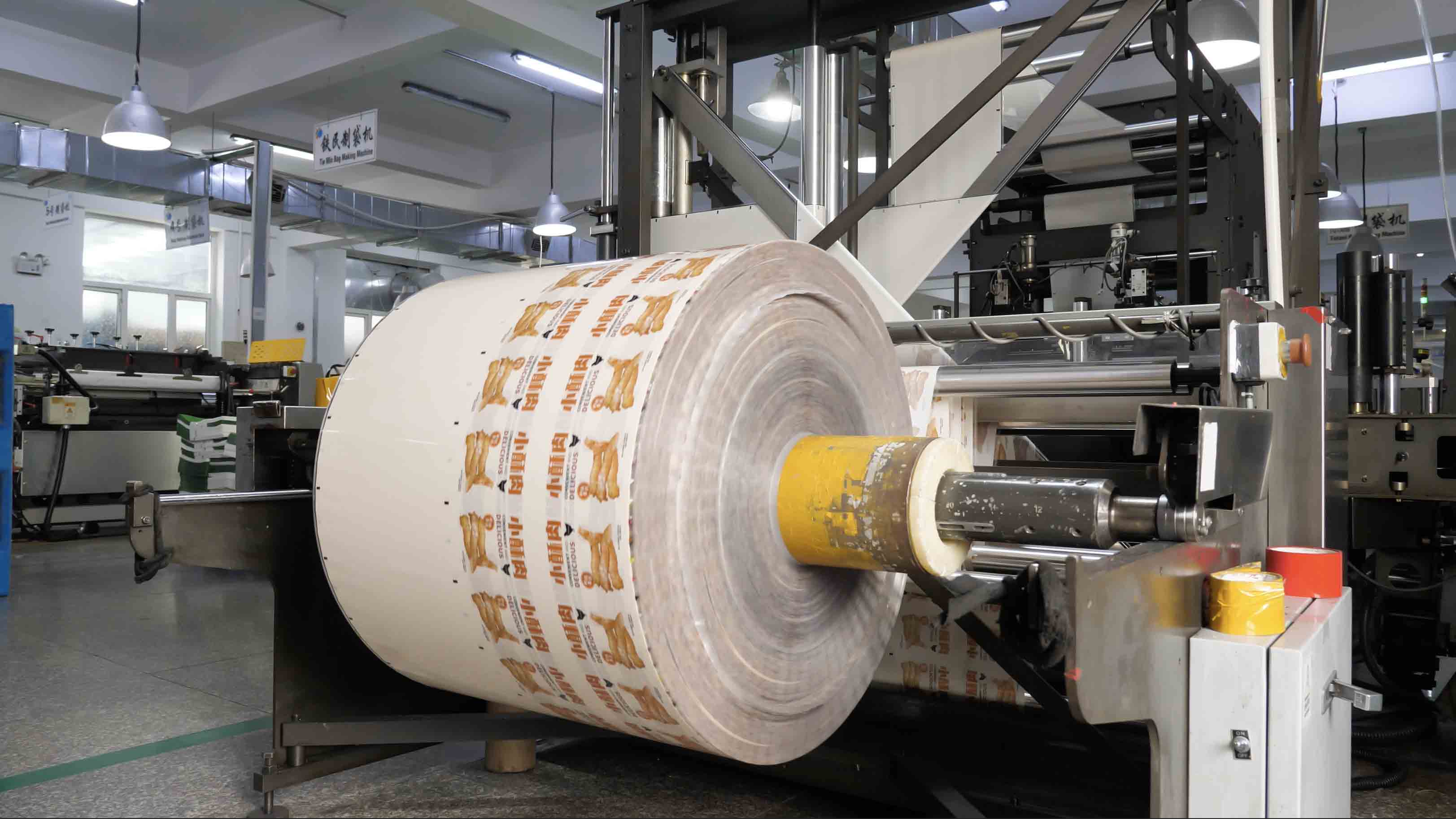
Real factory image: printed film on converting equipment. It does not depict cheese filling or establish the barrier values of a cheese SKU.
Protect the Initial Heat Seal From Cheese Particles
Loose shreds can bridge across a seal band, carry surface oil to the inner film, or interfere with jaw contact. More heat is not always the answer. The team needs to understand where the product falls, how much space remains above the fill, whether the bag mouth opens consistently, and whether a zipper or gusset changes how the film meets the jaws.
Plan a line trial at realistic speed, including startup and restarts. Record jaw temperature, pressure, dwell, line speed, and any changes to the cheese's condition. Inspect the top seal for folds, product, narrow sections, and irregular edges. Retain packs from the beginning, middle and end of the trial. If a defect appears, locate it in relation to the fill path and pouch drawing before redesigning the whole laminate.
The first heat seal is the unopened barrier. A zipper below it is a convenience after opening. It cannot cover a channel in the top seal and does not restore the original MAP atmosphere after the consumer pours out some cheese. In a shred pouch, zipper location and particle trapping deserve a separate use test; the companion planned sealing article will cover troubleshooting in greater depth.
For verification, ASTM F88/F88M describes seal-strength testing for flexible barrier materials, while ASTM F3039 addresses dye-penetration leak detection in nonporous packaging. They answer different questions. A strong peel result does not prove there is no narrow leak; a leak test does not tell the buyer whether the seal has appropriate peel characteristics. The product team and packer must define applicable methods, sampling, and acceptance criteria for their commercial pack.
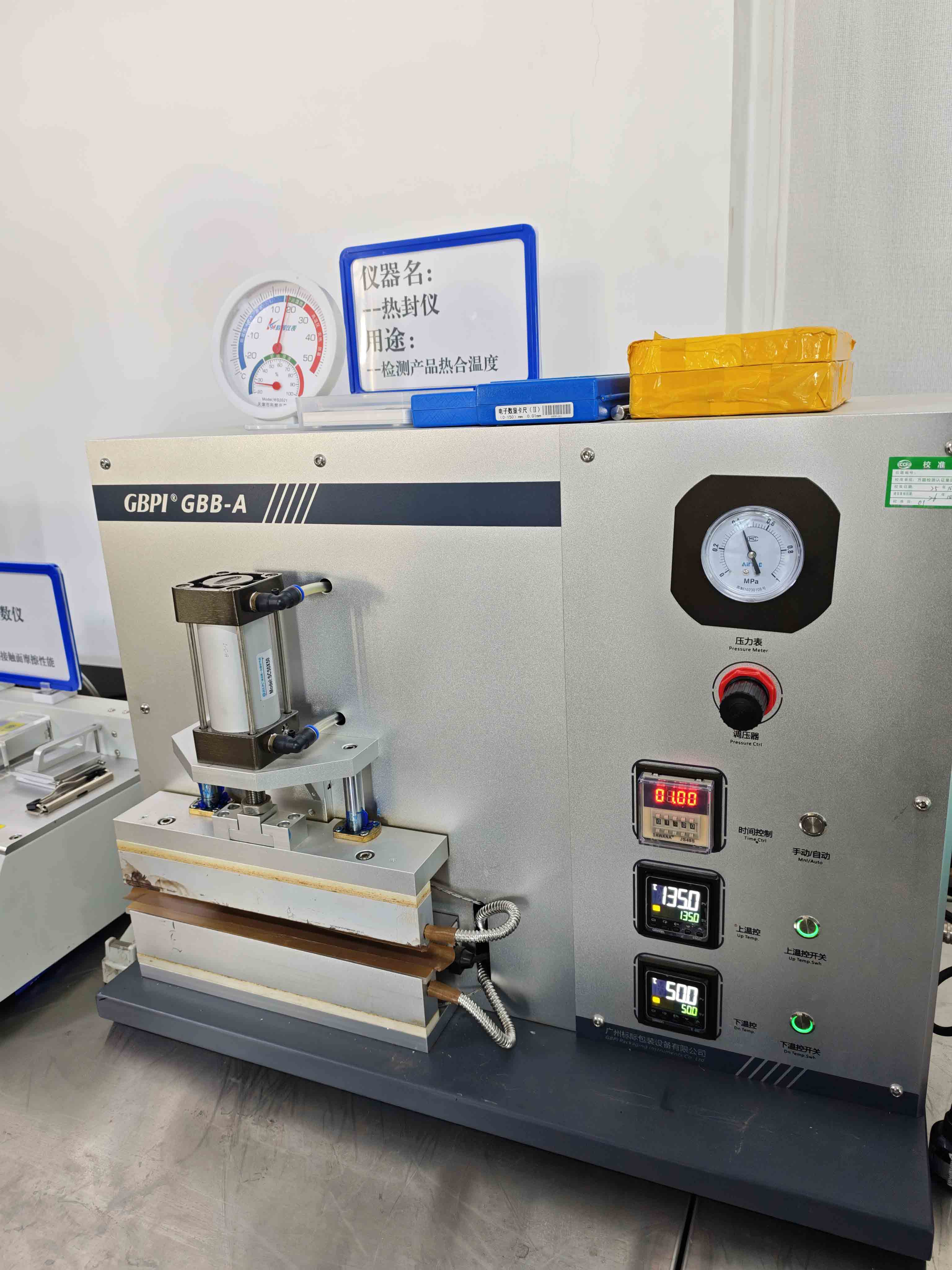
Real factory image: heat-seal testing instrument. The photo is a capability illustration, not a test report for shredded cheese.
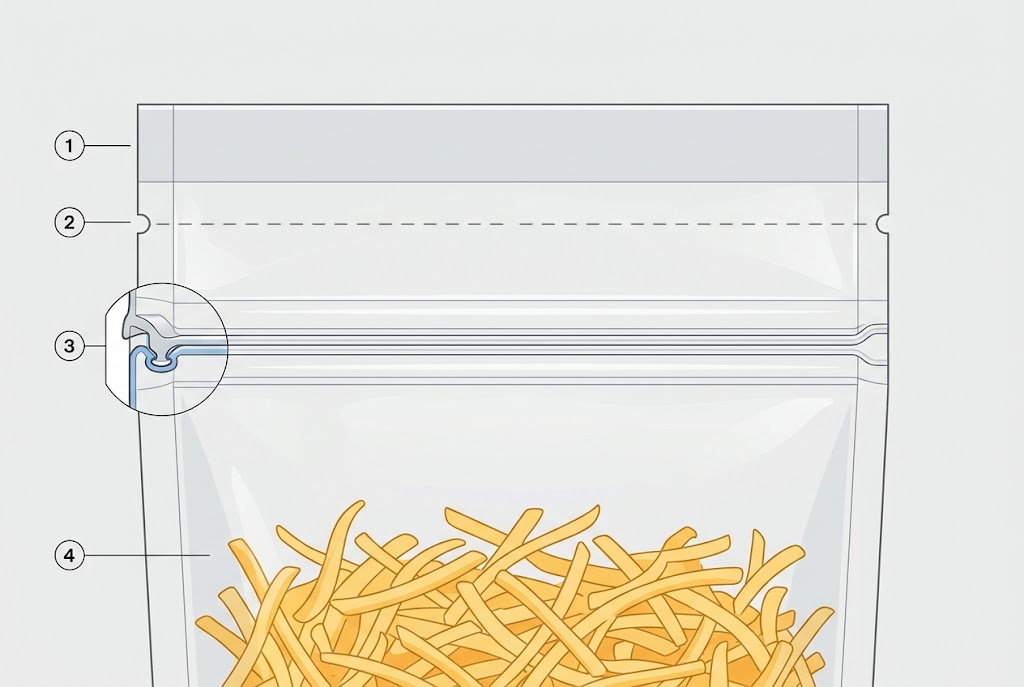
Illustrative closure concept showing separate factory heat seal, tear line, and press-to-close zipper.
Refrigeration, Display and Shelf-Life Checks
MAP and a high-barrier film do not replace hygienic production or a suitable cold chain. The cheese business must control its product and environment under its food safety plan. The package supplier can help with material and seal choices, yet cannot establish that a cheese is safe or assign its expiry date from a film data sheet.
Test the actual distribution pattern. If packs are palletized, moved through a refrigerated truck, displayed under light, and then handled by a shopper, a trial that remains motionless in one laboratory refrigerator misses relevant stresses. The published Cheddar-block oxygen study found differences between minimally moved storage and a group exposed to a simulated distribution route; do not transfer its failure rates or gas settings to shredded cheese, but use the experimental logic to design a meaningful handling comparison. Study details.
Observe clumping, visible surface moisture, gas, color, odor and use quality at planned intervals. If the intended package includes a clear window, examine it under realistic lighting and temperature changes. If an anti-fog feature is proposed, test the full filled pack. It may improve visibility by changing how droplets form on the surface; it does not remove product water or correct a warm distribution step.
The producer should establish product-specific microbiological, sensory and other acceptance criteria, choose representative lots and test conditions, and document the decision on the unopened use-by or best-before date. Consumer handling after opening is a separate question. A reclosed zipper pouch has already lost its original atmosphere. State storage and use instructions that the food business has reviewed for that product and sales market.
Use a Real Chilled-Food Case Without Calling It a Cheese Case
Mylarbag's current customer-case library does not document a shredded-cheese project. A published Australian 500 g fresh-pasta and chilled-food pouch lists a stand-up format, MOPP/PET/PE construction, zipper, Euro slot, gravure printing, and an 18 × 27 + 4.5 cm size. Those are actual project details. The page's broader promotional statements are not cheese trial data.
This adjacent application gives a shredded-cheese buyer useful questions. Would a hanging feature work at the intended fill weight? Does the opening leave enough space for loose shreds and a reliable heat seal? Would the frosted presentation or a clear area let the buyer see the product? How would the zipper behave after several pours? Each answer requires a cheese-specific sample and line trial. Nothing in the pasta project's dimensions or layer names proves the same structure will control mold, condensation, or clumping in shredded cheese.
That is how a real case should support a purchasing discussion: a concrete format and construction prompt a better test brief. It should never become a fictional dairy testimonial or a borrowed shelf-life result.
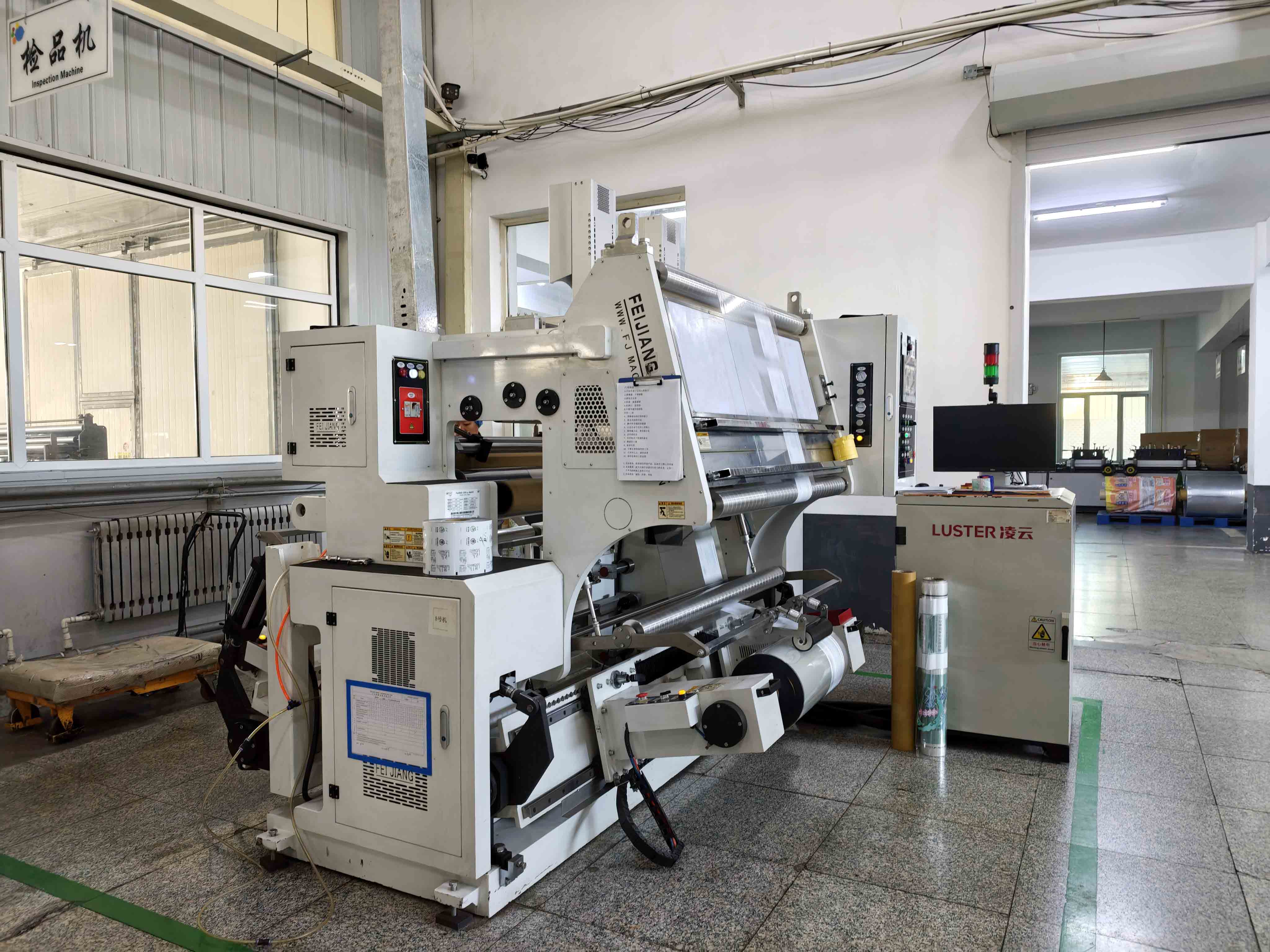
Real factory image: film inspection. Agree on the acceptance checks for the final cheese-specific structure and print run.
Build a Trial Matrix Before Ordering Printed Inventory
If the current pack has a complaint, change one group of variables at a time when feasible. A workable design-of-trials approach might compare two films at the same fill, gas process, and temperature, then compare two zipper or opening layouts using the more promising film. The plant's food-safety requirements remain in effect throughout; experimentation is not permission to release unvalidated product.
Record what failed as carefully as what passed. A single clean demonstration run can conceal intermittent contamination or handling damage. Retain the approved empty pouch, filled reference pack, drawing, artwork version, film and zipper specifications, and acceptance criteria. When a later order changes a film source or closure component, review whether the approval evidence still applies.
What to Send in a Shredded-Cheese Packaging RFQ
A useful inquiry lets a converter suggest a testable package without guessing the food producer's process. It also makes quotations comparable across suppliers.
An RFQ can be concise: “We pack [specific shredded cheese] at [net weight] on [machine] at [speed], using [gas process] for [market and refrigerated route]. Please propose [format and complete structure], a top-seal and zipper layout, material data with test conditions, food-contact documentation, sample quantities, and a line-trial plan. Our food team will validate the final product and label date.”
For a multi-flavor range, ask how print setup and MOQ change by artwork version. Do not assume a low empty-bag price minimizes total cost. Filling losses, rejected seals, speed reductions, oversized cartons, and obsolete printed stock can overwhelm the difference between two bag quotations. Equally, do not pay for an extreme barrier specification when the real limiting problem is product in the seal or a broken cold chain.
Frequent Errors in Shredded-Cheese Pouch Projects
Calling all clumps a film failure. Check cheese condition, cut, formulation and temperature alongside the bag. Document whether shreds cling to each other or to the film.
Assuming anticaking treatment makes seals clean. Loose particles and treatment powder can still enter a top seal. Watch the commercial filler and inspect real packs.
Copying another product's gas mix. Measure your cheese and process. The studied Cheddar shreds, a soft cheese, and a different retail blend do not share an automatic MAP prescription.
Approving a barrier number without its conditions. Require method, humidity and temperature where relevant, tested construction, and a finished-pack trial.
Letting the zipper replace first-seal QA. The unopened top heat seal and the later consumer reclosure have different jobs. Test each separately.
Judging the pack immediately after sealing only. Observe after cold storage, transport handling and display. Product and gas behavior can change with time.
Using adjacent food projects as dairy proof. A chilled-food case may show a genuine pouch, print and closure. It does not validate shredded-cheese shelf life.
Frequently Asked Questions
How is shredded cheese packaged for retail sale?
The producer prepares and portions the cheese, fills a suitable pack, establishes the approved air or modified-atmosphere process, makes a verified first closure, and holds the finished pack under the intended cold chain. The exact pouch, gas process and quality checks depend on the cheese and line.
Is shredded cheese always packaged under MAP?
No universal method applies. MAP is an option that must be validated for the product, equipment, film, headspace and storage route. Do not infer a gas blend from a bag's appearance.
Why does shredded cheese stick to the bag?
Surface oil or moisture, product condition, handling, compression and packaging contact can contribute. If the shreds stick mostly to each other, investigate product and anticaking treatment as well. Record the location and lot before deciding on a material change.
Does an anti-static film stop shredded cheese clumping?
It should not be presented as a general solution. Clumping is often a product and process issue. A proposed surface treatment needs a direct, controlled comparison with the actual cheese and filling conditions.
Why is starch or cellulose used on some cheese shreds?
Anticaking ingredients can help keep shreds separate during processing and storage. Their choice, use level, labeling and effect on cooking quality belong to the food producer's formulation and regulatory review. Packaging cannot substitute for that decision.
Should consumers rinse the anticaking powder off packaged cheese?
The package supplier cannot provide a general instruction for altering a ready-to-use food. Consumers should follow the cheese maker's preparation and storage directions. This article does not make a food-safety or recipe recommendation from the appearance of a coating.
What does a zipper do on a shredded-cheese bag?
It helps the consumer reclose the pack after opening. It is separate from the initial factory heat seal and does not recreate the original modified atmosphere. Its layout and resistance to trapped shreds should be tested with the real product.
Can the bag be sealed if cheese gets in the seal area?
Do not assume the pack is acceptable. Product in the sealing band may prevent consistent contact. Adjust the filling and package geometry, establish an operating window, and inspect and test the finished seals to the agreed criteria.
Is a clear window a good idea for shredded cheese?
It may help shoppers see the product. Compare the window's barrier, condensation appearance, print layout and cold-chain behavior with an opaque design. Test the complete pack under retail lighting rather than selecting by a flat artwork mock-up.
Does lower film OTR guarantee that cheese will last longer?
No. Film OTR is one input. Residual oxygen, seams, cheese condition, light, temperature and other product-specific limits can dominate. The finished cheese pack needs its own shelf-life study.
How can a manufacturer check residual oxygen?
Select a validated measurement method suitable for the package and gas process, sample the beginning and later stages of a run, and agree on reject limits with the food and packaging-line teams. Later storage checks help distinguish the starting process from changing package conditions.
Why might a gas-flushed bag change shape in the cooler?
Gas can interact with cheese and the package over time, and temperature or pressure changes can affect appearance. A changed shape is a prompt to compare the pack with approved retained samples and investigate; it is not enough by itself to declare a package safe or unsafe.
Can the same pouch be used for frozen shredded cheese?
Only after reviewing the intended food-contact conditions, low-temperature handling, seal and zipper performance, and product quality in a frozen route. A refrigerated approval does not automatically approve a frozen one.
Who sets the shelf-life date on a shredded-cheese bag?
The food business establishes and supports the date for its actual product, process, final package and distribution conditions. A pouch supplier can provide material specifications and samples, but cannot assign that date from a film data sheet.
Request a Testable Cheese Pouch, Not a Generic Freshness Promise
If your team is preparing a shredded-cheese SKU, send Mylarbag the cheese description, fill weight, line and gas process, target market, refrigerated distribution route, and proposed artwork. Ask for a complete construction, a marked seal-and-zipper drawing, food-contact documents for the intended use, and samples for a production trial. The custom cheese packaging team can then discuss the pack you intend to make rather than an anonymous bag size.
Keep the decision tied to measurable outcomes: product flows through the line, the first seal is repeatable, the pack behaves through the cold chain, and the food team supports its quality and shelf-life claims. That is how a shredded-cheese bag becomes a commercial specification instead of a promising empty sample.