
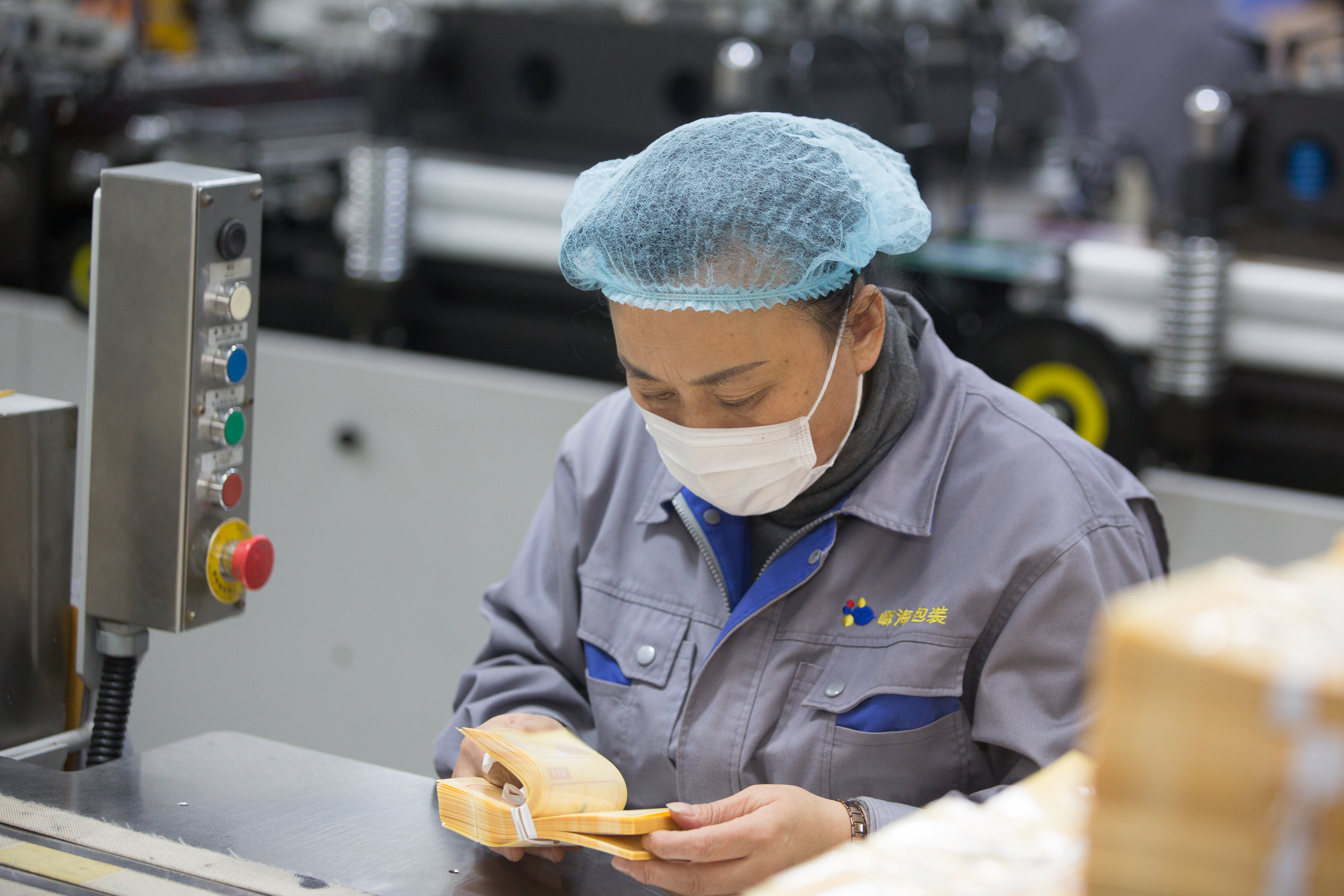
The right amount of tea in a tea bag is the amount that produces the intended cup when brewed according to the pack instructions and still fits the selected bag with safe, repeatable sealing space. There is no universal gram weight for every tea. Leaf size, tea type, bag volume, water volume, target strength, brewing time, and the product’s intended use all change the answer. A brand should use a controlled test-brew process rather than copy a number from another tea bag.
Treat fill weight as a validated range, not one magic number. That range belongs in the product specification and should be tested with the exact tea and selected bag format.
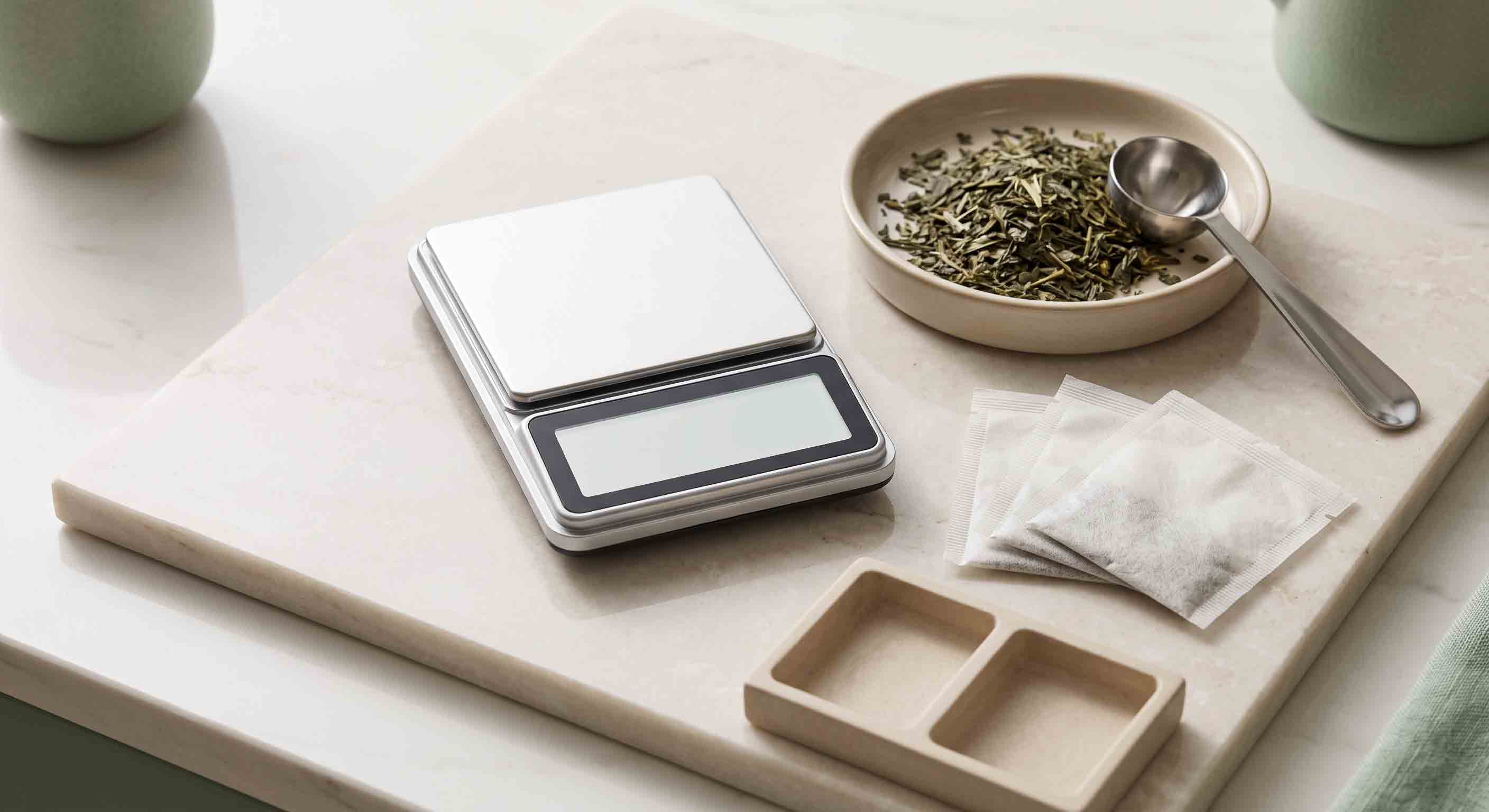
Separate “bag capacity” from “recommended fill weight”
These phrases are often confused. Bag capacity describes the maximum amount of physical product a bag or machine can accommodate under a stated configuration. Recommended fill weight is the amount of a specific tea blend that produces the intended brew and can be packed repeatably.
Machine data sheets can list capacities or limits for particular equipment and bag formats. Those figures are machine-specific operating information, not a rule that every retail tea bag should contain a particular amount. A light whole-leaf blend may occupy more volume at a lower weight, while a fine-cut tea may fit more densely. The finished product must be tested, not inferred from a machine brochure.
Start with the desired brew, not a generic teaspoon conversion
The consumer does not buy grams; they buy a cup of tea. Begin with the intended serving:
- cup size or pot size named on the package;
- tea variety or blend;
- water temperature and steeping time the brand intends to recommend;
- desired strength and flavor balance;
- whether the bag will be brewed once, repeatedly, or as a concentrate;
- whether the product is a single-serve, family-size, or foodservice format.
Use these choices to create a test protocol. Brew multiple samples at different fill weights using the same water volume and time. Record taste, aroma, clarity, bag expansion, ease of removal, and whether fine particles escape. Do not choose a fill solely because it fits neatly in an empty bag.
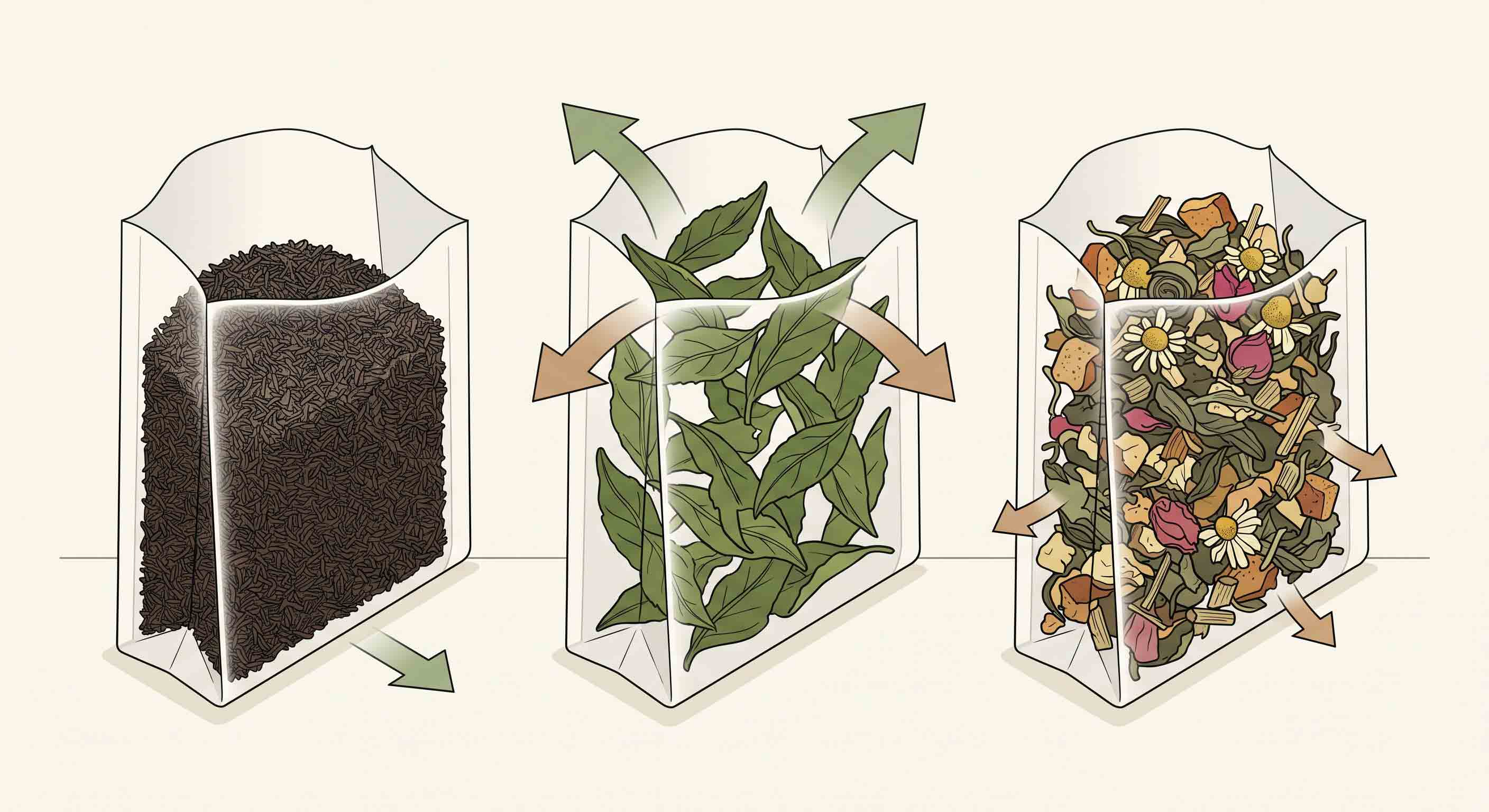
Tea type changes volume as well as weight
Fine-cut tea and small particles
Fine tea particles settle densely and may use less volume for the same weight than a large-leaf blend. The project team still needs to leave enough physical room for normal filling and sealing. If fines are present, evaluate whether product dust affects the sealing area or the consumer experience.
Whole leaf tea and large botanicals
Large leaves, flowers, fruit pieces, and light herbal ingredients often need more internal space. A low gram weight can still fill a small bag completely. For these products, a larger bag or sachet format may be evaluated so the blend has room to hydrate during brewing. That is a product-development and package-volume decision, not a promise that one format produces better extraction for every tea.
Powdered tea and blends with uneven pieces
Powders, powdered flavors, or blends containing both small and large ingredients require special attention. Material flow, static, dust control, weighing consistency, and seal cleanliness can matter as much as the nominal fill weight. The product should be tested with the actual production blend, including its normal particle-size distribution.
Use a simple fill-weight development worksheet
A useful worksheet for a brand or co-packer includes the following fields:
This worksheet prevents later confusion when a product is reformulated or moved to a different format. It also gives the packaging and production teams a shared record of what the chosen number represents.
Account for headspace and the sealing area
An inner tea bag is not simply a small container filled to the top. The filling process needs a clean zone for the closure method. The tea may also move or expand after filling, and a bag can be handled, transported, and brewed. Leaving adequate clearance is part of a functional pack specification.
Avoid using a “fill until full” approach. It can create inconsistent bags, contamination in the seal zone, or a poor brew experience. Instead, choose a bag volume that allows the intended tea sample to sit naturally and leaves the amount of space confirmed during testing.
If a project uses an automated line, the filling and sealing team should review the actual blend. A bag that works in a hand-filled development sample may need a different target range or material behavior for repeatable production.
Build the product family around serving size
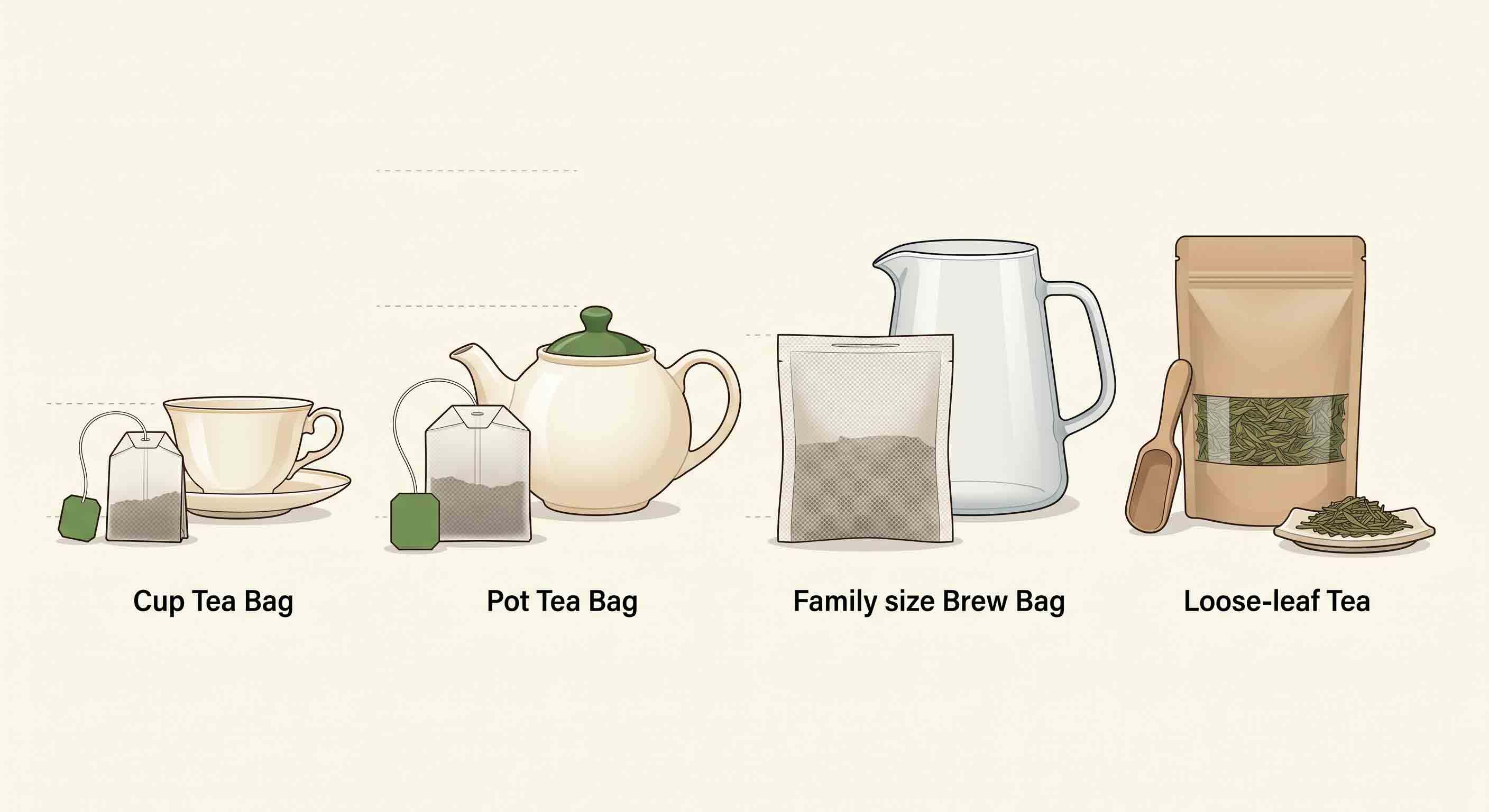
Many brands need more than one bag size. A line might include a single cup format, a larger pot-brew format, a family-size pack, and a loose-leaf product. These should not all inherit the same fill assumption.
For each format, define:
- Intended brewed volume.
- Tea blend and target profile.
- Bag volume and closure method.
- Test-brew protocol.
- Pack count and outer packaging.
- Consumer brewing instruction.
This creates a logical range rather than a collection of arbitrary SKUs. It also helps when a buyer asks why one carton contains a different bag count or fill than another.
Do not calculate retail pouch size from a tea-bag fill weight
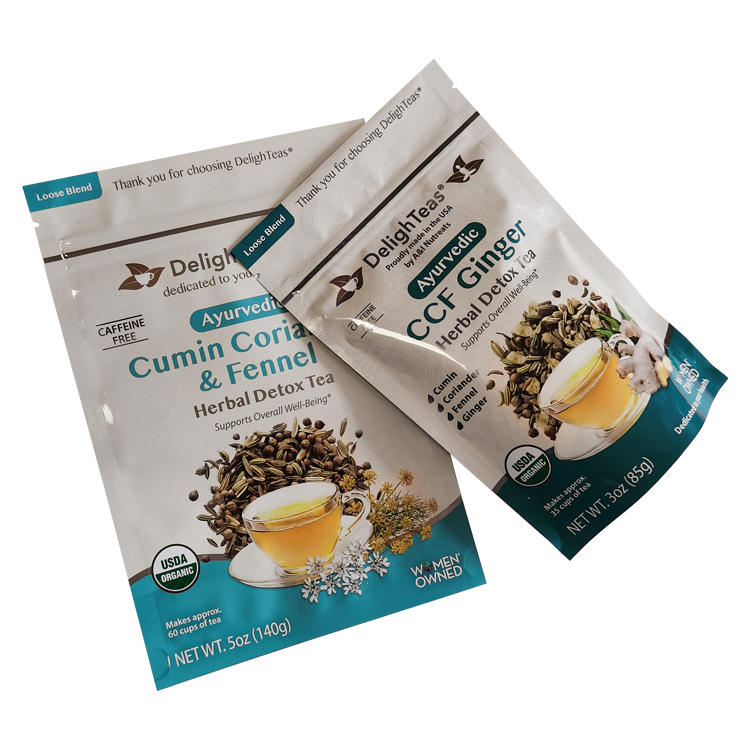
The grams in an inner tea bag and the capacity of an outer retail pouch are separate dimensions. A retail pouch may hold a carton of multiple tea bags, loose tea, or a mix of individual envelopes. The outer pouch must be sized around the complete sellable unit, including pack count and desired consumer use.
For a tea brand planning both inner bags and outer packs, the product brief should connect the two but not confuse them. A custom tea packaging project can be scoped around the inner tea format, pack count, outer pack type, artwork status, and target market.
Validate through samples before approving a run
An approved fill weight should be supported by an actual sample review. At minimum, check:
- the product fits and leaves the intended seal clearance;
- repeated samples fall within the agreed range;
- the bag remains usable during the planned brew;
- the outer pack holds the correct number of units;
- the artwork and brewing instructions reflect the tested format;
- the responsible team has reviewed any required documents for the market.
If a change is made to the blend, cut, bag format, material, or serving instructions, review whether the original test remains applicable. A small formulation change can alter volume or flow enough to make an earlier packaging decision unreliable.
Start product development with a test range
For a new tea-bag product, request a trial plan rather than a universal fill recommendation. Provide the blend, intended serving, target market, inner bag concept, and packaging approach. Test a controlled range, select the best result, and record the final specification alongside the approved sample.
When you are ready to assess the outer retail pack as well, send the tea sample or fill information, pack count, artwork status, and desired format to discuss a tea packaging project. The objective is a verified product-and-pack system, not an unsupported number of grams.
Design a controlled test range
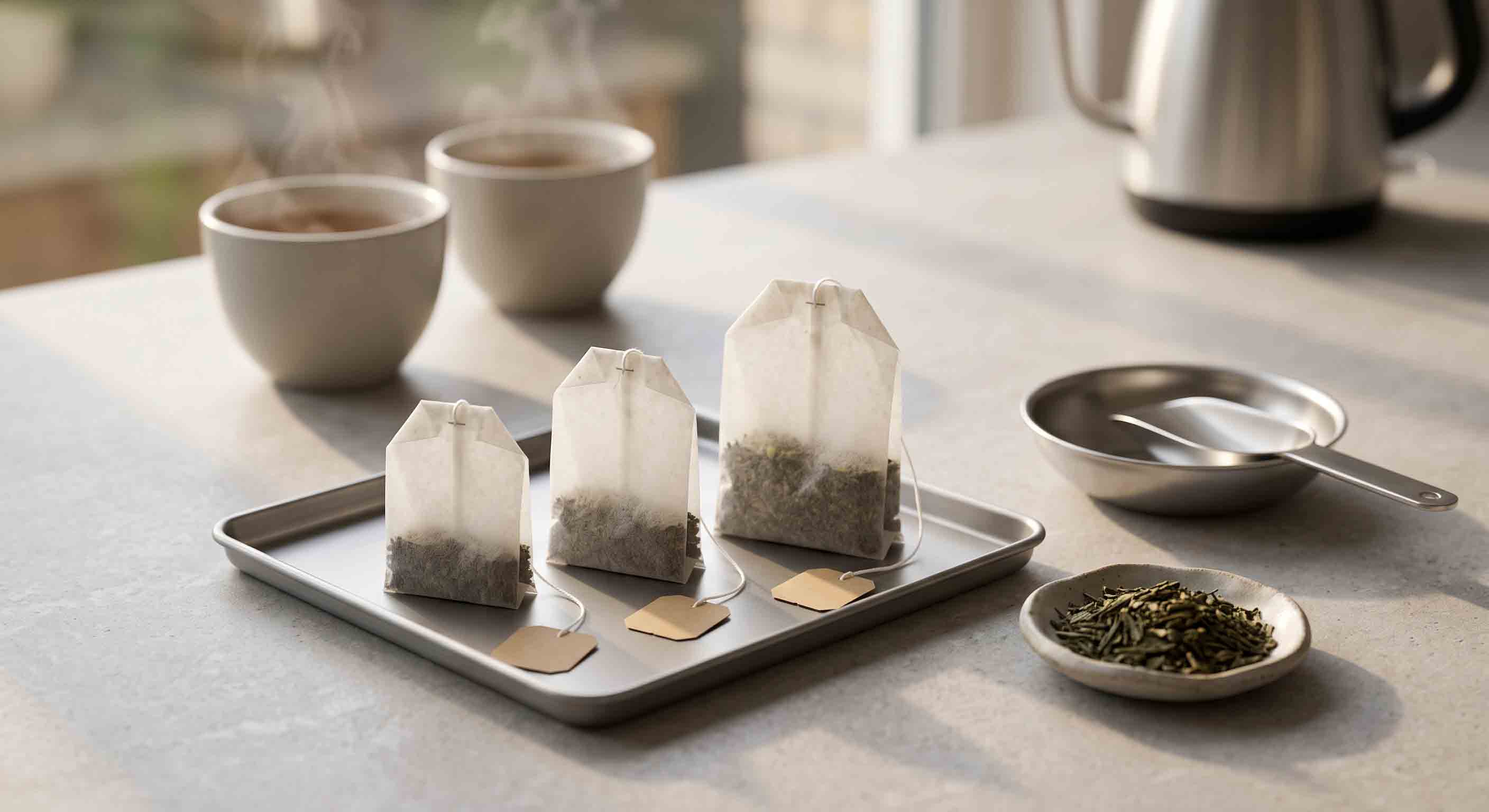
The purpose of development is not to find the largest amount that can be squeezed into a bag. It is to identify a repeatable target that supports the approved consumer preparation method and the selected packaging process. A controlled test range makes that decision more defensible than a single trial.
Start with several planned fill options that are close enough to compare meaningfully. Hold the tea blend, water volume, brewing method, bag format, and evaluation method constant while the fill amount changes. Then record both sensory and physical observations. If more than one person tastes the tea, use the same agreed criteria and record who evaluated it. This does not make the result a clinical or universal finding; it makes the product-development choice traceable.
If the test points to a different bag format or serving instruction, change the project specification and repeat the relevant review. Do not preserve an unsuitable pack simply because its artwork or purchasing discussion started earlier.
Define the target and the allowable production range separately
The development target is the nominal amount the product is intended to contain. The allowable production range is an operational specification that the responsible production and quality teams must define and monitor. They are related but not identical. Do not infer a production tolerance from a competitor’s package or a generic machine example.
Write the final record in a way that makes the distinction clear:
- Target fill: the selected nominal amount for the exact tea and serving method.
- Bag identification: the approved bag format, dimensions, and relevant component version.
- Physical-fit check: how the actual tea sits in the bag and the required clean closure area observed in the approved sample.
- Production range: only the range authorized by the responsible quality/operations team.
- Consumer directions: the preparation instructions tested with the selected product.
- Change triggers: blend reformulation, supplier/lot change, bag-material or dimension change, new market, new instructions, or a different packing process.
This distinction matters because a consumer-facing net quantity, a production control target, and a machine’s physical capacity solve different problems. Keeping them separate prevents a technical or operational number from becoming an unsupported marketing statement.
Make the product-family math explicit
A tea brand may offer a cup bag, a pot bag, a larger family-size bag, and loose-leaf tea under one visual identity. A customer can be confused if products look identical but have different intended brewing volumes. The solution is not necessarily to make every bag have the same fill. It is to make the format and preparation guidance clear, and to document why each product uses its chosen unit.
For each SKU, retain a short product card:
This approach also supports content accuracy. Recipe scaling should be based on the product label and serving definition, not on the inner-bag weight alone.
Revalidate after a meaningful product change
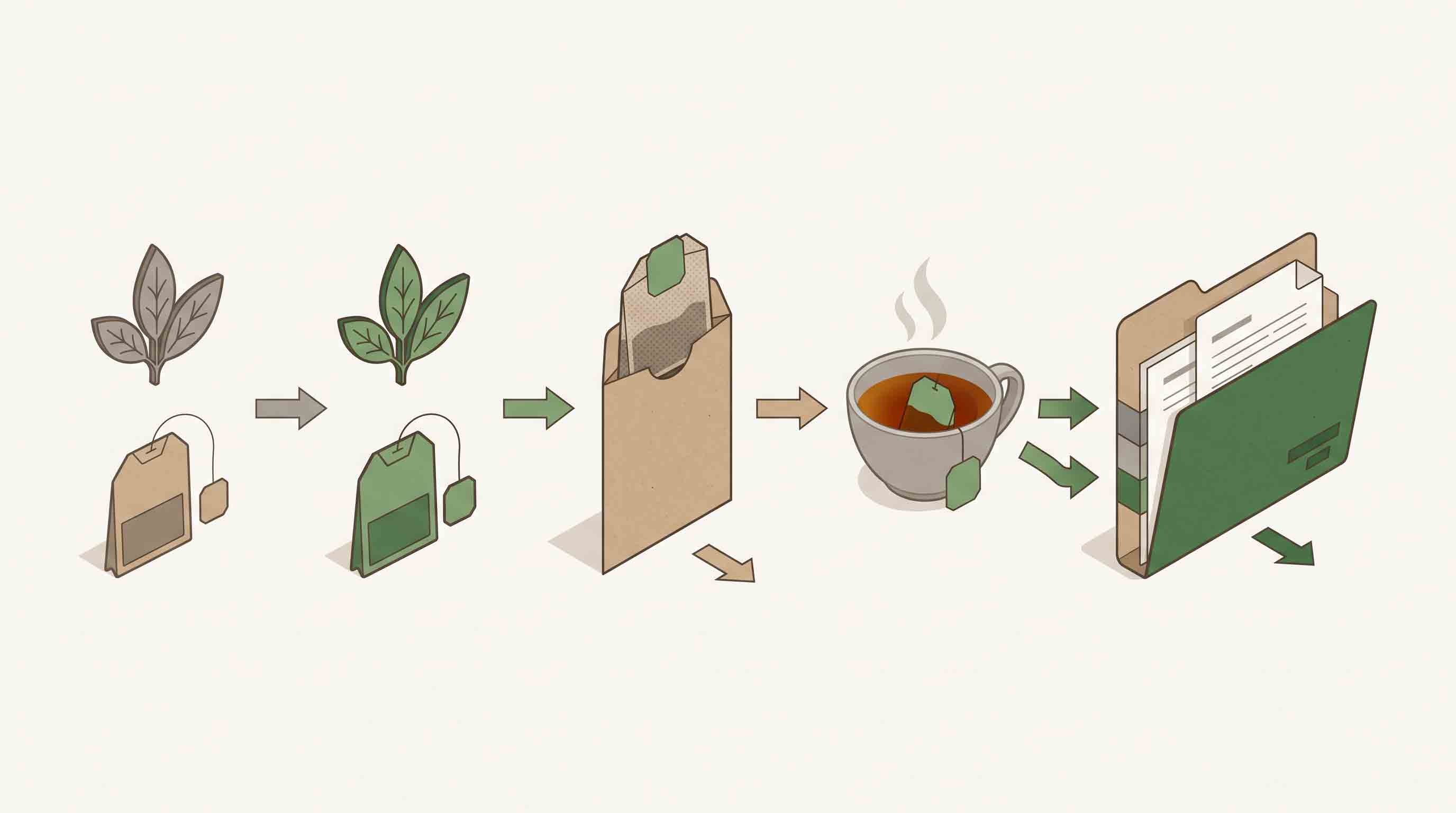
Packaging and recipe decisions can become out of date without anyone noticing. A new tea supplier, a changed leaf cut, a new flavor inclusion, a revised bag shape, a new closure method, or a different co-packer can alter physical fill or consumer preparation. The right response is not necessarily a full redevelopment, but it should trigger a documented decision about whether the prior test remains relevant.
Use a simple change review:
- Identify what changed and which SKU is affected.
- Check whether the change can alter fill volume, flow, seal clearance, brewing use, product instructions, or market documentation.
- Compare the new product/component with the approved sample.
- Repeat the focused test needed to confirm the original fill and bag choice, or define a revised specification.
- Update artwork, product records, and communications only after the responsible team has approved the new version.
This approach protects against an avoidable mismatch between the tea in the bag, the number printed on the pack, and the instructions a customer follows at home.
Frequently asked questions
How many grams of tea should be in one tea bag?
There is no universal answer. Use the tea blend, intended brewed volume, bag volume, and test-brew results to set an approved fill range. Machine capacity figures are not universal serving recommendations.
Do whole leaves require a larger tea bag?
They may require more physical volume even at a similar or lower weight. Evaluate the actual leaf volume and brewing use in a sample rather than selecting a bag by grams alone.
Can I use the same fill weight for a pyramid sachet and a flat tea bag?
Not automatically. The formats may have different internal volumes and consumer uses. Test the specific tea in each selected format before standardizing a fill weight.
Why should I leave room inside a tea bag?
The packaging process needs a clean closure area, and the tea needs a format that works for normal handling and brewing. The required clearance should be established during product and process testing.
What should be sent to a packaging supplier for a fill-weight project?
Send a representative tea sample or detailed blend description, target serve size, candidate fill range, bag format, brewing instructions, filling method, outer-pack plan, target market, and documentation requirements.
Sources
- IMA C24-E machine capacity example: https://imagroup.com/machines/c24e/
- IMA C27-E machine capacity example: https://imagroup.com/machines/c27-e/