

Supplement companies reduce packaging waste by measuring the entire approved selling unit, then fixing avoidable losses in sizing, filling, sealing, print inventory and distribution. A lighter film or a recyclable headline can be one part of a project, but it does not erase extra wrappers, obsolete printed bags or rejected product. Keep product protection and label accuracy as acceptance gates while measuring packaging used per good unit sold.
This article is for US supplement brands using flexible retail pouches for capsules, powders or wrapped doses. It gives a practical measurement and improvement method; it does not claim a universal waste-saving percentage or report results from a Mylarbag customer's production line. The EPA's Sustainable Materials Management tools distinguish source reduction from recycling and other waste-management paths, while the FTC Green Guides require support and appropriate qualification for environmental claims. A packaging change also has to work with the brand's actual supplement and filling operation.
Measure waste per acceptable selling unit
Do not begin with the mass of a flat film swatch. Decide what unit the brand needs to deliver—for example, one acceptable sealed retail pouch with the specified count of capsules. Then record all primary bags issued for the run, trial and setup bags discarded, inner wraps or labels used, rejected filled units, and acceptable units released. A supplier's “grams per bag” is useful, but the operational measure is packaging material consumed to produce a good selling unit. Keep product discarded because of packaging failures in a separate field; otherwise a thin but unreliable pouch can look efficient on paper.
An internal worksheet can calculate total relevant packaging mass used ÷ acceptable selling units. The numerator should reflect the defined scope: primary pouch, added wrap or label, and production rejects. Record the period and SKU. If comparing a new design, use the same unit and scope for both. Do not count a supplier's theoretical material saving while ignoring additional prep bags or a different accepted-output rate. The brand can also track empty bags scrapped because of an artwork change and finished supplement units discarded after a failed seal or distribution trial. These are distinct sources of loss with different owners.
| Waste point | Record from the real run | Likely decision owner |
|---|---|---|
| Oversized bag | Empty mass, usable filled volume and unused space at target fill | Brand, packer and bag designer |
| Setup and changeover | Empty bags used before an approved fill and seal | Packer and production planner |
| Dirty or weak seal | Rejected filled units and defect location by bag lot | Packer, brand quality team, bag supplier as relevant |
| Obsolete artwork | Unused printed bags by version and reason | Brand label owner and purchasing |
| Extra protection | Additional inner/outer wraps and distribution damage | Fulfillment team and product owner |
| Consumer disposal | Complete components and verified route | Brand claim reviewer and market team |

Agree on the baseline before discussing improvements. A 30-day run can reveal that most waste comes from an oversized bag, a dusty seal, a late label revision or damaged cases. The remedies are not the same. One team needs a better bag mouth; another needs its artwork approval earlier; another may need a shipping arrangement outside the retail pouch. Do not decide to change material first merely because material is the most visible part of the pack.
Right-size the finished pouch without crowding the seal
Measure the finished fill, not a product photograph. Powders settle differently across formulas and lots; capsules have count and dimension variation; wrapped sticks create corners and air gaps. Note the maximum expected product height and usable closure zone, then trial several bag geometries. A smaller pouch can cut material and improve case packing only if it can still be opened on the line, filled cleanly, sealed reliably, printed legibly and used by the customer. A nominal outside dimension says little about the useful internal opening once the bag is made.
Watch what happens after the product settles. An oversized pouch may have a tall, empty top and a sagging front panel, tempting the team to add a stiff insert or another wrap. A shorter pouch might prevent the scooping motion or bring powder into the top seal. The right target is not “smallest bag”; it is the smallest validated bag that meets filling, protection, labeling, retail and consumer-use requirements. Use a filled proof for the largest and smallest planned SKU. Record the grams of the final bag, not just a quoted film thickness.
If the product is an outer pouch holding stick packs, consider the unit count and stack orientation. A flat-bottom bag may use more film than a tight flat pouch but might prevent repeated handling damage or make retail presentation possible without another component. Test both total materials and acceptable packed units. The published collagen and stick-pack bag demonstrates a flat-bottom format, not a claim that it saved packaging on a particular line.

Reduce fill and seal rejects before changing film
Powder at the top seal, a trapped capsule, a misaligned zipper and a wrinkled gusset can each create a failed package. Log defects by location and process stage: empty-bag receipt, opening, fill, top cleaning, sealing, inspection, handling or shipping. The record should name the bag lot, product batch and line settings that the packer uses. Do not copy heat-seal settings from a different material. A material reduction that doubles rejects might consume more packaging and destroy more product than it saves.
The first correction is often operational. A wider useful opening may reduce spill; a fill-height adjustment may keep tablets below the jaw; a powder handling change may leave a cleaner seal land. In other situations the bag's inner sealant or geometry needs reconsideration. Run a controlled sample, change one variable, and check that the new unit still opens and recloses as intended. Keep a retained control. Failed supplement should be recorded separately because it may be a more consequential loss than the discarded empty pouch, although its impact cannot be quantified from bag data alone.
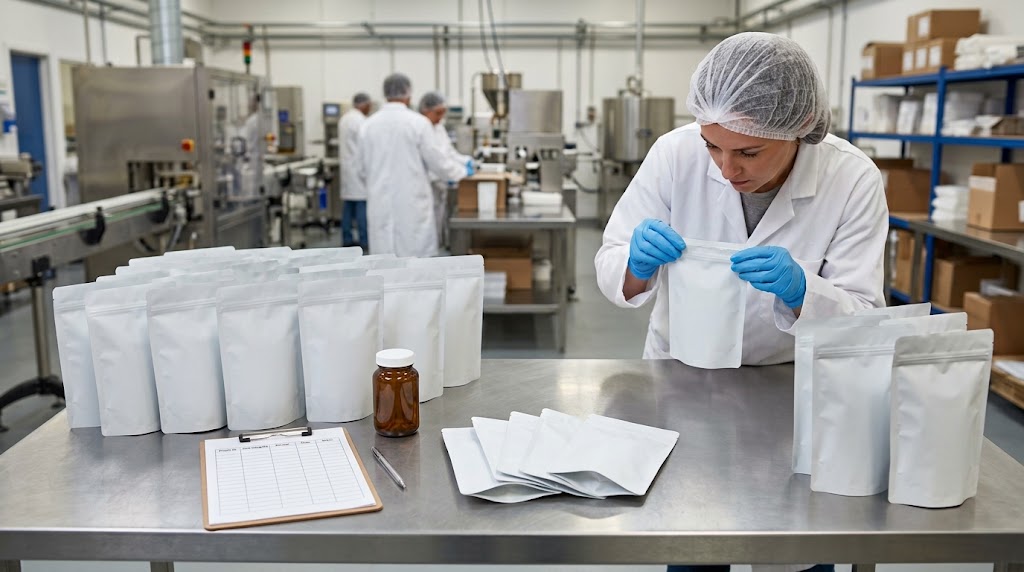
Ask why a reject occurred before increasing film thickness. A leaking top seam caused by powder contamination may persist with a heavier film. A puncture from a stick-pack corner may need a different orientation, support or material. A scuffed matte print might be a case-packing issue. The issue log should connect the defect to a plausible action and a repeat test. This is more informative than a single “scrap rate” with no description of what was scrapped.
Prevent obsolete printed bags when formulas and labels change
Supplement brands can change ingredients, counts, serving directions, claims or markets. Each change may affect the printed pouch, even if its size stays the same. If purchasing orders a year's worth of artwork before the brand's label is stable, the unused bags can become obsolete. Record inventory by approved artwork version, physical construction and SKU. Establish a cut-off for final label approval, and ensure the printer and contract packer are working from the same version. The FDA dietary supplement labeling guide is relevant to the brand's label review; it does not make an obsolete print run reusable.
For lines with many flavors, ask how each print route handles short or repeat runs and artwork changes. A digital print path may be useful for some test runs or numerous versions, while a different production route may be more appropriate at stable volume. The buyer needs a current quote, proof and delivered-cost comparison at its actual SKU mix; no method automatically saves material. Consider whether blank or partially printed trial pouches can test geometry before the final retail artwork is approved. Do not place a generic over-label on a wrong supplement bag without the brand's controlled label review.

When a new version is introduced, quarantine or clearly segregate unused old printed bags until the brand decides their status. Do not mix them into a new run because the colors look similar. Establish who can release the replacement artwork, what happens to unused inventory and whether the bag supplier can report pending stock before printing more. These controls serve both waste reduction and product-label accuracy. A “green” print message is especially risky if the underlying bag structure or supported environmental claim has changed.
Count the complete package and test distribution
Some brands reduce the retail pouch mass but add another plastic sleeve, bigger shipping carton or extra protection because the new bag is less robust under the chosen route. Others use an adequately tested primary pouch and a separate protective shipper for parcel handling. Include those added materials in a complete-system comparison. The inner retail bag contains and presents the product; it cannot be credited with all impact protection or temperature management. The product owner should define arrival criteria for the finished selling unit and document damage before and after a proposed change.
Here is a hypothetical arithmetic illustration, not Mylarbag or customer performance data. A baseline run uses 10,300 pouches at 18 g to produce 10,000 acceptable retail units: 10,300 × 18 g = 185.4 kg of primary pouch material. A new 16 g pouch uses 10,700 pouches to make the same 10,000 good units: 10,700 × 16 g = 171.2 kg. If the new design also requires a separate 2 g sleeve on every good unit, that adds 20 kg, for 191.2 kg in the defined scope. The lighter pouch would then consume more packaging by this measure. Product loss, transit packaging and the environmental effect of different materials are not included in these illustrative totals; real decisions require actual run and product data.
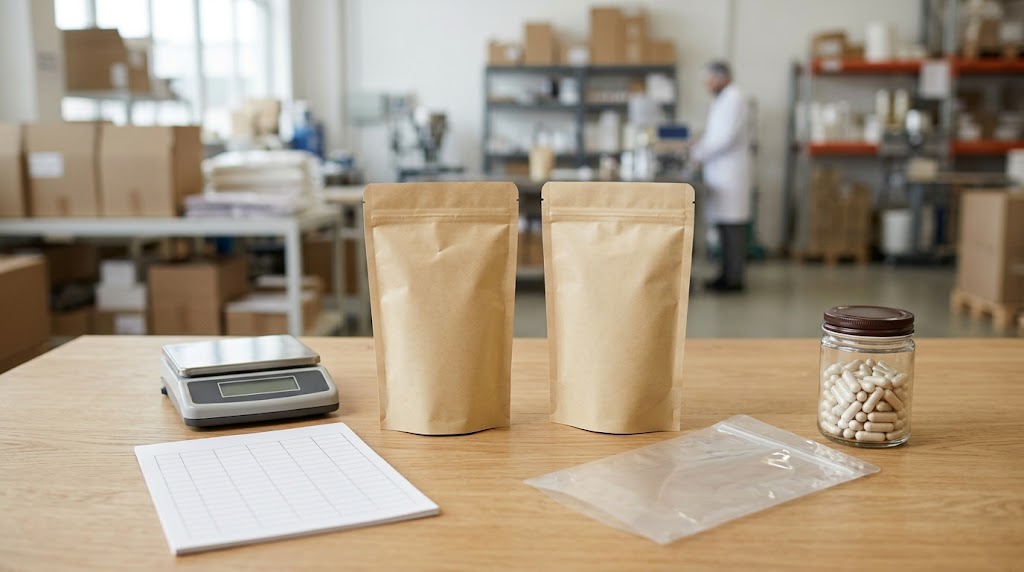
Be careful about sales claims from this calculation. “Uses less plastic” might be true per empty pouch but false per accepted selling unit after a new sleeve is counted. “Reduces packaging waste by 20%” requires a defined baseline, scope, date, measured data and an appropriate claim review. The FTC's Green Guides address source-reduction claims as well as recycling claims. An internal operational improvement can be valuable even when the right consumer-facing message is modest or deferred.
Separate start-up waste from steady-run waste
A new pouch will require line setup, but a brand should not compare a trial's first hour against a mature incumbent process and conclude that the new bag is inherently worse. Record setup waste and steady-run rejects separately for both alternatives, then compare at a realistic planned run length. A design with a difficult changeover may work acceptably for one long-running SKU but create large losses across a dozen small seasonal SKUs. The right observation is the total bags issued for the actual production plan, with the run and changeover pattern stated.
Break the setup category into useful causes. Are empty bags discarded while an operator adjusts the opening grippers? Does print registration need checking? Is the top seal dirty because the filler begins before the dust control is stable? Are several sizes of bag being run on one line without a validated changeover instruction? Each cause suggests a different intervention. The bag supplier may adjust dimensions or film behavior; the packer may improve a machine setting or handling step; the brand may reduce unnecessary SKU changeovers. Counting only the total scrap number hides those choices.
Set a sample acceptance sequence for a revised pouch. The packer can document a short initial trial, an approved set of line conditions and a production check at regular points. The brand decides the checks that matter for its supplement. If the bag passes only at a narrow setting that the production line cannot maintain, the “low-waste” design is not yet production ready. A stable process at realistic output can be more valuable than the lowest measured bag mass under ideal lab conditions. The aim is repeatable good units, not a perfect demonstration pouch.
Keep product waste and packaging waste on the same decision page
When a filled bag fails, the discarded unit may include a valuable supplement, inner packs, printed pouch and outbound transport already spent. Record the count and cause of rejected product separately from empty-bag scrap. Ask whether the supplement can be reworked under the brand's approved procedures; do not assume a leaking or mislabeled unit can be repacked and sold. The product business, not the bag supplier, decides disposition under its quality system. This prevents a procurement report from declaring victory over a few grams of film while product losses rise.
Complaints and returns should be sorted by observable failure. “Clumped powder” is different from a torn side seam, a failed zipper or a crushed retail carton. Record the package condition on arrival, product condition after opening, route, season and bag lot where available. A recurring puncture at the same stick-pack corner may point to orientation or geometry. Powder around the closure may point to fill control. If a return is unrelated to packaging, do not charge it to the bag redesign. An accurate cause map tells the team which change can reduce both waste and customer inconvenience.
Track storage-related issues over the same period as packaging material. An apparently lighter pouch can be unsuitable if the product's own verified stability criteria are no longer met. Conversely, there may be room to reduce oversized geometry or unnecessary presentation layers without changing the barrier structure. The brand's product and quality team should set the acceptance gates, then purchasing can compare feasible bags within them. This is why material use per good unit is a decision metric rather than a claim that one film always has the lowest environmental impact.
Design ordering rules that fit a changing supplement line
Printed bag inventory is a form of committed material. Forecast the likely demand for each approved SKU over the period before a label revision could reasonably occur, and compare that quantity with the supplier's quoted minimum and reorder schedule. Record old-bag stock by artwork version and the date it became unusable. A high minimum may reduce the unit price but leave more printed film to discard when the formulation changes. A small short-run may avoid obsolescence but require more frequent deliveries and setup. The brand should compare the actual total and its change risk, not apply a universal “shorter runs are greener” rule.
For multiple flavors using the same physical bag, the team can test a common geometry while still controlling distinct printed panels. Do not assume one label works for each flavor. If the supplier suggests a common blank bag with a product-specific label, count the added label, application rejects and whether the finished unit remains legible and acceptable. If it suggests printing every flavor separately, ask for setup waste and lead times by artwork. Both approaches can be reasonable under different real volumes; the waste measure should reflect the whole approved selling unit.
Include unused pilot samples and obsolete proofs in the planning record. They are often small compared with production material but reveal a weak approval process. If three rounds of full printed bags were ordered before anyone tested the fill opening, the next project can start with an unprinted size trial. If the brand repeatedly changes copy after print approval, tighten the label-review gate. These procedural changes can reduce avoidable bag waste without a new polymer, although the magnitude should be calculated from the company's own counts rather than guessed in a marketing paragraph.
Assign an owner to close each waste item. Purchasing can update the order cadence, the artwork owner can resolve revision timing, the packer can investigate fill rejects, and the quality team can decide product disposition. The bag supplier can propose a revised sample only after the problem has been described. A monthly review of a few well-defined measures is more useful than a one-off sustainability slide: it shows whether a change kept working after the pilot and whether a new SKU introduced another source of scrap.
Turn the waste log into a controlled improvement cycle
Prioritize the largest observed sources of loss rather than launching several redesigns at once. Choose one SKU, one product-equivalent sample and a clear baseline. Decide whether the proposed change is bag geometry, filling method, artwork planning, distribution assembly or material. State what success would look like before the trial: acceptable units, seal results, product quality, material issued per acceptable unit and consumer use. Compare the same production period or otherwise explain a major change in formula, demand or line conditions.
If the trial succeeds, freeze the approved construction, artwork, packing method and record. Continue tracking the relevant measure so the gain is not lost when a supplier substitutes a closure or the packer changes a line. If it fails, record whether the failure occurred at filling, storage, shipping or consumer opening. This makes the next design decision specific. An untested switch to a supposedly thinner or recyclable pouch is not a substitute for this sequence; material selection and end-of-life claims have their own validation gates.
| Stage | Practical question | Evidence |
|---|---|---|
| Baseline | Where are bags and products being lost now? | Bag issue count, acceptable units, rejects by cause and obsolete stock |
| Candidate | Which one change addresses the largest verified loss? | Drawing, process change or alternate structure and intended effect |
| Trial | Does the filled selling unit still meet all gates? | Fill/seal, storage, distribution and use observations |
| Comparison | What did material use per good unit actually do? | Same-scope masses and yields, with added components counted |
| Release | Can the result be reproduced and accurately described? | Versioned specification, owner approvals and claim evidence |
Recommended packaging configuration to discuss
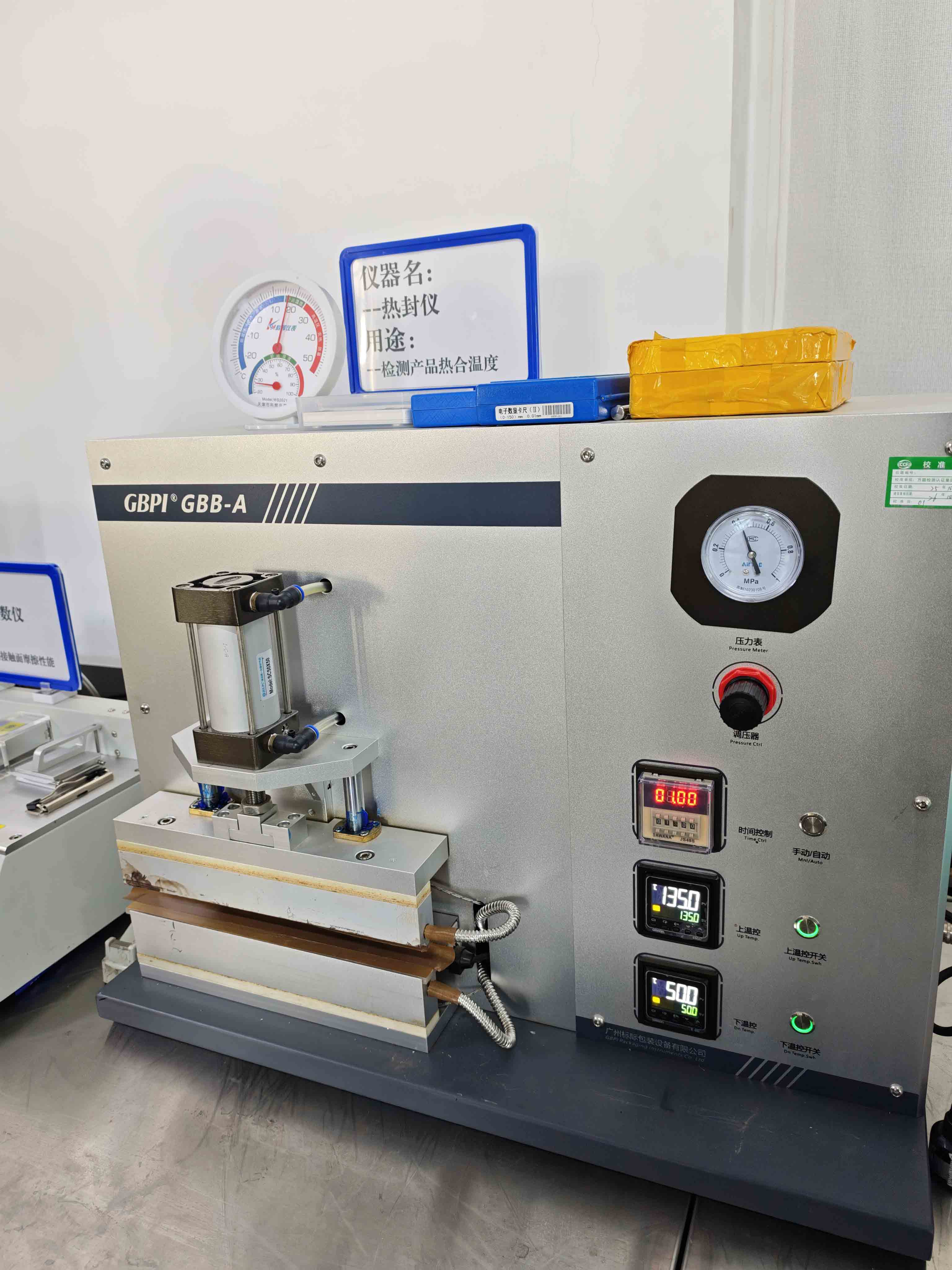
For a brand with high empty-bag use or oversized packs, trial a pouch geometry that fits its actual supplement and clean seal zone before switching material. For many frequently revised printed SKUs, ask about proof and print-run options as part of the inventory plan. If the brand is evaluating a PE-family alternative, keep the product trial and any recyclability claim assessment separate. Mylarbag's supplement pouch formats and published projects can support a sample discussion, but a reduction claim must come from the brand's measured baseline and approved complete-pack comparison.
Frequently asked questions
What is the simplest packaging-waste measure for a supplement brand?
Start with packaging material used per acceptable selling unit for one defined SKU and period. Include empty bags consumed in setup and rejects, plus any added wrapper in the stated scope. Track product loss and obsolete print inventory separately so they are not hidden by an attractive empty-bag weight.
Will a thinner supplement pouch always reduce waste?
No. It might require another protective component or create more rejected seals, damaged product or returns. Trial the finished fill, use and route, and compare total material for good units rather than film thickness alone.
How can I reduce waste from changing Supplement Facts or artwork?
Stabilize the approved label before a large print run, track printed bag inventory by version, and ask suppliers for production options that match the actual SKU mix. Segregate obsolete artwork and have the brand's label owner approve any proposed reuse or replacement. A bag factory cannot decide that an old supplement label remains correct.
Does moving to a recyclable pouch automatically reduce total waste?
No. A verified recovery route and lower production waste are different objectives. The new bag still needs to protect the supplement, run on the filling line, avoid extra components and support any consumer-facing recycling claim for the market where it is sold.
Should I remove an outer shipping box to use less packaging?
Only if the completed shipment still meets the brand's handling and arrival criteria. A flexible retail bag is not an impact-protection system by itself. Include added, removed and damaged components in the comparison rather than assuming fewer visible layers mean a better outcome.
Can Mylarbag estimate my brand's percentage waste reduction?
It can discuss a candidate pouch structure, size and sample process from the project brief. A credible reduction percentage requires the brand's existing bag consumption, reject and product-loss data plus a comparable trial of the proposed complete pack. A generic percentage from a brochure is not a measured result for the brand.
Make the next request specific to the largest loss
Share the current filled pouch, supplement form, acceptable fill range, bag specification, line method, quantity by SKU, artwork-change frequency, observed rejects and the distribution route. Identify whether the immediate goal is less material in a validated bag, fewer production rejects, less obsolete printed inventory or fewer added shipping layers. Mylarbag can review a custom pouch brief and physical sample request. Measure the result per acceptable selling unit and document any claim separately before changing the printed front panel.