
Choosing cat food packaging is not a matter of picking a bag shape from a supplier catalogue. The useful starting point is the food itself: its moisture, oil, particle shape, fill weight, process, target market and the information that must stay readable through distribution. From there, a brand can turn its product requirements into a pouch brief, validate the proposed construction with the filler and converter, and only then decide which visual and convenience features belong on the pack.
This guide is written for cat-food brands, co-packers and product teams planning a new flexible pack or reassessing an existing one. It is not a shelf-life guarantee, a food-safety approval or a substitute for process validation. A package may support a validated product and process; it cannot make an unvalidated formulation or filling process safe on its own.
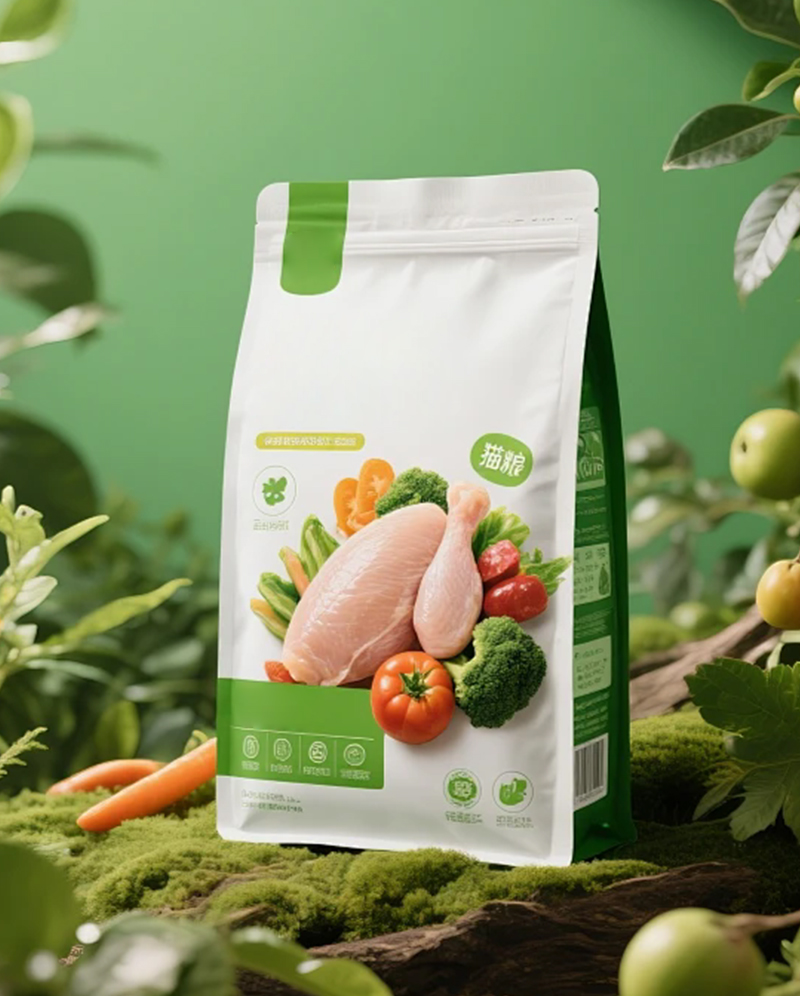
Start with the product, not a pouch name
“Cat food” covers products that behave very differently in a package. A crunchy dry diet, a freeze-dried topper, a gravy-filled wet meal and a soft treat may all sit in the same pet aisle, but they create different questions for the people who formulate, fill, seal and transport them.
The most dependable first meeting is therefore a product-and-process conversation. Before discussing metallic film, a zipper or a window, collect the facts that affect the package:
- Is the product dry, semi-moist, wet, frozen, retorted, or intended to be refrigerated?
- What is the finished net weight, and what is the measured bulk density or fill volume?
- Does the product have sharp edges, brittle pieces, powder, free oil, sauce or a strong aroma?
- How is it filled: by hand, on a vertical form-fill-seal line, through a pre-made pouch line, or by another process?
- What seal geometry, headspace and filling temperature does the process require?
- Which country or countries will receive the product?
- What information must appear on the pack, and how much panel area does the approved artwork actually need?
- How will units be packed into cases, stored, shipped and displayed?
That list may feel basic, but it prevents the common “beautiful bag, difficult product” result. A style that works for a small sample of light dry pieces may be a poor starting point for a heavy dense kibble. A pouch that is suitable for one product’s validated thermal process cannot be assumed suitable for another product merely because both are sold as wet cat food.
For a commercial overview of possible custom pouch formats, see Mylarbag’s cat food pouch page. Treat its online examples as a starting conversation, not as a specification or a promise that every feature fits every cat-food product.
Define the job the pack has to do
Packaging choices become clearer when the job is stated in plain language. “Keep it fresh” is too broad to specify a structure. A better brief describes the risks and the user task.
The last column matters as much as the middle one. A converter can help design and manufacture a flexible package, but a product owner, co-packer and relevant technical specialists must confirm the food and process requirements. This is especially important for products that use heat processing or refrigeration: a material description is not a regulatory or safety approval.
A useful way to write the requirement
Instead of requesting “a high-barrier cat food pouch,” write requirements in a testable form:
500 g dry cat-food kibble; measured bulk density supplied separately; pre-made stand-up pouch; product includes some hard, irregular pieces; consumer reseal desired; artwork requires nutrition, ingredient, net-quantity, lot/date and brand panels; packed 12 units per shipping case; target market: United States; final structure and seal performance to be confirmed through line and distribution trials.
That statement gives a packaging partner something concrete to evaluate. It does not assume an unverified material, a shelf life or a recycling outcome.
Separate food format from retail format
The food format dictates fill and process reality, while the retail format dictates standing, stacking, pouring, opening, resealing and reading. Decide them together.
Stand-up pouches
Stand-up pouches suit small to mid-sized dry products, providing a front-facing retail presentation and broad branding panel. However, they aren't appropriate for every fill weight; stability, clearance, filling equipment and case packing require thorough review.
Flat-bottom or box-style formats
Flat-bottom formats offer multiple printable panels, a stable base, and suit products needing extensive copy or larger fills. Practical questions include equipment runnability, case fit, and whether the product stresses seals or leaves awkward empty space.
Side-gusset or quad-seal formats
Side-gusset packs create vertical volume. For heavy dry products, review handle claims, gusset dimensions, seal orientation, settling and outer cases. “Heavy duty” remains marketing until proven by product-specific testing.
Three-side-seal and other flat pouches
Flat pouches suit samples, small portions and multi-pack components. Limitations include reduced label space (often requiring an outer carton) and the need for careful opening design.
Spouted, shaped and special formats
Spouts, shaped seals and unusual outlines should enter the project because they solve a stated user or process need. They can change filling, sealing, shipping and labelling requirements. Treat them as engineering choices, not decorative upgrades.

Convert fill weight into a dimension-development process
Net weight is necessary, but it does not give a pouch width, gusset or height by itself. Two products with the same weight may occupy very different volumes. Density, particle size, settling, allowable headspace and the pack’s geometry all matter.
Use a dimension-development process rather than a generic online size chart:
- Record the target net weight in grams and ounces where relevant to the market.
- Measure the product’s actual bulk density or run a controlled volume fill.
- Define practical headspace with the filler rather than filling a sample pouch to its visual maximum.
- Build or request a dieline candidate that includes seals, gussets and the usable print panels—not only the apparent front width.
- Fill physical samples with the actual product.
- Check settling, seal contamination risk, upright stability, opening clearance, label legibility and case fit.
- Repeat after artwork and final features are added, because a zipper, window, handle or changed seal position can alter usable space.
The idea is simple: use the food to find the package, then use physical trials to confirm the package. A stock pouch may be helpful for initial volume exploration, but it is not evidence that the final printed structure will work.
Choose material conversations that match the real risk
Material discussions can become vague quickly. It is more useful to discuss what must be managed than to lead with a film acronym. Depending on the product, the technical team may need to consider moisture, oxygen, light, aroma, oil, abrasion, product corners, seal contamination and the planned storage/distribution environment.
That does not justify a universal “maximum barrier” request. More layers or a foil-looking surface do not automatically produce the right package. A structure must be compatible with the product, the process, the chosen features and the market’s end-of-life claims. It should also be testable in the form that will actually be sold.
For example:
- A dry, crisp product may require attention to the environmental conditions that could change texture, but the final shelf-life claim must be set through the brand’s product validation.
- A product with oil or dusty residue may need a filling and sealing discussion so residue does not undermine the intended seal.
- A product with hard or angular pieces may need a distribution assessment focused on the finished pouch, its case and its stacking pattern.
- A wet product requires the product owner and processor to define the relevant process and storage condition before a packaging structure is selected.
Avoid using “food grade,” “BPA-free,” “retort safe,” “recyclable,” “compostable,” “odor proof” or “leak proof” as generic shorthand. They are claims that need a specific basis, conditions and sometimes third-party or regulatory review. A responsibly written package brief states what will be checked and by whom.
Make convenience features earn their place
Functional features should solve a product or user problem. Every feature also introduces a placement, compatibility, operating or end-of-life question.
The consumer experience starts before the first opening. A sturdy-looking top seal that is difficult to locate, a tear notch that creates a jagged opening, or a zipper coated during filling can cause real frustration. Add opening and reseal checks to the sample protocol early.
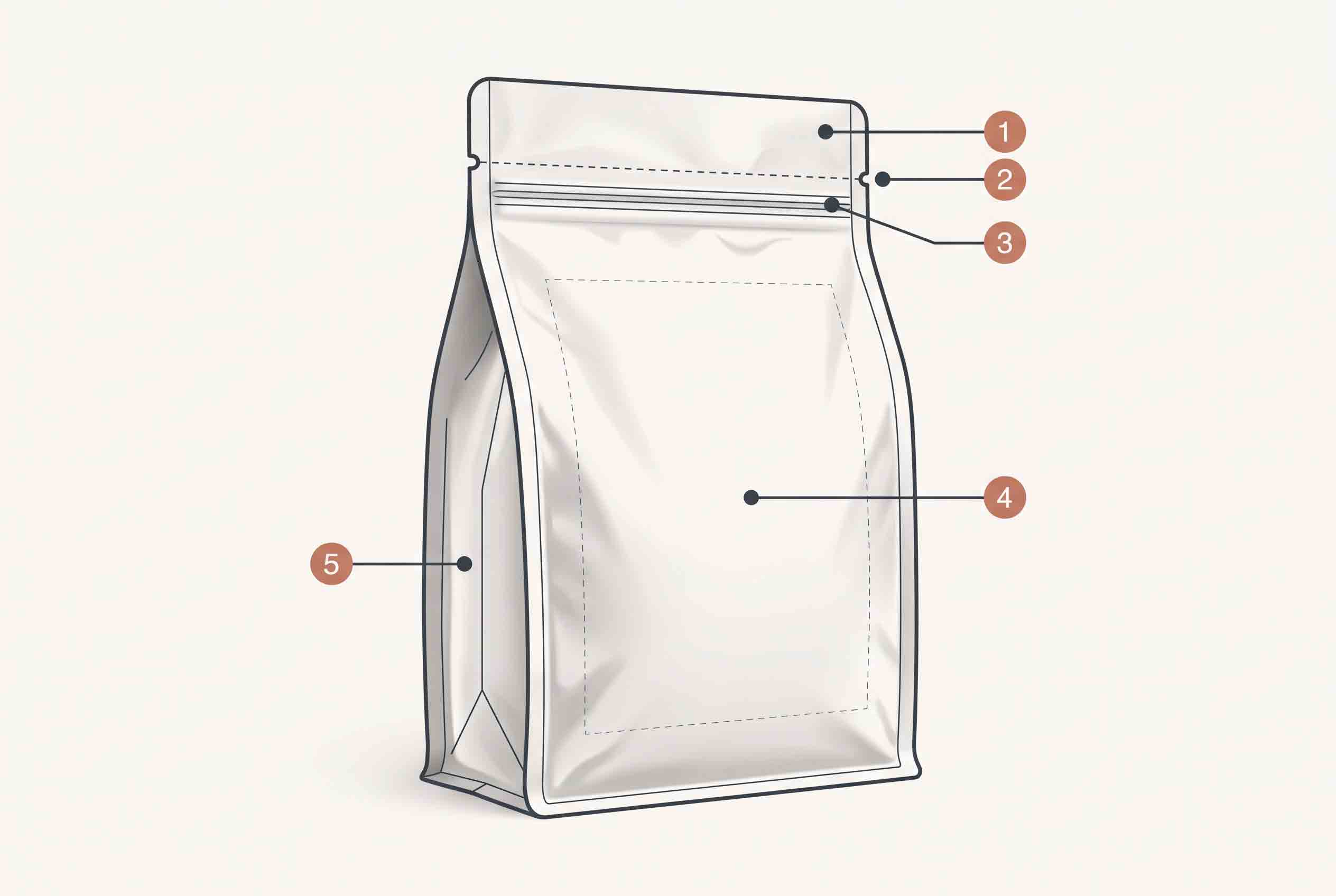
Reserve label space before artwork becomes expensive
Packaging is compliance work, not just logo background. In the U.S., federal and state rules (often AAFCO-based) apply. FDA’s pet-food overview and AAFCO’s label guide are starting points, but don't replace market-specific reviews.
AAFCO highlights species identification, quantity, ingredients, nutritional adequacy, feeding directions, and guarantor details. Labels span multiple panels, so review dielines with complete approved copy, barcodes, lot/date approaches and translations.
Ask these questions before design lock:
- Which panels must remain readable after the pouch is filled and gusseted?
- Where will the net quantity statement go for the target market?
- How are lot and date codes applied, and is the area suitable for the coding method?
- Is there enough contrast and clear space for small regulatory copy?
- If the product is a multipack, which information appears on the outer pack and which appears on each inner unit?
- Are market-specific languages, recycling instructions or retailer requirements already known?
Do not make nutrition, disease, comparative or environmental claims in artwork because they “sound right.” FDA notes that specific pet-food claims are reviewed in context, and AAFCO’s labelling explanation warns against false or misleading statements. The product owner is responsible for substantiation and market review.
Treat filling, sealing and validation as part of package design
The package cannot be selected in isolation from the line. A good technical review includes the pouch’s orientation, feed method, opening, static behavior, fill temperature, dust or residue, sealing bars, dwell conditions, cooling, coding, inspection and case packing. A change in any one of those can affect the result.
For a new project, establish a validation plan that fits the product and route. It might include:
- dimensional and appearance checks on filled packs;
- seal inspection using an agreed method;
- opening and reseal checks by representative users;
- product/package compatibility assessment;
- distribution or handling trials that reflect the actual case configuration;
- print, colour and label-legibility approval;
- review of lot/date coding and traceability;
- a documented decision on any environmental or performance claim.
The right set of tests is product-specific. A packaging blog should not promise a universal test result or a universal shelf life. The purpose of the checklist is to ensure that the business assigns each question to the person able to verify it.
U.S. FDA describes manufacturing and preventive-control requirements for animal food facilities. Packaging design must support—not replace—the manufacturer's food-safety plan. See FDA’s animal-food overview.
Build the logistics brief before approving the pouch
A retail pouch is shipped inside a larger system. The finished unit has to fit a case, the case has to fit a pallet pattern, and the full load has to meet the route’s handling constraints. If those questions appear only after final artwork, a visually successful pouch can become a freight or warehouse problem.
Include the following in the package brief:
- finished pouch dimensions and filled thickness;
- target units per case and case orientation;
- case internal dimensions, closure method and gross weight;
- pallet footprint, maximum load height and maximum gross weight;
- warehouse and transport conditions the product owner expects;
- retailer display or shelf requirements;
- whether the product is sold singly, in a multi-pack or in a display-ready case.
The future pallet calculation should be based on actual finished case dimensions and allowed load conditions, not an internet average. If you are working through that stage, our related guide will cover the formula once published: How Many Bags of Cat Food Fit on a Pallet.
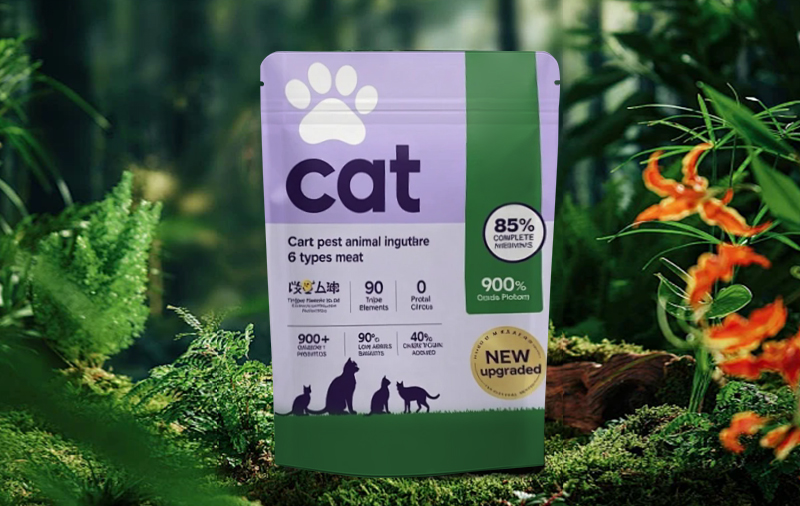
A realistic project example: what can and cannot be inferred
Mylarbag’s Pet Food & Treats collection includes published packaging projects for pet-related products. These examples can help a buyer identify visible format details, such as a stand-up pouch, a window, a printed finish, or a stated fill weight. They do not show that an unlisted cat-food product uses the same structure, that the same configuration will deliver a particular shelf life, or that it will perform the same way on another filling line.
That distinction matters in every packaging project. A real photo can show a physical format, but it cannot replace a written specification, a test record, a product–package compatibility review, or the brand’s own approval process. Because the collection does not document a verified cat-food project, treat it as a neutral format reference only. A cat-food brand should validate its own product with project-specific samples before approving a production configuration.
A copy-ready cat food packaging brief
Use this briefing form to move a project from a general inquiry to a technical conversation:
This form does not lock the project into a construction. It makes the unknowns visible early enough to solve them.
Common mistakes that create expensive revisions
Choosing dimensions from a fill weight alone
Net weight does not describe volume, headspace or the usable dimensions left after seals and gussets. Use actual product fills.
Treating an online material name as a final specification
Material shorthand can be helpful in a conversation, but it does not prove compatibility, process suitability, recycling acceptance or shelf life. Agree the actual construction and validation route.
Designing the front panel first
The front may be the visual hero, but the package also needs to carry required copy, coding and market-specific information. Start with a complete dieline and content map.
Adding every feature at once
Zipper, window, handle, special finish and unusual shape can each be justified. They can also make tooling, filling, recyclability assessment, dimensions and approval more complex. Choose features that solve a documented problem.
Using another brand’s bag as technical evidence
A competitor’s shelf pack can inspire a consumer-experience question. It cannot reveal its complete structure, validation, legal approval or filling conditions.
Calling the converter the food-safety owner
The food business and its responsible technical partners must own the formulation, process, label, safety plan and shelf-life decision. Packaging input is one part of that system.
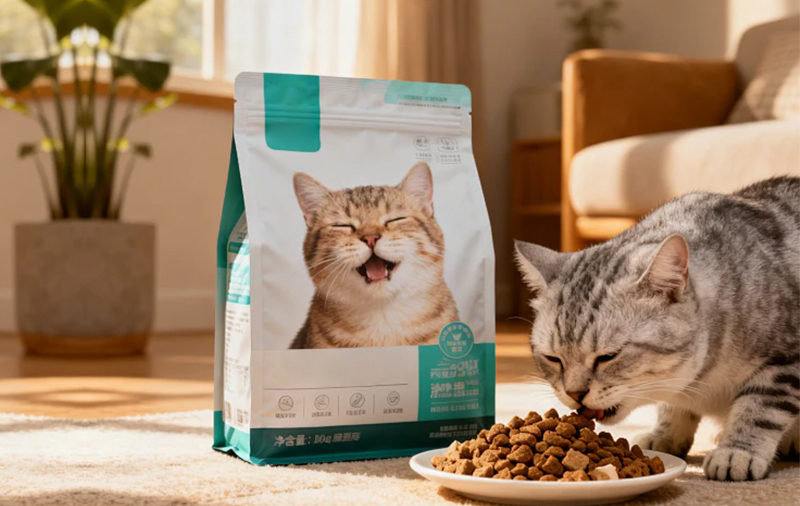
The decision sequence that saves the most time
If a team needs one short answer, it is this: define the product and its process, measure the actual fill, reserve label space, develop a format candidate, sample it, and validate the complete system before scaling. The order matters because it prevents a visual choice from dictating technical decisions.
For a custom-format conversation after the brief is ready, visit custom cat food pouches. Bring the product facts, target market and unknowns with you. A request that identifies what needs confirmation is far more useful than a request for an all-purpose “best cat food bag.”
Frequently asked questions
What is the best packaging for dry cat food?
There is no universal best format. Start with the food’s fill weight, measured density, particle shape, oil/dust behaviour, intended use after opening, line requirements, label area and distribution route. Then sample and validate the proposed pouch with the actual product.
Can one pouch work for dry cat food and wet cat food?
Not as a general assumption. Dry and wet products can have very different filling, sealing, storage and processing requirements. A pouch style that looks similar does not establish that the same final construction or process is appropriate.
Does a zipper keep cat food fresh for a fixed period?
No fixed period can be inferred from the zipper. Product instructions, storage conditions, food formulation, filling process and the complete package system determine the applicable guidance. A zipper is a convenience feature that must work with the real product and line.
How much label space does a cat-food pouch need?
It depends on the market, product claims, languages, barcode, lot/date method, nutrition and ingredient information, and any required statements. Build the dieline around complete approved copy; do not decide only from a front-panel mockup.
Are cat food bags recyclable?
Some materials may be accepted by a particular collection program, but there is no universal answer for flexible bags and pouches. Construction, closures, contamination and local collection rules matter. See the dedicated recycling guide for a market-specific explanation rather than making a packaging claim from appearance alone.
Should a new cat-food package be tested before a production run?
Yes. The appropriate plan depends on the product and route, but it should assign responsibility for line trials, seals, compatibility, distribution, artwork, labelling and any shelf-life or environmental claim. A sample that looks good empty is not the final approval.
Sources and scope
- FDA: Pet Food
- FDA: Food Safety Modernization Act and Animal Food
- AAFCO: How to Understand a Dog or Cat Food Label
- Mylarbag: Pet Food & Treats Projects
Scope note: This article is a packaging-development guide, current as of September 2026. It does not provide legal, nutritional, food-safety, process-validation, migration, shelf-life or recycling-program approval. Confirm country-specific requirements and the final product/package system with the responsible qualified parties before production.