
The right package for bird seed is selected from the food and the route to market, not from a pouch catalogue. Start with the actual seed mix, pellet or specialty feed; its density, particle shape, dust, fill weight, oil content, filling method, label requirements and distribution plan. Then develop a package candidate, fill it with the real product, and validate the complete product/package/process system before a production run. A bag can support a validated product. It cannot create a shelf-life claim, food-safety approval or puncture guarantee by itself.
This guide is for brands selling wild bird seed, parrot food, pet-bird pellets and similar dry feed products. It is not feeding advice, a pest-control guide, a substitute for legal review, or evidence that a particular material will work for every seed mix. Its purpose is to turn a vague request for “bird food bags” into a brief that a product team, filler and packaging supplier can actually evaluate.
Start by classifying the product
Bird food is not one packaging problem. A lightweight wild-bird seed mix, a dense small pellet, a mix with sunflower seeds and hull fragments, and a fine powdered supplement can have different behaviour in filling, sealing, handling and retail display. They may share a store aisle, but they do not automatically need the same format or the same validation plan.
Use a first meeting to collect the facts that affect a finished package:
- What exactly is being packed: seed mix, individual seed, pellet, crumb, supplement or another dry product?
- What is the finished net weight and measured bulk density?
- Are there sharp seed hulls, long pieces, free oil, fines or dust?
- How is the product filled and sealed?
- What is the product temperature and condition at filling?
- Is the pack single-use, repeat-use, bulk, subscription, trial or retail display?
- Which markets will receive it?
- Which label, lot/date and barcode information must remain readable?
- How many units go into a shipping case, and how will cases be palletised?
The useful answer to “What bag should we use?” begins after these questions, not before. A supplier can explain available formats and produce packaging; the food business and its responsible technical partners must define the product, market, claims, final label and validation requirements.
Write a packaging brief that can be tested
A generic instruction such as “need strong bird seed bags” leaves too much to assumption. A good brief is specific about the known conditions and transparent about the unknown ones.
Here is an example of a useful starting brief:
2 kg retail bird-seed mix; actual bulk density supplied with the inquiry; product includes seeds of different sizes and some natural fines; pre-made pouch line; target market and required label copy to be confirmed before artwork; consumer reseal preferred; case pack and pallet rules provided by the distributor; final dimensions, structure, seal settings and performance claims subject to real product and line trials.
The strength of that brief is not that it names a material. It assigns the questions that need evidence.
Choose a format for the actual use case
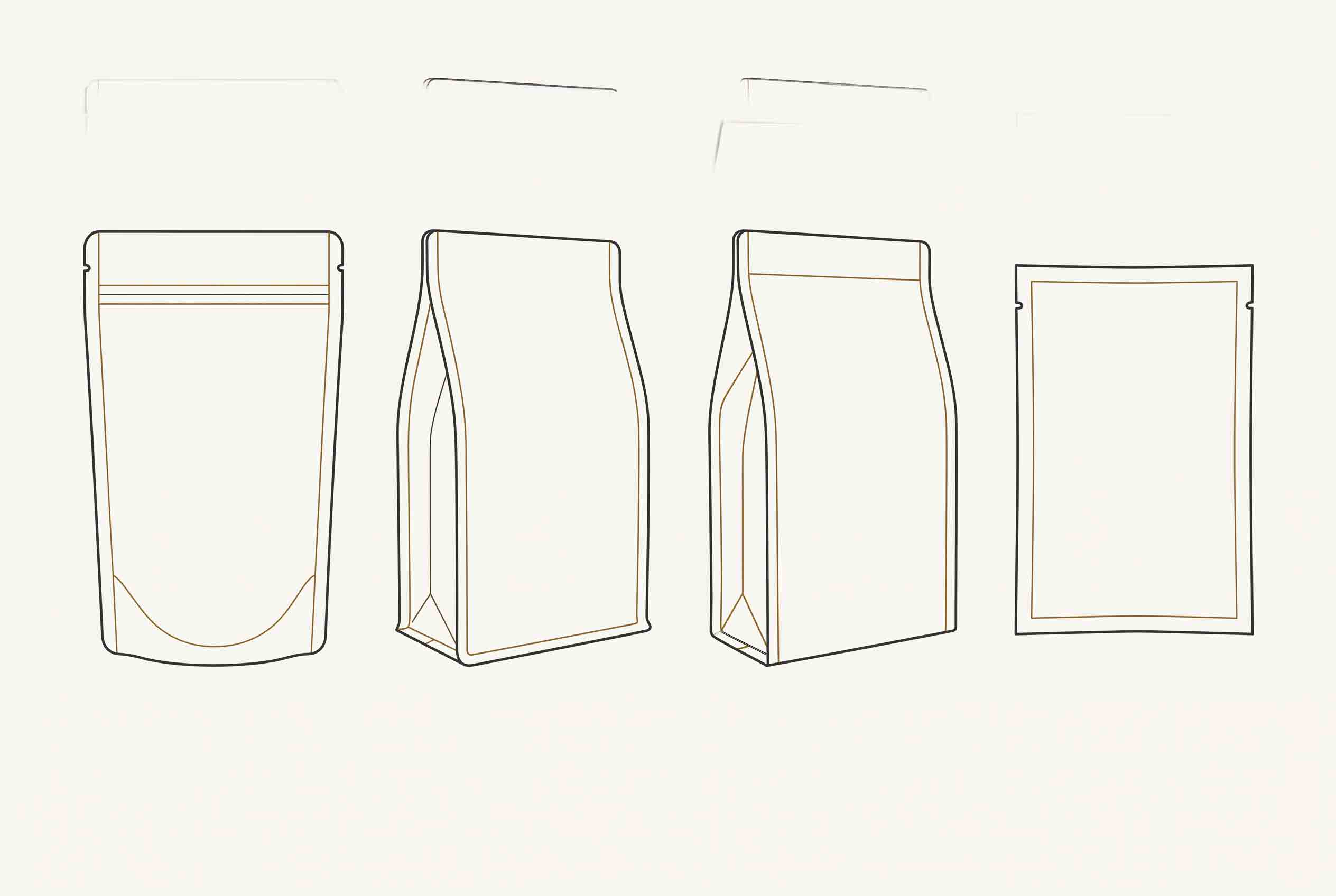
The format affects how the product is filled, how it sits on a shelf, what can be printed, how a consumer handles it, and how cases are built. It should be selected conditionally rather than marketed as a universal winner.
The retailer-facing silhouette is only part of the decision. A package that looks right on a computer screen can have poor headspace, awkward settling, a seal-area contamination issue or weak case efficiency once it is filled. Request samples early, and put the actual bird food into them.
Use fill trials, not fill-weight guesses, to develop dimensions
Net weight alone cannot supply a pouch width, height or gusset. A 2 kg seed mix with larger, light pieces can occupy a different volume from 2 kg of dense pellets. Even the same mix can settle differently after filling and transport. The practical development sequence is:
- Record the target net mass in grams and the market’s required units.
- Measure product bulk density under an agreed, repeatable method.
- Define target headspace with the actual filler.
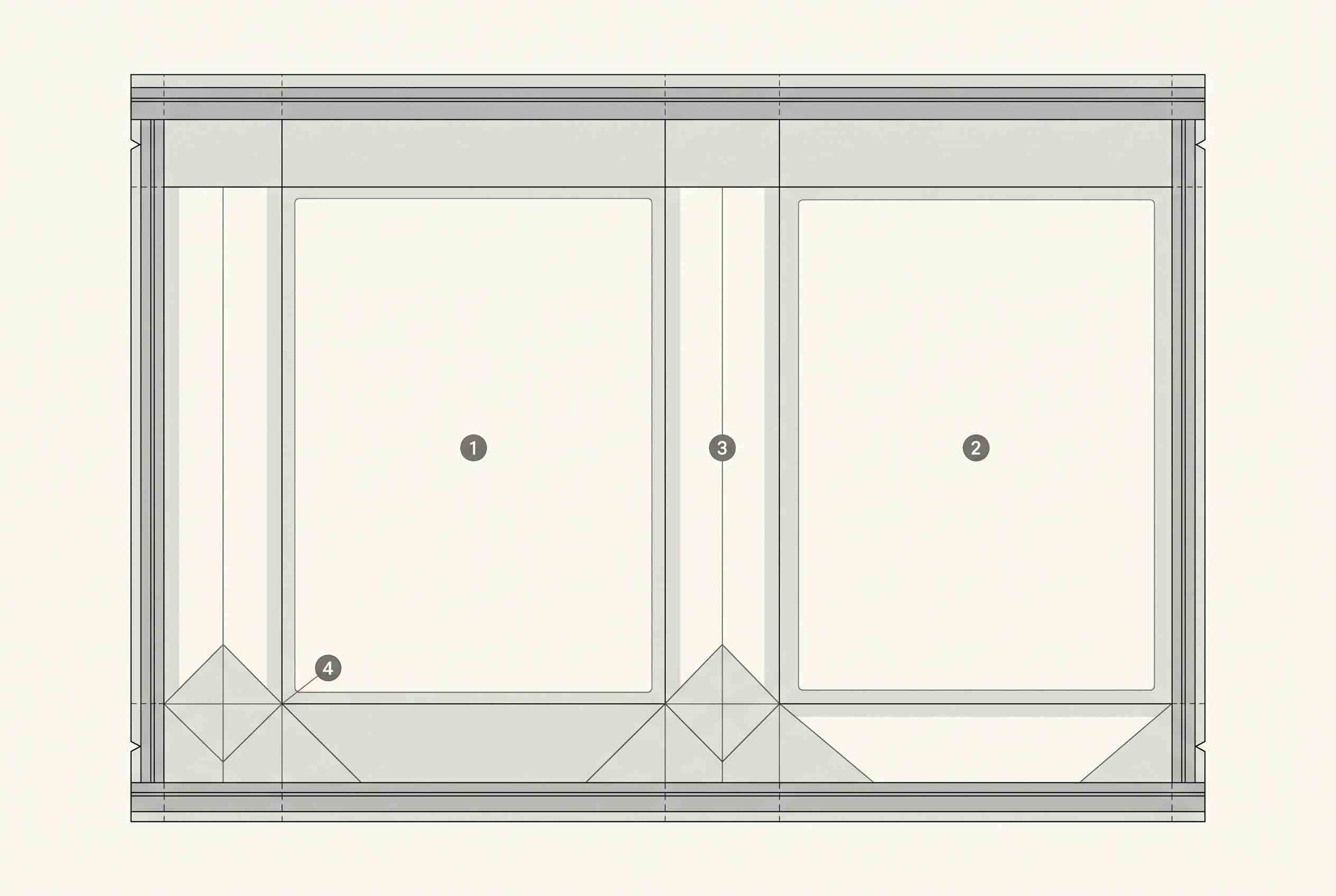
- Develop a candidate dieline that includes seals, gussets and usable artwork panels.
- Fill physical samples with the actual product.
- Check settling, pouch shape, top clearance, opening, coding area and case fit.
- Repeat after features or artwork placement changes.
The word “capacity” needs care. A nominal pouch size does not promise it will hold a stated bird-feed weight. The finished product and conditions determine usable capacity. If a brand is commissioning a custom pack, it should supply the product sample rather than expecting another company’s seed bag to become a universal size chart.
A formal fill trial must move beyond simple observation and generate a usable engineering record. When running the actual seed blend or pellet through the intended packaging equipment, the development team should systematically document every variable that affects the finished unit. A successful test run produces a detailed report detailing exactly what happened when the product met the pouch.
At a minimum, the trial record should document the product form and particle variation observed during the run. This includes noting whether large sunflower seeds, dusty millet, or irregular pellets flowed consistently through the filling heads. Next, it must record the target fill weight and permitted production range. Filling equipment is not perfect, and the documentation should show the actual mass achieved rather than relying solely on the marketing brief's nominal weight.
The physical dimensions of the resulting package are critical. The team should measure the filled pouch width, height, gusset behaviour and headspace after the product has settled. This confirms whether there is enough clear film remaining at the top to allow the sealing jaws to operate without crushing the ingredients. During this step, the report should explicitly note the sealing area cleanliness and closure operation where applicable. A zipper or press-to-close feature is only useful if it remains free of seed dust and hull fragments during the high-speed packing process.
Once the individual pouch is sealed, the trial should evaluate how the pouch is packed into its shipping case. A bag that looks excellent standing alone on a desk might bulge awkwardly, preventing the corrugated shipper from taping shut properly. Finally, the documentation must clearly distinguish which values are measured results and which remain planning assumptions. By explicitly stating what was physically verified on the line versus what is still a theoretical calculation, the brand can make an informed decision before committing to a full-scale commercial print run.
Treat dust and seal quality as an engineering conversation
Bird seed and dry feed can include fines, hull fragments and dust. That does not establish a defect or prescribe a single packaging solution; it means the team should talk about the fill process, product presentation, seal area and inspection before choosing a final structure.
Ask the filler:
- Does product enter or settle near the seal zone?
- Is the package filled upright, flat or in another orientation?
- Is there a clean-fill control or operating step that must be documented?
- How will the final seal be inspected?
- Does the product’s particle shape affect pouch handling or case packing?
Avoid unsupported statements such as “dust-proof seal,” “guaranteed leak-proof,” or “sharp-hull proof.” A responsible article can tell a buyer which questions to ask, while the real line and product trials establish the actual result.
Discuss material needs as risks, not magic words
Packaging materials are often discussed in shorthand: barrier, recyclable, food-safe, strong, high performance. Those terms can be useful as internal prompts, but they are not final specifications or public claims.
For a dry bird-food product, the team may need to consider moisture exposure, oxygen exposure, light, aroma, oil, abrasion, product edges, sealing, print finish and intended storage/distribution conditions. The right outcome depends on the finished product/package system and the market.
Do not make a material claim because it appears on an existing landing page, a supplier sample or a competitor’s shelf pack. “Recyclable,” “compostable,” “food-contact compliant,” “insect proof,” “odor proof” and similar statements need a defined final configuration, relevant market and appropriate evidence.
Reserve label space before artwork is finished
The package is part of a label system. For U.S. products, FDA explains that animal-food labelling is regulated at federal and state levels. AAFCO’s label resources also explain the importance of accurate label information and state-level regulatory roles. The specific obligations vary by product, species, state and market, so a brand should use current applicable requirements rather than a generic template.
At a practical level, the pack needs room for more than its front design:
- product and brand identification;
- intended animal/species information where required;
- net quantity statement;
- ingredient and product information as applicable;
- required nutrition/guarantee/feeding or specialty-pet information where applicable;
- responsible business details;
- barcode, lot/date coding and country/market requirements;
- storage, disposal and warning language where substantiated and required.
The AAFCO labelling requirements overview is a useful U.S. starting point, particularly because it describes specialty pet food as well as pet food. It is not an approval of an individual label. AAFCO explicitly notes that it does not approve or certify individual company labels; responsible state officials and the product owner’s own compliance review matter.
Build validation into the package-development schedule
Sample approval should not be a visual-only event. A sensible project identifies what will be checked and who owns each approval:
- pouch dimensions and filled appearance;
- line compatibility and seal inspection;
- product/package compatibility;
- opening and reseal usability;
- print, barcode and small-copy legibility;
- lot/date coding;
- case pack and handling;
- distribution and pallet review;
- label/legal review;
- support for any environmental or performance claim.
The correct test method and acceptance criteria depend on the product, market and route. A packaging blog should not pretend that a one-size-fits-all “drop test” or “barrier value” replaces product-specific validation.
For commercial animal-food businesses in the United States, FDA’s animal-food information and its food-safety framework explain the broader responsibilities for facilities that manufacture, process, pack or hold animal food. Packaging is one part of the system; it does not become the food-safety plan.
Plan the case and pallet before approving the pouch
Packaging projects become expensive when logistics appears after dielines and artwork are approved. The retail pouch needs to fit a real case. The case needs a defined gross weight and a stable pallet pattern. The pallet needs to meet the warehouse, retailer and carrier’s current limits.
Build these questions into the brief:
- What are the finished pouch dimensions and gross unit weight?
- How many units fit a case with the intended orientation?
- What are the case’s finished outside dimensions and gross weight?
- What pallet footprint, maximum height and gross-weight rules apply?
- Are cases allowed to rotate or interlock?
- Is overhang permitted?
- Which party validates case compression and load stability?
These are not just freight questions. A change in pouch footprint can change units per case; a different case can change cases per layer; the outcome can affect the overall commercial decision.
What a published packaging example can and cannot show
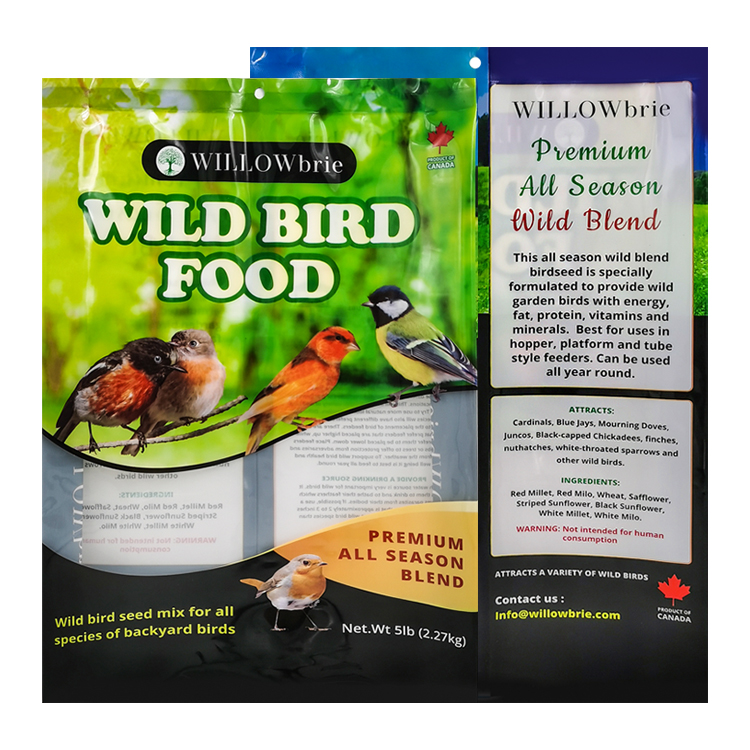
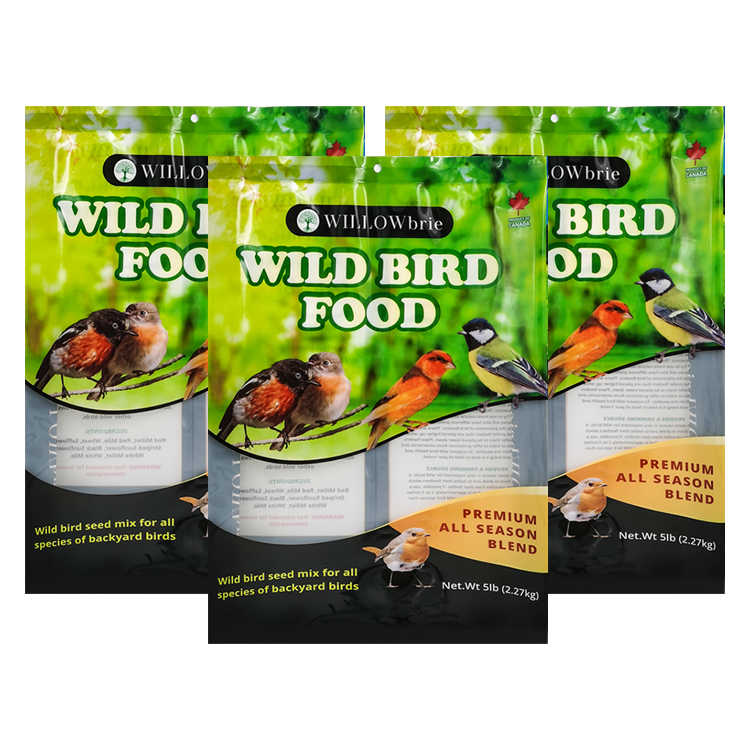
Mylarbag’s Pet Food & Treats collection includes a bird-food packaging example: a 5 lb (2.27 kg) PA/PE back-seal pouch with a clear window. It is useful as a format reference for the visible features shown on that pack, including the pouch style, window and stated fill weight.
Those visible details do not explain why that construction was selected, how it performed over time, whether it passed a particular distribution test, or whether it would suit another bird-seed mix. A new project still needs its own product review, fill trial and validation plan.
A copy-ready request for quotation
Use this text as a starting point when contacting a packaging supplier:
We are packaging [product type] for [species/market]. Target net fill is [mass], and measured bulk density is [value/method]. The product contains [particle/dust/oil observations]. Our filling method is [method], product condition at filling is [condition], and our target pouch use is [single-use/resealable/etc.]. Required label/coding information is [summary]. We expect [units] per case and must meet [pallet/destination constraints]. Please identify which dimensions, features and material options require samples or validation before final approval.
For a commercial format discussion once that information is available, visit Custom Bird Food Bags. The most useful inquiry is one that names its unknowns instead of asking for a universal “best bird seed bag.”
Common mistakes to avoid
Selecting a bag from fill weight alone
Mass does not reveal volume, headspace, product settling or usable print area. Use actual product fills.
Treating a competitor’s package as a technical specification
It can inspire a question, but it cannot reveal structure, process, approval conditions or distribution results.
Letting a finish decide the package
Matte, gloss, window and handle choices should not override filling, labels, case fit and validation.
Adding a claim before the evidence exists
Sustainability, food-contact, shelf-life, “freshness,” strength and delivery claims each need their own current substantiation.
Leaving coding until the end
Lot/date code placement, contrast and equipment access are part of package design.
Sending only an artwork file to a converter
The product, fill, process and route determine whether the artwork will live on a workable package.
When a new SKU needs a new packaging review
Do not assume that a small recipe, fill-weight or artwork change is only a marketing update. Review the package brief again when the seed blend changes, a pellet replaces a mix, the product gains more fines, the net weight changes, a closure is added, the case count changes or a new market is added. Any one of those can change fill volume, seal conditions, label space, case dimensions or the evidence needed for a claim.
Keep a short change log for the SKU: what changed, which samples were filled, who reviewed the label and whether the shipping case/pallet calculation was repeated. This is useful operational discipline, not a claim that every change requires the same test. It prevents a common error in packaging projects: the team treats a previous bag as automatically approved even though the product it now contains is materially different.
Frequently asked questions
What is the best packaging for bird seed, and can it include a clear window?
There is no universal best bag. Start with the exact product, target fill, measured density, dust/particle observations, filling process, label area and distribution route; then test a candidate package with the real product. A clear window can be considered only after the product, window size, label space, filling process and validation needs are reviewed; it is not evidence that one pouch format suits every bird-seed mix.
Can I use the same pouch for bird seed and pellets?
Do not assume so. Products can differ in density, particle shape, dust, filling behaviour and required pack size. A similar-looking pouch is not proof that the same final construction or dimensions are appropriate.
Does a zipper guarantee bird seed stays fresh after opening?
No. A zipper is a convenience feature. Product instructions, formulation, storage, package system and validation determine any applicable post-opening guidance.
How much label space does a bird-food bag need?
It depends on the target market, product type, required statements, languages, barcode, lot/date coding and business information. Review the full approved label on the actual dieline, not only the front-panel design.
Are bird-food bags recyclable?
Some specific finished packages may have an accepted collection route, but there is no universal answer for flexible bags. The exact construction, closures, condition and local program determine the consumer route.
What should I send for a custom bird-food packaging quote?
Send the product type, target net fill, density or physical sample, process details, market, label/coding needs, desired format, units per case and pallet/destination constraints. State which elements still need validation.
Sources and scope
- FDA: Animal Foods & Feeds
- FDA: Pet Food
- AAFCO: Labeling & Labeling Requirements
- AAFCO: Pet Food and Specialty Pet Food Labeling Guide
- Mylarbag: Custom Bird Food Bags
- Mylarbag: Pet Food & Treats Projects
Scope note: This article is current as of September 2026. It is a packaging-development guide, not legal, food-safety, nutrition, migration, shelf-life, recycling or performance approval. Confirm the final product, market and package/process system with the responsible qualified parties before production.