
A cheese buyer can approve a beautiful pouch and still have a failed launch. The cheese may release liquid, the top seal may catch shreds, a rigid block may stress a corner, or the package may look different after a week of refrigerated distribution. Those are different failures. A thicker film alone does not solve them.
The short answer: define the exact cheese and sales route first. Choose the pack format and closure around its shape, moisture, handling, and filling process. Compare vacuum, modified atmosphere packaging (MAP), and other options with actual product trials. Specify the complete material and its food-contact conditions. Then validate the filled, sealed pack under the intended cold chain before assigning a shelf-life date.
This guide is for cheese brands, creameries, co-packers, packaging engineers, and procurement teams. Mylarbag manufactures custom flexible packaging; the cheese producer remains responsible for its food safety plan, label, and finished-product shelf-life decision.
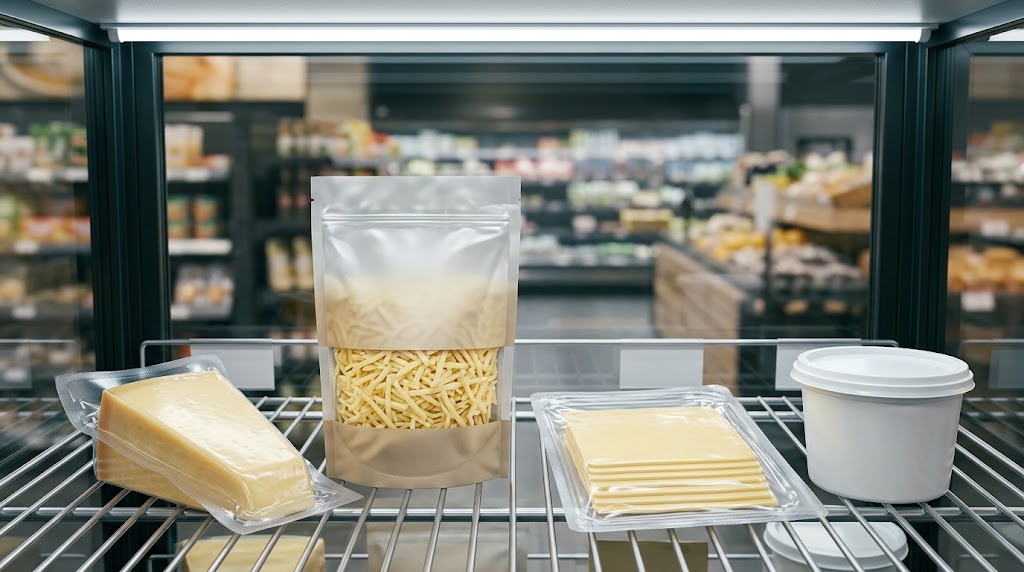
Illustrative cover concept. It must not imply that a pictured cheese has passed a particular shelf-life test.
Start With the Cheese, Not a Bag Catalogue
“Cheese” can mean a dry aged wedge, a moist fresh log, grated mozzarella, a stack of slices, a soft spread, or individually wrapped snacks. The packaging brief changes with the product. Even two cheeses with the same net weight may need different headspace, seal geometry, and handling protection.
Write down what goes into the pack and what must remain acceptable when it reaches the shopper. Include the recipe and process, moisture behavior, cultures, surface condition, salt or brine, oil release, shape, cut edges, intended storage temperature, planned unopened life, and expected use after opening. A fresh cheese with visible whey has a different leak problem from a dry block with hard edges. Shredded cheese introduces small particles into the sealing area. An active ripened product may behave differently from a stable portion cut from a block.
This screening table does not assign a preservation method. The next question is whether a proposed pouch works with the cheese plant's equipment and controls. A premade bag may suit a small run. A large line may use rollstock and form-fill-seal equipment. Neither choice makes the food safe by itself.
Choose the Primary Pack Before the Decorative Finish
The primary pack contacts or directly protects the cheese. Its job is to contain the product and perform through filling, sealing, storage, distribution, display, and opening. An outer carton or sleeve may provide branding and stacking but does not repair a leaking primary seal. Put the dimensions and actual fill into the decision before choosing matte ink, foil accents, or a window.
For a block, trial the largest and sharpest production piece. Measure the filled pack, not merely the empty pouch width. Observe where the cheese presses against seams after vacuum is applied and after a carton is stacked. For shreds, trial the product at realistic fill speed and note how the top opening presents to the filler. For soft cheese, determine whether a flexible pouch can be filled and handled without distorting the portion or wetting the seal. A cup, foil wrap, or thermoformed system may be the better package even when a stand-up pouch looks attractive in a mock-up.
Compare formats by the job they do
For a retail shredded-cheese project, the custom cheese packaging page shows pouch options. Its examples are a starting conversation, not a guarantee that a particular shape, zipper, or laminate suits every cheese. If a stand-up presentation is wanted, review the stand-up pouch format and request samples at the intended fill weight.
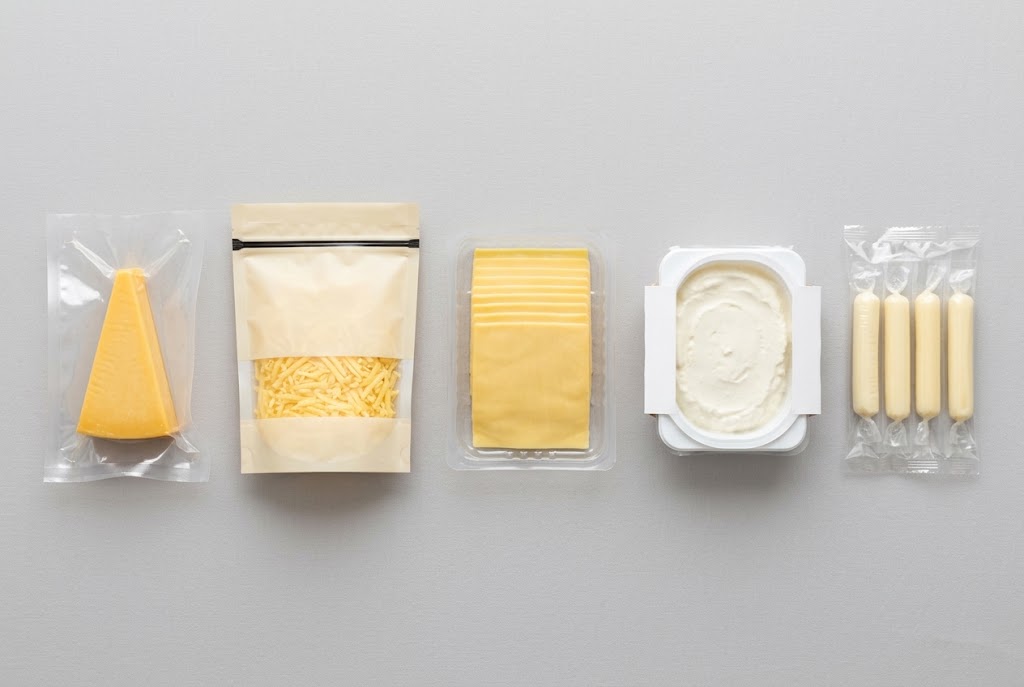
Illustrative formats only. The actual product, fill line, and storage route determine the commercial specification.
Vacuum, MAP, or Another Atmosphere: Make It a Product Trial
Vacuum removes much of the air before sealing and can make a close-fitting package around some blocks or wedges. It can also pull flexible film tightly against a delicate product, change the apparent shape, draw liquid toward the seam, or make a small pinhole consequential. A good-looking vacuum pack at the end of the line still needs leak and storage checks.
MAP replaces some of the original air with a defined gas mixture and normally leaves planned headspace. Carbon dioxide and nitrogen may be used in cheese packaging, with gas behavior changing during refrigerated storage as carbon dioxide dissolves into the product and gases pass through the material. A review of hard and semi-hard cheese research describes different quality outcomes for different cheeses and mixtures; it does not supply one ratio for every cheese. An experimental fresh-cheese study compared air, vacuum, and selected MAP treatments, but its results apply to the studied product and conditions rather than establishing a universal recipe. See the cheese preservation research review and the fresh-cheese MAP study.
For an actual launch, the cheese producer and packaging-line specialist should define the gas blend, target residual oxygen, headspace, gas-to-product relationship, sealing process, and acceptable gas changes over time. Compare candidates with the same cheese lot and defined refrigerated conditions. Record product quality, microbiological results, sensory changes, package appearance, and seal integrity at each time point. A supplier's generic phrase “MAP-ready film” is a material screening statement, not a finished-product shelf-life claim.
A pouch that was intentionally gas-flushed may be fuller than a vacuum pack on day one. The meaningful evidence is the approved starting appearance and whether a batch changes unexpectedly. If packs expand, leak, smell unusual, or show other signs of deterioration, the food business should hold affected lots and investigate the process and product; a shopper should follow the manufacturer's instructions rather than treating the bag's appearance as a home safety test. The FDA specifically advises against buying swollen or bloated queso fresco-type cheese packs. A later article in this series will cover inflated-package investigation in depth.
Do not add a one-way valve because a cheese is described as “living.” Whether a ripened cheese should exchange gas, remain in an established atmosphere, or use another package is a product and process question. A coffee-style degassing valve is not a universal cheese control.
Specify the Complete Film, Not a Material Nickname
“Mylar,” “high barrier,” and “food grade” are not complete specifications. Ask for the proposed layer sequence, nominal thickness, sealant, barrier technology, print and adhesive arrangement, and any window or zipper. Request data for the exact construction where available, with the test method and conditions stated. A clear window may have different barrier performance from the printed body of a pack. A recycled-content, coated, or mono-material route must also be assessed as a finished design.
Oxygen transmission rate (OTR) helps compare oxygen ingress through a specified film under stated conditions. Water-vapor transmission rate (WVTR) describes moisture movement through a film under stated conditions. Neither number measures a hole in a finished seam, initial oxygen inside the package, liquid release from the cheese, or temperature abuse in distribution. Compare like test conditions and ask which material sample was tested. ASTM D3985 describes an oxygen-transmission test for film; ASTM F1249 covers water-vapor transmission. Their methods do not prescribe a single acceptable OTR or WVTR for all cheese.
Materials such as PE, PET, PA/nylon, EVOH, metallized film, and foil can each play a role in an engineered structure. Their names do not prove suitability for a particular cheese. A very low OTR can be valuable for one product yet fail to address a dirty seal or a cheese that needs a different atmosphere. Use the plastic-films options as a way to begin a specification discussion, then test the actual commercial construction.
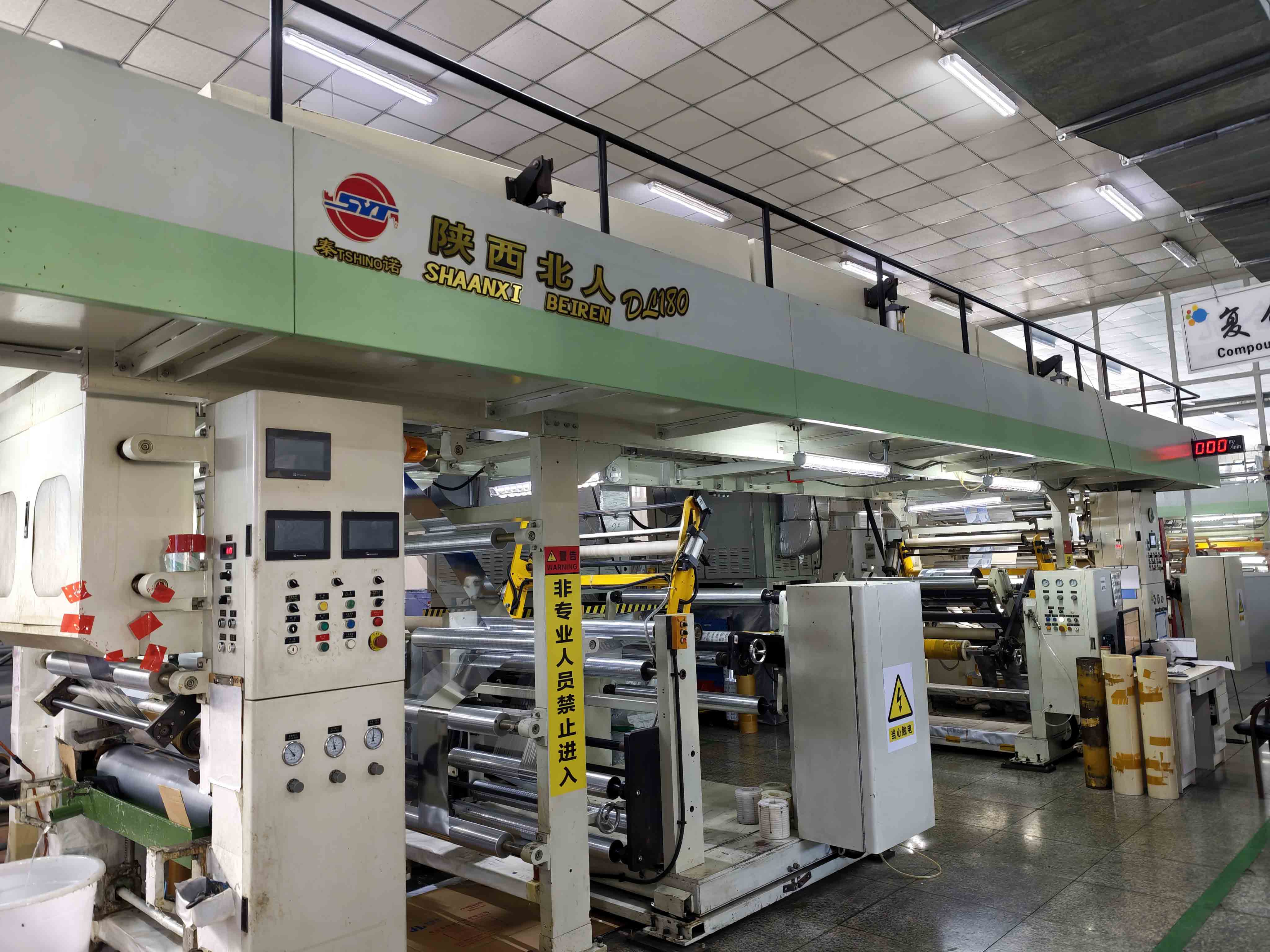
Real factory image: flexible-film lamination equipment. It illustrates manufacturing capability, not measured barrier performance for this cheese article.
Treat Food Contact as a Documented Intended Use
For a US project, the FDA explains that the regulatory status of a food-contact article depends on its individual substances and their authorized conditions of use. Those conditions distinguish refrigerated storage from frozen storage and other uses. Ask the supplier for documentation tied to the actual construction, the food type, and the intended temperature and use. A generic “FDA approved bag” slogan does not identify each component or the conditions it covers. Read the FDA's food-contact component guidance and conditions-of-use table.
The destination market matters. A US material document does not by itself establish compliance for an EU or other market, and a general compliance statement does not validate the cheese producer's label. Request current records for the proposed film, inks where relevant, adhesives, coatings, zipper, and any tray or lid in the assembly. Identify whether the product touches the material directly and whether it will be stored refrigerated, frozen, or handled under another condition.
The brand's regulatory team should review the retail artwork. In the US, milk is a major food allergen and packaged-food labels must declare applicable allergens under FDA rules. Product identity, ingredients, net quantity, nutrition information where required, lot/date coding, storage language, and destination-market requirements need their own review. The packaging converter can reserve the panel space and test print legibility; it cannot certify the cheese recipe or decide the manufacturer's allergen controls. The FDA's allergen-labeling guidance is the source to consult for US labeling questions.
Design the Seal for the Real Filling Line
An empty pouch sealed on a laboratory bench is only the beginning. The commercial line may run faster, fill colder cheese, deposit shreds near the mouth, or move a heavy block across a film fold. Define a first, unopened heat seal and, if required, a separate consumer reclosure. The zipper helps after opening. It is not a substitute for the original seal or proof of an unopened shelf life.
During trials, photograph and retain filled packs from startup, steady running, speed changes, and restarts. Record jaw temperature, dwell, pressure, line speed, fill height, and the observed product in the seal area. Inspect the top and side seams, gussets, notch, and zipper transition. A seal may look continuous while a small channel remains. A very strong peel value may still coexist with a leak at a wrinkled corner.
ASTM F88/F88M measures seal strength for flexible barrier materials. ASTM F3039 describes dye penetration for detecting leaks in nonporous packaging. These answer different questions. The brand and packer should choose applicable methods, acceptance criteria, sampling, and corrective actions for the commercial pack rather than treating any one test as a complete safety guarantee.
For blocks, inspect film folds and corners after vacuum and transit handling. For shreds, look for product trapped along the top seal and zipper. For soft or wet cheese, check whether liquid reaches a seam. For a package sold frozen, trial opening, handling, and sealing after the relevant cold exposure. If a design cannot keep the seal area clean on the intended machine, change the filling path, fill level, pack geometry, or closure before approving a print run.

Real factory image: pouch converting. Cheese filling and commercial top-sealing must be validated on the cheese producer's equipment.
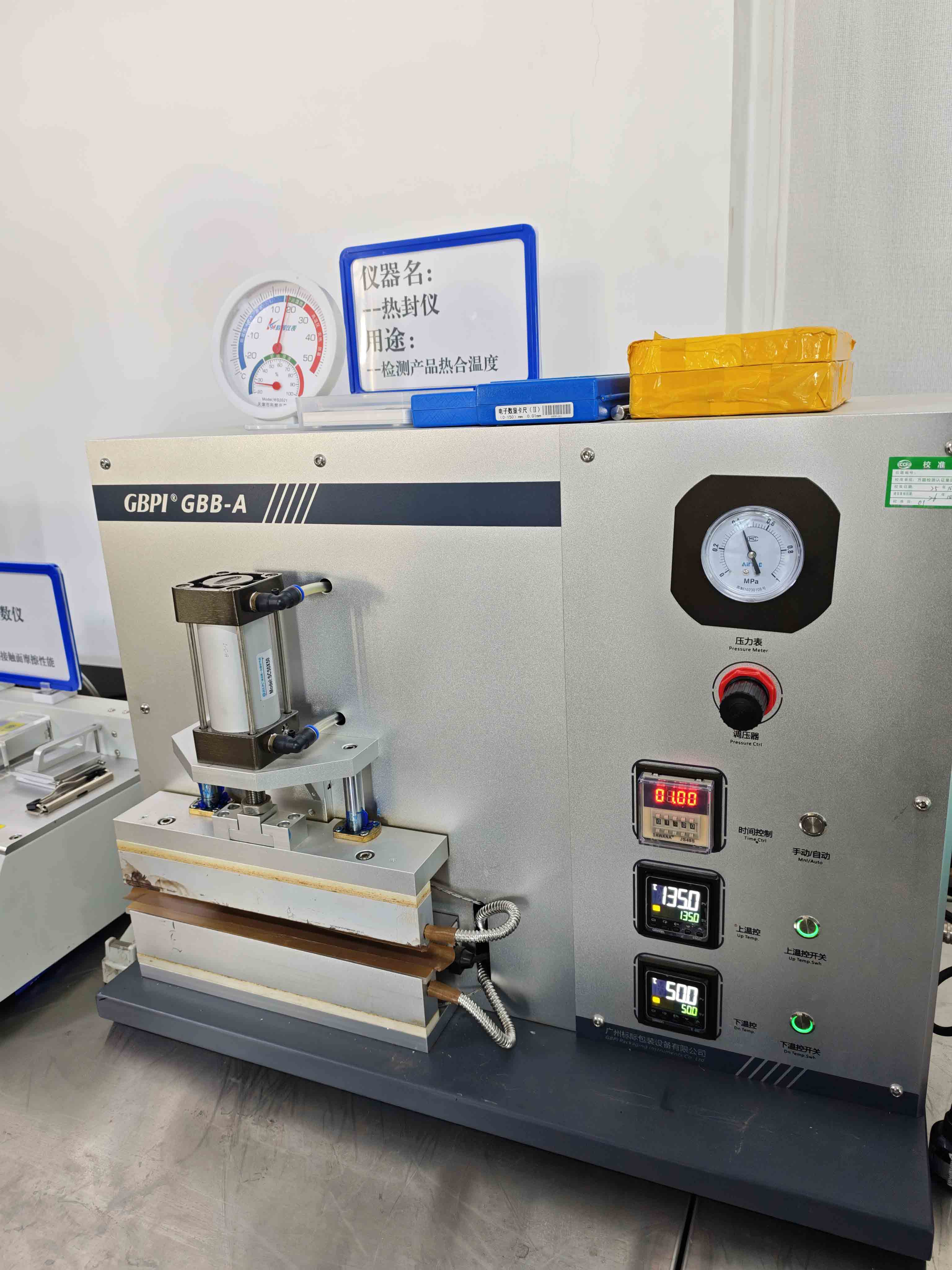
Real factory image: seal-test equipment. No test result for the proposed cheese pack is implied.
Keep the Cold Chain and Food Safety Plan in View
Packaging cannot turn an unsafe product into a safe one. The cheese producer must control incoming milk and ingredients, processing, sanitation, contamination risks, filling conditions, storage, and distribution under the food safety program appropriate to the business. The FDA's resources for manufacturers of soft fresh queso fresco-type cheeses explain why some fresh cheeses require especially careful refrigerated controls. Those resources concern that cheese category; do not project the same hazard profile onto every hard cheese.
For US consumer handling, the USDA advises keeping a refrigerator at 40°F (about 4.4°C) or below. A commercial cheese specification may call for a different, narrower target based on the product, process, distribution agreements, and applicable rules. The USDA refrigeration guidance is background for cold storage, not a substitute for a validated product specification.
Log product temperature at filling and during trials. Check dwell time on the line, cooler recovery, pallet layout, shipping handoffs, and display exposure. Condensation seen in a clear window may arise from product and temperature conditions; an anti-fog surface can change how droplets appear, but it cannot remove water from the system or repair a broken cold chain. If a retailer complains of fogging, investigate the inside and outside surfaces separately. The companion article on condensation will go deeper into that failure route.
Validate the Finished Pack in Three Layers
A good development program does not ask one measurement to answer every question. Organize the evidence into material, package, and food-performance layers.
- Material evidence: confirm layer structure, thickness, OTR, WVTR, mechanical behavior, food-contact documents, and print or adhesive details for the quoted construction. Record test methods and environmental conditions.
- Filled-package evidence: run the actual cheese at target weight on the intended equipment. Assess seal strength, leaks, package dimensions, headspace or vacuum behavior, drop and carton handling, cold exposure, zipper opening, and coding legibility.
- Food and shelf-life evidence: the food business establishes microbiological, sensory, appearance, gas, and other product-specific criteria. Test representative lots in the final package under intended and reasonably anticipated distribution conditions, with a defined decision rule for the label date.
Record the approved sample and every change. A different film source, zipper, window size, ink coverage, pack dimension, gas blend, or filling line can alter the result. A supplier's film data may support design screening, but it does not by itself set the cheese's shelf life. If a pack fails, retain samples and trace the failure to product, filling, seal, material, or handling before changing multiple variables at once.
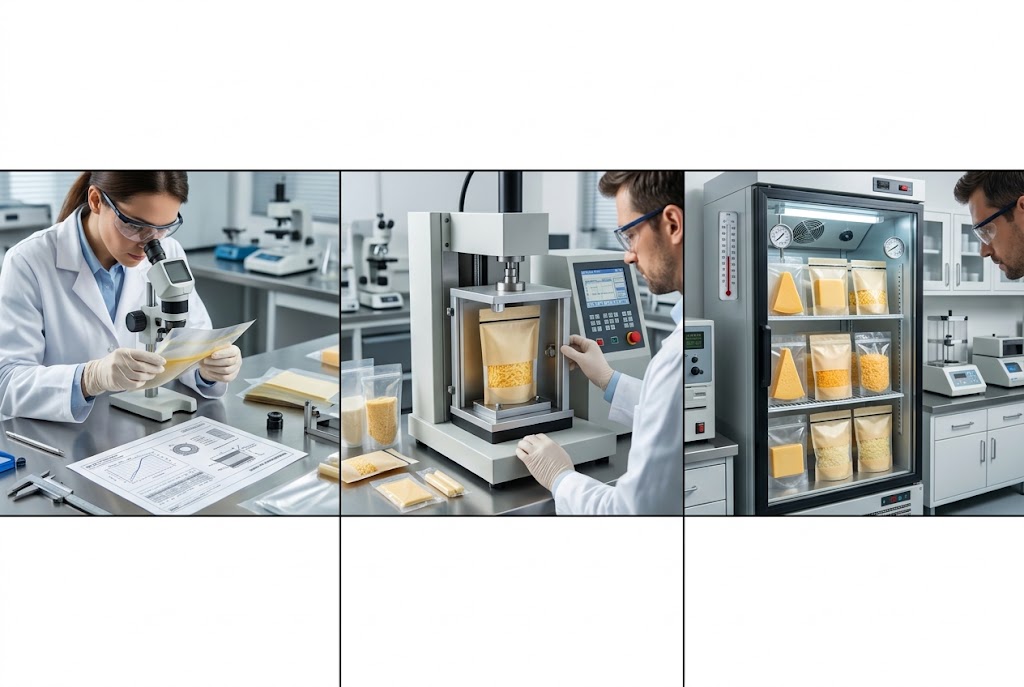
Illustrative validation pathway.
What Real Adjacent Food Projects Can and Cannot Prove
The current Mylarbag case library does not contain a documented cheese-specific customer project. Two published food-packaging projects are useful to illustrate manufacturing choices, provided their limits remain explicit.
An Australian 500 g fresh-pasta and chilled-food pouch lists MOPP/PET/PE, a stand-up format, zipper, Euro slot, gravure printing, and an 18 × 27 + 4.5 cm size. A cheese buyer can use it to discuss a refrigerated display brief: Does a hanging feature suit the weight? Is a zipper needed? Does a frosted finish obscure a required product view? It does not prove that the same laminate or dimension preserves cheese or prevents condensation in a different cold chain. The cheese producer would need its own tests.
A US 8 oz frozen-food pouch lists MATOPP/NY/low-temperature PE, a stand-up format, digital printing, and a 19 × 19 + 3.8 cm size. It provides a real example of a project specified for frozen distribution. A cheese brand considering frozen retail portions could use those design variables to frame a trial. No performance result for frozen cheese follows from this adjacent project, and claims on a case page should not replace the buyer's own evidence.
That is the practical value of a real case: it gives a concrete construction and format to question. It is not a shortcut to product approval. Ask the converter what was actually made, what measurements are available, and which parts of the prior design can be sampled for the new application.
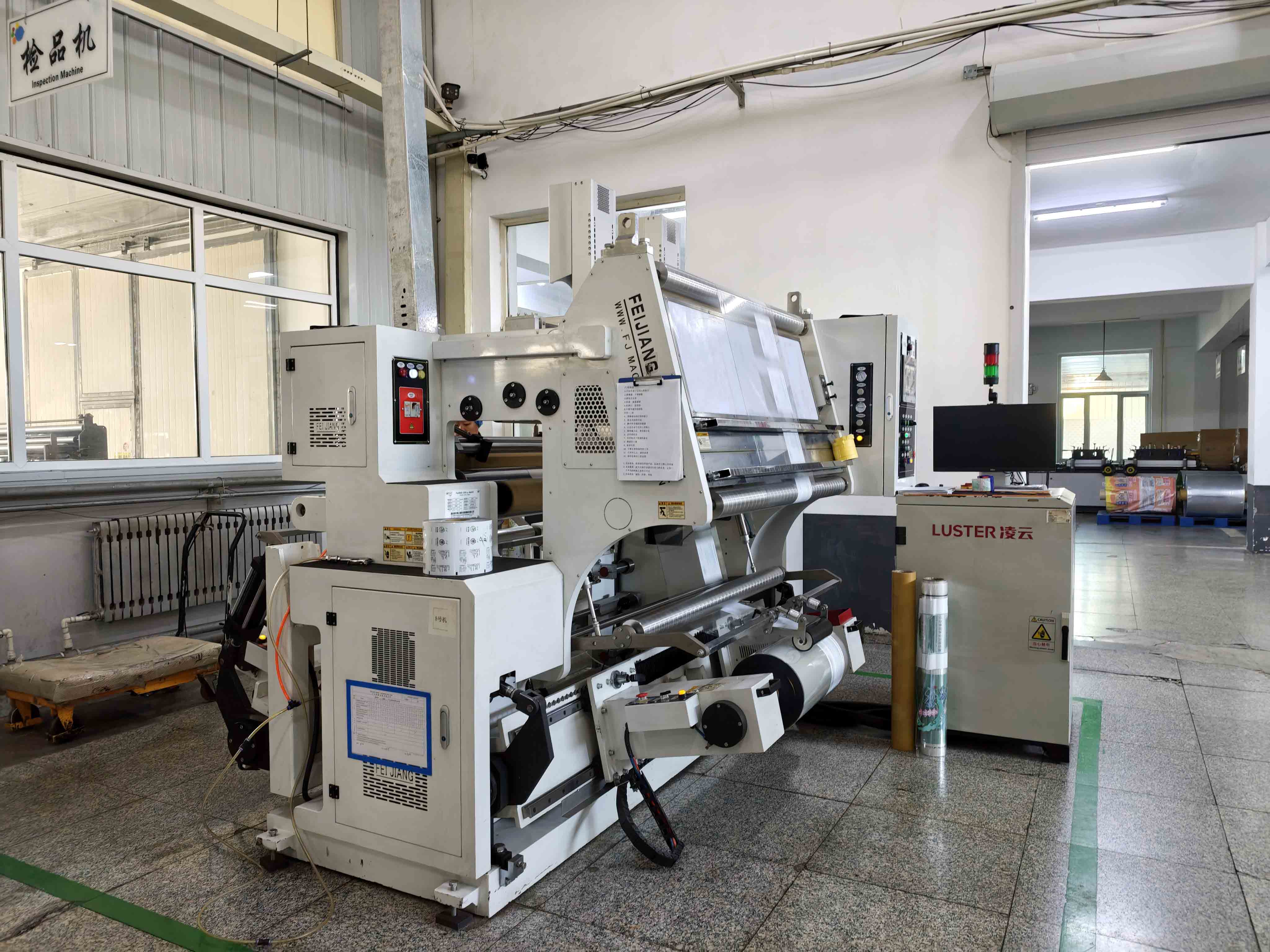
Real factory image: film inspection. Agree on acceptance criteria for the actual commercial cheese material and printed lots.
Build a Purchase Brief That Suppliers Can Quote Fairly
Many quotation delays start with “I need a cheese bag” and no product or line information. Give every supplier the same brief and ask them to state what they are quoting. If the internal team has not yet chosen vacuum or MAP, request two or three testable alternatives rather than an unsupported “best” film.
For a multi-SKU creamery, compare the whole project cost, not only the unit price of an empty bag. Consider artwork setup, trial quantities, filling rejects, changeovers, cold-storage inventory, carton efficiency, damaged-pack returns, and obsolete printed stock. A structure that costs less per thousand bags can be more expensive if its seal window is too narrow for the production line. Conversely, a complex laminate may add cost without improving the factor that limits the actual product.
A short RFQ a buyer can adapt
We package [exact cheese and form] at [net weight] for [markets]. It will be [refrigerated/frozen] through [distribution route], with a target unopened life of [target pending validation]. Our line is [equipment and speed] using [vacuum/MAP/other]. Please propose [two or three formats], state the complete construction and test conditions for OTR/WVTR, include the first seal and any zipper, provide food-contact documentation for the intended use, and quote filled-sample trial quantities, MOQ, lead time, and tolerances.
Do not put an unvalidated shelf-life claim in the inquiry as though the converter has already established it. Say who will run the cheese trials and who signs off the final date. That makes the purchasing discussion faster and prevents responsibilities from disappearing between the pouch supplier, co-packer, and brand.
Common Mistakes to Catch Before Printing
Approving an empty sample only. Fill the actual cheese and check the finished package. A heavy wedge, loose shreds, or liquid-bearing portion changes what happens at the seam.
Treating a zipper as the factory seal. Test the initial top seal separately from consumer reclosure. The after-opening experience is important, but it cannot validate the unopened package.
Copying a gas blend from another cheese. Product cultures, moisture, size, film, and temperature affect the atmosphere and quality result. Trial the formulation and gas system together.
Using one OTR number as a shelf-life date. Gas already in the pack, seam quality, product condition, temperature, and microbiology also matter. Record both material and finished-pack evidence.
Assuming an anti-fog window stops condensation. Surface treatment can improve visibility under some conditions. Investigate product moisture and temperature history as well.
Calling every PE-containing bag recyclable. End-of-life guidance depends on the complete structure, food residue, closure, local collection, and the destination's rules. Keep any claim conditional until reviewed.
Turning a neighboring project into a cheese case study. A chilled-pasta or frozen-food pouch may show a genuine manufacturing capability. It does not establish that the construction was tested with cheese.
Frequently Asked Questions
What is the best packaging for cheese sold in stores?
There is no single best package across hard blocks, fresh cheese, shreds, and spreads. Start with the cheese and line, compare suitable formats, and approve the finished pack through trials for the intended storage and sale conditions.
Can I use a stand-up pouch for shredded cheese?
It is a plausible retail format when the line can fill it cleanly, the first seal is reliable, the intended atmosphere and barrier work, and the pouch is stable at the real weight. A zipper may improve repeated use, but its performance must be tested after opening.
Should cheese always be vacuum packaged?
No. Vacuum may suit some blocks or wedges; other products may require MAP, a supported tray, an individual wrapper, a cup, or another solution. Compare texture, liquid movement, gas behavior, appearance, and safety controls for the particular cheese.
Does MAP eliminate the need to refrigerate cheese?
Do not infer that from a gas-flushed pack. MAP is one part of a validated system. The product's refrigeration requirements, sanitation controls, and applicable rules remain in force.
Which film specification matters most for cheese?
The answer depends on the product's limiting failure. Request the full structure and test conditions for barrier properties, then check sealability, puncture, food-contact use, and filled-pack performance. One film metric cannot substitute for the other checks.
Does a lower OTR always mean a longer shelf life?
No. A lower measured oxygen transmission through a film can help in an oxygen-sensitive design, but initial oxygen, leaks, product properties, cold-chain exposure, and other quality or safety limits may dominate. Validate the final cheese package.
Can a pouch supplier guarantee my cheese's use-by date?
The supplier can provide specifications, samples, and relevant test information for the package. The food business needs to establish the finished product's shelf life using the actual cheese, process, pack, and distribution conditions.
What tests should I run on a cheese bag?
Choose tests from the failure risks: material OTR/WVTR, seal strength and leak detection, filled-pack handling, cold exposure, gas or vacuum trend, and the cheese producer's microbiological and sensory shelf-life program. Agree on methods, sampling, and acceptance limits before trials.
Is a swollen cheese package normal because it is MAP?
An approved gas-flushed pack can contain intentional headspace. Unexpected swelling or a change from the accepted appearance needs investigation. Consumers should follow the producer's advice and should not use package appearance alone to declare food safe.
Can anti-fog film prevent water from forming inside the pack?
Anti-fog design changes droplet formation or visibility on a surface under certain conditions. It does not remove water released by the cheese or prevent a temperature excursion. Test it with the actual refrigerated product and display route.
Can I use the same pouch for refrigerated and frozen cheese?
Do not approve that switch from the material name alone. Confirm the applicable food-contact conditions and trial the intended seal, flex, handling, and product quality in both storage routes.
What label information should be reserved in the artwork?
Reserve space for the product identity, ingredients and milk-allergen declaration where applicable, net quantity, nutrition and responsible-business information where required, storage directions, and legible lot/date codes. Have the brand's regulatory team review the final market-specific artwork.
Are cheese pouches recyclable?
Some designs can be evaluated for a collection stream; many multi-material structures or food-soiled packs face limitations. Do not infer recyclability from a PE layer or from the word “paper.” Review the finished pack and the collection options in its sales market.
What should a small creamery send with a quote request?
Send a real cheese description, net weight, target market and storage route, filling method, desired format, number of SKUs, approximate quantity, and any shelf-life target. Ask for sample constructions and documents before placing the printed production order.
Next Step: Test a Cheese Package You Can Specify
If your team is developing a retail cheese SKU, send Mylarbag the product form, pack weight, destination, filling method, target storage route, and any proposed vacuum or MAP process. Ask for candidate custom cheese bags, the complete material details, and samples for your own line and shelf-life validation. A useful quote should tell you what will be made and what still needs testing.
The right purchase is the pack that works with your cheese and your process, supported by records you can review. Start with the brief, test the filled package, and approve the print run only after the product team has accepted the result.