
Loose leaf tea should be packaged around its real volume, fragility, sales channel, and consumer use—not by copying a pouch used for another dry product. A workable retail pack gives the tea a suitable amount of room, provides a clear opening and closing experience, carries the required product information, and can be filled and shipped consistently. The best format depends on the tea and the project, so samples matter more than generic “best bag” claims.
The focus here is the outer retail pack for loose leaf tea. It does not replace the separate decisions involved in manufacturing filter bags, obtaining food-contact documentation, or meeting country-specific label requirements.
Begin with the tea’s physical profile
Loose leaf tea is not a uniform granular product. A 100 g fill of tightly rolled tea may take much less volume than 100 g of large white-tea leaves, chamomile flowers, or a fruit-and-herb blend. Leaf breakage, dust, oil content, static, aroma, and the way the tea settles can also affect how a pouch fills and how a consumer pours from it.
Before you select a bag, collect a working sample and document:
- target net weight and expected fill range;
- maximum product volume before compression;
- particle size and any fine dust;
- whether the tea should remain visually visible;
- whether the consumer will use the pack many times after opening;
- whether it will be displayed hanging, standing, laid flat, or placed inside a carton;
- the intended filling method and the target market.
This information turns a subjective packaging conversation into a practical sample brief. It also prevents a common mistake: selecting a pouch from a weight-only size chart and then discovering that the tea will not fit naturally or leaves an excessive amount of unused headspace.
Decide the retail experience first
Loose leaf tea can be sold as an everyday refill, a premium specialty product, a travel portion, a bulk foodservice item, or part of a gift collection. The retail experience changes the packaging question.
For a household refill, consumers may value a pack that can be opened and reclosed simply. For a premium product, the front panel, finish, and structured shape may matter more because the product is displayed at eye level. For samples or subscription packs, a smaller flat format may make sense. For bulk supply, handling, filling, and secondary packing can become more important than a decorative shelf silhouette.
Write a one-sentence job statement before choosing the pouch: “This pack is designed for ___ tea, sold through ___, used ___ times after opening, and shipped to ___.” If that sentence is unclear, the pouch specification is probably too early.
Compare the common loose-leaf tea packaging formats
Stand-up pouches
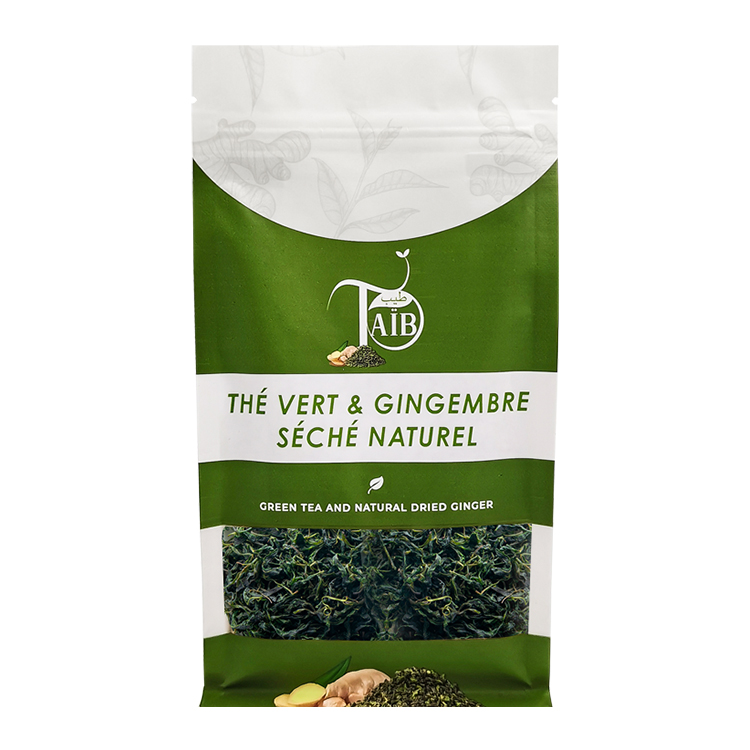
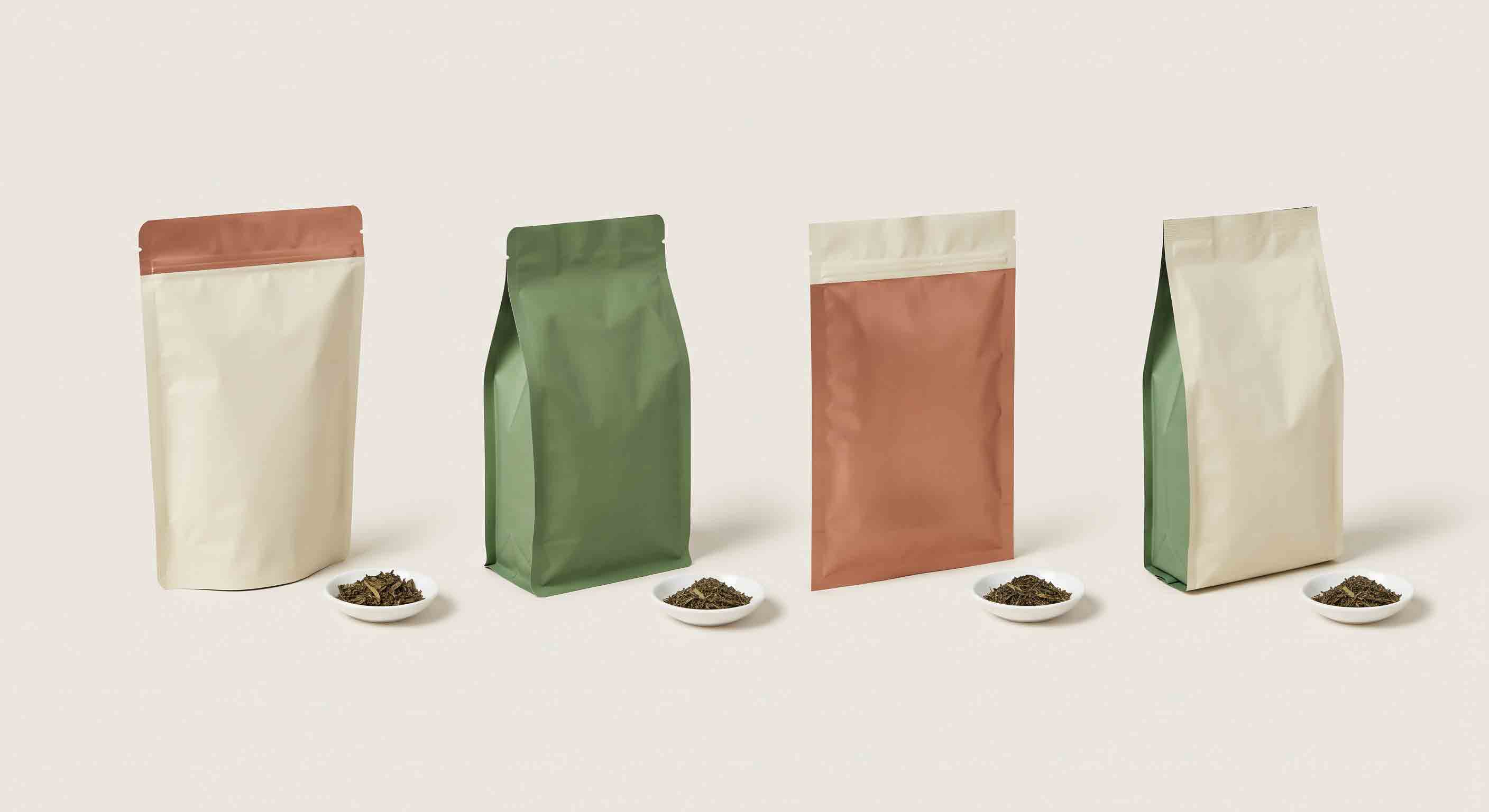
A stand-up pouch can be evaluated for retail loose leaf tea when the product needs a compact flexible format that can present a front panel on shelf. It may be specified with a closure suited to the intended consumer use and may be printed in a range of finishes, subject to the confirmed material structure and project requirements.
The key question is not whether a stand-up pouch is “better” than every other option. It is whether the product sits, opens, fills, closes, and displays the way the brand needs. Test the actual tea inside the actual dimensions before treating a pouch style as the final answer.
Box-bottom or flat-bottom pouches
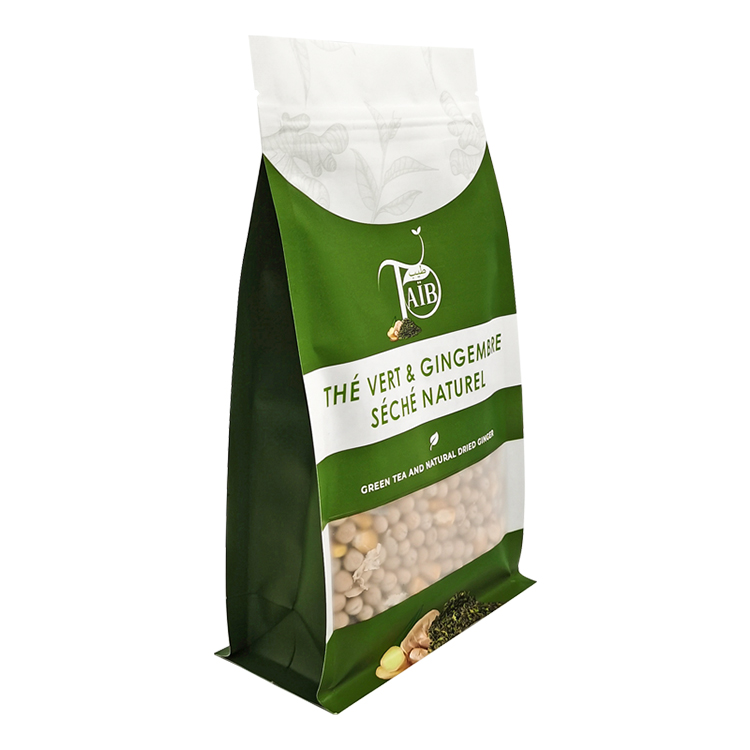
A box-bottom style can provide a more structured presentation and several printable panels. It may be useful when a tea brand wants a larger visual presence or expects consumers to store the pack upright. The format still needs a sample because the way a light, irregular tea fill supports the base is different from the way a dense coffee or snack fill behaves.
A current public Related Project records a 125 g loose-leaf green-tea pouch with a MATOPP/VMPET/PE structure, gravure printing, a box-bottom pouch classification, and dimensions of 12 × 22 + 6 cm. That record is useful as a visible configuration reference, not as a guarantee that the same structure or dimensions suit another tea.
Flat pouches and sample packs
Flat pouches can be considered for samples, small portion packs, mail-friendly formats, and projects where a flat product profile is part of the brief. They usually offer less internal volume than a gusseted pack, so the tea’s volume matters especially. A flat pouch can be a useful part of a line rather than the only format: for example, a brand might sell a larger loose-leaf pouch alongside single-use trial packs.
Side-gusset or bulk formats
For larger loose leaf quantities or foodservice projects, a side-gusseted format may be evaluated for capacity and storage efficiency. It should be scoped around the actual product weight, filling method, secondary case, and closure approach. Do not assume that a bulk pouch is automatically suitable for every loose tea just because it has more volume.
Separate material selection from environmental claims
Brands often ask for “eco-friendly tea packaging” before deciding what environmental claim they can support. Material choice and marketing language are related but not identical decisions. A structure should first be evaluated for the tea, the intended use, the production process, and the documentation requested for the destination market. Any recyclable, compostable, recycled-content, or food-contact statement should be checked against the exact structure and applicable evidence.
For U.S.-facing claims, the FTC’s Green Guides stress that environmental marketing claims should be truthful, substantiated, and qualified when necessary. A material family name alone is not enough to support a broad claim. Similarly, a food-contact statement must relate to the relevant component, intended food, market, and use conditions.
For a tea buyer, the practical questions are:
- What is the complete material structure, including seals, window, zipper, inks, coatings, and adhesives where relevant?
- Which documents are available for the target market and intended use?
- Does an environmental claim describe the whole pack or only one component?
- What disposal or collection conditions apply in the target market?
- What should be tested on the actual tea before a run is approved?
Size the pouch from volume and use, not grams alone
Gram weight is useful for labeling and costing. It does not by itself determine the pouch dimensions. The right approach begins with a filled-product sample.
- Fill the tea to the proposed net weight without crushing it beyond the normal filling process.
- Measure the natural product volume and note how it settles.
- Allow a practical amount of top area for sealing, opening, and product movement.
- Check the front-panel space required for artwork, regulatory information, and coding.
- Put the sample in a provisional pouch and inspect it after handling, storage, and opening.
For an irregular tea blend, repeat this check with more than one production sample. Blends can change from lot to lot, and leaf pieces can vary more than a fine powder. The result should be a packaging range or approved sample, not a promise that every 100 g product uses the same pouch.
Plan for the filling process
Packaging that looks good as an empty sample can create problems during filling. Fine herbal dust may cling to surfaces. Long leaves may bridge in a hopper. A fill that is too close to the seal area can interfere with consistent closure. Artwork may need a reserved code zone. A retail closure should be considered alongside the first seal because consumers may need to reseal the pouch after opening.
Bring the operations team or co-packer into the project early. Ask what information they need about pouch dimensions, opening width, film behavior, closure, feeding direction, and print registration. If the project will begin with manual filling and later move to a production line, document both stages rather than assume the same package will automatically work in both.
Treat artwork as a functional part of the pack
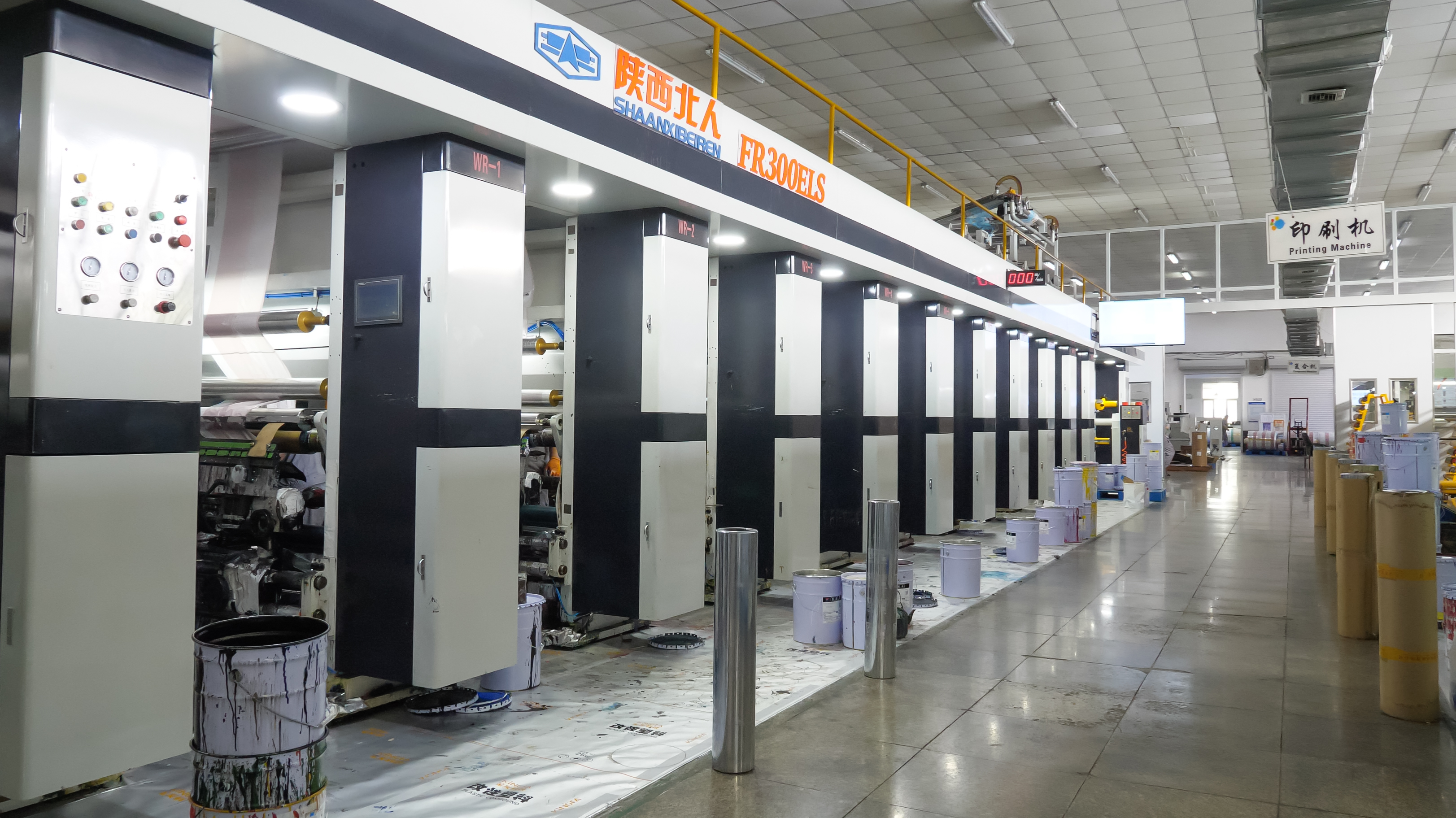
The artwork must work with the pouch’s construction. A clear window, zipper, gusset, finish, tear feature, or seal area changes the printable space and the way the design will be viewed. A premium front panel may be attractive in a mock-up but fail to leave room for ingredients, brewing guidance, net quantity, batch coding, or languages needed for the destination.
Use the approved dieline before finalizing the design. Mark non-print areas, seals, folds, window positions, code zones, and any feature that can cover type or small graphics. Review the artwork at the physical sample size—not only at 100% on a large monitor.
This is where a packaging project benefits from a clear decision brief. Custom tea bags and tea-packaging options can be discussed around the actual pouch format, tea sample, artwork state, market, and target quantity rather than a generic product category.
Use Related Projects carefully
Real public records can help a buyer see the relationship between tea, dimensions, pouch format, print method, and finish. They should not be turned into invented stories about a customer’s sales, test result, or reason for choosing a material.
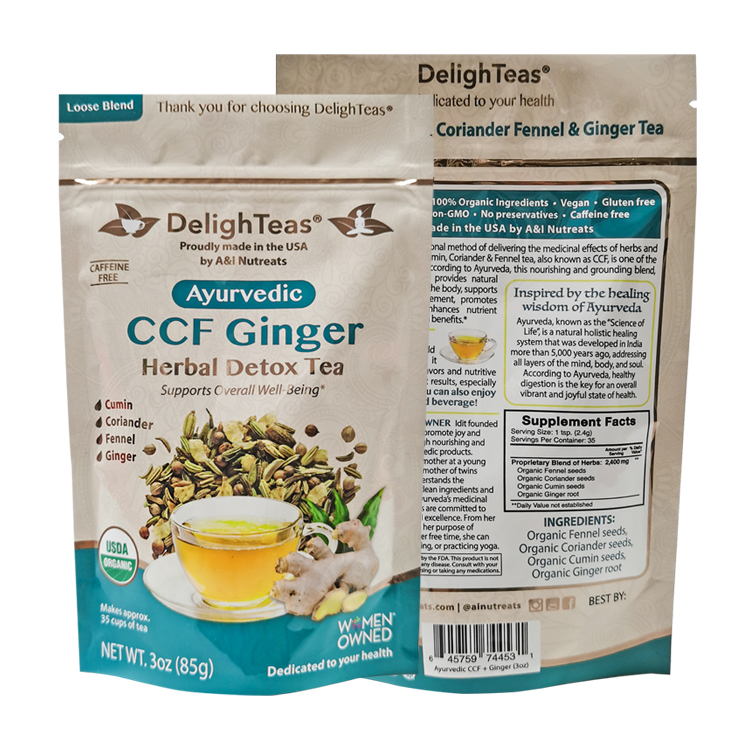
One public record for a 3 oz loose-leaf tea pouch lists a PET/VMPET/PE + PET/PE structure, gravure printing, Spot UV, and 12 × 18.5 + 3 cm dimensions. Use it as a configuration reference only. A different tea, market, product density, and sales channel may require a different specification.
Turn the pouch choice into a concise project brief
For a typical loose-leaf tea project, a supplier discussion should begin with the tea sample, desired retail format, target net weight, expected consumer use, artwork status, closure preference, and destination. A resealable pouch may be evaluated for a product intended to be opened repeatedly. A box-bottom format may be evaluated where a more structured shelf presence is desired. A flat pack may be evaluated for samples and limited portions.
Do not order the first bag style that appears in a search result. Request a configuration discussion instead. For a quote or sample review, share the tea category, target fill or physical sample, intended market, pouch-format preferences, artwork, closure needs, and expected quantity through the tea packaging project enquiry page.
Check the pouch against the full retail route
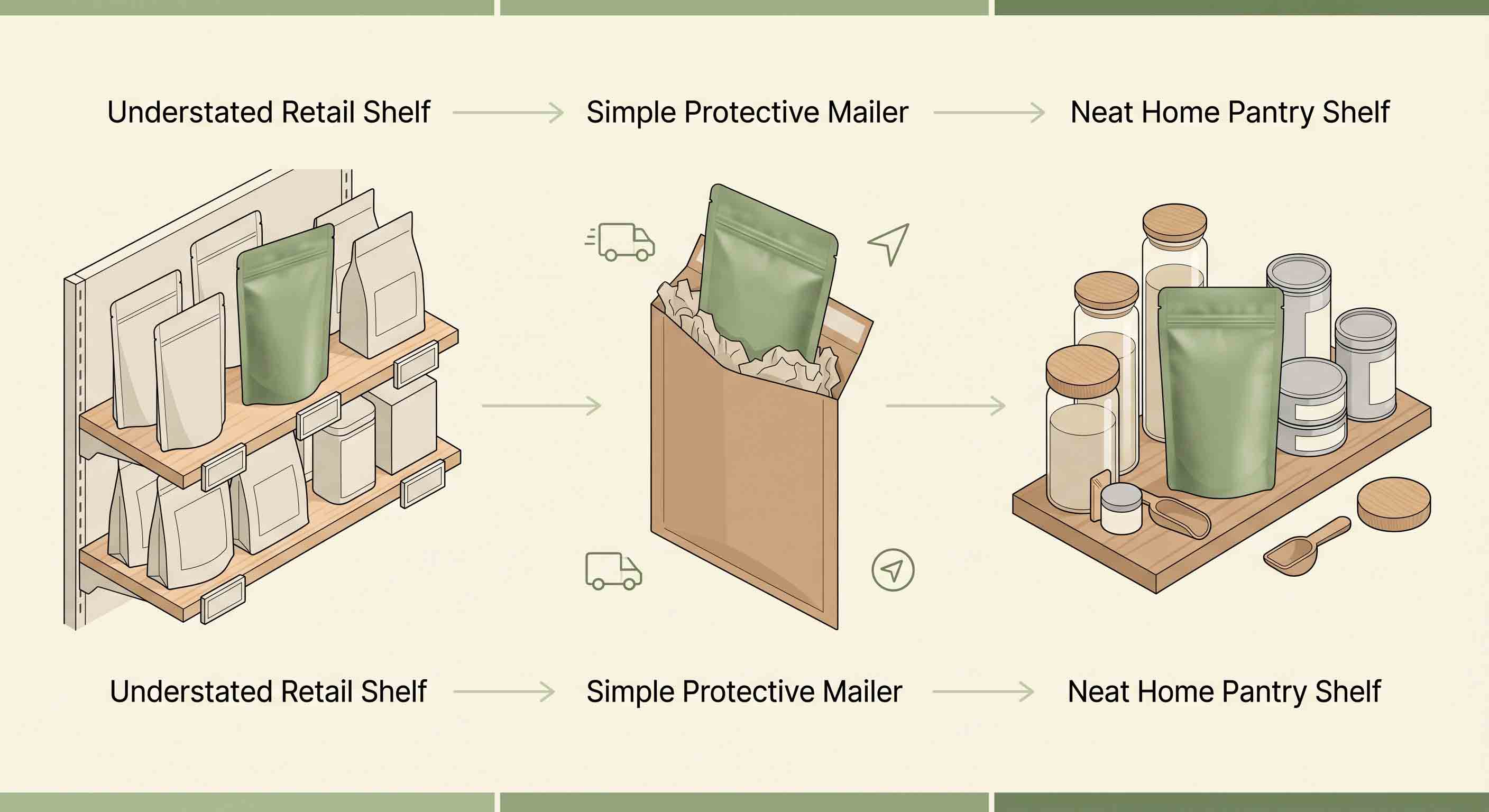
A loose-leaf pouch succeeds only if it works after it leaves the filling table. Before final approval, review the filled selling unit in the environments it is expected to meet. The relevant route varies by brand: a specialty retailer may need a stable shelf-facing display; an online seller may need to fit a mailer and unboxing system; a café or foodservice buyer may need a pack that can be opened repeatedly in a back-of-house setting.
Use the route review to ask concrete questions rather than make a general claim about durability or performance:
- Does the filled pouch fit the intended shelf, carton, mailer, or display tray?
- Is the product name visible in the direction the pack will actually face?
- Can a consumer understand how to open, use, and store the tea from the approved pack information?
- Does the pack leave usable space for any required label, code, or fulfillment step?
- Does the complete selling unit have a consistent identity when it is photographed, placed beside range variants, or removed from a gift box?
- Are there any handling steps that could affect the final pack and need an operational trial?
These questions are not a substitute for a formal test plan or market review. They are a way to stop a common oversight: approving the pouch as an isolated object even though customers buy it as part of a route.
Build a controlled sample and approval record
Loose-leaf tea projects often change incrementally: a new blend is added, a window is moved, a closure is revised, or a product is expanded into another market. Without a controlled record, the team can accidentally reuse an old pouch size or an unsupported claim simply because it was present on an earlier artwork file.
Keep a simple approval record for each SKU:
The record should not claim that one successful sample proves every future production run. It is a practical reference for repeat orders and a trigger to recheck the work if the tea, pouch structure, supplier, claim, artwork, or market changes.
Choose a format using a decision question, not a trend label
When teams are stuck between a pouch, carton, or another retail format, ask which problem the packaging must solve first. The table below does not choose for the brand; it identifies the tradeoff that should be validated with a sample.
This method keeps a loose-leaf packaging decision grounded in product use rather than a fashionable material term or a pouch photo from an unrelated category.
Frequently asked questions
What is the best packaging for loose leaf tea?
There is no single best format. The right pack depends on leaf volume, target weight, consumer use, sales channel, artwork requirements, and the documents needed for the target market. Compare physical samples using the actual tea.
Should loose leaf tea be sold in a pouch or a box?
Both can be part of a suitable system. A pouch can be used as the primary flexible pack; a carton may add display, information, or gifting functions. Select the system based on the product journey rather than appearance alone.
How do I choose a pouch size for loose leaf tea?
Begin with a filled sample at the intended net weight. Measure the tea’s natural volume, allow room for sealing and normal product movement, then test it in a provisional pouch. Do not select by grams alone.
Can I use a clear window on tea packaging?
A clear window is a project-specific design choice. It should be evaluated with the complete material structure, product needs, artwork, and any documentation requirements; do not assume it has no effect on the rest of the package specification.
What should I send when requesting a loose-leaf tea packaging quote?
Send the tea type, target fill or sample, desired format, size range, target market, artwork status, closure needs, expected quantity, and any documentation or testing requirements. Mark unknown items clearly so they can be evaluated rather than guessed.
Sources
- FTC Green Guides: https://www.ftc.gov/news-events/topics/truth-advertising/green-guides
- FDA food-contact overview: https://www.fda.gov/food/food-ingredients-packaging/food-packaging-other-substances-come-contact-food-information-consumers
- Related Project, 125 g tea pouch: https://www.mylarbag.net/products/food-packaging/custom-matte-flat-bottom-tea-pouch-with-clear-window-matoppvmpetpe-for-125g-loose-leaf-green-tea-herbal-blends
- Related Project, 3 oz tea pouch: https://www.mylarbag.net/products/food-packaging/custom-3oz-stand-up-pouch-for-loose-leaf-tea-high-barrier-vmpet-packaging-bag-with-spot-uv-anti-static-design