
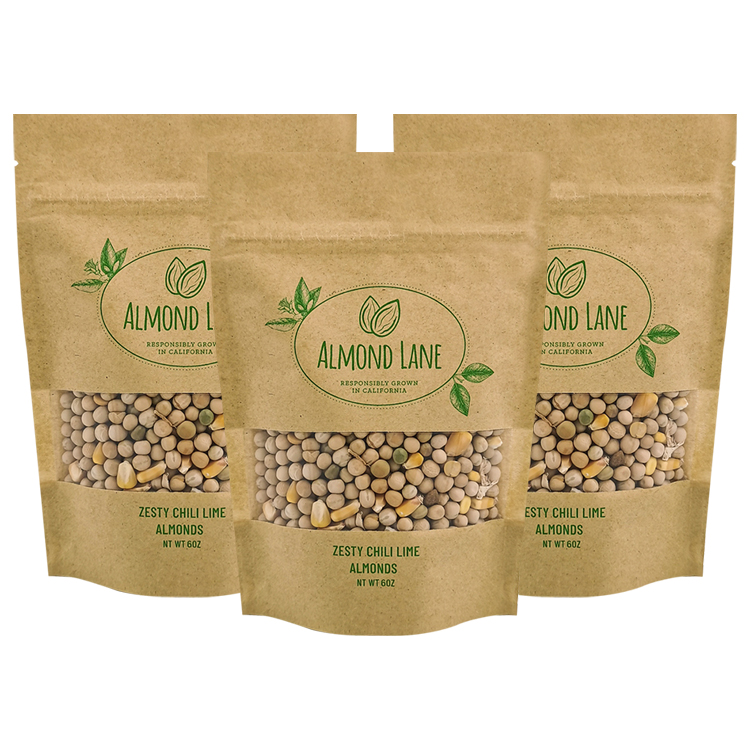
To package nuts for sale, start with the exact nut product and selling unit, then choose a pouch that can be filled, sealed, labeled, handled and opened as intended. Trial the proposed size with actual nuts, check the final seal on the intended equipment, and review the filled bags in their shipping carton. A pouch photograph or a nominal “8 oz” size cannot establish fit, freshness or regulatory readiness for another recipe.
This guide covers dry, shelf-stable retail projects involving roasted peanuts, almonds, pecans, cashews, macadamias and dry mixed nuts. It does not provide a process for wet boiled peanuts, nor does it validate a raw-nut treatment or promise a shelf-life period. The food business must establish the product’s safety, label, storage conditions and date through its own program. An empty-pouch supplier can help specify and sample the packaging that will be tested with the food.
If you are sourcing custom bags, the nuts packaging page shows relevant flexible formats. Use the process below to make your first inquiry specific: name the nut form, target net weight, filling method, retail channel and intended storage route.
Define the food before choosing a bag
“Nuts” covers products that behave differently on a packing line and after sale. An intact in-shell peanut or pistachio occupies more space than the same selling weight of shelled kernels. Pecan halves can break under pressure; small pieces may settle into a compact layer. A roasted cashew may carry seasoning dust or oil to the top seal. Candied nuts can have a coating whose stickiness matters when the product is filled and after it has been stored. A mixed-nut recipe may separate by size and density as it travels through the filler and carton.
Write a one-page product definition for each SKU. Include the ingredients, the form of each nut, any coating or seasoning, the expected range of piece sizes, the net weight, the established storage conditions and the distribution route. Include the filling method and whether the consumer will finish the bag in one sitting or open it repeatedly. If your processor has quality and microbiological specifications, connect the packaging trial to those already-approved food controls; a sealed bag does not make an unsuitable food safe.
A brand selling the same seasoned peanut in a single-serving flat packet and a larger family pack may need two pouch drawings and two filling trials. It should not assume that scaling width and height proportionally will preserve the same pouring behavior or seal clearance. Likewise, moving from pecan halves to chopped pecans can change both the apparent fill level and the way product enters the closing area.
Roasted nuts and raw nuts are different briefs
Roasting, seasoning, cooling and packaging should be considered as one controlled food-production sequence. A packaging supplier cannot decide whether a nut has been adequately processed or cooled for a particular recipe. The packer should define when nuts reach the filler, the product temperature range acceptable to its process, and how it will prevent condensation, rework mix-ups or foreign material before closing the bag. Do not copy a warm-fill assumption from a different product or tell a customer to seal freshly roasted nuts at an invented temperature.
For raw nuts intended to be sold as such, the processor’s handling, hazard and labeling decisions remain distinct from the pouch selection. An attractive high-barrier laminate is a protective package, not a validated pathogen reduction step. Keep the language precise when marketing the finished food: the packaging can be specified and tested for the intended dry product, but it cannot substantiate claims about the treatment of the nuts inside it.
Choose a pouch format around the selling unit
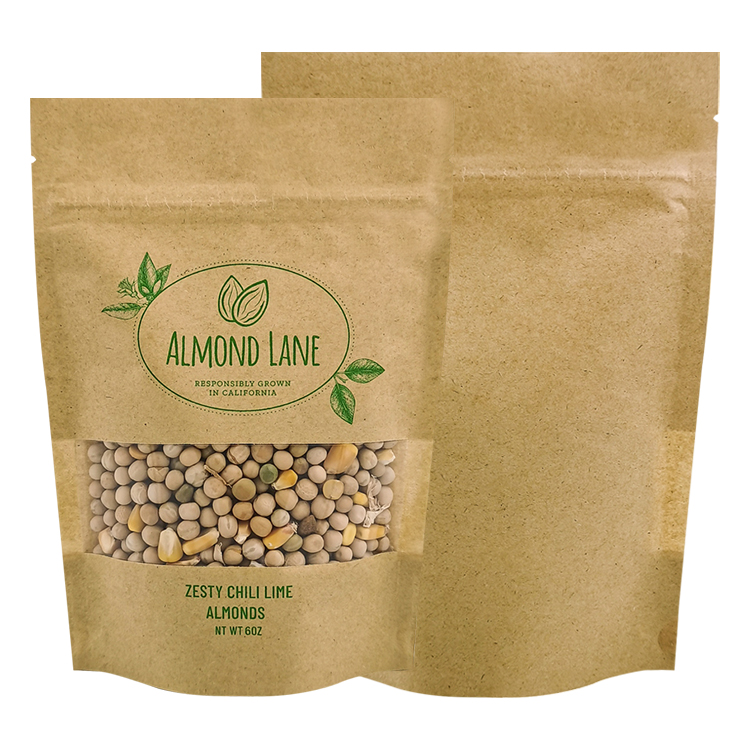
Many dry nut programs start with a stand-up pouch because it can display a printed front and can be discussed with a reclosure for repeated use. A flat pouch may suit a smaller single portion that is opened once. A flat-bottom or side-gusseted format may help with a larger unit, but its actual filled shape and shipping behavior still have to be tested. None of those descriptions says that a bag of a stated exterior size will hold a stated weight of every nut.
The stand-up pouch and flat pouch pages show format directions. Use them to begin a sample comparison, not to replace one. If you sell loose mixed nuts by weight from a larger food-service bag, think about opening size and how staff will identify a partially used pack. If you sell a small impulse snack, the opening and display method may matter more than a zipper. A zipper on a one-time pack adds complexity without necessarily improving use.
Size by volume and use, not by a printed weight label
Start with the actual net weight and several representative lots of the product. Fill sample pouches using the intended equipment where possible. Record the initial and settled height, the pouch’s usable opening, the distance to its final top seal, and how the front panel looks after the package has been handled. Repeat with the bulkiest SKU and with a SKU whose coating or fragments make filling difficult. A row of empty sample bags tells you little about a line running real nuts.
The exterior width and height include space that the product cannot use. Side seals, a bottom gusset, a zipper, a tear strip and the final seal each occupy part of the bag. A bag may nominally accept the food weight yet leave kernels pressed into the zipper or seal path. Another bag may have enough volume but make a legally correct net weight look visually sparse. Do not solve a display problem by quietly adding food outside the approved net-weight control; change the pack geometry and validate it.
Record at least three filled positions: immediately after filling, after the product settles, and after the pack has traveled in the intended carton. The difference can be noticeable for pecan pieces or mixed nuts. Keep these observations with the actual sample dimensions so a later size change can be compared against the same product and fill method.
Decide which risks the material must manage
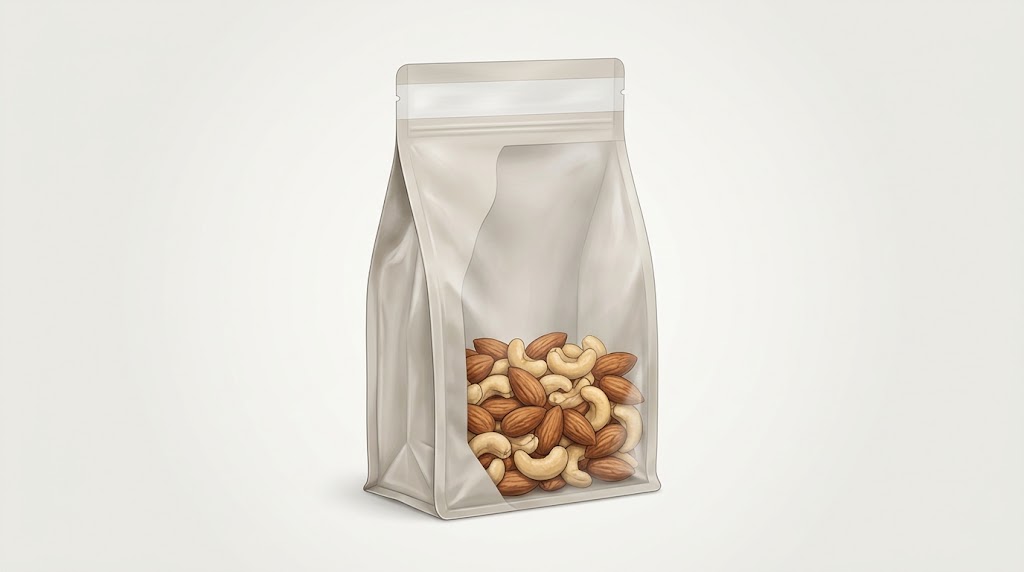
Dry nuts present more than one packaging-quality concern. Product oil can develop off-flavors over time, while exposure to moisture can change texture. Light exposure, storage temperature, formulation and the seal also matter. A transparent window may help shoppers see the product, but the visible area changes the complete package and can change light exposure. Request data for the proposed finished construction rather than comparing a generic “kraft,” “foil” or “Mylar” label.
The University of California Agriculture and Natural Resources guidance on storing nuts advises clean, moisture-free, odor-tight containers for several fresh nut varieties. It addresses handling and household storage of those products; it does not assign a commercial shelf life to your roasted, seasoned retail SKU. For a food brand, the useful lesson is to define which conditions the unopened bag and its distribution will encounter, then study the finished product under those conditions.
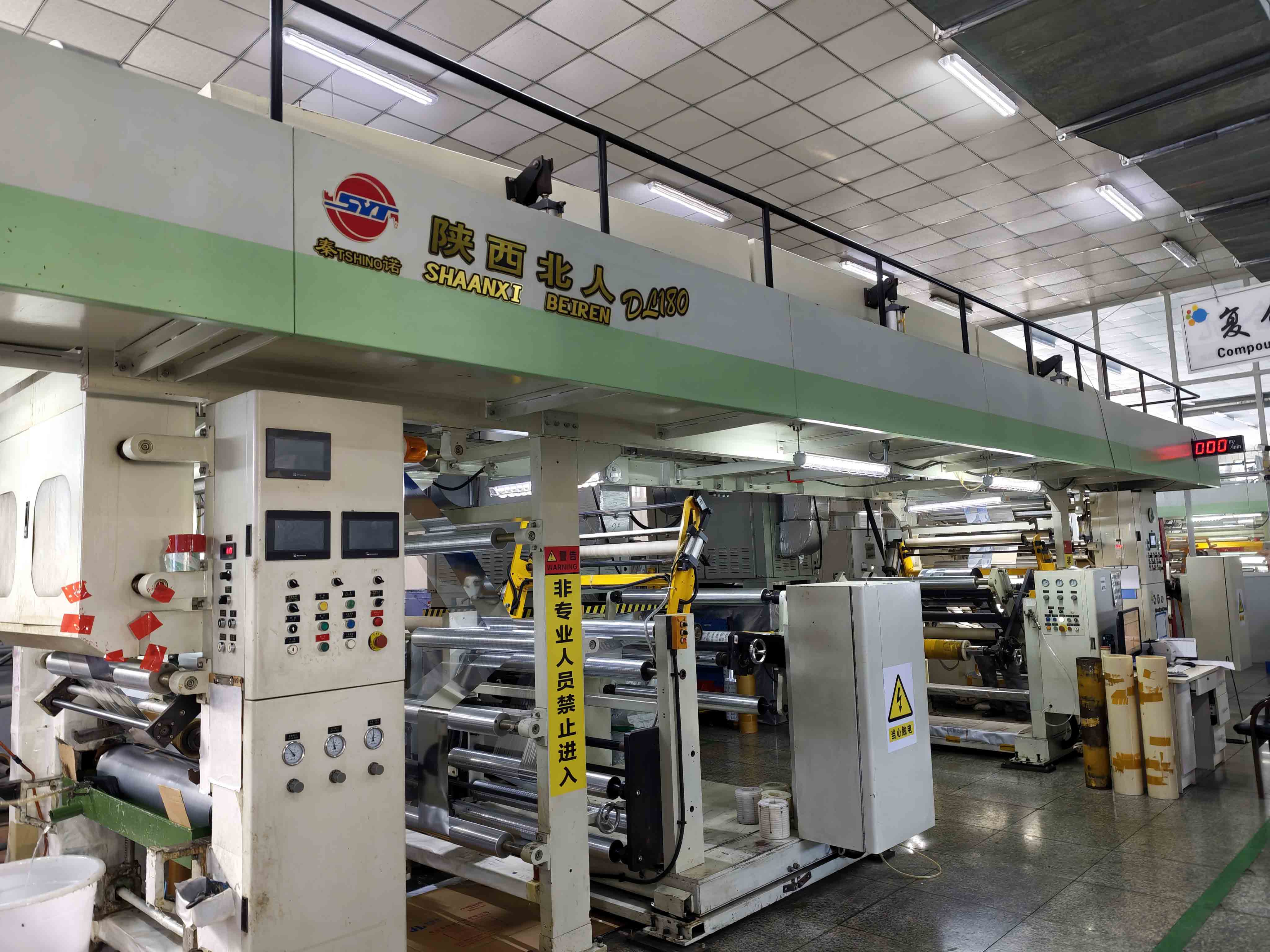
Ask the pouch supplier for the layer sequence, contact-side material, thickness as specified for the actual build, and available oxygen and water-vapor transmission measurements with their test conditions. A single barrier number is not a finished-food performance guarantee. Evaluate the window, zipper and heat seal as part of the package, not as exceptions to a film data sheet. If the bag will be filled warm, moved through a humid packing area or stored near strongly scented products, raise those conditions explicitly with the food and packaging teams.
The word “foil” is especially loose in nut packaging. A reflective inner face might come from an aluminum-foil layer or a metallized film; a brown paper-looking outer surface may be only one layer of a laminate. Ask for the full structure before making a recycling, barrier, food-contact or heat-sealing statement. The barrier-layer overview can help frame the material conversation, but the project-specific construction and test conditions decide what to trial.
A window is a design choice with a test cost
A window can communicate nut size, roast color or a mix of ingredients at a glance. It can also reveal a poorly settled fill or expose a portion of the food to store lighting. Decide where the window sits when the bag is filled to its normal weight, then review the actual food behind that area over the intended distribution and display conditions. A window cut across a gusset may appear differently when the pack stands than it does on a flat artwork proof.
If a marketing team asks for a large window, give the packaging and product teams a chance to evaluate the full structure. If they instead choose an opaque panel, printed food photography needs its own artwork approval and should not misrepresent the contents. Both options can be discussed without making an unsupported assertion that every clear pack is insufficient or every opaque pack preserves nuts for a fixed number of months.
Fill and seal the real product, not an empty mock-up
On a preformed bag, the packer typically fills through an open top and then applies the final closure. Many zipper bags require a separate initial heat seal above the zipper; the zipper serves the customer after the first opening. Other manufacturing formats use different filling and sealing paths. The pouch drawing must show where the product enters, where the final seal will be made, where a tear notch is located and how much material the equipment can reach. Do not assume a zipper by itself is the unopened retail seal.
Pieces and coatings can obstruct the seal. Salt or seasoning fines may land on the contact surfaces. A large nut caught in a closing jaw can leave a channel; forcing the jaw through it can crush the nut without fixing the package. Inspect where defects appear and adjust the process or geometry as appropriate. The packer should determine and validate its own settings for the actual film, equipment and food. A temperature copied from another bag is not a usable specification.
Check seals by more than appearance. Visual inspection can catch product in the seam, a fold, wrinkles, cut edges or an obviously open corner. The food business and its packaging supplier should agree on any additional seal-strength or integrity checks relevant to the finished product and route. Keep the rejected examples and record the pouch lot, food lot and equipment settings when investigating a failure. If a defect appears only after a carton test, review the pack and carton together rather than immediately asking for thicker film.
Evaluate the first opening and reclosure separately
Open a finished bag the way an ordinary customer would. Is the tear location evident? Does the opening provide enough room for a pecan half or a handful of cashews? Do nut crumbs catch in the zipper track? Can the customer close the pouch again after removing part of the contents? Try it with a sample that has been shipped in a carton rather than only with a pristine bag on a desk.
The reopened bag is a different storage state from the factory-sealed pack. A zipper may improve day-to-day convenience, but it does not restore an unopened oxygen environment or validate the original shelf-life date after repeated use. If the product is meant to be consumed at once, compare a simpler flat packet. If customers will snack over several days, write their expected behavior into the sample brief and instructions.
Review the label before approving print
The pouch carries information as well as food. For a US retail project, the brand must review its product identity, net quantity, ingredients, nutrition information where applicable, responsible business details, lot/date identification and relevant claims against current requirements for the actual food and channel. Space can disappear quickly around a window, zipper, side seals and bottom gusset. Do the compliance review on the full-size dieline and physical proof, not on a zoomable screen that makes small text seem legible.
Peanuts and tree nuts are especially important in an artwork/version-control discussion. The FDA’s 2025 food-allergen labeling guidance addresses major-allergen declarations for foods under FDA jurisdiction; the specific tree nut type matters. The food brand or its qualified reviewer must approve the actual ingredient and allergen statement for every recipe and destination market. The printer cannot infer it from a photograph of almonds, and a packaging quotation is not a label approval.
Multiple nut mixes make a useful example. A brand may use one pouch dimension for salted cashews, spiced peanuts and an almond-pecan blend. Each recipe can need a different ingredient list, allergen declaration, net quantity or code. If printed rollstock or preformed bags for these flavors are held near one another, put artwork version, SKU, food lot and carton label into one controlled matrix. A perfect print of the wrong flavor artwork is still a failure.
What actual nut projects can and cannot tell you
Mylarbag’s US 6 oz nut-and-seed project lists a brown kraft paper/PET/PE construction, a stand-up format, digital printing, a full horizontal window and dimensions of 14 × 20 + 4 cm. That is a documented example of a printed retail pouch. It does not mean that an 8 oz cashew mix will fit at the same height, that a 4 oz pecan product should use a proportional dimension, or that a window will meet every brand’s storage target.
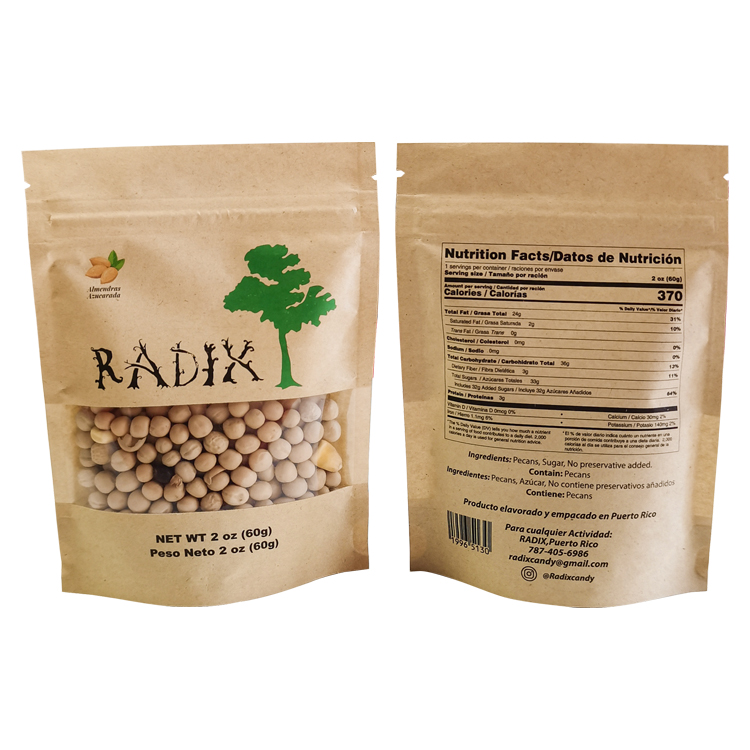
The Puerto Rican candied-nut and snack project lists kraft paper/PET/CPP, digital printing, a stand-up bag and 11.2 × 15 + 2.5 cm dimensions. Its title includes both “2 oz” and “60 g”; those figures are not exactly equivalent. Confirm the intended legal net quantity with the food brand, and do not copy the project’s dimensions into a standard sizing chart. Its printed project details also do not establish a tested shipment result or a universal claim about candied-nut texture.
Use such examples to ask good questions: How wide is the actual filling opening? What does the settled product look like behind the window? Which contact layer and closing process will be specified? Where are the lot code and allergen text? Could the finished pack fit the planned carton? A new customer gets a new sample-and-approval record. Project photographs are a starting reference, not transferable performance evidence.
Pack the pouches into the real shipping carton
The primary bag has to reach the shelf or customer intact. Fill the correct number of finished pouches into the proposed carton, in the intended orientation. Check whether a rigid nut or corner of a filled bag rubs against an adjacent pouch. Check whether cartons squeeze the lower row enough to break delicate pecan halves or stress a seal. For online orders, the retail unit may also need a parcel arrangement; an attractive shelf pouch is not automatically its own protective mailer.
After a representative handling or distribution trial, inspect both food and package. Record crushed pieces, scuffed print, changes in fill appearance, window damage and any leak location. A compromised corner suggests different questions from a product-contaminated top seal. The carton count, orientation, dividers and handling route should appear in the same trial record as the pouch and product. Otherwise a later failure can be wrongly attributed to the film alone.
Keep retained samples with a simple traceability chain: approved pouch drawing and material version, artwork version, pouch lot, nut recipe/food lot, filling date, seal settings and carton configuration. This does not require turning a blog into a quality-management manual. It means that when a buyer reports “the mixed nuts arrived stale,” the team can compare the reported unit with the correct build and investigate the food, seal, storage and transit conditions instead of guessing.
Recommended packaging configuration: choose by use, then verify
For a dry, multi-use retail nut snack, a printed stand-up pouch with a defined initial seal and, if the consumer benefits from it, a zipper is a reasonable candidate to sample. Specify the actual contact layer, product weight, opening and window preference, then run filled and carton trials. For a single-serving dry snack, a flat heat-sealed pouch may be simpler to handle and display in a carton. For a larger replenishment unit, compare filled shape, lifting and case stacking before choosing a gusseted format. These are configurations to evaluate, not promises of a stated shelf life or a guarantee that one film works for every nut.
Start with custom nuts packaging and the physical pouch samples that match your route. If the brand cares about an environmental claim, request the complete construction and suitable substantiation for the actual zipper, window and printing as a separate review. A kraft-looking exterior does not make the entire pouch paper-only or automatically recyclable. If an offered construction changes, repeat the filled trial and any claim review rather than preserving an earlier approval by name alone.
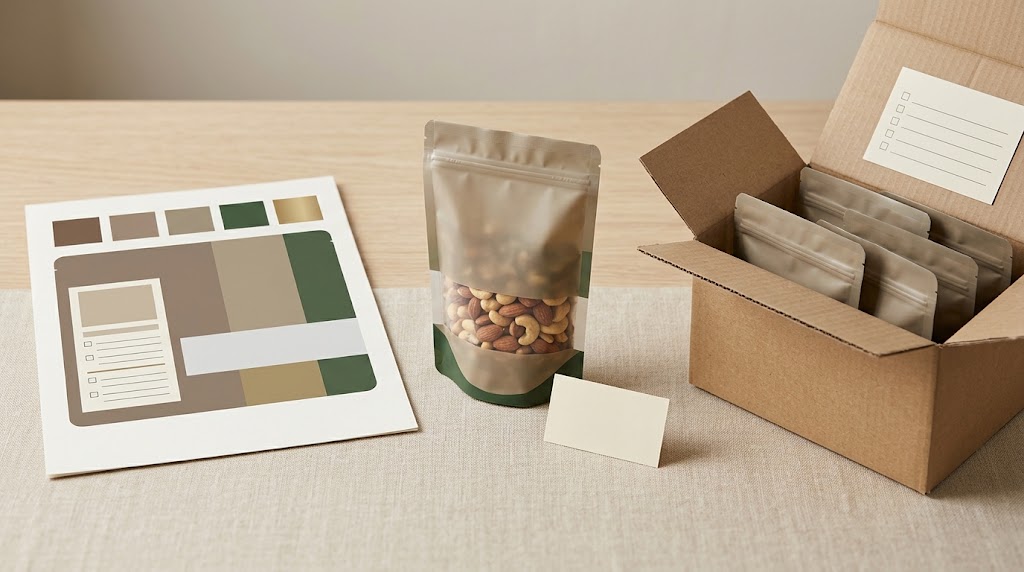
The answers in this table are an example brief, not a customer project or a validated 6 oz specification. The actual buyer should provide its own food, weights, machine and target market. A supplier can quote a candidate and share relevant material information; the food business must approve the finished product and label.
A workable launch sequence
First, freeze the food specification for the trial: which nut or mix, which roast and seasoning, which piece-size range, and which selling unit. Second, obtain several candidate pouch formats and material constructions, with drawings that identify seals, zipper and usable opening. Third, fill production-representative samples and compare settled appearance and the clean closing zone. Fourth, seal the bags on the intended equipment and inspect them using the packer’s approved checks. Fifth, have the food brand review the full-size printed proof and all flavor/version information. Sixth, evaluate the filled carton for the actual route, retain samples and sign off the final build.
If a trial exposes a failure, describe where it occurs. Nuts caught in a top seal invite a filling and clearance review. A zipper full of salt fines invites a consumer-use review. Scuffing where two pouches rub invites a carton and surface review. A visually sparse pack invites a geometry and presentation review, provided the net weight remains correct. Changing every variable at once makes the next trial hard to interpret.
The payoff from this sequence is modest but concrete: you can compare suppliers on the same food and use conditions, approve a bag that your packer can actually close, and bring the artwork and carton into the same project. No generic “best nut bag” recommendation can do that work for you.
Frequently asked questions
How should I package roasted nuts for sale?
Define the roasted product and its approved storage conditions, then sample a pouch sized by the actual net weight and bulk volume. Check filling, a clean final seal, the intended consumer opening, label content and the filled carton. The roast and food-safety process belong to the food producer; the bag must be tested with that finished product rather than assumed suitable from an empty sample.
Do peanuts, pecans, cashews and macadamias need different bags?
They may share a pouch design only if filled trials show acceptable fit, closure, presentation and product quality for each SKU. Pecan halves and large cashews have different size and breakage behavior from small peanuts or chopped nuts. Formulation and coatings can affect seal cleanliness. Do not turn a single customer’s bag dimensions into a universal species chart.
How are mixed nuts packaged without the large pieces ending up at the top?
The food processor must control blending and filling so consecutive packs meet the approved recipe and net-weight specification. Sample bags at several points during the run, then inspect them after normal handling. Packaging geometry can affect what the consumer sees, but a printed window or opaque film does not correct ingredient segregation by itself.
Does a nut bag need a zipper or a vacuum seal?
Neither is automatic. A one-time portion may use a simple final heat seal. A larger bag intended for repeated snacking may benefit from a zipper plus the specified unopened seal. Vacuum packing is a separate process decision that can affect fragile nuts and finished appearance; assess it against other options with the actual product, equipment and storage study.
What size bag holds 6 oz or 8 oz of nuts?
There is no reliable size based on weight alone. Whole or broken nuts, coatings, gussets, side seams, zipper placement and top-seal clearance change usable space. Fill and seal multiple physical samples at the target net weight, then inspect settled appearance and the bag in its carton. The published US 6 oz project is evidence only for its own stated configuration.
Can a printed kraft nut pouch be called recyclable or guarantee freshness?
Not on appearance alone. Ask for the complete finished structure, including inner films, window, zipper and print, and review the destination market’s actual disposal route before making an environmental claim. Similarly, the brand must establish its own product-specific shelf life through suitable testing. A paper-look outer layer or a supplier’s generic barrier description does not prove either claim.
Ready to compare samples? Send the product form, target net weight, number of SKUs, proposed filling method, consumer use and sales route to Mylarbag’s nuts packaging team or use the contact form. Ask for a candidate drawing and material information, then evaluate the filled bags and cartons with your actual nuts.