

To package rice for sale, start with the product and sales channel, then choose a bag format that can hold the intended weight, display the approved label, run through your filling process, seal consistently, and survive distribution. Approve the package with filled samples of your actual rice. An attractive empty pouch is not proof that a filled pack will stand well, close cleanly, or arrive without damage.
For many specialty retail projects, the first comparison is between a stand-up pouch and a flat-bottom pouch. For a heavier pack or a different packing line, the answer may change. The useful question is not “Which rice bag is best?” in isolation. It is “Which complete pack works for this rice, this fill weight, this shelf, and this delivery route?”
This guide follows that decision from the first brief to the approved sample. It is written for rice brands, mills, importers, and private-label teams preparing a commercial package. Long-term household storage, detailed film selection, supplier sourcing, and sealing-machine setup have their own guides in this series.
Start with a one-page product and sales brief
The bag supplier needs more than a request for a “1 kg rice pouch.” Two packs with the same net weight can behave differently when one contains long-grain white rice and the other a mixed grain product. Grain shape, product flow, fines, presentation, filling equipment, and intended storage all affect the pack specification. Record what is known before choosing dimensions or artwork.
Begin with the rice itself: variety or blend, whether it is polished white rice or a brown or mixed-grain product, representative product samples, and the condition in which the rice reaches the packing line. The pack will not correct poor product handling before filling. If a brand is making a quality or shelf-life claim, its own product and packaging validation must support that claim.
Next define the selling unit. Is the pack a small specialty item for a grocery shelf, a family-size product, a food-service unit, or a shipping unit sold to another business? Note the net content in the units expected in each destination market. Also record whether the consumer will pour from the pack repeatedly, empty it at once, or transfer it to another container. Those choices shape the opening and reclosure discussion.
Finally, describe the route to the customer. A pouch displayed upright on a store shelf has different demands from a bag stacked in a warehouse or shipped individually through e-commerce. Record the carton configuration, anticipated handling, and any retailer requirements. Where the project covers multiple markets, keep the market-specific label and claim approvals separate rather than printing one unreviewed design for every destination.
If any field is uncertain, mark it as open. A supplier can suggest a sample range, but a drawing should not quietly turn an assumption into a fixed production specification.
Choose a format for the way the rice will be sold
A stand-up pouch is a useful candidate when a small or medium retail pack needs a front panel that faces the shopper. Its bottom gusset opens as the product is filled. The filled shape, rather than the flat outline, determines how well it stands. The brand must still check how much of the front panel is visible after filling, how the upper edge closes, and whether the bag remains stable as rice is poured out.
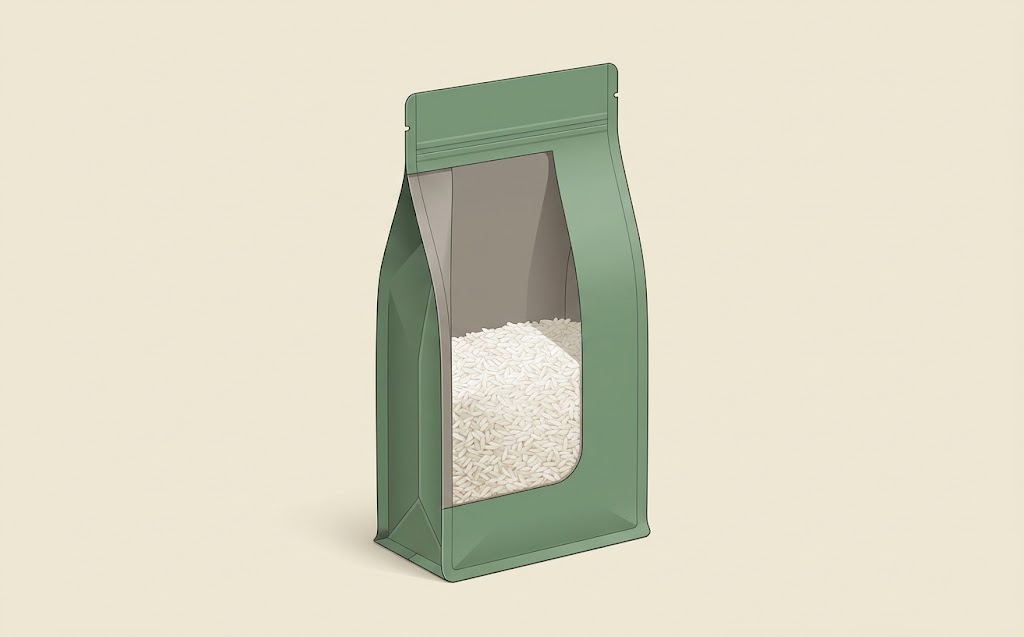
A flat-bottom or box-bottom pouch has a rectangular base and several printable faces. That can make sense for a specialty rice line that needs a more defined shelf shape or additional side-panel space. It is not automatically stronger, better for every weight, or worth the added complexity. Fill trials should compare the actual finished shapes, carton fit, and unit economics.
Flat pouches, side-gusset bags, and larger sack-style formats may suit other sales units. A large-volume request should begin with the required load, the packing process, and the supplier's verified construction. Do not assume that a small laminated retail pouch scales to 20 or 25 kg merely by enlarging the artwork. Nor should a description of BOPP film be read as proof that a supplier makes woven polypropylene sacks; those are different constructions.
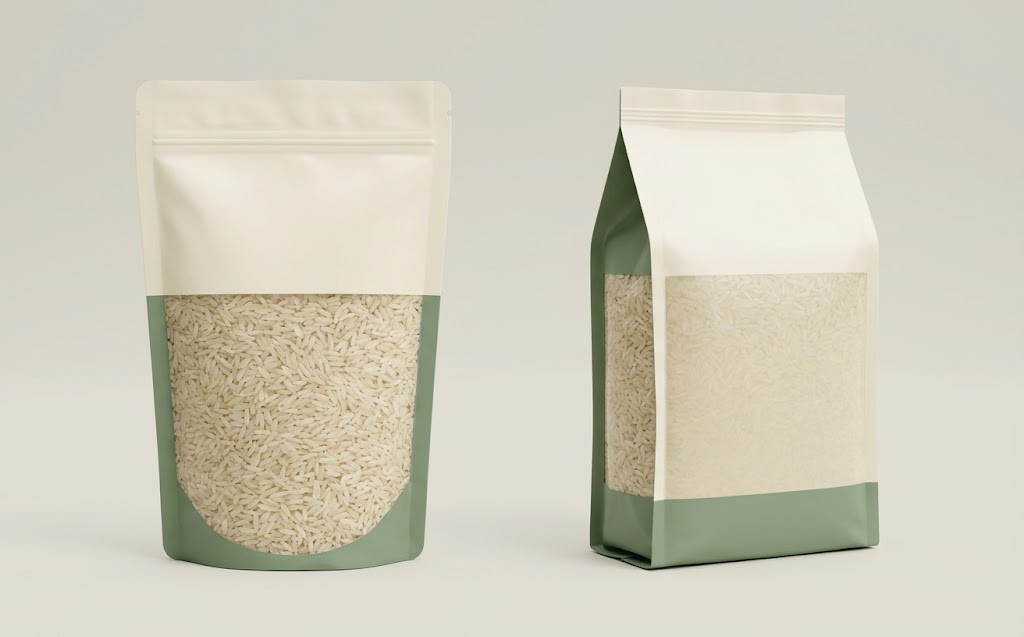
Think about the retail shelf before settling the shape. How deep is the shelf? Does the retailer display the item front-facing or side-facing? Will a price label cover the lower part of the bag? Is the product sold in an outer carton or directly as a pouch? A format that looks excellent in a design rendering may waste its strongest print surface in the real display.
The same test applies to handling at home. A shopper must be able to carry, open, pour, and, if intended, reclose the bag. A zipper may improve repeat use, but it also takes up space near the top. A handle may help a heavier pack, but its position, reinforcement, opening route, and filled-pack balance require a sample review. Neither feature belongs on the design simply because it appears on a competitor's bag.
Select a protective concept before finalizing the artwork
Rice packaging has several jobs at once: keep the product contained, support its quality under the intended conditions, tolerate the planned handling, and present the brand clearly. The material decision should follow these jobs. A supplier can propose a structure, but the buyer should ask what the individual layers and finished bag are intended to do, and what evidence is available for that exact construction.
For a commercial brief, request the complete structure, including the food-contact layer, window if used, adhesives where relevant, closure components, and finished-bag construction. Ask for applicable food-contact documentation for the intended product and market. The FDA's food-contact material status guidance describes why the regulatory status of components and conditions of use matter. A broad phrase such as “FDA approved bag” is not a substitute for reviewing the actual materials and intended use.
Do not turn a film description into an untested shelf-life claim. Barrier performance depends on the complete structure and the finished pack, including seals, windows, folds, and any other openings. A clear window can be a valuable merchandising feature, but its material and placement need to be included in the review. “High barrier” has little meaning without a relevant specification and test method for the project.
For this first article, the practical output is a shortlist of candidate structures to sample. The deeper comparison of PP, BOPP, PE, multilayer barrier options, and recyclability belongs in the separate materials guide. Here the brand only needs enough information to avoid approving artwork for a package whose function has not yet been defined.
Work backward from a real filled sample
A target net weight is a label and process requirement; it is not a reliable bag dimension. Different rice products can settle differently. Fill height changes with the pouch base, mouth width, grain shape, and vibration during packing and transport. A bag can technically contain the correct mass and still be difficult to seal or unattractive on shelf.
Ask for a small range of physical samples rather than one “standard” size. Fill each with the representative product using a measured target. Use the filling method the production team expects to use, then allow the product to settle as it would in the actual process. Photograph the front, back, side, base, and top. Mark the fill line and the space remaining above it. Repeat the trial, because a single carefully filled sample can hide an awkward routine process.
Reserve a clean top area for the specified first-sale seal. Rice kernels or fines trapped in that area can interfere with a clean closure. If a zipper is present, verify where the first seal sits relative to it and how the customer opens the bag. Do not select a universal clearance measurement from an unrelated bag; the supplier and packing team should validate it against the final film, dimensions, equipment, and product.
The approval sample should answer these questions:
- Does the bag take the intended net fill without bulging or distorting the artwork?
- Does the bottom form as expected after the rice settles?
- Can the operator fill it without spilling rice into the closure area?
- Does it stand, hang, or stack as intended?
- Can a customer identify the product and read the approved information on the filled pack?
- Is the first-open path clear, and does the reclosure work after opening if one is included?
- Does the pack fit its shipping carton without excessive squeeze or wasted space?
This is also where a brand should decide whether a transparent window helps. A window can show recognizable grains, but it takes space from the printed panel and introduces a component that must be considered in protection and finished-pack review. The question is whether the visible product improves this particular sales presentation enough to justify that design choice.
A real 1 kg rice and ancient-grain pouch: what it shows
One published Mylarbag rice and ancient-grain project records a 1 kg flat-bottom pouch for the Philippines. Its public specifications list a PET/NY/PE structure, a 15 × 24 + 6 cm size, gravure printing, and a teardrop-shaped window. Those are useful, concrete facts for a brand planning a premium retail pouch.
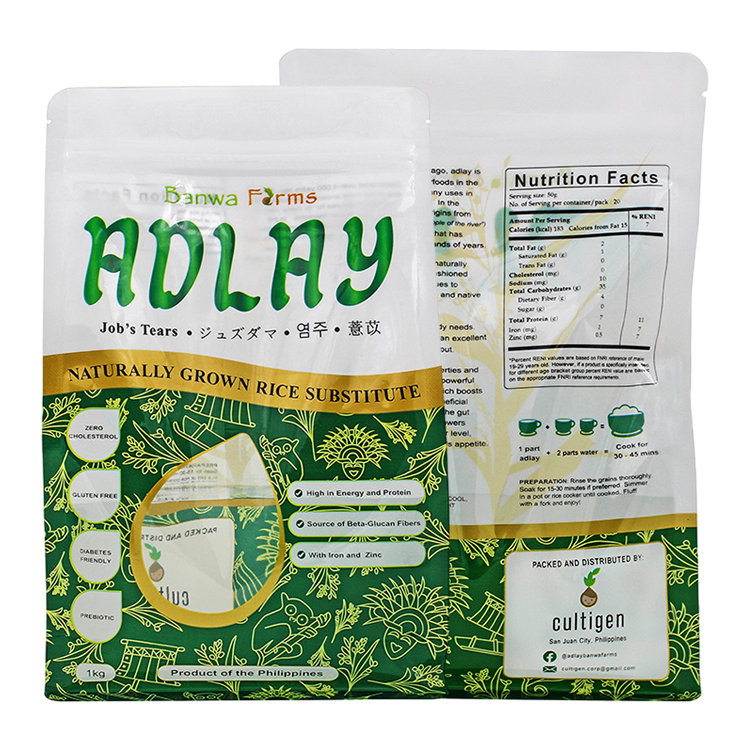
The case illustrates three planning choices. First, a 1 kg retail unit can be developed as a box-shaped pack with more than a front and back panel to consider. Second, the window is a deliberate part of the graphic layout; it needs to be placed with the real fill line and printed information in mind. Third, the case records the material structure and dimensions together, which is more useful than saying only “premium bag.”
The public case does not publish comparative drop-test data, shelf-life results, measured OTR or WVTR, or a controlled comparison against another format. It therefore does not prove that the same size or structure is right for a different rice, a different filling line, or a 5 kg order. A new buyer should use it as a starting reference, then conduct a filled-sample trial for the new project.
This separation matters in procurement. A real case is evidence that a specific combination was made. It is not permission to copy a performance promise into a new brief. If a customer asks for the same look, the supplier still needs the new product, target weight, market, distribution route, and any required test criteria.
Design the label around the final filled shape
Artwork should be developed with the bag structure, not pasted onto it at the end. A flexible pouch changes shape when filled. The lower gusset expands, side panels curve, and any window may show a different portion of the product than it did on an empty mock-up. Check the graphics on a filled prototype, ideally under the lighting and shelf arrangement in which the buyer will see it.
Create a panel map. Identify the principal consumer-facing panel, secondary faces, bottom or gusset areas, seal and trim zones, window, barcode position, lot/date coding area, and any retailer-specific space. Keep critical text away from folds or places that are hard to read when the bag is full. If several SKUs share an artwork system, test the longest product name and the most crowded approved information panel, not only the easiest design.
For a U.S. product, use the FDA's Food Labeling Guide as a starting point for the brand's label review. The guide covers required statements under applicable U.S. rules; it also notes that some chapters are under revision, so the responsible team must check current requirements and the specific product. The pouch supplier can reserve practical print space, but the brand is responsible for approved product statements and market-specific review.
Do not put a recycling mark, “pest-proof” claim, or fixed shelf-life statement on the pack simply because a film sales sheet uses similar language. Each statement needs support for the complete package and target market. The same caution applies to country-of-origin, organic, nutritional, and other product claims: get approved wording before the print file is locked.
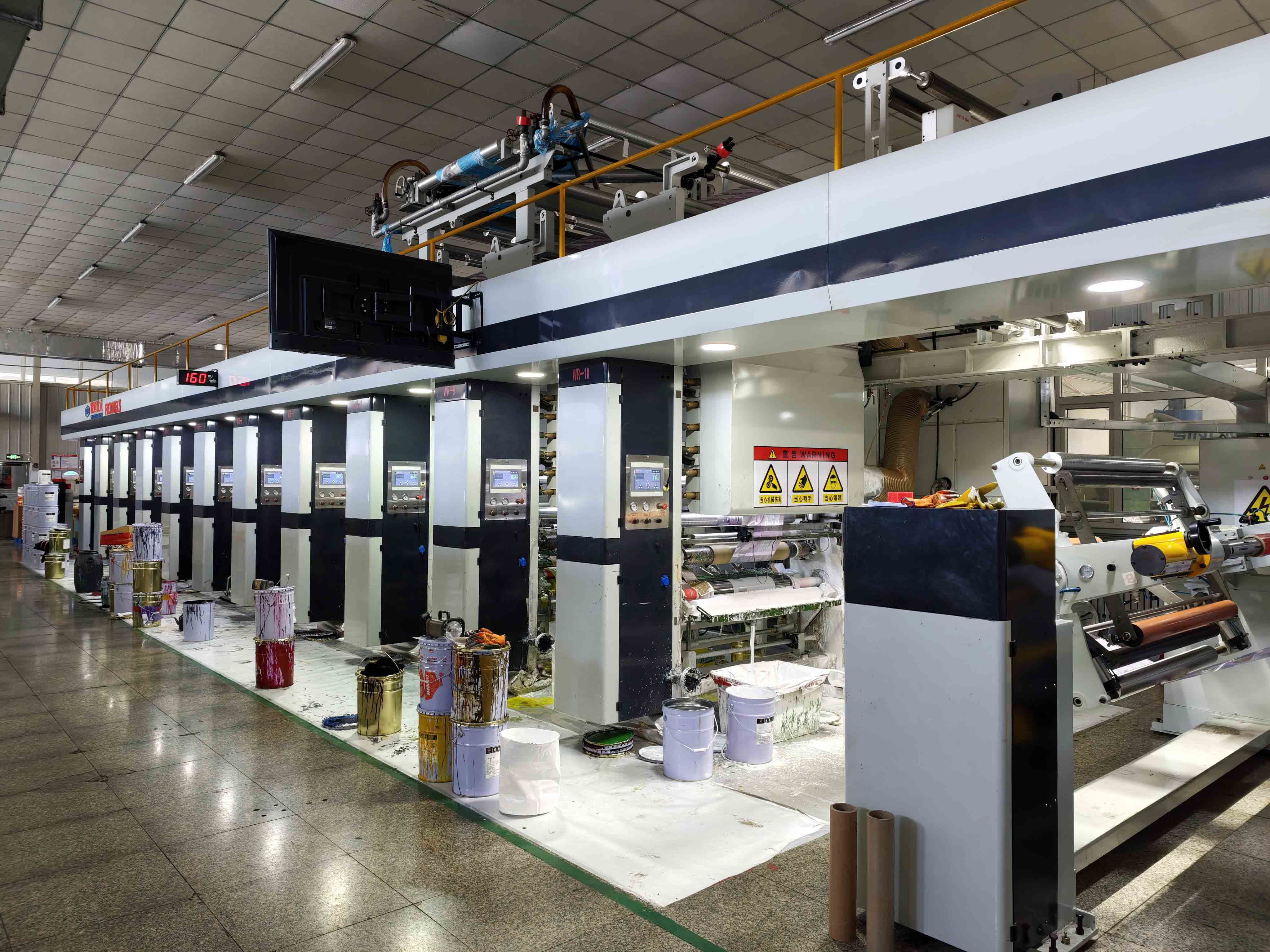
Print production adds another level of discipline. Confirm color expectations on the intended substrate and finish, review registration around the window and seals, and record the approved artwork version. A bag with accurate dimensions but the wrong SKU artwork is still a failed order. For repeated orders, keep the signed sample, dieline revision, color references, and market-specific copy linked to the same SKU record.
Plan the filling and sealing sequence as one operation
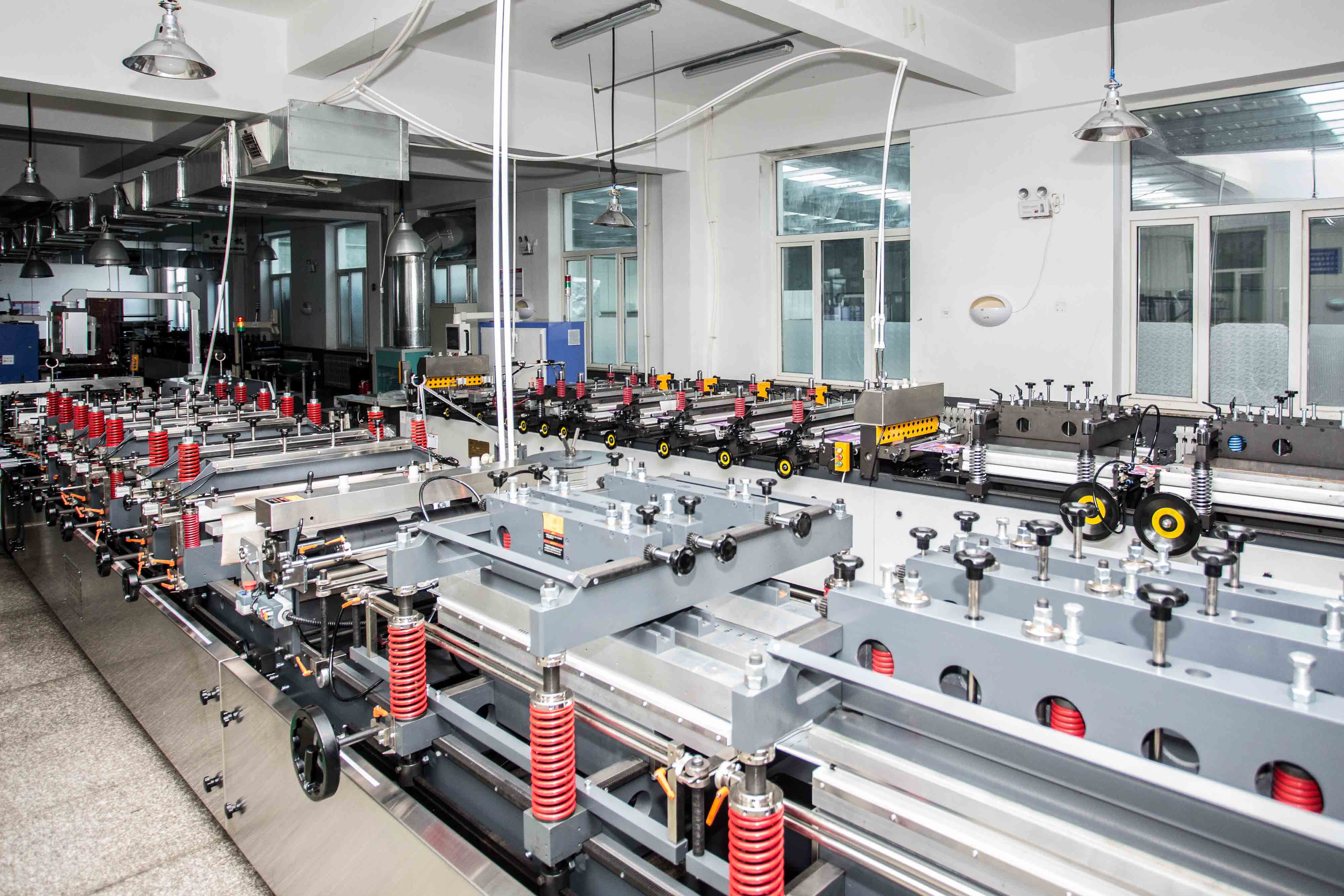
The bag, the rice, and the equipment meet on the packing line. Map the full sequence before calling a pouch “production ready”: receive and identify the empty bags, open each bag, fill to the controlled target, allow product to settle if the process requires it, clear the top area, make the initial closure, inspect it, apply or verify the lot code, and place the unit into its carton.
The exact controls depend on the line and closure. A manual trial can establish whether the product fits, but it may not reproduce the speed or variation of a production filler. An automated trial should check bag pickup, opening, flow through the mouth, product bridging, rice dust or kernels near the seal, and reject handling. If the line uses a zipper pouch, verify that the opening and top seal geometry works with its jaws and coding equipment.
Ask the supplier for the finished pouch's relevant dimensions and sealing information, then establish line settings with the actual bag and equipment. A nominal sealing temperature borrowed from another material is not an approval criterion. Product residue, dwell time, pressure, cooling, and machine condition can all affect the result. The separate sealing guide will cover this in depth; at this stage the project needs a repeatable trial and documented acceptance method.
At the end of the trial, examine more than one beautiful sample. Check the first, middle, and last units from the run, and include ordinary operators and normal product variation where possible. Photograph any defects and note the bag lot, rice lot, equipment, setup, and result. If a bag fails, the record should help the team decide whether to change the pouch, the artwork, the product handling, or the line setup.
Define quality checks before a large order
Quality control starts with agreement on what will be checked. For an incoming pouch, that may include the approved dimensions, print version, window and zipper position if present, appearance, and documented material construction. For a filled pack, it includes actual content, seal appearance and integrity, coding, display shape, and handling through the chosen route.
Specify how many samples the team will inspect, when it will inspect them, how it will record results, and which failures stop the process. The numbers should come from the project's risk assessment and agreed quality plan; they should not be borrowed from a different product. If the brand needs formal barrier or migration results, request the relevant report for the exact construction and intended use.
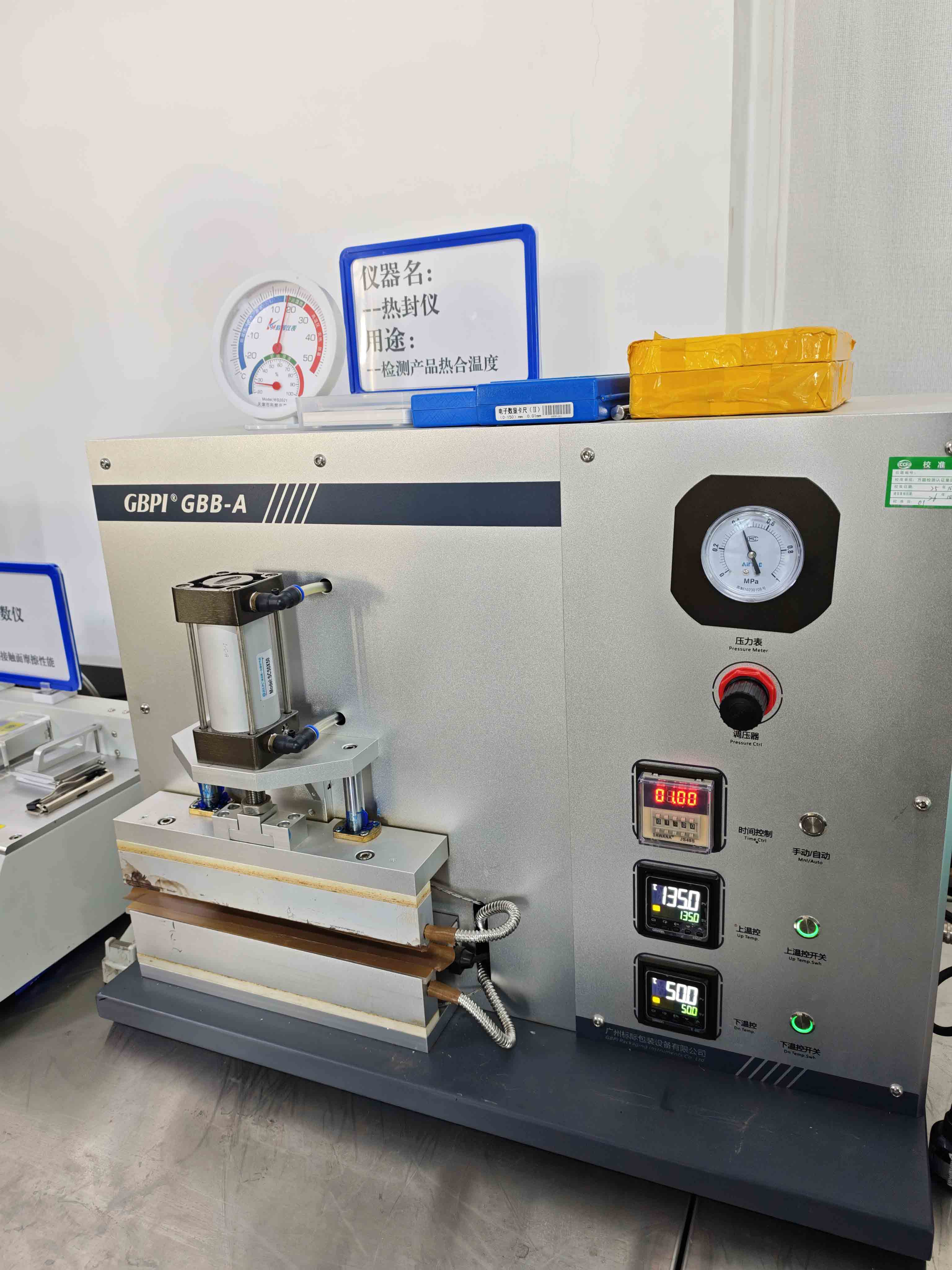
The table is a planning template, not a universal standard. For example, a good-looking seal can still require a defined strength or leak evaluation under the selected method. Conversely, a machine test alone does not show whether the label is readable on a full pouch or whether a shopper can pour from it. Inspect the pack as a system.
Treat the carton as part of the rice package
Many package problems appear after the filled bag leaves the line. A full carton can press against corners, zipper tracks, or unsupported windows. Stacking may change the pouch shape. Repeated movement can expose a weak seam or create abrasion that a single shelf sample never sees. The team should approve the retail unit and the carton together.
Load the proposed number of filled bags into the proposed carton, then check orientation, unused space, crush points, and whether a worker can pack it repeatedly without forcing the units into place. Review the actual route: pallet storage, wholesale delivery, parcel shipping, or several transfers. The tests should reflect the route and the buyer's agreed criteria. A claim that a pouch is “puncture proof” or cannot fail in transit is not supported by its appearance.

Also separate the retail net content from shipping calculations. A “1 kg” label describes the rice in a retail unit. Shipping weight includes the bag, cartons, inserts, pallets, and other materials. When comparing freight or warehouse plans, use the measured packed unit and complete shipping configuration rather than multiplying the printed net content and assuming the answer is final.
If a distributor will handle several rice SKUs, make case markings and lot traceability part of the plan. A premium front panel will not help if the warehouse cannot distinguish one variety from another or identify which carton belongs to a production lot. The coding and carton record should tie the filled product to its approved packaging version.
Approve a sample package, not just a quotation
Before ordering a commercial run, build an approval set. Keep a representative filled pouch, the final empty pouch specification, the approved artwork and dieline, the material and food-contact documentation supplied for the intended use, the label approval record, the filling trial, and the agreed quality checks. Assign an owner to each open item. A verbal “looks good” does not show whether the buyer approved the same structure and artwork the factory is preparing to produce.
When comparing quotations, ask whether they describe the same package. A lower unit price can reflect a different structure, print process, window, closure, quantity, packing method, or shipping term. Ask suppliers to state assumptions and exclusions. If a component is optional, show its effect separately so the buyer can compare like with like.
Keep revisions controlled. If the rice blend, net weight, market, window, zipper, film, supplier, or filling machine changes, ask whether the approved sample still applies. A bag that passed with one product is not automatically approved for another. Documenting the changes is less costly than discovering a mismatch after printed bags arrive.
For a custom rice packaging project, a useful first inquiry includes:
- Rice variety or blend and a representative product sample or clear product description.
- Target net weight for each SKU and the markets where each will be sold.
- Preferred format, or photographs of reference packs plus the desired shelf presentation.
- Filling method, line constraints, and whether the consumer needs reclosure.
- Artwork status, panel requirements, approved window concept, and coding location.
- Expected order quantity, delivery destination, carton requirements, and desired schedule.
- Any performance, food-contact, labeling, or sustainability claims that require documented support.
The supplier can then suggest samples and identify questions the brief has not answered. The goal of the first conversation is a testable package specification, not a promise that one material or bag style works for every rice product.
Common mistakes to catch before printing
Selecting a size from net weight alone. Use representative rice in physical prototypes. Record settled fill, closure room, base shape, and carton fit. A nominal “1 kg bag” from another project may be a poor fit for yours.
Letting the window dictate the label. Place the window after reviewing the filled product and required information. Avoid squeezing essential text into folds or the top sealing area merely to keep a decorative opening.
Treating a zipper as the initial seal. If the package requires a first-sale heat seal, plan it separately and test the customer's first-open route. A zipper is usually a reclosure feature after opening, not evidence that the unopened pack is sealed correctly.
Copying shelf-life or protection claims from a supplier page. Request project-specific evidence for a claim. The product, complete bag, closing process, and storage conditions all matter. A filled pack's performance cannot be established by naming a film layer alone.
Approving the retail pouch without its carton. A shelf-ready sample can fail in transit or arrive deformed. Include the expected carton and handling route in the approval process.
Approving artwork before the market copy is final. Verify the label with the responsible brand team for each target market before authorizing print. Leave room for variable data such as lot coding, and retain the signed version.
These errors are avoidable when the team works from one current brief and an identified approval sample. Good packaging development is a sequence of decisions that can be checked, revised, and repeated.
Frequently asked questions
What is the best packaging for rice sold in stores?
There is no single best bag for every retail rice product. Start with the intended net weight, sales channel, filling process, protection needs, label space, and distribution route. Stand-up and flat-bottom pouches are useful candidates for many specialty retail products; compare them using filled samples. The dedicated materials article will examine construction choices more deeply.
How do I choose a rice bag size for a 1 kg product?
Trial several candidate sizes with your actual rice and a measured 1 kg target. Check settled fill height, bottom formation, front-panel appearance, clean sealing space, opening, and carton fit. The published 1 kg Philippines pouch is a useful example of a documented project, not a universal size chart for all rice varieties and lines.
Should a rice pouch have a clear window?
Use a window when showing the grains helps the product's retail presentation and the final construction meets the project's protection and label requirements. Review its position on a filled pouch, not only an artwork flat. Record the window material and placement in the specification; do not assume it has no effect on overall package performance.
Do I need a zipper on a rice bag?
It depends on how the customer will use the product. A pack opened repeatedly may benefit from reclosure; a single-use or transfer-to-container pack may not. A zipper uses top-panel space and changes opening and line-handling details. If the brand selects one, test the initial seal and consumer reclosure as separate steps.
Can I print the same rice bag for several countries?
Possibly, but only after the responsible team reviews the product copy and label requirements for each market. Panel area, units, languages, origin statements, claims, and variable data can differ. A shared artwork system can reduce design work, while market-specific approved versions prevent unreviewed copy from being printed everywhere.
What should I send a rice bag manufacturer for a quote?
Send the rice type, target fill weights, intended markets, desired bag format or reference images, packing method, artwork status, approximate quantity, delivery location, and any window, zipper, or handle request. State the claims and tests you need to substantiate. Ask for physical samples and a written specification before treating a quotation as production approval. See Mylarbag's custom rice packaging options to start that discussion.
The practical next step
Pick one intended selling unit and write its product brief. Then trial two or three plausible pouch configurations with the real rice, the planned fill, and the proposed carton. Let the filled samples decide the format, dimensions, artwork space, and closure layout. Once the brand has approved the product copy and the supplier has confirmed the construction, the project can move from an attractive concept to a repeatable commercial pack.