
A shredded-cheese pouch can have a zipper that clicks shut beautifully and still leave the filling line with a weak original seal. It can pass a seal-strength pull on clean film and leak where one shred crossed the seam. It can seal well at room temperature yet become awkward to open and reclose with cold hands. These are three different jobs.
The short answer: for a retail bag of shredded cheese, the producer normally needs an intact first heat seal above the product for the unopened pack. A separate press-to-close plastic zipper can support repeated access after that first seal is torn away. Develop the film and sealant around the actual filling machine, keep cheese and moisture out of the seal area, establish a measured sealing window, and verify both strength and leak integrity on filled packs. If the product is sold or stored frozen, test the film, seams, tear opening, zipper engagement and user handling after the specified cold exposure. A zipper is a convenience feature, not a replacement for the first heat seal or proof of a food-safe shelf life.
This guide is for cheese processors, co-packers, quality teams and flexible-packaging buyers. It stays on the closure problem. For the full product-format and atmosphere decision, use the separate general cheese packaging and shredded-cheese process guides when those articles are live.
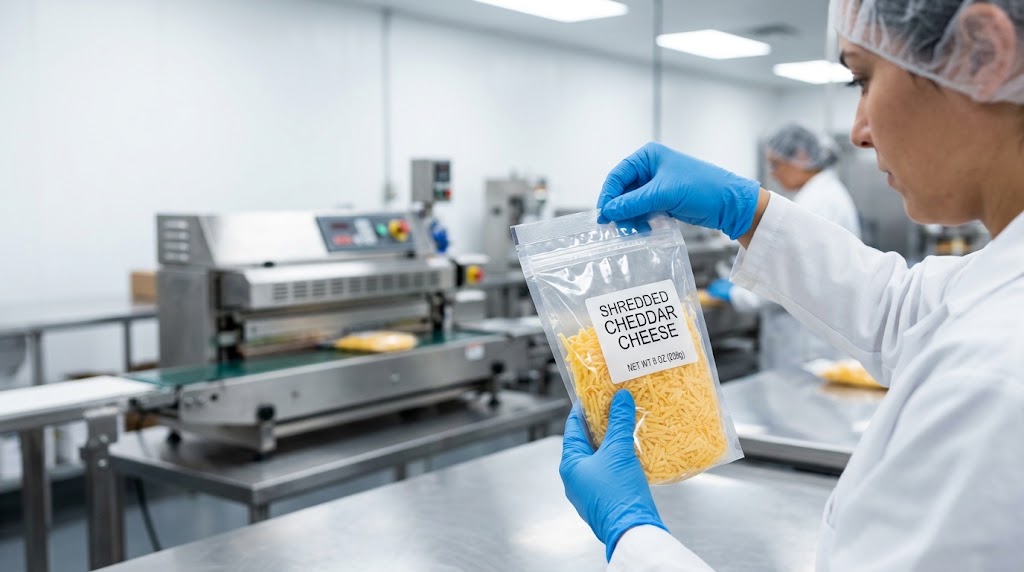
Illustrative factory quality-control inspection of a shredded-cheese pouch. This scene does not document a customer test or package certification.
First Identify Which Seal Is Supposed to Work
A typical resealable retail pouch has more than one boundary. The bottom and side seams are made when the empty pouch is converted. The filling line creates the top heat seal after dosing and any approved gas flush. The shopper tears open the portion above a zipper, then presses the zipper closed between uses. The order matters. If the consumer must cut through the zipper to reach the cheese, the opening geometry has failed even if the closure itself is sound.
A slider, coffee degassing valve, metal fastener or garment-style tooth zipper should not appear in a standard shredded-cheese closure brief unless the buyer has explicitly specified and validated such a component. A conventional pouch zipper uses mating plastic rib-and-groove profiles. The zipper's ends, registration and fit to the pouch are just as important as the center section a salesperson demonstrates.
On the custom cheese-bag page, a resealable stand-up format is a possible starting point. Translate it into a drawing: fill weight, internal dimensions, seal width, zipper type and location, distance from tear line to zipper, grip area, gusset, window if any, and the order in which each layer is opened. A picture of a generic pouch cannot settle these details.
Build the Heat Seal Around the Real Film and Equipment
The surface that fuses in the packer's jaws is the sealant, usually the food-facing portion of a specified multilayer film. The outer layer supports printing and handling, while other layers may provide stiffness or barrier performance. The supplier must identify the whole construction and which face should contact which face at the top seam. An impressive oxygen-barrier claim does not tell the packer the jaw conditions needed for the sealant.
For a commercial trial, record actual jaw temperature, dwell time, pressure, jaw surface and condition, line speed, product level, pouch alignment and cooling or handling immediately after sealing. Treat supplier temperature ranges as starting information, not a universal recipe. Two lines can report the same displayed temperature while delivering different energy to the interface. A change in film gauge, jaw cover, machine speed or pouch width can move the useful process window.
ASTM F2029-16(2021) describes laboratory preparation of heat seals to study material heat sealability. The standard explicitly distinguishes laboratory results from production-equipment validation. A lab heat-seal curve can help choose a trial range; the cheese plant still needs to qualify its own filled pouch and line. Set lower and upper trial conditions inside a controlled, authorized production study. Reject a range that produces intermittent weak seals at its low end or excessive distortion, shrinkage, delamination or zipper damage at its high end.
Specify the seam instead of saying “strong seal”
A good drawing defines the intended top-seal width, where that width is measured, acceptable variation and the clear seal land between fill zone, zipper and pouch edge. A broad-looking seam can contain a narrow channel. If the bag has a notch, the tear line must leave an unbroken first seal until purchase and a usable grip area afterward. If the pack is gas flushed, seal placement must account for headspace and product motion at full speed.
Measure actual production bags: edge to edge across the top; corners, zipper transition and any film fold. Inspect the inside of the seam when destructive review is allowed. Some failures only appear at startup, after a stop, at a speed change, or on one machine lane. Sampling only the prettiest stable-run pouch can miss the problem. Document how the sample was selected and whether it was empty, dry, product-filled or cold-exposed.
The supplier can discuss compatible plastic-film structures and provide pouch samples. The cheese producer decides whether the finished pack meets its process, product and food-safety criteria. Avoid giving a temperature, minimum seal strength or shelf-life promise without the exact materials, machine and acceptance standard.
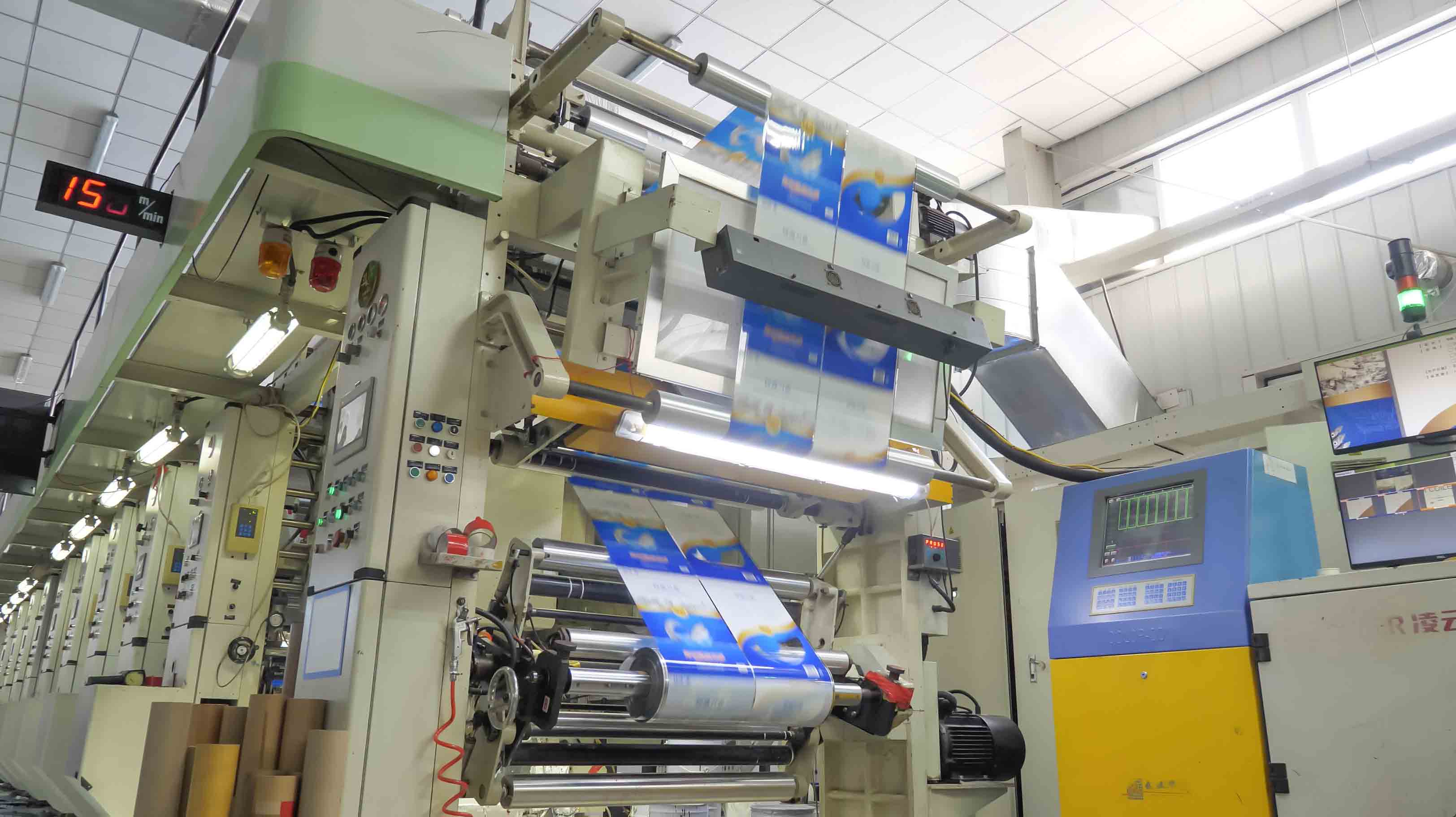
Real factory image: pouch converting. The cheese packer's final top heat seal is a separate operation to validate on its own line.
Keep Shreds, Fat and Moisture Out of the Top Seam
A shredded-cheese filling head can throw small particles toward the pouch mouth. Some stick to film, especially where static, oil or condensation is present. A single shred may bridge the two sealant faces. A greasy smear can alter contact and heat transfer. Excess free water or a wet lip can change the seam's appearance and behavior. These contaminants differ, so “turn up the heat” is not a diagnosis.
A peer-reviewed film characterization study included experiments with grated cheese contamination in seals of selected high-barrier cellulose films. It supports testing with actual food in the seal area; its specific film results cannot be copied as a performance claim for a PE-based Mylarbag pouch. The useful method is comparative: run clean and realistically contaminated samples, identify the location and amount of contamination, and measure both seal strength and leak continuity under the intended settings.
Find how contamination reaches the seam
Watch a line during startup and at its highest intended speed. Does a dosing chute brush the mouth? Does a burst of gas lift loose shreds? Does the pouch rebound after filling? Are shreds trapped at the zipper or in a gusset? Is the mouth wet because cold cheese meets humid room air? Do operators wipe away visible particles but leave a smear? These observations tell the team whether to adjust the filler, pouch presentation, fill height, product condition or geometry.
A practical countermeasure sequence is:
- Reduce particle scatter through filling-path and timing changes approved by the food team.
- Provide adequate clear distance between the product level and first heat-seal land.
- Keep the sealant surfaces aligned and supported by the jaws.
- Remove or prevent buildup on equipment according to the plant's sanitation plan.
- Repeat tests on product-filled samples at normal and challenged line conditions.
Do not put a questionable pack back in the saleable stream because its outside looks clean. If an experimental contamination trial is needed, isolate it from commercial production and label every sample. The point is to design a robust process, not to prove that a dirty seam can be hidden.
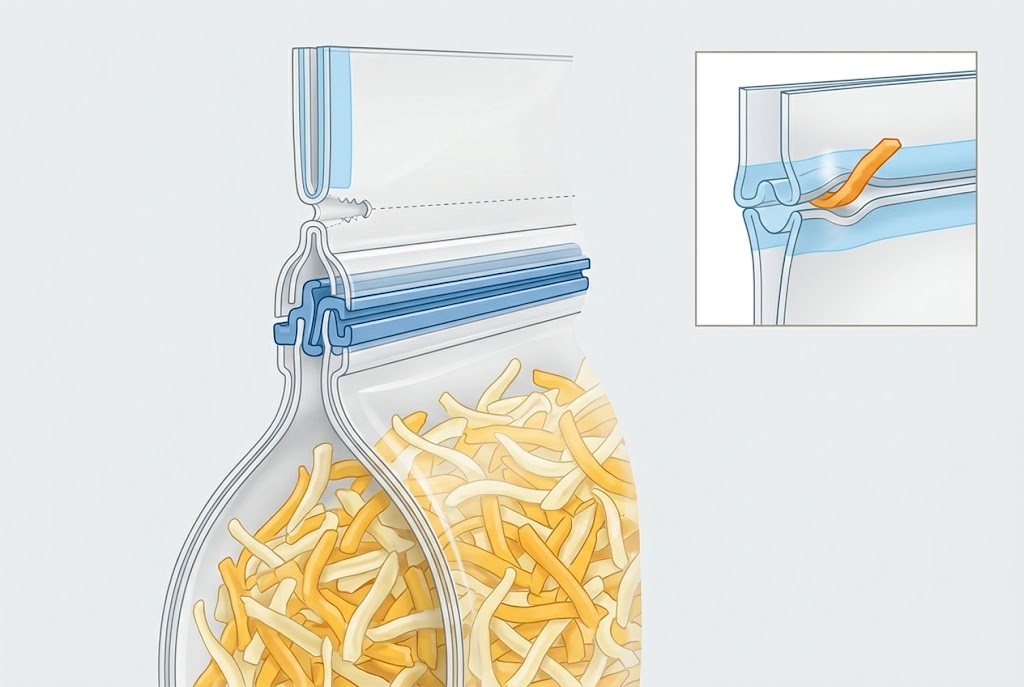
Conceptual illustration of a first heat seal above a separate press-to-close plastic zipper. The trapped cheese particle shows a possible channel, not a measured leak.
Seal Strength and Leak Integrity Are Separate Results
A pull test helps answer how a seal resists separation under a defined method. A dye-penetration or other suitable integrity test looks for channels or leaks. A strong area near the center does not rescue a corner with a path through it. A continuous-looking seam can still leak; a weak seal may not show a hole in the limited sample tested. The brand needs a plan that matches its product and package risks.
ASTM F88/F88M-23 addresses seal-strength measurement for flexible barrier materials. ASTM F3039-23 addresses dye-penetration detection of leaks in nonporous packaging or flexible barrier materials. Choose methods, specimen locations, sample numbers and acceptance criteria with the quality team. Record failure mode as well as the number: did the interface peel, did the film tear, did a laminate split, or did a local unsealed channel admit dye?
If the complaint is a swollen package, do not relabel it as “just a zipper issue.” Use the brand's package-integrity and food-safety process. Gas in an unopened pack, a leaking top seam and a hard-to-close after-opening zipper require different investigations.
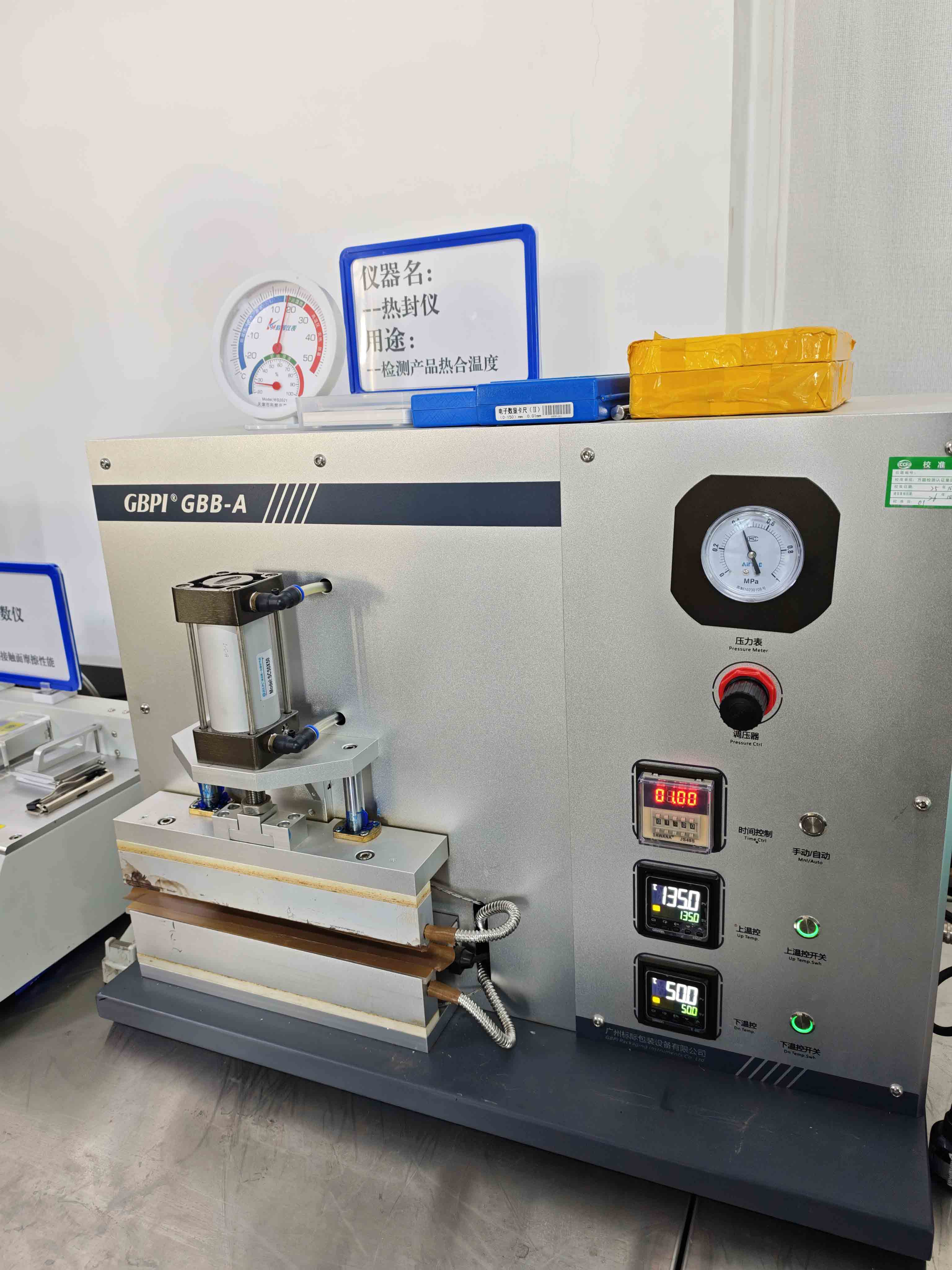
Real factory image: seal-strength equipment. No pass value for this cheese pouch is implied.
Design the Opening and Reclosure for Hands, Not Renderings
A zipper is useful only if shoppers can reach and fully engage it. Draw the order of actions: locate tear notch, remove the sealed strip, grasp the two pouch panels, separate the rib-and-groove profiles, take out cheese, wipe or dislodge stray shreds from the track, align the profiles and press along the full width until closed. Test these actions on an actual filled pack, including when its surface is cold or slightly damp.
The pull tab and grip area need room for fingers. A notch too close to a top corner may tear diagonally into the zipper. A tear line too low may remove the zipper with the tamper-evident top. A zipper too near the mouth may be hard to grasp; too low and it can sit among loose cheese. The bag should stand or lie steadily during use without dumping product. Ask testers to perform the sequence without a written explanation, then record where they hesitate.
A press-to-close zipper should have continuous mating profiles and secure ends. Check registration after the bag is filled and the top is cut open. Listen or feel for engagement if the design makes it noticeable, but do not treat a click as proof the entire track is closed. Run a fingertip from end to end, inspect each end and try a gentle opening force. A partial closure can trap a shred invisibly. The user instructions should be simple enough to work without specialized force or tools.
For a stand-up cheese pouch, set the gusset and fill weight so the pack can sit upright through repeated opening. A side zipper or pocket zipper changes access and sealing geometry and should be drawn and tested specifically; a product photo with a side closure does not validate a top zipper. A non-reclosable flat pack may be entirely reasonable for a single-use portion. Buy the closure the product and consumer behavior justify.
Test after several openings
Run an agreed number of opening, dispensing and reclosure cycles. Include users with different hand sizes and typical handling at the intended temperature. Some can test with cold but dry hands, others with normal kitchen conditions. Avoid creating an unsafe food-handling trial: use non-saleable test packs or approved procedures for food samples, and keep hygiene controls in place.
Track how often the zipper was not engaged on the first try, whether cheese accumulated in its groove, whether the bag tore near its welded ends, and whether the consumer could tell it was closed. Inspect after cycling, not merely on the first closure. An after-opening zipper is judged by repeated use and consumer communication, while the unopened heat seal is judged by finished-package integrity.
What Changes When the Cheese Bag Is Frozen?
Freezing changes handling. Films and seals may flex differently at low temperatures, a filled corner can strike another case, frost can collect near the opening, and a user may try to operate the zipper before the pouch has warmed. The product's texture may also change. “Freezer-safe” needs a stated product, temperature, duration, route and test criteria.
The FoodSafety.gov cold-storage guidance distinguishes food quality from safety in freezer storage and identifies 0°F (-18°C) or below as the continuous freezer condition for its general chart. This is context for designing a freezer trial, not a promise that a particular shredded cheese or zipper will retain quality indefinitely. The cheese maker sets its own labeled instructions and validates quality and safety under actual distribution and use.
Ask which freezer journey is real
There are at least three different briefs: cheese sold frozen and opened by the shopper; refrigerated cheese that a consumer chooses to freeze after purchase; and a frozen distribution leg followed by refrigerated sale. They may require different labeling, product studies and pouch trials. Do not assume a zipper built for a chilled retail pack was tested for frozen use.
For a sold-frozen product, run filled packs through the intended freeze and storage condition. Examine corners and side seams before opening, then open and reclose according to the proposed directions. Repeat after allowed handling or temperature transitions, logging what actually happened. Check whether the zipper tracks separate evenly, whether frozen particles block engagement, and whether a seam tears when the film is flexed. Inspect the package again after the user removes some cheese and reseals it.
For a refrigerated product that buyers may freeze at home, be precise about what the brand's label does and does not say. If the product is not labeled or validated for freezing, a pouch supplier should not make the freezing recommendation on the cheese maker's behalf. If freezer use is part of the commercial brief, agree on the product and closure validation together. A resealed bag cannot restore a factory-applied modified atmosphere.
A damaged freezer bag may admit air or let product escape. The food company should instruct consumers in its own approved language; the pack designer should focus on making failure less likely and the closing action more understandable. Do not claim that pressing the zipper shut reverses an unsafe temperature history. The FDA notes that freezing does not eliminate Listeria. Storage instructions and product disposition belong to the food producer's safety program.
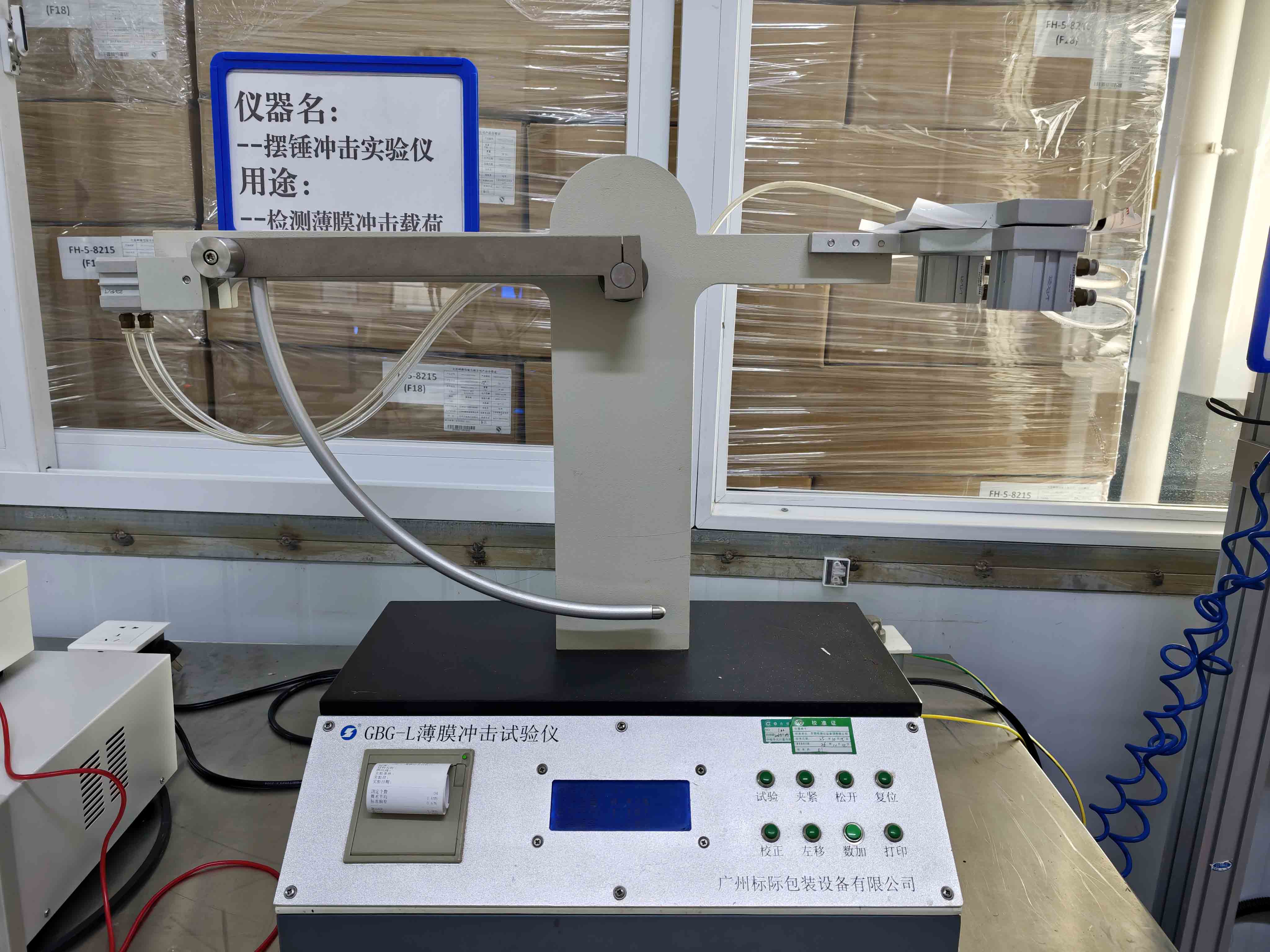
Real factory image: film impact testing. The finished cheese pouch, filled and cold-exposed, still needs its own handling evaluation.
A test matrix the buyer can actually request
Do not compare a dry empty sample at room temperature with a wet full pack in a freezer and call the difference a material result. Use matched products, fill weights and lots where possible. Define the comparison and the order of tests before the supplier sends samples.
The test matrix is a planning aid, not a universal sampling plan or pass limit. When measuring seal strength after cold exposure, let the quality team specify sample conditioning and method so results remain comparable. If a destructive leak test makes a package unsuitable for subsequent checks, use a matched pack from the same lot. Preserve evidence from failed samples before opening them.
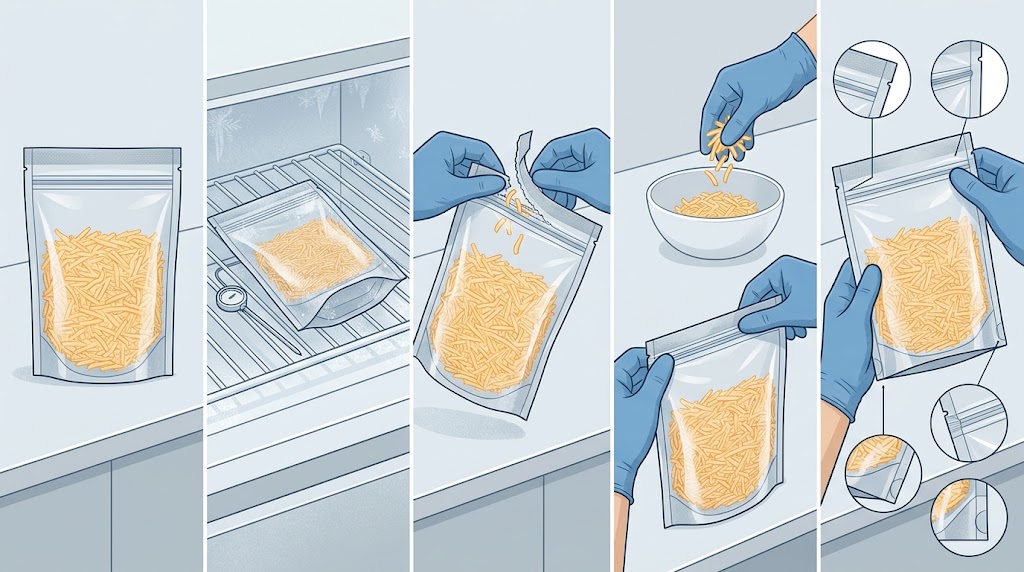
Conceptual freezer-use trial showing cold storage, first opening, reclosure, and inspection of a filled pouch. These stages do not establish food-safety approval.
An Adjacent Frozen-Food Case With a Side Zipper
Mylarbag's Saudi Arabian frozen-cookie-dough pouch is a real adjacent example of a frozen-food package with a side zipper. The listed structure is PET/VMPET/NY/low-temperature PE in a flat-bottom format, with digital printing. It shows that a freezer project may combine material selection, a structural seam and a reclosure design in one commercial brief.
It is not a cheese customer case. Cookie dough is not shredded cheese. The project listing does not supply a controlled cheese zipper-cycle study or a cheese shelf-life trial. Its temperature and performance marketing claims should not be quoted as independent test outcomes for this article. Use the known attributes to ask better questions: Would a cheese buyer want a side zipper or top zipper? Is a rigid-looking flat bottom useful for its fill mass? Which film face will be sealed on its own equipment? Where might cheese particles collect when the consumer dispenses portions?
The commercial lesson is conditional. If a producer sells larger frozen shredded-cheese portions that are accessed repeatedly, trial a closure format that keeps the profiles clear and is easy to operate at the intended use temperature. If a small single-use portion is sold frozen, an elaborate zipper may add material and line complexity without a matching consumer benefit. If the cheese is sold refrigerated, do not copy a freezer-pouch structure simply because it contains low-temperature PE. Define the real distribution and use case first.
Turn Complaints Into a Root-Cause Record
When an unopened bag leaks, photograph the whole pack and isolate the failure location before cutting it apart. Record SKU, cheese lot, pouch lot, date code, line, shift, jaw settings, fill weight, storage route and whether the returned package was already opened. Classify the first observation: top-seam channel, side-seam opening, zipper-end split, puncture, product escape after opening, or consumer difficulty with closure.
Look for recurrence by lane, shift, film roll, machine stop and transit carton. The correct remedy may be a cleaner filling path, a wider seal land, a jaw repair, a different pouch presentation, another zipper location or a material change. Do not change all of them at once. A one-page defect map with photos often tells the converter much more than “the bag does not seal.”
A quality hold or recall decision is the cheese producer's responsibility. A packaging supplier can supply material and batch traceability, retained samples, drawings and applicable test information. It cannot determine food safety from an isolated pouch photo.
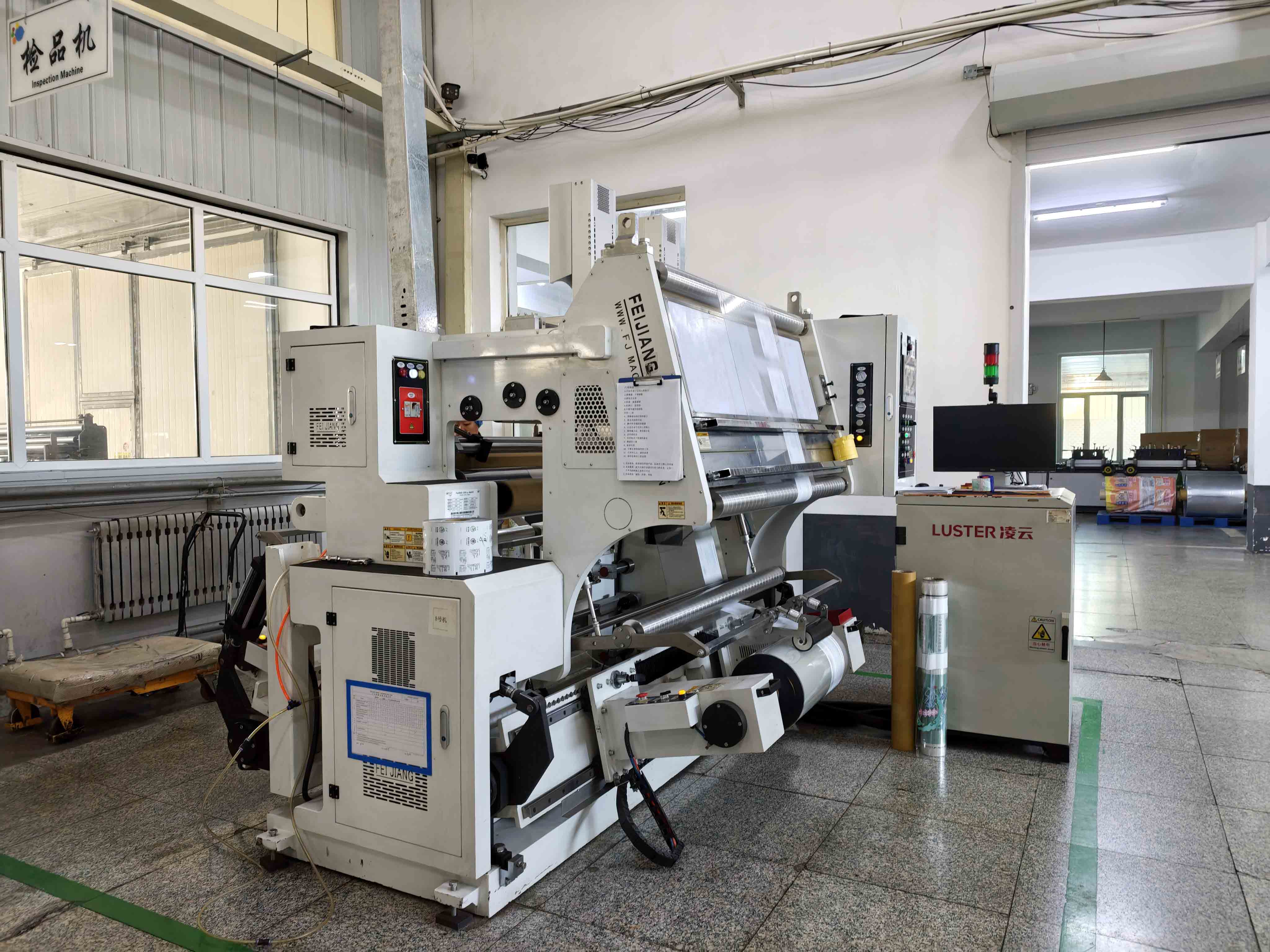
Real factory image: converter-side film inspection. It does not replace inspection of filled bags at the cheese plant.
A Purchase Specification for Samples and Acceptance
A buyer can send a useful request without pretending to know the perfect structure. Include the cheese style, target weight, whether it is sold refrigerated or frozen, whether the unopened pack is air packed, vacuum packed or MAP packed, planned shelf life, filling equipment, line speed, destination markets, desired opening and reclosure steps, and distribution conditions. Then request candidate pouches with drawings and the construction details needed to evaluate them.
The sample checklist should state:
- Geometry: filled dimensions, headspace, gusset, clear seal land, top-seal width, notch, grip area, zipper centerline and end treatment.
- Material: all layers and sealant, nominal gauge, relevant barrier measurements with methods and conditions, food-contact documents for actual intended use.
- Line setup: orientation, pouch pickup and opening, fill clearance, heat-seal trial range and expected output condition.
- Risk trials: clean and representative contaminated seals, top and side seams, filled-pack leaks, cold storage and impact if specified.
- Consumer use: first opening, several dispense-and-reclose cycles, track cleanliness, closing feedback and label instructions.
- Evidence: lot identifiers, sampling protocol, measured acceptance limits, defect photographs and who signs off.
Write the acceptance criteria before the trial: no defined leak route in the stated sample plan, acceptable strength and failure mode at specified locations, no product in the first seal beyond the agreed limit, and usable reclosure across the agreed handling cycle. The exact numerical limits come from the product, method, pack and buyer's quality system. Reject both a vague “freezer proof” claim and a single lab number offered as a finished-pack guarantee.
The supplier conversation should end with a controlled sample trial and a decision record. If the current bag already performs, a better opening notch may solve a complaint without a new barrier laminate. If the top seam fails on a high-speed line, a premium zipper will not rescue it. Ask Mylarbag for cheese-pouch samples with your actual filled-product and machine brief, then validate the candidate with the cheese team before printed production.
Frequently Asked Questions
How do factories seal bags of shredded cheese for sale?
The packer uses a pouch or rollstock designed for its filling and heat-sealing equipment. It fills the cheese, applies its approved atmosphere process if relevant, and forms the first top heat seal above the product. Finished packs need the cheese producer's strength, integrity and product-quality checks.
Can I just close the zipper instead of heat-sealing the retail bag?
A consumer zipper is not a substitute for the original unopened-pack seal. The first heat seal and the later reclosure serve different purposes. Design and validate both for the intended product and line.
Why does a shredded-cheese heat seal fail in only one corner?
A fold, jaw misalignment, pouch skew, trapped cheese or local equipment difference may affect one corner. Locate the defect and compare samples from the same lane and shift. Do not assume the flat film's barrier rating explains the local failure.
Can a cheese shred in the seal be fixed by raising the sealing temperature?
Not reliably. It might change the interface, damage the film or zipper, and leave a channel. First identify why particles reach the seal land, then trial the actual product, material and equipment over an approved process window.
What is the difference between seal strength and a leak test?
Seal strength measures resistance to separation under a defined test. A leak test looks for a pathway through the package or seam. Both can be useful; neither alone proves cheese safety or a shelf-life date.
How should I reseal a frozen shredded-cheese bag?
If the brand's instructions support freezer use, clear loose cheese or frost from the plastic zipper track, align the rib-and-groove profiles and press the full length, checking both ends. Return the product to its instructed storage promptly. A damaged or poorly closing bag needs the food brand's approved handling guidance.
Does the zipper remain airtight after freezing?
No universal zipper can be assumed airtight after every freeze and use cycle. Test the selected profiles, end welds and filled pouch under the actual temperatures and operations. Resealing cannot recreate the factory atmosphere.
Is a side zipper better than a top zipper for frozen cheese?
It depends on fill weight, access pattern, machine, available grip area and how food moves during dispensing. Trial both formats with the actual cheese if repeated access matters. The frozen-cookie-dough case illustrates a side-zipper design, not a cheese performance result.
Will thicker film prevent cold-weather cracks?
Thickness alone does not define a film's low-temperature behavior. Structure, sealant, corners, folds, fill geometry and handling all matter. Ask for a filled-pack cold and impact trial rather than choosing by gauge only.
How wide should the top heat seal be?
There is no one width that fits every cheese pouch and sealer. Specify a width and tolerance for the construction, machine, fill conditions and quality requirements, then verify the weakest locations of production packs.
Do I need to test clean and contaminated seals?
Yes, when loose shredded cheese or moisture may realistically reach the seal land. A clean lab seal is a baseline; product-filled production samples show the actual challenge. Contamination trials must be controlled and their packs kept out of saleable inventory.
Can a strong heat seal still leak?
Yes. A measured strip can resist pulling while a different local segment contains a channel or pinhole. Pair location-specific seal observations with an appropriate package-integrity method and sampling plan.
Does freezing make cheese safe if its seal was damaged?
No. Freezing does not undo prior contamination or validate a broken package. The cheese producer's food-safety program decides disposition using the product and its temperature history.
What should I send a pouch manufacturer before ordering samples?
Send cheese type and fill weight, expected cold route, filling and sealing equipment, current failure photos, desired first-opening and reclosure experience, target market and intended shelf life. Ask for construction, drawings and test information tied to the candidate pack.
How can I tell whether the first seal or the zipper caused a customer complaint?
Ask whether the package had been opened before the complaint and photograph the original top seam and zipper separately. An unopened top-seal channel, a zipper track that will not mate and a torn zipper-end weld are different failures requiring different corrective action.