How to Stop Weed Smelling in a Bag: Do Smell-Proof Bags Work?
Quick answer
Smell-proof bags can help reduce odor transmission compared with an ordinary household storage bag, but the result depends on the complete package—not a marketing label alone. The barrier film, side seals, zipper or heat seal, handling, and condition of the pouch all matter. For lawful cannabis retail and storage, a high-barrier pouch should be specified and verified for the actual product, pack format, and destination market. It should never be described as making a product undetectable, odor-free, or automatically compliant.
This guide explains how to stop weed smelling in a bag from a packaging perspective. It is not legal advice and it is not a guide to concealing products from law enforcement. Cannabis packaging rules vary by product and location, so licensed brands should confirm the requirements that apply to their own market before launch.
What does “smell-proof” actually mean for cannabis packaging?
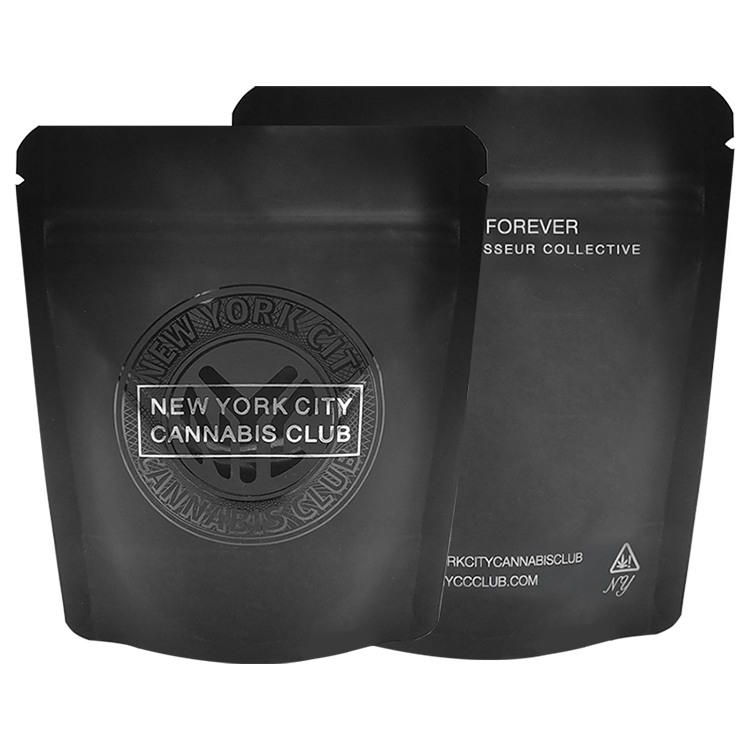
“Smell-proof” is convenient shorthand, but it is not a single material grade or a universal performance standard. A pouch can look thick, feel premium, or be black and still have a very different barrier profile from another pouch. The useful question for a buyer is not simply, “Is this bag smell-proof?” It is, “What is the complete structure, how is it sealed, and what test data supports the intended use?”
Cannabis flower contains aromatic volatile compounds, including terpenes and terpenoids. Storage conditions can affect those compounds over time, but the research does not support a one-size-fits-all shelf-life claim. For example, a recent study of dried cannabis inflorescence found that storage outcomes differed among individual compounds and conditions rather than moving in one identical direction for every sample. Read the study.
That is why packaging copy should stay specific. A high-barrier structure may be appropriate when a brand wants to reduce gas and moisture transmission, reduce light exposure, and keep the product in a sealed retail format. It is not evidence that every pouch will retain every aroma, preserve a fixed potency level, or pass every odor test.
For a packaging buyer, the practical goal is to reduce avoidable variation. Choose a pouch that fits the product, use a closure that matches the filling process, and ask the supplier to document the material and test conditions. Those steps are more meaningful than a blanket “100% smell-proof” claim.
Are Ziploc bags smell proof for weed?
An ordinary household Ziploc-style bag should not be assumed to provide the same odor-barrier performance as a purpose-specified multilayer pouch. Household storage bags are generally designed for convenience and short-term storage. They are not automatically comparable to a flexible laminate selected for defined oxygen, moisture, light, seal, and handling requirements.
That distinction matters because the package is a system. A zipper can be useful for repeated access, but it does not replace a properly specified film structure or a sound perimeter seal. Likewise, a bag can have a metallic appearance without having the same barrier properties as a different construction that uses a metallized film or an aluminum-foil layer.
If a brand is comparing a household bag with a custom pouch, ask for the construction in plain language. For example, a supplier may identify the outer print web, the barrier layer, and the food-contact sealant layer. It should also be clear whether the quoted specification applies to the finished pouch, including its zipper, window, gusset, and seals—not just to a sample of one individual film.
The answer to “are Ziploc bags smell proof for weed?” is therefore not a useful absolute yes-or-no promise. For a commercial cannabis project, a typical household storage bag is not a substitute for a high-barrier packaging specification and documented validation. If odor control is an important purchasing criterion, the right next step is to compare the intended pouch structure and its relevant test data.
Can you smell weed through a plastic bag or Ziploc bag?
It is possible for odor control to vary significantly between plastic bags because plastics and laminates do not all transmit gases and water vapor at the same rate. Material choice, thickness, lamination quality, flex damage, seams, and closure design can each affect performance. A thin bag, a poorly formed seal, or a pouch with handling damage may perform differently from an intact, correctly specified high-barrier pouch.
Packaging engineers commonly measure oxygen transmission rate (OTR) and water-vapor transmission rate (WVTR) to compare barrier performance. Those measurements do not by themselves equal an “odor-proof” score. They are nevertheless useful procurement data because they show why a buyer should not assume two bags with a similar appearance will perform alike.
In a peer-reviewed study of metallized and aluminum-foil-centered laminates, researchers measured OTR and WVTR before and after flexing. The study found that material construction, optical density, lamination, and flexing all affected the measured barrier performance. The most relevant lesson for a cannabis buyer is simple: barrier claims need conditions and test methods, especially when the pouch will be filled, shipped, squeezed, and repeatedly opened. Read the packaging-barrier study.
For lawful storage and retail use, do not treat a pouch as the only control. Keep the exterior of packages clean during filling and handling, use an appropriately sized format, and avoid treating a damaged or poorly sealed bag as equivalent to a verified finished pouch. Odor on the outside of a package is a handling issue, not proof that a particular barrier structure has failed.
Ziploc vs. high-barrier Mylar packaging: what is the real difference?
In cannabis packaging, “Mylar” is often used broadly to describe a premium-looking flexible pouch. In technical conversations, however, the name alone is not enough. The actual laminate and the finished pouch design determine what is being purchased.
The following comparison is designed for packaging evaluation, not as a performance guarantee for any particular bag.
| Packaging question | Ordinary household storage bag | High-barrier custom pouch |
|---|---|---|
| Primary design objective | Everyday resealable storage and convenience | A specified retail or storage application with defined material, print, closure, and barrier requirements |
| Material information | Often limited to consumer-facing product information | Should identify the laminate structure and, when relevant, barrier layer and sealant layer |
| Odor-control claim | Should not be assumed from the bag name or zipper | Should be tied to the exact construction and validated for the intended project |
| Closure | Resealable closure may be convenient, but it is only one part of package performance | May use a zipper, heat-seal area, tear notch, child-resistant feature, or another specified closure system |
| Data to request | Consumer product information may not answer B2B barrier questions | OTR/WVTR conditions, seal-integrity information, finished-pouch specification, and any available project-specific validation |
| Regulatory fit | Not automatically suitable for a regulated retail product | Must still be checked against the destination market, product category, labeling, and child-resistance requirements |
1. The barrier layer is only one part of the answer
Metallized films and aluminum foil are often used in flexible packaging because they can contribute to barrier performance, but they are not interchangeable labels. The same published packaging study showed that flexing affected oxygen barrier performance differently across foil-centered and metallized-film-centered laminates. This is one reason a buyer should request the material stack and test context instead of choosing solely by the words “foil,” “metalized,” or “Mylar.”
Research on coated and vacuum-coated packaging films also found that the presence of an evaporated barrier layer did not, by itself, guarantee an aroma barrier. That is a useful guardrail for this article: a metallic-looking layer is not a substitute for an evidence-backed finished-package specification. Read the aroma-barrier study.
Thickness can be relevant to puncture resistance, stiffness, and handling, but it is not a stand-alone odor-control measurement. A thicker bag is not automatically the better barrier bag. Likewise, a clear window, a zipper, or a special finish can change the finished package design and should be considered in the actual specification.
2. Seals and closures deserve the same attention as film
A package cannot rely on film performance if its seals are inconsistent. For commercial filling, the sealing method should match the pouch and the equipment. A resealable zipper may support consumer convenience, while a heat seal can provide an additional retail closure where appropriate. The correct arrangement depends on the pouch design, filling method, product format, and market requirements.
Brands should ask whether the quoted pouch is designed for heat sealing, where the seal area is located, and whether the supplier has instructions for the relevant sealing range. A finished package should be evaluated after filling, not only as an empty sample. This is particularly important when a product has sharp stems, varied flower density, a large headspace, or handling conditions that can stress the pouch.
3. Flexing, pinholes, and ordinary handling can matter
Flexible packaging changes shape in transit and during retail handling. The peer-reviewed laminate research linked flexing with changes in measured barrier performance and discusses the role of flex-formed pinholes. That does not mean every pouch will fail in use. It means that barrier performance should be evaluated as a finished package under realistic conditions rather than inferred from a stock photo or a generic material claim.
For B2B procurement, request samples, fill them with the intended product where lawful and appropriate, and review the seals, zipper operation, fit, and visual condition after the relevant handling process. If a project has an important odor-control requirement, document the acceptance criteria before placing a bulk order.
How to stop weed smelling in a bag for a lawful retail or storage project
For brands, dispensaries, and licensed operators, the most reliable process is a packaging-selection workflow rather than a quick “double bag it” tip. The following steps focus on product protection and quality control.
Define the product and its package conditions
Start with the form of cannabis product, fill weight, physical volume, storage duration, and sales market. Flower, pre-rolls, gummies, and concentrates do not have the same packaging needs. A pouch that is oversized for a small fill can leave unnecessary empty volume; one that is too small can place stress on seals or damage the presentation of the product.
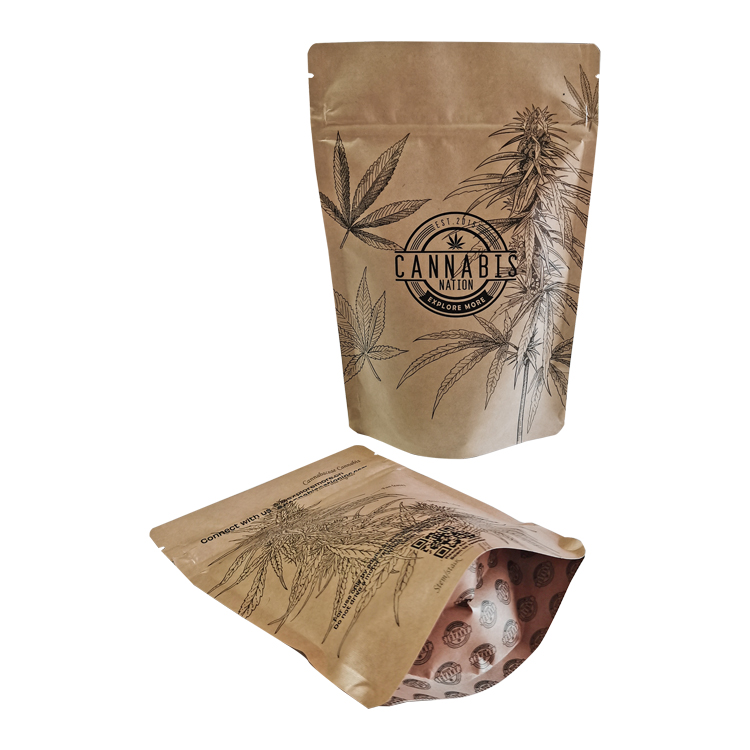
If you are selecting a flower pouch by weight, use a real sample rather than weight alone. Flower density can vary, so a stated gram weight does not guarantee an identical physical volume. For a separate size-and-format reference, see The Ultimate Guide to Weed Bag Sizes, Grams, and Prices.
Request a complete pouch specification
Do not accept “smell-proof Mylar bag” as the complete specification. Ask for:
- the full material structure;
- finished dimensions, including gusset and usable fill area;
- closure configuration, such as zipper, heat-seal area, or child-resistant option;
- OTR and WVTR values with the test method, temperature, and relative-humidity conditions stated;
- any available seal-integrity, puncture, or flex-durability data for the relevant structure; and
- limitations created by windows, die-cuts, special finishes, or intended repeated opening.
OTR and WVTR are comparative packaging metrics, not a promise that a pouch will eliminate odor. Asking for them still improves purchasing decisions because it forces the conversation to move from appearance and slogans to the actual finished-package specification.
Make the marketing claim match the evidence
Before approving product copy, separate what a test measures from what a marketing phrase implies. An OTR result measures oxygen transmission under stated conditions; a WVTR result measures water-vapor transmission under stated conditions. Neither result alone proves that a particular cannabis pouch will have no detectable odor in every environment. A seal test, a flex test, and a finished-pouch review answer different questions again.
That distinction protects both the buyer and the brand. If a supplier has validation for a specified structure, use a qualified claim that matches the evidence and name the scope where appropriate. If no finished-package evidence is available, describe the pouch factually—for example, by material structure, closure, and intended application—rather than inventing a result. This is especially important when a package contains a window, a special zipper, a tear notch, a child-resistant feature, or other design elements that may differ from a generic film sample.
Match the closure to the filling process
For a single-use retail pouch, a heat-seal area may be part of the intended package design. For a multi-use format, a resealable closure may also be needed. In either case, the seal should be formed and inspected according to the pouch and equipment requirements.
Do not make a legal claim based on a closure alone. Child-resistant and tamper-evident requirements are determined by the applicable market and product. As one current example, New York requires retail cannabis packages to meet child-resistant and tamper-evident requirements, fully enclose the product, and be sealed to protect against oxygen exposure, contaminants, and degradation. It also requires licensees to retain relevant child-resistance documentation. Other jurisdictions can differ. Review New York’s packaging guidance.
Validate the finished package before ordering at scale
Before approving a production run, review the actual pouch with the actual product and expected handling process. Check fit, seal appearance, zipper operation where applicable, print placement, label area, and any required compliance elements. If you need a verified claim, request the evidence that supports that exact claim for that exact format.
This is where a packaging partner can add real value: helping translate a product brief into a pouch structure, dimensions, printing method, and closure configuration that the brand can evaluate before bulk production. For a custom project, visit Custom Cannabis Packaging or request a quote with your product type, fill weight, target market, and expected packaging features.
Related project: a published cannabis flower pouch configuration
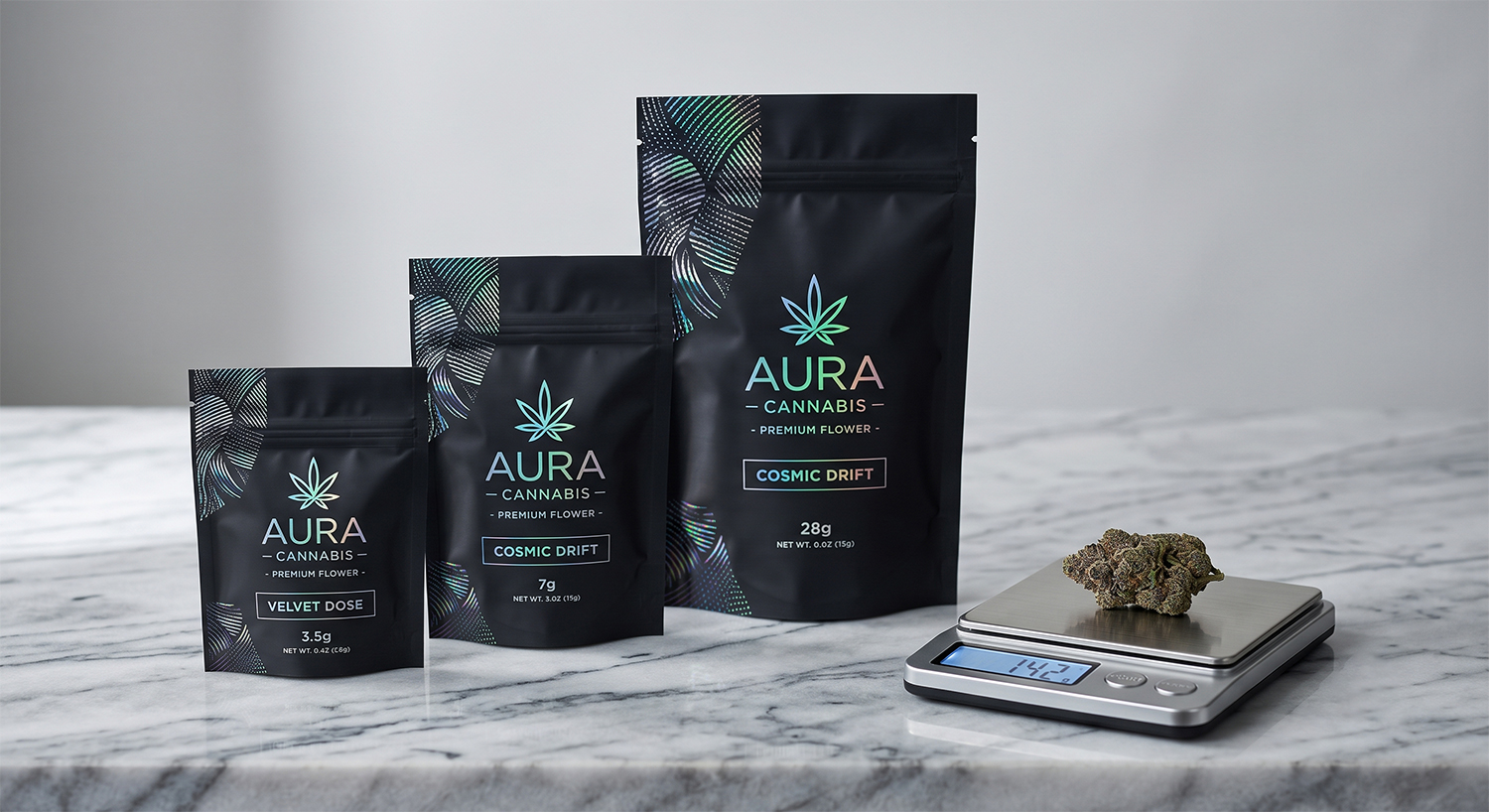
The following published Mylarbag project is relevant as a format example, not as proof of odor performance or a customer-success story. The product page lists a U.S. custom cannabis-flower stand-up pouch with a PET / Aluminized Laser (Holographic) / PE structure, digital printing, and dimensions of 17 × 15 + 4 cm. It also shows the pouch’s real project imagery.
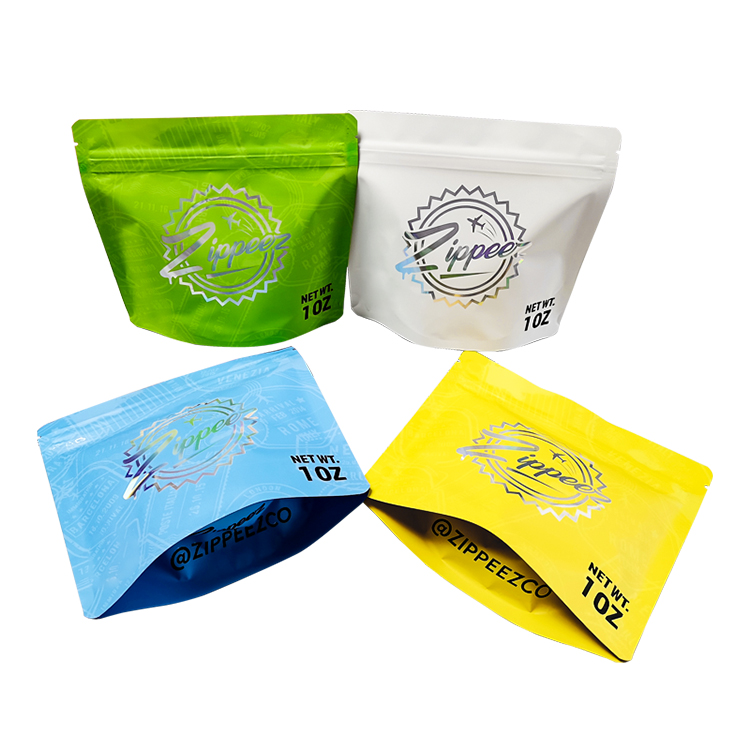
That information can help a buyer discuss format, material structure, and printing direction. It does not establish the customer’s reason for choosing the pouch, the final product’s shelf life, an odor test result, regulatory approval, or a sales outcome. Those facts would require separate, verifiable records.
Frequently asked questions
Do smell-proof bags work for weed?
They can help reduce odor transmission when the finished pouch has an appropriate barrier structure, intact seals, and a closure suited to the use case. The term alone is not enough to establish performance. Ask for the exact material structure and relevant test data, and evaluate the completed package under the conditions that matter for your product.
Are Ziploc bags smell proof for weed?
A standard household Ziploc-style bag should not be assumed to provide the same odor-barrier performance as a specified multilayer cannabis pouch. For a commercial or regulated product, evaluate a finished-pouch specification rather than relying on the appearance of a resealable bag.
Can you smell weed through a plastic bag?
Odor-control performance varies by the plastic or laminate, the pouch construction, the condition of the seals, and how the package is handled. Plastic bags are not all equivalent. A buyer seeking a barrier-oriented solution should compare the actual material structure and relevant test conditions.
Can you smell weed through a Ziploc bag?
Do not assume that a household storage zipper makes a bag an odor-barrier package. A zipper is only one part of a pouch system. For a cannabis retail project, consider the film, perimeter seals, closure, fill process, and finished-package validation together.
Do Ziploc bags hide the smell of weed?
The useful packaging question is whether the finished package has documented barrier performance for the intended use. A household storage bag may be convenient, but it should not be treated as a verified odor-control solution for a commercial product. This article focuses on lawful packaging and storage, not concealing products from detection or avoiding legal obligations.
Will a Ziploc bag hide the smell of weed?
There is no responsible universal guarantee. Packaging performance varies by material, closure, package condition, handling, and product. If the odor-control requirement is important to your project, specify the pouch structure and ask the supplier for relevant validation rather than relying on a generic bag name.
How do I choose a cannabis pouch for a 1 oz or “zip” format?
Start with the product’s physical volume, not the weight alone, then choose a pouch that fits without over-compressing the flower or leaving unnecessary empty space. Read What Is a “Zip” of Weed? for the measurement context, then discuss the actual flower density, dimensions, and closure requirements with your packaging supplier.
Choose a specification, not a slogan
The strongest answer to “how to stop weed smelling in a bag” is not an absolute product claim. It is a documented packaging choice: the right format, the right material structure, sound seals, realistic validation, and market-specific compliance review. That approach gives cannabis brands a better basis for sourcing a pouch that supports their product and retail requirements.
If you are planning a lawful cannabis packaging project, contact Mylarbag with your product type, fill weight, target market, artwork needs, and the features you want to evaluate. The team can help you compare pouch structures, formats, printing options, and sample routes for your project.