
Store an opened bag of bird seed or dry bird food according to the exact product’s label and manufacturer instructions. Keep the product identifiable, protect it from conditions the label says to avoid, close the original package as its design allows, and use a clean, dry, dedicated outer container only when it helps without losing the original bag, lot/date information or instructions. There is no universal number of days that every opened bird-food bag remains suitable.
The phrase “How long does a bag of bird food last?” can mean two different things. It may mean how many days of product are physically in the bag, which is a product-specific quantity calculation. Or it may mean how long the product keeps after opening, which depends on the actual product, packaging, label instructions and storage environment. This guide separates those questions and stays out of feeding advice, wildlife advice and household pest-control instructions.
The first rule: the exact label controls
Bird seed and bird-food products can differ by ingredients, processing, intended animal, market and package. A general blog cannot replace the storage instruction on the exact bag. Read the product label before throwing away the packaging, moving the food into another bin or assuming that another mix will behave the same way.
Keep the following information accessible:
- product name and product type;
- net quantity;
- manufacturer/distributor contact information;
- lot/date or batch information;
- storage and handling instruction;
- market-specific label statements;
- any official notice or recall reference relevant to the exact product.
In the United States, animal-food labelling is a regulated communication, not merely artwork. FDA and AAFCO explain the broader labelling context for animal and specialty pet food. The specific requirements depend on the product and market, but the practical consumer point is simple: the original package may contain the only useful instruction for the item in the home.
“How long does a bag last?” has two different answers
This distinction is valuable because it keeps a packaging article honest. The quantity calculation is simple mathematics. The freshness/storage question is a product-specific responsibility.
Calculate usage duration without giving feeding advice
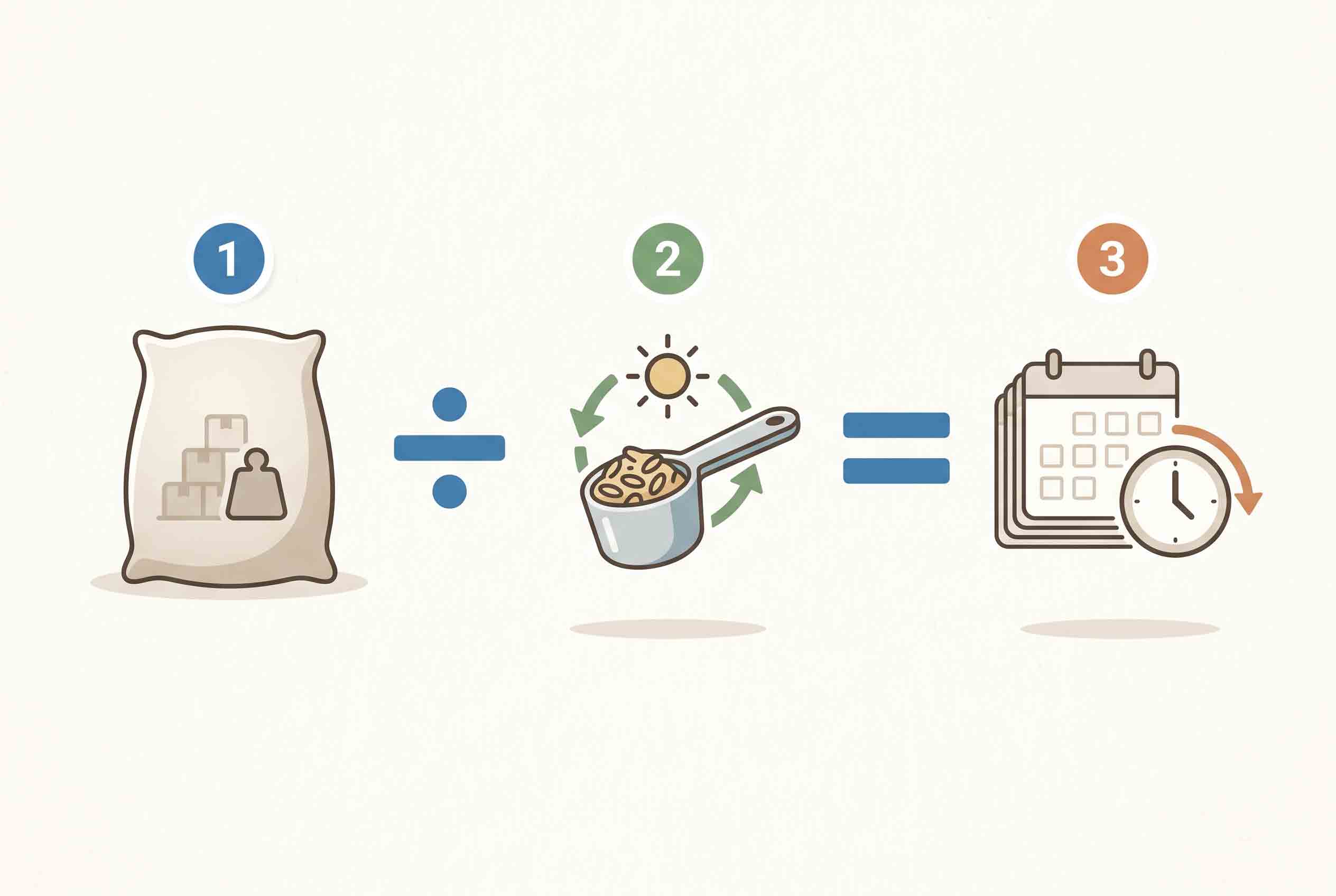
If a product owner supplies a stated use amount in grams, calculate:
[ \text{Estimated product-use days} = \frac{\text{net bag mass in grams}} {\text{product owner’s stated amount in grams per day}} ]
For several animals, divide by the total applicable stated amount. If the label uses another measure, use that product’s own measurement system. The formula describes inventory; it does not say what any bird should be fed. Species, life stage, health and other conditions are outside this article and should be guided by the product owner and an appropriate qualified professional.
Example only: a 2,000 g bag divided by a product-specific stated use amount of 40 g per day produces 50 days of product in arithmetic terms. That is not a suggested bird diet. It is only a way to understand why a bag’s physical quantity and its storage life are different questions.
Keep the original bag when practical
An outer storage container can be helpful for organisation and physical protection, but it should not erase the original package from the system. Keep the bird food in its original bag where possible, then place the bag inside a clean, dry, dedicated lidded container if that suits the household and label instructions.
The original bag preserves:
Product identity
Bird seed mixes can look similar once poured into a container. The original bag keeps the product name, intended use and manufacturer visible.
Lot/date information
If a manufacturer issue, retailer contact or recall notice arises, the lot/date may be needed to identify whether a particular bag is affected.
Storage instruction
Different products can have different directions. A generic plastic bin cannot carry that instruction unless the household keeps the bag or an accurate retained label with it.
Packaging context
The original closure, seal and product-contact surface remain part of the product as supplied. Moving the contents into an unknown or poorly cleaned container can introduce questions the manufacturer did not intend to answer.
This is not a demand that every household buy a giant bin. The practical goal is to keep product information, product condition and storage instructions connected.
Choose a storage location deliberately
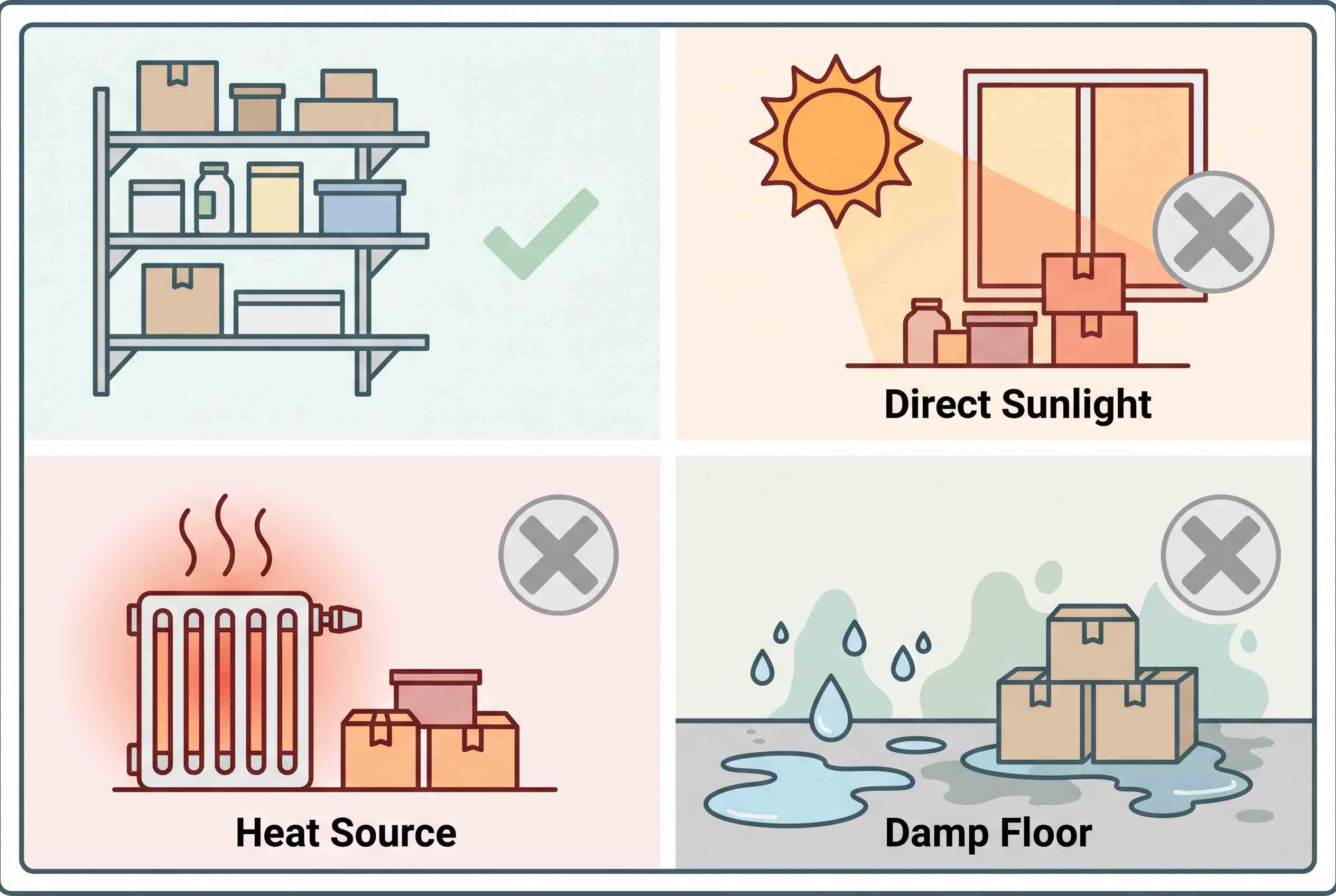
Use the product’s own storage instructions first. In general, an appropriate location for a dry packaged product is clean, dry, away from direct heat and sunlight, and not exposed to household spills or cleaning chemicals. The exact product may specify more.
Review the proposed location:
Avoid naming a universal temperature or a universal post-opening period for bird food. Those numbers must come from the exact product owner or relevant qualified guidance. A “cool, dry place” is meaningful only when it is applied to a real product and label.
How to close an opened bird-food bag
Use the closure built into the bag if there is one and if it can be closed cleanly. If there is no reseal feature, fold the bag top in a stable way, secure it without puncturing the bag, and use a lidded outer container where appropriate. The goal is orderly product handling, not an unverified claim that a folded top reproduces the original seal.
Before closing, check:
- Is product or dust sitting in the closure area?
- Is the zipper fully engaged, if the bag has one?
- Is the original bag still upright and supported?
- Can the outer container close without crushing the bag top or closure?
- Can the lot/date information still be found?
Avoid a common leap in logic: “the bag has a zipper, therefore the product is fresh for a set time.” A closure is a convenience component. The product owner’s instructions and the finished package system determine applicable storage guidance.
Outer containers: useful when they are clean, dry and dedicated
If using a container, choose one that can hold the original bag without excessive forcing, can be closed, and can be cleaned and dried before the next full-bag refill. A container is not a reason to decant all food automatically.
Do not continuously top up a container with a fresh bag when remnants of an older bag remain. That mixes lots and product ages, makes cleaning harder and obscures which instruction applies. Finish the old bag, remove it, clean and dry the container according to its care instructions, then begin the next bag.
Manage multiple mixes without creating a mystery bin
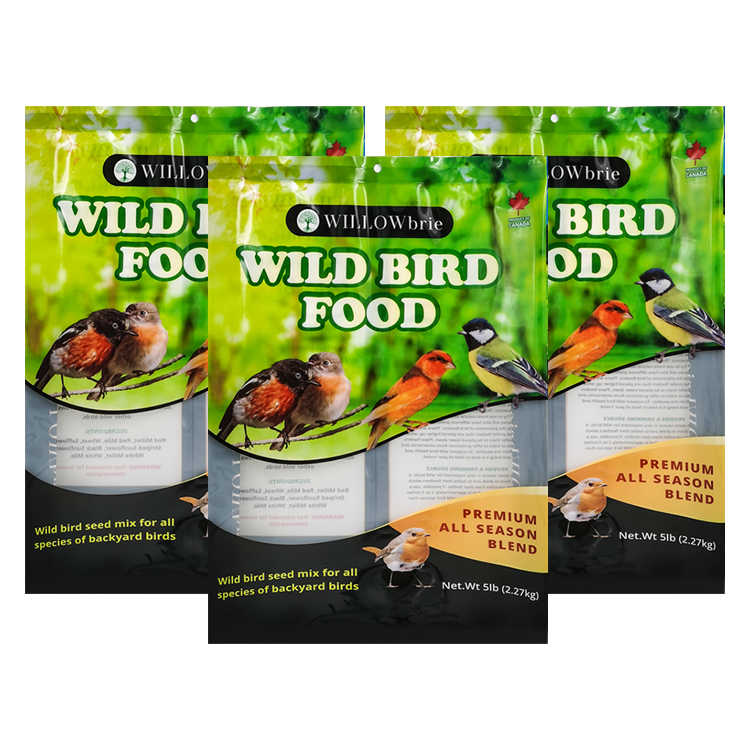
Households may use different seed mixes or products for different birds. Keep each product separate and identify it by retaining its original bag. Do not rely on colour, memory or the shape of a storage container once several open products are in use.
A simple first-in, first-out routine helps:
- Place newly purchased unopened bags behind the current open bag.
- Keep each bag’s lot/date and product information accessible.
- Use the open product according to its label before starting another of the same item.
- Do not combine products unless the product owner or an appropriate qualified source directs that use.
- Recheck the label when a formula, package or market changes.
This is inventory discipline, not feeding advice. It reduces the chance that a household forgets what is in a container or overlooks a product-specific instruction.
Routine feeder refilling without compromising storage
Refilling a bird feeder daily or weekly is a separate activity from long-term bulk storage, but the two practices directly affect one another. A common error is leaving the primary bulk bag or its dedicated storage bin open and exposed to ambient humidity while walking outside to fill a feeder. This briefly but repeatedly subjects the remaining dry product to outdoor air, moisture, and potential debris. Over dozens of refills, those cumulative minutes of open exposure can alter the product condition before the bottom of the bag is reached.
To prevent this, use an intermediate transfer vessel, such as a smaller dedicated jug or a sealable hand-held container. Pour the required daily or weekly amount into the intermediate container, then immediately seal the bulk bag and its primary storage bin before heading outside. This practice serves two functions: it keeps the main product reserve stable in its controlled indoor environment, and it minimizes the physical handling of the primary bag, which reduces the chance of zipper failure, gusset tear, or seam stress over the product’s lifecycle.
Furthermore, avoid pouring unconsumed seed from an outdoor feeder back into the main bag or the intermediate container. Once the food has been exposed to outdoor conditions, wild birds, or environmental moisture, returning it to the original package contaminates the entire remaining inventory. If outdoor seed becomes damp or soiled, manage it according to the product owner’s guidelines or discard it responsibly. Treat the main storage bag as a clean, one-way reserve rather than a mixing point for partially used product. By maintaining this strict separation, the product inside the original package is more likely to remain in its intended condition until the final scoop.
When storage is no longer an ordinary question
Set the product aside and use official or manufacturer guidance if:
- the package was compromised;
- the product may have contacted water, cleaning chemicals or another contaminant;
- the label/date information is missing and the product cannot be identified;
- the manufacturer, retailer or regulator issues a notice related to the product or lot;
- the product has an unexpected condition compared with normal use;
- a bird’s health is a concern.
Do not ask a packaging blog to diagnose product safety or animal health. Contact the responsible product owner and, where relevant, an appropriate qualified professional. FDA maintains information about animal-food notices and recalls; an exact lot and original package make that information more usable.
What brands should learn from consumer storage questions
A clear storage experience begins in package development. For a bird-food brand, the relevant questions include:
- Is the product meant for one use or repeated opening?
- Does the chosen closure work with the actual product and fill process?
- Is the lot/date coding location readable before and after opening?
- Does artwork give the product’s verified storage instruction clearly?
- Has the brand kept product-condition and shelf-life claims within the available evidence?
- Does a large bag’s intended case and retail handling align with how it will be used?
These questions can be addressed in a product brief without making unsupported performance promises. For a custom-format conversation after the product requirements are defined, see Custom Bird Food Bags.
A visible case fact, used carefully
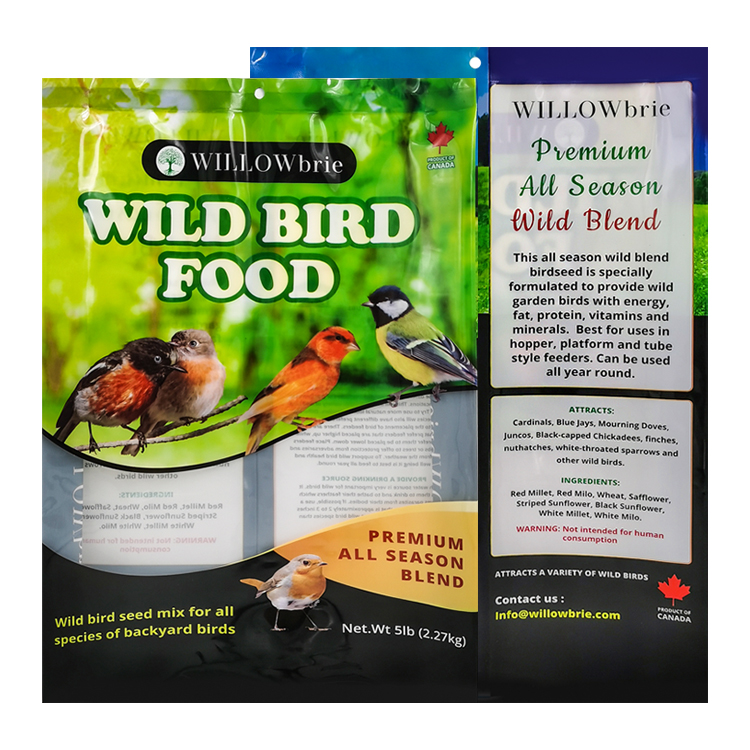
The Mylarbag Pet Food & Treats collection includes a Canada-listed bird-food/pet-feed project described as a 5 lb (2.27 kg) PA/PE back-seal pouch with a clear window. That can be cited as an example of a public configuration record. It cannot tell a reader how long another product will remain suitable after opening, why a customer chose that structure, or how a different seed mix should be stored.
This boundary matters. Packaging photographs are useful for showing physical formats. They are not a substitute for product label directions, food validation or customer outcome data.
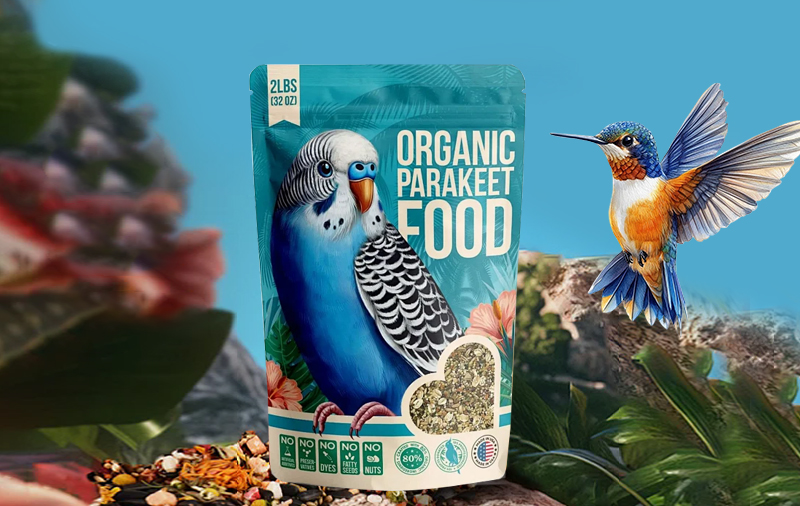
A storage handoff checklist for shared households
Storage problems are often communication problems. One person opens the bag, another tops up a container, and a third person later cannot identify the mix or find the lot/date code. A short handoff routine keeps the package information usable without turning ordinary feeding into a technical project.
The point is traceability and ordinary care. It is not a claim that every bird-food product needs a special storage vessel or a specific after-opening period.
When a package redesign should update storage copy
If a brand changes from a single-use pack to a resealable bag, increases fill weight, adds a handle, changes a closure or supplies a different market, it should recheck the storage copy on the final artwork. Consumers interpret a closure as a promise, even when the product owner never intended to make one. Clear wording can tell them what storage condition to follow without implying that the package guarantees a fixed freshness outcome.
The same review should include lot/date coding. A code placed where it becomes hidden by a folded top, scuffed during handling or lost when the bag is transferred to a bin does not serve the consumer well. Confirm coding position on the filled product, not only on an empty artwork proof.
Keep storage questions separate from packaging promises
Consumers often ask a packaging supplier whether a specific bag will “keep seed fresh.” The useful response is a process, not a promise: identify the food, confirm the final package and label, set storage instructions through the responsible product owner, and verify the claims that will appear on the SKU. A package format can make opening and handling easier, but it does not independently establish how long an opened product remains within its intended condition.
This distinction makes customer communication more credible. It also ensures that a brand does not rely on a pouch feature to answer a product question that requires formulation, process and storage evidence.
Common storage mistakes
Throwing away the bag as soon as it is opened
This removes product identity, lot/date information and instructions. Keep the original bag with the food where practical.
Treating a storage container as a shelf-life extension
A container can support organisation and protection. It does not create a universal fresh-for period.
Mixing the new bag with remnants of the old one
This makes lots, dates and storage history harder to track. Clean and dry the container between full-bag refills.
Using a generic online duration
Different products and labels can differ. Follow the exact product owner’s current direction.
Confusing product quantity with storage suitability
Net bag mass can be used for inventory arithmetic. It does not tell you how long an opened product remains within guidance.
Adding pest-control advice to a storage guide
This article does not provide household pest-control recommendations. If packaging has been compromised or contamination is suspected, use product-owner and relevant local guidance.
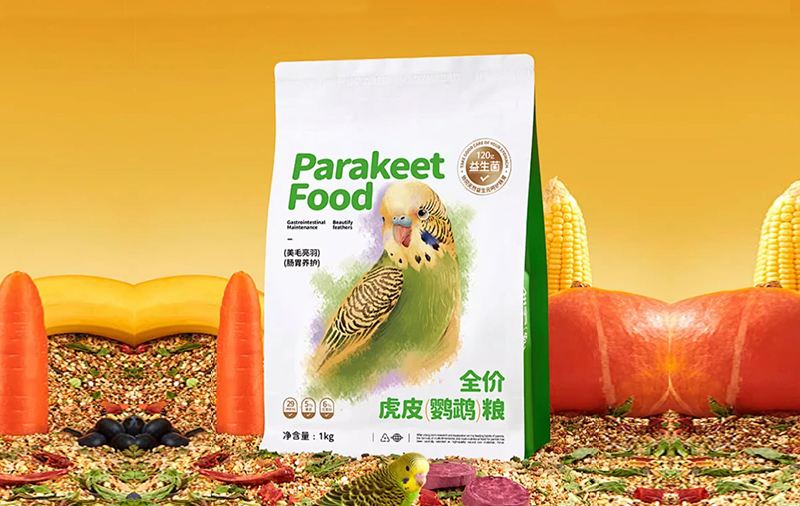
Frequently asked questions
How long does a bag of bird food last?
It can mean two things. For usage quantity, divide the bag’s net mass by the product owner’s stated use amount. For post-opening storage, follow the exact label and manufacturer guidance; there is no universal duration for every bird-food bag.
Should bird seed stay in the original bag?
Where practical, keep it in the original bag so the product name, lot/date and instructions stay with the food. A clean lidded outer container can hold that bag if it fits and the label permits.
Can I pour bird food directly into a bin?
Follow the exact product instruction. Keeping the original bag inside a clean, dry, dedicated container is often more useful because it retains product and lot/date information.
Does a resealable zipper keep bird seed fresh for a fixed period?
No. A zipper is a convenience feature. The food, original package, storage conditions and product owner’s directions determine any applicable guidance.
How should I store a large bag of bird seed?
Use the exact label, keep it identifiable, store it in an appropriate clean and dry location, and plan a container only if it preserves the original bag and can be cleaned and dried between bags.
What if I no longer know which bird food is in the container?
Do not rely on a guess. Retaining original packaging prevents this problem; if the product cannot be identified, use the product owner’s guidance before using it.
Sources and scope
- FDA: Animal Foods & Feeds
- FDA: Pet Food
- AAFCO: Labeling & Labeling Requirements
- AAFCO: Pet Food and Specialty Pet Food Labeling Guide
- Mylarbag: Custom Bird Food Bags
- Mylarbag: Pet Food & Treats Projects
Scope note: This article is current as of September 2026. It is a label-first storage and inventory guide, not feeding, wildlife, pest-control, legal, food-safety or animal-health advice. The exact product label and manufacturer guidance control.