
After opening dry cat food, keep it in a cool, dry place and follow the product’s own storage instructions. A practical default is to keep the food in its original bag, close the bag as well as its design allows, and place that bag inside a clean, dedicated lidded container if extra protection or organization is needed. AAFCO’s handling guidance specifically advises keeping dry pet food below 80°F and, if possible, storing the original container inside a clean, dedicated plastic container with a lid.
The important distinction is that a storage method does not create a universal “fresh for X weeks” date. The product label, product formulation, pack system, opening history and storage conditions determine the applicable guidance. A container can help protect an original bag from household exposure; it does not turn an unknown product into a validated long-term storage system.
This article focuses on dry cat food. Wet food and single-serve pouches have different handling rules and are covered separately.
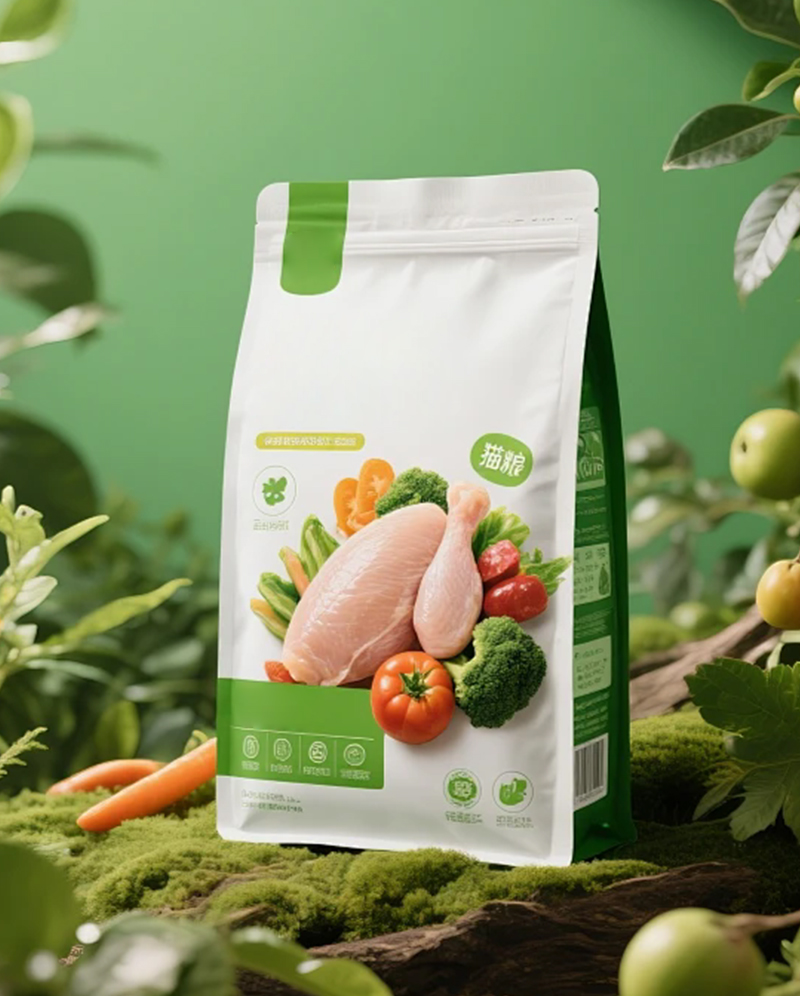
The direct answer: use the label, then control the environment
The original pack gives you information a loose storage bin cannot: product identity, ingredient list, feeding directions, net weight, lot/date information, manufacturer instructions and any market-specific statements. Keeping the bag with the food means that information stays available when a question arises.
The simple storage sequence is:
- Read the food’s storage instruction and best-by/date guidance before discarding any packaging.
- Keep the dry food in its original bag where possible.
- Close the original bag in the manner designed for it; do not assume that a zipper alone establishes a specific post-opening life.
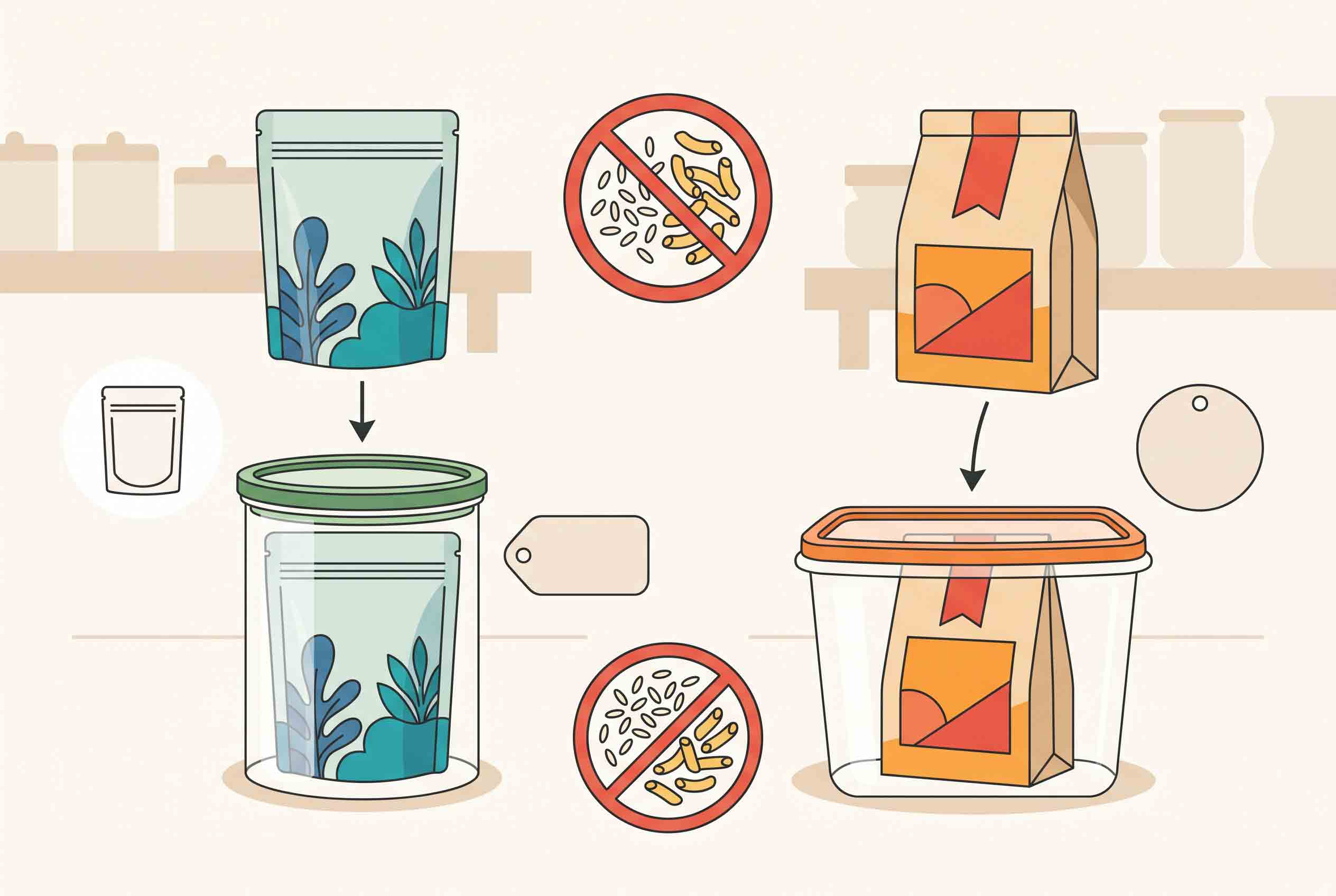
- Put the bag, if desired, inside a clean, dry, dedicated lidded container that is large enough not to crush the bag or closure.
- Store the system in a cool, dry location away from direct heat, sunlight and damp conditions.
- Keep lot and date information accessible until the food is fully used.
- Clean and dry the container between full refills rather than continuously topping up old crumbs with new food.
This is a household handling guide, not a food-safety diagnosis. If a product looks, smells or behaves unexpectedly, or if it is subject to a recall or manufacturer notice, use the brand’s instructions and contact the responsible source rather than relying on general storage advice.
Why the original bag matters
It is tempting to pour a newly opened bag directly into an attractive bin. That makes the kitchen look tidy, but it removes the food from the information and design system created for it.
Product identification
Cats in one household may eat different foods or formulas. The original bag keeps the exact product name and intended use visible, avoiding the “mystery kibble” problem when someone else feeds the animal.
Lot, date and traceability information
Lot and date codes can be important when a manufacturer posts product guidance, a retailer contacts customers or a recall occurs. Keeping the original bag makes it easier to compare the item in a home with an official notice.
Feeding and storage directions
AAFCO’s label guide notes that most products making complete-and-balanced claims require feeding directions, and its broader label discussion explains the importance of the label as an information source. The package may also give handling instructions that are specific to that formulation. A storage bin cannot carry that context.
A barrier between food and the container
When the original bag sits inside a clean lidded container, it can reduce the need to expose the food directly to the container’s surfaces and retain printed product information. This is why AAFCO’s practical handling guidance suggests keeping dry food in the original container inside a clean, dedicated lidded plastic container where possible.
The phrase “where possible” is sensible. Some bags are too large for the available container, and some households use food quickly enough that a container adds little. The underlying objective is to protect the food under the manufacturer’s instructions while retaining identifying information.
Cool and dry are operating conditions, not decoration
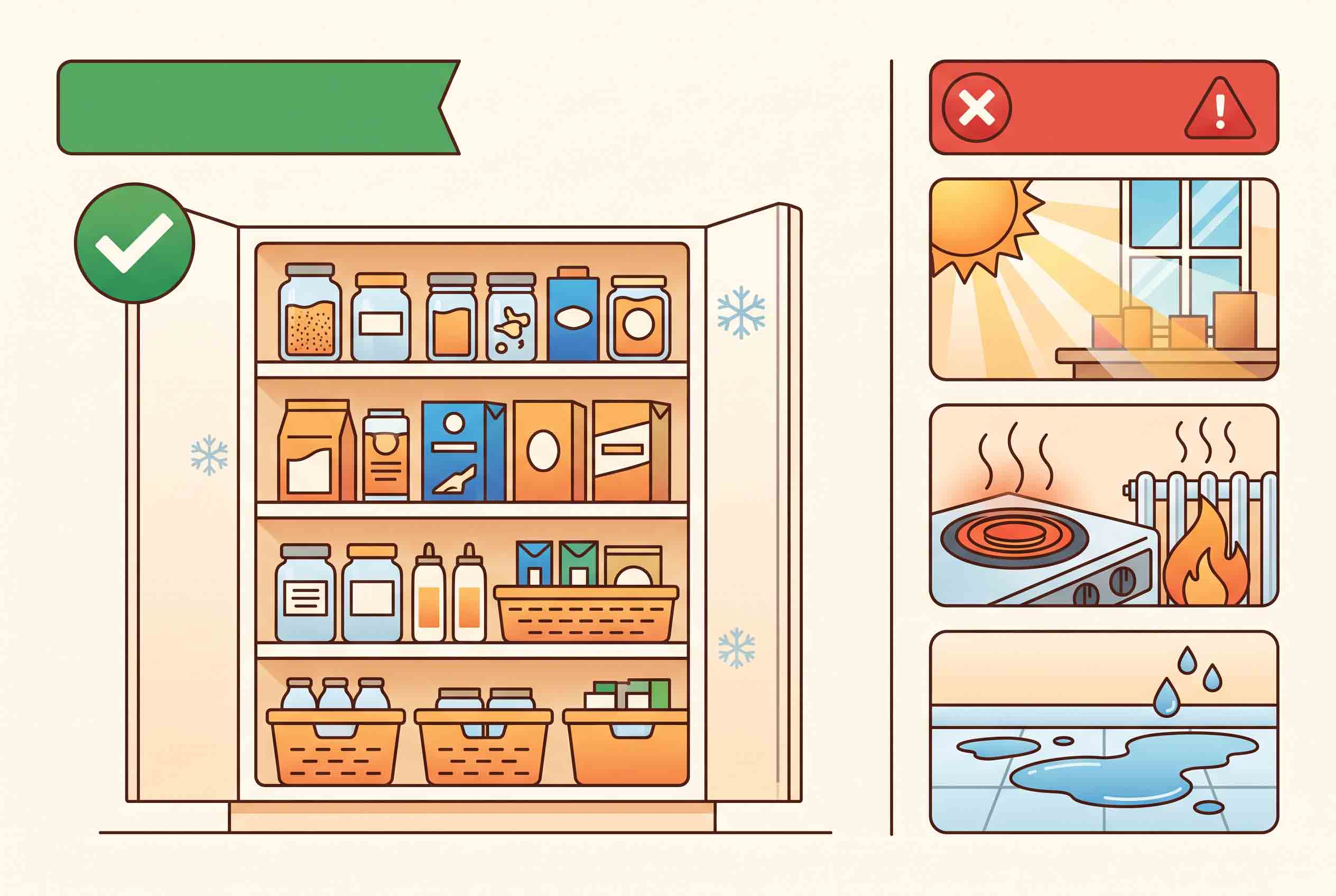
Dry cat food is not improved by a pretty location if that location is hot, humid or repeatedly exposed to water. AAFCO’s consumer storage guidance says to keep dry pet food in a cool, dry place below 80°F. The exact product label can be more specific, so follow it if it differs.
Locations that are often less suitable
- a garage, shed or porch with large temperature swings;
- a spot directly beside an oven, radiator, boiler or sunny window;
- a basement or utility area that becomes damp;
- a floor where leaks, mopping water or pet-bowl spills are common;
- an outdoor storage location;
- any place where the container cannot stay closed and clean.
Locations that may be more suitable
- a dry pantry shelf away from appliances that emit heat;
- a kitchen cabinet not directly adjacent to a range or dishwasher vent;
- a clean closet with stable indoor conditions;
- a dedicated interior shelf where the bag stays upright and accessible.
The right location is ordinary, not exotic. It should make it easy to use the food before any product-specific date, keep it away from moisture, and retain the package information. A refrigerator or freezer is not automatically the answer for dry food unless the product owner gives that instruction.
How to close an opened dry-food bag
Use the closure built into the bag if it is designed to be resealed and is clean enough to close fully. If the bag does not have a resealable feature, fold or roll the opening in a way that keeps the opening tidy and place the bag inside the lidded container. Avoid improvised methods that puncture, tear or contaminate the bag.
The goal is not to claim a perfect seal after every use. The goal is to limit unnecessary exposure while following the product’s own instructions.
When attempting to close the original bag, avoid aggressively squeezing out every last pocket of air if it means crushing the kibbles into dust or compromising the bag's structural integrity. Some modern cat food bags feature a multi-layer design that can handle a gentle fold and a robust bag clip if the built-in slider or zipper eventually fails. Remember to ensure that your hands are completely dry before handling the bag’s opening, as even a few drops of water transferred from a newly washed pet bowl can introduce unwanted moisture into the top layer of the food, defeating the purpose of a good seal.
Check before closing
- Is food or powder sitting in the closure area?
- Is the zipper, if present, fully engaged along its length?
- Is the opening folded in a way that leaves the product in a stable position?
- Does the bag fit inside the storage container without crushing its top?
- Can you still see or retrieve the lot/date code?
If a zipper becomes blocked with product, clean handling of the package and a container can be more practical than forcing the closure. Do not use a damaged closure as evidence that a fixed freshness period still applies.
Choosing a storage container without creating a new problem
A storage container is useful only if it is suitable for the quantity, cleanable, dry and dedicated to the food. Bigger is not always better. A huge container partly filled with a small bag can be awkward to move and can encourage unnecessary direct pouring.
Use this checklist:
Avoid treating “food storage container” marketing as proof that a bin is suitable for every pet-food product. The food label and the household conditions still govern how the food should be stored.
When selecting a dedicated outer container, the material properties play a subtle but important role. High-density food-grade plastic bins are lightweight and resist shattering, while glass or stainless steel alternatives can offer superior barrier properties against ambient odors. However, transparent or translucent containers should only be used if they will be kept in a consistently dark pantry or cabinet; constant exposure to artificial kitchen lighting or daylight can slowly degrade sensitive vitamins and fats in the food. Always remember that regardless of the material you choose, the bin is a secondary barrier—the original packaging remains the primary defense.
Why topping up is not the same as refilling
Topping up means adding a new bag onto remnants of an old one. That makes it harder to keep product lots separate, harder to know which instructions apply, and easier for crumbs or residue to remain at the bottom for a long time. A better routine is to finish the bag, empty the container, clean it according to its own care instructions, dry it thoroughly, then add the next bag—ideally in its original packaging.
This is not a perfection test. It is an easy traceability and housekeeping habit.
How long does dry cat food stay fresh after opening?
There is no responsible one-number answer for every dry cat food. The food’s formulation, original package, production date, storage conditions, use pattern and the brand’s own instructions all matter. A generic “use it within 30 days” statement may be common online, but without product-specific support it can mislead.
Use the following hierarchy:
- The product label and manufacturer’s current instructions;
- Any official notice from the manufacturer or retailer related to the specific lot;
- Appropriate guidance from the responsible food business or veterinary professional if the product/animal situation requires it;
- General good handling practices, including cool, dry storage and retention of the original bag.
The phrase “How long does a 16 lb bag last?” is often a different question: it may mean how many feeding days the net amount provides. That is a product-quantity calculation based on the label’s stated daily amount, not a freshness guarantee. Do not confuse the two.
When should you discard the food or contact the manufacturer?
General storage advice is not a substitute for product-specific judgement. Set the bag aside and use official guidance if:
- the product is past a relevant date or the label says not to use it;
- you learn that the lot may be affected by an official recall or safety notice;
- the package was visibly compromised before or after purchase;
- water, cleaning chemicals, pests or another contaminant may have contacted the food;
- the food has an unexpected appearance, odour or condition compared with the product’s normal state;
- you cannot identify the product or lot after transferring it;
- a cat has a health concern associated with food use.
FDA maintains animal-food information and publishes relevant safety notices. The food manufacturer and a qualified professional should guide the next step for a specific product or animal; a blog cannot evaluate an individual situation.
When you suspect an issue and decide to discard the food, take a moment to record the necessary information before throwing everything away. Snap a clear photo of the packaging, ensuring the lot code, best-by date, and the specific formula name are legible. If you notice small, uncharacteristic punctures in the bag that might have occurred during shipping or retail handling, document those as well. This information can be incredibly helpful for the manufacturer's quality assurance team and may be required if a replacement or official report is necessary. Never feed a questionable product to your cat just to avoid waste.
Keep scoops, bowls and hands out of the storage problem
Storage is not only about the container. The routine of getting food out matters too. AAFCO’s product-handling page recommends washing pet food bowls, dishes and scooping utensils with soap and hot water after use, and it specifically says not to use a pet dish as a food scoop.
For dry food:
- use a clean, dry scoop dedicated to the food;
- return the scoop to a clean storage location rather than leaving it in a damp bowl;
- do not use a wet measuring cup inside the bag;
- close the bag/container after removing the required amount;
- keep the food-storage area separate from pet waste, household trash and cleaning activity.
These habits are simple because they are meant to be repeatable. The aim is not to turn a pantry into a laboratory. It is to avoid obvious moisture, residue, mix-up and traceability problems.
A practical routine for households with a large bag
Large bags can be economical, but they make a storage routine more important. Here is a workable sequence:
- Before purchase, verify that the household can use the product within the product owner’s stated guidance.
- On arrival, check that the pack is in good condition and retain the receipt or order record if useful.
- Choose a cool, dry storage location before opening.
- If using a container, clean and dry it fully first.
- Place the original bag inside the container, keeping its back panel and lot/date accessible.
- Use a clean dry scoop; close the bag and lid after each use.
- Do not add the next bag until the old one is fully removed and the container is cleaned and dried.
- Keep an eye on product and official notices for the exact brand/lot, not generic social posts.
This also makes it easier to answer quantity questions. The original bag still displays the net weight, label directions and product identity, rather than leaving someone to estimate from a plastic bin.
What packaging teams can learn from post-opening storage
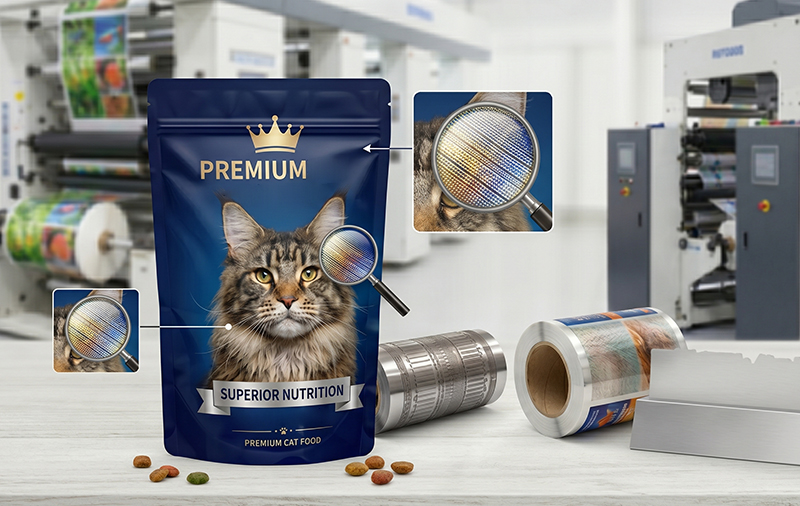
Consumer storage questions reveal useful packaging-design questions, but the answers should not be turned into unsupported marketing claims. A brand planning a custom cat-food bag can ask:
- Will the package be opened repeatedly, or is the product a single-use format?
- Does the closure work with the product and line conditions?
- Is there a practical place for date/lot coding that remains readable after the bag is opened?
- Does the filled bag fit the intended storage behaviour without the brand promising a storage-bin outcome?
- Is the package artwork clear about any product-specific storage instruction?
- Have the finished pack and closure been evaluated under the real product’s intended use?
These questions belong in a packaging brief. They do not prove an unopened or opened shelf life. For a format discussion after the product requirements are defined, see custom cat food pouches.
Packaging engineers should also consider the physical ergonomics of retrieving food on a daily basis. If a zipper is placed too high on a narrow gusset, or if the opening does not comfortably accommodate a standard one-cup scoop, consumers may inadvertently tear the bag's side seams when rushing to feed their pets. Real-world testing must go beyond drop tests and barrier measurements; it should simulate the repeated, sometimes imprecise motions of pouring and scooping over a 30-day period. Designing a resealable feature that survives the factory line is only half the job; it must survive a busy kitchen environment.
Common storage mistakes
Throwing away the bag immediately
This loses lot/date, instructions and product identification. Keep the original bag with the food.
Pouring new food on old food
It mixes lots and makes cleaning/traceability harder. Empty, clean and dry the container between full-bag refills.
Treating a zipper as a post-opening date
A closure helps usability, but it does not establish a universal freshness period. Follow the product instruction.
Storing food in a hot garage or damp utility room
Dry food should be kept in a cool, dry place. AAFCO’s general guidance specifies below 80°F.
Using a pet bowl as a scoop
Bowls can be wet or carry residues. Use a clean dry scoop dedicated to the food.
Trusting an internet date instead of the exact product
Formula and pack systems vary. The manufacturer’s current guidance for the exact product is more useful than a generic number.
When a household uses more than one dry food
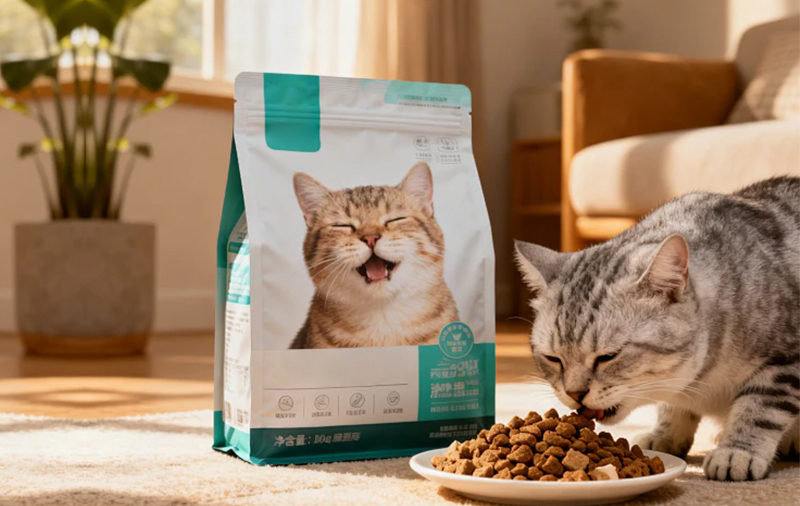
Multiple cats, life-stage products or a transition directed by a qualified professional can make storage more complicated. Keep each food in its own original bag and dedicated, clearly distinguishable container if containers are used. Do not rely on the colour or shape of an unlabelled bin; the product name, formula, lot/date information and instructions should stay with the food.
If a food is being introduced gradually, follow the exact directions supplied by the responsible product or professional rather than creating a mixed “mystery bin.” A mixed container makes it difficult to know which lot, date, formula or storage instruction applies if a question later arises. It can also make it impossible to identify a product accurately in the event of a recall notice.
For households that buy food on subscription, use a first-in, first-out routine: keep the newest unopened bag behind the currently open product, then check the label before opening it. This is inventory organisation, not a claim that every product has the same usable life. The printed instructions and dates on each exact bag remain the controlling information.
Frequently asked questions
Should dry cat food stay in the bag after opening?
Where possible, yes. AAFCO advises keeping dry pet food in its original container inside a clean, dedicated lidded plastic container. The original bag keeps important product and lot/date information available.
Can I pour dry cat food directly into a storage bin?
It is usually more useful to keep the original bag inside a clean, dry, dedicated container. If food is transferred, retain all identifying information and follow the product’s instructions; do not mix different lots or products.
How long is dry cat food good after opening?
There is no universal time period. Follow the exact product label and manufacturer guidance. Storage conditions, the food and the package system affect the answer.
Should I refrigerate dry cat food?
Do not assume refrigeration is necessary or appropriate. Store according to the product label; general AAFCO guidance is a cool, dry place below 80°F.
Can I use a zipper bag as the only storage method?
Use the package as designed and follow the product’s instructions. A zipper can make repeat use easier, but it does not itself guarantee a particular period of freshness after opening.
Why should I keep the lot number?
It identifies the product if a manufacturer notice, recall or quality question arises. Keeping the original bag makes the lot/date code and product information easier to find.
Sources and scope
- AAFCO: Product Handling Safety
- AAFCO: How to Understand a Dog or Cat Food Label
- FDA: Pet Food
- FDA: Animal Food Safety Information
- Mylarbag: Custom Cat Food Pouches
Scope note: This article is current as of September 2026 and covers ordinary dry-food storage. It is not veterinary, food-safety or recall advice for a particular product. Product labels and official manufacturer/FDA notices take priority.