
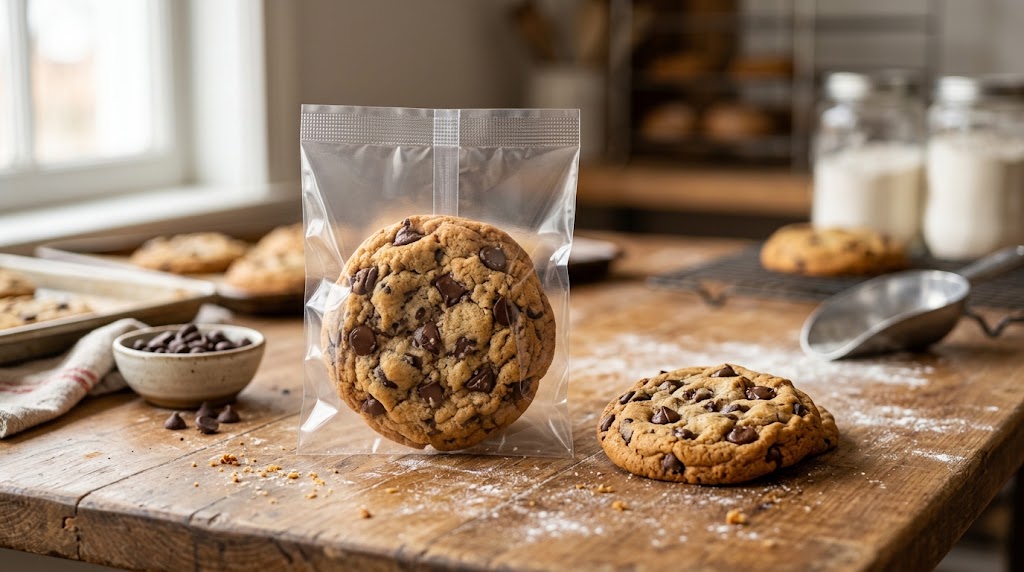
A bakery can tell a supplier that it needs a bag for one cookie and still receive a sample that will not work. The cookie may be wider than the nominal diameter, thick enough to use up the opening, coated with something fragile, or too close to the top seal once inserted. A bag's printed outside dimensions are not its usable inside dimensions. Even a familiar “3-inch cookie” can require different bags when one recipe is thin and another is tall or irregular.
The short answer: measure representative production cookies at their largest normal diameter, thickness and vulnerable edge. Choose a flexible-bag format and drawing that show usable opening, side seams, bottom seam, first top-seal area and tolerances. Use the measurements to shortlist sample sizes, then fill, seal, handle and store the actual product in them. A 4, 5 or 6 oz cookie label describes weight, not the width of the empty bag.
This guide is for individual packaging of cookies people eat. It concentrates on flexible food-contact bags and wrappers, whether they are filled by hand or on an existing line. The numerical worksheet below is an openly labeled starting example for sample selection, not a standard size recommendation or a validated shelf-life claim.
First, Separate Cookie Size From Bag Size
When someone asks “what size bag for 1 cookie?”, ask what was measured. A recipe card may give nominal dough-ball weight. A sales listing may give the average baked diameter. A bag supplier may list external width by external height. None of these is the clear width through which the thickest production cookie must pass.
Use the terms below in every drawing and sample request:
| Measurement | Meaning for a one-cookie bag | Common mistake |
|---|---|---|
| Cookie maximum span | Largest normal diameter or longest edge in the intended insertion orientation | Using the average cookie or dough size |
| Cookie thickness or profile | Height through the thickest point, including inclusions or raised decoration | Treating a thick cookie as a flat circle |
| Bag outside width and height | Nominal dimensions across the flat empty bag, subject to tolerance | Assuming every millimeter is available inside |
| Usable inner width | Clear space after side seams, gusset folds or other construction features | Choosing a nominal width equal to cookie diameter |
| Usable opening | Width and shape available to the hand or filling equipment at the mouth | Measuring the wider body but ignoring a narrow opening |
| Filling depth and seal zone | Room for the cookie, handling, a clean first seal and any tear feature | Filling right into the sealing jaws |
| Filled profile | Width, height and thickness of a bag with the real cookie inside | Approving a flat empty pouch photograph |
Record units consistently. Three inches is 76.2 mm as a length conversion. “3 oz” is a mass and cannot be substituted for three inches. If a supplier's specification says “4 × 6,” clarify the unit, order of dimensions, whether these are external or usable, and how the seams are counted. Do not infer that a 4-inch cookie will fit through a bag called four inches wide.
A cookie can also rotate during filling. An oval cookie may need its long diagonal across the mouth even if it settles into a narrower width afterward. A fortune cookie has fragile tips and a hollow shape; the useful envelope may be determined by the projection of one tip rather than its overall weight. The sample trial must use the intended orientation.
Measure a Real Production Range
A reliable measurement set includes more than the one cookie selected for a product photograph. Take representative pieces from normal batches and include the largest normal pieces, most raised toppings, fragile edges, and a sample with the most crumbs. If product dimensions change after cooling or decoration sets, measure at the point when the cookie will actually be packed. Record the method and batch so a later change can be assessed.
For a round cookie, measure two perpendicular spans rather than assuming a perfect circle. For a rectangular or shaped cookie, note the longest edge and corner-to-corner orientation that must pass through the opening. Measure maximum thickness with a method that does not crush the product. Check whether chocolate pieces, nut fragments or icing protrude beyond the baked base. Photograph the extremes beside a scale for your project record.
A practical cookie measurement card contains:
- Product and SKU, recipe version, baked and cooled condition, and intended count per bag.
- Minimum, typical and largest normal span in the insertion orientation.
- Maximum thickness and any part that is easy to break, smear or snag.
- Weight range as a separate field, not a proxy for geometry.
- Surface concerns: loose sugar, crumbs, oil, chocolate, filling or decorated face.
- Desired opening method, first seal, storage target and distribution route to validate.
It is useful to distinguish routine variation from a genuine out-of-spec cookie. If a new batch regularly exceeds the approved bag trial, decide whether to change the baking specification or the package. Do not squeeze oversize pieces into a bag just because the nominal count still matches.
For individually decorated cookies, leave a visible surface-clearance question on the card. A clear front window can improve display but may rub a raised design. The material's contact suitability and the mechanics of sliding the cookie past the seal area both need checking. More empty space is not automatically safer; it can let the cookie move and strike another edge.
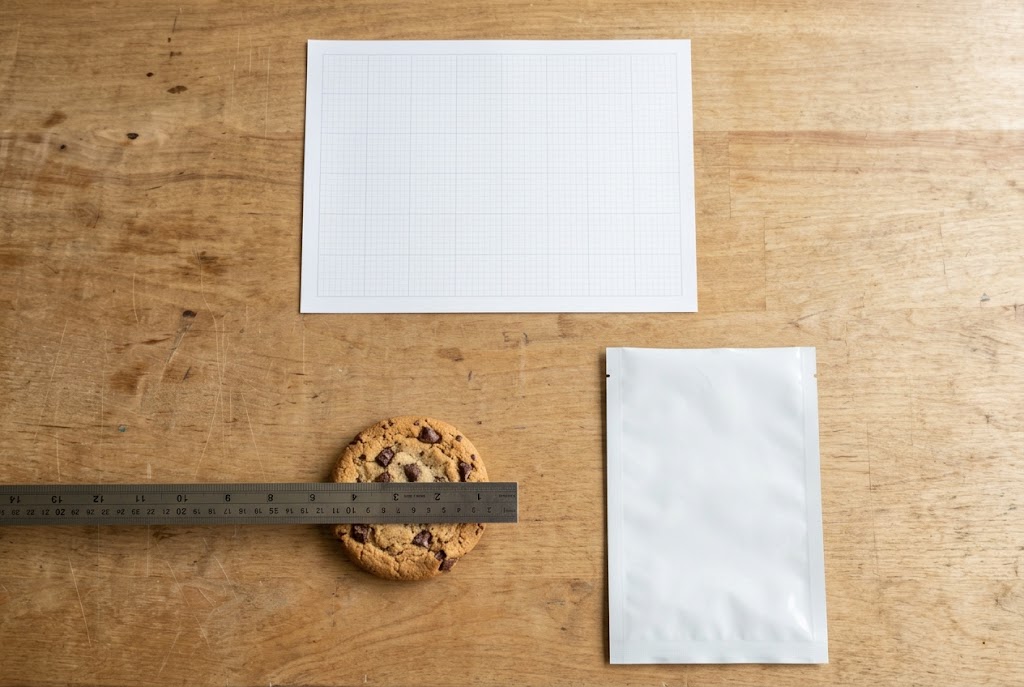
Build a First Bag-Size Worksheet
A sizing worksheet is a way to choose samples, not a substitute for them. It should keep cookie span, seam widths and handling space in separate fields so the buyer can see what an adjustment changes. A flat three-side-seal pouch provides a simple starting geometry, but its film must still form around a three-dimensional cookie.
For a preliminary outside width, write:
Maximum cookie span across the opening + left and right handling clearance + left and right side-seam widths + additional width observed to be needed for thickness, film drape and insertion.
For a preliminary outside height, write:
Cookie extent along the bag + lower clearance and bottom seam + clean fill and top-seal allowance + any tear, hang or artwork area + additional height observed in filled samples.
The “additional” terms are not constants to be copied from an internet chart. A thick cookie bows the film. A stiff laminate, wide side seam or tight opening changes insertion. The actual bag geometry and machine jaws may change the height available. The supplier's drawing should show how it defines nominal dimensions and tolerances, and the sample should settle the real fit.
A deliberately hypothetical 3-inch example
Suppose a round cookie has a measured maximum span of 76.2 mm and is packed upright in a flat pouch. For a worksheet illustration only, assume 5 mm of provisional side handling space on each side and nominal 6 mm side seams. The planar arithmetic is 76.2 + 5 + 5 + 6 + 6 = 98.2 mm outside width. This is a lower-bound candidate before allowing for cookie thickness, film drape, dimensional tolerance and the actual mouth. It is not a production recommendation.
The team might therefore request physical width samples around 100 mm and wider alternatives, such as 110 mm, then try to insert the largest normal cookie without touching or bending the edges. If the first sample catches, do not simply force it through. Record whether the limiting feature is the side seam, mouth, film stiffness, cookie thickness or handling method. A bag that admits one perfect sample may still fail a routine larger cookie.
Height needs its own trial. If the cookie's extent along the bag is also 76.2 mm, a hypothetical worksheet could reserve 5 mm below it, a 6 mm bottom seam, 15 mm of clean filling and handling space above it, an 8 mm first top seal, and 10 mm for the opening geometry or tear route. The arithmetic is 120.2 mm before production tolerances or additional filled-profile effects. Samples around 125 mm and 135 mm could expose the trade-off. The assumed 5, 6, 15, 8 and 10 mm figures exist solely to demonstrate the worksheet; they are not universal minimums or prescribed sealing dimensions. The chosen film, equipment, artwork and cookie must set the actual values.
| Worksheet input | Hypothetical entry | Must be verified on |
|---|---|---|
| Largest cookie span | 76.2 mm | Cooled production cookies |
| Cookie thickness | Measured separately, not inferred from diameter | Largest normal cookie with toppings |
| Side handling space | 5 mm per side for this arithmetic example | Insertion trials and product condition |
| Side seam | 6 mm per side for this arithmetic example | Exact supplier drawing and tolerance |
| Bottom and top allowances | 6 mm and 8 mm for this arithmetic example | Bag construction and sealing equipment |
| Other height space | 5 + 15 + 10 mm for this arithmetic example | Filled sample, opening method and first seal |
Do not treat the selected sample dimensions as a public “bag size for a 3-inch cookie.” The trial may require a different width, height, shape or film; a thinner cookie could behave differently in the same nominal bag. Keep the worksheet with the approved filled sample so reorders use the actual evidence.
Why 4, 5 and 6 oz Cookies Do Not Have Standard Bag Widths
Searches for a “bag for a 4 oz cookie” or “what size bag for a 6 oz cookie” mix weight and shape. Four ounces is approximately 113 g, five ounces approximately 142 g, and six ounces approximately 170 g. Those figures describe mass only. A dense, thick cookie and a wide, thin cookie can weigh the same while presenting very different opening and bending problems.
| Cookie label | Approximate mass | What it tells the bag supplier | What is still missing |
|---|---|---|---|
| 4 oz cookie | 113 g | Intended portion weight | Baked span, thickness, coating and insertion orientation |
| 5 oz cookie | 142 g | Intended portion weight | Filled profile, largest batch variation and breakage risk |
| 6 oz cookie | 170 g | Intended portion weight | Opening width, seal allowance and how the product will be supported |
A large bakery cookie may also be soft, warm after cooling, filled, or decorated. The recipe and process influence whether its edges tolerate contact with the film. Ask the baker for the largest cooled production sample and packing condition. Then request two or more bag samples that bracket the likely fit. A plain clear bag can answer the physical-size question before custom printing is approved.
For a larger cookie, the challenge is often more than width. A flexible film cannot make a brittle cookie rigid. Too much headspace allows movement; too little space presses on the edge. If the product needs additional handling protection, test an appropriate support arrangement while keeping the food-contact and closure questions clear. The bag-size chart alone cannot resolve transit breakage.
One Cookie, Two Cookies and an Irregular Fortune Cookie
Two cookies in one bag do not simply require twice the single-cookie width. The answer depends on whether they are stacked face to face, arranged side by side, or allowed to move. A stack increases thickness and can bow the bag or put pressure on a delicate top surface. Side-by-side placement increases width and may create a weak central fold. Test the planned count and orientation with a normal range of production pieces.
| Portion | Geometry to measure | Trial question |
|---|---|---|
| One round or shaped cookie | Largest span, thickness, projections and insertion angle | Can it enter cleanly and remain clear of the planned first seal? |
| Two cookies stacked | Combined thickness, offset edges and toppings | Does the filled bag distort, rub or press the upper cookie? |
| Two cookies side by side | Combined span and any overlap allowance | Do they stay in place without crossing a side seam or top seal? |
| One fortune cookie | Tip-to-tip envelope, open hollow side, brittle folds | Which orientation avoids snagging and how does handling affect the shell? |
Fortune cookie packaging is a separate geometry problem. Its pointed ends and hollow curved body can make an apparently spacious bag fail at the mouth or during later handling. A transparent flexible bag may show the product nicely, but transparency does not confer structural support. Measure the largest normal tip-to-tip span, trial the preferred orientation, and assess breakage after sealing and distribution handling. Do not compress the shell just to meet a nominal bag size.
The term cookie sleeve packaging is also used loosely. An open-ended flexible sleeve can help with presentation or handling, but it is not the same as a pouch with a defined first closure. If a shelf-life claim relies on a sealed primary package, specify which edges are actually closed, the contact layer, and how the final closure will be checked. A sleeve placed inside another pack may have a different job from a sealed single-cookie bag.
Choose a Format That the Cookie and Line Can Use
A flat premade pouch, a converted film wrapper and a small stand-up pouch each create a different opening and sealing problem. There is no advantage in choosing a more elaborate format if the single cookie cannot be placed consistently or the first seal crosses a crumb-heavy area.
| Flexible format | Possible use for human-food cookies | Critical bag-size question |
|---|---|---|
| Premade flat, three-side-seal pouch | Hand filling or a compatible filling setup for one cookie | Is the actual mouth wide enough, and is there clean space for the last seal? |
| Flexible sleeve or open-ended wrapper | A defined presentation or secondary wrap function | Is it intended to be heat sealed, or is another component the primary closure? |
| Film wrapper formed on a compatible line | Repeat single-cookie portioning when the existing equipment is suitable | What film width, product pitch, registration and jaw clearance does the line require? |
| Small stand-up pouch | A thicker or multi-cookie portion where shelf presentation or reclosure has a purpose | Does the gusset and zipper consume space or complicate single-cookie loading? |
A flat pouch format is a natural starting point for a one-cookie sample. Confirm which three edges arrive sealed and whether the proposed mouth fits the intended hand or filling tool. If a supplier proposes a stand-up bag instead, request a filled sample and explain which customer or packing benefit justifies the extra gusset or closure. A format label does not prove efficiency, capacity or barrier.
For an existing automated line, the bag specification starts with the actual equipment. Supply the machine model, film or premade-pouch feed method, jaw width, product pitch, registration requirement, opening motion and approved operating range. Run a controlled line trial with real cookies. A bag that looks ideal in a hand-filled photo may wrinkle, rotate the cookie, or trap crumbs at production speed. The converter and the bakery should agree on what dimensions and tolerances the line needs.
For hand packing, observe the operator's full motion. Can a cookie be placed without touching the inside seal area? Does the mouth stay open? Is the product pushed against an already sealed side? Can a clean first seal be made without moving the cookie back down? Time per pack can matter, but record it in your own trial rather than accepting a generic “packs fast” claim.

Material, Food Contact and the First Seal
Bag width does not settle material suitability. A crisp cookie may be sensitive to moisture uptake; a soft cookie may have a different desired texture. Oils, coatings and storage conditions can change the material questions. Ask for the proposed full layer structure, food-side surface, relevant barrier data and the test conditions before selecting a printed production film. The site's plastic film options can help frame a material inquiry, but the quoted construction and filled-cookie trial determine suitability.
ASTM F1249 is a method for water-vapor transmission rate (WVTR) through flexible barrier materials. Such film data can help compare exact constructions when the units, humidity and temperature are aligned. It does not measure the filled one-cookie pack's top seal or establish a shelf life. A film with a window or changed contact layer needs to be evaluated as the actual construction. When oxygen exposure is relevant to a recipe, ask separately about suitable oxygen-barrier evidence.
Food-contact documentation should correspond to the exact material and intended use. The FDA's explanation of food-contact components shows why a component's regulatory status and conditions of use matter. The responsible team should review documents against its cookie, packing conditions and destination market. Do not use “food grade” or a paper-looking surface as the only evidence.
A one-cookie bag usually gives the bakery little room to recover from a poor first top seal. Crumbs, chocolate or grease in the seal zone can make the result variable. Identify the intended sealant layer, sealing width, clean product-to-seal space and operating process on the drawing. If there is an easy-tear feature, keep its position distinct from the initial seal. A zipper is not automatically useful for a single portion and should not be assumed to replace the first closure.
ASTM F88/F88M describes seal-strength measurement for flexible barrier materials. Set sampling and acceptance criteria for the project and inspect the actual filled packs as well. A pull value on a test strip does not reveal every local channel or product particle in a finished seal. Keep process evidence, package observations and storage results separate.
A Real Cookie Case Is a Useful Boundary, Not a Size Chart
A published Mylarbag 3.5 oz organic mini-cookie pouch case lists a digitally printed stand-up bag with zipper, PET/VMPET/PE structure, and nominal 12 × 18.5 + 3 cm dimensions. Those are documented attributes of one multi-cookie product. They do not define a bag for one large cookie, a 3-inch cookie, or a fortune cookie.
A case-gallery image shows the 3.5 oz bag beside a smaller 1.15 oz cookie SKU. The public case specification quoted here belongs to the 3.5 oz project. The image does not publish the smaller bag's precise material, nominal dimensions, usable opening, seal test results or cookie count. Even though the two packages look related, do not transfer the larger bag's construction or size to the smaller pictured pack.
The case illustrates an important distinction. Net weight and visual package scale can help a buyer describe a commercial portion, but they cannot substitute for measured baked pieces and a bag drawing. The material stack may prompt questions about food contact and barrier; it does not provide a transferable WVTR, OTR or shelf-life result for a new single-cookie product. The zipper may make sense for that mini-cookie pack, while an individually eaten cookie may not need reclosure.
A better inquiry uses the case only as a reference: “We are packing one baked cookie. Here are our measured maximum diameter, thickness, fragile edge, filling method and storage target. Please propose a flat-bag drawing with a clear opening and top-seal allowance; send samples in two candidate sizes and identify the exact construction and relevant food-contact documents.” That brief invites an engineering response instead of copying an unrelated pouch.

Trial the Bag Before Approving Printed Production
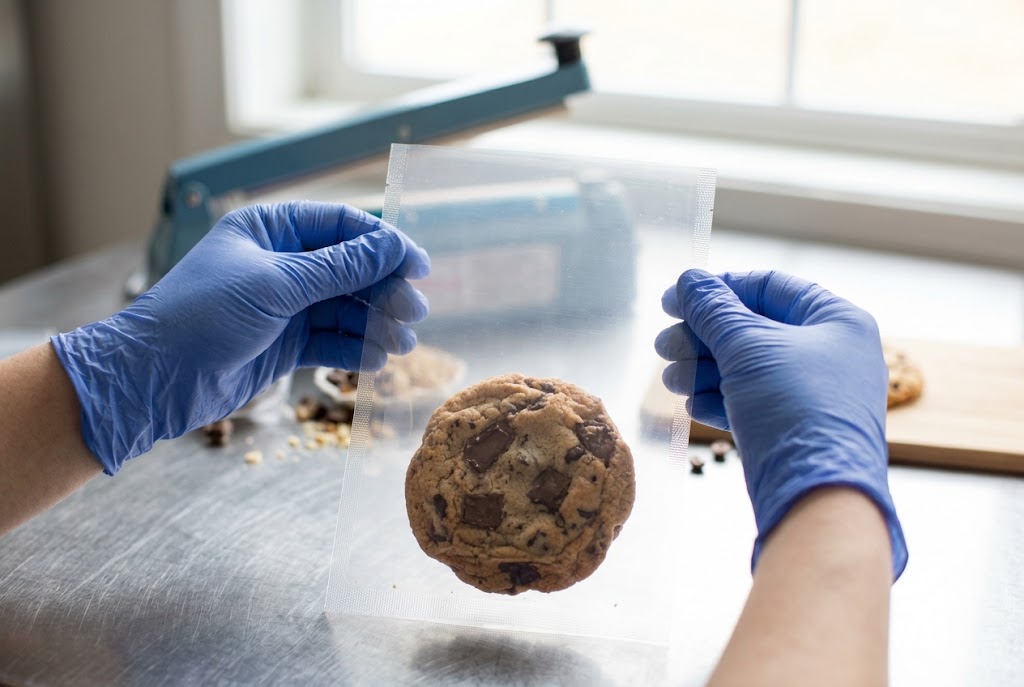
An empty bag proves only part of the fit. The next stage is a small but controlled trial using the largest normal cookie, a typical cookie, and any fragile or coated variation that matters. Fill the bag by the planned method. Observe insertion, orientation, movement, contact with side seams, the clean top-seal area and the consumer opening route.
After sealing, compare the bag's flat drawing with its filled profile. Check whether a cookie projects into the seal, whether the film pulls tightly over a raised surface, whether a fragile edge bends, and whether the package closes without an awkward fold. Use the planned artwork proof only after physical size is credible. Printing can change the appearance of a fold or window, but it cannot create more usable opening.
Set a simple sample matrix:
| Sample variation | Question answered | Record |
|---|---|---|
| Largest normal cookie in each candidate bag | Can the cookie enter and leave clean top-seal space? | Cookie dimensions, insertion result, seal-zone photo |
| Typical cookie in each bag | Is the presentation and movement acceptable? | Filled profile, scuffing, handling observations |
| Most fragile or decorated cookie | Is film contact or insertion damaging the edge or surface? | Visible marks, breakage and orientation |
| Planned sealed pack after handling | Do seams, first seal and cookie remain acceptable? | Sealing conditions, defects and opening behavior |
| Stored production-like pack | Does the product meet its own quality target over time? | Texture, grease appearance, aroma and seal condition |
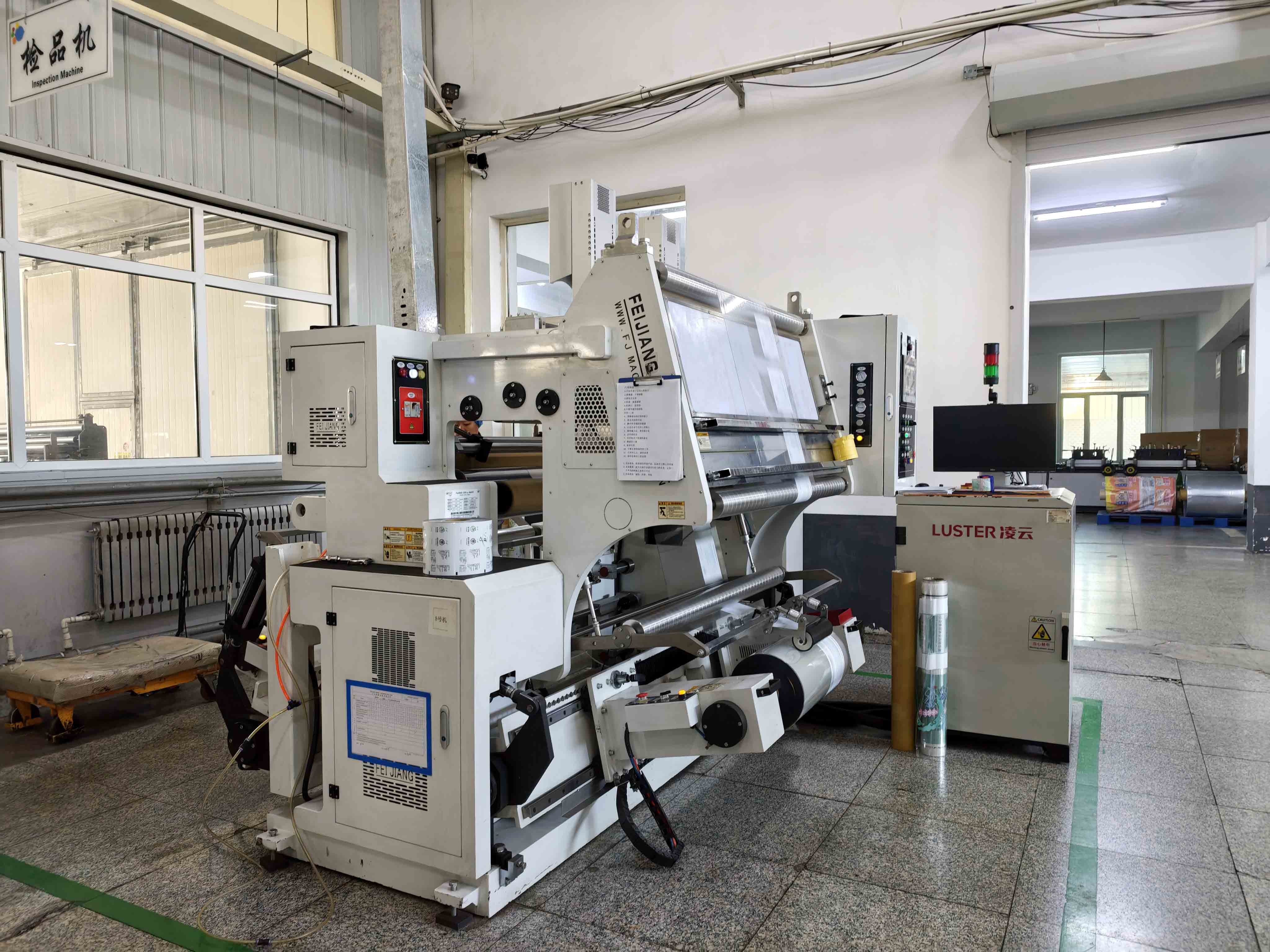
Film inspection and dimensional checks at the converter can help control incoming material. Ask what is measured on the proposed bag, what tolerances apply, and how the approved lot is identified. Then perform incoming bag checks before a full filling run. A real inspection-machine photograph does not supply a numerical reject rate for a single-cookie order.
For seal development, a laboratory heat-sealing instrument can help make controlled samples, but the bakery's actual filling and top-sealing equipment still needs its own trial. The equipment photo below shows the instrument, not a measured F88 peel force or a leak-free cookie package.
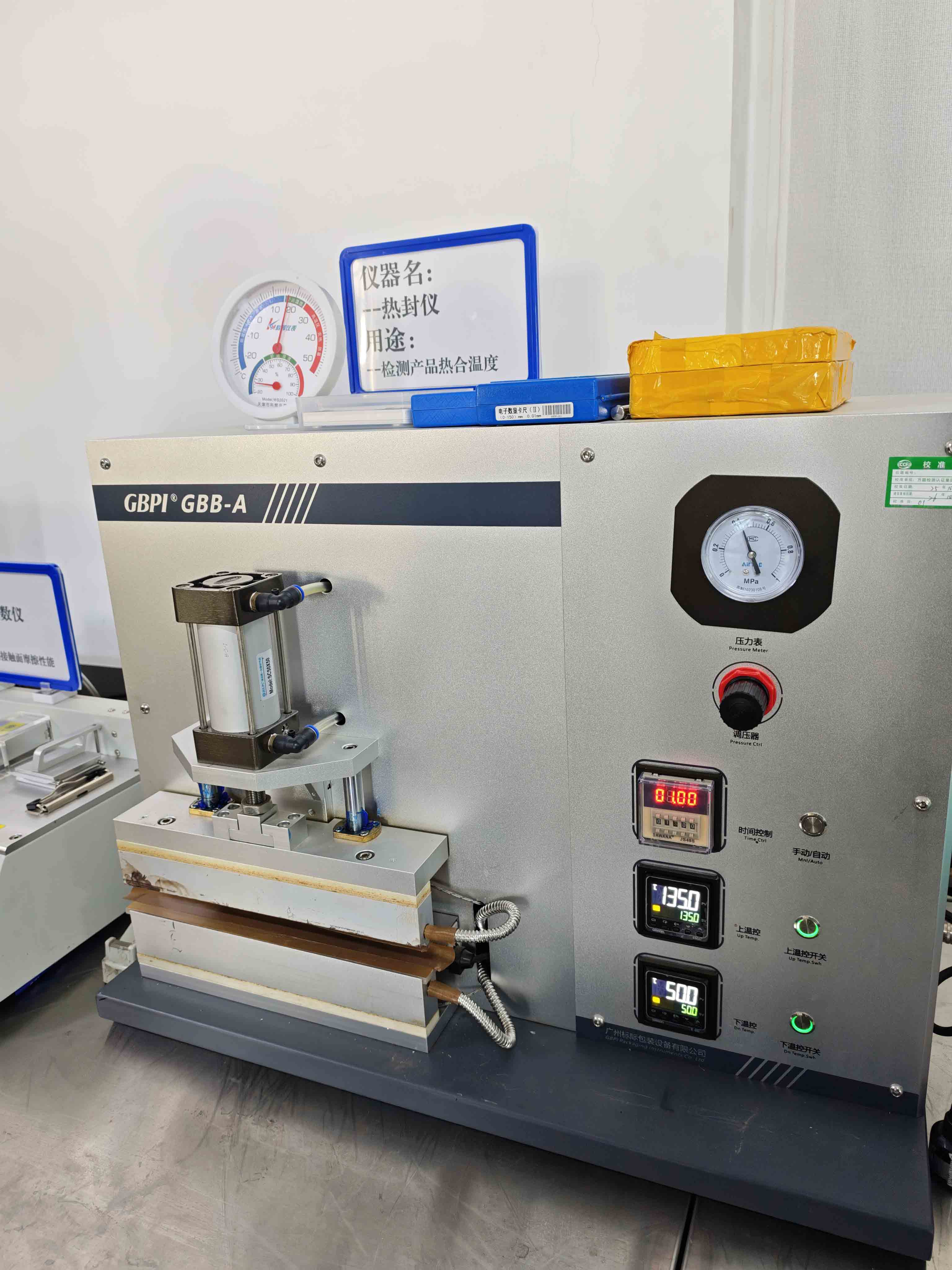
Keep a signed physical reference sample and a record of what passed. A later cookie recipe, thickness, decoration, film, seam width or filling line change can invalidate the comfortable fit. Recheck the affected dimensions and process rather than assuming the approved bag will work indefinitely.
Send a Bag Supplier a Useful Single-Cookie Brief
The fastest way to compare proposals is to give each supplier the same product information and ask it to state deviations. A short request can be more effective than a vague “small cookie bag” inquiry:
Cookie: [SKU and recipe family; cooled packing condition; coating or fragile surface].
Count and geometry: [One or two per bag; maximum span, thickness, mass range and insertion orientation].
Format: [Premade flat pouch, compatible film wrapper or another proposed flexible format; first seal and opening method].
Dimensions: [Candidate outside size for sampling, required usable opening, side and bottom seams, clean top-seal area, tolerances].
Process: [Hand packing or named existing line; product handling, jaw or opening constraints and target throughput to validate].
Use: [Storage and distribution conditions, quality target and intended food-contact use].
Supplier response: [Full construction and contact documents, barrier methods where relevant, sample sizes, drawing, print proof, MOQ by SKU, lead time and acceptance checks].
Ask for a drawing and physical samples before approving custom print. The custom cookie bag options page can start the format discussion; the bakery's measured product and trial determine the final bag. A seller should explain any proposed alternative size or construction and how it will be tested.
FAQ: Individual Cookie Bag Sizes
What size bag do I need for one 3-inch cookie?
Three inches is a diameter of 76.2 mm, not an outside bag width. Measure the largest cooled cookie's thickness and projections, then add the actual side-seam, handling and top-seal requirements on the chosen bag drawing. The hypothetical worksheet above produces preliminary samples to test, not a universal production size. Insert, seal and handle real cookies before approval.
Will a 4 × 6-inch bag fit a 4-inch cookie?
Not automatically. Confirm whether 4 × 6 refers to outside dimensions, the unit used, seam widths, usable mouth and bag construction. A nominal four-inch outside width can leave less than four inches clear inside, and thickness may require more film. Trial the largest production cookie.
What size bag is right for a 4 oz cookie?
Four ounces describes about 113 g of product, not its baked diameter. A thick cookie and a wide thin cookie can share that weight. Measure span, thickness and fragile features and run a physical sample trial. The same reasoning applies to five- and six-ounce cookies.
How should I package two cookies in one flexible bag?
Decide whether they will be stacked or placed side by side. Measure the resulting combined profile rather than multiplying one-cookie width by two. Check rubbing, breakage, access through the opening, and clean space for the top seal after both pieces are inserted.
Do fortune cookies need a special bag size?
Their shape requires a different measurement. Note the largest tip-to-tip envelope, hollow body and intended orientation. Test whether brittle points catch at the mouth or fail during handling. No weight-based universal bag size can answer that question.
Is cookie sleeve packaging the same as a sealed single-cookie bag?
The phrase may describe an open-ended flexible sleeve or a wrapper that will be closed after filling. Specify which edges are sealed and which component supplies the primary food closure. An open sleeve should not inherit a sealed bag's barrier or shelf-life claim without appropriate evidence.
Can I use a clear bag for an individual cookie?
A clear bag can display the product, but clarity does not establish food-contact suitability, moisture barrier or seal quality. Check the exact film and contact layer, test grease or coating appearance, and validate the finished pack under intended storage conditions.
Should I add a zipper to a one-cookie bag?
Usually a single portion is opened once, so a zipper may add cost and consume usable height without improving the intended use. There are exceptions, but justify them with a real use case. In every configuration, define and test the unopened pack's first closure.
Is a three-side-seal flat pouch suitable for hand packing?
It can be, if the supplied open edge is large enough and an operator can place the cookie without damaging it or contaminating the final seal area. Confirm the three pre-sealed sides, material and top-sealing method. Trial the actual motion and normal product variation.
Does a heavier cookie require thicker film?
Weight alone does not answer that. More mass may affect handling and seam stress, but cookie width, stiffness, sharp inclusions, bag orientation and distribution route also matter. Test physical protection separately from barrier and food-contact suitability. Choose a material from the actual failure modes.
Can the same bag size be reused for a new cookie flavor?
Only after checking what changed. A flavor with larger inclusions, a softer structure, a coating, or different oil content may change fit, staining, seal contamination or storage behavior. Compare the new production samples with the approved bag and repeat affected trials.
How do I know the chosen bag will keep one cookie fresh?
Validate the actual cookie in the filled, sealed production-like bag under the intended storage conditions. Film WVTR and other material data can guide candidate selection, but they do not replace the finished-pack seal, product condition and quality checks over time. Set a shelf-life claim from the product-specific evidence.
Approve the Sample, Not a Nominal Size
The usable bag for one cookie is the one that admits normal production variation, leaves a clean first-seal zone, protects the vulnerable surface, runs on the planned packing process and passes the food business's finished-pack checks. A numerical width from a catalogue is just a sample candidate until those points are shown.
Measure the cookie, ask for an unambiguous drawing, trial more than one width and height, and retain the approved filled sample. That record gives the bakery and bag supplier a practical basis for print approval, incoming checks and later recipe changes.