
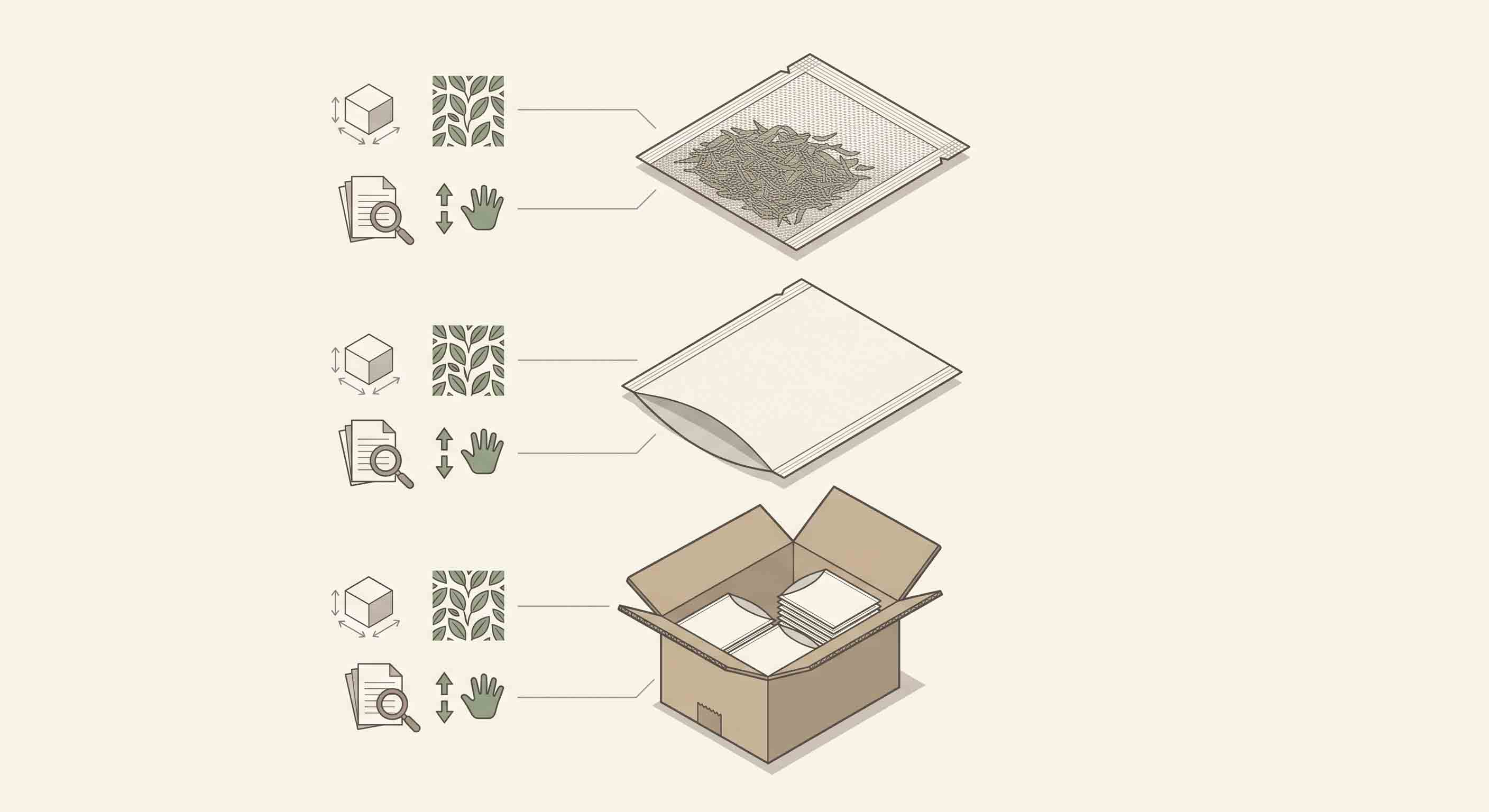
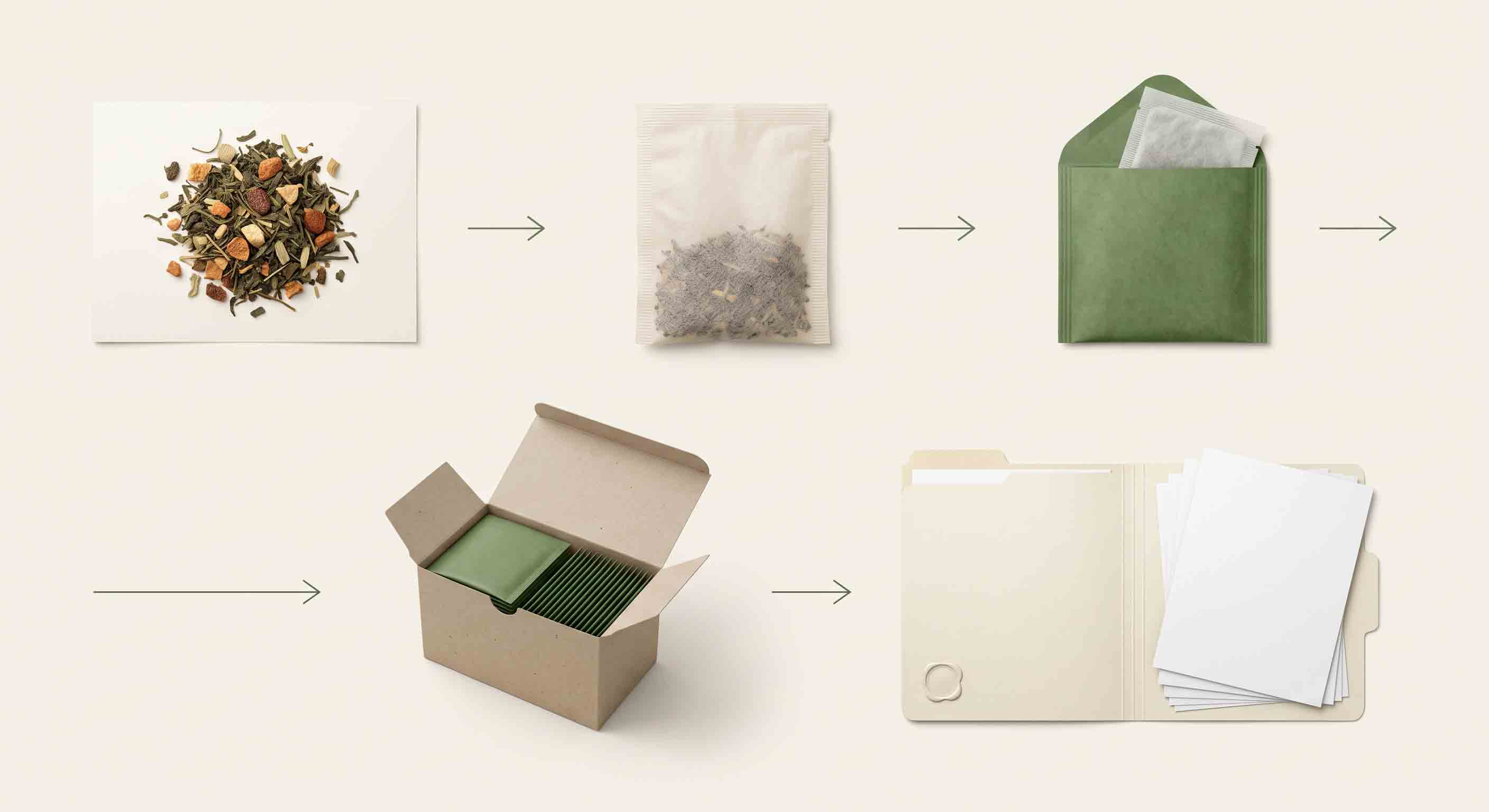
Individually wrapped tea bags are a packaging system, not a single item. The product may include a tea portion inside a filter bag, an outer envelope for that unit, and a carton or retail pack that holds a defined count. Each layer has a different job, a different artwork area, and different questions for the product team, packaging supplier, and co-packer.
The planning sequence below helps tea brands specify individually packaged tea bags without assuming a universal material, barrier level, food-contact status, environmental outcome, machine capability, or market approval. Final specifications need to be validated with the actual tea, packaging components, intended use, target market, and supplier documentation.
What “individually wrapped” usually means
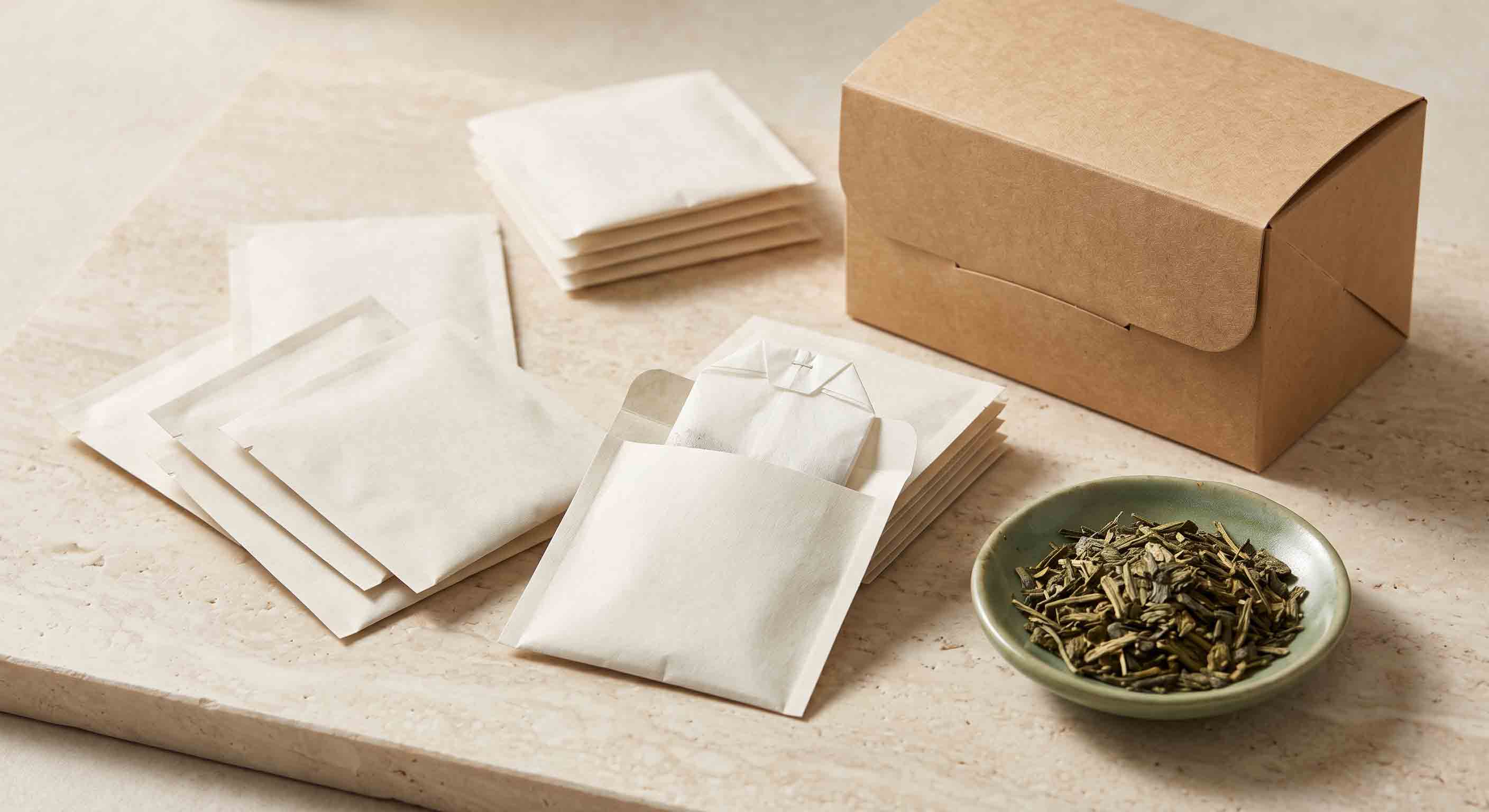
The phrase is often used for any single-serve tea, but there are distinct configurations. Clarifying the configuration at the beginning avoids requesting the wrong quote, artwork template, or pack count.
An envelope should not be confused with the filter bag itself. The inner bag is part of the brewing experience; the outer packaging is part of the product’s handling, presentation, and retail system. The material and regulatory questions for each may be different.
Decide why the product needs an outer envelope
An individual envelope can be considered for applications where a single tea bag may be handled away from the carton, offered to a guest, carried in a bag, used in an office, or included in a sample set. But it adds components and operations, so the team should document the reason rather than add it only because it looks familiar.
Useful planning questions include:
- Will customers normally take one unit away from the main retail carton?
- Does the product need the tea name and brewing information visible on every individual unit?
- Is the product intended for hospitality, travel, gift, subscription, or retail use?
- What pack count and dispenser behavior are expected?
- Does the user need a string and tag, or is another brewing format being considered?
- What artwork and code information, if any, must be associated with the individual envelope?
- How will the components be filled, sealed, counted, and packed?
The answer may be “an outer envelope is appropriate,” “a carton alone is sufficient,” or “the range needs two configurations for different channels.” Treat it as a product decision, not a default claim about freshness or hygiene.
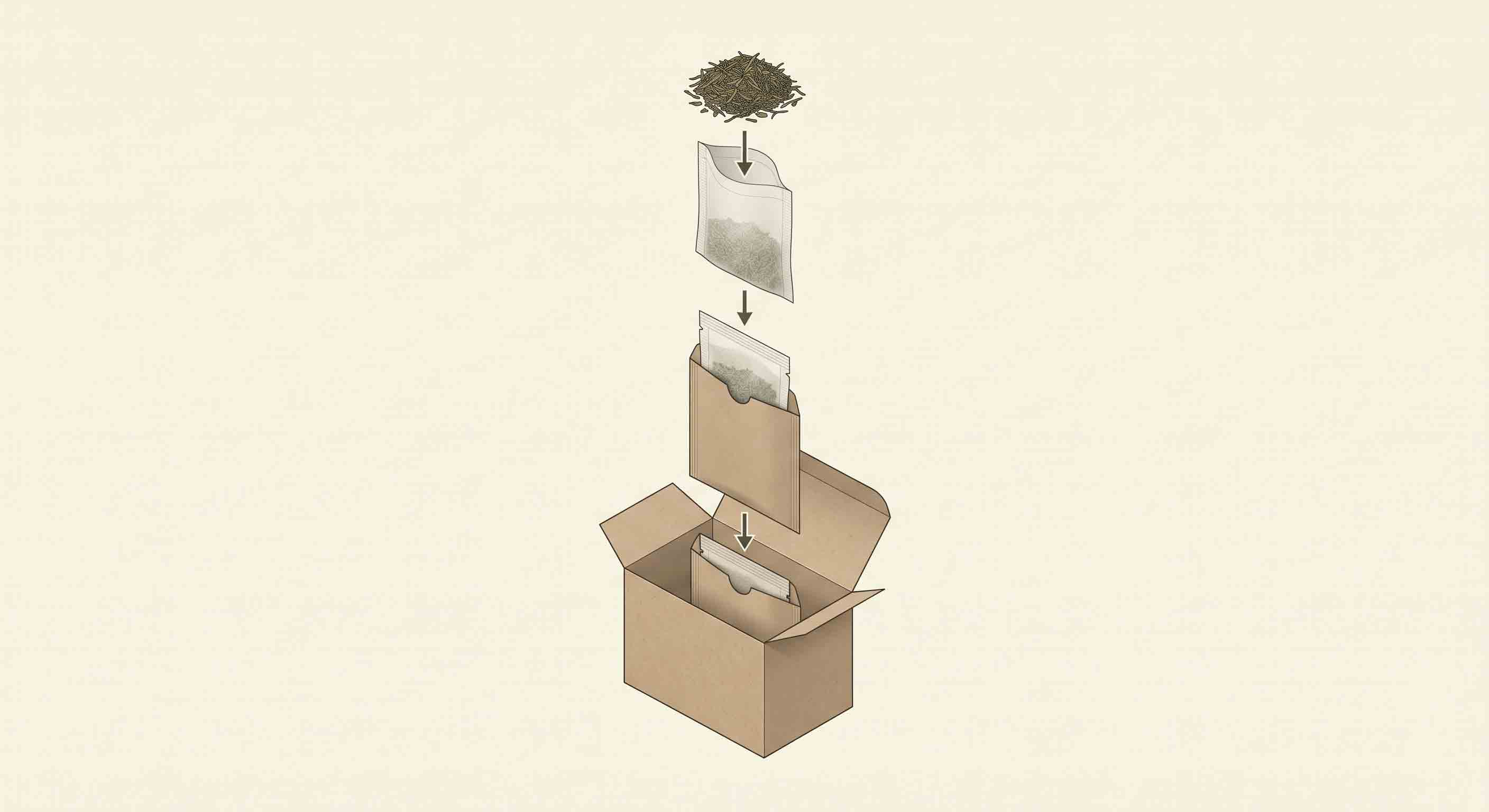
Create a specification for the inner tea bag
The filter bag specification starts with the product, not with a generic “tea bag” label. The actual tea or botanical blend affects the portion volume, handling, and final bag format. Work with a sample of the intended tea and define the following before a final pack is selected:
- target tea dose per serving;
- whether the tea is fine-cut, whole leaf, a blend with larger inclusions, or another physical format;
- bag shape and intended brewing use;
- string, tag, thread, attachment, or other component requirements, if any;
- desired tea-bag count per selling unit;
- brewing instructions that have been approved for the exact product;
- intended markets and any material or labeling documentation needed.
A physical brew evaluation can help the team see whether the product, portion, and bag configuration are a sensible fit. It should not be used to make generalized extraction, safety, or health claims. Record what was actually tested, by whom, and under what product conditions if the project will rely on the result later.
Then size the envelope around the assembled unit
The outer envelope must hold the actual finished bag, not an empty paper outline. A string and tag can change the required length and fold pattern. A bulky botanical blend can change the profile. If the unit will carry a printed tag or a special attachment, that should be included in the sample review.
When requesting envelope dimensions or a dieline, provide:
- a filled tea-bag sample or its verified dimensions;
- the expected orientation inside the envelope;
- required sealing margins and opening method to be discussed with the supplier;
- the areas needed for product identity, approved instructions, codes, or other content;
- any count-pack or carton constraints;
- the product’s intended market and documentation request.
Do not infer an envelope size from another brand’s photo. A size can look similar while having different internal clearance, closure, print zones, or packing method. A sample of the actual assembled unit is the practical checkpoint.
Keep individual-unit information useful
When a tea bag may be separated from its carton, the individual envelope should still help a person identify the product. This does not mean every panel must repeat every brand story. It means the design should make the tea type or variant, brand, and any essential consumer information clear in the context where the unit will be used.
Consider how the unit will be seen:
- a guest selects one envelope from an open box;
- a hotel or office places units in a tray;
- a customer keeps several varieties loose in a drawer;
- a retailer opens a carton for sampling;
- a subscription shipment includes one or two sample envelopes.
If the brand uses color to distinguish varieties, pair it with clearly written names and a consistent layout. Do not rely solely on subtle color differences, especially if the envelope is small. Review the full range side by side at actual size before approving artwork.
Plan the carton at the same time
The carton or outer retail pack has its own role: it contains the count, presents the product on shelf, holds more detailed information, and guides storage after purchase. Its dimensions depend on the envelope shape, number of units, arrangement, and any divider or insert. A carton that holds 20 envelopes arranged one way may not work for 25 envelopes or a mixed-flavor assortment.
Map the retail pack from the inside out:
- Confirm the finished inner tea-bag unit.
- Confirm the outer envelope dimension and orientation.
- Define the retail count and whether varieties are mixed or separated.
- Select a carton structure or other outer pack around the real units.
- Place the approved artwork content on the proper panels.
- Review the final selling unit in shelf, shipping, and consumer-use scenarios.
This is also where secondary packaging matters. A carton may be placed in a display tray, master carton, mailer, or gift set. Share the intended route with the packaging team so the sample can be checked in context.
Do not turn an envelope into an unsupported claim
Individual wrappers are often described with broad language such as “freshness protected,” “hygienic,” “sustainable,” “plastic-free,” or “premium.” Whether those statements are accurate depends on the full configuration and evidence. For example, an outer envelope does not establish a specific shelf-life outcome, and a surface appearance does not establish material composition or end-of-life handling.
For food-contact questions, documentation needs to be relevant to the actual component, food, intended use, and market. For environmental claims, review the entire package and local collection or disposal context. In the United States, the FTC Green Guides are a relevant starting point for evaluating environmental marketing claims. Use precise, substantiated language rather than a generic leaf icon or a sweeping claim.
Confirm the packing workflow before locking artwork
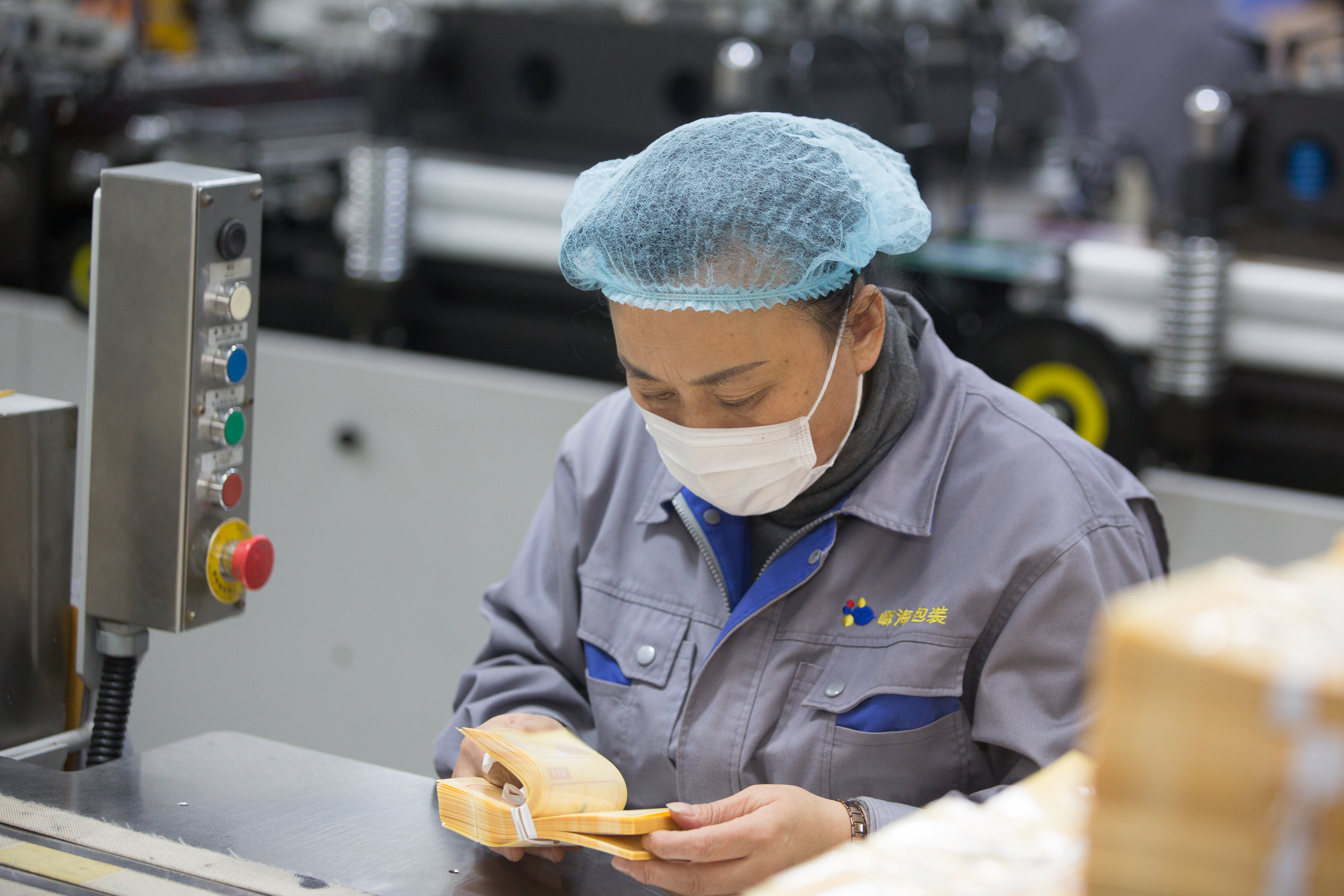
Artwork and structure should match how the product will really be packed. An individually wrapped tea-bag system can involve portioning, forming or filling the inner bag, attaching a tag if applicable, enclosing the unit, sealing the envelope, counting units, placing them into a carton, coding, and secondary packing. The exact order and equipment vary by project.
Before the final artwork is approved, ask the responsible production team:
- Which steps are manual, semi-automatic, or automated?
- What dimensions and material formats can the chosen process handle?
- Where are variable codes applied and checked?
- How are count accuracy, seal appearance, and component changes inspected?
- What samples are required before a full run?
- What artwork limitations or registration areas does the process impose?
Confirm the production method before finalizing artwork so that the design fits the planned packing process, including any manual or automated steps that affect dimensions, coding, seals, or count handling.
Build an order-ready project brief
Use a written brief to reduce ambiguity across design, sourcing, and production.
The brief should make open requirements visible. If material documentation is not yet available for the target market, list it as an item to confirm rather than making a sustainability or compliance statement on the pack.
How an individually wrapped tea-bag project can be discussed
When the tea sample, portion, inner bag, envelope, retail count, and artwork needs are known, custom tea bags can be discussed as a defined packaging project. Provide the information that affects the assembled unit and flag what must be tested or documented. This creates a better starting point than asking for a generic individual wrapper without the underlying product details.
A final pre-production checklist
Before a project moves from artwork to production approval, verify:
- the tea and portion used in samples match the intended selling product;
- inner bag, envelope, and carton samples are all assembled together;
- count and variant arrangement are clear;
- each panel’s information has been approved by the responsible team;
- carton and envelope artwork use the current dielines and safe areas;
- seal, opening, and handling expectations have been reviewed against the actual process;
- the project has a plan for variable codes and quality checks if applicable;
- material and environmental claims have evidence for the exact configuration and market;
- the filled selling unit has been reviewed in its intended retail and shipment context.
This kind of disciplined review makes a compact individual unit easier to operate and less likely to create an avoidable surprise after the product has left the main carton.
Plan multi-flavor and hospitality packs as a user-experience problem
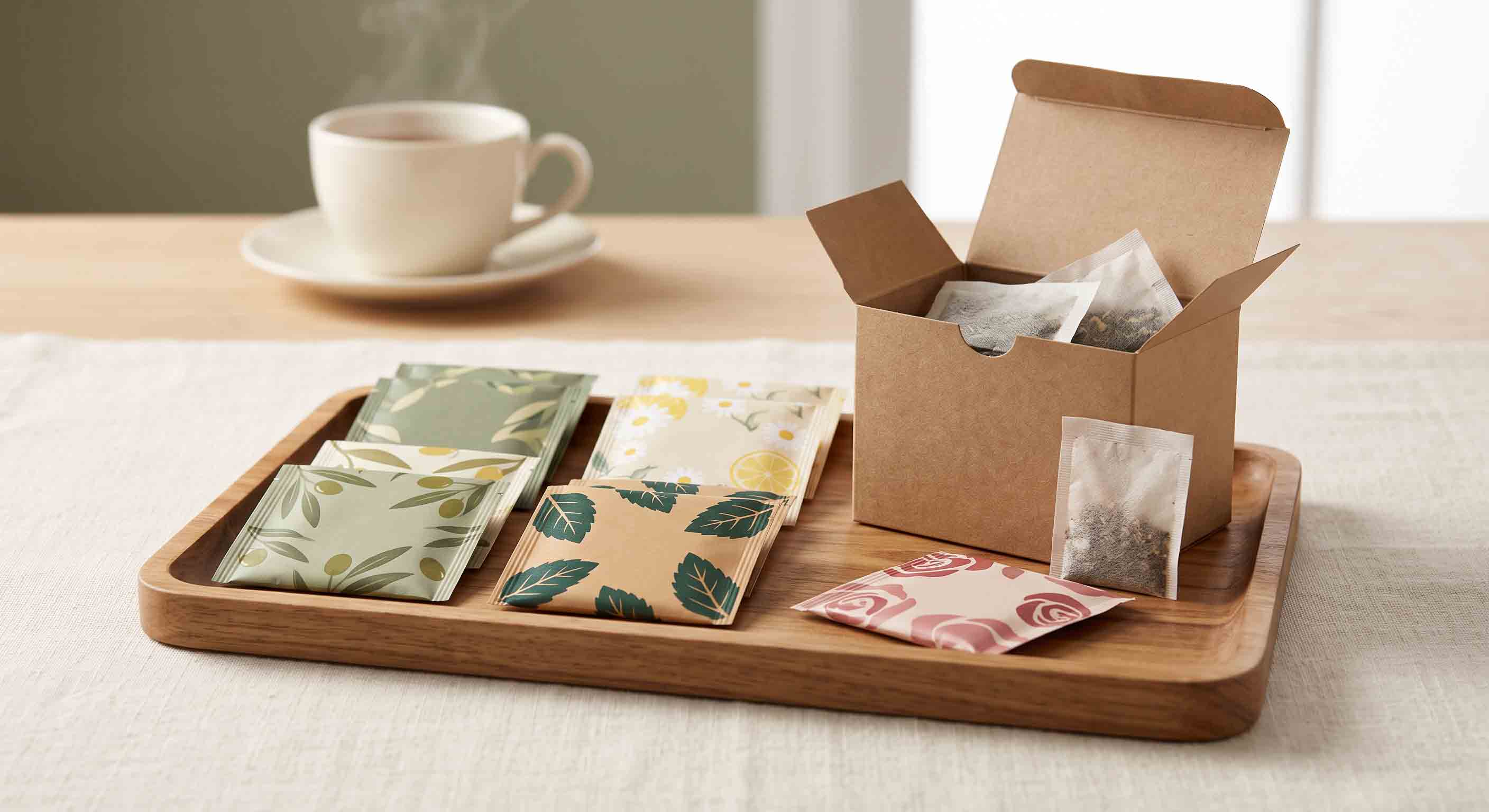
Individual wrapping becomes especially useful when several tea varieties share one carton, tray, or service area. The customer may encounter an envelope without its original box, so the envelope needs to identify the product clearly at a small scale. At the same time, the carton needs to explain the assortment and count without asking a user to memorize a color system.
For a multi-flavor set, confirm:
- the exact variant names and consistent hierarchy on each envelope;
- a secondary identifier beyond color alone;
- the carton count by variant and the order in which units are packed;
- whether every envelope needs the same instructions or variant-specific information;
- how the staff member or customer will tell a missing, mixed, or incorrect unit from the intended assortment;
- how the design works when individual envelopes are photographed, displayed in a tray, or separated from the carton.
For hospitality use, the objective may be simple selection and presentation rather than a large brand story. The envelope may need the tea type and a readable brand mark, while the outer dispenser or menu explains the broader range. The right balance depends on the product channel and the responsible team’s labeling review. Do not assume that the design needs the same content for a hotel tray, a grocery shelf, and an online sample pack.
The selected system should be tested in the place it will be used. Place a complete set on a tray or counter, ask a person unfamiliar with the range to identify a variant, and note where the naming or arrangement becomes unclear. This simple check helps identify unclear naming or arrangement before approval.
Frequently asked questions
What is an individually wrapped tea bag?
It is typically a filter bag placed inside a separate outer envelope. The envelope may then be counted into a carton or another retail pack. The precise structure and materials should be specified project by project.
Do individually packaged tea bags need a carton?
Not always, but many retail configurations use a carton or other outer pack to hold a defined count and carry additional product information. The appropriate system depends on the sales channel, count, handling, and market requirements.
Can each tea envelope have different artwork?
Yes, a range can use different envelope artwork for variants, but it should be reviewed at actual size and as a full set. Make the tea type and variant plainly identifiable, not only color-coded.
Are individually wrapped tea bags more sustainable?
That cannot be assumed. An outer envelope adds a packaging layer, and the environmental outcome depends on the exact materials, components, collection context, and substantiated claim. Evaluate the whole system rather than using a generic label.
What should I send a supplier when requesting individual tea-bag packaging?
Send the actual tea or its detailed product information, target dose, inner bag format, envelope need, retail count, artwork status, intended market, and the questions that require a sample or current material documentation.
Sources
- FDA food-contact overview: https://www.fda.gov/food/food-ingredients-packaging/food-packaging-other-substances-come-contact-food-information-consumers
- FTC Green Guides topic page: https://www.ftc.gov/news-events/topics/truth-advertising/green-guides