
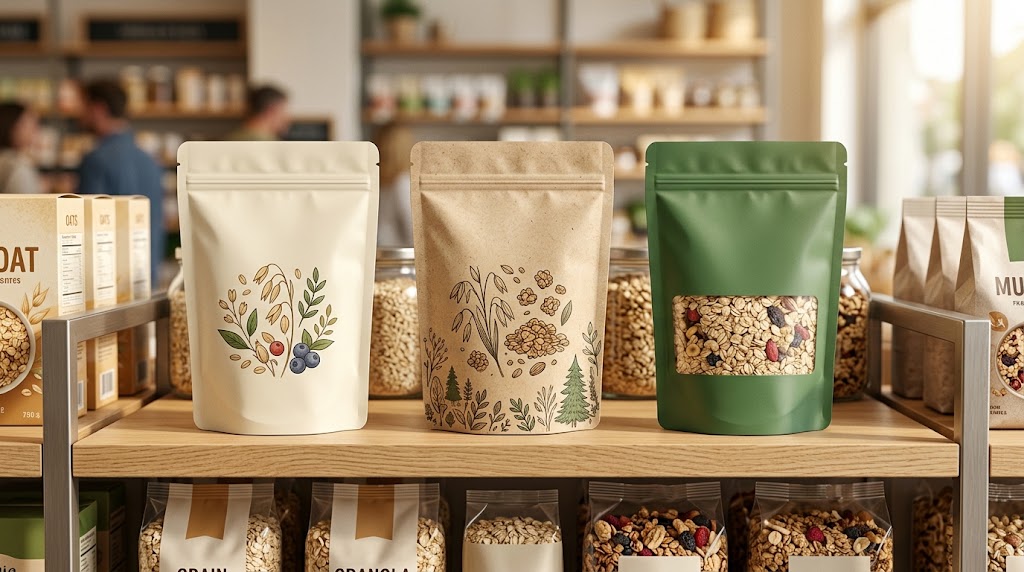
An oatmeal pouch can look excellent in a design mockup and still fail on a filling line. The 500g of oats that fits one bag may sit above the zipper in another. A zipper can feel satisfying in a sample, yet the first heat seal may pick up oat dust during production. A film that works for plain rolled oats may be a poor match for a granola blend with nuts and added oils.
If you are buying custom oatmeal packaging bags, start with the product and the packing process. Then choose the pouch geometry, material, closure and print method. This guide turns that sequence into a practical specification you can send to a supplier.
The short answer: A stand-up pouch is a strong retail option when you need a stable shelf display, a printable front panel and a reclosure for a multi-serve product. Specify it by a tested fill volume, the actual oat blend, an agreed barrier target and a seal that works on your equipment. Net weight alone is not enough to choose a bag size.
1. Start with the Oat Product, Not the Pouch Catalog
"Oatmeal" describes several products with different handling needs. A buyer should send the supplier a filled product sample or at least a clear description of the formula. The package has to hold the real product, not a generic weight printed on a size chart.
| Product | What to check before choosing the bag | Likely packaging consequence |
|---|---|---|
| Plain rolled oats | Flake size, bulk density, dust level and target pack weight | Enough volume without excessive headspace; clean top seal |
| Quick or instant oats | Fines, powder migration and portion format | Seal contamination control; perhaps sachets or rollstock instead of a large pouch |
| Steel-cut oats | Higher apparent density, flow and abrasive handling | Confirm bottom support, seal strength and filled-bag stability |
| Granola or muesli | Cluster size, nuts, dried fruit, added oil and settling | More fill-volume margin; evaluate oxygen and aroma protection for the actual recipe |
| Mixed superfood oats | Product-specific powder, fruit or ingredient sensitivity | Test the complete blend, not a plain-oat proxy |
That table is a screening tool, not a material prescription. The same brand can use different films for a plain oat SKU and a nut-rich granola SKU. Ask the food team what change would end the product's acceptable life: loss of crunch, stale flavor, oxidation, caking, color change or another measurable defect. The answer determines what the package needs to protect.
Write down the use case
Before discussing pouch dimensions, capture six facts: product name and formulation; net weight; intended distribution markets; desired unopened shelf life; expected storage conditions; and whether consumers will reopen the pack repeatedly. Add the filling method and the expected order volume. A supplier can offer a much better first sample when those basics are known.
If you are still developing the recipe, say so. A provisional pouch can support a market test, but the final structure and shelf-life claim should be confirmed with the production formula and actual filling process. A packaging supplier cannot validate the food's shelf life from a film datasheet alone.
2. Decide Whether a Stand-Up Pouch Is the Right Format
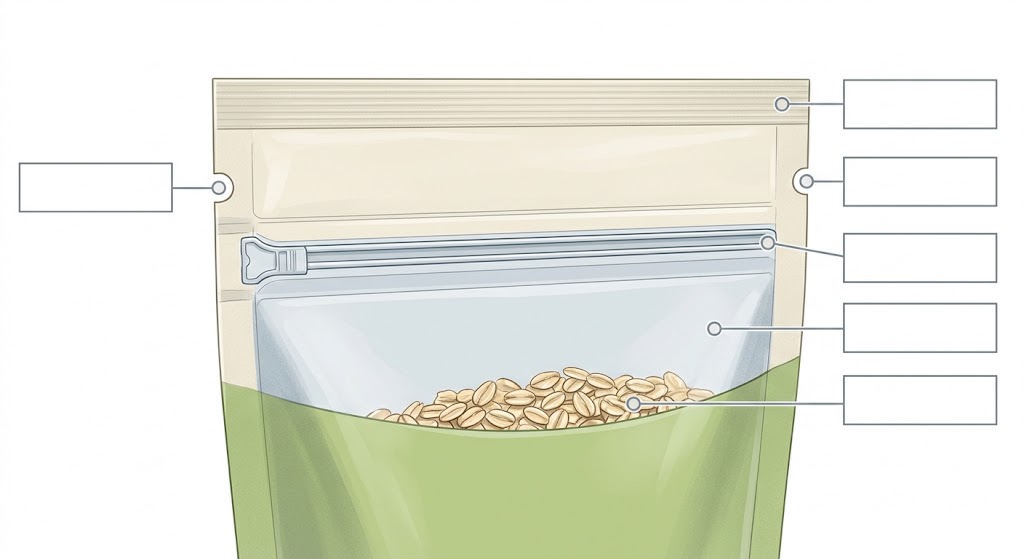
A stand-up pouch has a bottom gusset that opens when the bag is filled. It provides a broad front panel for branding and can include a press-to-close zipper. For a multi-serve retail pack, the customer can pour out a portion and reclose the bag. The empty pouches ship and store flat before filling.
Those advantages do not make it the default for every oat product. A single-serve instant oatmeal portion may suit a flat sachet and an outer carton. A large, heavy retail pack may display better in a flat-bottom pouch. A high-speed line may call for printed rollstock rather than pre-made pouches. Choose the format with a filled sample and a line trial, not a rendering.
| Format | Good starting use | Main question to test |
|---|---|---|
| Stand-up pouch | Multi-serve retail oats or granola | Does the filled pack stand, pour and reclose well? |
| Flat-bottom pouch | Larger premium pack needing a wide, stable base | Is the added structure worth its cost and machine-handling needs? |
| Side-gusset bag | Dense or larger-volume product | Does it maintain the intended display and seal quality? |
| Flat sachet | Single portion or sample | Is it easy to fill, open and protect inside its outer pack? |
| Printed rollstock | Automated form-fill-seal operation | Can the film run and seal within the machine's window? |
Be precise about terminology. A three-side-seal flat pouch does not become a five-panel flat-bottom bag just because both are called "flat" in casual conversation. Request a photo of the empty and filled construction, plus a drawing showing the seals and gusset. That avoids a surprisingly common quotation mismatch.
Retail shelf and e-commerce are different tests
On a shelf, a bag needs to stand straight and show the front panel. In an e-commerce carton, it may be squeezed, dropped or laid on its side. Test both if you sell through both channels. For a multi-pack, check whether the pouches still fit the shipper after the product settles. A taller bag with an attractive silhouette can waste carton space or fold over at the top in transit.
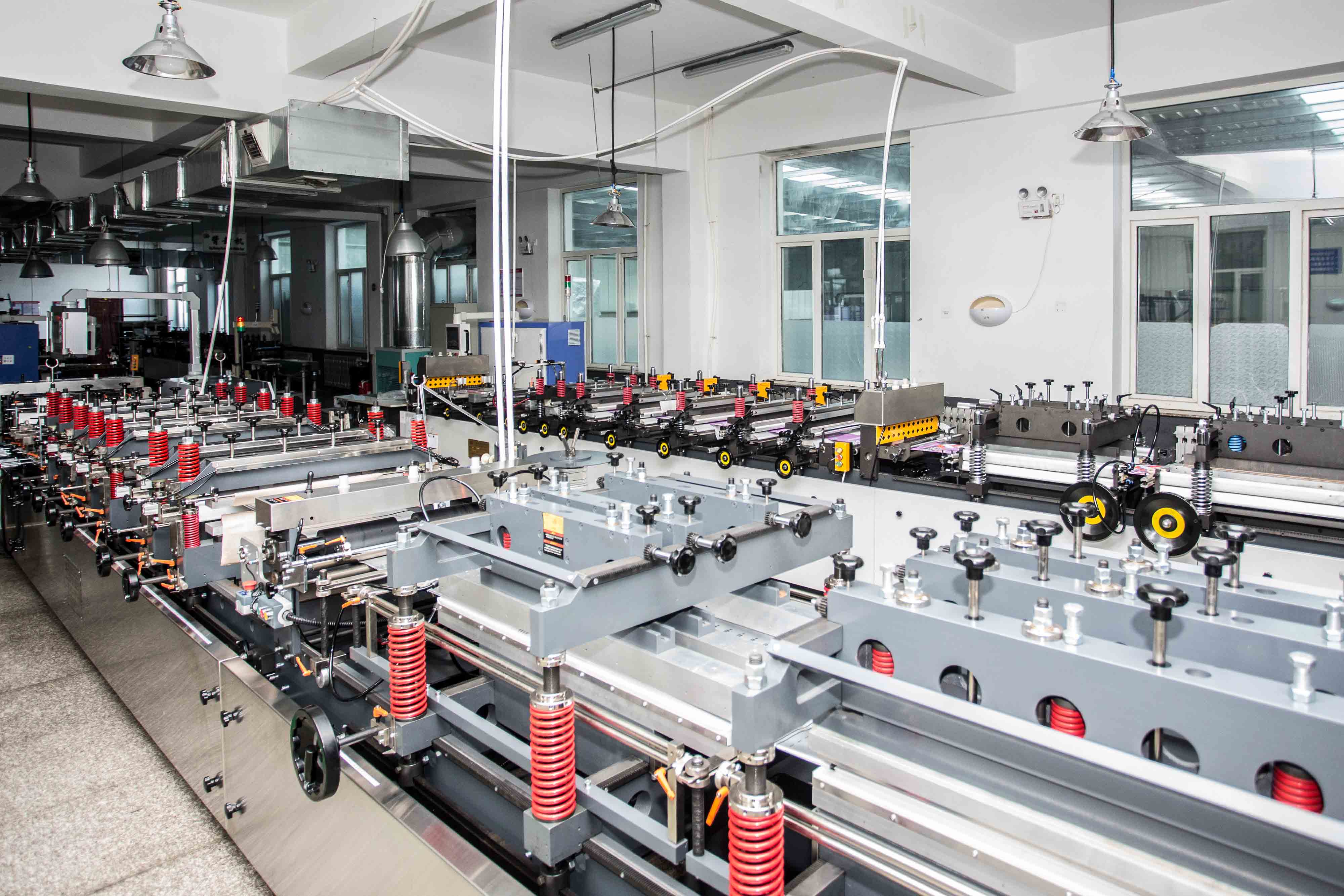
3. Size by Bulk Density and a Physical Fill Trial
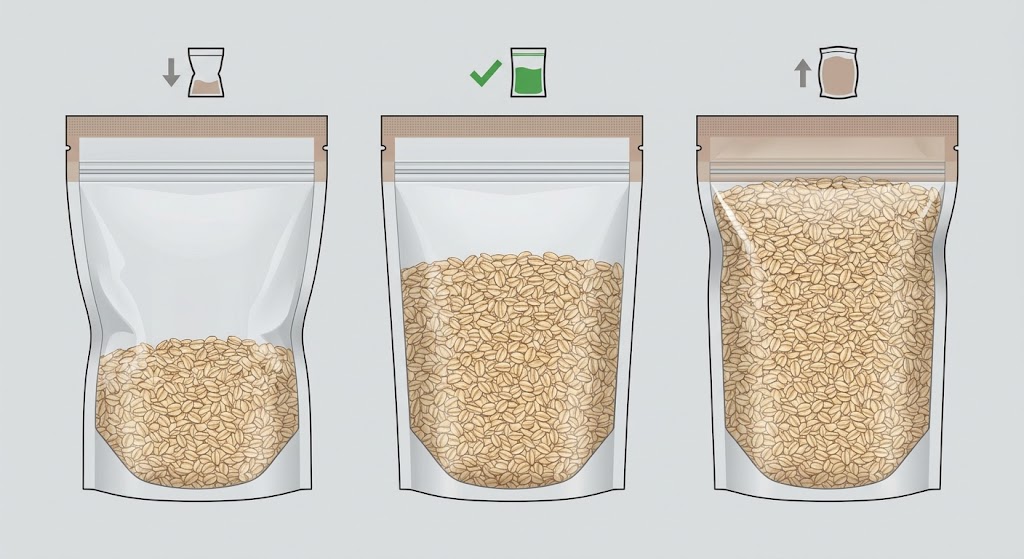
"We need a 500g oatmeal bag" is a start, not a size specification. Two 500g products can occupy very different volumes. Rolled oats, quick oats and chunky granola settle differently. Inclusion size matters: a large dried-fruit piece can bridge at the filler or push against the zipper even when the total weight fits.
In simple terms, required product volume equals net weight divided by measured bulk density. Use the units consistently. That estimate tells you which sample sizes to test. It does not tell you the final width, height or gusset, because the bag is not a rigid rectangular box. Seals, corners, zipper position, product settling and the shape of the filled gusset all reduce usable volume.
A repeatable five-step fit test
- Measure the real product. Use representative lots and include the largest clusters or inclusions. Record loose and settled fill behavior rather than assuming a catalog density.
- Fill candidate bags to target weight. Use the planned funnel or filling head where possible. Observe product bridging and how much material lands in the seal area.
- Check usable headspace. Leave enough clear film above the product for the zipper, tear notch, date code and first heat seal. Do not place the zipper at the product's natural fill line.
- Handle the pack like a customer. Stand it on a shelf, pour one serving, reclose it and see whether the bottom remains stable after partial use.
- Repeat after vibration and shipping simulation. Product may settle. Inspect the top corners, gusset and outer carton before approving the dieline.
Ask the supplier whether the quoted gusset dimension is the full opened depth or a folded measurement. Notation such as "W × H + G" varies between drawings. Confirm units, the reference points for every dimension, seal allowances and the tolerance on finished bags. A drawing without those definitions can look correct until the first production trial.
Should you copy a competitor's dimensions?
Only as a way to shortlist samples. Their product's density, target weight, zipper location and pouch film may differ from yours. Even if the same nominal weight fits, the filled profile and carton efficiency may not. Request two or three candidate sizes, run the same product through each, then approve the finished-bag drawing.
4. Specify Barrier from the Shelf-Life Brief
The film's job is to support the food's required quality over the intended storage and distribution conditions. For oats, the important questions often include moisture pickup, oxidation of fat-containing ingredients, aroma change and exposure to light. The balance shifts by recipe. Plain dry oats and granola with nuts or added oil should not automatically receive the same film.
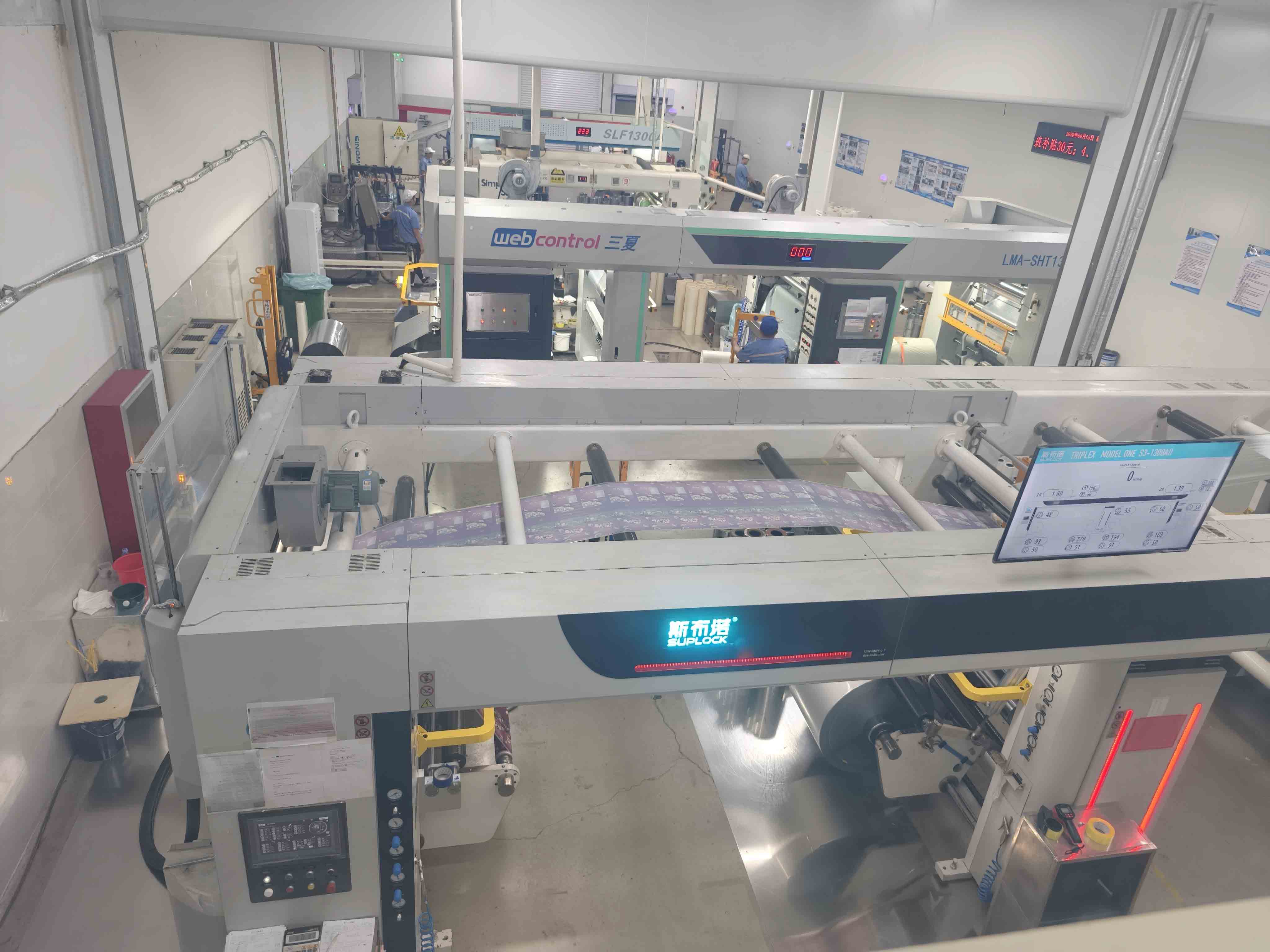
Ask for the complete laminate construction, not just the trade word "Mylar." A conventional high-barrier option may include an outer print film, a metallized or foil barrier layer and an inner heat-seal layer. Another project may use a PE-based structure. A paper-look pouch usually still needs a functional sealing and barrier structure. Each option has trade-offs in transparency, stiffness, sealing and end-of-life claims.
| Design question | Information to request | Why it matters |
|---|---|---|
| Moisture barrier | WVTR result, test method, temperature and humidity | A number without conditions is hard to compare |
| Oxygen barrier | OTR result, test method and conditions | Recipe and shelf-life goals determine whether added oxygen protection is useful |
| Light exposure | Opaque, metallized, foil or windowed sample | A clear window changes the local barrier and light path |
| Mechanical durability | Thickness, puncture/tear testing and filled-pack trial | Handling failure can defeat a good film specification |
| Heat sealing | Sealant layer and a tested seal window | The actual filling line must make consistent seals |
| Food-contact suitability | Documentation for the complete intended construction and use | A generic "food grade" badge is not a specification |
ASTM's F1249 method addresses water-vapor transmission through flexible barrier materials. Its own description stresses agreement on sampling, conditions and acceptance criteria when buyer and seller compare results. ASTM D3985 covers oxygen transmission rate through films and laminates. Ask for the report on the structure you are actually buying, with units and conditions, rather than importing a "best OTR" number from a different material. There is no universal OTR or WVTR threshold that guarantees a given oatmeal shelf life.
What a clear window changes
A window helps shoppers see the oats, which can be useful for a premium blend. It also introduces a different optical and potentially different barrier area from the opaque film around it. Ask how the window is made, whether the perimeter seal is validated, and whether light exposure affects your actual product. If the brand needs a window, test the windowed construction rather than assuming data for the solid film applies unchanged.
Keep food-contact claims tied to the intended use
For a US project, request the supplier's documentation for the materials and the conditions of use. The FDA explains that the status of a food-contact article depends on its components and applicable authorizations, including use conditions. "FDA approved bag" is too vague to replace that review. If you sell in the EU, discuss the destination requirements separately; the European Commission's food-contact framework sets general safety and inertness principles and calls for compliance documentation and traceability.
For either market, tell the converter whether the bag will hold a dry product, whether it will be heated, and the anticipated storage conditions. Do not assume a statement written for one structure, food type or process covers every SKU.
5. Design the First Seal and the Consumer Reclosure Separately
Most retail oatmeal pouches with a zipper still need a heat seal above the zipper before sale. The heat seal is the unopened package closure. The zipper lets the consumer close the bag after opening. They solve different problems, and one should not be used as proof that the other works.
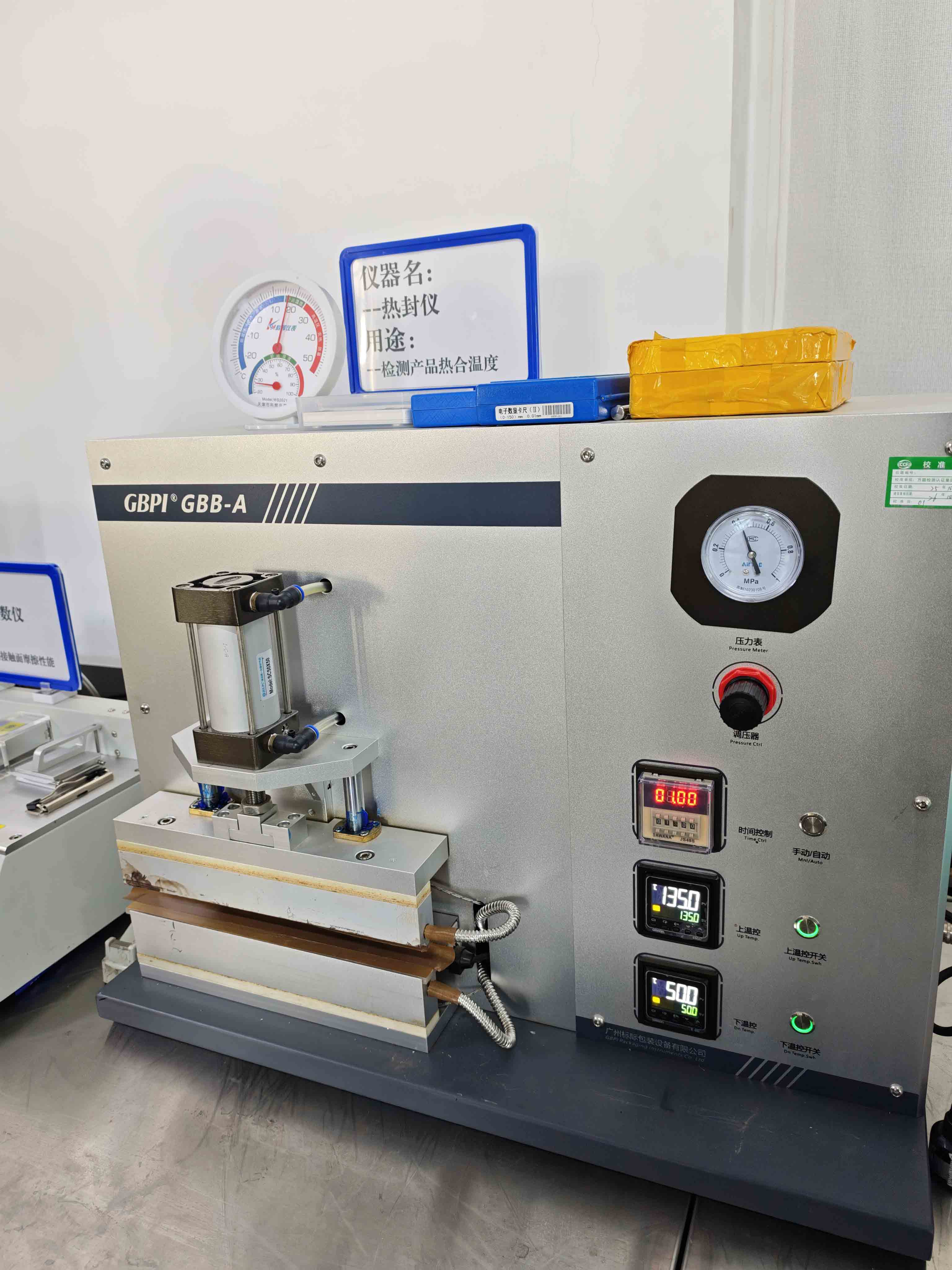
Ask your packing team where oat dust accumulates. A good film can produce a weak or incomplete top seal if flakes or powder enter the seal area. Keep the fill height below the zipper and sealing jaws. Trial the actual line speed, sealing temperature, dwell time and pressure with representative product. Check hot seals and cooled seals, including the corners near the zipper ends.
For seal-strength evaluation, ASTM F88/F88M is a method for measuring seal strength in flexible barrier materials. ASTM notes that the value contributes to process validation and control; it does not, by itself, prove that every finished pouch has no leak. Agree on an inspection and integrity plan with your packer, and keep the results with the production specification.
Choose a zipper that fits the way the pack is used
A 250g pack opened twice is different from a family-size bag opened every morning for weeks. Have users open and close filled samples with dry hands and after a typical portion has been poured. Check whether oat fines collect in the tracks, whether the top opening is wide enough for a scoop, and whether the bag can stand after its first few servings are removed.
Consider a tear notch or easy-open feature if the top heat seal is hard to open cleanly. Put the tear line above the zipper so the reclosure remains usable. Give the designer a dieline that marks the no-print seal area, zipper track, notch, registration marks and date-code zone. A beautiful graphic cannot repair an awkward opening experience.
6. Match the Pouch to the Filling Line
A pre-made stand-up pouch typically enters a pouch-filling and sealing operation. Printed rollstock is a different purchasing and machine setup. Before signing off on artwork, ask the co-packer or production engineer which format the machine accepts, its supported width range, zipper capability, registration requirements and sealing limits.
For pre-made pouches, check how the machine picks and opens the bag. Film stiffness and finish can affect separation from a magazine. A large gusset may help display yet interfere with handling if it is outside the machine's tested range. Some systems insert a zipper; others require it to be built into the bag. These are line-specific questions, so a supplier sample and a co-packer trial are more useful than generic claims of "machine compatibility."
Run a small line trial with recorded rejects
Set a practical acceptance protocol before the trial. Record target and actual fill weights, rate of bags that fail to open, product in the seal zone, top-seal defects, print-registration issues and finished-pack appearance. Retain samples from the beginning, middle and end of the run. If bags arrive after a long transit, inspect them again before filling.
| Trial checkpoint | What to observe | Decision it informs |
|---|---|---|
| Bag opening | Missed picks, double picks, mouth opening | Film stiffness and pouch geometry |
| Filling | Bridging, dust, target-weight variation | Bag mouth, product feed and headspace |
| Top sealing | Contamination, folds, incomplete corners | Sealant and line settings |
| Coding | Date/lot legibility and abrasion | Code location and finish |
| Packing | Standing stability, carton fit and transit damage | Gusset, dimensions and secondary pack |
Do not turn one successful sample into a blanket approval for several flavors. A granola version with chocolate chips or large nut pieces may require a different fill trial even when the artwork and net weight match the plain-oats SKU.
7. Use One Real Project as a Starting Reference
Mylarbag's published 500g Açaí and oatmeal stand-up pouch project lists a Venezuela destination, PET/NY/PE construction, gravure printing, a resealable zipper and dimensions of 21 × 27 + 4.5 cm. Those are useful project facts. They do not establish a universal 500g oatmeal size, a measured barrier value or a guaranteed shelf life for a different product.

What can another oat brand learn from the example? First, a blended product may need its own capacity check. Second, the pouch is a complete system: film, zipper, gusset, print and finished dimensions. Third, the listed PET/NY/PE structure is a project-specific choice, not evidence that every oat blend needs nylon or that the film is suitable for every end-of-life claim. These are engineering questions worth testing during your own development. They are inferences from the project specification, not claims about the client's measured outcomes.
If your recipe is plain rolled oats, ask whether a simpler structure meets your defined requirements. If it contains fragile clusters or sharp inclusions, ask for handling and puncture trials. If the product is intended for a different market, review the relevant food-contact documentation. Use the case to shape better questions rather than to copy its bill of materials.
8. Plan Artwork, Printing and Order Quantity Together
Decide how many flavors, weights and seasonal versions will share a bag format. Artwork that changes frequently may favor a short-run printing route. A mature, high-volume SKU may justify a different setup. A supplier should quote the total project, including proofing, printing, film, converting, freight and any applicable setup charges, rather than only a per-bag number.
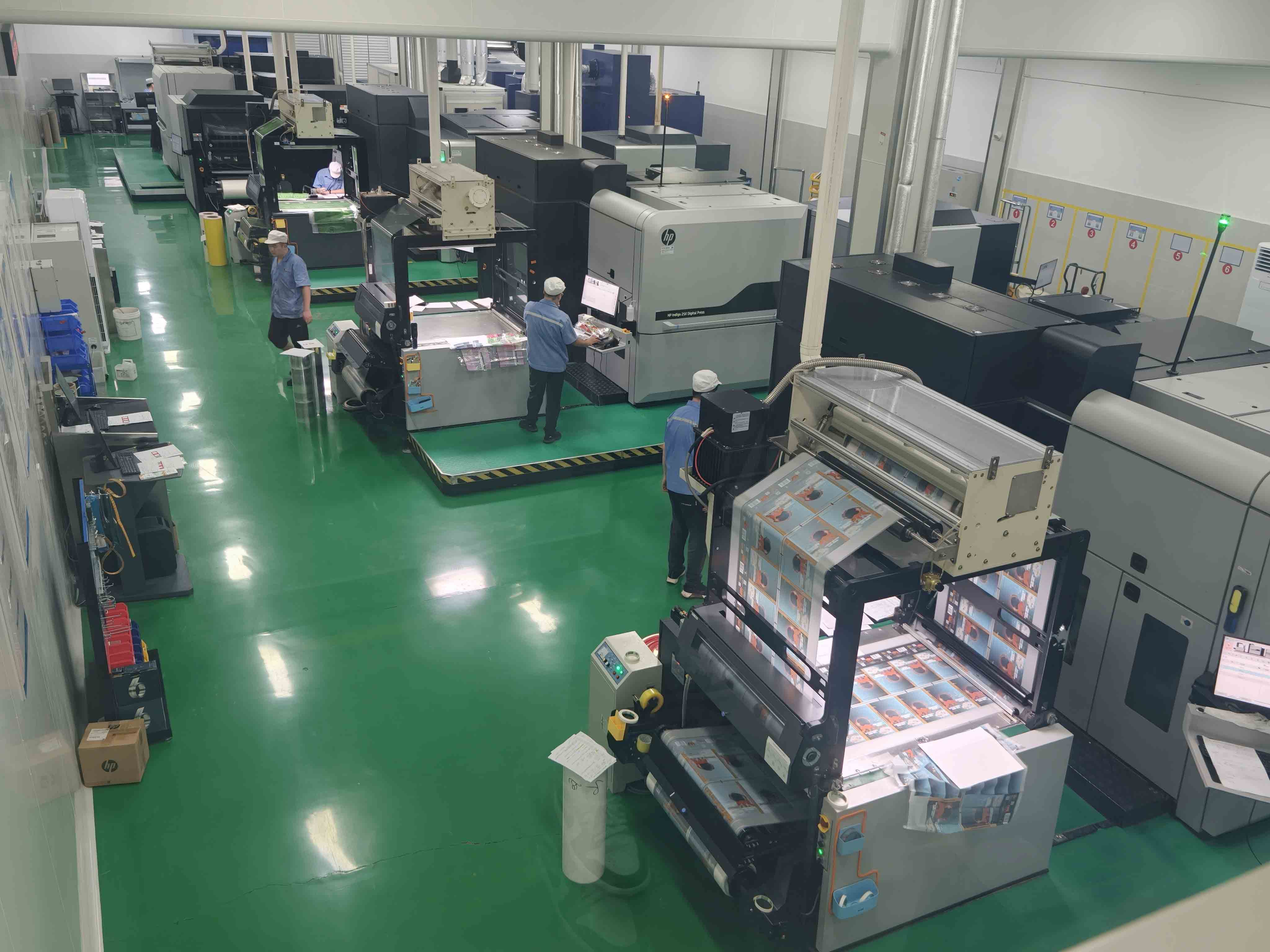
Digital printing can make multi-SKU launches easier because the artwork changes without gravure cylinders. Gravure can become more economical at higher repeat volumes, depending on design, colors, substrate and order size. Neither method is universally cheaper. Ask for comparable quotations at your expected initial order and likely reorder, including the same film structure and pouch dimensions.
Make the dieline a production document
Reserve space for mandatory label information, lot coding and the zipper before adding decorative artwork. A finished sample should be checked for how the design wraps around the gusset when filled. Metallic or matte finishes can look different on a screen and in the final laminate. Approve a color proof and, for a high-visibility launch, a physical pre-production sample when practical.
Ask whether the supplier's minimum order quantity applies per design, per size or per combined order. A quote for one flavor does not necessarily apply to six small flavors. Also confirm overrun/underrun tolerance, artwork ownership, cylinder or tooling charges, reorder lead time and how long a proof approval remains valid. These details affect inventory and cash flow more than an attractive headline MOQ.
9. Compare Quotes on the Same Specification
Two quotes are not comparable if one supplier prices a clear PET/PE bag and another prices an opaque high-barrier laminate. The same is true if one includes a zipper and the other does not, or if freight terms differ. Put the essential requirements in one brief and ask every supplier to answer against it.
| RFQ item | What to specify or request |
|---|---|
| Product | Oat type, formula, inclusion size and a representative sample |
| Fill | Net weight, measured bulk-density range, target headspace |
| Format | Stand-up pouch, opening style, zipper, notch, window if needed |
| Dimensions | Width, height, gusset definition and finished tolerance |
| Barrier | Shelf-life target, OTR/WVTR report conditions, light requirement |
| Food contact | Intended market, product and conditions of use; supporting documentation |
| Printing | Number of designs, colors, finish, proof method, variable coding area |
| Packing line | Machine model or co-packer, line speed and seal settings for trial |
| Quality | Seal-strength/integrity plan, sampling, inspection and reject criteria |
| Commercial | Quantity per SKU, setup fees, sample cost, timeline and delivery term |
The first quotation can identify options, but it should not lock a guessed film and size into a purchase order. Ask for a plain sample of the proposed structure, then a printed proof or pilot where the stakes justify it. Confirm which costs are credited to a later production run and whether the same materials will be used in the full order.
A copy-ready enquiry paragraph
We are developing a custom stand-up pouch for [product and ingredients] at [net weight] per bag, for sale in [markets]. Our target unopened shelf life is [target] under [storage conditions]. We expect [quantity] bags across [number] SKUs, filled on [machine/co-packer]. Please propose two pouch sizes for a physical fill trial, a complete film structure with OTR/WVTR data and test conditions, zipper and heat-seal details, food-contact documentation for our intended use, samples, print options, MOQ per SKU, and an itemized delivered quotation.
That brief does not require you to solve every engineering detail yourself. It gives a converter enough information to suggest a testable starting point and tells the buyer which assumptions still need validation.
10. Approve the Filled Bag, Then the Production Run
When the bag, food and line are treated as one system, a buying decision becomes easier. The sequence is simple: define the product; shortlist structures and dimensions; make filled samples; run the intended sealing process; evaluate quality and handling; approve the artwork and technical specification; and keep a retained reference sample for incoming inspection.
Do not set a shelf-life date from the bag vendor's generic brochure. The product owner needs evidence for the finished food in the finished pack under the intended conditions. The pouch supplier can support the process with film, seal and material data. The food team owns product-specific quality and safety validation.
If you are ready to compare options, send the brief and a product sample to Mylarbag through the custom oatmeal packaging enquiry page. Ask for candidate pouches that can be filled and tested on your line before approving a bulk run.
Frequently Asked Questions
What size stand-up pouch do I need for 500g of oatmeal?
There is no reliable universal size. Bulk density and settling vary across rolled oats, quick oats and blends. One published Mylarbag project for a 500g Açaí and oatmeal blend lists 21 × 27 + 4.5 cm, but that is a reference from one product, not a standard. Fill candidate bags with your own product, then check headspace, zipper position, stability and carton fit.
Is a zipper enough to keep oatmeal fresh?
The zipper helps consumers reclose an opened pack. For an unopened retail product, specify and validate the heat seal above it. Shelf life also depends on the food, the full film structure, sealing quality and storage conditions. A zipper by itself is not a shelf-life guarantee.
Should I choose a windowed oatmeal pouch?
Choose one if showing the product helps the customer and the complete windowed construction meets your protection brief. Test light exposure and the window perimeter. Ask for barrier data relevant to the actual finished design rather than assuming the opaque film's data covers the window.
Is a thicker pouch always a better barrier?
No. Thickness can influence durability, but oxygen and water-vapor transmission depend on the material structure and test conditions. Compare measured performance of the candidate laminates, then test filled bags for handling and sealing. Extra gauge may add cost without solving the actual failure mode.
Can a paper-look stand-up pouch protect oats?
It can, depending on its complete construction. A paper exterior may be paired with a separate barrier and heat-seal layer. Ask for the full laminate specification, food-contact documentation and measured barrier data. A kraft appearance alone tells you little about moisture protection or recyclability.
What is the difference between an oatmeal stand-up pouch and a flat-bottom pouch?
A stand-up pouch normally gains its shelf base from a bottom gusset. A flat-bottom or box pouch has a broader, structured base and more distinct printable panels. Fill and shelf trials will tell you whether the extra structure benefits your weight and retail presentation enough to justify it.
Is PET/NY/PE the right material for every oat product?
No. It is the listed construction for one published Açaí and oatmeal project. Your choice should come from the product formula, shelf-life brief, handling tests, food-contact use, cost and end-of-life objectives. Ask the supplier to compare a simpler and a higher-protection candidate where appropriate.
Do I need an oxygen absorber inside an oatmeal retail pouch?
Do not add one by default. First identify the product's quality risk and the food team's validated packing method. Absorbers introduce their own handling, labeling and process considerations. This article concerns commercial retail packaging; home long-term storage advice is not a substitute for a product-specific packaging validation.
How do I prevent oat dust from weakening the top seal?
Keep the fill level below the sealing zone, review the filling head and dust control, and trial the actual sealing settings at production speed. Inspect the seal area and test representative finished packs. Changing only the film may not fix a contaminated seal.
Can I order several flavors in one print run?
Often, but the economics depend on the print process and the supplier's minimum per artwork, size and total order. Ask for an itemized multi-SKU quote. Confirm whether all flavors can share one pouch dimension and film after separate fill trials.
What should I ask for before paying for custom artwork or tooling?
Request the approved finished-bag drawing, complete structure, print method, proofing plan, color expectations, sample policy, setup charges, ownership of any cylinders or tooling, quantity tolerance and delivery terms. Keep these in the purchase specification rather than scattered across emails.
How can I tell whether a pouch is suitable for my packing machine?
Share the machine model and co-packer requirements. Request a physical sample and run it at representative speed with the actual product. Check bag opening, fill accuracy, top seals, coding and reject rates. "Suitable for automated filling" without a line trial is a starting claim, not an approval.
How long will oatmeal last in a stand-up pouch?
The pouch format alone cannot answer that question. Shelf life depends on the specific recipe, processing, initial product condition, complete film and seal, storage and distribution. Establish the date from a finished-product study under the intended conditions rather than copying a generic time range from a product page.
Are oatmeal stand-up pouches recyclable?
Some constructions are designed for a particular recycling route; others use mixed layers that may not be accepted. The answer depends on the entire bag, including barrier treatment, zipper and local collection system. Request the actual construction and market-specific support before printing a claim.
What is the fastest way to get a meaningful custom quote?
Send the product and target weight, market, estimated annual volume and first order, number of designs, filling method, desired shelf life, preferred appearance and destination. State which items are open to supplier recommendation. Ask for samples and an itemized quote with assumptions so you can compare options fairly.