

An indie skincare brand can make a handful of good-looking face masks and still have no approved retail pack. The folded sheet may touch the top seal. A high fill may splash serum where the film needs to bond. An unprinted sample may fit perfectly, while the finished artwork puts a tear notch or batch code in the wrong place. Those problems are easier to catch with a small, documented trial than after a printed order arrives.
The short answer: decide which cosmetic product you intend to sell, obtain a suitable empty-pouch sample, and run a controlled trial with the actual mask and formula. Record the pouch version, fold, fill, clean seal area, sealing conditions, leaks and opening experience. Use that evidence to revise the bag and process. Then approve the printed construction and a production-representative run before making claims about a saleable shelf life. Small volume changes the number of bags you may need; it does not turn a home recipe into a validated stored cosmetic.
Here “face mask” means a facial skincare product, especially a single-use wet sheet or hydrogel mask. It does not mean a protective respirator. The focus is the flexible bag a packaging manufacturer can specify and supply, and the decisions the brand and its filler must make with it. The face mask packaging range is a starting point for asking for samples; this guide explains what those samples should prove.
“Homemade” Describes Your Starting Point, Not Your Safety Evidence
A mixture someone prepares for immediate personal use and a packaged product intended for storage, transport and sale are different projects. The second must be assessed as a finished cosmetic in its actual packaging. A heat-sealed bag cannot supply a missing preservation system, make contaminated filling harmless or establish an expiry date by its appearance.
For a U.S. example, the FDA's Small Businesses & Homemade Cosmetics fact sheet says home manufacture is not categorically prohibited under federal cosmetics law, while the maker or marketer remains responsible for safety and truthful labeling. It also explains that a product's intended use and claims can affect whether it is a cosmetic, a drug, or both. Local and other-market requirements need their own review. The point for packaging is straightforward: a small brand should identify who is qualified to evaluate its formula and finished product before ordering retail packaging.
The FDA also notes that cosmetics need not be sterile, but harmful microbial contamination can make them unsafe; inadequate protective packaging is only one possible route among formulation, ingredients, manufacturing and storage issues. See its microbiological safety explanation. This article does not give a homemade preservative recipe, a sanitation shortcut or a universal number of months. Those are product-specific decisions for the responsible cosmetic team.
Write the responsibilities down even if a small founder performs several of them. The pouch maker supplies a specified empty bag and the evidence it actually has. The brand owns product definition, claims, label review and safety substantiation. The filler, whether internal or contracted, owns the process that introduces the mask and formula and makes the final top seal. The finished-pack quality decision must connect those records rather than assuming one supplier has approved the whole cosmetic.
Choose One Product Form for Each Trial
The phrase “homemade face mask” might mean a serum-soaked sheet, a hydrogel piece, a paste or clay product, or a dry powder that the buyer mixes later. They do not fill, flow or open the same way. Make separate trial records and bag briefs for each; do not use a successful dry-powder sample to approve a wet serum sachet.
| Product form for sale | Likely flexible-pack question | What a first trial should show |
|---|---|---|
| One wet sheet or hydrogel mask | Can the folded product and liquid enter an open-top flat sachet without obstructing its final seal? | Actual folded fit, high-fill seal clearance, leak behavior and controlled opening |
| Single-use paste or clay mask | How will a viscous dose be filled, squeezed out and sealed? | Product-contact compatibility, dose handling and finished-pouch integrity |
| Dry powder facial mask | How is the powder dosed and kept out of the seal? | Dust at the seal, moisture protection and directions for the consumer's separate mixing step |
| Multi-use refill | Does the consumer need a different dispensing or reclosure system? | Reclosure and repeated-use study specific to that product |
For the wet single-use sheet at the center of this guide, an open-top flat pouch is a useful candidate. A zipper is not a default feature when the consumer opens the sachet once. The width and height must be chosen from the real folded product and the filler's opening and sealing method, not from a generic one-mask size chart. If your product is a paste or powder instead, treat the table as a branch to its own trial, not a reason to force it into the wet-sheet method.
Build a One-Page Brief Before You Ask for Samples
A sample request becomes much more useful when it includes the proposed product, the filling method and the selling route. Send representative folded masks or clear dimensions, the intended liquid target and variation, and enough information about the formula for a compatibility discussion. Identify the target market and whether the pouch will be displayed alone, inserted in a carton or shipped through a parcel network.
Keep facts, targets and open questions separate:
- Approved facts: the mask substrate and fold revision, formula version, intended dose and existing filling equipment, if those are already fixed.
- Trial targets: a candidate inside width, a clean top-seal zone, opening direction, notch position and an outer-carton fit.
- Open questions: inner contact layer, barrier need, compatibility endpoints, final label wording, claimed shelf life and production approval.
Ask for identifiable sheet mask pouch samples, not “a small silver bag.” Record each sample's full construction as supplied, dimensions, opening orientation, sample lot and whether it is a stock pouch, a converted prototype or production-representative material. A stock sample can answer early fit questions even if its layers differ from the final printed bag. It cannot automatically validate the final structure.
| Handoff item | Packaging supplier | Brand or filler |
|---|---|---|
| Empty-pouch drawing, film structure and sample ID | Provide what is actually proposed | Check fit, contact requirements and version |
| Folded mask and serum target | Use for sample discussion | Define, supply and control |
| Filling and final top sealing | Provide film and pouch input information | Develop and verify on intended equipment |
| Cosmetic safety and label | Provide factual packaging documentation | Evaluate formula, finished product, claims and market |
| Trial failure | Review defects tied to empty bag or material | Map fill, sealing, storage and distribution evidence |
The FDA cosmetic GMP inspection checklist is useful as a U.S. self-inspection reference for primary packaging identification, clean filling equipment, batch codes and retained samples. It is not an approval certificate for a bag and should not be copied as if it imposed one universal test count on every small brand.
Run Four Gates Instead of Ordering a Finished Print First
The gates below answer different questions. Do not call a visual fit check a leak test, or a short filled trial a shelf-life study. Keep the same product version when comparing pouch candidates so a formulation change does not masquerade as a packaging improvement.
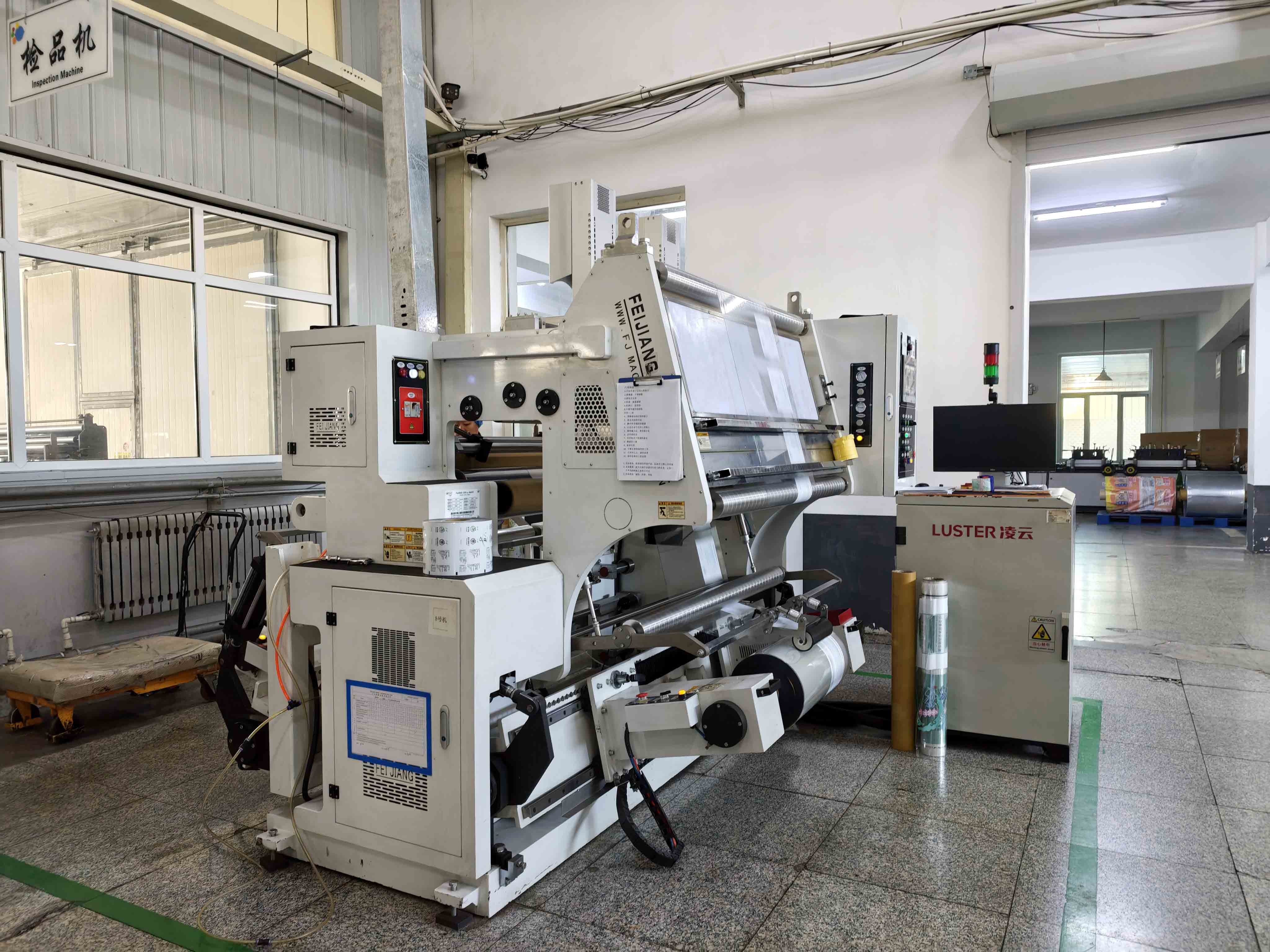
Gate 1: Unprinted fit and handling
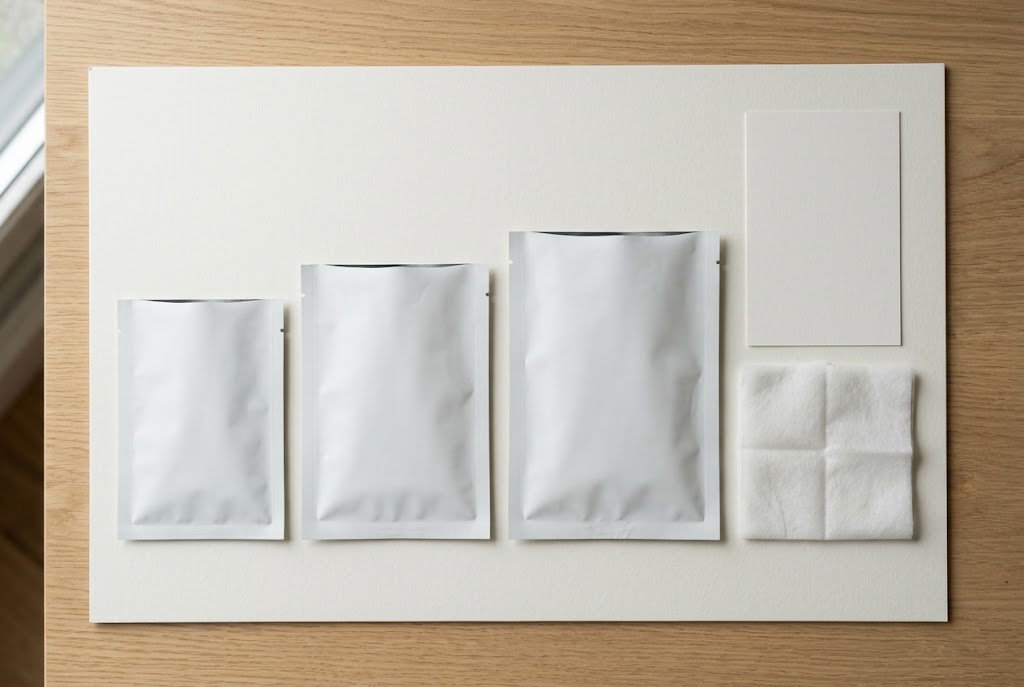
Use unprinted empty pouches to compare plausible widths and heights. Insert a representative folded mask, including backing or separator if it will be in the retail unit. Measure the actual space inside the side and bottom seals, not just the outside dimensions. Check the thickest fold, top opening, corners and how the mask moves when the bag is turned. Trial the pouch in its real carton or display.
Put a visible mark where the final top seal will be made. Then inspect with the highest intended fill under trial conditions. If the wet sheet reaches the mark or liquid repeatedly wets the area, the sample is not ready for seal approval. Revise one variable at a time: pouch height, fold, opening, dose placement or filling method. Do not approve a larger bag merely because the front panel looks less crowded; record what clearance it creates under the actual high fill.
Gate 1 can eliminate an obviously poor size at low cost. It does not show that a different final laminate will suit the serum, that the filler can seal it consistently, or that the product is safe to sell. Label the sample “fit trial” and keep its supplier and version attached.
Gate 2: Actual formula, dose and first heat seal
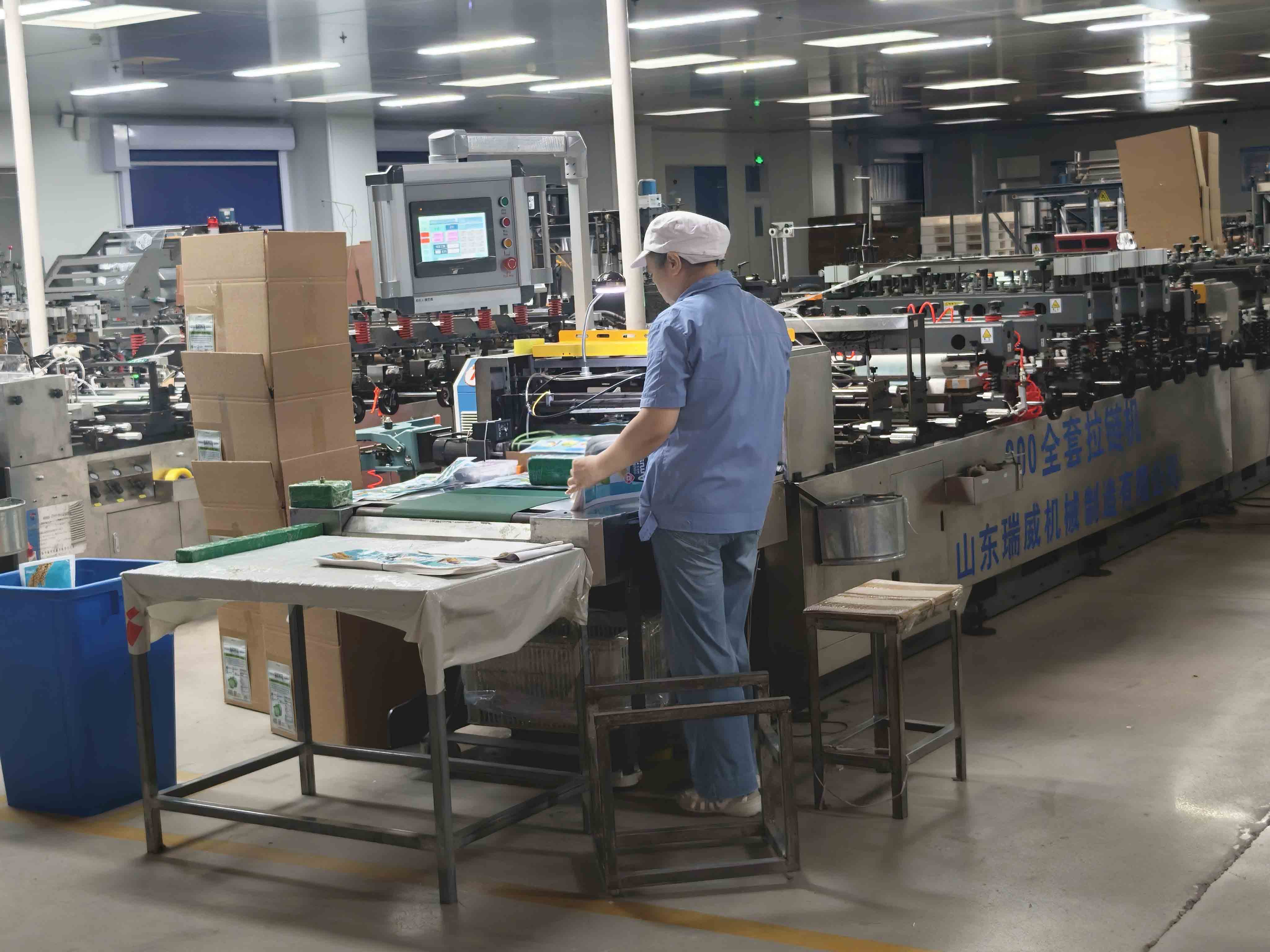
Use a product lot and filling method representative of what the brand intends to sell. Record formula and mask lots, sample pouch lot, fill target and actual checks, the order of insertion and dosing, and who performs the final seal. Where a small team uses manual equipment, test the actual equipment and operator process. A sealing setting borrowed from another laminate is only a starting idea, not a validated recipe.
Watch the top-seal land before the jaws close. Serum carried on the sheet or dripped by the filling nozzle can interfere with bonding. A mask fold or backing caught in the seam creates a different defect. Treat visibly contaminated or obstructed edges according to the trial disposition procedure; do not simply raise the temperature and assume the problem is solved.
Inspect the center and both top corners. Map any leak to its location and preserve the failed pouch. If a converted side seal fails, the supplier should examine that bag lot. If the final top seal fails, compare the film, equipment, clean-seal control and settings together. Add a leak challenge suited to the filled liquid pouch and its anticipated handling, plus an opening trial. A short successful sample run answers feasibility questions, not long-term preservation.
Gate 3: Printed sample, opening features and label proof
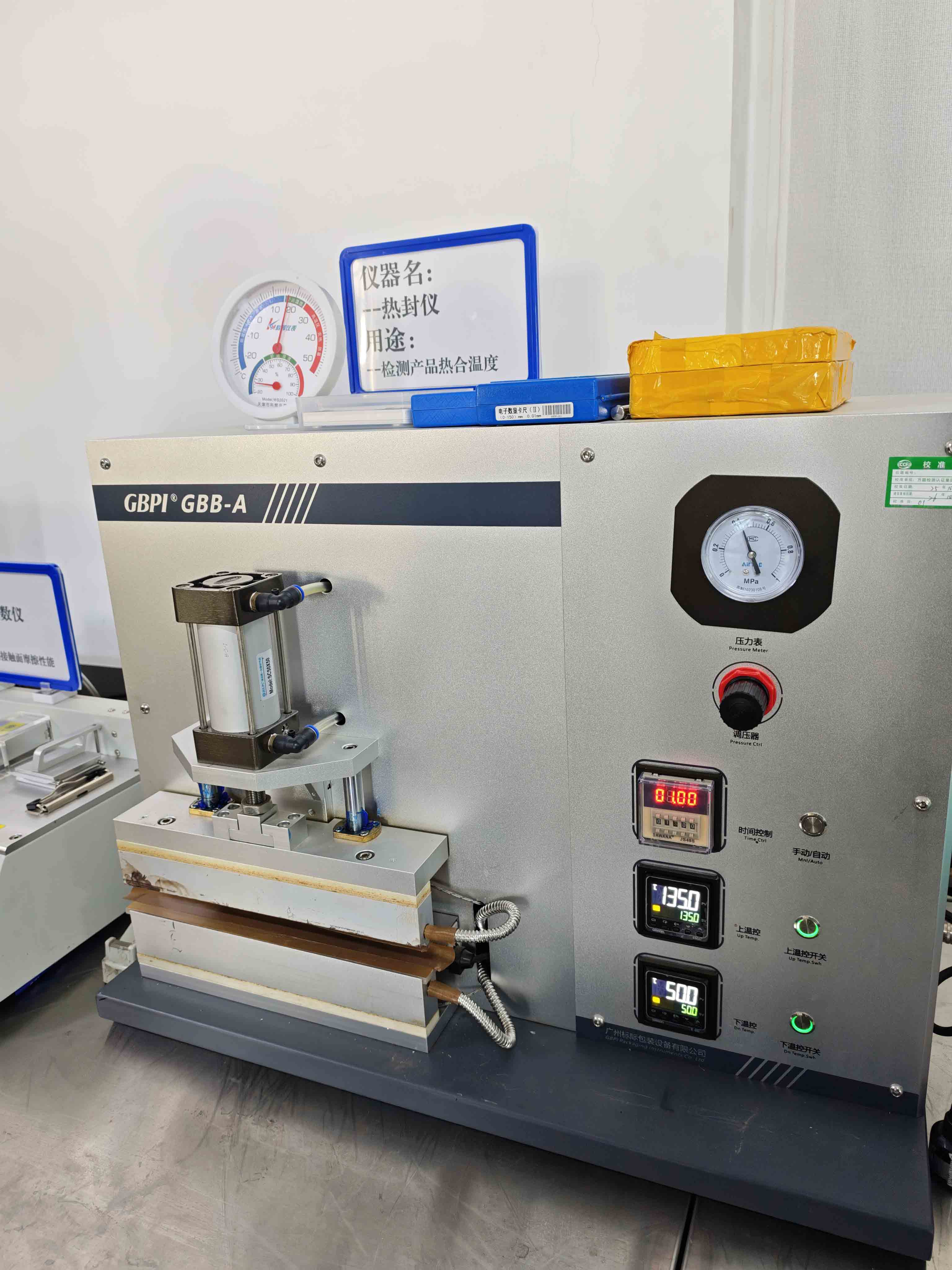
Once the unprinted fit and first seal are promising, move to a proof of the bag that buyers will actually see. Confirm that the proposed print sample uses the same contact and seal structure as the trialed candidate. If its film, adhesive, coating, window or sealant changes, flag the affected Gate 2 results for review. An artwork change can also move a notch or code into a functional area.
Review the flattened dieline and a filled, sealed print sample side by side. The first shows where graphics were intended to land; the second shows what remains visible after the pouch fills and its top is sealed. Check the primary display panel, ingredient and direction space, lot or batch code, any required caution text, the tear path, and whether the consumer can remove the mask without forcing a fold against a sharp cut. The brand's qualified reviewer owns the label and claims for the intended market. A bag printer's color proof is not a legal review.
A stock unprinted bag with an appropriately reviewed label may be a practical trial route for some brands. A digital-printed prototype can let a team assess multiple designs without immediately committing to a conventional printed run. Neither option is automatically cheaper or available at a particular minimum order quantity for every material, size and finish. Request a project-specific quote and distinguish a display mock-up from a production-representative pouch.
The digital printing option is relevant when artwork versions are being assessed, but its general marketing information should be confirmed against the particular sachet specification. Ask whether the proposed proof shares the same layers and sealing behavior as the final production bag. If it is a visual-only mock-up, mark it as such and keep it out of the material approval set.
Gate 4: A production-representative pilot and retained units
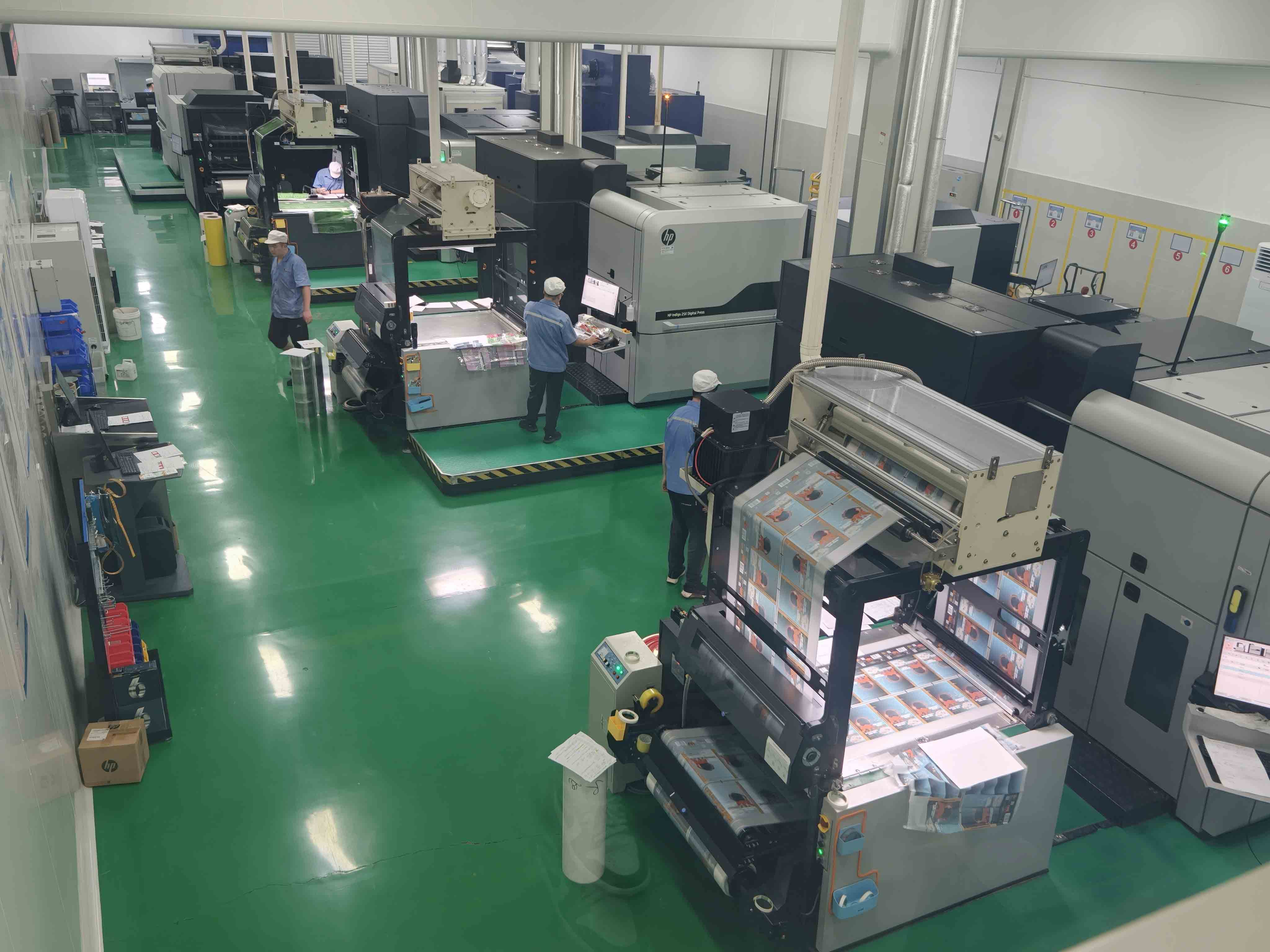
The last gate before a larger order should represent the intended product and process as closely as possible. Use the approved formula and mask, the agreed pouch construction and print version, the intended filling equipment and final sealing procedure, and the planned retail and shipping system. Establish who will sample the start, middle and end of the run, what defects cause a hold, and how rejected units are recorded. Do not silently replace a film or nozzle and keep the old approval code.
Inspect packages as they will be sold and shipped. A filled sachet may fit the display but be pressed against a carton edge; a top seal may be sound at packing and stressed after the shipper is stacked. Check the pack and its outer packaging together. Retain identified units under the product team's selected conditions for ongoing observation. A short pilot cannot pronounce a long shelf life, but it can provide the final-package version that a proper storage study must use.
At this point, write down what remains open. A typical pilot may establish that the pouch can be filled, sealed, opened and transported under the selected trial conditions while the formulation team is still assessing long-term stability and microbiological safety. Calling the sample “retail-ready” before those issues are resolved would erase the most important distinction in the project.
Use a Trial Log That Survives the Next Revision
Photographs are helpful, but they need labels. A picture of a leaking pouch with no formula lot, pouch version, orientation or time after filling cannot show whether a revision fixed the problem. Give every trial a unique identifier and link it to physical samples and the actual results.
| Record field | What to enter for each trial |
|---|---|
| Trial ID and purpose | Fit only, filled-seal feasibility, print review or production-representative pilot |
| Product identity | Mask type, fold and backing revision; formula and batch |
| Pouch identity | Supplier, material construction or sample code, size, artwork version and pouch lot |
| Fill and line | Target dose, observed range or checks, insertion/dosing sequence, equipment and operator or line ID |
| Seal control | Planned seal position, whether the land remained clean, settings recorded by the filler and visual defects |
| Inspection | Locations and descriptions of leaks, wrinkles, caught sheet, delamination or print/code errors |
| Challenge | Orientation, handling, carton, storage condition, timing and test method actually used |
| Opening | How the notch started, whether the sheet emerged cleanly and where serum moved on opening |
| Disposition | Pass for the stated gate, hold, reject or revise; responsible owner and next change |
| Retained samples | Quantity selected by the plan, storage location, date and link to version/batch records |
Use “pass for the stated gate” deliberately. A Gate 1 fit pass says only that this folded product could enter that unprinted sample with the observed clearance. It is not a Gate 4 pilot pass. A Gate 2 seal pass on one film version does not automatically transfer to a digitally printed version with a different layer structure.
Triage a defect before changing the bag
| What the team sees | First question | Controlled next step |
|---|---|---|
| Wet top edge before sealing | Did the dose, nozzle or wet fold touch the seal land? | Observe the filling sequence; trial a single change in dose placement, fold or pouch height |
| Mask trapped in the top seam | Is it the fold size, insertion method or too little clearance? | Record position at sealing and compare revised fit samples |
| Leak at a side or bottom edge | Was the empty pouch already defective or later damaged? | Keep failed and unfilled units from the same pouch lot for supplier review |
| Leak at the final top seal | Was there contamination, wrinkle, tracking or unstable sealing? | Review filler records and sampled seals on the exact laminate |
| Artwork or code obscured after filling | Was the proof approved flat instead of filled and sealed? | Mark the usable panel on a real pack and revise dieline/code position |
| Opens badly or spills on tear | Is the notch too deep, misplaced or hard to control? | Observe opening with representative filled units; change feature and retest |
| Carton arrives wet or crushed | Where is the first actual failure: pouch, fit or outer shipper? | Map damaged units and repeat a relevant pack-and-carton challenge |
One observation is not a diagnosis. For example, a wet carton could result from a converted corner defect, a contaminated final top seal, or pressure from the carton geometry. Altering the film barrier number would not address every one of those causes. Hold samples, locate the failure and change one variable where possible.
A Real Printed-Pouch Case With a Different Job
Mylarbag's public U.S. hotel amenities pouch case lists a digitally printed stand-up pouch with an MOPP/VMPET/PE structure and dimensions of 20.3 × 33 + 5.1 cm. It is an example of fields a buyer can put into an artwork and material brief: print process, structure, format and size. Those fields help prevent “same design” from referring to two materially different bags.
This is an outer pouch for a hospitality amenity bundle, not a primary wet-sheet-mask sachet. The public page does not provide a wet mask formula, a single-use flat-bag seal trial, a serum-contact result, a matched minimum order for a mask SKU, or a validated product life. Its large gusset and intended contents should not be copied into a single-mask specification. Its value in this guide is narrower: make the version of a printed pouch explicit before a small brand approves production.
For a small facial-mask brand, the corresponding proof should show the correct single-unit format, contact/seal material, opening and final artwork. If an outer gift kit is also planned, treat that as a second packaging component with its own dimensions and proof; it does not replace the primary sachet's liquid containment.
Decide What Is Ready to Scale
At the end of a small-batch trial, do not ask only “Did it leak?” Ask what version passed which conditions and who has signed off on the unresolved questions. A simple handoff pack should contain the approved pouch drawing, laminate and print code; physical filled samples; the trial log and rejected examples; final-seal settings and checks; artwork and label approval; pack-and-carton review; retained-product plan; and a change-control owner.
If the team changes the formula, dose, sheet backing, pouch size, inner layer, print construction, notch, filling equipment or shipper, record a change assessment. Some previous evidence may remain useful, but the team should identify which gate needs repeating. An unprinted stock pouch can be a good way to learn; it is not a loophole around finished-product evaluation. A digital print can make artwork review easier; it is not a microbiological or shelf-life test.
To request a practical first sample, send the folded mask, expected serum fill and variation, target display or carton, and filling method to the face mask packaging team. Ask for a labeled empty-pouch candidate and the information your filler needs for a controlled seal trial. That request is more actionable than “What bag is best for homemade masks?”
Frequently Asked Questions
Can I sell face masks that I make at home?
For the U.S. example, FDA says home manufacture of cosmetics is not categorically prohibited under federal law, but the manufacturer or marketer is responsible for a safe, properly labeled product and an environment that does not cause adulteration. Product claims may change its regulatory category, and state, local or other-country requirements may differ. A small run or personal-sounding brand name is not evidence that a stored wet mask is safe. Work out the product, production and labeling requirements before selling it.
Can I seal a fresh recipe in a pouch and choose a short expiry date?
A short printed date is not a substitute for evidence. Water-rich formulas, the mask substrate, preservation system, manufacturing conditions and packaging all influence the finished product. The brand's qualified team must select appropriate safety and stability work and study the final filled pack under its intended conditions. A supplier's empty-bag sample or one day of no visible leaks cannot set an expiry period.
Can I use a paper bag or any food pouch for a wet sheet mask?
A plain paper bag does not offer the same liquid containment and heat-seal function as a suitable primary sachet. A food pouch may be worth asking about as a candidate, but its food-contact description does not establish compatibility with a particular cosmetic serum, fold, filling line or label. Ask for the complete structure and trial the actual wet product. An outer paper carton can have a separate presentation role while the primary sachet contains the liquid.
Is a household impulse sealer enough for a small commercial trial?
It can make a preliminary sample, but the result depends on the actual laminate, clean seal land, equipment condition and process control. Record settings and examine representative seals and filled-pack integrity. If production will use another machine or operator sequence, validate that intended process. Do not take an attractive hand-sealed prototype as proof that a larger run will make the same closure, and do not copy a temperature or dwell setting from an unrelated film.
Do I need a zipper on an individual wet mask?
A single-use sheet mask is usually opened once. A zipper adds a feature that does not repair the first heat seal or resolve serum contact. A multi-use cream or refill has a different consumer-use pattern and may justify reclosure. For one wet mask, prioritize fold fit, a controlled tear path, clean seal space and the final closed pack. Trial any unusual closure only when the product brief calls for it.
Should I buy custom printed bags before running a fill trial?
Begin with identified unprinted samples when the main uncertainty is physical fit and filling. After a candidate works, review artwork on the correct construction and a filled, finally sealed sample. Ask whether a digital proof is visual-only or production-representative. The print choice does not erase the need to test serum contact and seals. Get pricing and minimum quantities for the exact size, material and artwork rather than assuming one public example applies to your project.
What should I do if only one of my sample pouches leaks?
Retain the failed unit and record its exact failure location, product and pouch lots, fill, sealing circumstances and handling history. Check comparable units from the same run and the empty-pouch lot. A one-off defect deserves investigation; it should not be dismissed as normal variation or turned into a claim that every pouch in the material family fails. Decide the hold, sampling and corrective action under your quality plan.
How many samples are enough to approve a small run?
There is no universal sample count that proves every product safe or every planned storage period acceptable. Determine the quantity and timing from the decision you are making, expected variation, test method and consequences of failure. A handful of fit samples may be enough to reject a clearly wrong size, but they cannot establish long-term stability. The brand and filler should define acceptance criteria, sampling points and retained-unit needs before making a production decision.
Does a stock pouch with a sticker label avoid cosmetic labeling review?
No. A stock bag can be a useful packaging route if it suits the product, but the brand still needs accurate information in the form required for its market. Confirm that the label stays legible and attached through normal handling, does not cover the opening or lot code, and is reviewed with the final retail unit and any outer carton. The pouch supplier's print proof or a neatly placed sticker does not approve the cosmetic claims.
A Small Trial Should Leave a Clear Next Step
Small-batch face mask packaging works best when each sample has one purpose and a traceable identity. First learn whether the product fits. Then learn whether the actual formula can be filled and sealed in a controlled way. Review the final print and labeling on a filled unit. Finally, test a production-representative pack and keep units for the product's proper study. If any gate fails, a documented change gives the next sample a reason to exist.
The packaging manufacturer can supply a better-specified pouch and respond to a mapped defect. The brand and filler can use that pouch in a sound finished-product evaluation. That division makes the first order more useful and gives the next order a version that can actually be repeated.
Source notes
- FDA: Small Businesses & Homemade Cosmetics — Fact Sheet — U.S. home-manufacture, product-category, safety and labeling context.
- FDA: Microbiological Safety and Cosmetics — product safety responsibilities and contamination pathways.
- FDA: Good Manufacturing Practice Guidelines/Inspection Checklist for Cosmetics — primary packaging, filling, coding, records and retained samples.