
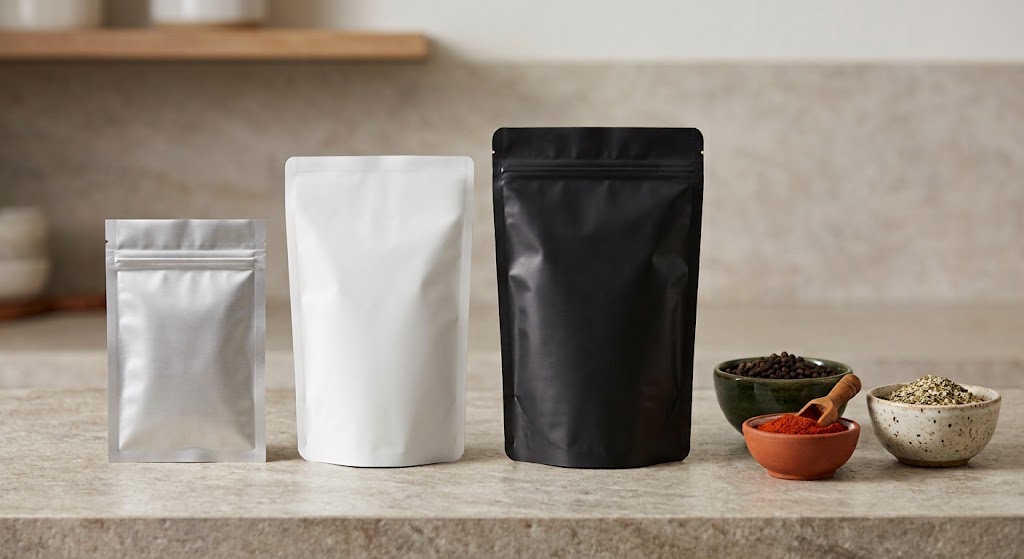
To package spices for sale, start with the spice and its route to market. Define the product, net weight and storage conditions. Test your actual spice in a food-contact pouch. Check that it fills cleanly, seals consistently, carries the required label information and arrives in saleable condition. Then approve the printed bag and the packed product together.
That sequence matters whether you are launching a single ground spice, repacking whole spices or selling a collection of blends. A pouch that looks excellent when empty can be too small for a fluffy mixture, awkward to fill with peppercorns or difficult to seal after fine powder reaches the top edge.
For a new retail line, our custom spice packaging options are a starting point for discussing the format and material. Bring the filling weight, a representative product sample and the intended market to that conversation. Those details produce a more useful sample than a request for "the standard spice bag."
1. Write a product brief before choosing the pouch
"Spice" covers products that behave very differently on a filling line. Ground cinnamon settles and makes fine dust. Whole cloves are bulky relative to their weight. A coarse rub can contain salt crystals, sugar and herbs that separate during handling. If your range includes an oil-rich paste, it needs a separate brief from a dry powder.
Start with the physical product you intend to sell. Record the formulation and lot identity, the intended net weight, any special handling and how the customer will open and use it. Decide whether the package is a single-use portion, a small pantry pouch or a larger food-service refill.
For a multi-flavor range, make a brief for each product family rather than assuming one filling setup covers everything. You may ultimately use one pouch size across several flavors. That should follow a trial in which every recipe fits and fills acceptably.
Keep food processing and packaging responsibilities visible
A sealed pouch can help maintain an established product specification. It cannot make contaminated spices safe. The FDA's spice-safety overview describes pathogen concerns and the role of controls in the spice supply chain. If you process or repack food for retail, work with your qualified food-safety team on the process and any applicable supplier controls.
The pouch supplier can help specify materials and test packaging performance. The food business remains responsible for the food and the claims it puts on the pack. Keep those two sets of records connected by product and packaging version.
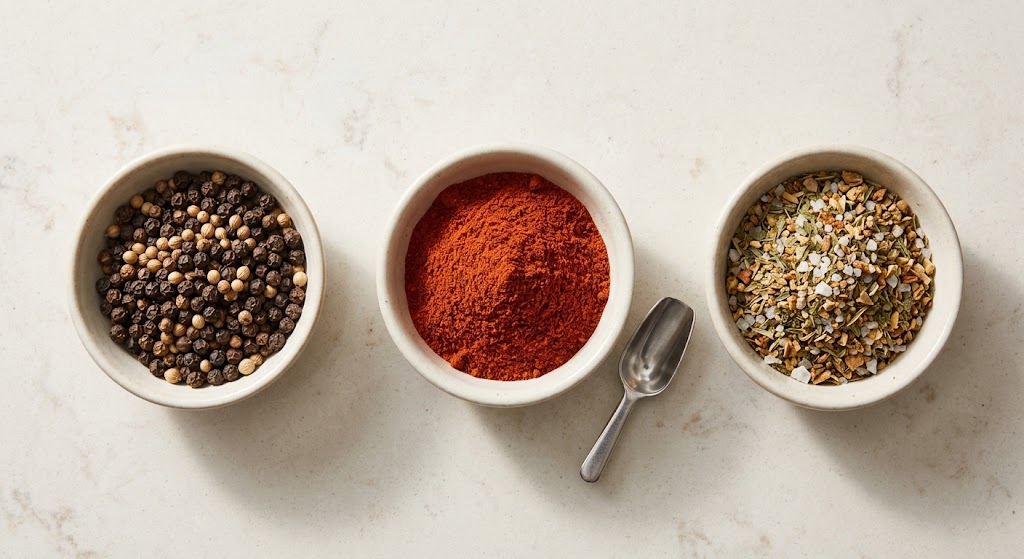
2. Match the pouch format to the way the spices will be sold
Start with the selling unit. A small flat pouch can suit a one-use seasoning portion. A stand-up pouch gives a small retail range a stable front panel and more room for graphics. A larger refill pack calls for attention to handling weight, carton protection and how the customer dispenses the contents.
Do not choose a zipper because it appears on a competitor's bag. Ask whether the customer is expected to use the product over several occasions and whether the contents will interfere with reclosing. An initial heat seal and a recloseable zipper perform different jobs: the first closes the unopened retail pack, while the second is for use after opening.
A window may help sell an attractive whole spice or coarse blend. It can also expose product to light and change the overall package construction. Ask for the specification of the actual windowed design rather than using the opaque version's data as a substitute.
If a buyer asks for a "spice bag," confirm the physical product. Some people mean a retail pouch of dry seasoning; others mean a porous bag steeped in a pot. This guide concerns sealed retail packaging for the spice itself. A cooking infusion filter has a different purpose and material requirement.
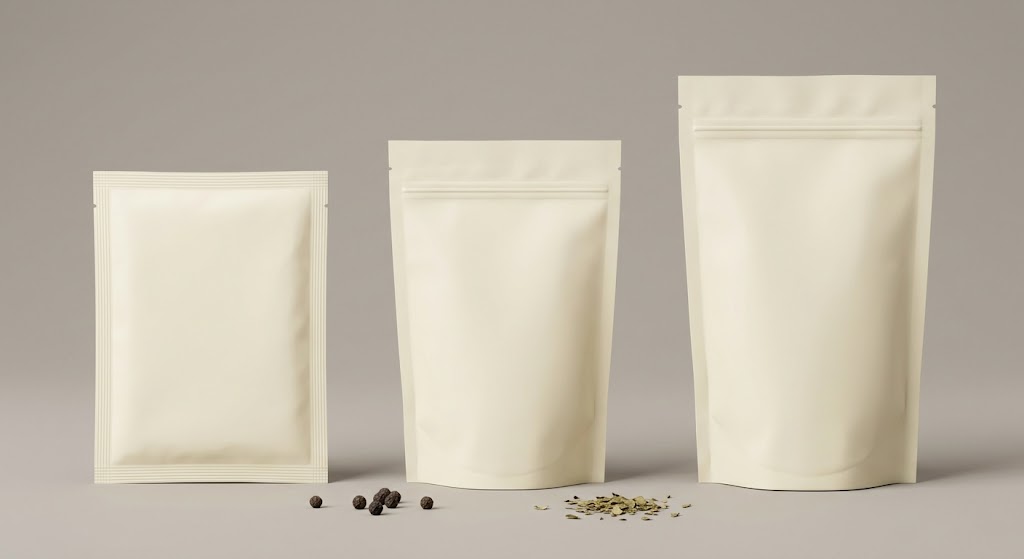
3. Choose a material against the food and the intended storage claim
Once the bag shape is roughly right, describe what the material needs to do. Aroma retention, protection from ambient moisture, light exposure, stiffness and heat-seal behavior can all matter. Their relative importance depends on the spice and the proposed storage conditions.
Ask for the full laminate construction and identify which layer contacts the food. A natural-looking paper outside does not mean the entire pouch is paper. A silver appearance does not identify whether the barrier is a metallized film or foil. Materials with similar finishes can behave differently during conversion and filling.
The FDA's food-contact explanation emphasizes intended use when evaluating substances in contact with food. Ask for documentation tied to the specific construction and market instead of accepting "food grade" as the whole answer.
AMETEK MOCON's explanation of permeation distinguishes film and whole-package transmission results and notes the effect of temperature and humidity. A number without its units, test conditions and sample identity cannot settle a material comparison.
Keep the material discussion proportionate to this article's purpose. If your team is choosing between barrier films, paper laminates, metal tins and packaging for organic spice blends, the deeper comparison belongs in a separate material specification review. Here, your immediate goal is to obtain a sample that can be filled, sealed and evaluated.
4. A real 5 oz seasoning project: what the photos establish
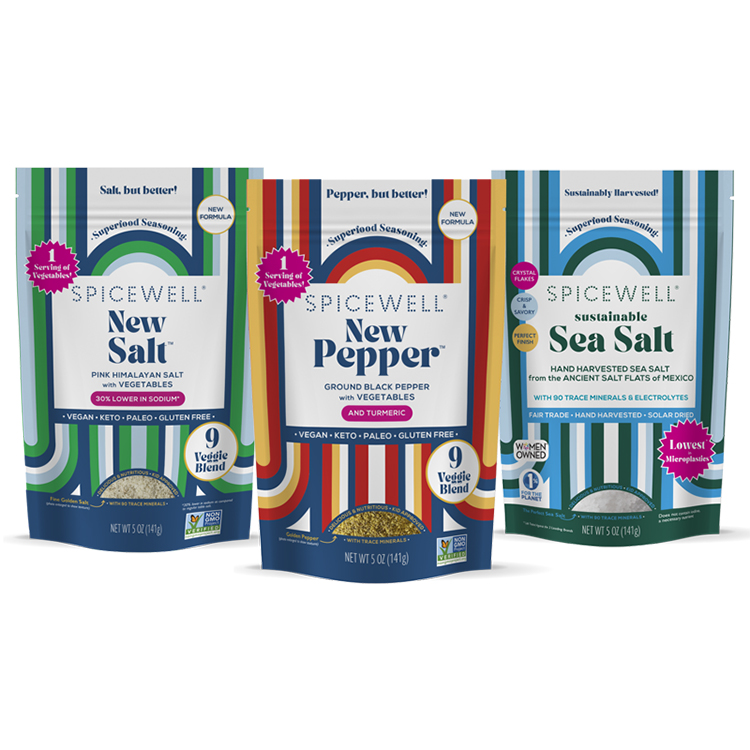
One US customer project for 5 oz seasonings and mineral salts shows printed stand-up pouches for a retail range. The project page identifies digital printing and an NK / white kraft paper / NKME / PBS construction. Its listed size is 13.3 × 20.9 + 2.5 cm. The photographs show several distinct designs for salt and pepper products.
This is useful to a new brand because it makes the artwork problem visible. A family of flavors can share a recognizable layout while each front panel still makes the specific product easy to distinguish. Production files also need the correct product text and barcode for each version, where applicable.
The listed 5 oz is this project's intended selling quantity. The recorded pouch dimensions do not establish that every 5 oz blend, herb or whole spice fits. A bulky ingredient could occupy more space; a fine powder could settle differently. Ask for physical trial samples with your own product.
For a similar range, use the spice pouch options to begin a sample discussion, then approve the result with each real product rather than borrowing the dimensions of the photographed pack.
The project page describes the material as compostable. That wording is a cue to request the applicable material and finished-package evidence if your brand wants an environmental claim. It is not an independent certificate in this article, and it does not tell us how the packaged food performs over an unstated shelf life.
Turn the example into a brief for your brand
If you are launching several seasoning SKUs, send the supplier a list of flavors, intended weights, draft artwork and preferred finish. Then separate what is common from what changes. The pouch size and base material may be shared if every product passes the fill trial; ingredient text and front-panel identity may vary by SKU.
If a flavor includes conspicuous whole pieces while another is finely milled, check both during sampling. The example makes a multi-SKU design tangible. It does not replace your own packaging approval or food-safety work.
5. Find the right pouch size with a fill trial
Bag dimensions describe the outside; a fill trial shows how the product behaves inside. For a candidate size, fill several bags to the intended net weight using the actual recipe and handling method. Check the bag immediately, after normal settling and again when it is placed in a carton.
Do not select a bag solely from an online "ounces per pouch" chart. Ounces on your food label usually refer to weight, whereas a pouch's usable volume depends on its shape and the bulk density of the contents. A light dried-herb blend and a dense mineral salt can have the same weight and occupy very different spaces.
Use a repeatable sampling record
Record the pouch sample code, dimensions, material revision, target net weight, product lot and filling method. Photograph the filled pack front, side and top. Note whether the product settles below the artwork, whether the gusset opens as intended and how much clear film remains at the sealing area.
When you compare two bag sizes, keep the product and target weight the same. Otherwise you cannot tell whether the change came from the pouch or the fill. For blends that vary between production lots, include a representative range in the approval discussion.
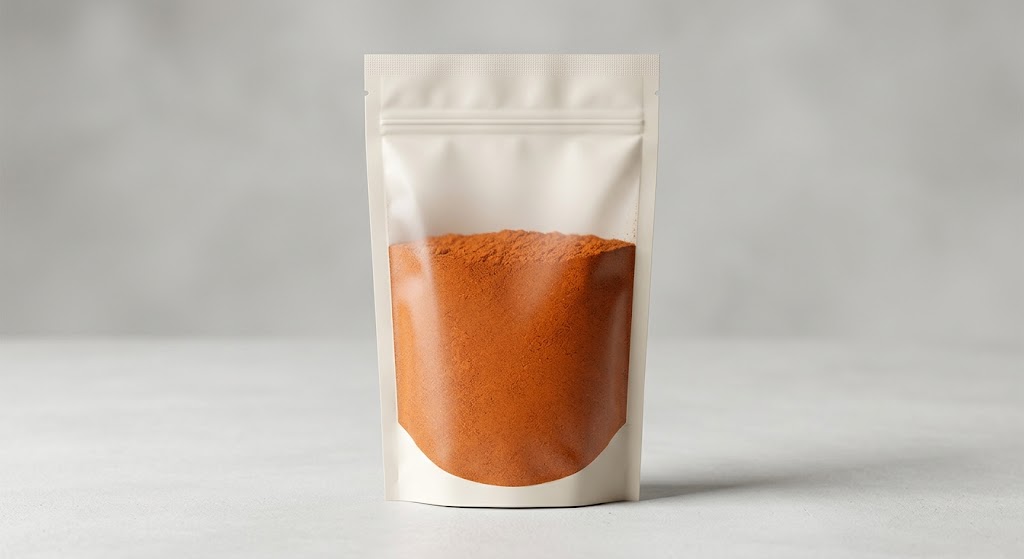
The final result may be less tidy than a mockup. That is precisely why the mockup should not be the final purchasing evidence. A filled sample lets the brand, packing team and printer agree on where the product sits in relation to the front-panel design.
6. Prepare print files for every flavor and size
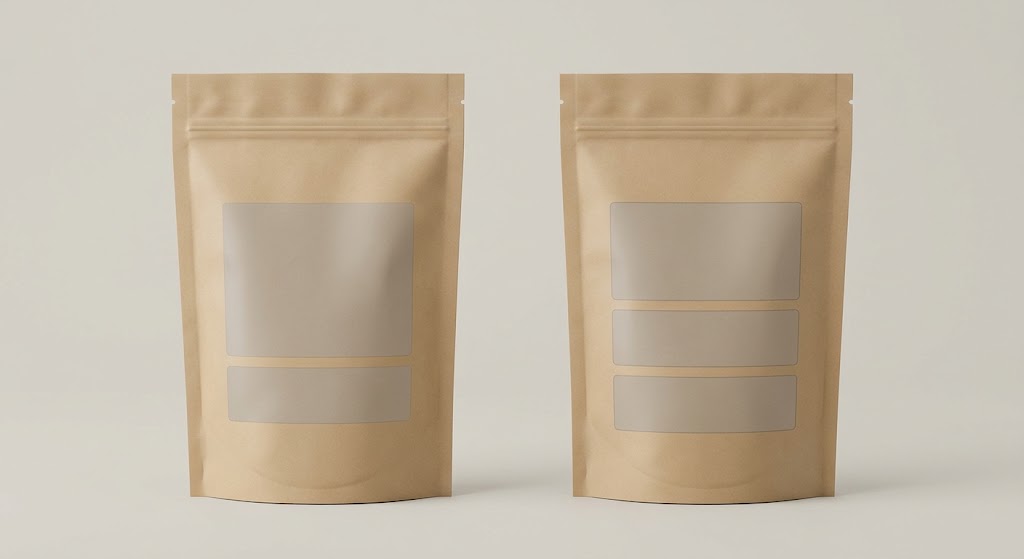
The artwork is a manufacturing input, not simply a shelf image. Ask the converter for the actual dieline of the chosen pouch and place the approved label content onto that version. A change to the bag size, gusset, tear notch or zipper can move important information in relation to folds and seals.
Give every SKU an unmistakable identifier. A familiar family look is valuable, but a salt variant and a pepper blend must still be easy to tell apart when a team picks finished pouches for filling.
Make a version table before printing
Do a physical proof review. Look at the smallest text, the contrast over a printed background, the fold positions and the appearance when the pouch is full. A PDF on a large monitor can hide a problem that becomes obvious in a small pack.
For several flavors, discuss how the printer will manage artwork changes and quantities. Digital printing may be a useful option for versioned designs, as in the 5 oz project, but the actual commercial choice depends on quantities, color requirements, scheduling and the supplier's quoted process. Ask for a comparison against your SKU plan rather than assuming one printing method is always cheaper.

7. Leave room for the retail label and review the actual market rules
Packaging suppliers can provide the printable area and dieline. The food business should approve the food label content for every market where the product will be sold.
For a US launch, the FDA Food Labeling Guide is a starting point for the statement of identity, net quantity and other label elements. Its web page specifically notes that allergen and nutrition sections have more recent guidance; review those newer materials when they apply. There is no single front/back layout in this blog that approves all spice products.
Plan the actual information panel early. The required text can change with ingredients, claims, pack size and market. A tiny pouch may create an artwork challenge even when the design looks attractive in isolation.
Check the right questions before the printer locks the file
- What is the exact name and net quantity of this SKU?
- Has the food team approved the ingredient statement and any allergen declaration?
- Does the artwork have room for the responsible business's information and any applicable nutrition information?
- Are dates, lot codes and storage directions legible after printing and sealing?
- Do marketing statements, including "organic," "recyclable" or "compostable," have their own supporting review?
- Will the label still be readable when the gusset opens and the top is torn off?
The FDA's current allergen questions and answers are relevant when a seasoning mix includes an ingredient that triggers those requirements. A package printer cannot determine an undisclosed formula's label on the brand's behalf.
For organic wording, USDA's organic labeling page explains that applicable product labels need certifier review and that different categories permit different claims. A kraft appearance or compostable pouch does not itself make the spice certified organic.
If your range is sold outside the US, review the target market's rules separately before printing. The same artwork may need changes even when the pouch itself remains the same.
8. Validate filling and heat sealing on the intended line
Powder at the seal is an everyday production problem. The package can look closed while a contaminated section compromises the intended closure. Include the actual filling equipment, operator handling and product dust in the trial.
Define the sequence: prepare the pouch, fill to the target weight, remove product from the seal area according to the packing procedure, apply the initial heat seal and inspect the finished pack. If a zipper is included, keep the initial seal and the consumer reclosure roles distinct.
Establish an operating window, then check finished packs
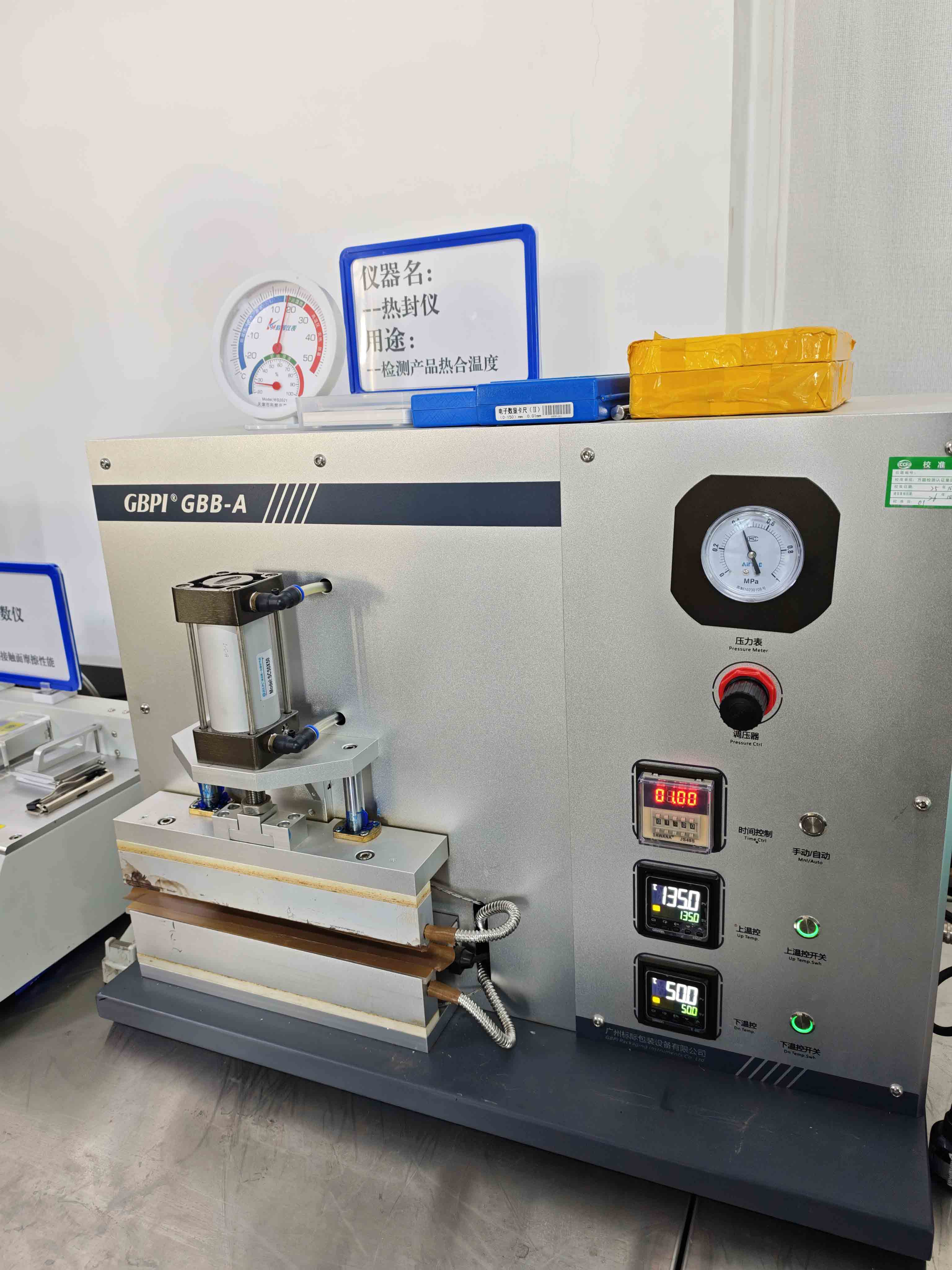
The supplier may offer starting conditions for the selected film. The packing team needs to establish settings that work on its own machine and through normal production variation. Record the material version, jaw arrangement and relevant temperature, time, speed and pressure settings.
Run more than an empty-bag demonstration. Try a normal production fill, a dusty product and a realistic operator pace. Inspect the seal near edges and corners as well as across the middle.
ASTM F88/F88M describes a method for measuring seal strength on flexible barrier materials and notes its use in process control. Ask the laboratory to select and document methods that fit the question. A heat-seal machine can prepare test seams; a separate measurement supplies seal-strength results.
If your packing line changes, assess whether the existing setting and sample evidence still apply. Keep rejected bags and photographs long enough to learn where the failure started, subject to your own quality procedure.
9. Design the shipper around the filled retail pack
Your pouch does not travel alone. It goes into a carton, through storage, onto a pallet or into a parcel and eventually onto a shelf. Test the product in that packing arrangement before ordering a large run of printed material.
The case pack should protect corners, avoid excessive compression and make it possible to identify the product and lot. Check that printed panels are not abraded by neighboring packs and that the bags remain upright or otherwise presentable when unpacked.
Use the route the customer actually plans to use
E-commerce parcels, wholesale cartons and retail displays expose packs to different handling. Put representative filled pouches into the proposed carton and review the same route your business intends to use. If a test reveals scuffed printing or leaking seams, document the specific damage and adjust the pouch, carton or packing method as appropriate.
Store product under the conditions approved by the food team. A barrier pouch cannot repair heat-damaged or improperly processed food. Date codes and pack version identifiers should remain traceable after shipping, so a complaint can be linked to the relevant batch and packaging specification.
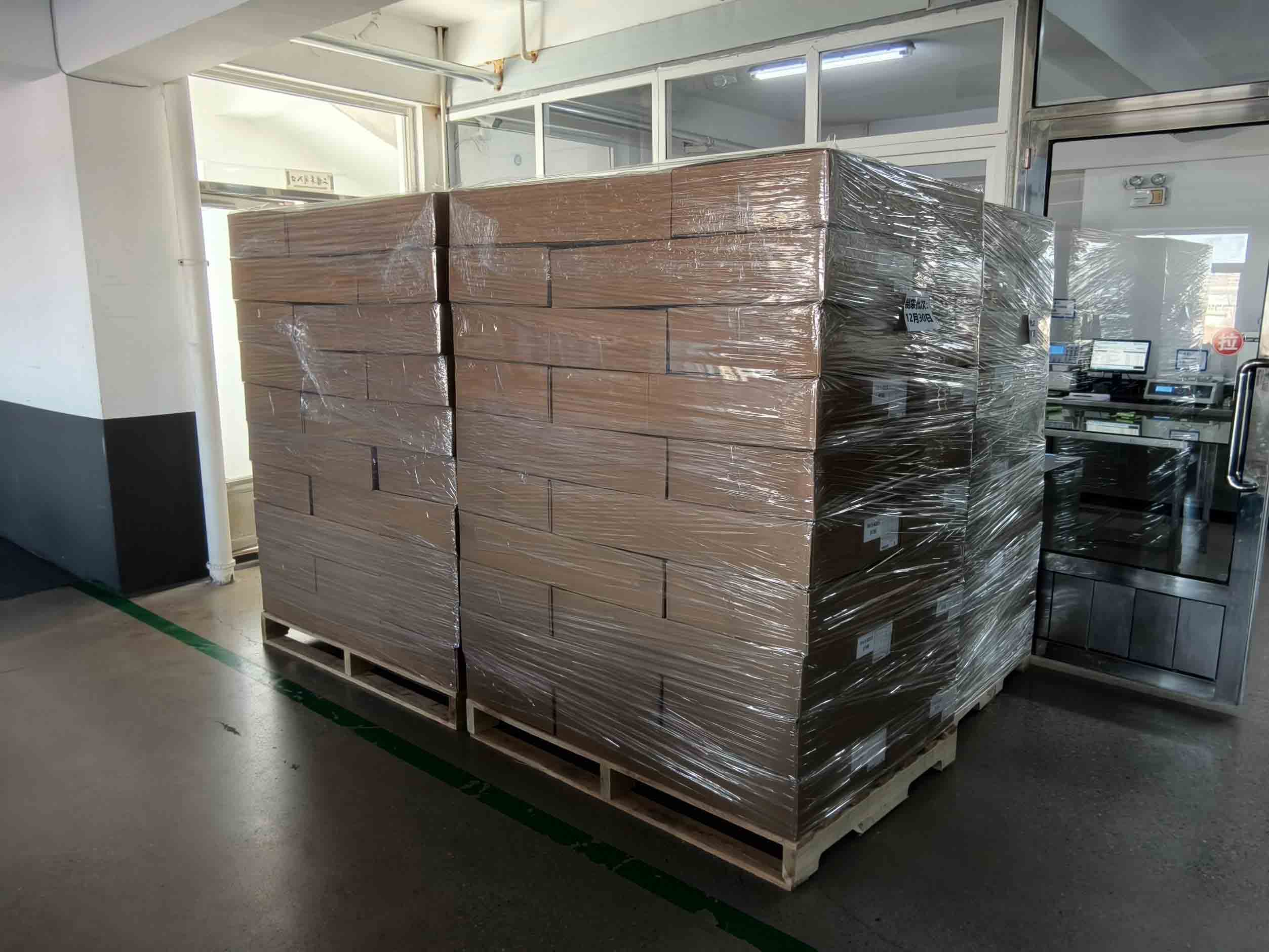
Do not infer a customer's distribution success from a photograph of factory cartons. The photograph below shows a real packaging operation. Your own filled-pack distribution check is still needed.
10. Move from sample approval to the first order
Before placing the order, hold a short approval review involving the food business, printer or converter, and packing operation. A bag can meet its drawings while the filled product still fails a practical check. Conversely, a nice-looking hand-filled sample may be difficult to run consistently at the intended pace.
Keep one approved sample and one controlled specification for each version. Record the film construction, pouch dimensions, closure, artwork file, print proof and approved product use. If an alternate material or closure is proposed later, treat it as a documented change.
A practical order checklist
- Product: confirm formula revision, intended net weight and the real product used for the trial.
- Bag: approve the exact format, material layers, dimensions, closure and finish.
- Print: approve a separate proof for each SKU and check the smallest text at full size.
- Line: retain filling, seal and inspection results from the intended equipment.
- Label: have the food business approve the market-specific text and claims.
- Distribution: check filled packs in the intended shipper and storage plan.
- Traceability: align food lot, packaging lot, artwork version and date coding.
You do not need a guess about "how many ounces fit" to start this conversation. A target net weight and a representative product sample let the supplier propose a sensible first set of sizes. Test the shortlist before the printed production order.
When you contact us through the cooking spice bag range, include the details above. A description such as "ground paprika, 5 oz, three flavors, US retail, stand-up refill pouch, existing filling line" is much easier to act on than "send me your best spice bag."
Frequently asked questions
How do I package my own spices for sale?
Start with a food product and process suitable for the market where you will sell it. Choose a selling unit and a candidate food-contact pouch. Fill samples with your actual spice, check weight and presentation, test sealing on the intended line, approve the label and review the filled carton. Keep the specification and lot records for the version you sell.
Can I package homemade spices for resale?
Packaging alone does not determine whether a homemade product may be sold. The applicable food-business and labeling requirements depend on your location, the product and the way it is produced. Establish those requirements with the appropriate authority or qualified adviser, then select packaging for the approved product and sales channel.
What is the best bag for ground spices?
There is no one construction that fits every powder. Define the product's moisture, aroma, light and storage requirements; then compare suitable food-contact pouch constructions. Trial filling and sealing with the actual powder because fine particles can reach the closure area even when an empty sample seals well.
Does a zipper replace the initial heat seal on a retail spice pouch?
For a pouch designed to be initially heat-sealed above the zipper, the zipper is a consumer reclosure feature. Specify and validate the initial package closure on the intended line. The exact arrangement depends on the finished pouch design; do not assume a zipper alone establishes the unopened package.
How many ounces of spices will fit in a 4 × 6 inch pouch?
Outside dimensions do not determine a universal weight capacity. A fine powder, dried leaves and coarse salt have different bulk densities and settling behavior. Ask for a sample of the actual construction, fill it to your proposed net weight and check the seal area and shelf presentation before approving the size.
Is environmental monitoring required for spice packaging?
That depends on the food facility's hazard analysis and applicable requirements, rather than the choice of a spice pouch alone. Under the FDA preventive controls rule overview, environmental monitoring is required when contamination of a ready-to-eat food with an environmental pathogen is identified as a hazard requiring a preventive control. The food business should have its qualified food-safety team determine how that applies to its operation.