Are Pyramid Tea Bags Safe in 2026? The Hidden Dangers of Nylon and PET
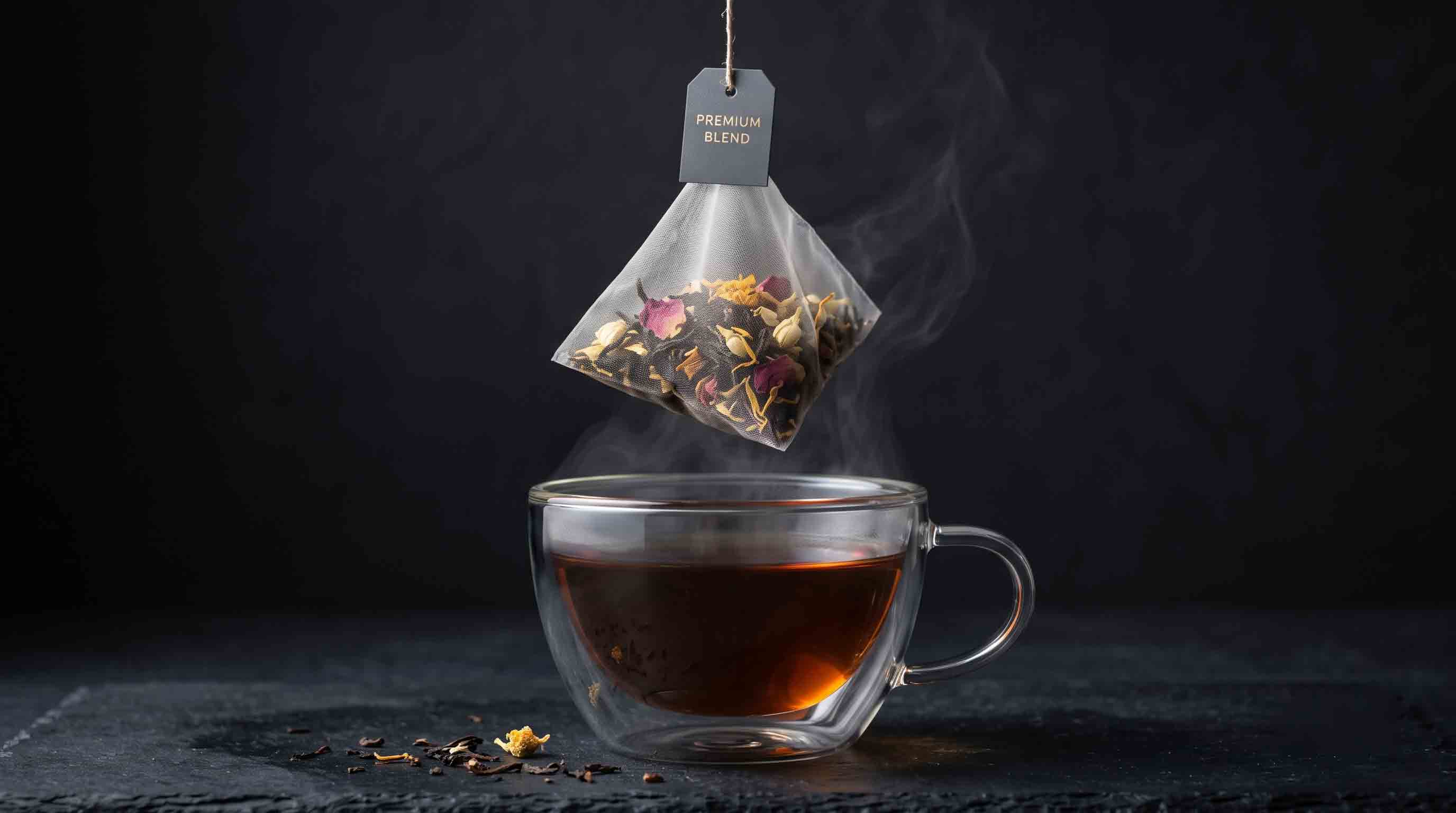
TL;DR: Not all pyramid tea bags are safe. As we move deeper into 2026, the classic silky, see-through pyramid bags you often see on store shelves are still predominantly made from Nylon or PET plastic films. When exposed to boiling water (above 95°C/203°F), these plastics begin to degrade rapidly, releasing microplastics and nanoplastics into your tea. If you want a truly safe cup of tea, you must check the packaging and choose ultrasonically sealed PLA (corn fiber) pyramid bags—a true leap forward in eco-friendly packaging—or stick to loose leaf tea.
The Luxury Illusion of "Silky" Pyramid Sachets
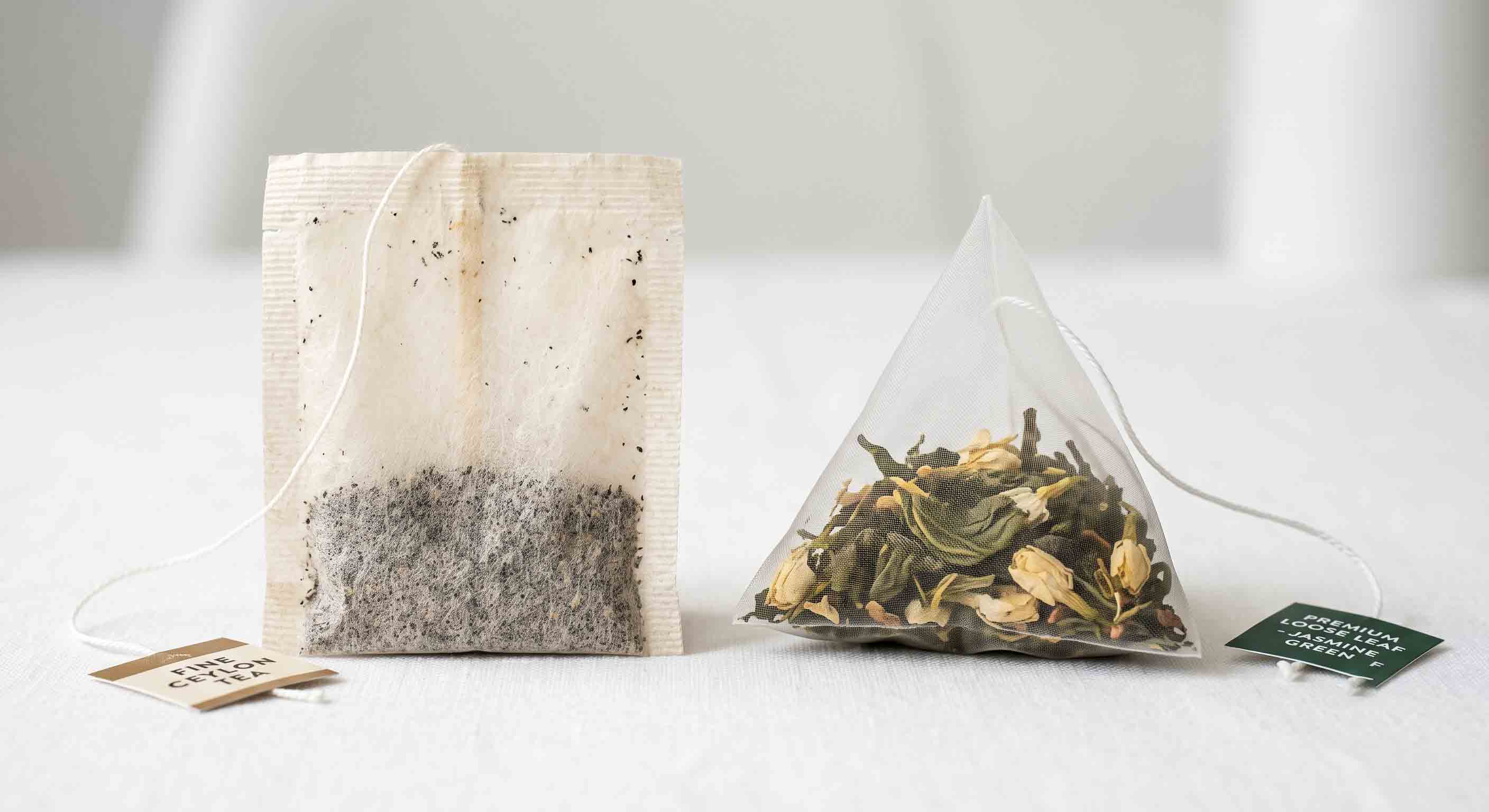
Take a walk down the premium tea aisle, and you'll spot them everywhere: those elegant, tetrahedral bags that give high-grade loose-leaf tea plenty of room to expand. A common question my packaging clients ask when launching a new line is, are sachets better than tea bags?
From a purely flavor extraction standpoint, yes. The pyramid shape allows whole tea leaves, herbs, and dried fruits to unfurl completely. This delivers a richer, more robust flavor profile compared to the crushed, low-grade "fannings" and dust typically found in traditional flat paper bags.
But there is a dirty little secret in the flexible packaging industry. To achieve that premium, see-through "silky" texture that looks so great on Instagram, many brands rely on cheap synthetic polymers—specifically Nylon and PET (Polyethylene Terephthalate). They look incredibly luxurious and hold their shape beautifully in hot water, but they are essentially the same plastics used to make your water bottles, yoga pants, and synthetic activewear.
The Plastic Tea Bag Problem: By the Numbers
To see exactly why big brands are quietly panicking and shifting their supply chains, look at these numbers:
- 11.6 Billion: The staggering number of microplastics released from a single plastic tea bag steeped at brewing temperature, according to McGill University.
- 3.1 Billion: The number of nanoplastics (particles small enough to penetrate human cellular walls) released in that same single cup.
- 95°C (203°F): The standard brewing temperature for black tea, which is hot enough to fracture and degrade PET and Nylon polymer chains.
- $0.01 - $0.03: The negligible extra cost per bag for a brand to upgrade from toxic nylon to safe, plant-based PLA.
- Composting: Composting outcomes depend on the complete material structure, applicable certification, and conditions at the receiving facility.
The Ultimate Tea Bag Materials Comparison
Forget the marketing spin. Here is the brutal reality of the three main materials currently rolling off production lines:
| Material Type | 100% Plastic-Free? | Heat Tolerance | Biodegradability | B2B Cost Level | Safety Verdict |
|---|---|---|---|---|---|
| Nylon / PET Pyramid | No (Fossil-fuel synthetic) | Poor (Breaks down at 95°C) | Never degrades | Very Low | Releases microplastics |
| Traditional Paper | No (Usually contains PP glue) | Moderate | Partially compostable | Low | ⚠️ Proceed with Caution (Releases sealants) |
| PLA (Corn Fiber) Pyramid | Yes (Plant-based) | Excellent | Industrially Compostable | Moderate | ✅ Safe (Best for health & extraction) |
Pros & Cons: Nylon vs. PLA Pyramid Bags
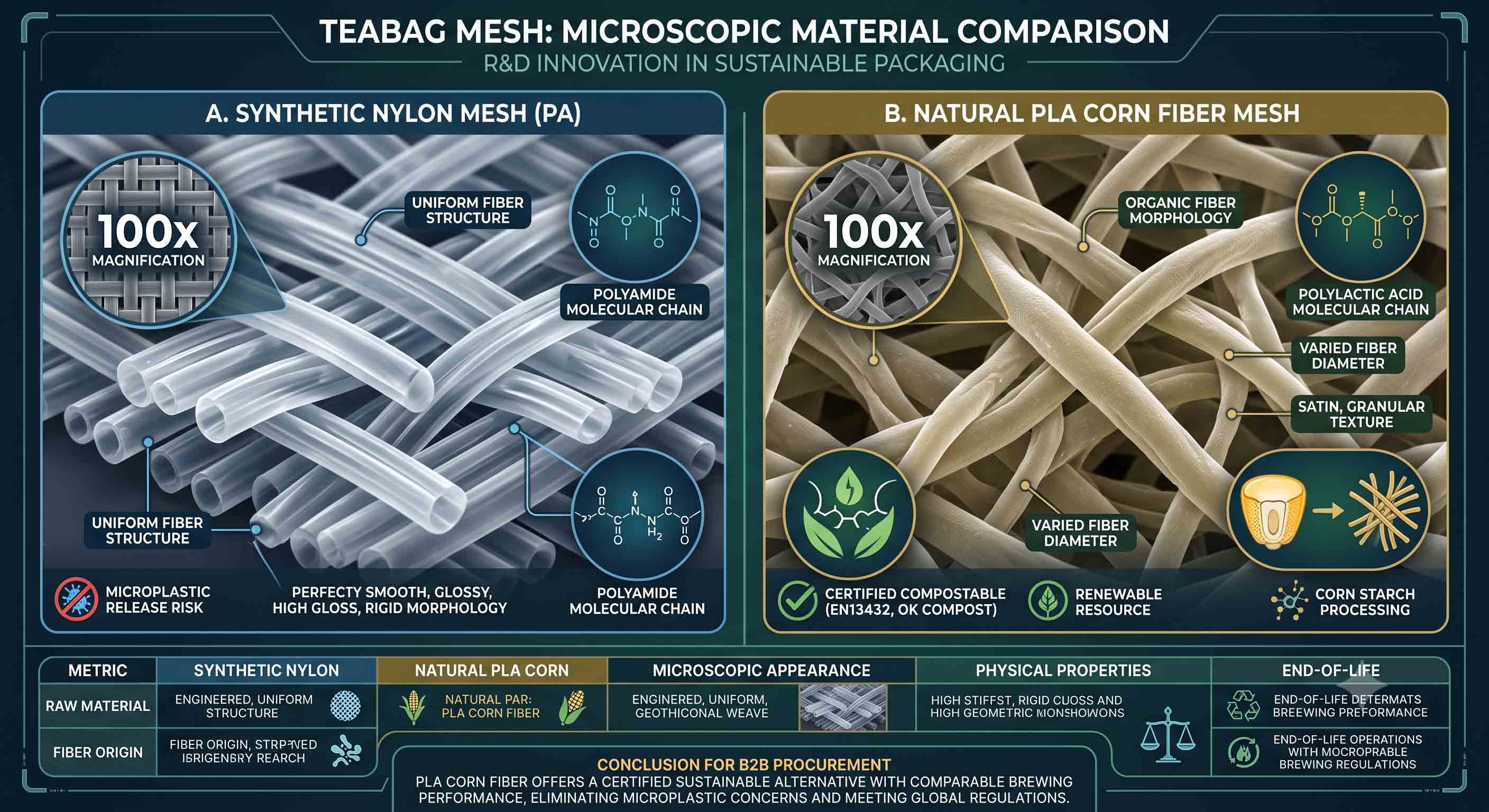
Brand owners usually fight over aesthetics vs. cost. Here is the unfiltered breakdown of what you're actually buying:
Pros & Cons of Nylon & PET Pyramid Bags
✅ Pros:
- Extremely cheap to produce at scale.
- High visual clarity (very "silky" and transparent).
- Strong tensile strength; difficult to tear by accident.
❌ Cons:
- Releases microplastics and nanoplastics when exposed to boiling water.
- Not biodegradable; creates permanent environmental pollution.
- Massive reputation risk for brands if consumers find out.
Pros & Cons of PLA (Polylactic Acid) Pyramid Bags
✅ Pros:
- PLA is a bioplastic that may be made from renewable feedstocks such as corn or sugarcane.
- Completely safe at boiling temperatures.
- Excellent flavor extraction matching nylon's performance.
- Industrially compostable and eco-friendly.
- Allows brands to charge a premium for "clean" packaging.
❌ Cons:
- Slightly higher upfront unit cost for manufacturers.
- Requires industrial composting facilities (cannot easily decompose in a backyard garden).
The Hard Data: What Happens When Nylon Meets Boiling Water?
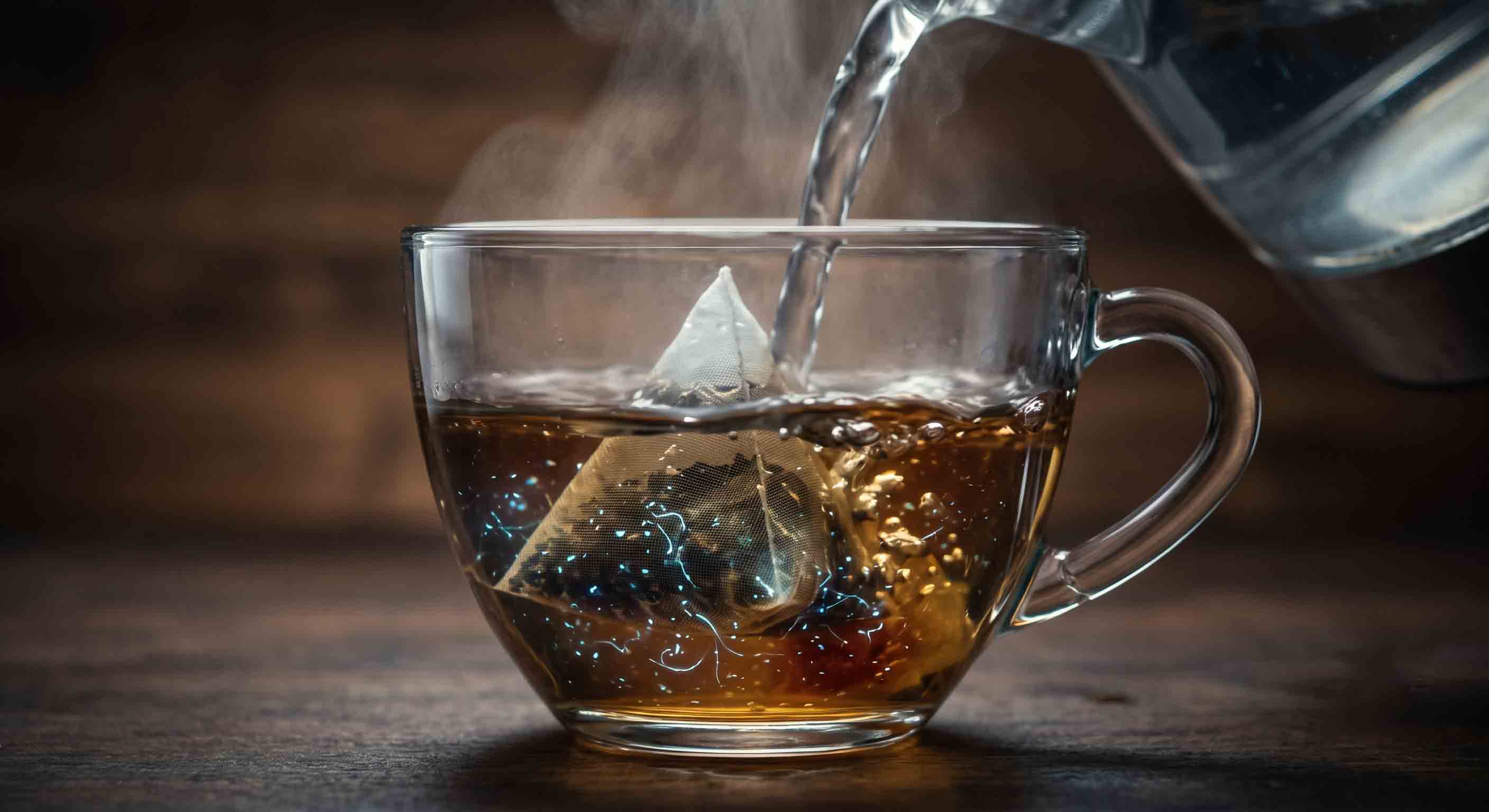
You don't have to take a packaging manufacturer's word for it. In 2019, researchers at McGill University published a landmark study in the highly respected journal Environmental Science & Technology. They took four different commercial plastic tea bags, emptied out the tea leaves, and steeped the empty plastic mesh in water heated to 95°C (203°F).
The results sent shockwaves through the tea industry. In a 2019 laboratory study, a plastic tea bag released 11.6 billion micro-sized and 3.1 billion nano-sized particles under the study's steeping conditions. Human-health implications from this type of exposure remain under study. To put that massive number in perspective, the amount of plastic particles in that single cup of tea was thousands of times higher than the plastic load previously reported in other foods and beverages like bottled water, honey, or table salt. Plastics like PET and Nylon simply cannot withstand boiling water. The heat causes the polymer chains to fracture, crack, and shed microscopic plastic shards directly into your morning brew.
Microplastics vs. Nanoplastics: Why You Should Care
While the word "microplastics" gets all the media attention, the nanoplastics are actually the bigger threat. Microplastics range from 5 millimeters down to 1 micrometer. Nanoplastics, however, are smaller than 1 micrometer.
Because they are so unbelievably tiny, nanoplastics can bypass the human body's natural digestive barriers. They are small enough to penetrate cellular walls, enter the bloodstream, and potentially accumulate in organs. When you brew a nylon tea bag, you aren't just drinking tea; you are ingesting a microscopic chemical soup.
Health Risks: Are Nylon Tea Bags Bad for You?
So, are nylon tea bags bad for you? And are plastic tea bags safe? Current scientific investigations are assessing the long-term impact of ingesting synthetic polymers from packaging materials. While regulatory agencies monitor these materials, consumer awareness regarding potential microplastic exposure has grown significantly.
You are drinking green tea for its antioxidants, catechins, and health benefits. The last thing you want to do is neutralize those benefits with a side order of petroleum byproducts.
Expert Take: "The decision by some brands to continue using nylon over PLA isn't about functionality; it's purely a cost-saving measure that knowingly passes significant health and environmental risks onto the consumer." — Senior Packaging Engineer
Top 3 Myths About Tea Bag Packaging
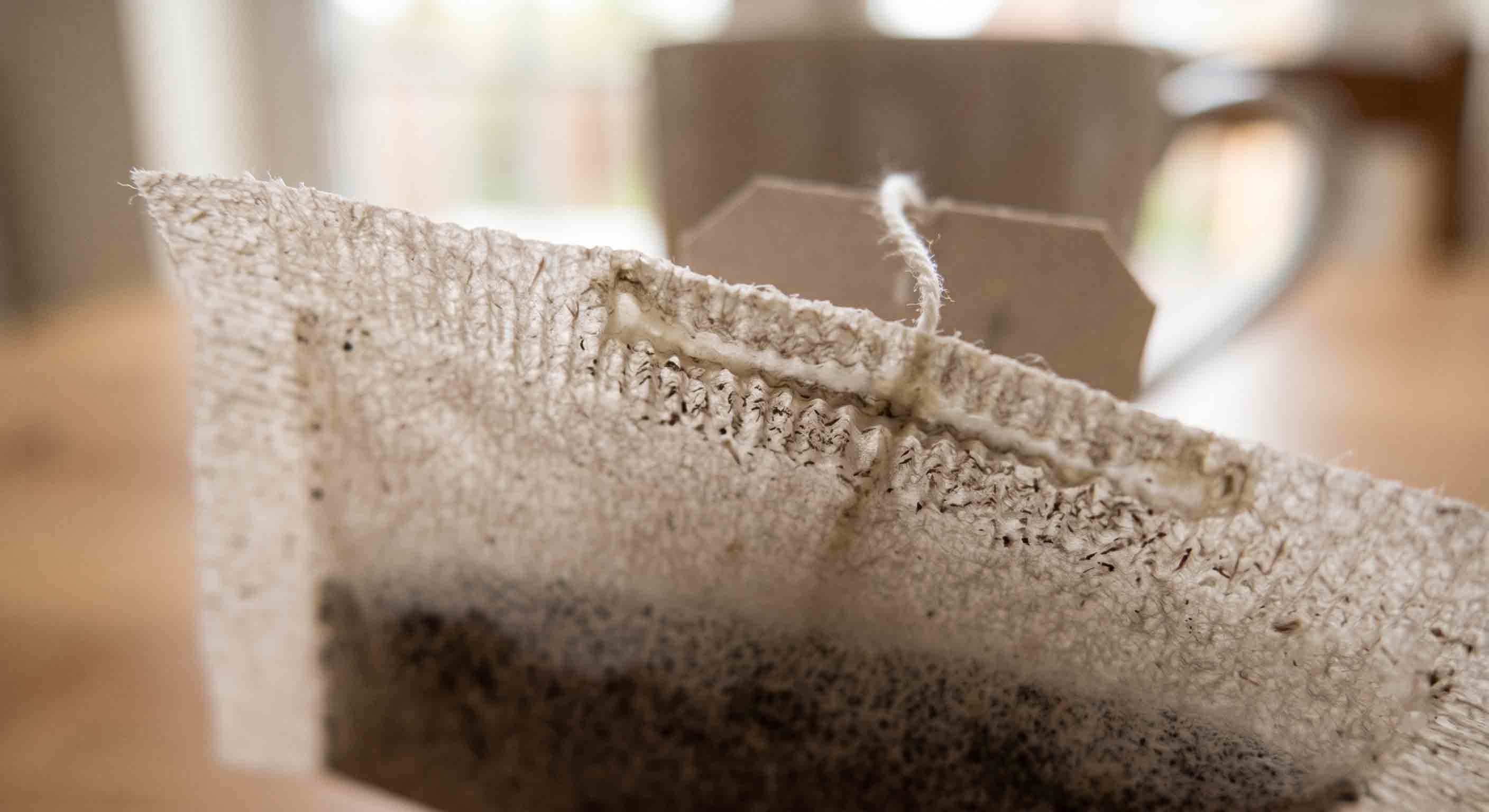
I spend half my day on the factory floor debunking internet rumors for our clients. Let's kill these myths right now:
-
Myth 1: Traditional "Paper" tea bags are 100% safe.
- Fact: Paper tea bags seem like the safest bet, right? While generally better than nylon, they have their own dirty little secret. Most conventional paper tea bags use a thermoplastic resin called Polypropylene (PP) or Epichlorohydrin to glue the edges shut. Paper tea-bag constructions vary by supplier. Some food-contact paper materials use wet-strength agents or heat-seal materials; buyers with specific material requirements should request material and food-contact documentation from the supplier.
-
Myth 2: Pyramid bags are just a marketing gimmick for aesthetics.
- Fact: The 3D pyramid shape is genuinely superior for extraction. It allows full-leaf teas and botanicals the space to hydrate and expand fully. The problem is not the shape; the problem is the toxic nylon material used to construct it.
-
Myth 3: You can compost any plant-based tea bag in your backyard.
- Fact: Even the best plant-based bags, like PLA, require industrial composting facilities (operating at around 60°C/140°F) to break down properly. Do not throw them in your cold backyard compost bin expecting them to turn into soil in a week.
The Glue vs. Ultrasonic Sealing Debate in Tea Packaging
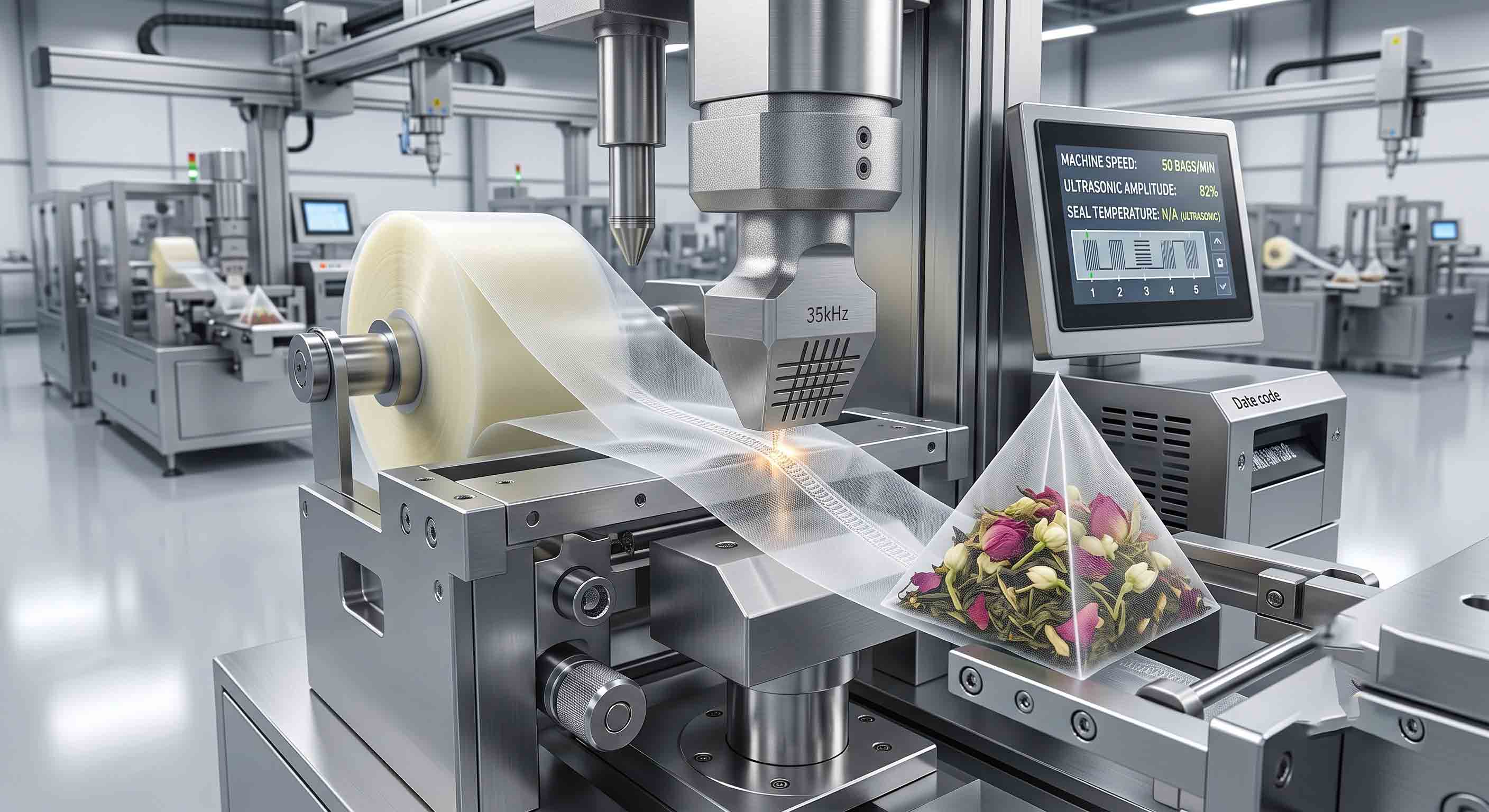
If nylon is toxic and paper uses plastic heat-sealants, what is the alternative? This brings us to the manufacturing floor.
To create a truly 100% plastic-free pyramid tea bag, you need two things: the right material and the right sealing technology. Even if a brand uses plant-based mesh, if they use chemical adhesives or plastic glues to seal the bag and attach the string, they have compromised the product.
In our factory, we refuse to use heat-sealing glues for our premium tea packaging. Instead, we utilize Ultrasonic Sealing Technology. Our machines generate high-frequency acoustic vibrations (ultrasound) that create localized friction heat. This friction physically melds the plant-based fibers together at the molecular level, creating a perfectly secure seam without a single drop of plastic, glue, or chemical adhesive. It is clean, safe, and entirely non-toxic.
Real-World Case: A Texas Tea Brand’s Packaging Nightmare
I've been in the flexible packaging manufacturing business for over a decade, and I've seen brands make catastrophic mistakes simply because they were trying to save a fraction of a cent.
A few years ago, a fast-growing artisanal tea brand from Texas came to us for a rescue mission. They had sourced their "silky" nylon pyramid bags from a cheap overseas supplier because the initial unit cost was incredibly low. It looked great on their spreadsheet. But soon, their core demographic—health-conscious, middle-class consumers—started asking questions on social media: "What exactly are these bags made of?"
When the brand admitted it was nylon, the backlash was fierce and instant. Sales tanked, subscription boxes were canceled, and negative reviews piled up, accusing the founders of poisoning their customers with microplastics.
We helped them scrap their entire remaining inventory. We completely transitioned their packaging line to ultrasonic-sealed PLA (Polylactic Acid) pyramid tea bags.
Within three months, they rebranded their outer packaging with a bold, certified "100% Plastic-Free & Compostable" badge. Not only did they win back the trust of their loyal customers, but the new eco-friendly positioning allowed them to confidently execute a 15% price increase.
Cost Analysis: Can Your Tea Brand Afford to Switch to PLA?
If you are a tea brand owner reading this, you are probably wondering about the bottom line. Yes, sourcing ultrasonic-sealed PLA pyramid bags is slightly more expensive than buying bulk nylon bags. We are typically talking about a difference of $0.01 to $0.03 per bag.
But this is not a cost; it is an investment in your brand's survival.
Modern consumers are actively scanning labels for environmental and health indicators. By upgrading to PLA, you unlock the ability to market your product as premium, eco-friendly, and safe. That $0.03 extra cost per bag can easily translate into a $3.00 to $5.00 premium on your retail box price. If you are a tea startup looking to package your blends, don't make the nylon mistake that almost bankrupted our Texas client. Check out our custom tea bags packaging solutions to see how easy and profitable it is to upgrade to plant-based materials.
How to Tell if Your Pyramid Bag is Plastic or PLA? (The Factory Burn Test)
If you have a box of pyramid tea bags in your pantry right now, and the label doesn't explicitly state what they are made of, how do you know if you are drinking plastic? You can perform a simple diagnostic test we use every day on the factory floor: The Burn Test.
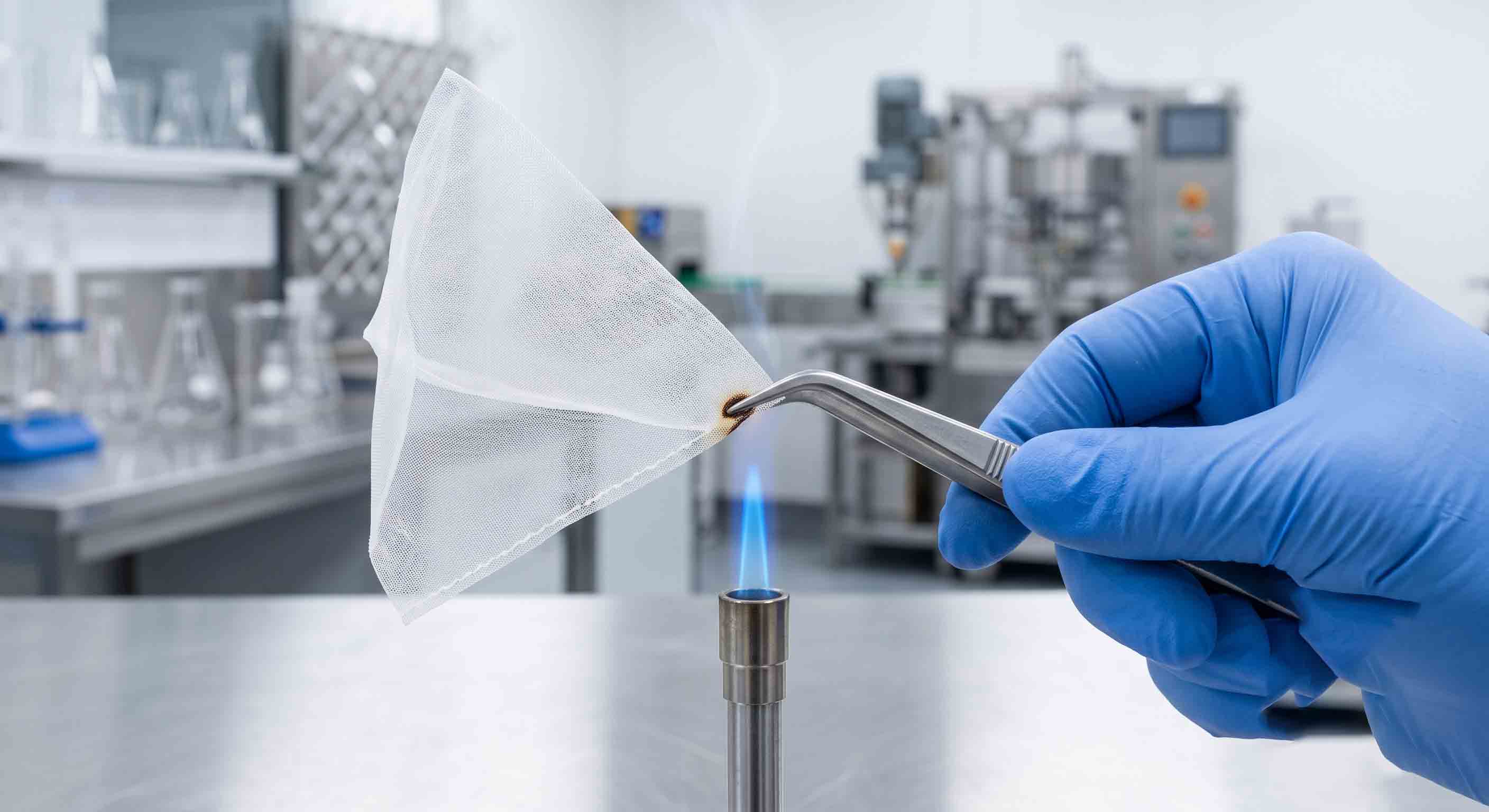
Step 1: Disassemble the Sachet Cut open the tea bag and remove all the tea leaves or botanicals completely, so you only have the empty mesh fabric.
Step 2: Ignite the Edge Hold the empty mesh safely with a pair of metal tweezers and carefully light the edge with a lighter.
Step 3: Analyze the Burn Profile
- If the material shrinks back rapidly, melts into a hard, black, sticky bead, and emits a harsh smell like burning celery, chemical fumes, or sweet plastic, it is synthetic Nylon or PET.
- If the material burns cleanly with a steady, bright flame, turns into soft white or grey ash, and smells distinctly like toasted bread, burning sugar, or roasted corn, it is plant-based PLA (Corn Fiber).
Real-World Factory Case: Transitioning a UK Organic Brand from Nylon to PLA
Here is exactly how this plays out on the production line. Last year, a mid-sized organic herbal tea brand based in the UK came to us in a panic. They had been using premium nylon pyramid bags for years. However, a viral video showing the "burn test" prompted their eco-conscious customers to test their tea bags. The backlash over microplastics was immediate and severe.
They wanted to switch to PLA immediately, but they hit a massive technical wall with their local co-packer. The local factory was using outdated heat-sealing machines. Because PLA is highly sensitive to heat, the old machines were melting the mesh unevenly, causing the tea bags to burst open or suffer from burnt, unsightly edges.
When they transferred their production to our facility, we moved their entire line onto our dedicated Ultrasonic Sealing machines. Ultrasonic waves use high-frequency vibrations to fuse the PLA fibers together perfectly, without any direct heat or glues. We even attached the PLA string and tag ultrasonically.
Because they were shipping via ocean freight back to the UK, we also warned them about PLA's vulnerability to moisture degradation during transit. To solve this, we custom-manufactured a high-barrier stand-up pouch for their outer packaging.
The Result: The brand proudly launched their new "100% Microplastic-Free & Industrially Compostable" line. Not only did they win back their loyal customer base, but the premium, safe positioning allowed them to successfully increase their retail price by 15%, easily absorbing the $0.02 upgrade cost per bag.
The 5-Point Buyer's Checklist for Sourcing Safe Tea Packaging
If you are a tea brand looking to launch a new pyramid sachet line, use this checklist before signing a contract with any packaging supplier:
- Verify the Mesh Material: Demand explicitly that the mesh is 100% PLA (Polylactic Acid), not nylon or PET.
- Confirm the Sealing Method: Ensure the factory uses Ultrasonic Sealing rather than heat-sealing glues.
- Check the String and Tag: The string must also be made of PLA or organic cotton, and attached ultrasonically, not glued.
- Ask for Compostability Certifications: Request documents proving the material breaks down in industrial facilities (e.g., BPI certification).
- Audit the Outer Pouch: Ensure the primary custom tea bags or stand-up pouch uses a high-barrier film to protect the PLA from moisture degradation during transit. (If you are also curious about how packaging affects the shelf life of the tea itself, check out our guide: Do Tea Bags Expire?). For high-end tea brands, pairing a PLA sachet with a beautifully printed outer pouch (using a matte varnish finish or digital printing) creates a 100% premium, guilt-free unboxing experience.
Quick Glossary of Tea Packaging Terms
If you're talking to a supplier or a co-packer, you better know these terms so you don't get scammed:
- PLA (Polylactic Acid): A renewable, plant-based polymer typically derived from corn starch or sugarcane. It behaves like plastic but is fully biodegradable under industrial conditions.
- PET (Polyethylene Terephthalate): A common synthetic plastic used in water bottles and cheaper pyramid tea bags. It degrades in boiling water and releases microplastics.
- EDCs (Endocrine-Disrupting Chemicals): Chemicals that can interfere with the body's hormonal system. Often found leaching from synthetic plastics like PET and Nylon when heated.
- Ultrasonic Sealing: A manufacturing process that uses high-frequency acoustic vibrations to create friction, melting plant fibers together without the use of toxic glues or chemical adhesives.
- Industrial Composting: A large-scale waste management process that maintains high temperatures (around 60°C) and specific microbial conditions necessary to break down bioplastics like PLA.
The Plant-Based Solution for Premium Tea Brands
The era of nylon and PET tea bags is rapidly coming to an end. As consumers become hyper-aware of microplastics in their diet, any brand still using synthetic polymers is playing a highly dangerous game with their reputation and long-term viability.
For the outer packaging of these premium PLA pyramid bags, we highly recommend using high-barrier flexible pouches to keep the delicate tea leaves fresh, aromatic, and safe from moisture. A custom-printed stand-up pouch or a sturdy, premium box bottom pouch pairs perfectly with eco-friendly pyramid bags, offering both stunning shelf appeal and maximum product protection.
Frequently Asked Questions (FAQ) About Pyramid Tea Bags
What is the safest tea bag material?
The safest tea bag material currently on the market is 100% plant-based PLA (Polylactic Acid) mesh, often derived from corn starch or sugarcane. Unlike nylon and PET, PLA does not release microplastics or toxic EDCs when exposed to boiling water. It is fully compostable in industrial facilities and provides the same premium, silky feel as synthetic plastics.
Are plastic tea bags safe?
No, plastic tea bags are not safe for hot water brewing. Scientific studies clearly show that plastics like PET and Nylon degrade rapidly at high temperatures (around 95°C). This degradation releases billions of microplastics and nanoplastics, along with potential endocrine-disrupting chemicals (EDCs), directly into your tea.
Are nylon tea bags bad for you?
Yes, nylon tea bags pose a significant health risk. When exposed to boiling water, the synthetic nylon mesh breaks down and sheds microscopic polymer particles. Ingesting these particles exposes your body to unwanted industrial chemicals and microplastics that can penetrate cellular walls and interfere with your endocrine system.
Are sachets better than tea bags?
It depends on the material. From an extraction standpoint, 3D pyramid sachets are absolutely better than traditional flat tea bags because they allow whole tea leaves the room to expand and release full flavor. However, if that sachet is made of nylon, the health risks outweigh the flavor benefits. A PLA (corn fiber) sachet gives you the best of both worlds: superior flavor extraction and zero microplastics.
Can microplastics from tea bags enter my bloodstream?
Yes. When plastic tea bags degrade in hot water, they release nanoplastics alongside microplastics. Nanoplastics are smaller than 1 micrometer and are tiny enough to bypass human digestive barriers, penetrate cellular walls, and potentially enter the bloodstream, acting as carriers for endocrine-disrupting chemicals.
Why do premium tea brands still use nylon bags?
Many brands continue to use nylon or PET because it is significantly cheaper to produce and visually looks very premium and "silky." Unfortunately, these brands prioritize profit margins and shelf aesthetics over consumer health and environmental safety.
Can you compost pyramid tea bags?
You can only compost pyramid tea bags if they are explicitly made from PLA (polylactic acid) or other natural plant fibers. Nylon and PET tea bags are made from synthetic fossil fuels and will never break down. Note that PLA requires industrial composting facilities (around 60°C) to break down efficiently, rather than a standard backyard compost pile.