
As global Extended Producer Responsibility (EPR) regulations tighten across Europe and North America, supplement brands are facing a massive ultimatum: transition to sustainable packaging or face crippling plastic taxes and retailer rejections. For brands selling sports nutrition, transitioning protein powder packaging bags to eco-friendly alternatives is no longer a marketing gimmick—it is a critical business survival strategy.
However, a terrifying question haunts every procurement director making this switch: "If we drop the aluminum foil and move to 100% recyclable plastics, will our protein powder absorb moisture, clump into rocks, and ruin our brand reputation?"
It is a valid fear. Protein powder—particularly whey isolate, casein, and hygroscopic vegan blends—is incredibly sensitive to moisture (H2O) and oxygen (O2). Traditionally, achieving a zero Oxygen Transmission Rate (OTR) and Moisture Vapor Transmission Rate (MVTR) required a multi-material laminate, bonding PET, Aluminum Foil (AL), and Polyethylene (PE) together. While this structure is indestructible, it is completely unrecyclable because the layers cannot be separated at standard recycling facilities.
Enter the holy grail of sustainable packaging: Mono-Material PE (Polyethylene) Pouches.
In this comprehensive 3000-word B2B guide, we will dissect the cutting-edge polymer engineering that allows 100% Recyclable Mono-PE bags to rival the barrier performance of traditional aluminum foil. We will explore MDO-PE technology, high-barrier EVOH coatings, real-world transition case studies, and how Mylarbag.net ensures your sustainable sustainability packaging never compromises product integrity.
1. The Death of Multi-Material Laminates: Why EPR Laws Demand Change
To understand why Mono-PE is taking over the supplement industry, we must first understand the legislative and retail landscape driving the change.
The Problem with Traditional Protein Bags
For the past three decades, the standard recipe for a high-quality protein powder bag has been a three-ply laminate:
- PET (Polyethylene Terephthalate): The tough, printable outer layer.
- VMPET or AL (Metallized PET or Aluminum Foil): The impenetrable middle barrier blocking all oxygen and light.
- PE (Polyethylene): The inner food-safe layer that melts to create the heat seal.
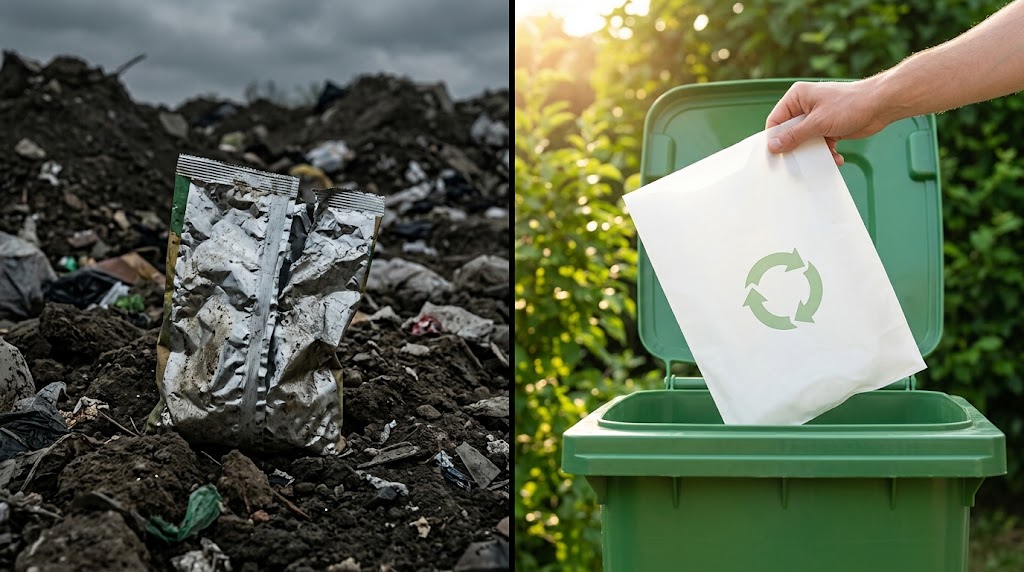
Because these three drastically different polymers are glued together using permanent adhesives, they cannot be recycled. When a consumer throws a traditional protein bag into a recycling bin, the sorting facility inevitably sends it straight to a landfill or an incinerator.
The EPR Tsunami
Extended Producer Responsibility (EPR) laws are sweeping across the UK, the European Union, and key states in the USA (like California and Maine). These regulations shift the financial burden of plastic waste management from municipalities back to the brands that produce the packaging.
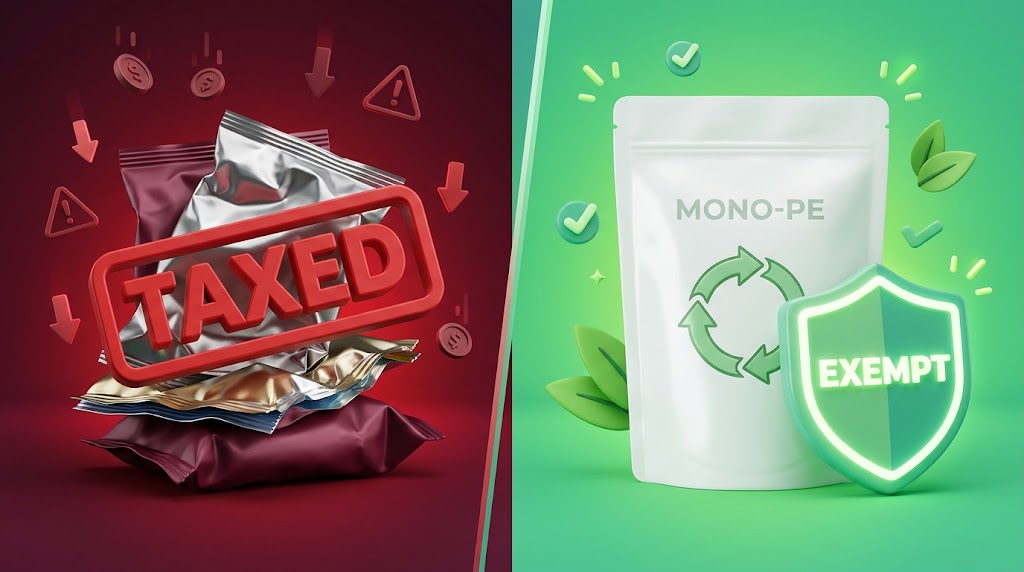
- If you sell a non-recyclable multi-material protein bag, you are penalized with steep "plastic taxes."
- If you sell a certified 100% recyclable Mono-Material bag, your taxes are drastically reduced or waived entirely.
Furthermore, mega-retailers (like Whole Foods, Target, and European pharmacy chains) are issuing ultimatums requiring all brands on their shelves to use 100% recyclable packaging by 2030. The writing is on the wall: adapt to Mono-Material packaging or lose market share.
2. What Exactly is a Mono-Material PE (PolyPE) Pouch?
If multi-material packaging is the problem, mono-material packaging is the solution. "Mono-material" means that the entire pouch—including the outer printable layer, the middle barrier layer, and the inner sealing layer—is constructed from a single polymer family.
For flexible packaging, that polymer is Polyethylene (PE).
The Challenge of Using Only PE
In a traditional bag, each material has a specific job. PET provides rigidity and heat resistance (so the bag doesn't melt on the sealing machine). Aluminum provides the barrier. PE provides the inner seal. If you try to make a bag using only standard PE, you face catastrophic failures:
- Low Heat Resistance: PE melts easily. When the jaws of a pouch-making machine clamp down to seal the bag, standard PE will melt and stick to the machine, destroying the artwork.
- Poor Stiffness: Standard PE is highly flexible and stretchy (like a grocery bag). A protein pouch made of standard PE will slump over and look terrible on a shelf.
- Zero Barrier: Standard PE is highly porous to oxygen. Your protein powder will oxidize, lose its nutritional efficacy, and clump up rapidly.
To solve this, polymer scientists had to invent a way to make PE behave like PET and Aluminum. The result is MDO-PE and High-Barrier Co-extrusion.
3. The Science of MDO-PE: Making Polyethylene Rigid
The secret to a successful 100% recyclable protein bag lies in MDO-PE (Machine Direction Oriented Polyethylene).
How MDO-PE is Created
During the film extrusion process, standard PE film is heated and physically stretched (oriented) in the machine direction up to ten times its original length. This extreme stretching forces the random polymer chains to align in a highly organized, crystalline structure. The film is then rapidly cooled to "lock" this structure in place.
The Miraculous Results of Stretching
By simply stretching the PE film under controlled conditions, its physical properties transform entirely:
- It Becomes Rigid: MDO-PE loses its stretchiness and gains the crisp, stiff, structural rigidity of PET. This allows the protein bag to stand perfectly upright on a shelf.
- It Becomes Heat Resistant: The melting point of MDO-PE is significantly higher than standard PE. This creates a "thermal differential." The outer MDO-PE layer can withstand the heat of the sealing jaws without melting, while the inner standard PE layer melts to form a perfect seal.
- It Becomes Optically Clear: MDO-PE provides a brilliant, glass-like surface that allows for stunning high-definition gravure or digital printing.
With MDO-PE serving as the outer shell, we have solved the printing and rigidity problems using only Polyethylene. But what about the oxygen and moisture barrier?
4. Engineering the Barrier: EVOH and AlOx Coatings
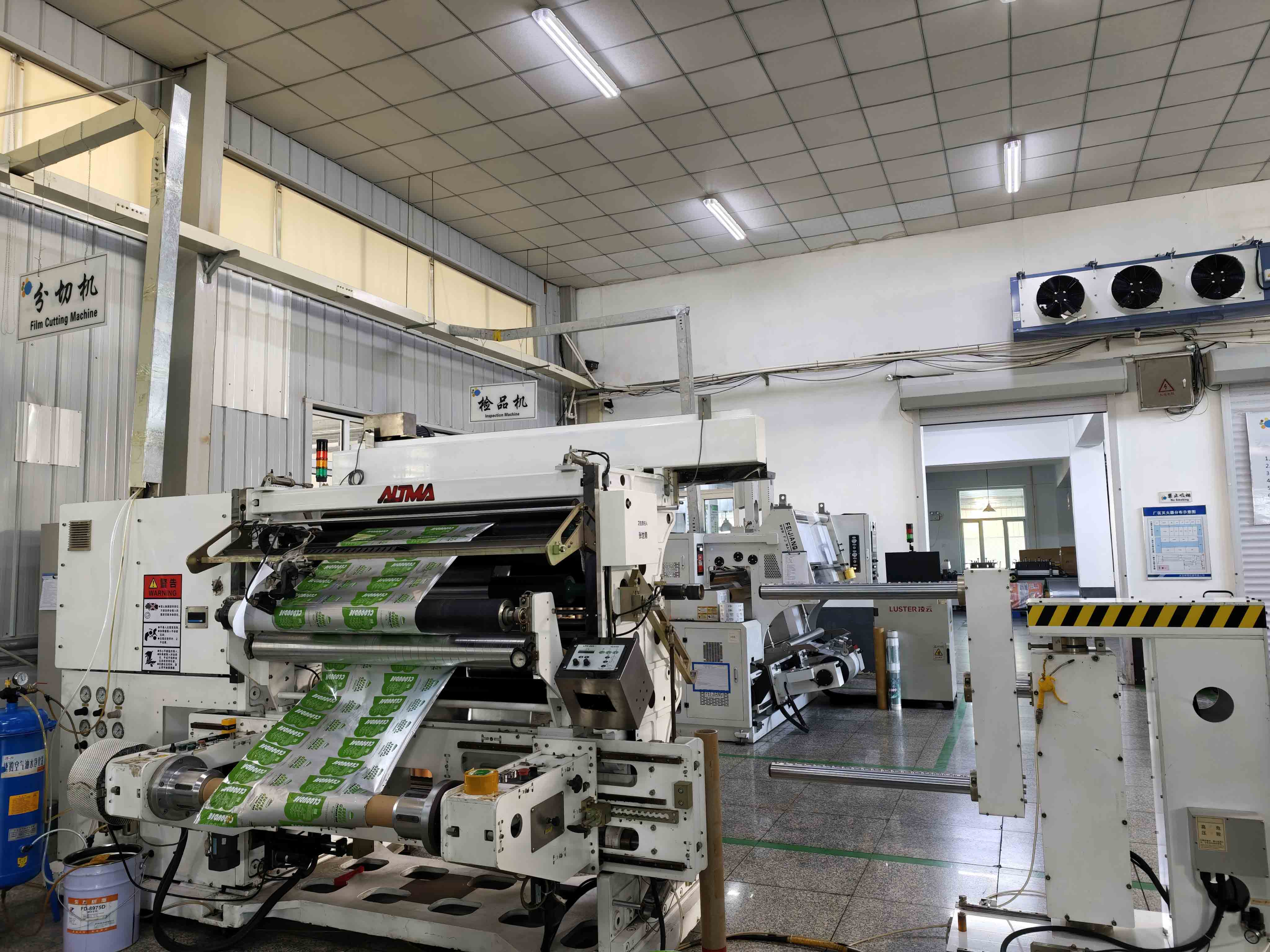
Protein powder demands an Oxygen Transmission Rate (OTR) of less than 2.0 cc/m²/24hrs to survive a 24-month shelf life. Standard MDO-PE alone cannot achieve this. We must integrate a high-barrier layer that does not disrupt the recycling process.
The EVOH Solution
EVOH (Ethylene Vinyl Alcohol) is a specialized, transparent polymer resin that possesses one of the highest oxygen barrier properties in the world. In the manufacturing of Mono-PE bags, a microscopically thin layer of EVOH (usually less than 5% of the total film weight) is co-extruded directly into the inner PE film. Because the EVOH makes up less than 5% of the total bag weight, international recycling standards (like the CEFLEX guidelines in Europe) still classify the entire bag as a "Mono-PE" structure that is 100% recyclable in the PE stream (Recycle Code 4 - LDPE).
AlOx (Aluminum Oxide) Transparent Coating
For brands that require absolute maximum moisture protection (especially hygroscopic pre-workout powders or vegan proteins), we apply a microscopic vapor-deposition of Aluminum Oxide (AlOx) onto the MDO-PE layer. This transparent ceramic coating is so thin that it does not trigger metal detectors, does not affect the bag's recyclability, yet it plummets the MVTR (Moisture Vapor Transmission Rate) to rival traditional aluminum foil.
By laminating an MDO-PE (AlOx coated) outer layer to a PE/EVOH/PE inner layer, we create a 100% recyclable fortress that keeps protein powder bone-dry for over two years.
5. Eco-Friendly Manufacturing: The Solvent-Free Lamination Edge
Having recyclable materials is only half the battle. If a packaging factory uses toxic, solvent-based adhesives to laminate the MDO-PE to the inner PE layer, the bag loses its eco-friendly credibility and risks solvent migration into the protein powder.
At Mylarbag.net, we employ advanced Solvent-Free Lamination technology for all of our sustainable packaging projects.
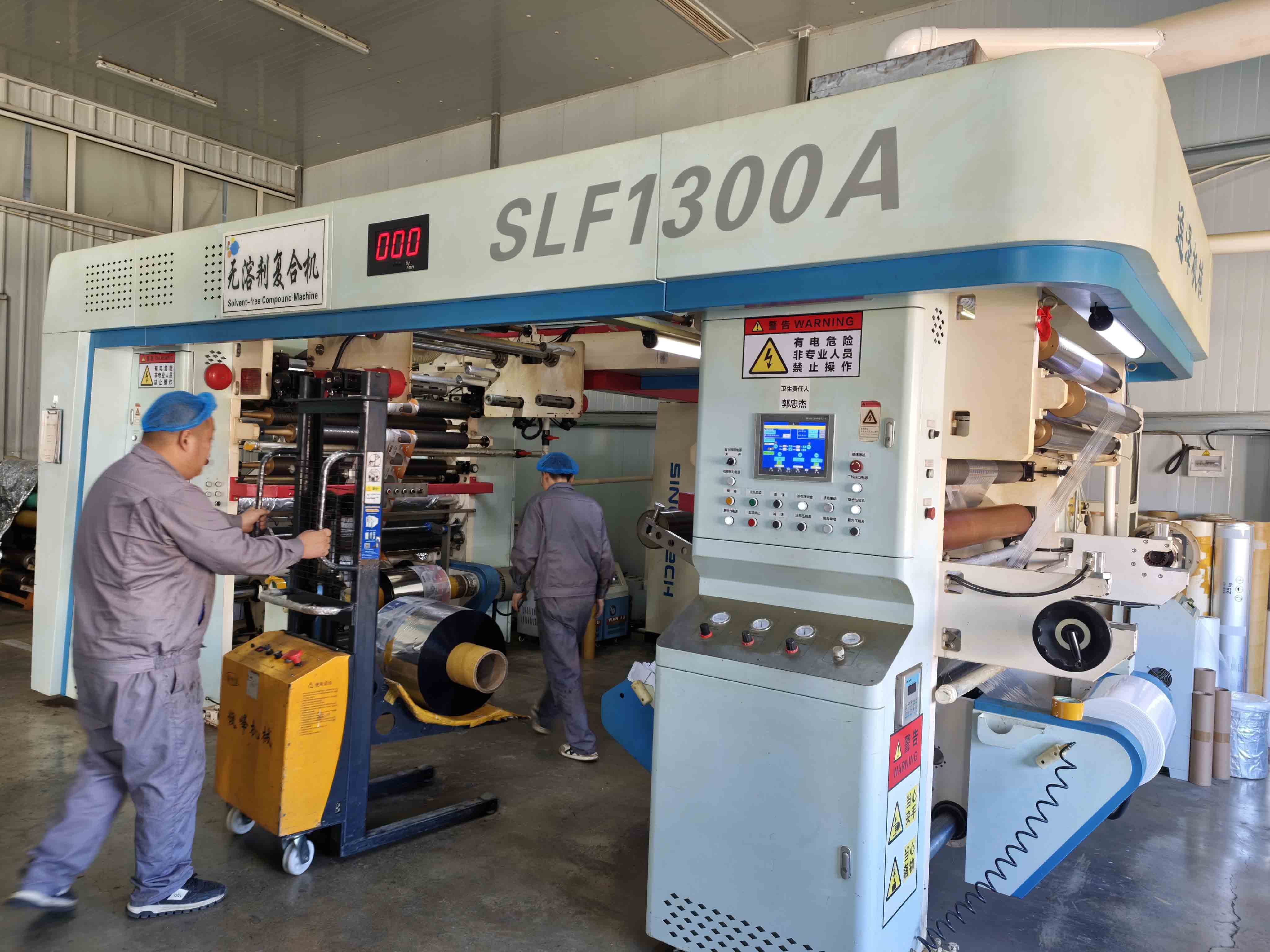
Solvent-free lamination not only protects the environment and the factory workers but also ensures that the delicate flavor profile of your premium whey or vegan protein remains untainted by chemical off-gassing.
6. Real-World B2B Case Study: Transitioning to Mono-PE in the USA
To prove the commercial viability of Mono-PE structures, let's examine a highly successful B2B transition from our Mylarbag.net case archives (Case #96).
The Client: A premium organic health and wellness brand based in the USA, specializing in high-end, highly hygroscopic organic mushroom powders and superfood protein blends. The Challenge: Their target demographic (LOHAS consumers—Lifestyles of Health and Sustainability) heavily criticized the brand for using unrecyclable foil-lined pouches. The brand needed to pivot to a 100% recyclable structure, but mushroom powder is notoriously prone to moisture absorption. If the barrier failed, the powder would turn into a solid brick within weeks. The Solution: We engineered a Custom Digital Printed 100% Recyclable Stand-Up Pouch (Mono-PE) specifically designed for extreme moisture defense.
The Engineering Breakdown:
- Material Architecture (PE/PE): We used a 25-micron MDO-PE outer layer laminated (solvent-free) to a 100-micron EVOH-enhanced PE inner layer. This ensured absolute PE-stream recyclability while providing a heavy-duty 125-micron total thickness for structural rigidity.
- Digital Printing for Low MOQ: Because they had multiple flavor SKUs (Lion's Mane, Reishi, Cordyceps blends), we utilized HP Indigo 25k digital printing directly onto the MDO-PE. This eliminated printing cylinder costs and allowed them to launch the eco-friendly line rapidly.
- The Recyclable Zipper: A recyclable bag is useless if the zipper is made of PVC or PP. We integrated a Mono-PE press-to-close zipper, ensuring the entire unit—from the film to the closure—could be tossed into a standard PE recycling bin.
The Result: The brand proudly printed the "100% Recyclable - Store Drop-Off" logo on their new bags. They experienced a 22% increase in retail sales within the first quarter, entirely driven by their new eco-friendly positioning, with zero reports of powder clumping or barrier failure.
7. Laboratory Verification: Proving the Barrier Works
B2B procurement is built on trust, but verified by data. We do not expect you to blindly trust that a plastic bag can replace aluminum foil. We prove it in our quality control laboratories.
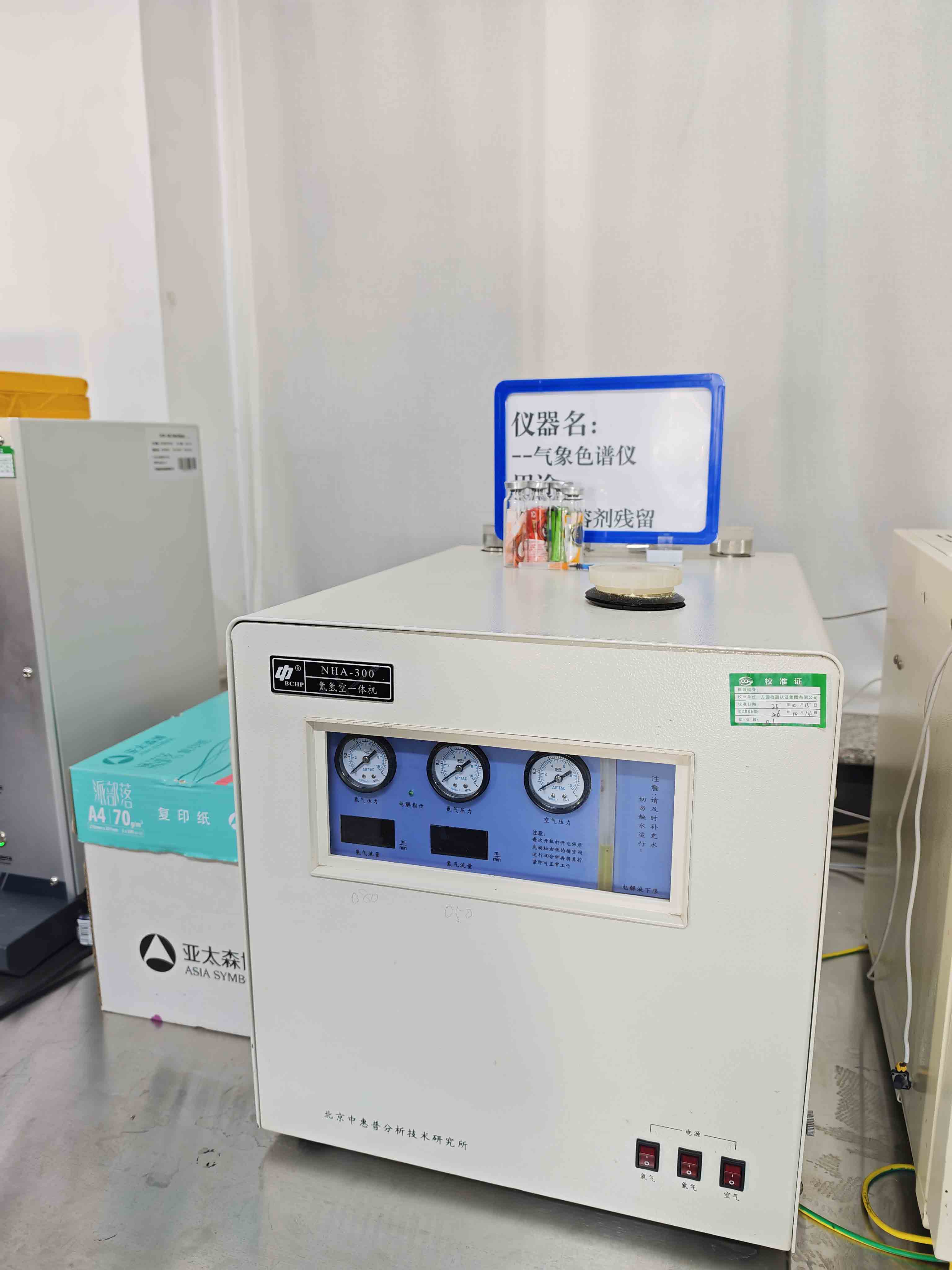
Gas Chromatography for Food Safety
Before any Mono-PE bag is approved for protein powder contact, it must pass rigorous food safety checks. Even though we use solvent-free lamination, we utilize Gas Chromatographs to detect any microscopic traces of VOCs or residual monomers, ensuring the bag is 100% food-safe and chemically inert.
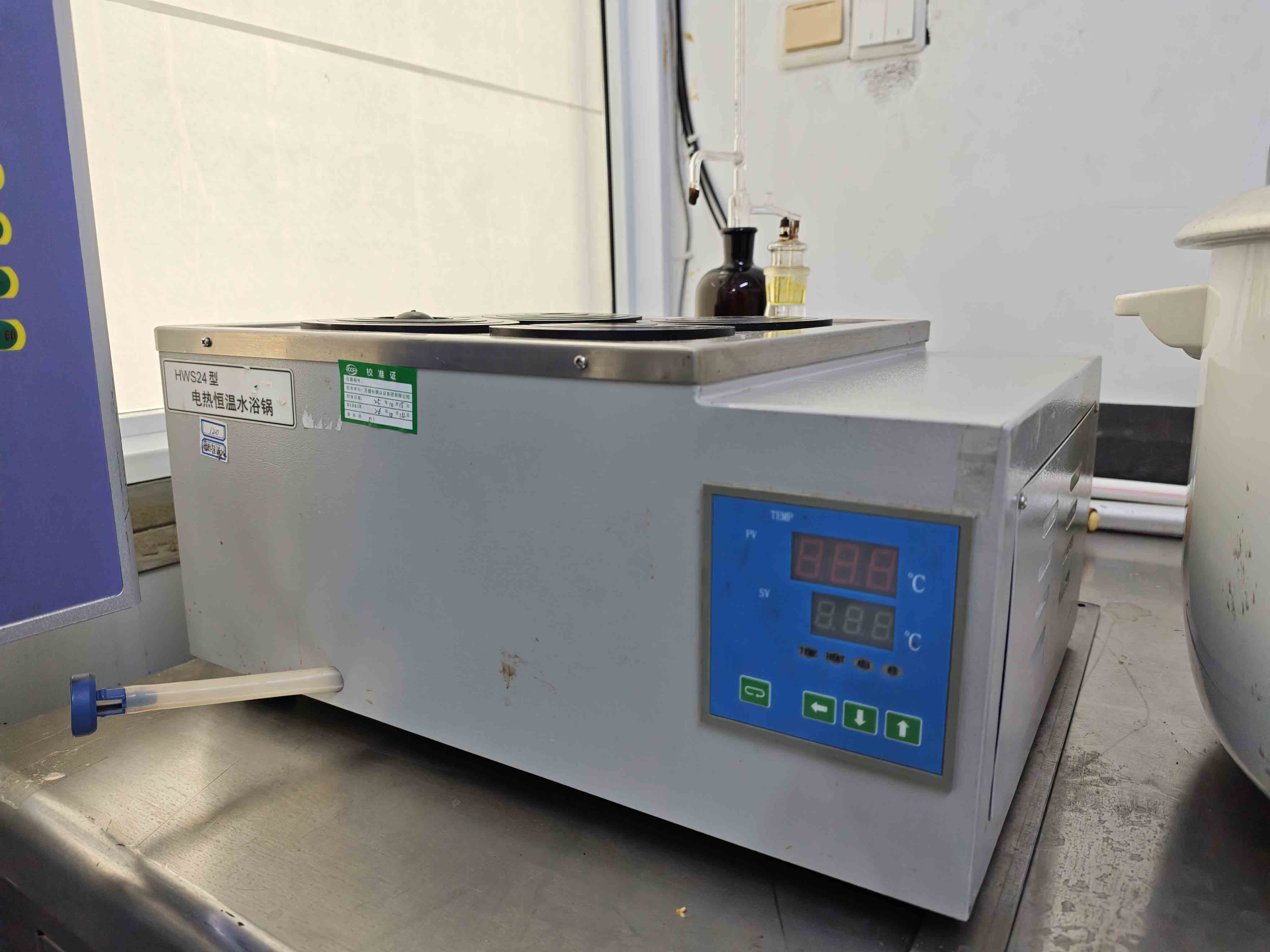
Retort and Water Bath Integrity Testing
To verify the strength of the heat seals (since MDO-PE and PE have narrower sealing windows than PET/Foil), we subject the sealed Mono-PE bags to extreme thermostatic water bath testing.
8. Overcoming Common Objections to Mono-PE Bags
If you are pitching a transition to sustainable packaging to your CEO or board of directors, you will likely face these three objections. Here is how to answer them.
Objection 1: "Mono-PE bags look cheap and feel stretchy." The Reality: This was true ten years ago. Today, thanks to MDO-PE (stretching) technology, Mono-PE bags possess the exact same crisp, rigid, crinkly feel as traditional PET bags. Furthermore, we can apply premium Matte, Gloss, or even Soft-Touch varnishes directly to the PE film, ensuring your brand maintains its luxury aesthetic.
Objection 2: "They are too expensive." The Reality: High-barrier Mono-PE structures do have a slightly higher upfront unit cost (typically 10-15% more than standard foil bags) due to the complex EVOH co-extrusion and MDO processing. However, when you factor in the evasion of EPR plastic taxes in the EU/UK, the ability to win retail contracts that mandate sustainable packaging, and the premium price point eco-conscious consumers are willing to pay, the ROI is overwhelmingly positive.
Objection 3: "They run slower on filling machines." The Reality: Because Mono-PE lacks the extreme heat resistance of PET, standard filling machines can sometimes melt the outer layer if the sealing jaws are too hot. However, this is easily solved. By lowering your jaw temperature by 15-20°C and slightly increasing the dwell time (seal time), Mono-PE bags will seal perfectly on standard automated packing lines with negligible impact on throughput.
9. Next-Gen Sustainability: Compostable Options (PLA)
While 100% Recyclable Mono-PE is the most pragmatic and scalable solution for large 2kg-5kg protein bags, brands packaging smaller capacities (e.g., 500g vegan proteins or 30g single-serve sachets) often explore 100% Compostable Packaging.
Compostable bags utilize materials like Kraft Paper layered with PLA (Polylactic Acid, derived from corn starch) and NKME (metallized nature-friendly films). While these provide incredible marketing value for organic brands, they lack the extreme tensile strength and long-term oxygen barrier of Mono-PE, making them unsuitable for heavy 5kg bulk bags.
For 95% of sports nutrition brands, Mono-PE remains the superior choice for balancing shelf-life, physical durability, and sustainability.
10. Conclusion & Call to Action
The era of unrecyclable, multi-material aluminum foil protein bags is rapidly drawing to a close. Driven by EPR taxation, retail mandates, and fierce consumer demand for corporate responsibility, sustainable packaging is now the baseline for entry into the global supplement market.
By engineering your packaging with advanced MDO-PE outer layers, ultra-thin AlOx coatings, and EVOH co-extruded inner barriers, you can proudly print "100% Recyclable" on your bags without sacrificing a single day of shelf life or a single ounce of product freshness.
At Mylarbag.net, our deep expertise in sustainable polymer science and our solvent-free, eco-friendly manufacturing facilities make us the ultimate B2B partner for your sustainability transition. Do not wait for plastic taxes to erode your margins. Explore our sustainability packaging solutions and custom protein powder packaging bags today, and let our engineers upgrade your brand into the circular economy.
11. Comprehensive FAQ
What does Mono-PE mean in packaging? Mono-PE stands for Mono-Material Polyethylene. It means that all the layers of the packaging pouch—from the printable outer layer to the barrier and inner sealing layer—are made exclusively from the Polyethylene family of plastics. This allows the entire bag to be melted down and recycled together without the need for complex material separation.
Can Mono-PE bags really block moisture as well as aluminum foil? Standard PE cannot. However, when Mono-PE is upgraded with an EVOH co-extruded core or a transparent AlOx (Aluminum Oxide) coating, the Moisture Vapor Transmission Rate (MVTR) and Oxygen Transmission Rate (OTR) drop to levels that rival standard foil structures, keeping protein powders completely dry for 18 to 24 months.
Are Mono-PE bags recyclable everywhere? Mono-PE bags are classified as Recycle Code 4 (LDPE). In many countries (like the UK and Australia), they are widely accepted in "Store Drop-Off" recycling programs (such as the REDcycle or OPRL schemes) where consumers return soft plastics to supermarkets. In regions with advanced sorting technology, they are increasingly accepted in curbside recycling bins.
What is MDO-PE and why is it necessary? MDO-PE (Machine Direction Oriented Polyethylene) is a PE film that has been heated and stretched to align its polymer chains. This stretching removes the elastic, stretchy nature of normal PE, making it rigid, highly transparent, and heat-resistant. Without MDO-PE as the outer layer, a Mono-PE bag would slump over on a shelf and melt on your sealing machine.
Do I need a new filling machine to use Mono-PE bags? No. Mono-PE bags can run on standard automated fill-and-seal machines. However, because PE has a lower melting point than traditional PET/Foil, you will need to recalibrate your machine by lowering the sealing jaw temperature and slightly increasing the sealing time to prevent the outer layer from melting.
Is solvent-free lamination better for protein powder? Absolutely. Solvent-free lamination uses 100% solid adhesives, meaning there are zero Volatile Organic Compounds (VOCs) released during manufacturing. This eliminates any risk of chemical odors becoming trapped in the bag and altering the delicate flavor profile of your premium protein powders, while also being significantly better for the environment.