

Sometimes, but there is no single recycling answer for a chocolate package. A clean paperboard box may belong in paper recycling, while the wrapper inside it may be a plastic-and-metal laminate that your local program does not collect. A separate, genuine aluminum foil wrap may have a metal-recycling route. A flexible pouch needs its own material and collection check. Separate the pieces, read each component's instructions, and confirm the current rules where you live before placing anything in a bin.
This guide addresses ordinary U.S. household packaging after the chocolate has been eaten. It does not certify a particular brand's wrapper or replace your city, county, hauler or participating store's instructions. Businesses may have different collection contracts. The EPA's common recyclables guide repeatedly directs readers to their local program because the answer changes with both the item and the collection system.
First, lay out the finished package
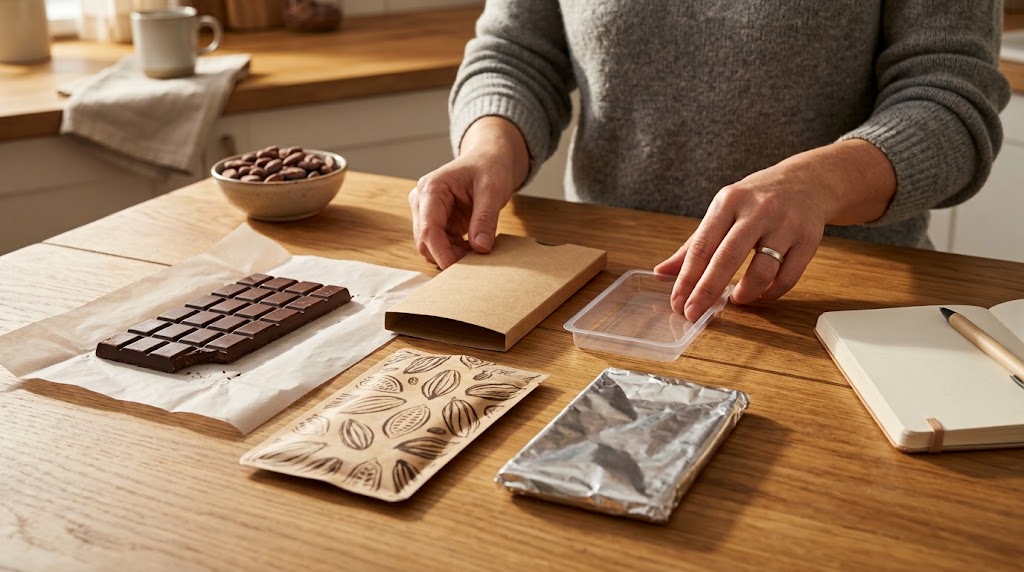
A chocolate bar can leave behind an inner wrap, a printed sleeve, a small sticker and a shipping carton. A gift assortment may add a rigid box, plastic insert, paper cup, film window and individual candy wraps. A pouch of chocolate pieces can have a zipper, window, label and tear-off strip attached to the body. Those are different objects for a recycler even if they arrived together as one product.
Empty the package and separate only the components designed to come apart without shredding them into tiny fragments. Read any disposal panel component by component. A statement about the box does not automatically describe the inner wrapper. A statement about a film does not automatically cover its closure, label or liner. How2Recycle's multi-component label explanation shows why a paper box and an inner plastic bag can receive different instructions. Its U.S. and Canadian instructions can differ as well.
Take a quick inventory before deciding which bin to use. The following table is a set of questions, not a universal recycling schedule.
| Component found after opening | What to verify | Possible route only after verification |
|---|---|---|
| Plain paperboard chocolate box or separate paper sleeve | Is it mostly clean, dry paperboard without an inseparable plastic or metallic layer? Does the local paper program take this format? | The accepted local paper/cardboard stream. |
| Genuine, separate aluminum foil | Is the piece actually aluminum rather than shiny plastic or bonded foil-paper? What size and cleanliness does the local metal program require? | The accepted local metal stream; tiny pieces may need an approved aggregation method. |
| Shiny inner film or pillow wrapper | Is it plastic film, metalized film or a bonded laminate? Is there a component-specific instruction? | Only a program that specifically accepts that finished wrapper; otherwise follow local trash guidance. |
| Heat-sealed or zippered flexible chocolate pouch | What is the complete film/closure/label construction and its specific disposal label? | A verified film collection route for an eligible item, or another expressly accepting program; never assume curbside. |
| Clear window, plastic tray or molded insert | Can it be removed, and does the local program accept that shape and resin? | Separate local rigid-plastic route if accepted; otherwise local trash guidance. |
| Gift ribbon, mixed-material decoration, waxed liner | Can it be cleanly separated and identified? | Check its own local rule; keep unaccepted items out of paper recycling. |
| Corrugated shipping box | Remove loose packing items, flatten, and check the local cardboard instructions. | Often the local cardboard stream when clean and accepted. |
The printed word “recyclable” is not an instruction to place every piece together in your curbside bin. The actual route follows the package component and the local collection method. A resin identification number identifies a plastic family; the EPA explains that the number alone does not mean local collection is available.

Can the outer chocolate box or sleeve go with paper?
Start with the box by itself. A clean, conventional paperboard carton has a more recognizable paper route than many inner wrappers. The EPA lists cereal and shoe boxes among examples of recyclable cardboard containers and tells households to flatten boxes. New York City's paper instructions accept gift boxes and other cardboard but exclude wax paper, parchment paper and candy wrappers. This is a useful local example, not a nationwide verdict for every sleeve.
Remove the chocolate and loose inserts first. If the sleeve separates from the inner wrap, evaluate the sleeve on its own. An uncoated-looking cream sleeve may indeed be paper, yet the same color can be printed over film or combined with a plastic coating. An attached clear window, heavy lamination or metallic layer changes the question. Check the item's component label or ask the brand for its construction when the surface is ambiguous. A photograph and a paper-like texture cannot confirm pulping behavior.
Food residue matters, but it is easy to overcorrect. A small dry chocolate smudge is different from a thick layer of melted chocolate and crumbs. The EPA says to remove food scraps and describes “spatula-clean” as sufficient for some food containers; your local paper collector has the final word on its own threshold. Do not wash a box until it becomes soggy merely to declare it recyclable. Remove accessible crumbs, keep recyclable paper dry and follow the local program's contamination guidance.
If a gift box has a removable plastic insert, lift it out and check the insert separately. Some jurisdictions take particular rigid plastic shapes; others limit which trays are accepted. If a window remains attached to a carton, do not assume that tearing it out is always required. Follow the actual local or component-specific instruction. The important step is to stop treating a multi-part pack as one homogeneous piece of cardboard.
Is chocolate foil the same as a shiny plastic wrapper?
No. A separate sheet of genuine aluminum foil and a shiny plastic film are different material formats. So are a foil-paper laminate and a plastic pouch with a very thin metalized layer. All may look silver under kitchen light. If you can find a reliable material specification or clear package instruction, use it instead of a visual guess. A casual “scrunch test” can sometimes help distinguish a loose foil sheet from springy film, but it cannot prove the composition of a coated or bonded wrapper.
The EPA's aluminum section says aluminum foil can be recycled after food residue is removed, with local rules still controlling acceptance. New York City lists aluminum foil and trays in its metal stream. Small pieces raise another local question: the San Luis Obispo County waste authority advises saving clean, genuine foil pieces and rolling them into a roughly tennis-ball-sized ball for its program. That size instruction belongs to that program; do not copy it blindly into another city's bins.
Chocolate-covered foil is not ready just because it is metal. Wipe off the food. If the wrapper has paper or plastic permanently bonded to the metal, a metal-only instruction does not automatically apply. In the other direction, a shiny inner surface does not make a wrapper aluminum foil. Metalized plastic and mixed-material candy wrappers are identified as trash in several local guides, including the San Luis Obispo example. If the manufacturer's construction is unknown, do not promote the piece into a metal stream based on sparkle alone.

Do not tear a laminate into slivers hoping to separate materials that were bonded during manufacture. That produces smaller mixed pieces and does not create a clean aluminum sheet or paper sleeve. If the product has a dedicated take-back arrangement, check its specific accepted-item list, current availability and preparation rules. A scheme that takes one brand's candy wrappers may not take an unrelated chocolate bar's packaging.
What about a plastic or metalized chocolate pouch?
Flexible packaging is where consumers most often encounter misleading shortcuts. A pouch may have several films laminated into one wall; it may also have a sealant, zipper, window, label or metallic finish. An identification such as PE, PP, PET or VMPET helps a buyer ask better questions, but it does not settle the household route by itself. The only useful question is whether the finished item is compatible with an actual collection program that serves the customer.
The EPA says plastic bags, wraps and films should not go into the ordinary household recycling bin and points to separate retail or other local collection. This is general film guidance, not a claim that every chocolate pouch is eligible for a store bin. How2Recycle's U.S. Store Drop-off instructions specifically describe labeled, eligible polyethylene-based flexible plastics at participating stores. They warn that not every package in a listed product category qualifies, and ask that food-contact film be clean and dry. A generic film bin is not permission to put PP, PET, metalized laminates or unverified pouches into a PE stream.
A one-piece pillow wrapper used for a 12 g bar is a good reminder that size and flexibility are separate issues from material. Mylarbag's published 12 g dark chocolate sachet record lists MATOPP/VMPET/PE and an 8 × 8.5 cm three-side-seal format. The photo shows what the finished printed sachet looks like; the listed layers call for a local acceptance check, not a claim that it belongs in household plastic recycling or PE-film drop-off.

If your pouch carries an authoritative, component-specific disposal label, follow its geography and preparation instructions and confirm the receiving collection point. A “Check Locally” label means precisely that. A “Not Yet Recyclable” or “Do Not Recycle” instruction means the item should stay out of that recycling stream. How2Recycle explains these designations. Do not move a pouch from trash to recycling because it has a recycle-arrow graphic or a low resin number printed on it.
Does “mono-PP” or “recyclable” on a product page settle the question?
No. A package can be designed around one polymer family and still lack an accepted household or drop-off route in a specific place. The end user needs a validated instruction for the complete pack, the destination market and the program that collects it. A design target, a supplier's title and a municipal bin rule answer different questions.
For example, Mylarbag's published bean-to-bar chocolate pouch project is titled “100% Recyclable” and describes a mono-PP concept. Its listed construction is BOPP/PMP822/CPP, with a 12.7 × 15.3 cm flat pouch and Spot UV printing. Those are the public project fields. The page's statements about standard #5 store drop-off should not be reused as a universal disposal instruction. The currently published How2Recycle U.S. Store Drop-off guidance discussed above is for eligible PE films bearing the appropriate label, and individual participating stores can have their own acceptance requirements.

For a brand, the next step is to request a complete bill of materials, including closure and print details, and have the exact proposed package assessed for the target market. For a household, the next step is to read the finished pack's approved instruction and look up the local collector's accepted-item list. These two steps meet only when the brand has tested and communicated a route that the household can actually use. A supplier label cannot create a collection program.
The FTC's Green Guides summary says marketers should qualify recyclable claims when appropriate facilities are not available to at least 60% of the consumers or communities where the product is sold. That is U.S. marketing-claim guidance, not permission to infer local bin acceptance for an individual pouch. The standard for what a seller may advertise and the instructions a household receives are related, but they should not be collapsed into one slogan.
How do grease, crumbs, seals and attached parts affect sorting?
An empty, reasonably clean item is easier to evaluate than a wrapper with chocolate still attached. Remove food before following a metal, paper or eligible plastic-film instruction. The EPA advises keeping food and liquids out of recycling, and How2Recycle says eligible Store Drop-off film that contacted a residue-producing product must be clean and dry. If you cannot prepare an item to the program's stated condition, follow the local disposal route rather than contaminating a collection bin.
Preparation should be realistic. Scraping crumbs from a paper box is different from attempting to wash a tiny laminated wrapper until its ink, adhesive and layers separate. Do not consume excessive water trying to make an unaccepted format look “clean enough.” The first requirement is item eligibility; cleanliness does not turn an incompatible laminate into a PE film. Likewise, removing a zipper does not automatically make an unknown pouch eligible. Some films may require labels or closures removed, while other evaluated systems account for certain attachments in the whole-package design. Read the instruction assigned to the exact package.
The apparent center of a pouch is not the entire package. Check a separate window, broad adhesive label, slider or tear strip if the pack has them. For a chocolate gift box, check the plastic tray and loose paper cups separately from the outer carton. A label that says “box: recycle” is only about the box unless it clearly gives instructions for the other pieces. This component-by-component discipline is the main practical lesson; you do not need to memorize a global list of acceptable materials.
A five-minute check for the package in your hand
Use this sequence once the chocolate is gone. It is deliberately conservative where a material or route is unknown.
- Identify the pieces. Put the box, inner wrap, pouch, insert and shipper side by side. Do not assume that nested pieces share a material or bin.
- Read component-specific text. Look for “box,” “sleeve,” “wrap,” “film” or “tray,” plus the country and any instructions to empty, dry, flatten or remove a part. Do not treat an unlabeled recycling symbol as a disposal route.
- Check the current local list. Search the city, county, hauler or collection point for the exact item form, such as aluminum foil, paperboard box, plastic film or rigid plastic tray. A list that accepts bottles may still exclude flexible pouches.
- Confirm alternate collection. For a Store Drop-off label, verify that the particular participating location accepts the eligible, clean and dry film. For a brand take-back program, read its accepted formats and geographic limits.
- Prepare only accepted items. Remove food, separate removable components as instructed and keep the remaining unaccepted pieces out of the recycling bin. If the item or route cannot be identified, ask the collector or follow its residual-waste guidance.
| If you find this | The next useful question | Avoid this shortcut |
|---|---|---|
| Clean paperboard sleeve and a different inner wrap | Does local paper collection accept the sleeve, and what is the wrap made of? | Putting both pieces in paper. |
| Loose silver foil around a bar | Is it genuine aluminum, clean enough and accepted by the local metal program? | Calling every shiny wrapper foil. |
| Gold or silver inside a flexible pouch | What are its complete film layers and evaluated disposal instructions? | Calling it either aluminum or recyclable plastic by color. |
| A numbered plastic symbol | Does the local collector accept that complete item and shape? | Treating the resin code as a collection promise. |
| “Store Drop-off” on one component | Which component, which country and which participating store? | Putting the entire multi-part pack in the store bin. |
Local examples show why the address matters
New York City's published instructions accept aluminum foil in its metal collection and gift boxes in its mixed paper/cardboard collection; they exclude soft plastics such as candy wrappers from the relevant curbside stream. A household in New York can use those pages for those specific item categories, but must still identify the actual wrapper. The San Luis Obispo County authority gives a different, highly specific preparation rule for small aluminum foil pieces: collect clean pieces into a roughly tennis-ball-sized ball. It also places many mixed candy wrappers in trash. These examples show the level of detail a real local guide can provide. They are not substitute rules for readers in other cities.
For a city that publishes only “plastic containers” as accepted, do not infer that a flexible pouch belongs there. For a store that has a bag collection bin, do not infer that it accepts all flexible packs. When local instructions are unclear, a photo of the empty item plus its label and material information can make an inquiry to the collector more useful. Ask, “Do you accept this finished wrapper or pouch in this program?” rather than “Is plastic recyclable?”
Consider two households opening the same bar. One has a separately removable paper sleeve and clean aluminum inner foil, and the other lives where only cardboard boxes and metal cans are listed by the hauler. The first household should still check whether that program accepts loose paper sleeves and foil; the second should not extrapolate from the word “metal” on a general flyer. Even if both programs accept the sleeve, their foil size or preparation rules may differ. The product is identical, yet a correct disposal instruction can vary by address. This is why a national brand should avoid treating a single city example as proof of a countrywide claim.
If an online answer says to “recycle the whole pack,” ask what the author did with the inner wrap, seal strip, tray and window. An answer that names only the cardboard has left out the difficult pieces. Conversely, an article that calls every wrapper trash may miss a genuinely separate aluminum foil sheet in a place that collects clean foil. Precision at the component level is more useful than an enthusiastic yes or no.
Does a compostable label change the recycling route?
A claim of compostability answers a different question from collection for recycling. The EPA says compostable plastics are not intended for ordinary plastic recycling because they can disrupt that stream. A chocolate wrapper marked compostable still needs a compost program that accepts its specific finished format, under the conditions specified. A home-compost claim and an industrial-compost claim are not interchangeable, and an unmarked community organics bin is not an invitation to add a wrapper. Confirm the local operator's accepted-material list first. If there is no appropriate route, use its disposal guidance. The visual appearance of brown paper, a leaf design or a biodegradable word on a pouch cannot decide which bin receives it.
What real chocolate pouch records can and cannot tell you
Public case pages are useful when they name a material stack, size and format. They are a poor substitute for a household's current local guide. The following examples help explain why appearance, polymer family and actual destination must be kept apart. These are packaging references, not claims that the brand's products have achieved a particular recycling outcome.
| Published Mylarbag chocolate record | What the record says | What a household still needs |
|---|---|---|
| 3 oz artisan range | MATT OPP / white kraft / VMPET / PE, 13 × 21 cm, digital print. The title calls it stand-up, while a format field calls it a three-side-seal flat pouch. | Exact finished-pack instructions and a local program that accepts it; the paper-like look and inconsistent format wording do not settle that question. |
| 12 g dark-chocolate sachet | MATOPP / VMPET / PE, 8 × 8.5 cm, three-side-seal sachet. | Whether any separate collection route takes that specific small multi-material sachet. |
| Bean-to-bar flat pouch | BOPP / PMP822 / CPP, 12.7 × 15.3 cm, printed flat pouch; the page title makes a broad recyclability claim. | A finished-pack assessment and an applicable local collection pathway; its PP-family wording is not an automatic PE Store Drop-off label. |
In particular, a “white kraft” line in a materials list can coexist with plastic and metalized layers. Mylarbag's 3 oz record makes that visible on the specification line even though the pouch has a paper-like finish. Treat the title's stand-up versus flat-format contradiction as unresolved until the supplier confirms the actual SKU. That discrepancy does not change the disposal principle: ask about the exact pack in hand, not a generic format name.

How can a chocolate brand give buyers a useful answer?
The strongest consumer instruction is specific to a finished component and a market. A brand preparing a new bar wrap or pouch should obtain the full structure and accessories from its packaging supplier, document which layer contacts food, and identify every piece the consumer must dispose of. It should then seek an assessment for the complete package and the sales geography before designing a disposal panel. If only the outer paper sleeve has a common route, the copy should not imply that the foil, plastic window or pouch shares it.
This is also a packaging-design choice. A brand can ask whether a separate sleeve is necessary, whether a removable window is worthwhile, and whether a pouch construction has a credible collection route for the intended market. Those questions belong to procurement and packaging testing; they do not change today's household bin rules. If the business is reconsidering a custom flexible pack, Mylarbag's custom chocolate packaging bags page shows relevant pouch formats and published projects. Request the exact layer structure, closure/label specification and market-specific disposal evidence for any proposed option. Do not rely on the broad “easy to recycle” or “100%” promotional wording on a category or project page without that evidence.
For a quote or sample review, specify the chocolate format, net weight, actual package you want to replace, target selling markets, desired opening/closure, artwork stage and the exact environmental attribute you hope to communicate. A packaging supplier can then discuss a plausible pouch configuration and what data would have to be checked. A rigid gift box, molded tray or traditional loose aluminum foil wrap should be sourced and evaluated as its own component; the published Mylarbag chocolate pouch examples do not prove that those separate components were manufactured in those projects.
Frequently asked questions
Can I put a chocolate bar wrapper in curbside recycling?
Only if your local program accepts the actual finished wrapper in that stream. A separate clean aluminum foil sheet may have a local metal route; a shiny multi-layer film often does not. Check the material and component instructions first. A clean paper sleeve and the inner wrapper can have different answers.
Are shiny chocolate wrappers aluminum foil?
Some are separate aluminum foil, while others are plastic film with a metallic appearance or bonded paper-and-foil. Color and a quick scrunch are insufficient to verify a laminate. Use a reliable package specification or manufacturer instruction, then check your local acceptance rule for that exact form.
Can a chocolate pouch go into a grocery store's plastic-film bin?
Only when the specific pouch qualifies for that participating store's stream, such as an eligible PE-film package with an appropriate Store Drop-off label, and it meets the clean-and-dry requirements. Do not assume that a PP-family pouch, a VMPET laminate or any flexible chocolate wrapper belongs there merely because a collection bin exists.
Can I recycle a chocolate box if the inner wrapper is not recyclable?
Often the separate, clean paperboard box can be checked against local paper rules independently of the inner wrapper. Remove loose contents and assess any attached window or lamination. Keep the wrapper out of paper recycling unless its own material and local route are confirmed.
What if chocolate residue is stuck to the foil or box?
Remove accessible food and follow the collector's preparation rule. The EPA recommends removing food from accepted foil and cardboard. A heavily contaminated item may have to follow local trash guidance. Cleaning does not make an otherwise unaccepted multi-layer film recyclable.
Does a recycling triangle or “mono-PP” label guarantee collection?
No. A resin code describes material, and a mono-family design describes construction intent; neither names a collector for the finished item in your community. Read any component-specific disposal instruction, confirm the local or store program and ask the brand for a full-pack assessment when the claim is unclear.
The practical answer is to sort by component, verify by local collection route, and prepare only what that route explicitly accepts. For brands reviewing a new flexible chocolate pack, contact Mylarbag with the intended product and sales markets and ask for the construction and evidence needed to write a narrower, accurate disposal instruction.