
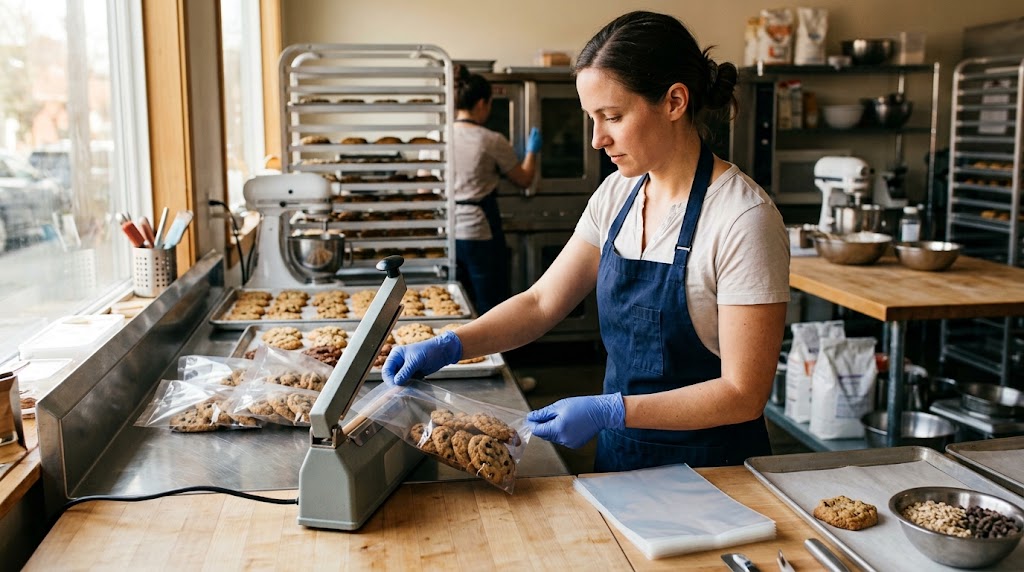
An otherwise excellent cookie bag can fail in the final few millimeters. A stray crumb sits across the top seam. The operator folds a corner under the sealing jaw. A printed pouch has a zipper, but no one has decided where the unopened factory seal belongs. The pack looks closed on the table and opens in the shipping carton.
The short answer: let the finished cookie reach an approved packing condition, choose a bag whose inner surfaces suit the planned closure, keep the sealing zone clean and flat, then establish the sealing settings with that exact bag on the actual equipment. Inspect finished packs and use a suitable combination of seal-strength and leak checks. An adhesive flap, twist tie or zipper can be useful, but none automatically provides the same unopened-pack integrity as a validated heat seal.
This guide covers flexible bags for cookies people eat. It addresses hand packing, small bakery runs and bag validation on existing production lines. It does not prescribe one temperature, pressure, dwell time or shelf life for every cookie or film. The food producer owns the product, packing conditions, food-safety plan and release criteria; the bag supplier can provide construction details, samples and relevant test information.
Before Choosing a Sealer, Define What “Sealed” Must Mean
People use “seal” for several different actions: folding down a paper bag, pressing an adhesive strip, snapping a zipper closed, applying a tamper-evident label or fusing two film faces. The right choice depends on what the package promises. A cookie handed to a customer for prompt eating has different demands from a multipack that travels through storage and retail distribution.
Write a short brief before purchasing equipment or bags. What is the cookie recipe and finished surface? Is it crisp, chewy, iced or oily? How many pieces go into one bag, and how much space is needed above the tallest one? How long and under what conditions will the unopened pack be held? Will consumers eat the whole portion at once or need reclosure? Is the bag a primary food-contact pack or a secondary decorative overbag around an already sealed inner pack?
The answer determines whether the closure needs to retain loose crumbs, resist unintended opening, contribute to a moisture-control system or provide an obvious first-opening path. A handsome folded top may be sufficient for a short, local handoff under the producer's plan. It is not evidence that the same unlined bag will protect a crisp cookie through a long humid distribution route. Conversely, a heat seal is not a cure for a film with unsuitable barrier properties, a poor cookie recipe, or an unsafe packing process.
| Intended pack | Closure question | Useful trial |
|---|---|---|
| Single cookie for prompt sale | Can the customer open it cleanly, and is product contact suitable? | Fill and close with actual cookie; check grease marks, handling and presentation |
| Multi-cookie bakery bag | Will the contents be eaten over several occasions? | Compare an unopened first seal with any planned reclosure; test actual opening route |
| Retail pouch | Does the complete unopened pack meet integrity and quality criteria? | Check sealing window, filled-pack seam, leaks, storage and distribution |
| Decorative outer bag | Is there already an approved primary food-contact seal inside? | Confirm which layer truly contains and protects the cookie |
The custom cookie bag options can provide a starting format for a trial. Describe the finished cookie and closure duty in the request; a photograph of an empty pouch cannot settle either question.
Can You Put Hot Cookies in a Plastic Bag?
For routine sealed packing, do not assume that a cookie straight from the oven is ready for a plastic bag. Warm product can raise moisture in a closed headspace; when surfaces cool, water may condense on the inner film or the cookie. That can soften a crisp texture, mark icing or make a complaint look like a film problem. Kansas State University Extension advises cooling baked goods completely before wrapping for freezing to help prevent condensation inside the wrapping. That advice supports the moisture mechanism, but it does not set a universal commercial cookie-pack temperature.
The practical control is a documented packing condition for your own SKU. Define when cookies have cooled sufficiently for the planned process, inspect for visible surface moisture, and compare filled packs just after sealing and after they equilibrate in the expected storage conditions. A very thick cookie, a filled cookie and a thin crisp biscuit may cool at different rates. A measurement at the tray edge does not necessarily describe the warmest product center. Record the time since baking, product and room conditions where they matter, and the first hours of pack appearance.
There is a second question beyond condensation: is the food-contact material intended for that contact temperature? FDA's food-contact framework distinguishes conditions including room-temperature filling and hot filling; it evaluates the status of the constituent substances for their intended conditions of use. Do not infer that a bag suitable for ambient cookies is automatically approved for contact with a hot product. For a market outside the United States, review the corresponding applicable requirements for that destination and actual construction.
Some moist, cream-filled or otherwise perishable baked products require a product-specific food-safety and cooling plan. “Cool completely at room temperature” should not be applied mechanically to them. The producer's food-safety team must determine safe handling and any time-temperature controls. This article discusses the closure of finished cookie bags, not a replacement for that plan.
A short packing-condition trial
Make several small groups from a normal production batch at the planned filling conditions. Put real cookies in the candidate bags, close them as intended, and photograph the inside face and product at time zero, after the expected cooling transition and during the first storage interval. Use an unfilled bag as a comparison if haze or moisture could be a property of the film itself. Note any visible droplets, surface tack, grease migration, texture change or unusual odor, and use the product team's approved evaluation methods.
Do not mistake a clear-looking bag for a microbiological clearance or a validated shelf-life claim. The purpose of this quick trial is to identify an obvious packing-condition mismatch before a larger packaging trial. Blog 10 in the cluster will address the separate shelf-life and barrier study.
Four Ways to Close a Cookie Bag
Heat-sealed film top
A heat seal joins compatible inner faces at a defined band. For many flexible plastic or laminated cookie pouches, this is the intended first closure after filling. The exact outer appearance—clear, kraft-look or metallic—does not tell you which inside layer is sealable. Ask the supplier for the complete structure, the intended sealing surfaces, the top-seal area and a material sample. The plastic film options explain available material families; the approved setting must still be established on the actual construction.
An impulse sealer often suits small batch work because a jaw heats for a controlled impulse and the joint cools under pressure according to the machine instructions. A constant-heat bar or a continuous band sealer may suit another throughput. These descriptions are equipment categories, not interchangeable setpoint recipes. Test the exact pouch, sealer, jaw surface, operator method and pace that will be used. Do not substitute a household iron for a controlled process when a repeatable retail seal is required.
Adhesive flap or strip
A pressure-sensitive strip can close a suitably designed flat bag quickly. Its performance depends on the adhesive, bag substrate, fold geometry and cleanliness. Cookie grease, sugar dust, repeated opening or a textured paper surface can change adhesion. Check whether the adhesive can contact food under the intended use and whether the bag itself provides the needed protection. Test the closed bag after ordinary handling, not just after the first press of a thumb.
An adhesive strip is not automatically equivalent to a fused top seam. If the selling plan assumes a sealed retail pack, define what evidence will show that this particular adhesive closure meets the intended containment and quality duty. A decorative sticker on a folded top should be described honestly as a presentation or tamper cue if it has not been validated as the pack's protective seal.
Fold, tie or twist closure
A folded top with a ribbon, clip or twist tie can look appealing for a bakery handoff. It often permits easy reopening, but there may be a path for ambient air and small crumbs. Some paper-look bags contain a separate liner; the outside paper fold says little about the inner layer's integrity. If the cookie must stay crisp through storage, test the completed pack under that route instead of treating the tie as a barrier rating.
This option can make sense for an immediate-use item or a secondary overbag around individually sealed cookies. It may be a poor match for a product with a strict unopened shelf-life objective. Describe the service context and any inner pack clearly on the label and in the internal specification.
Zipper reclosure, usually with a first seal
A zipper is designed to reclose a pouch after opening. Where the unopened retail pack requires an initial heat seal, that band needs its own space and must survive the opening route. On a top-opening pouch, a typical layout places an accessible opening or tear route above the zipper and preserves the zipper below the first seal. Actual designs vary; use the approved dieline, not a generic sketch, to decide clearance from the top edge, tear notch, first seal and product fill level.
The published 3.5 oz organic cookie pouch case describes a digitally printed stand-up bag, PET/VMPET/PE construction, approximately 12 × 18.5 + 3 cm format and zipper. It shows a real commercial format worth discussing with the supplier. It does not publish a measured seal window, leak result or cookie shelf life for your product. For a similar bag, run your own filled-pouch trial and inspect both the initial seal and zipper after opening.

How to Seal Plastic Cookie Bags With a Repeatable Heat-Seal Process
Start with a supplier's proposed sealing range for the exact film, then find and validate a working window on the actual equipment. The temperature shown on a machine is a control reading, not proof of the temperature at the interface between the two inner faces. Contact geometry, film thickness, printing or laminate, jaw condition, line speed and cooling all influence the finished seam.
ASTM F2029-16(2021) describes laboratory preparation of heat seals to study heat sealability. It explicitly warns that a laboratory heat-seal curve is a starting point for production equipment, not a production validation. The standard refers to F88/F88M-23 for testing seal strength and leaves seal continuity to other methods. That distinction is useful for a bakery choosing between an attractive sample seam and a controlled production process.
1. Identify the sealable face and band
Request the layer order from outside to food-contact side, the intended sealant faces, total thickness range, bag drawing, top-seal width and any nonsealable print or coating zones. For a pre-made pouch, confirm whether the top must be sealed film-to-film or across a thicker transition near a side seam. A window, zipper, gusset or handle can create a local thickness change. Inspect the actual filled geometry before choosing jaw position.
The heat sealer joins what lies between its jaws. If one face is folded back, a crumb holds the faces apart, or a stiff cookie pushes a wrinkle into the band, increasing the nominal jaw temperature may not correct the channel. A seal band should be continuous over the required opening and adequately separated from the cookie and other hardware.
2. Set a starting window, not a magic number
Plan a small matrix of plausible settings from the film and equipment suppliers: jaw temperature or impulse energy, pressure, dwell time and any cooling-under-pressure phase. Change one factor at a time for simple troubleshooting, or use a documented trial design when interactions matter. Record the machine model, jaw type, displayed setting, measured process checks available on that machine, bag lot, product batch and operator method.
Too little effective heat, pressure or contact time may leave a weak bond or channel. Too much can distort film, squeeze the sealant, shrink a window, damage the edge or make a peel-open pack hard to open. The same displayed setting may behave differently after a cold startup, during a long run, at a seam crossover or after a change in film lot. Sample those conditions rather than reporting a single best-looking seal.
3. Keep the top zone clean and flat
Use the planned fill level and a controlled way to present the bag opening. Crumbs, granulated sugar, chocolate smears and oils can land in the seal band. A wide fill funnel, product drop path, antistatic measures where appropriate, or a simple pause before sealing may help, but their effect must be checked on the actual cookie and film. Wiping a contaminated food-contact opening with an unsuitable cloth or solvent can introduce another problem.
Research on flexible food-packaging films shows why a blanket “one crumb always breaks a seal” rule is unreliable. A peer-reviewed study of particular LDPE-based films and ground coffee or powdered sugar, not cookies, found different contaminant thresholds under its specified test conditions. It demonstrates that contaminant type, amount, film and sealer geometry matter. It supplies no acceptable crumb allowance for a cookie line. Set a clean-band criterion and verify that your real crumbs do not undermine your defined strength and integrity limits.
4. Allow the process to finish before loading the seam
For an impulse sealer, follow the machine's cooling and release cycle. Pulling a bag away while the interface is still hot can deform a joint that appears acceptable after it is set down. On a line, check how the newly sealed bag is gripped, coded, turned, conveyed and cartoned. A good seam at the jaws may be damaged by immediate tensile load or abrasion at the next station.
Avoid forcing a filled pouch into an undersized carton or stacking weight onto a seam crossover before it has been evaluated. These are handling checks, not a universal dwell-time formula. The bag and machine suppliers should provide the starting instructions; production trials set the approved operating limits.

What to Check on Every Finished Bag
An inspection program should catch a defect while its cause is still traceable. Define who checks it, where, how often, and what happens to product made since the last good check. A visual examination is useful, but a neat-looking band alone does not prove strength or leak tightness.
Look at the entire top seal under consistent lighting. Is it continuous from edge to edge? Are the two faces aligned? Does it cross an unexpected fold? Is there visible product, ink, adhesive, oil or condensation in the contact band? Are there stretched spots, holes, burns or whitening? Does the tear notch leave enough material for the initial seal? For a zipper pouch, can a customer open the first seal without cutting through the zipper track?
Make the answer reproducible. Keep an approved sample or annotated reference image for ordinary appearance, and a small library of known rejects. Record the bag lot and sealer settings on samples retained at startup and after changes. If the pack is opaque, do not pretend that visual inspection can detect contamination hidden inside every seam; use an appropriate destructive test plan and process controls.
Seal strength asks how a sampled strip separates
ASTM F88/F88M-23 measures the force needed to separate a test strip containing a flexible-barrier seal and identifies its failure mode. It is relevant to process capability, opening force and control. Consistent specimen width, conditioning, gripping geometry and test method matter when comparing results. A minimum may be needed for containment; a peel-open design may also need an upper limit for usability.
The result describes the sampled strip under the stated test conditions. A strong strip from one position does not prove that every millimeter of the bag is free of a narrow channel. Nor is a single dramatic hand pull a substitute for the test. Write acceptance criteria for the actual product and compare startup, center-of-run, end-of-run and seam-crossing positions where relevant.
Leak checks ask whether there is a path through the pack
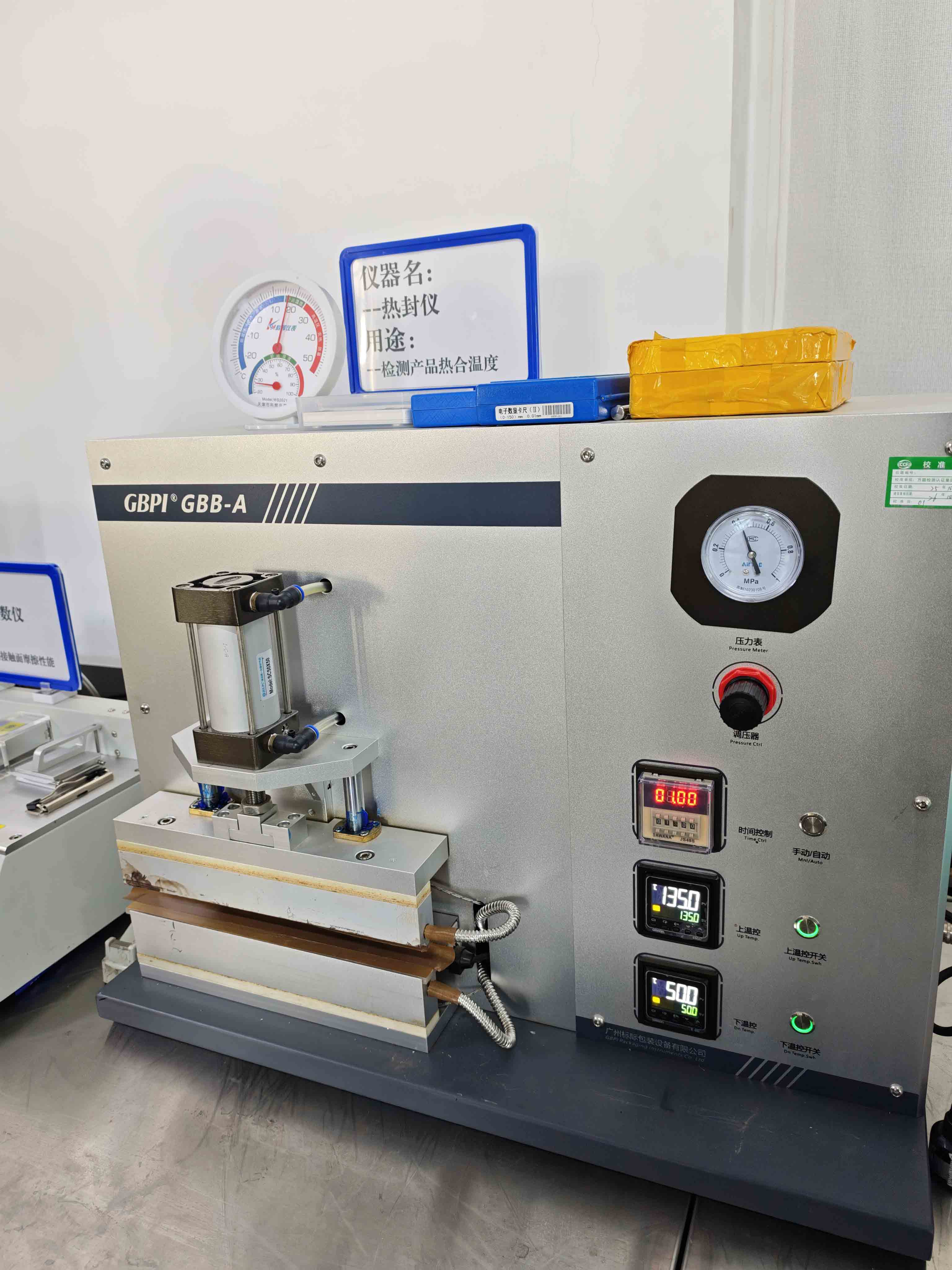
Leak tests answer a different question. ASTM F3039-23 describes dye-penetration methods for locating leaks in nonporous packaging or flexible barrier materials. It is a qualitative, destructive check: a dyed sample cannot return to saleable food packaging. The exact method, package fit and detectable defect must be chosen by the technical team. Other pack types may call for another method. Do not apply a standard written for porous medical packs to a nonporous cookie pouch merely because both use the word “seal.”
A pack can show adequate average peel force and still leak at one fold. A leak result can show a path without quantifying how long the cookies will remain acceptable. The producer needs both closure integrity and a separate product-quality study for any claimed unopened life. Note whether a test punctures the sample, whether it is empty or filled, and how that choice changes interpretation.
A practical sampling record
| Checkpoint | What to record | Why it matters |
|---|---|---|
| Setup and first acceptable packs | Film/bag lot, product, settings, operator, appearance, strength and applicable leak check | Establish an approved reference before volume production |
| Startup after pause or maintenance | Jaw condition, warmup, first-pass rejects, representative samples | Process may not behave like steady operation |
| During run | Time, line and bag lot, sampled positions, defect counts, corrective action | Detect drift and locate affected product |
| Material, artwork or zipper change | New construction/drawing, settings, filled samples and opening trial | A similar-looking bag can require a new process window |
| End of run and retained samples | Last acceptable check, identified rejects, carton/lot trace | Bound investigation if a later failure is reported |
The intervals and acceptance limits in this table are not a prescribed universal sampling plan. Set them from the plant's own risk assessment, equipment and validation evidence. A test with an unspecified method, strip width or sample location is hard to compare with a later batch.
Diagnose Common Cookie-Bag Seal Defects
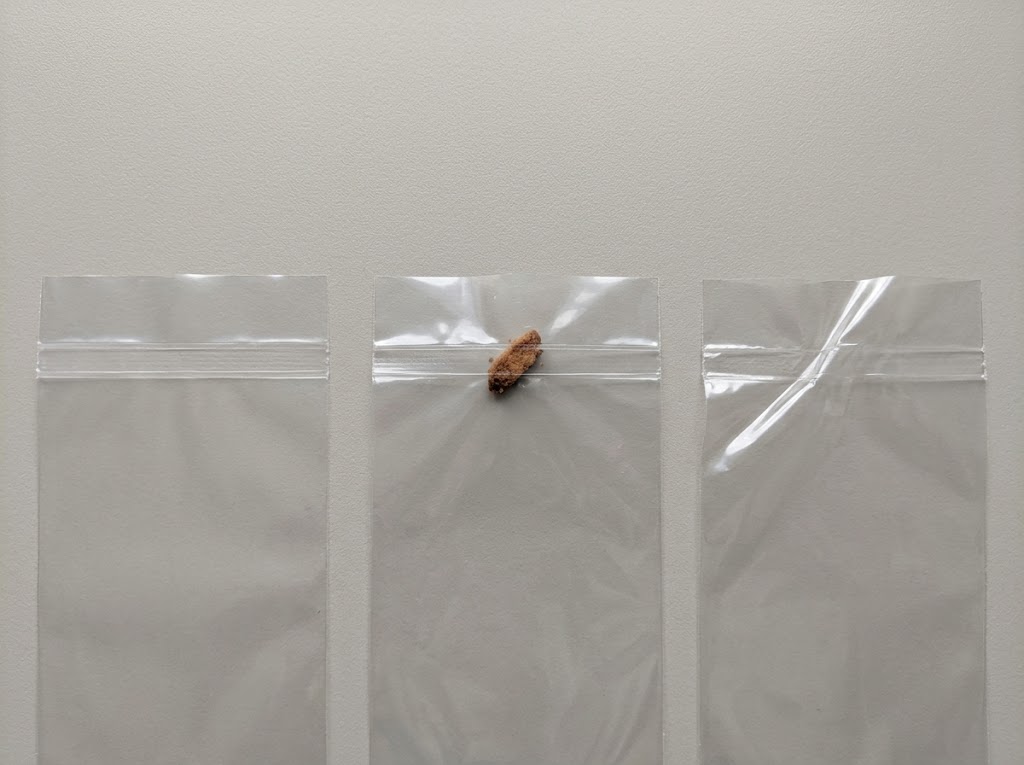
Begin with the symptom and keep a suspect sample intact long enough to photograph it. Separate a defect caused by the cookie fill from one caused by film orientation, jaw contact or the supplied bag. The same visible symptom can have several causes. Do not change temperature blindly while a fold or crumb remains in the jaw path.
| Observation | First questions | Trial or action |
|---|---|---|
| Edge opens with light handling | Is the correct inner face presented? Did the impulse/cooling cycle finish? Is the jaw uniformly contacting the band? | Compare supplier film guidance, machine record and F88 samples at several positions |
| Narrow channel at side-seam crossing | Does the jaw bridge a thickness step? Is the bag mouth flat and aligned? | Inspect filled profile; trial compatible jaw or band position with supplier |
| Crumb, sugar or oil in the seam | Is the fill level too high or the drop path depositing product at the opening? | Adjust presentation and filling; sample actual contaminated-risk positions |
| Wrinkle or diagonal fold | Is the opening under uneven tension or pressed against the cookie? | Change bag fit and guidance; compare edge and center checks |
| Burn, thinning or distorted print | Is effective heat too high or contact too long for this film? Is the exterior sticking to the jaw? | Reduce one variable within a controlled trial; examine film and equipment compatibility |
| Good bench sample, frequent line rejects | Are speed, warmup, bag tension or release different? | Run a production-speed trial including starts, stops and material changes |
| Zipper works poorly after opening | Is the first seal or tear path crowding the track? Is product lodged in it? | Revise approved dieline/fill clearance and perform a real opening/reclosure trial |
Never treat a rejected pack as saleable merely because a second pass makes its top look flat. A partial first seal can trap product or create a fold that a second pass hides. Define beforehand when a supervised rework may be allowed, how the food and bag are handled, which checks must be repeated and how lots are traced. Some bags or food-contact situations will call for discard rather than rework. The food producer's quality team owns that decision.
Separate supplier-side from packer-side evidence
The supplier can review layer construction, sealant grade, top geometry, zipper placement, bag lot, film variation and converter seam samples. The packer can provide actual cookies, fill level, jaw settings, timestamps, rejected units and retained finished bags. Neither a supplier's empty-pouch test nor a packer's one-off hand seal fully describes the production process. When failures cluster at the start of one film lot, compare the material record; when they appear only after a long run, inspect the machine and handling sequence too.
Build a Small Validation Trial Before Ordering a Large Printed Run
You do not need to guess a full commercial run into existence. Start with the exact cookie, planned portion and several candidate bags or constructions. Confirm food-contact documentation for the intended food, temperature and market, then conduct a controlled fill-and-seal trial on the planned equipment. For a U.S. application, FDA explains that the regulatory status of a food-contact material follows its relevant component substances and their authorized conditions of use. A generic “food safe” statement about an unrelated bag does not answer that question.
Set the pass criteria before looking at trial results. Include product condition at filling, acceptable visible seam, specified seal-strength method and range, applicable leak check, opening experience, line reject rate and downstream handling. Tie each trial result to bag construction, dimensions, supplier lot, machine, settings and cookie SKU. A crisp cookie and a soft filled cookie can need different quality criteria even when the same heat sealer is used.
Use a control batch when comparing changes. If candidate A changes film, candidate B changes jaw settings and candidate C changes fill level all at once, a better result will be hard to explain. Change one factor at a time where feasible or use a documented experiment with enough samples. Include normal size variation and crumbs from a real production batch, not just carefully selected intact cookies. Recheck at commercial pace; laboratory F2029 data are a starting point, as ASTM itself cautions.
For an RFQ, send the pouch supplier an actionable brief: cookie size range and portion, product temperature at filling, intended food-contact use and destination market, planned closure and machine, first-seal position, optional zipper, desired unopened quality period as a validation target, artwork and code areas, bag dimensions, and the tests the team will perform. Request a clearly identified construction and matching trial samples. A supplier may suggest two testable alternatives; ask what would make one pass or fail on your line.
| Owner | Evidence to bring to a joint trial | Decision |
|---|---|---|
| Cookie producer | Recipe and product variation, cooling/packing condition, quality and safety criteria | When product is ready to fill and which packs may be released |
| Bag supplier | Layer order, sealant, food-contact documentation, drawing, bag lot and suggested starting range | Which constructions are suitable for trial |
| Packing team | Machine setup, jaw condition, speed, filled rejects and retained samples | Whether the closure is repeatable at intended output |
| Quality team | Visual standard, sampling plan, strength and leak methods, traceability | Whether trial and commercial lots meet written limits |
Good records also help when the answer is not a new bag. A crumb-control change might rescue a compatible film; a new jaw or a larger mouth clearance might solve a fold. Equally, a cleaner line cannot make a nonsealable contact face fuse reliably. Let the evidence assign the next action.
A Final Checklist for the First Commercial Run
- The finished cookies meet the producer's documented packing condition; the team has checked for cooling-related condensation in sealed samples.
- The approved food-contact construction and use conditions match the actual cookie and target market.
- The inner faces, bag orientation, first-seal band and any zipper or tear route are identified on a current drawing.
- The equipment and material suppliers' starting guidance has been translated into a tested production window, including startup and normal speed.
- The fill path keeps the planned sealing area acceptably free of crumbs, sugar, grease and folds.
- Visual acceptance, seal-strength method and an applicable integrity check have distinct written criteria.
- Destructive test samples are identified and held out of saleable inventory.
- The pack opens as intended without destroying a zipper meant for reclosure.
- Sampling records link finished cookies and bags to material lots, sealer settings, operators and corrective action.
- The producer has a hold, investigation and rework/discard rule for suspected weak or leaking packs.
If any of these points is unknown, commission a sample run that answers it. The custom cookie packaging team can discuss film and pouch samples, top clearance and zipper options. Approval of the actual cookie, seal process and saleable lot belongs to the food business.
FAQ: Sealing Cookie Bags
What is the best way to seal cookie bags for sale?
It depends on the selling route and the bag. A validated heat seal on a compatible food-contact film is a common first closure for a retail flexible pouch. An adhesive flap or folded-and-tied bag may suit some short-use bakery formats. State what the unopened pack must do, then test the actual filled bag rather than ranking closure types by appearance.
How do you heat seal plastic cookie bags without melting them?
Confirm the intended sealant surfaces and use the film and machine suppliers' starting guidance. Trial a controlled range of heat, pressure, contact time and cooling on the exact construction. Check for bond, distortion and leaks at the center and edges. There is no trustworthy temperature that works for every plastic bag.
Can you put hot cookies in a plastic bag?
Do not assume it is appropriate. Warm cookies may create condensation as the sealed pack cools, and the bag's food-contact use must cover the actual contact temperature. Establish the product's packing condition and test the filled pack through the cooling transition. Moist or perishable products need the food producer's own safe cooling plan.
Does a zipper keep an unopened bag sealed?
A zipper provides reclosure after opening. If the unopened retail pack needs a defined first seal, design and test that separate seal above the zipper with enough room for the tear route and consumer grip. Never infer first-seal integrity from a picture of a zipped pouch.
Are self-seal bags airtight?
“Self-seal” may mean an adhesive flap, press closure or another feature. The label does not establish an airtight or moisture-tight result. Identify the adhesive and film, close a filled sample as instructed, and test it against the actual performance requirement. Even a heat-sealed bag needs a suitable whole-pack check.
Is a twist tie enough to keep cookies crisp?
It can be a convenient closure for prompt sale, but it often leaves an exchange path at a folded opening. Test the entire bag, cookie and storage route before relying on it for a crispness claim. If there is an individually sealed inner bag, distinguish its job from the decorative outer tie.
Why does a heat-sealed cookie bag reopen at one corner?
Check the side-seam crossover, jaw contact, alignment, folds, trapped product and release timing at that precise corner. Compare retained bags from the same lot and seal-strength or leak results at relevant locations. Simply increasing temperature may create damage elsewhere without closing a channel caused by geometry.
Does a strong peel test prove a cookie bag has no leaks?
No. A peel test such as ASTM F88/F88M measures how a sampled strip separates. A small channel at another location may still exist. Use a suitable integrity method for the actual nonporous pouch and record which samples and regions were tested.
Can a bag with a failed top seal be sealed again?
Only under the producer's preapproved rework procedure, if the product and bag remain suitable and the corrected pack can pass its specified checks. A second pass may hide a fold or contaminated seam. Hold and trace suspect units; do not return destructive test samples or unapproved rework to saleable stock.
Do paper cookie bags need a plastic liner to be heat sealed?
Many paper-look pouches use a sealing film or coating, but not every paper grade or bag is built the same way. Ask for the complete construction and intended joining method. The outside kraft appearance alone cannot tell you whether the inside is sealable or suitable for direct cookie contact. A supplier's paper-look packaging options are starting examples, not proof that every grade seals the same way.
Will a better heat seal guarantee a longer cookie shelf life?
No. It closes one possible path for exchange, but film transmission, cookie formulation, initial moisture, oxygen or light exposure, storage, microbial considerations and handling can still limit quality. Establish an integrity-controlled filled-pack trial and evaluate quality at the intended checkpoints. Do not promise a fixed number of days from the sealer setting alone.
Source Notes and Scope
Technical starting points in this guide include Kansas State University Extension on cooling baked goods before wrapping, the FDA's food-contact conditions of use and component-status explanation, ASTM F2029, F88/F88M and F3039, and the University of Twente's record of a peer-reviewed contaminant study. The cited paper tested particular films and coffee/sugar particles, not a universal cookie-bag contamination limit. These sources explain methods and mechanisms; they do not approve a specific Mylarbag pouch, a food-contact claim in every market, or any cookie's saleable life.