
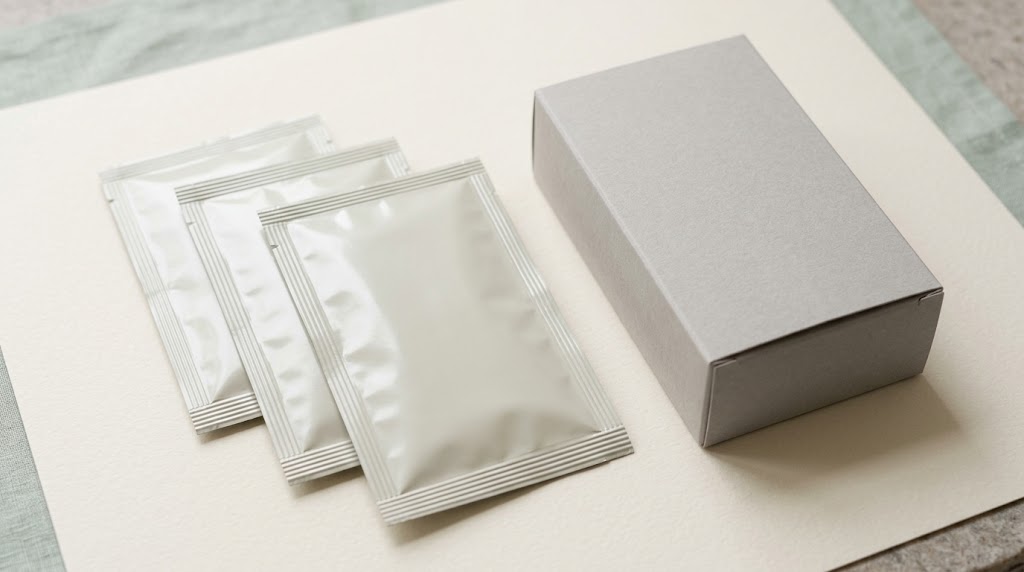
An unopened sheet-mask pouch looks like a simple promise: the mask inside will be ready when the customer tears it open. Yet a bright, intact wrapper cannot tell you whether its serum still performs as intended, whether enough liquid remains in the sheet, or whether the finished product meets the brand's safety criteria. Those questions need evidence from the actual formula, mask substrate and filled, finally sealed pouch.
The short answer: packaged facial skincare masks can expire, but there is no single number of months that applies to every wet sheet mask. A brand should set its product-specific period using a suitable study of production-representative finished packs under the intended storage and distribution conditions. The candidate film and empty pouch matter; so do the preservative system, filling hygiene, the final top seal and the way the product travels. A bag supplier's barrier value cannot establish an expiry date for the filled cosmetic on its own.
This guide addresses single-use wet sheet or hydrogel facial masks in flexible sachets. It is not about protective face masks. A dry powder mask, a jar of clay mask and a repeatedly opened multipack need different assumptions. If you are choosing the primary bag, the face mask packaging range shows candidate formats. The job here is to explain what the finished combination must demonstrate before the brand can rely on a date.
First, Separate Four Different Questions About Time
Searches such as “how long do face masks last in packaging?” often collapse several questions into one. It helps to name the clock before proposing a test.
- The brand's intended unopened life: the period for a specified finished product, sealed as sold and stored as directed. This is the principal question for a shelf-life study.
- A printed date or lot statement: information the brand chooses or must provide under the rules of its actual market and product classification. The number printed on a pouch should be supported by the product evidence; the artwork itself does not create that evidence.
- The condition of an individual pack: a damaged, leaking, swollen or otherwise suspect sachet can require action even when its printed date has not arrived. Conversely, a tidy appearance does not prove that an out-of-date pack is safe.
- Time after opening: an individual wet sheet mask is normally opened for one use. A study of unopened packs cannot automatically support storing a partly used sheet or leaving an opened sachet for another day. Follow the particular brand's directions.
The U.S. FDA's cosmetics shelf-life explanation describes shelf life as the time a product can be expected to look and act as expected and stay safe for use, depending on the product and its storage and use. It says U.S. law does not impose a specific shelf life or generally require an expiration date on an ordinary cosmetic label, while manufacturers remain responsible for safety and for determining shelf life. That is a U.S. cosmetics statement, not a worldwide exemption from date, label or product-safety requirements. A product marketed with drug claims can fall under different U.S. rules.
For a consumer, the practical instruction is simpler than a study protocol. Check the brand's date and storage instructions. Do not use a pouch that has been opened, leaks, has a compromised seal, or shows a concerning change; contact the brand about the batch. Do not use a normal-looking expired pack as a home experiment to prove that it remains safe.
What Can Reach Its Limit Inside a Sealed Sachet?
The first failing endpoint sets the practical limit. A sheet may be adequately wet while the serum's color changes; a seal may stay intact while a formula becomes unsuitable by another criterion. Packaging teams therefore need the whole product specification, not one headline “freshness” claim.
| Endpoint in the final pack | What a brand may observe or measure | Why a visual check alone is incomplete | Principal evidence owner |
|---|---|---|---|
| Serum appearance and function | Color, odor, separation, viscosity or other formula-specific properties and substantiated claims | A clear-looking liquid can still change in ways a casual glance cannot reveal | Formula and finished-product team |
| Wet sheet or hydrogel | Texture, fold integrity, uniform wetting and ability to remove and unfold as intended | A sealed bag can contain a partly dried or physically changed sheet | Brand, substrate supplier and filler |
| Liquid retention | Filled-pack mass trend, recoverable liquid and wetting pattern, with meaningful controls | Weight loss may reflect a leak, a permeation pathway or a measurement problem; one number does not identify the cause | Brand, filler and packaging team jointly |
| Microbiological quality | Product-specific, qualified sampling and tests selected by the responsible cosmetic team | Harmful contamination need not create visible mold, odor or gas | Brand and qualified testing personnel |
| Contact and laminate compatibility | Changes in sealant, ink or laminate as relevant; swelling, delamination, odor transfer and formula changes | A film that is suitable for another lotion may behave differently with this serum | Brand and packaging supplier jointly |
| Finished-seal and bag integrity | Leakage, damaged corners, final top-seal continuity, fit after handling and opening | A seal-strength strip or flat-film report covers only its tested specimen and method | Pouch maker for supplied bag; filler for final seal; brand for finished pack |
These are study-design prompts, not a required FDA checklist or universal pass limits. The qualified team chooses the methods, limits and sample counts for its formula and markets before judging results. The FDA says it has no list of tests required for every particular cosmetic, while the manufacturer or distributor is responsible for a product that is safe in expected use.
Formula and preservation remain part of the story
A wet sheet places liquid in contact with a large substrate area before the user opens the pack. The formula and substrate both enter the evaluation. Raw ingredients or water, a weak preservation system, manufacturing conditions, inadequate packaging protection, and poor shipping or storage are among the pathways the FDA identifies for microbiological problems. A stronger barrier film cannot repair an unsuitable preservative system or reverse contamination introduced at filling.
The opposite mistake is possible too: a team may blame the formula for a liquid-loss complaint while the first sign is a thin, irregular final seal at one corner. Inspect the product and package together. Where microbiological testing, preservation evaluation or safety assessment is needed, use a qualified team and an appropriate product-specific protocol. A pouch converter should not turn a vacuum or seal-strip result into a claim that a wet cosmetic is microbiologically safe.
How the Pouch Can Change the Shelf-Life Outcome
“High barrier” is a useful design direction, but it is not a date. Ask which performance was measured, on which material version, by what method and under which conditions. Oxygen transmission rate (OTR) and water-vapor transmission rate (WVTR) reports can help compare candidate webs. They do not account by themselves for the final top seal, folded corners, a clear window, a tear notch, pinholes, print and converting changes, or compatibility with this formula.
Film body, sealant and optional window
A laminate may combine a print-bearing outer layer, a barrier layer and an inner contact and heat-seal layer. The supplier should identify the actual construction proposed for the project. A foil-containing or metallized option may be worth screening when light or vapor exposure matters; a clear option may be useful for presentation. Neither category has one guaranteed performance independent of construction, processing and a finished-pack trial. A window can create a different path through the bag than an opaque panel. The product team's endpoint, not the silver or clear appearance, decides which candidate is suitable.
For a single-use wet sheet, a flat pouch often gives the filler an open top for mask insertion and liquid dosing, followed by a permanent heat seal. There is usually no reason to add a zipper simply because the retailer sells other resealable pouches. A zipper would introduce a different consumer-use pattern and another feature to evaluate, rather than strengthen evidence for a single-use sealed sachet. The barrier-layer overview can start a material discussion, but ask for reports tied to the exact proposed web and then assess the filled pack.

The final seal is made after the empty bag leaves the pouch maker
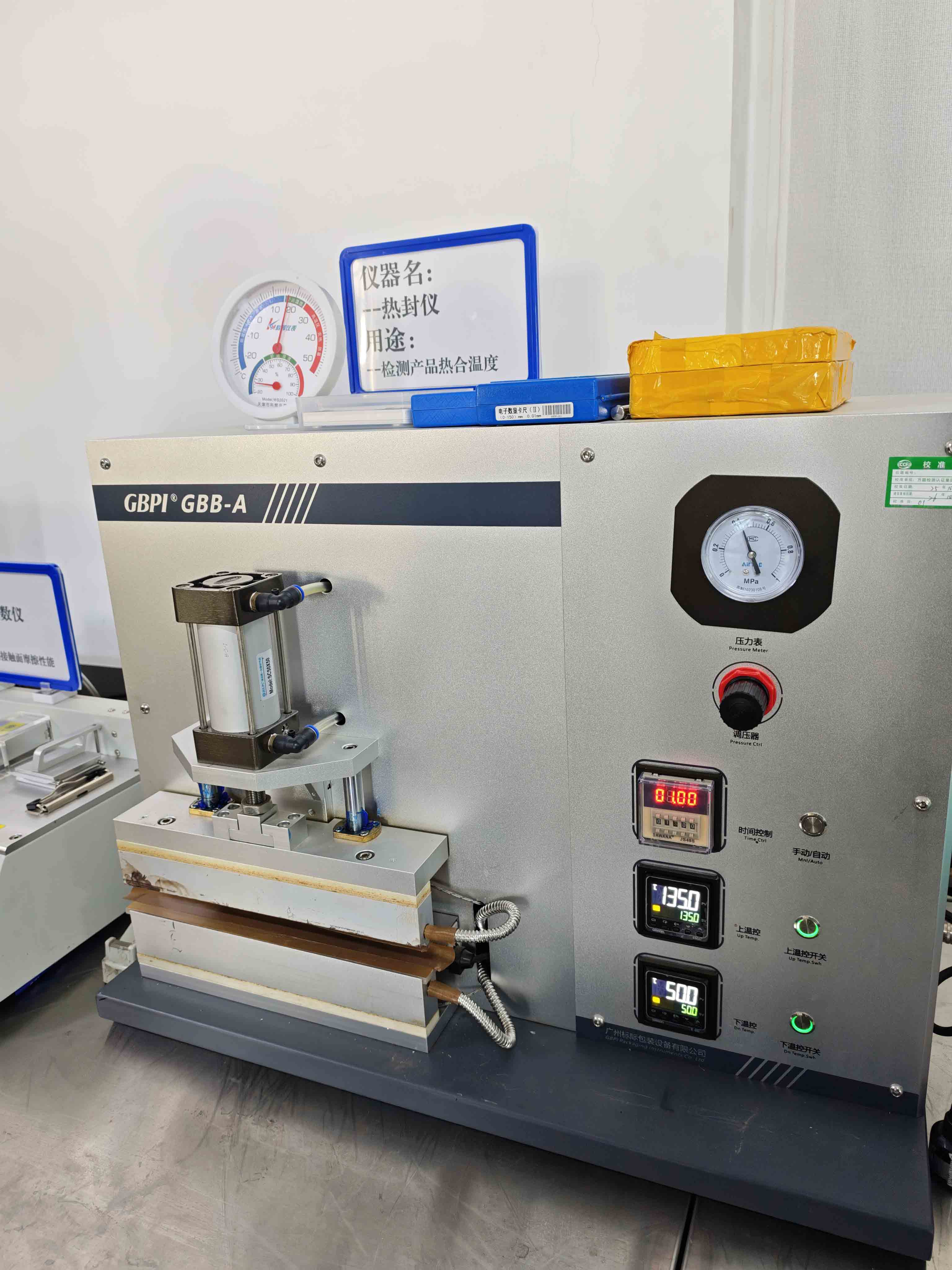
The pouch supplier can examine the supplied bag and provide relevant material or seal samples. The filler still has to insert the folded mask, add the intended liquid, keep the top-seal zone clear, apply the agreed sealing process and inspect the final closure. Serum on the inner seal face, a trapped fold, a creased mouth or an unsuitable operating setting can create a leak path in an otherwise promising construction. A strength value from one laboratory strip is useful within its method; it does not certify every edge and corner of a filled product.
When drafting a study, include packs from actual production conditions. Check the normal fill range and the setup conditions that the filler expects to use. Record which company made the side and bottom seals and which operation closed the final top. If a complaint later points to the top edge, this simple responsibility map helps the team ask for the right records rather than sending every defect to the film supplier.
Distribution can turn a small weakness into a visible defect
Packed sachets are flexed, stacked, compressed and handled. A retail carton may protect the face of the pouch but also create pressure at a fold if the fit is tight. Warm storage can affect the cosmetic and its package by different mechanisms. A product that passes a quiet bench check may not behave the same way after its expected distribution route. The study should therefore define the actual carton, pack count, shipping configuration and credible exposures, then examine the packs afterward.
Do not automatically choose the most dramatic drop or temperature and call the result a realistic shelf-life simulation. Use conditions connected to the planned route, and record what they are meant to reveal. A transport challenge asks whether packs survive handling. Time under representative storage asks whether the product remains within its agreed criteria. A short excursion may require a separate risk assessment. Those are related questions, not interchangeable clocks.
Build a Finished-Pack Study You Can Trace Later
An empty sample pouch is suitable for fit, artwork or preliminary seal work. To support the product date, the study must identify the finished SKU: the actual serum formula, preserved as intended; the mask substrate and fold; the production pouch construction; the filling and final-sealing process; and the storage and selling configuration. If the commercial item includes a box, identify that too.
1. Freeze the version you are testing
Record the formula and preservative-system version, substrate source and fold, dose target and normal variation, pouch drawing and laminate, contact layer, window if any, print version, converting lot, filling line, top-seal method and outer-pack configuration. List the intended markets and the product's actual cosmetic claims. A report labeled only “sheet mask in silver sachet” cannot be matched confidently to a later printed lot.
The FDA's cosmetics GMP self-inspection checklist discusses protecting primary packaging materials from contamination and mix-ups, and examining raw, in-process and finished samples against specifications. It is a useful prompt for traceable records and retained samples. It does not itself approve a particular brand's date or prescribe the exact table below.
2. Write the endpoints and acceptance rules before looking at results
Specify what “acceptable” means for the actual product. That might include defined formula properties, appearance and odor, pack mass or liquid distribution, intact packaging, opening behavior, and applicable microbiological and safety criteria. Use the qualified team's methods and numerical limits where the product warrants them. If a measured change is expected but not consequential, state the reasoned boundary in advance. Otherwise it is too easy to call a result acceptable only after seeing it.
The pouch supplier can contribute the construction, manufacturing tolerance and material-report context. The filler can provide the actual process and final-seal checks. The brand's product and quality team integrates those inputs with its formulation, safety and stability work. Where a separate laboratory runs tests, identify the sample IDs, methods and reporting units so the results belong to the same versioned product.
3. Sample the packs that customers would receive
Collect production-representative, unopened finished packs from identified lots and line positions according to the team's plan. A deliberately perfect hand-sealed specimen can be useful for engineering comparisons, but it cannot stand in for an ordinary commercial run. Keep controls and enough retained packs for the planned checks and investigation. Document how samples were stored, moved, opened and tested. Since opening a pouch changes it, destructive tests at later time points need separate unopened units.
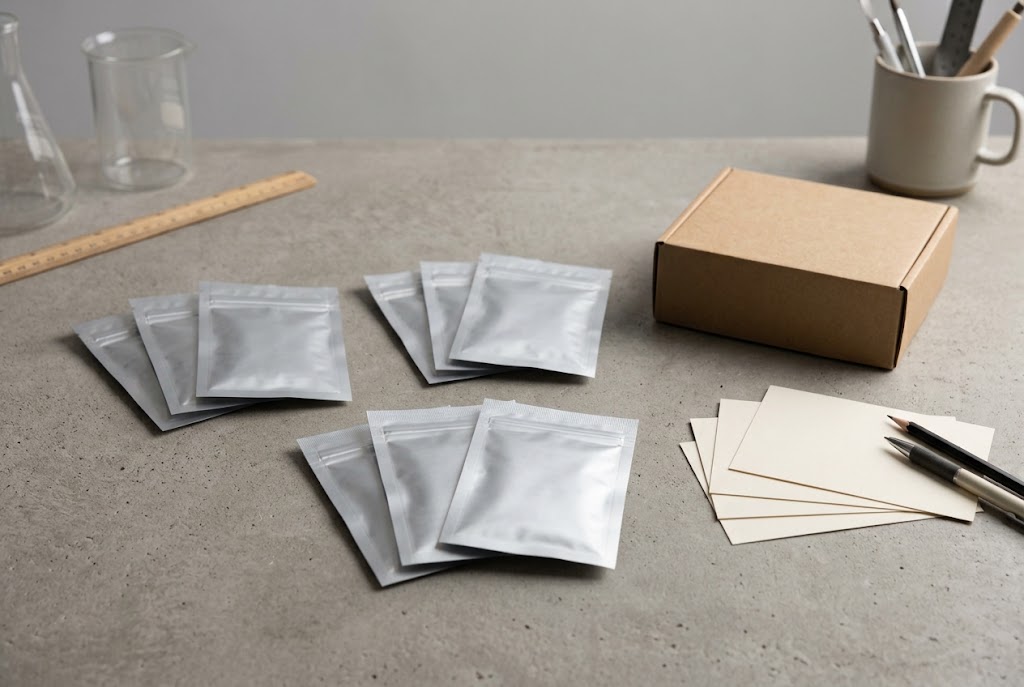
Do not copy a sample size from another cosmetic, or pick a time point simply because it is a round number. The qualified team should decide sample counts, lot coverage, intervals and limits from the product's risks, methods, intended claim and market. A practical planning grid can still make omissions visible:
| Study checkpoint | What to identify and preserve | Decision the checkpoint can inform |
|---|---|---|
| Initial, after normal production | Formula, substrate, pouch and final-seal versions; baseline product and pack observations | Whether the production run meets its starting specifications |
| Interim at representative storage | Unopened retained units, storage record, predetermined chemical/physical, pack and applicable microbial endpoints | Whether changes appear and which tests need attention before the target date |
| Target claimed period | The same traceable SKU and agreed endpoint methods, plus relevant unopened controls | Whether the brand has evidence for the proposed unopened period under stated conditions |
| After route-related handling or excursion | Shipping pack, exposure record, actual bag and product observations | Whether the intended distribution route introduces a separate defect or changes an endpoint |
| After an approved design/process change | Old and new versions and a written impact assessment | Which prior evidence remains applicable and which tests must be repeated |
The grid deliberately supplies no generic months, temperatures, pass limits or FDA-mandated sample count. Those values require a real study design. An observed improvement in one endpoint is not permission to ignore a different failing endpoint.
Real-Time, Accelerated and Shipping Checks Answer Different Questions
Representative real-time storage follows the final product under defined intended conditions. It lets the team observe whether its chosen endpoints remain acceptable through the proposed unopened period. That evidence is most directly connected to what the printed date promises. The plan must still consider whether those defined conditions are realistic for the retail and distribution route.
Accelerated or stress exposure can screen a candidate film, formula or seal system sooner and identify vulnerable mechanisms. Elevated temperature can alter the formula or package in ways that are not simply a faster copy of normal storage. No general “one week equals one month” conversion is appropriate for every sheet mask. If a team uses a model to predict a date, it must justify the model for this product, check the mechanism, and continue to compare against real-time observations. An accelerated pass alone should not be presented as a universal finished-mask guarantee.
Transit and handling checks probe compression, carton fit, flexing and leakage after a credible route. A bag may lose integrity under pressure without showing a slow chemical change. A formula may change in warmth without a visible puncture. Keep the records separate, then decide how the route evidence affects the overall claim. The FDA notes that temperature, humidity, sunlight and storage conditions can influence cosmetics; it describes firms using varied conditions to help determine life, without imposing one universal cosmetics schedule in its shelf-life discussion.

The outer box needs a place in the record
Sheet-mask brands often test a sachet alone, then later put it in a retail box or promotional kit. A tight opening, sharp insert edge or densely packed shipper can change pressure points. Record the commercial packing arrangement when evaluating leakage and appearance after distribution. The box is a separate component and may help presentation or handling; it does not replace the primary sachet's seal or establish the serum's shelf life.
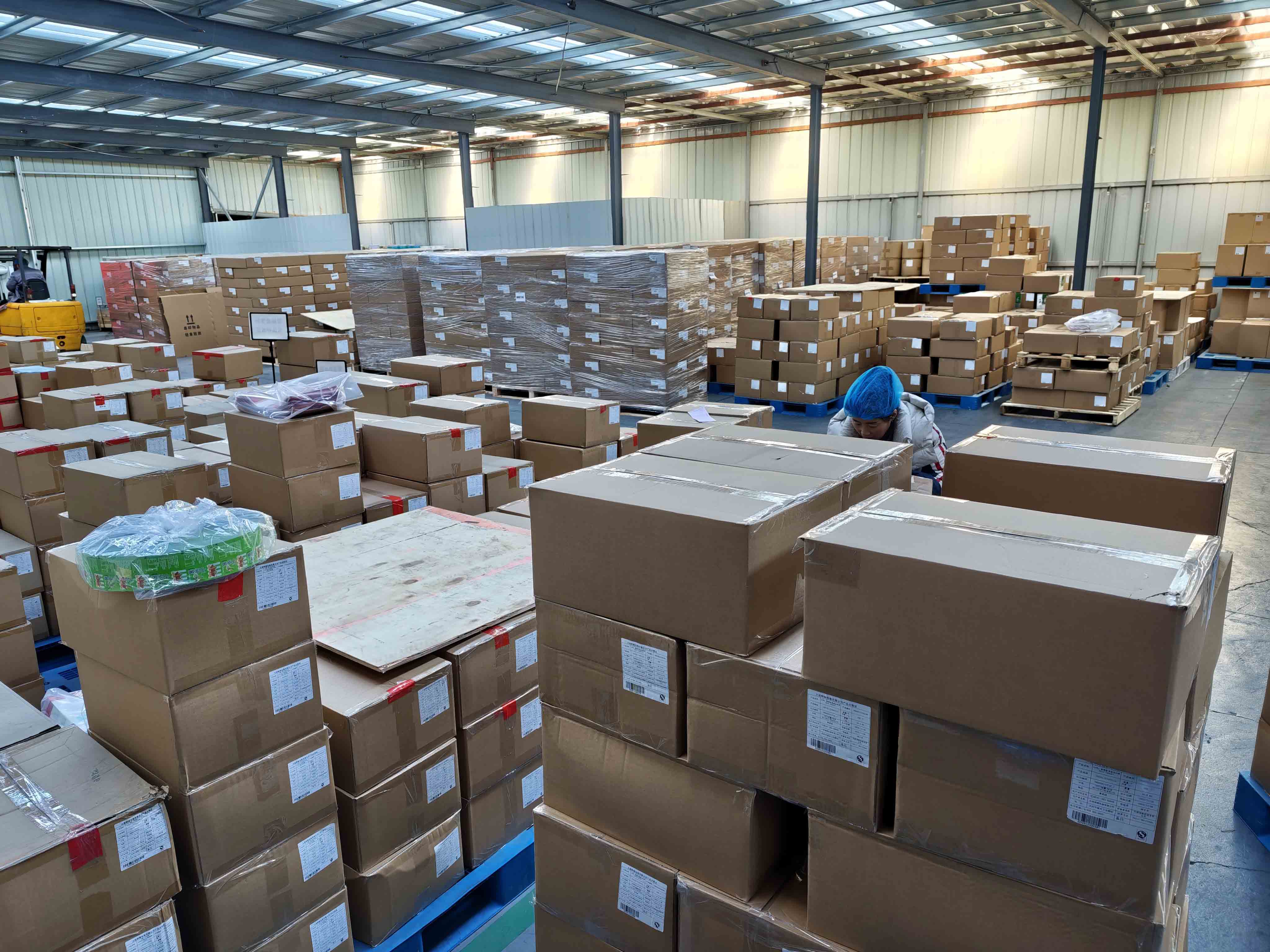
Likewise, a warehouse photo does not prove a storage regime. Keep the actual logged conditions and the instructed storage language together. If the product needs a specific condition to meet the claimed period, the responsible brand must be able to support and communicate it in the markets where it sells.
When a Pack Fails, Investigate Before Changing the Film
A symptom is a lead, not a diagnosis. Isolate the affected batch or study samples as the brand's quality procedure requires; retain both failed and apparently normal comparison packs. The investigation should follow the evidence across formula, fill, top seal, converted pouch and shipping history. The following table is an editorial troubleshooting tool, not a consumer safety test.
| Observation | Plausible routes to investigate | Records or samples to request | Immediate study decision |
|---|---|---|---|
| Lower liquid or pack mass | Fill variation, small leak, transfer through material, puncture, opening during handling | Baseline weights, fill records, matched unopened controls, leak location, film version | Hold interpretation of the date until the source and extent are understood |
| Wet or tacky final top seal | Serum in the seal zone, mask fold trapped at the mouth, process variation | Filler's setup and in-process checks, filled samples, location and shape of defect | Review final-seal process with the filler; do not infer a film-body barrier failure |
| Color, odor or texture change | Formula stability, substrate interaction, package contact, exposure conditions, contamination | Formula lot, product tests, contact-layer version, storage history | Refer to the brand's qualified product team; appearance cannot establish safety |
| Delamination, swelling or print change | Laminate compatibility, conversion issue, exposure or handling | Pouch construction, adhesive/print version, actual contact conditions, controls | Compare versions and investigate the affected structure |
| Pouch inflation, leak or damaged corner | Gas or product change, seal flaw, puncture, compression or a combination | Unopened affected units, microbiological assessment as appropriate, seal/transport records | Quarantine suspect units and avoid use; investigate with the responsible teams |
| Apparently normal pack, failed laboratory endpoint | A problem invisible to the eye or a sampling/method issue | Sample ID, method, controls, lab report, retained packs | Follow the quality procedure; do not release by appearance alone |
For example, imagine a trial in which a retail carton is damp at one corner after handling. That is a hypothetical decision example, not a Mylarbag customer result. The team should locate the wet sachet, compare the carton pressure point and the seal/corner geometry, inspect top-seal records, and check neighboring retained packs. Ordering a laminate with a lower WVTR may have no effect if the source is a squeezed, contaminated top seal. Conversely, a visually clean top seal does not rule out a product-quality endpoint. One variable at a time helps locate cause where practical, but safety and disposition belong with the responsible brand.
A Real Skincare Pouch Listing Shows What a Case Cannot Prove
Mylarbag's public 30 g skincare-cream pouch case identifies a Philippines project, a MOPP/VMPET/PE material structure, gravure printing, a die-cut round spout pouch, and a 10 × 9.6 cm size. Those fields make a packaging project more specific than “shiny pouch.” A buyer can ask for the exact web, inner contact layer, geometry and printing revision, then assess which records could apply to the contemplated product.
The case is a cream in a spouted dispensing pack, not a wet sheet mask in a permanently top-sealed flat sachet. A spout adds a dispensing component and a different in-use pattern. A cream and serum-soaked substrate do not have the same formula-contact or filling questions. The public page does not disclose a study protocol and finished-product data that could establish a wet sheet mask's date. Its promotional descriptions of absolute light, gas or leak protection should not be treated as measured universal performance. We use only its verifiable project fields here; we do not claim to know that cream's actual expiry, ingredients, preservation outcome or shipping-test results.
The transferable lesson is a method, not a performance claim. Write the packaging fields down precisely, then ask which final-product tests are still missing. A buyer may select a metallized structure for screening, but the right question is whether this serum, on this sheet, in this sealed commercial pouch, remains within agreed criteria over its intended route and time.
Who Can Supply Which Part of the Evidence?
The pouch supplier should be able to discuss the specified empty bag, its construction, converting details and relevant tests it actually performed. It can help the brand choose candidates and investigate a suspected material or premade-seal defect. The filling operation owns what happens when the mask and liquid enter the bag and the final top seal is formed. The brand or other responsible product company integrates formula, preservation, product safety, label and finished-pack evidence. A laboratory reports the tests it was asked and qualified to run; it does not turn an unrelated bag into an approved cosmetic.
This division is especially useful when a team asks, “Will your foil pouch give us two years?” A constructive answer is to request the product brief and propose a matched sample and validation plan. The film's barrier report can narrow choices, and a seal trial can remove a bad candidate. The date itself still belongs to the finished SKU's supported quality and safety decision. If the packaging supplier has not seen the formula or the final filler setup, it cannot responsibly guarantee that period.
U.S. rules also require careful wording. As the FDA explains, ordinary cosmetics do not have one mandated U.S. expiry period or a general requirement to print an expiration date, but the manufacturer is responsible for product safety and shelf-life determination. Some personal-care products, including products making certain treatment or SPF claims, are regulated as drugs or both drugs and cosmetics; their stability and expiry requirements differ. The brand should classify its actual claims and consult the rules of each market. This packaging guide does not decide a product's legal category from its sachet shape.
What to send when asking for a pouch sample
The most productive first contact is a brief that names the unknowns. Share the product form and whether it is one-use; the folded sheet and substrate; the formula category and information needed for contact review; target liquid dose and variation; filling method; planned display or outer carton; target markets; desired appearance and light exposure concerns; and anticipated storage and shipment route. Ask for a clearly identified empty-bag construction and reports relevant to that exact candidate. Do not ask an empty-pouch sample to prove finished-product stability.
After the filler trial, send back physical samples and observations: whether the folded sheet clears the seal, whether liquid contaminates the mouth, where any leaks appear, how packs open and how the carton fits. Ask for an alternative material or dimension only in response to a known problem or a defined comparison. A face mask packaging inquiry with this information gives the supplier a way to help, while leaving the date decision with the product team.
Change Control: When Do You Revisit the Date?
The study supports a version, not a vague product name. If the brand changes its formula, preservative system, mask substrate or serum dose, the original outcome may no longer describe the final product. If it changes the inner sealant, barrier layer, window, ink placement, pouch dimensions, tear feature or supplier process, the contact and package pathways may differ. If it changes the filling line, final-seal settings, pack orientation, outer carton or distribution route, the process and handling evidence may differ.
Do not assume every change always needs the entire study repeated from zero. Document an impact assessment: which endpoints could change, what old evidence still matches, what bridging or new work is needed, and who approves the conclusion. A print-only revision outside the contact surface may pose different questions from a new inner contact layer, but the actual construction and process must be checked. New artwork can also move a tear feature or change a window, so “cosmetic change” is not a reliable engineering category by itself.
Keep a connection from the marketed lot to the approved pouch drawing, film/converting lot, filler record and final-product specification. If complaints arise later, that link allows a targeted investigation and avoids throwing away useful evidence from unrelated versions. Periodic review of retained samples and market feedback can help the brand detect a trend before a shelf-date statement becomes stale. Record a reasoned decision and revise the label if the supported period changes.
Frequently Asked Questions
How long do face masks last in packaging?
There is no defensible universal duration for all wet facial sheet masks. The period depends on the actual formula and preservation, mask substrate, filled and heat-sealed pouch, storage and distribution conditions, and the brand's acceptance criteria. Ask the brand for the date and storage directions for its specific product. A packaging material's nominal barrier property cannot answer the full question.
Do packaged face masks expire if the pouch has never been opened?
Yes, an unopened cosmetic can reach the end of its supported quality period, and a compromised pack can be suspect earlier. Opening is only one exposure route; formulas and materials can change over time under storage. Follow the brand's date and directions. Do not assume that an intact, normal-looking sachet has passed a safety check after its stated period.
Does a high-barrier or foil-looking sachet guarantee two years?
No. “Foil-looking” may describe different structures, and a film report does not include the final top seal, actual formula, substrate, filling conditions, carton or storage route. Request construction-specific data and evaluate production-representative finished packs. Do not copy a general product-page month range into a new SKU specification without its own evidence.
Can I use a sheet mask after the expiration date if it smells fine?
Smell is one observation, not a test for microbiological safety or every quality endpoint. Follow the brand's date; if a pouch is out of date, leaking, swollen, discolored or otherwise suspect, do not use it and ask the brand about that lot. The pouch supplier cannot assess the safety of an individual expired cosmetic by its wrapper.
Does the pouch manufacturer's heat-seal report establish the finished mask's shelf life?
No. It can support a specific seal-material or empty-bag engineering question under the reported conditions. The filler produces the final closure around the actual contents. The brand must assess the finished product's stability, safety, packaging integrity and target conditions. Keep the supplier report linked to the exact material version so it remains useful without overstating its scope.
Does FDA require an expiry date on every cosmetic sheet mask in the United States?
For ordinary U.S. cosmetics, FDA says no U.S. law or regulation requires a specific shelf life or generally requires an expiration date on the label; the manufacturer remains responsible for safety and determining the product's life. Products regulated as drugs or both drugs and cosmetics are different. Other markets can have different labeling rules. Check the actual product classification and sales markets before finalizing artwork.
Is accelerated aging enough to print a date?
It can help screen weaknesses and support a qualified model, but a hot or otherwise stressed pack can fail by a different route from one stored normally. The product team must justify how accelerated results relate to the proposed conditions and follow real-time evidence as appropriate. There is no universal short test that converts directly into a fixed number of months for all facial masks.
What if the bag changes but the serum stays the same?
Assess the change. A new contact layer, barrier construction, clear window, pouch size or sealing process can alter the relevant endpoints. Write down the old and new versions and identify which compatibility, sealing, handling or stability work needs repeating. A similar-looking exterior does not prove the contents see the same conditions.
Should an opened single-use sheet-mask pouch be saved for later?
An unopened-pack shelf-life study does not answer that question. Single-use sachets are designed to be opened for the directed use, and opening changes the exposure and handling conditions. Follow the brand's instructions rather than applying the unopened date to a partly used product.
A Date Is a Conclusion Drawn From the Finished Product
The best pouch specification is one that the brand can test, trace and keep aligned with its formula and route to market. Start with a versioned empty-bag candidate, verify that real sheets and liquid can be filled and finally sealed, then study unopened production-representative finished packs against pre-agreed endpoints. Connect interim and target-date observations with route and change-control records. If an endpoint fails, investigate before changing a film or extending a date.
Mylarbag can help define an empty facial mask sachet for those trials. Send the folded sheet, dose, formula category, filling method, proposed storage and outer-pack plan, and ask for the exact pouch construction and suitable samples. The resulting bag can then become one documented part of the brand's finished-product validation, rather than a substitute for it.