
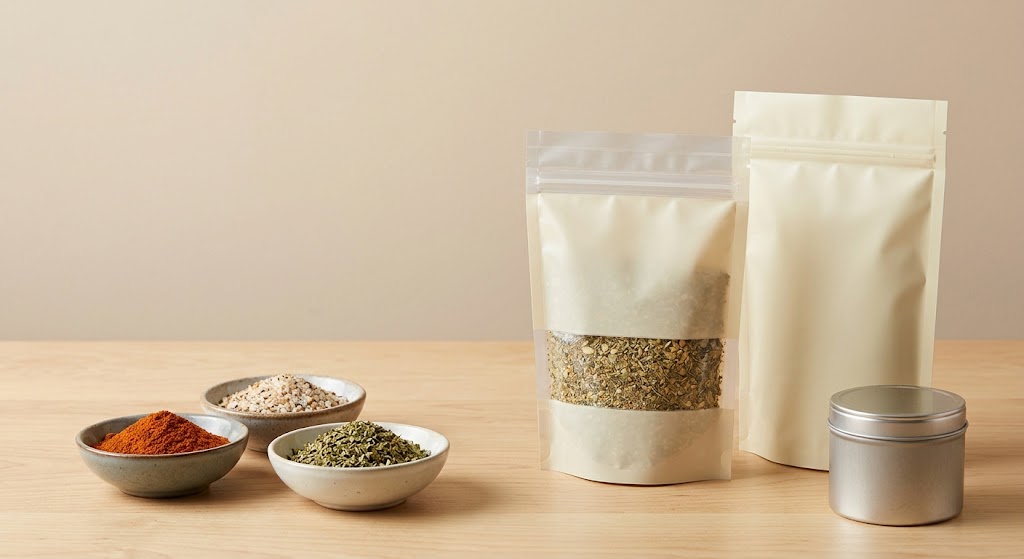
The best package for a dry spice mix is the one that protects that particular blend, runs cleanly on your filling line and survives the intended storage route. Start with the formulation, then compare complete food-contact pouch constructions. Ask for oxygen and water-vapor transmission results with their test conditions, fill real samples, and check seals before approving artwork or a shelf-life claim.
That answer changes when a powder contains fine dust, a rub has large salt crystals, or a brand wants shoppers to see the contents through a window. The outside of two bags may look almost identical while their inner sealant, barrier layer, window construction and performance differ. “Kraft,” “foil” and “Mylar” are descriptions worth investigating, not finished specifications.
This guide is for businesses buying retail or refill packaging for dry seasoning blends. A wet mole paste or an infusion filter placed in broth calls for a different product brief. If you are planning a dry-spice project, our cooking spice pouch range is a useful place to begin a sample discussion. Bring the actual mix, target weight, destination market and intended storage conditions.
1. Start with the blend's failure modes, not a favorite film name
A spice blend is a small system of ingredients. The proportions, particle sizes and oils all affect what happens after packing. A finely milled mix may dust the seal area. A coarse rub may segregate in transit and place hard pieces against the film. A blend with aromatic ingredients may lose the sensory profile the brand wants to retain. Salt and sugar can change how the mixture behaves when humidity reaches it. These are questions for the food business to investigate with its actual recipe; no generic pouch can settle them.
Before selecting a material, write down the product's known quality endpoints. Is the concern visible caking, loss of aroma, color change, a change in free flow or an unacceptable amount of broken pieces? Who will judge those endpoints, under what conditions, and at what dates? “Fresh for two years” cannot be inferred from a film name or an online product card.
Do not let a material choice mask a food-process issue. The manufacturer of the spice remains responsible for ingredient quality, processing controls and the finished food's specification. Packaging is one part of the preservation system, alongside the recipe, fill operation, closure and storage plan.
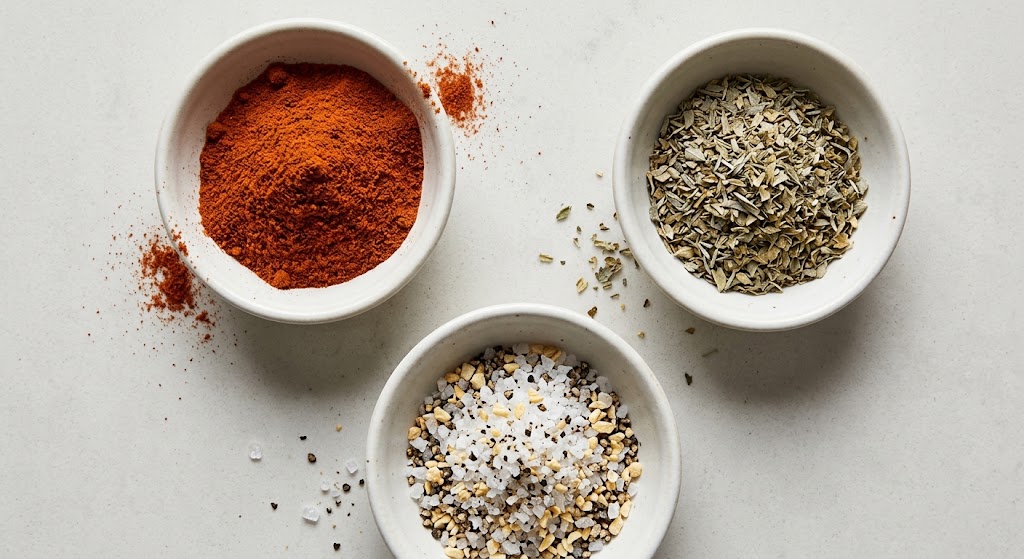
2. Compare complete pouch constructions, not marketing labels
A flexible spice pouch can combine a print surface, a barrier layer and a food-contact sealing layer. Some products add paper for appearance; others have a metallized layer or a clear region. Ask the supplier to identify each layer, total construction, food-contact surface, closure and window detail for the exact version being quoted.
The shorthand on a proposal is useful only when its limits are clear. A MATOPP/VMPET/PE listing describes a matte oriented polypropylene outer web, metallized PET and polyethylene in broad terms. It does not itself give you an OTR, a WVTR, a certified shelf life or the construction of a transparent window. An NY/PE description points to nylon and polyethylene, but it does not establish that a particular finished bag is better at every barrier property than another laminate. Performance depends on the actual layers, thicknesses, processing and test conditions.
These are questions to compare, not a league table claiming that one named structure universally wins. Ask for material samples and fill them. If the quote changes from one sealant, zipper or window to another, request the revised finished specification and repeat the relevant checks.
The FDA's explanation of food-contact substances emphasizes authorization for the intended use. For a US food project, ask the supplier for evidence tied to the offered food-contact layer and conditions of use. A blanket “food grade” statement does not tell you which version, food or use conditions the documentation covers.
A useful purchasing question
When two offers both say “high barrier,” ask each supplier: What is the measured performance of this exact film or finished pouch, under which temperature and relative humidity, and how is the window or closure accounted for? That question is much more actionable than comparing thickness or metallic appearance alone. Our spice packaging options can be narrowed to a small number of samples once you share the blend and the intended selling format.
3. Read OTR and WVTR reports with their units and conditions
OTR is oxygen transmission rate. WVTR is water-vapor transmission rate. They describe movement through the tested sample under stated conditions. A low result can be useful when the product's quality specification calls for oxygen or moisture protection. The number becomes meaningful only alongside the specimen, test method, units, temperature and relative humidity.
AMETEK MOCON's permeation explanation distinguishes film values, usually expressed per square meter per day, from finished-package values expressed per package per day. It also notes that temperature, humidity and concentration differences affect the result. Keep those columns with the number when you compare quotes.
For scale, consider a purely illustrative calculation. If a flat film report states an OTR of 2 cc/m²/day under its specified conditions and an imagined package exposes 0.06 m² of that film, multiplying gives 0.12 cc/day through that idealized film area under the same conditions. This is not a measured whole-pouch result. It ignores seams, the zipper, a different window film, gradients that change over time and any use after opening. It cannot set the spice's shelf life. Its value is to show why a bare film number and an entire package are not interchangeable.
Do not compare an OTR measured at one humidity with another at a different humidity as if the numbers were produced under identical conditions. Do not use WVTR alone to decide aroma retention: water vapor and volatile flavor compounds are different substances. If aroma is the quality endpoint, the food team needs a suitable sensory or analytical plan on the actual product, not an inference from one film property.
What a window changes
The transparent area may use another material from the opaque panel, and its size can change with the artwork. Ask whether a report concerns the opaque web, the window material or a finished pouch that includes both. If the brand plans to display spice near strong light, consider that exposure in its product-quality study. An attractive photo of a window does not establish that a visible spice can tolerate every lighting condition.
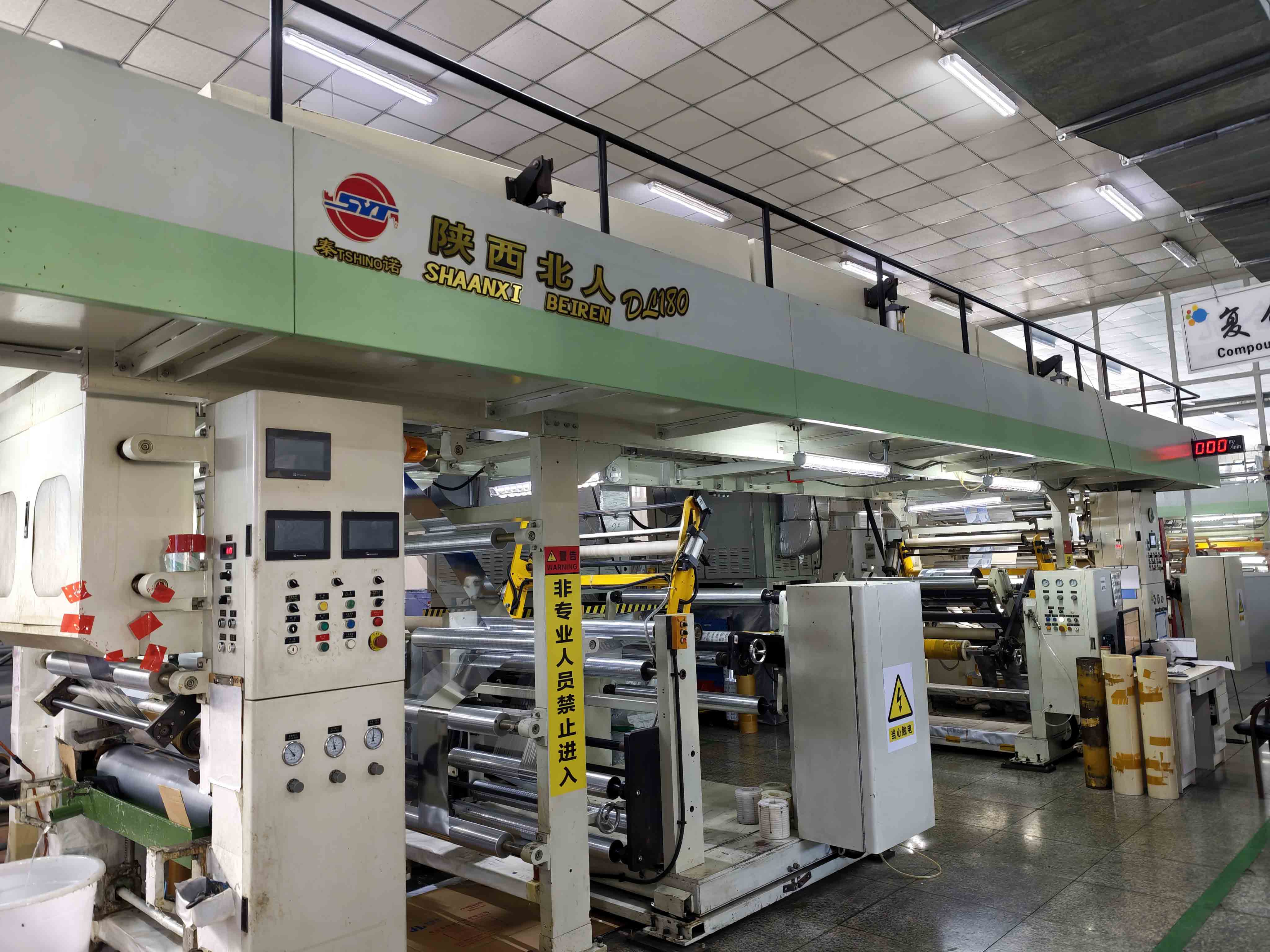
4. What the Belgian seasoning-powder project can actually teach
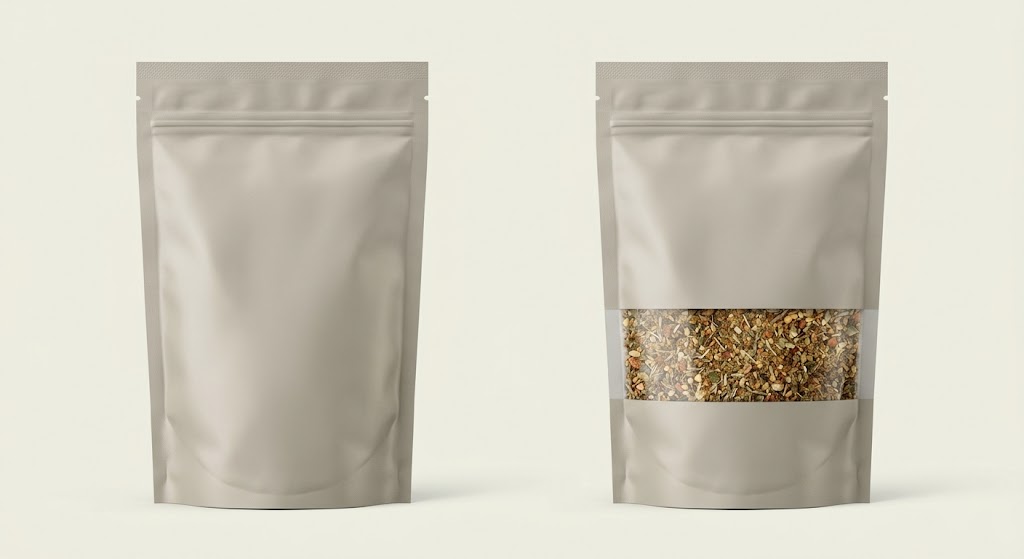
A Belgian spice and seasoning pouch project provides a concrete design to inspect. The published record lists Belgium, gravure printing, a matte MATOPP/VMPET/PE construction, a 12 × 20 + 4 cm format and a visible strip window. It describes the application as seasoning powder and herbs.
The interesting engineering question is how the project combines a printed opaque area with product visibility. If your own blend needs a similar presentation, ask for the window dimensions and construction, then check the complete printed sample under the proposed lighting and storage route. Also fill it: a powder that coats the inside of the window may look quite different from an empty sales sample.
The public case does not give a traceable OTR/WVTR report for the exact windowed bag, a verified shelf-life study or a measured change in sales. We can discuss the layout and recorded construction without promoting those unmeasured outcomes to facts. The case's size is not a capacity promise for your powder; bulk density and settling can change the amount that fits.
There is another lesson in the listing: “matte” describes the surface presentation, not the food-contact layer. “Metallized” describes part of the structure, not an unbroken metal wall around the whole pouch. Ask for a cross-section or layer schedule that identifies the window region. Confirm which layer actually seals when the filling line closes the bag.
If the brand expects the consumer to open and close the pack repeatedly, put the zipper and initial heat seal on the same physical proof. The zipper needs to remain usable after powder handling, while the first commercial closure must be validated separately. A photograph cannot tell you whether the filling operation will deposit product on either area.
5. Use the Japanese coarse-seasoning case for a different decision
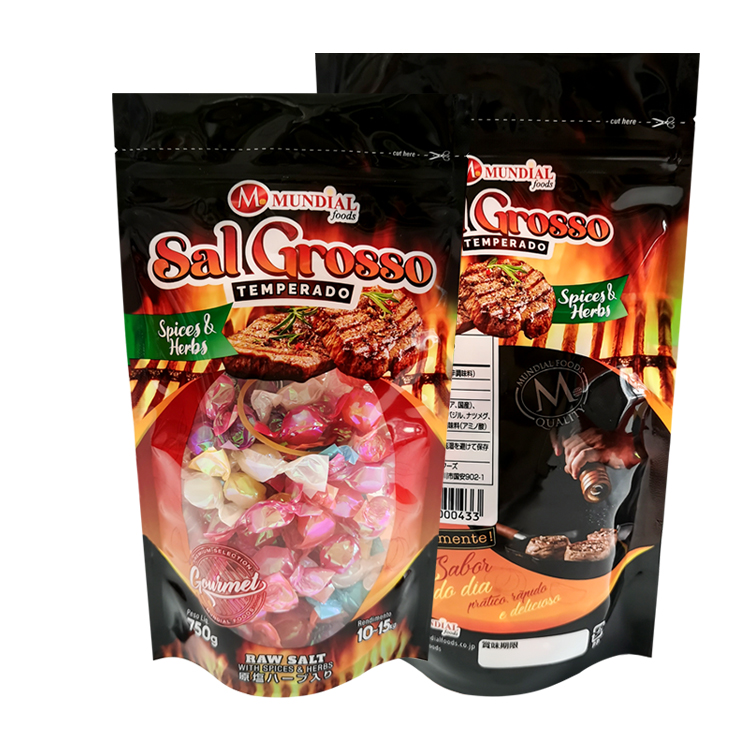
The Japanese 750 g BBQ seasoning and coarse-salt project lists an NY/PE construction, gravure printing, a clear window, a stand-up format and dimensions recorded as 13 × 22 + 4 on the product page. The published application is much heavier and coarser than the Belgian powder example. This makes it a useful second case, rather than another photograph of essentially the same selling unit.
If your mix includes coarse salt or hard seeds, test whether the filled product places repeated pressure on the film or gusset during packing and shipment. A nylon-containing proposal may be worth testing for handling behavior, but the public case does not establish its measured puncture resistance, OTR, WVTR or a universal capacity for every coarse blend. Ask for the appropriate test reports and evaluate the filled pouch.
The clear window creates a second question. It lets the buyer see the size and color of the blend, yet its exact construction and area matter to a barrier comparison. The project page's broad “high barrier” wording is not a numeric specification for a buyer's new design. If an alternative quote replaces NY/PE with another laminate, compare the complete performance and actual filled handling, not just the name of the inner material.
For a heavier retail bag, check how the bottom gusset unfolds with the real fill, whether the pouch remains upright after settling, and how many finished units can be placed in a carton without scuffing or excessive pressure. Inspect the zipper, if selected, after repeated opening with coarse product. The initial heat seal remains a separate acceptance point.
Neither case lets us rank the two films by shelf life. They show two different sets of design inputs. If a supplier offers both approaches, ask for product-relevant evidence and trial both using the same proposed fill and storage conditions.
6. How many ounces of spice mix fit in a 4 × 6 inch pouch?
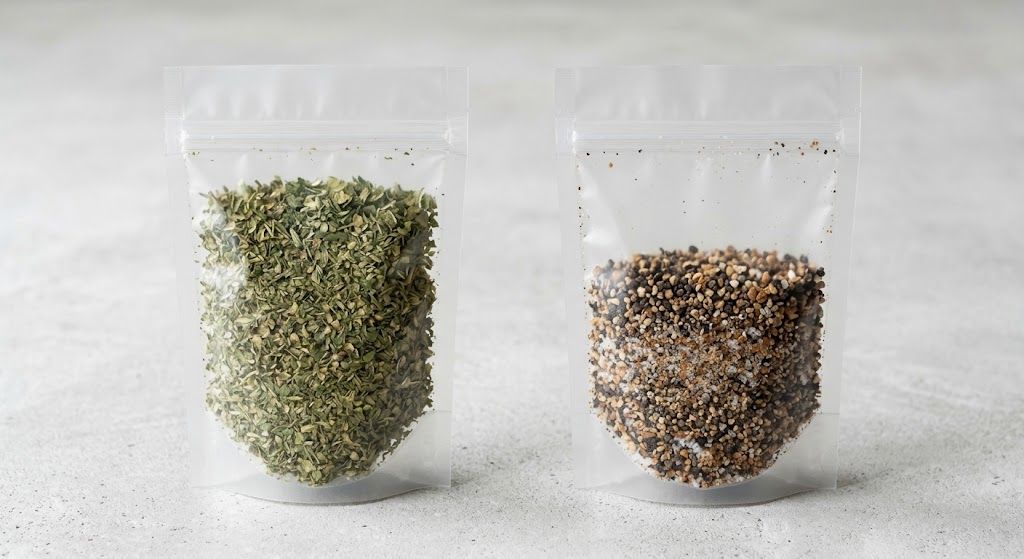
There is no defensible universal number. “4 × 6 inches” usually describes nominal outside dimensions, while usable internal volume depends on seal widths, the exact format, gusset, zipper position and how far the product may rise without crowding the final seal. Two mixes at the same net weight can occupy different volumes because their bulk densities differ. A fluffy dried-herb mixture may fill a bag that still looks nearly empty with coarse salt of the same weight.
The fastest useful answer comes from a controlled fill trial. Take the supplier's actual 4 × 6 inch sample, confirm whether it is flat or gusseted, and weigh several target fills of your own mix. Fill them using the intended method and settle them as they will settle in production. Inspect the seal zone, the way the front panel looks, and whether the filled pouch closes without forcing particles upward.
A simple comparison that avoids a misleading capacity chart
- Record the pouch's outside dimensions, internal design, closure and sample code.
- Use one formula and one target net weight for the comparison.
- Fill at least enough samples to observe ordinary operator and blend variation under your quality plan.
- Check the pouch immediately and after a defined settling or handling step.
- Photograph the front, side and top, including the area above the contents.
- Check the packed carton as well as the individual unit.
Do not substitute a kitchen spoon volume for the declared net weight. A retail label's ounces normally describe mass, not how much space a powder takes in the bag. If one SKU contains fluffy herb flakes and another contains finely milled, salted seasoning, test both. Even if they can share one printed pouch dimension, their line settings or filled appearance may differ.
This section answers the 4 × 6 inch question in more detail than the brief size warning in our general packaging guide. It gives a method for a purchasing decision, not an arbitrary number that would fail for another recipe.
7. Validate seals and finished bags before setting a date claim
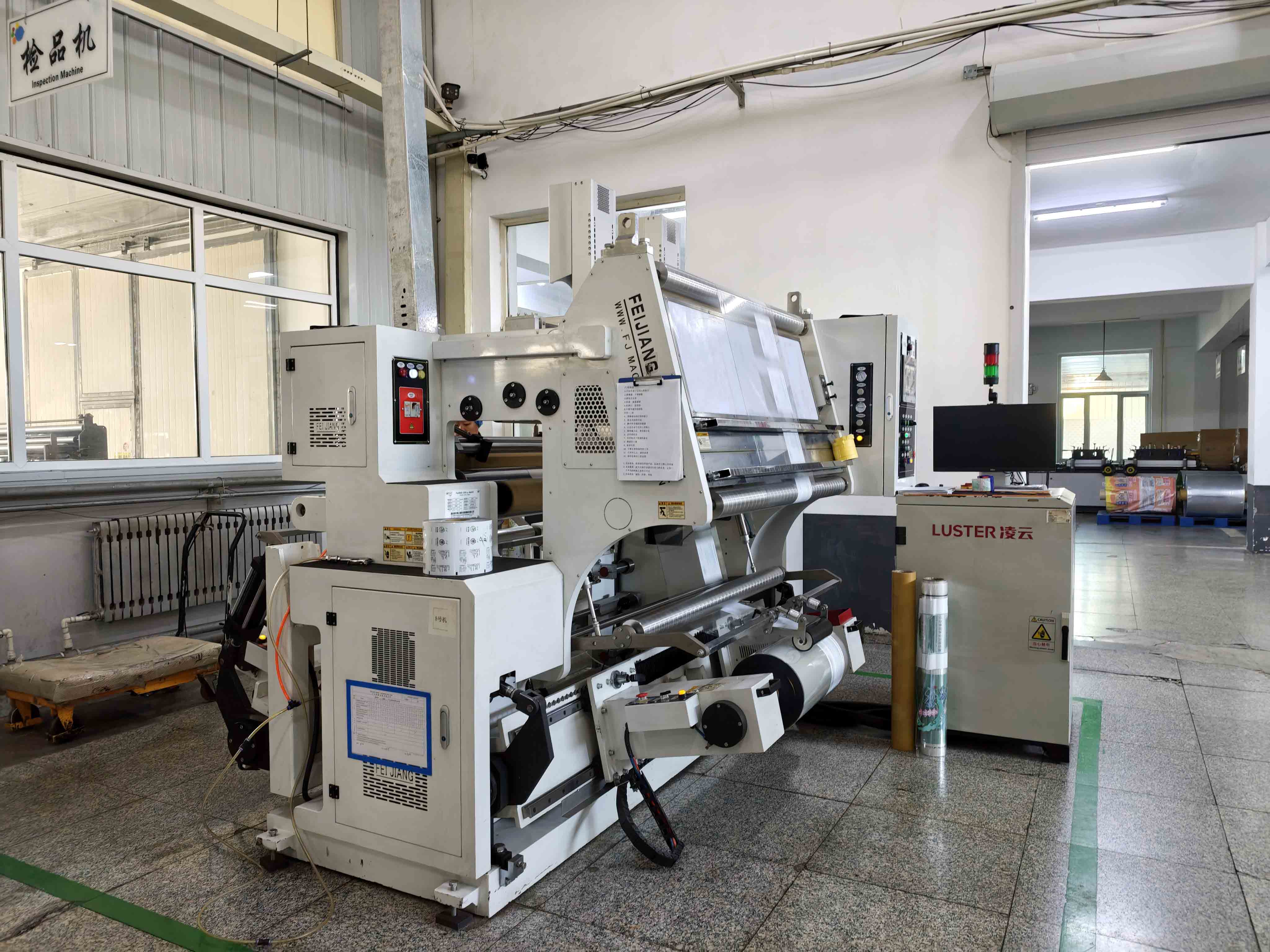
A promising film report is a starting point. The filled spice pouch also has seams, a final heat seal, perhaps a zipper, and perhaps a window boundary. Fine product can reach the seal area. An overfilled pouch can cause folds. A shipper can squeeze hard contents against the panels. Test these as a system, with the actual blend and equipment.
Set an operating window on the intended line rather than copying a temperature from an unrelated pouch. Record film revision, jaw design, dwell time, pressure, speed and the observed seam quality. Check samples from the start, middle and end of a trial under the packing team's procedure. Keep the initial retail seal and the later zipper reclosure distinct in both the specification and inspection record.
ASTM F88/F88M-23 describes measurement of flexible seal strength and its role in process validation and control. A strip result characterizes sampled seals; it is not a measurement of the entire filled package's integrity. When a leak-location question is relevant to a suitable nonporous flexible package, ASTM F3039-23 describes a dye-penetration method. The laboratory must select methods that suit the construction and question; the test is destructive and does not produce a universal shelf-life result.
For a shelf-life proposal, the food business should define acceptance criteria and monitor the packaged spice under a justified study plan. Sensory checks can matter when aroma drives the sale; moisture or clumping may be relevant for another blend. Some teams will also evaluate color or chemical markers. Choose endpoints because they measure the actual product's quality, not because a pouch supplier's marketing sheet lists a convenient number.
8. Organic spices can use a pouch or a metal tin, with the right review
“Organic” describes how the food is produced and handled under the applicable certification system. It does not mean that the retail container must be compostable, made of paper or free of metal. A pouch and a metal tin can both be candidates for an organic spice brand; each still needs suitable food-contact materials and a process that maintains the food's organic integrity.
For US sales, USDA's organic labeling guidance distinguishes “100 percent organic,” “organic,” “made with organic” and specific ingredient claims. The categories affect which claims and seals may appear on a package. A compostable pouch, kraft finish or metal tin cannot establish that a finished spice blend qualifies for a particular organic label. The food business should have its certifier review the actual artwork and the handling system where applicable, including whether an exemption applies.
USDA's commingling and contamination guidance addresses practices that keep organic product separate from nonorganic product and protected from prohibited substances. This is especially relevant if a co-packer changes between conventional and organic spice blends. Record the supplier's packaging material specification, packing sequence and cleaning controls within the operator's applicable plan. Food-contact review is a separate question: check the tin's interior coating or liner, or the pouch's food-contact layer, for the intended use and market.
Pouch versus tin: a purchasing comparison
Neither column is automatically “greener.” Disposal routes, material claims and local infrastructure differ. Do not call a multilayer kraft-look pouch recyclable because its outside looks like paper, or call a tin a better barrier without checking its lid and liner. If the article discusses a particular environmental claim, it needs evidence for the complete package and the market where the claim will be used.
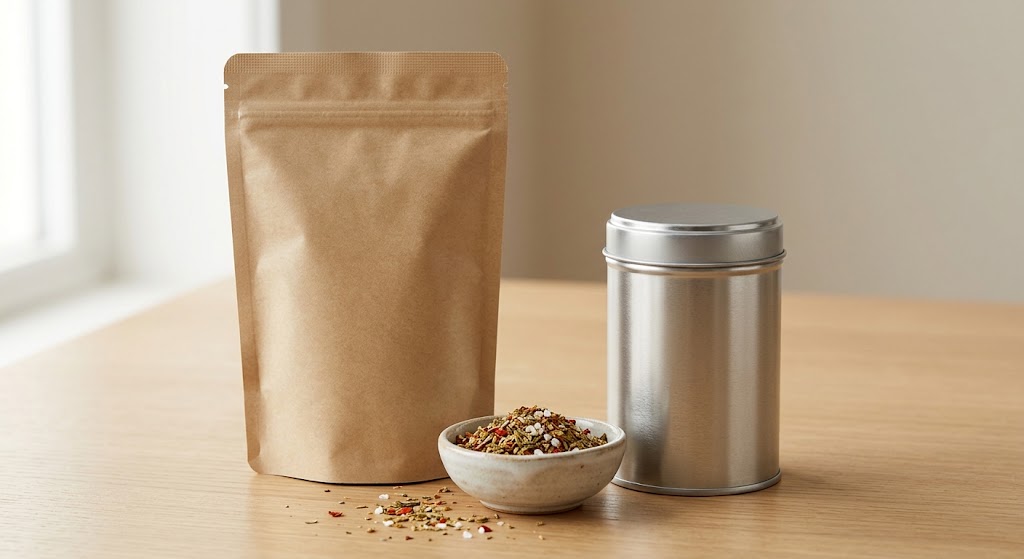
9. Turn material comparisons into a quoteable specification
Once you have narrowed the options, send suppliers a brief they can actually price and sample. Name the exact dry mix and its physical form; do not write only “spices.” Include a target net weight and a representative product sample. State whether the pack will be a small retail unit, a refill pouch or a larger food-service format. Tell the supplier where it will be sold and which packing machine will make the final closure.
For each candidate, request a construction drawing, food-contact information for the intended market, barrier reports with complete conditions, and physical samples. Where a window is proposed, ask for its area and material. Where a zipper is proposed, decide how the consumer will use it and where the initial heat seal will be placed. Ask the printer for the real dieline before the designer finalizes any certification or product copy.
The two real cases in this article are useful starting conversations: the Belgian powder project for a matte windowed presentation, and the Japanese coarse-seasoning project for a heavier visible fill. They are not substitutes for a trial with your own formulation. If neither format suits the line, describe the failure and request a different size, geometry or construction rather than selecting by appearance alone.
Brief to send with an inquiry
- Blend type and representative product or ingredients list, subject to your confidentiality process.
- Target net weight, expected fill variation and approximate production quantity per SKU.
- Intended country, storage route, target quality endpoints and desired review dates.
- Proposed bag format, window, initial seal, consumer reclosure and print versions.
- Filling equipment and expected operating pace.
- Documents needed for food contact, organic label review or environmental claims.
- Samples and tests needed before purchase approval.
With that information, the custom spice bag team can discuss plausible sample constructions and a quote for your actual project. The practical decision is the filled and tested package that meets your specifications, supported by the right documents. It is not the most confident-sounding material label on a sales page.
Frequently asked questions
What is the best way to package spice mixes for retail sale?
Define the dry blend's quality risks and selling unit, then compare complete food-contact pouch constructions against those needs. Request OTR/WVTR data with units and test conditions where relevant. Fill and seal samples on the intended line, review the actual printed and windowed design, and test the finished pack and shipper under the proposed storage route. A universal film recommendation cannot replace that process.
Is a metallized pouch always better than a clear pouch for spices?
No universal ranking follows from those names. An opaque metallized structure may address light exposure, while a clear panel helps shoppers see the product. The exact barrier properties depend on the full construction, window, seams and test conditions. Compare reports for the candidate designs and assess the spice's quality in the finished packs.
How many ounces of spice mix fit in a 4 × 6 inch pouch?
There is no fixed answer from outside dimensions alone. Film seams, gusset and closure reduce usable space, while the mix's bulk density and settling change how much volume a given net weight occupies. Fill the exact sample pouch with your intended recipe and weight, then check the closure area and appearance after settling.
Can organic spices be packaged in metal tins?
Yes, a suitable metal tin can be a packaging candidate. An organic claim depends on the applicable production, handling and labeling rules, including certification where required; it does not follow from choosing paper, plastic or metal. Check the tin and any interior liner for the intended food-contact use, review lid and shipping performance, and have the responsible organic certifier review the actual claim where required.
Does a kraft-paper exterior make a spice pouch compostable or recyclable?
No. A kraft-looking outside can be laminated to other layers. Obtain the complete finished-package construction and evidence for the exact environmental claim and destination market. An “organic spices” food label also does not establish an environmental property of its container.
Do OTR and WVTR numbers prove a spice blend's shelf life?
They are useful material or package measurements under stated conditions. They do not by themselves account for the food's initial quality, fill dust, seam leaks, window construction, changes during storage or what happens after opening. A shelf-life conclusion needs product-specific endpoints and evidence from the actual finished package under a justified study plan.