
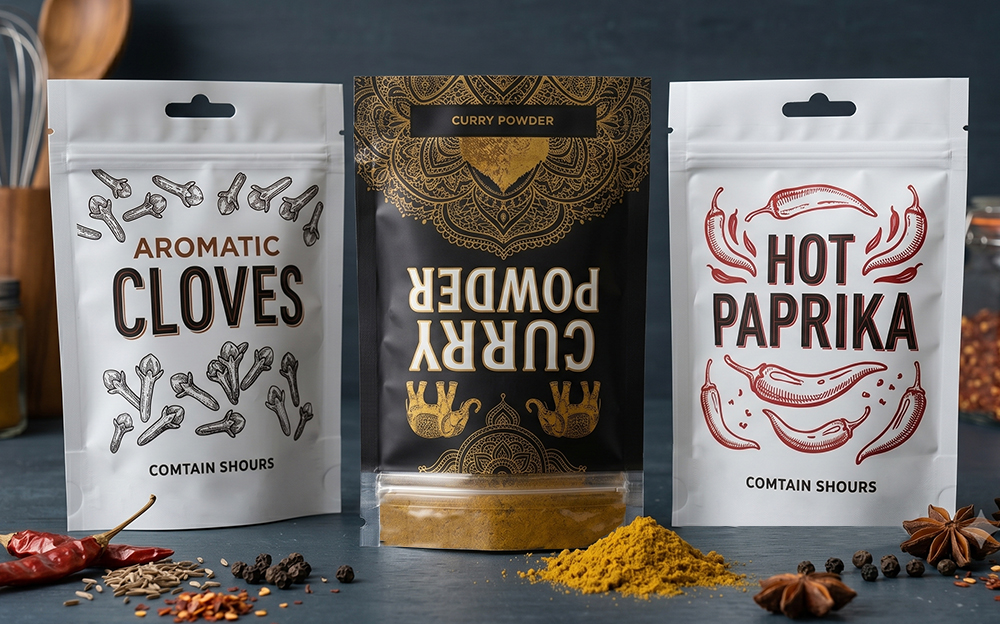
A spice sachet can mean two very different things. In packaging, it often means a small, sealed packet of dry seasoning that a customer tears open and empties into food. In a kitchen, a sachet d’épices is a permeable bundle that holds whole spices or herbs while they flavor a simmering stock; the cook removes it afterward. The first package keeps the contents protected until opening. The second deliberately lets liquid pass through during cooking. A supplier cannot specify one from the words “spice sachet” alone.
This distinction matters when a food brand asks for a quote. A heat-sealed film packet for a dry rub needs a suitable food-contact construction, reliable seals, workable filling dimensions and print space. A bag to be submerged in broth needs evidence about its contact conditions, particle retention, seams and removal after cooking. If the customer wants both, the project may contain two components: an inner infusion bag and an outer protective retail package. They need separate specifications and may come from different qualified suppliers.
Mylarbag’s cooking spice packaging range shows flat pouches and other flexible retail formats. The published customer cases discussed below document outer seasoning packages, not tested porous infusion bags. This guide explains the terms so buyers can ask for the right thing and assess the evidence for each component.
First, name the job the bag must do
The quickest way to clarify “sachet” is to ask what the customer does with it. Will they tear the package and pour out the powder? Or will they put the entire bag into a pot of water, leave it there while cooking and retrieve it afterward? A sealed retail packet does the first job. A culinary infusion bag does the second. A pouch that holds several smaller packets is another component altogether.
These are functional descriptions, not promises that any particular film, paper, fabric or nonwoven construction will be appropriate. The choice depends on the actual food, contact conditions, filling route and supplier documentation. A printed packet can say “for broth” because its seasoning is intended for broth, while the packet itself must be opened before use. Conversely, an infusion bag might be enclosed within an airtight outer packet to protect aroma before cooking. The copy on the front must tell the consumer which action to take.
“Sachet” describes context, not one universal material
The word has several established uses. A small sealed packet of sauce, powdered seasoning or a product sample is commonly called a sachet in flexible packaging. In classical cooking, the Culinary Institute of America describes a sachet d’épices as herbs and spices wrapped in cheesecloth and tied for simmering liquid. Both uses are legitimate. Translating either directly into a material order without a use description is where mistakes begin.
Try asking for the use in a single sentence. “We need a printed, sealed packet containing 8 g of dry seasoning, which the consumer opens before cooking.” Or: “We need a measured whole-spice infusion bag that stays in simmering stock for our instructed time and is removed intact.” Even if the supplier proposes a different format after reviewing samples, the sentence prevents the two projects from being silently conflated.
What is the name for a spice pouch used in broth?
For a bag that goes into broth, useful terms include spice sachet, sachet d’épices, spice infusion bag and, in some kitchens, bouquet garni bag. The last expression can also refer to bundled herbs, so specify the physical bag. If you mean a bag of dry broth seasoning that the customer tears open, call it a sealed seasoning sachet or single-serving broth seasoning packet instead. Adding “permeable for simmering” or “sealed and tear-open” is more useful than arguing over the noun.
In a traditional kitchen, cheesecloth and kitchen twine make a simple removable spice bundle. The Culinary Institute of America’s example puts peppercorns and herbs into cheesecloth, ties it and removes the bundle when the cooking is done. A commercial ready-to-use infusion bag has to turn that culinary action into a repeatable food product: consistent dose, usable bag size, secure seam or closure and an acceptable amount of spice particles in the finished liquid.
The blend changes the brief. Whole peppercorns and a bay leaf impose different particle-retention demands from fine powdered cinnamon. Smaller particles may pass through a porous material and cloud the broth; a very restrictive material may slow extraction. The food developer should define the acceptable result through actual cooking trials rather than specify only a nominal “pore size” copied from a different product. Bag geometry, headspace, seam placement, product loading, liquid volume and stirring also affect what happens in the pot.
A sachet d’épices is not the same as an airtight pouch
The culinary sachet is meant to interact with liquid. An airtight retail pouch is meant to limit exchange with the surroundings before opening. A sealed film laminate, especially one designed as an aroma or moisture barrier, should not be treated as a ready-made simmering bag. Do not instruct a customer to boil a retail laminate in stock simply because it holds cooking spices. The material and finished bag would require evaluation for that intended contact and temperature, and an intact sealed bag would not perform the normal infusion task in any event.
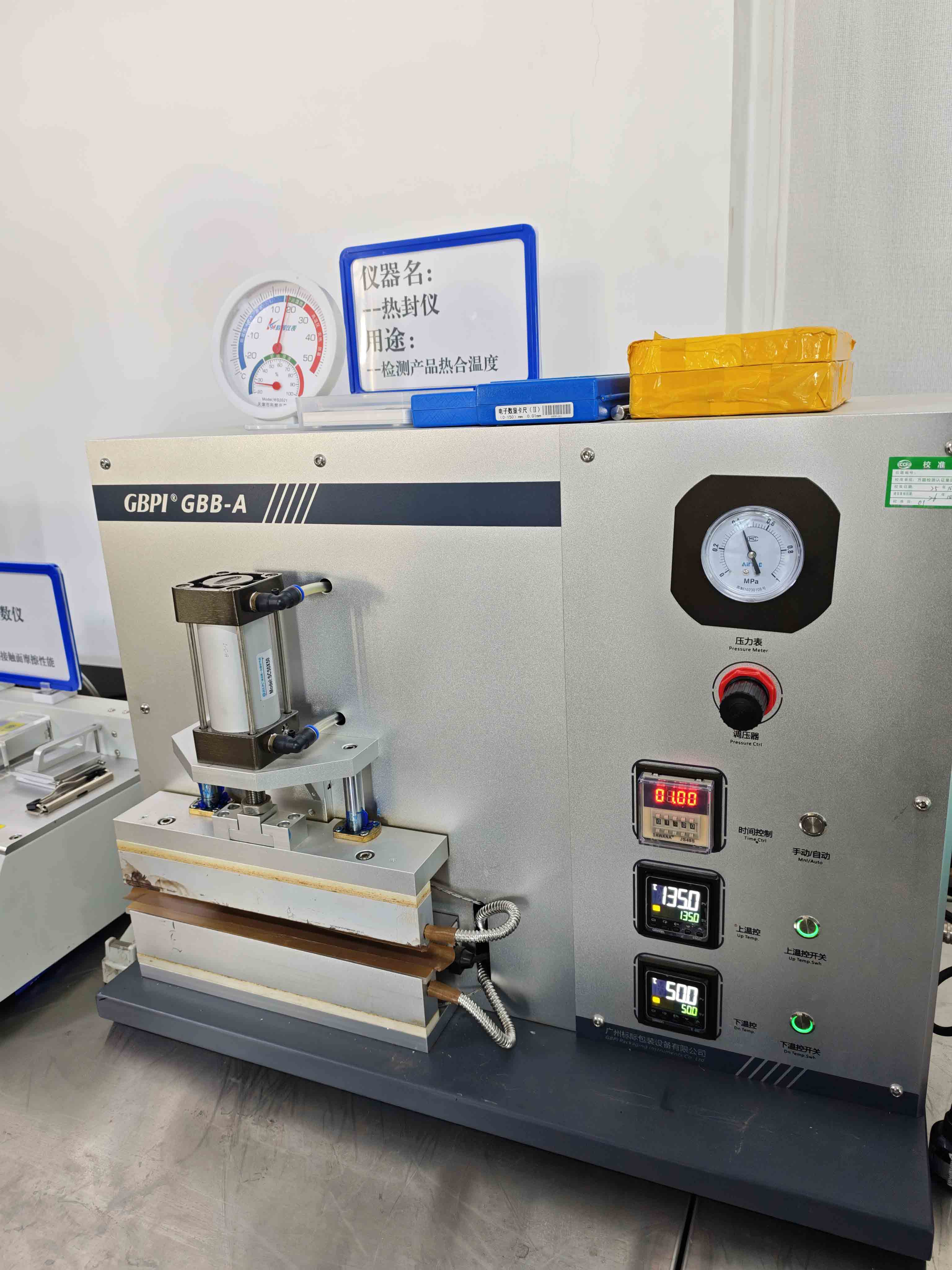
This distinction also affects pictures. A customer photo of a stand-up spice pouch proves that a printed retail pack was made; it does not show its contents being extracted in broth. A photograph of factory heat-seal equipment shows that testing equipment exists; it is not a test report for a filter-bag seam. Request the specific evidence for the component you plan to sell.
When a sealed seasoning sachet is the right product
A sealed packet makes sense when a measured dose is intended to be added directly to food. Examples include one soup portion, a seasoning component in a meal kit, a restaurant takeaway portion or a trial sample enclosed in an outer carton. The packer may buy printed preformed packets or specify rollstock for a form-fill-seal line. What matters is that the packaging and the filling process agree on the portion, the opening direction, the final seal and how many finished units go into each selling unit.
Ground spices are difficult to handle at a narrow seal. Dust can ride on the product stream or settle on the surfaces that must bond. A tiny packet is not automatically easier to fill than a larger pouch. The product needs space to enter without scattering into the seal zone, and the machine needs enough clean film to form a consistent closure. The packer should trial the actual grind, feed speed and equipment. A tabletop prototype filled slowly with a spoon may conceal the very dust problem that appears on the intended line.
The sealed packet should also dispense as the consumer expects. A tear notch can indicate where to begin opening, but its position relative to the seal and contents matters. A narrow opening may retain clumpy or oily seasoning. A broad opening can make a small dose spill. Test the intended opening with people unfamiliar with the design. If a sachet is meant to be emptied entirely into a soup, the user should not have to cut an unmarked corner and guess whether the pack can go into the pot.

Choose the packet size from a filled trial
Begin with the target net weight, bulk behavior and filling method, rather than a picture of a packet marked “10 g.” Equal weights of fine ground spice, large herb flakes and coarse seasoning occupy different volumes. Film seals take up width and height. The top closure needs clearance. If the portion is sold inside another pack, the number and orientation of inner packets affect the outer pouch or carton as well.
Ask the packer to measure the settled fill height after a representative run. The packet must retain enough room for the final seal without trapping product. Confirm whether the end user can get the full intended dose out of a sample after ordinary storage and handling. A packet designed around one free-flowing granule blend might be frustrating for a powder with different cohesion. There is no reliable grams-to-dimensions chart without a defined product and geometry.
If multiple flavors share a packet shape, trial the bulkiest blend, the dustiest blend and the one most likely to bridge near the opening. Then compare how the packet looks and empties after being packed into its carton. A dimension approved for one SKU is a starting point for another, not automatic proof of fit.
Plan the sealed packet and its outer pack together
A single-serving sachet often travels inside a carton, kit pouch or multipack. This creates two layers of decisions. The inner packet needs its approved contact construction, seal and opening. The outer pack may carry most of the branding and organize several portions. Artwork still needs to keep the correct ingredient, allergen and lot information connected to the actual flavor and manufacturing lot according to the food brand’s market requirements.
Define the count per carton, how inner packets are oriented, whether edges abrade one another and how a customer identifies an individual packet after removing it. If all flavors have identical unprinted inner packs, handling controls become especially important. A barcode and a beautiful carton do little good if the wrong flavor is placed inside. Retained filled packets, carton samples and a controlled artwork matrix make later investigations possible.
When a porous broth spice bag is the right product
A broth infusion bag is bought for extraction and removal. It has to admit cooking liquid, keep the intended ingredients sufficiently contained, and withstand the actual cooking conditions and handling. A food-service cook may tie a cheesecloth pouch at the workstation; a consumer brand may want preportioned infusion bags inside protective retail envelopes. Those are related use cases but not the same manufacturing brief.
Write down the recipe and particle distribution before shopping for a bag. Whole spices, cracked spices, dried leaf pieces and powders are not interchangeable. A material that retains whole peppercorns may allow a substantial amount of powdered spice through. During a cook test, look at the appearance and taste of the finished broth and at what remains in the bag. Examine the seam, knot or closure before and after simmering, especially if the user will squeeze or pull the wet bag out with tongs.
Specify the actual use conditions: the food and liquid, approximate temperature, contact duration, intended fill, agitation and removal method. The supplier should identify the construction, joining method and documentation for those conditions. The FDA explains that food-contact substance authorizations are tied to intended conditions of use. Documentation for dry-food storage in a retail film is not interchangeable with evidence for a material submerged in hot broth. For markets outside the US, the brand must review the applicable requirements there as well.
The protective outer packet may still be a flexible pouch project
An infusion bag sitting on a shelf may need a separate protective enclosure. A sealed outer sachet can help protect the dry contents and carry artwork, directions and lot identification until the customer opens it. The consumer removes the inner porous bag from that enclosure and places the inner bag in broth. The two materials do opposite jobs during use, so specify and test them separately. The retail supplier may quote the printed outer packet while a specialist supplies the cooking-contact inner bag.
Do not imply that a site photo of a spice pouch proves both layers were manufactured together. The flat pouch page is relevant to a sealed outer flexible format. Its dimensions, film and printing still require approval for the actual inner-bag count, filling process and destination market. The culinary bag’s porosity and hot-contact suitability require their own supplier evidence.
Material and validation questions for each route
For a sealed dry seasoning packet, request the complete proposed film structure and the food-contact side. Discuss whether the product is a ground powder, coarse blend or oily spice mixture, the unopened distribution life the brand is studying, and any relevant aroma, oxygen, moisture and light concerns. Ask which barrier measurements are available for the proposed construction and under what conditions they were measured. A film data sheet alone does not assign a shelf life to the finished food. The brand must test the packaged product and approve the date.
For a porous infusion bag, request the material identity and evidence for the intended liquid and temperature exposure. Ask how seams are made, whether loose fibers or spice fines appear in a cook test, how the user removes the bag, and whether the final bag remains intact after the specified time. A trade label such as “food grade,” “natural,” “biodegradable” or “tea bag material” is not a complete technical description. The complete finished assembly, including thread, adhesive or heat-joined seam if used, needs scrutiny for its actual use.
For an outer package around an infusion bag, review both interfaces: the outer pack’s contact with its enclosed food component before opening, and the inner bag’s contact with the cooking liquid. Ask how the pack will be sealed after the inner bag is inserted. If the outer pack is opaque, plan a process to ensure the right inner flavor is loaded. If the brand wants a paper-look panel or a window, evaluate the final package rather than assuming the appearance tells you its barrier or disposal route.
That table is a diagnostic starting point, not a claim that a particular material will solve the problem. Keep samples of the actual food and both package components when trialing a combined system. Record the version of each, the date, the cooking or filling conditions and the observed result. Otherwise a change to the spice grind may be mistaken for an improvement in the bag.
Two supplier briefs that should never be merged into one vague request
Suppose a meal-kit company wants 12 g of dry spice blend for each carton. The user tears open the seasoning packet and adds the powder. The buyer needs a sealed packet brief. A practical opening line would be: “Please propose a printed or plain sealed flexible packet for a 12 g dry blend that our line can fill; the consumer tears it open and empties all contents.” The supplier then needs product samples, the proposed filling equipment and packet count per carton. Ask for drawing, material construction, proposed opening, print location, sample quantity, and the tests the packer must run on its filled product. Do not choose seal settings without a line trial.
Now suppose the same company sells a whole-spice mix meant to infuse stock. The user drops the entire inner bag into the pot and retrieves it. That buyer needs a porous cooking-bag brief: recipe and particle sizes, target filled mass, intended stock volume, time and temperature, acceptable fines, removal method and market. Request construction, joining details and use-specific food-contact documentation from a supplier qualified for that component. Separately, ask an outer-pack supplier for a sealed retail envelope if protection or presentation is required.
One purchase order can coordinate two components, but the specifications and acceptance checks should remain separate. Packaging teams can prevent a costly misunderstanding by naming each component consistently in artwork, sample bags, invoices and approval records. “Spice sachet, version B” is ambiguous. “Dry seasoning tear-open packet, version B” and “porous stock-infusion bag, version C” are traceable.
A quote request for sealed flexible spice packaging
Send Mylarbag the product form, target dose or net weight, expected number of flavors, intended selling unit, print requirements, desired format, filling method and destination market. Say whether the pack is a single portion, a multi-portion stand-up pouch, or a sealed outer envelope containing another component. Include whether the customer pours the spice out once or reopens a larger pouch. Ask the team to confirm which specific format and capability it can quote, then request samples and an approved drawing.
Provide the target shelf-life question as a question, not as an assumed film property: “We intend to validate this food for our proposed sales period; please share available construction and barrier information.” A supplier can propose candidates and documentation. The food brand must run product-specific studies, approve the final label and ensure its packer controls the fill and seal.
For the broth bag, do not infer an offer from general “spice bags for cooking” website wording. Ask any potential supplier to confirm that it makes the porous, hot-contact inner component, and obtain construction, intended-use documentation and real samples before considering a claim. If that proof is absent, source the cooking bag from a qualified specialist and treat Mylarbag’s sealed flexible packaging as a separate outer-pack discussion.
What the published spice projects actually show
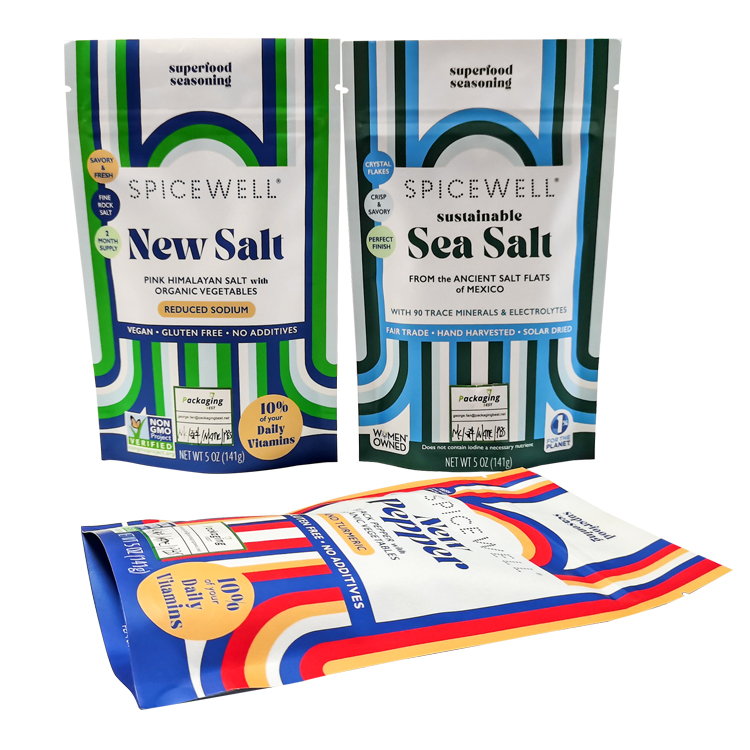
Real customer projects can help a buyer evaluate visual direction and some documented construction choices, but only within their published scope. The US 5 oz gourmet seasoning and mineral-salt project lists a printed stand-up pouch with an NK/white kraft/NKME/PBS structure, dimensions of 13.3 × 20.9 + 2.5 cm and digital printing. Those are facts about its retail outer bag. Its listing does not establish a single-serve spice packet line, an infusion bag, a result of simmering or a universal compostability claim for other constructions.
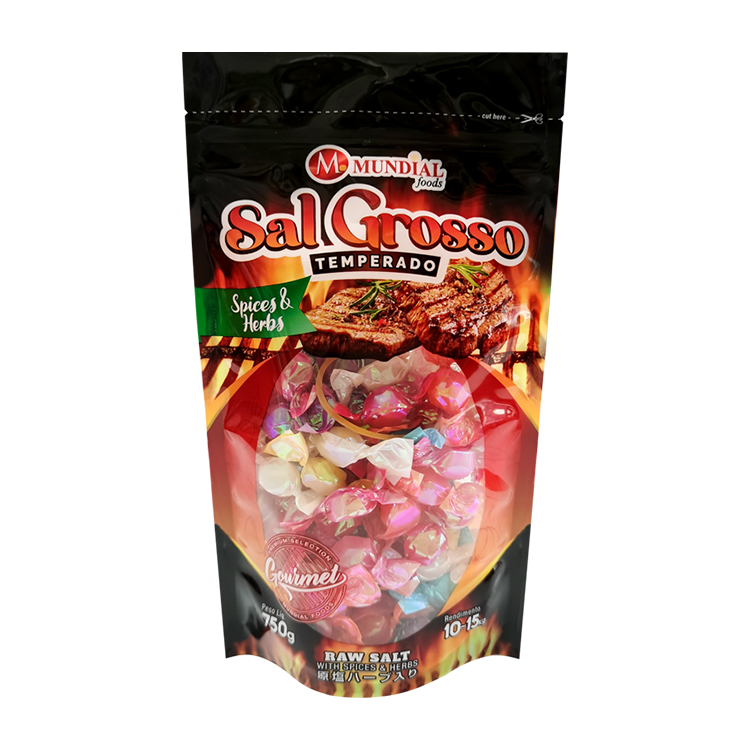
The Japanese 750 g BBQ seasoning and coarse-salt project describes a clear-window stand-up pouch, NY/PE, gravure printing and 13 × 22 + 4 cm dimensions. Its much larger selling unit illustrates why a retail spice pouch should not be confused with a measured cooking sachet. Nor can its window and NY/PE construction be treated as evidence that the complete bag belongs in hot stock.
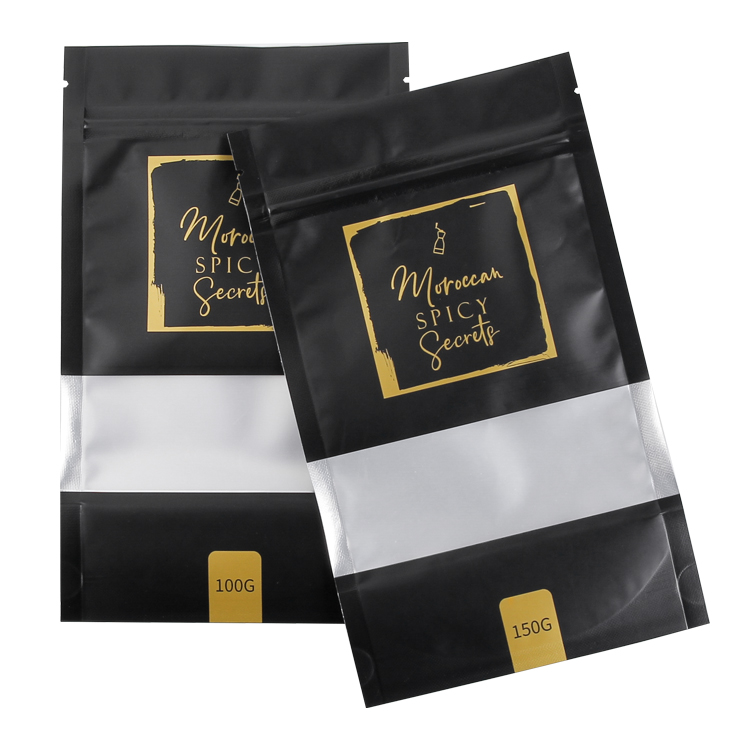
The Belgian spice and seasoning powder project documents another printed retail pouch with a matte finish and window. It can prompt useful questions about artwork, product visibility and dry-powder filling. It does not prove that the project included an inner filter bag. If a buyer uses any of these images as a reference, label them as adjacent outer-pack examples in the brief.
Use real case evidence precisely
A case photo can substantiate appearance and a published listing can substantiate the particular dimensions, structure or print method stated there. Neither establishes the food brand’s shelf life, its filling-line yield, the suitability of another blend, or a different product’s compliance. Ask for new samples for your own formulation and use conditions. If the resulting specification differs, retain the new approved drawing and test record instead of treating the reference case as the approval.
This matters especially with terms such as “flat sachet.” A flat-looking outer pouch may be much larger than a single-serving packet; a tiny sealed packet may arrive on rollstock and be filled by the packer; a permeable stock bag may never be printed at all. Appearance alone does not tell you which production route or food-contact conditions apply.
Can a coffee filter or reusable cloth bag stand in for a spice bag?
For home cooking, cooks sometimes wrap whole spices in a coffee filter, cheesecloth or a reusable cloth bag, then tie or secure the bundle and remove it from broth. The culinary idea is straightforward: contain larger solids while liquid circulates. A coffee filter may tear, restrict flow, or release fines depending on its construction and the recipe. Never assume that every filter, thread or tie is suitable for the intended cooking temperature, duration and food contact. Follow the product maker’s instructions and keep loose fibers or an unsecured closure out of the pot.
That household workaround does not specify a commercial, prefilled infusion bag. A brand selling prepared bags needs repeatable filling, a defined material and joining method, food-contact evidence for its intended use, instructions and suitable manufacturing controls. It also needs to decide whether a protective outer packet is necessary before purchase. A consumer searching “where to buy reusable spice bags” often wants a washable kitchen accessory, not a printed retail laminate. The two searches should not be sent to the same quote form under the assumption that they describe the same product.
If your commercial goal is a printed pack of seasoning that customers open and empty, ask about custom spice pouches. If your goal is a washable textile bag or a prefilled porous component for simmering, seek a supplier that can document that exact product and use. An outer pouch for those inner bags can be quoted as a separate flexible-packaging project.
Approve the whole user sequence before launch
Place the actual finished product in front of someone who has not read the development brief. Can they tell whether to open the packet or put a bag directly in a pot? Can they identify the flavor and follow the cooking directions? If the product contains an inner bag and an outer wrapper, can they remove the correct layer without tearing the wrong one? Clear on-pack instructions may be more valuable than a broad claim such as “spice sachet for all cooking.”
Next, follow the route backward. Confirm the packed carton has the correct number and flavor of portions. Inspect the sealed packet after handling. Check the artwork, lot code and product identity. Verify the packer can form and inspect the final seal with the real spice. For an infusion bag, add a cooking trial and review material documentation under the instructed conditions. If there is an outer wrapper, confirm that it stays sealed through the intended distribution route and that it does not get mistaken for the inner cooking bag.
The most useful result is a short approval record that names both the component and the test. “Outer dry seasoning packet: clean final seal and acceptable consumer emptying on our line trial.” “Inner broth bag: acceptable fines and intact removal after the defined cook trial.” An approval worded simply “sachet OK” is too vague for purchasing, artwork or complaint handling.

Frequently asked questions
What are sachets in spice packaging?
Usually, the packaging term means small sealed packets containing a measured portion of seasoning, which the customer tears open. In culinary use, sachet d’épices can mean a permeable spice bundle placed in stock and removed after cooking. State whether the bag itself goes in the food or whether the contents are poured out.
What is a “satchet”?
“Satchet” is a common misspelling of sachet. It does not identify a particular material or construction. A request for a “spice satchet” should still say whether it means a sealed retail portion, a cooking infusion bag, or a protective outer wrapper.
What is the name for a spice pouch for broth?
If the entire bag simmers in the broth, call it a spice infusion bag, broth spice bag or sachet d’épices. If you open the packet and add the loose seasoning, call it a sealed broth seasoning packet. The distinction tells a supplier whether to investigate hot-liquid contact and permeability or an unopened retail barrier and tear opening.
What can I use for a spice bag in home cooking? Can I use a coffee filter?
Cheesecloth and a suitable tie are a traditional way to hold larger aromatics for later removal. Some home cooks use a coffee filter or a purpose-made reusable bag, but performance depends on the product and recipe. Check the maker’s intended use, secure the closure and watch for tearing or loose particles. A home workaround is not a tested specification for a commercial prefilled cooking bag.
Where can I buy reusable spice bags?
For a washable bag intended to be placed in broth repeatedly, look for a kitchen-accessory or infusion-bag supplier that documents its material and care instructions. A resealable printed spice pouch is a different product: its zipper allows the customer to access stored dry spice, but does not by itself make the package a washable broth bag or establish multiple commercial reuse cycles.
Can I put a sealed Mylar spice packet straight into boiling stock?
Do not assume that is its intended use. A sealed flexible retail packet is normally opened so the seasoning can be emptied. Hot-liquid immersion would need its own material, finished-pack and food-contact assessment, and an intact barrier packet would not work like a permeable infusion bag. Follow the finished food’s validated instructions.
Is a spice bag always a packaging term?
No. In some searches, “spice bag” also refers to a prepared takeaway dish, especially in Ireland. In a supplier inquiry, add “sealed dry seasoning packet,” “outer retail pouch” or “porous bag for simmering broth” so the request cannot be confused with a recipe or an unrelated bag format.
What should I send a supplier for a quote?
State the use sequence first. For a sealed packet, provide the spice form, portion weight, filling method, flavors, artwork and selling unit. For an infusion bag, provide the recipe and particle sizes, filled weight, liquid, time, temperature, removal method and intended market; request use-specific evidence. If you also need a printed outer envelope, describe it as a separate component. Mylarbag’s spice packaging page is a starting point for a sealed flexible-packaging inquiry, with samples and a project-specific specification to follow.