

Keep unopened chocolate in its intact original pack, follow the product's own storage instructions, and choose a dry, dark place with a reasonably steady temperature away from strong smells. After opening, close the usable inner wrapper or pouch as well as its design allows, then protect it in a clean, dry, closed container if needed. Avoid heat and abrupt cold-to-warm changes. The original package helps only while its protective parts remain intact; it cannot correct unsuitable storage conditions.
This is a guide to storing finished chocolate bars, squares and comparable packaged confections at home or in a retail stockroom after delivery. A filled bonbon, a bar with fresh inclusions and a plain solid bar may have different handling instructions. Always give the maker's label priority, particularly when it specifies refrigeration, a use-by instruction or a shorter period after opening. The advice below is about storage in the original retail pack; shipping a parcel through heat, sunlight or delay requires a separate transit plan.
What does “original packaging” actually protect?
An attractive outer carton is sometimes only a sleeve. The food may also have a foil or film inner wrap, a heat-sealed sachet, a fitted tray or a closed pouch. Each layer has a different job. The sleeve may carry a product name and date; a sealed inner layer may be the actual enclosure that limits contact with the surrounding air. A tray may keep pieces separated without forming a moisture barrier. Treat the complete package as received, rather than assuming the visible box alone performs every protective function.
Look for the line of the primary seal before storing an unopened product. If the package is torn, damp, greasy on the outside, swollen in an unexplained way or has an incomplete seal, setting it in a better pantry spot will not restore the condition in which it left the maker. Keep the product identification, lot and date legible. For a gift box containing individually wrapped pieces, check whether the maker's instructions apply to the entire box, the separate pieces or both.
It is easy to overstate what a flexible wrapper can do. A particular film structure, seal quality, chocolate formulation and distribution history together influence product quality. A metallic-looking surface is not a measurement of moisture protection, and a paper-looking surface is not proof that there is no inner film. Published packaging examples show formats, sizes and material lists, but do not prove a set shelf life in someone's kitchen.
For example, a real 12 g dark chocolate sachet project lists a matte OPP / VMPET / PE structure and an 8 × 8.5 cm three-side-seal format. The photograph shows a single-serve printed sachet. It does not establish how long every chocolate square will keep, that its walls insulate against heat, or that a different product in a similar-looking bag shares its storage instructions.

Where should unopened chocolate go?
Find a location that stays dry, relatively cool and stable during the hours when nobody is watching it. A closed cupboard away from a sunny window, oven, radiator and warm appliance may work better than a picturesque countertop. Do not store the pack directly beside spice jars, scented candles, detergent, onions or other strong-smelling goods. Callebaut's confectionery storage guidance recommends protection from light and strong odors as well as appropriate packaging; chocolate can pick up odors when poorly protected.
The best temperature is product-specific. Callebaut gives 12–18°C (54–64°F) as a professional ideal for pure chocolate in its confectionery guidance. Valrhona's advice for its solid tablets, beans, squares and gift boxes gives 16–20°C (61–68°F) in a dry, dark place. Those recommendations have different contexts. Neither is a blanket pass/fail threshold for all home pantries or all fillings. If the package names a range, follow that range and seek the maker's advice when your storage environment cannot meet it.
Stability matters alongside the number on a thermometer. A pantry that is moderate throughout the day avoids the repeated heating and cooling a kitchen shelf may experience near the stove. When the chocolate becomes warm enough to soften, an intact wrapper does not keep its cocoa butter solid. The pack might conceal visible changes until opening; the consumer then sees a dull surface, altered snap or a misshapen bar. Packaging helps manage exposure to light, ambient moisture and odors according to its verified design. It is not a cooler.
Think about humidity as exposure rather than relying on one household target. Callebaut gives a maximum 70% relative humidity as a general professional storage rule for chocolate products, but the risk also depends on package integrity and temperature transitions. A dry cabinet is preferable to a damp shelf near a sink or dishwasher. Avoid putting an unopened carton against a cold wall that becomes wet, or in a basement where the box may absorb moisture. A secondary container can keep cartons clean and separate from odors, but it cannot dry an already damp wrapper.
| Location or condition | What to check in the original pack | Practical response |
|---|---|---|
| Dark, dry interior cupboard with fairly steady conditions | Maker's stated range; intact seals and legible date | Usually a sensible starting place for products whose label permits it. |
| Counter in direct sun or beside cooking heat | Warming at particular hours; softened or distorted chocolate | Move the intact pack to a steadier suitable location; do not expect the wrapper to insulate it. |
| Damp room or cold exterior wall | Moist carton, water marks, repeated condensation | Find a dry location and examine the pack's condition before further storage. |
| Fridge, cooler or very cold room | Whether the specific maker directs cold storage; moisture and odor protection | Follow that product's instructions and plan to warm the unopened pack before opening. |
| Shelf beside spices, cleaners or strongly scented goods | Odor exposure and whether the inner wrap is actually closed | Separate stock and use a clean closed outer container if suitable. |
For a shop, examine both display and back stock. A bar that sat under a hot spotlight before being returned to the storeroom has a different history from a case held steadily in a suitable location. Keep cases away from wet floors, wall condensation and heater outlets; record receipt and rotate identifiable lots by their applicable dates. Do not overwrite the manufacturer's date with a new arbitrary store deadline or assume that ambient room conditions are identical at the display and in the stockroom.

After opening, can chocolate stay in its original wrapper?
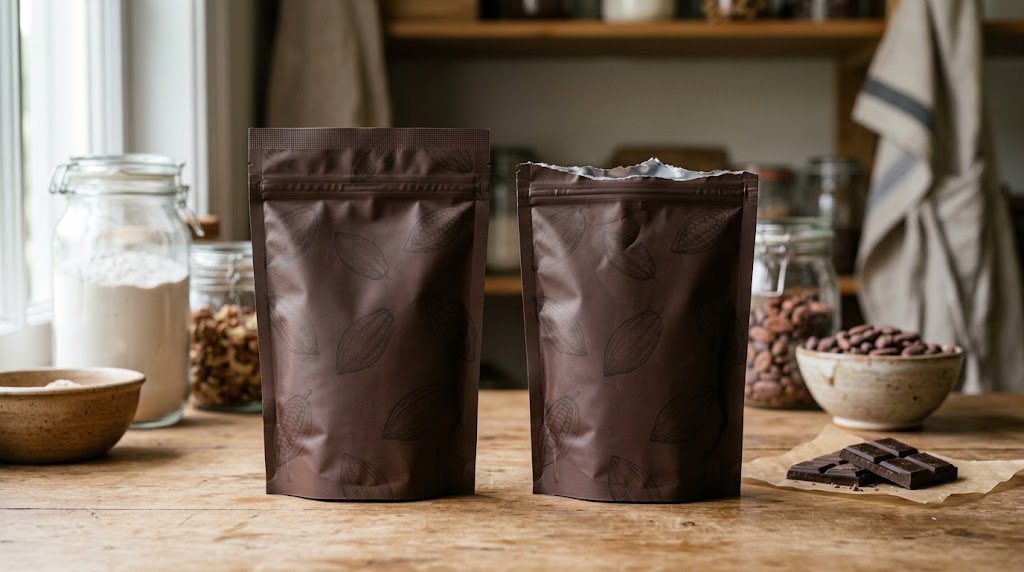
Often it can, if the remaining package can be closed reasonably well and the product's directions allow it. The answer changes with the package. A zipper below a heat-sealed tear strip may provide a designed reclosure after the first opening. A loose foil sheet can sometimes be folded closely around the remaining bar. A torn single-serve sachet may have no useful reclosure at all. Do not describe these three states as an equally sealed “original package.”
Handle the chocolate with clean, dry hands or utensils and remove only the portion you intend to use. Close the inner layer promptly and keep crumbs out of a zipper's tracks. Where the original wrap stays attached to a carton or sleeve, return the properly wrapped chocolate to that carton so the product name, date, ingredients and allergen information remain with it. A clip around a folded sleeve alone cannot close an exposed chocolate bar that was once protected by a separate inner wrap.
If the inner material cannot close well, place the remaining, properly wrapped or otherwise suitably contained chocolate in a clean, dry, odor-free closed food-storage container consistent with its label. Retain the original label with the food, or reliably record the name, lot, date, allergens and storage directions. This outer container is a practical extra guard against crumbs, ambient odors and accidental damage. It is not evidence that the open package has regained its original shelf life or an equivalent factory seal.
Avoid carrying an opened bar into and out of a cold environment each day merely to retrieve one square. Each opening exposes the remaining product and makes temperature changes harder to manage. For multiple portions, choose a sensible small pack size and a closure suited to the real use pattern. If a consumer cannot identify the product or date after decanting, the neatness of a new container may conceal more useful information than it preserves.
| Package after first use | Useful action | Limit to remember |
|---|---|---|
| Heat-sealed single-serve sachet, torn open | Finish as intended or move any remainder into a suitable clean, dry food container following product directions. | The original top seal is gone; a folded tear edge is not a factory seal. |
| Zipper pouch with a separate initial seal | Clear the track, engage the zipper fully and protect the closed pouch from heat and odors. | Zipper reclosure and original heat seal perform different jobs. |
| Bar in an inner sheet and printed sleeve | Wrap the bar closely with the remaining suitable inner material, then return it to the sleeve. | An outer sleeve may carry information without making an airtight enclosure. |
| Individually wrapped pieces inside a gift box | Keep unused individual wraps intact and observe the maker's box-level directions. | Opening the box does not necessarily open every piece, but fills and dates may differ. |
| Wrapper torn or closure contaminated | Follow the label; use a suitable closed food container when appropriate and keep identification with it. | A replacement container cannot reverse time spent exposed to moisture, heat or odors. |
Should the original package go into the refrigerator?
For many ordinary solid chocolates, a suitable cool, dry, stable place is the more straightforward choice. Callebaut's general confectionery guidance says refrigeration is generally not recommended because of moisture and texture risks. That statement has a scope: it does not cancel a specific manufacturer's instruction for a filled product that requires cold storage. For example, Valrhona's guidance for its 2 kg professional bonbon boxes recommends 4°C (39°F) in the original box with its protective film intact, followed by a gradual warm-up under the film before display. It is a product-specific procedure, not a refrigerator setting or fixed warm-up time for every chocolate bar.
If the product label directs refrigeration, use the prescribed conditions. If room conditions are persistently too hot for a plain bar and the maker permits colder storage, contact the brand for a suitable method. Keep the primary pack intact and protect it from refrigerator odors and moisture with a compatible closed outer enclosure where appropriate. Do not refrigerate an unwrapped chocolate bar beside aromatic leftovers. Also do not assume that adding a plastic bag to a damaged retail pack creates a validated commercial barrier.
When moving cold chocolate back into a warmer room, the critical moment is before opening. Leave the protective package closed while it gradually approaches the room's conditions, then open when condensation is no longer likely to form on the cold chocolate. Callebaut explicitly advises allowing packaged chocolate to return to room temperature before unpacking. The time depends on pack size, the temperature gap and the surroundings; a universal number of minutes would be misleading. If a particular product has a stated staged procedure, use that procedure.
Freezing introduces a still larger transition. Do not copy freezer instructions from dough, ice cream or another confection onto a finished chocolate bar. If the maker specifically permits freezing, follow its complete wrapping, storage and thawing directions. A foil-colored or metalized pouch alone does not establish freeze suitability; the seal, formulation, fillings and presentation all matter. Consumers and stockroom teams should treat cold storage as a product decision, not a generic way of adding months to a printed date.
Why does chocolate turn white in the package?
A pale or gray-looking surface can have more than one explanation. Callebaut describes fat bloom as a surface change associated with factors including tempering, migration of fat from fillings, and high or fluctuating storage temperatures. A pack can be entirely closed while heat exposure still accelerates this change. The pattern may show as dull streaks or a pale cast, yet a photograph or a short description cannot confirm the cause for a particular product.
Sugar bloom involves moisture: condensation can dissolve sugar on the chocolate surface, which recrystallizes as the water evaporates, leaving a pale, grainy finish. This is why a cold bar opened immediately in a warm, humid room can fare poorly even if it spent its cold period in an apparently sound wrap. A wrapper that shields a bar during storage does not prevent condensation after the consumer exposes the cold chocolate to warmer air.
These are explanations for common quality defects, not a home test proving that a suspicious product is safe to eat. Mold, an unusual odor, visible wetness, damaged packaging, a leaking filling, an unknown temperature history or a maker's explicit discard instruction calls for a different decision. Do not scrape away a white patch or taste an unidentified area to make a safety judgment. Check the label and contact the manufacturer with the lot and condition when there is doubt, especially for filled or perishable products.
The best practical prevention is to keep the pack intact until needed, avoid overheating and repeated temperature swings, and control moisture during cold-to-warm transitions. If bloom has appeared on an otherwise identified product, the maker can help distinguish a cosmetic quality complaint from a condition requiring disposal. Do not promise that a specific flexible film prevents bloom: chocolate formulation, temper, filling, handling and environment all contribute.
How long does chocolate last in original packaging?
There is no responsible number of months that covers every unopened chocolate package. Read the actual product's date wording and storage instructions, then consider whether its protective pack remained intact and whether the stated conditions were met. A plain dark bar, a milk chocolate bar, a nut-filled confection and a fresh-cream bonbon can differ substantially. Even two bars in similar printed pouches may have different dates because the recipes and maker's validation differ.
In the United States, FDA's explanation of food product dating describes “Best if Used By” as a quality-oriented phrase and notes that food labels can use different wording. That general distinction does not license ignoring a product-specific safety instruction, assuming every product is good past a date, or assigning a new date after opening. Valrhona's answer about its Date of Minimum Durability confines its quality guarantee to the stated period under its conditions. For a specific product, the producer is the source for what its date means.
The printed date assumes something about the product and its handling. An unopened but visibly damaged package has not necessarily enjoyed the conditions behind that date. Likewise, a bar repeatedly warmed in a display may lose desirable appearance before its printed quality date. Opening the primary enclosure changes the exposure again. Do not calculate “time remaining after opening” by subtracting today's date from the unopened best-by date; look for a separate after-opening instruction or ask the maker.
Keep the carton or label so a later user knows exactly what they have. If the label says a particular filling must be chilled, that direction takes precedence over the general pantry discussion here. If the date cannot be read, the product's history is uncertain or the contents have changed noticeably, the FDA recommends contacting the company about questions or concerns regarding quality, safety and labeling. Storage guidance cannot supply missing facts about a given batch.
How should a retailer inspect and rotate stock?
At receipt, note the SKU, lot or traceable code, printed date and the condition of both outer carton and primary wrap. Check for crushed corners that press into bars, broken seals, wet paper, oil stains or an odor that suggests contamination. An unopened shipping carton does not prove every retail unit is sound. Set aside suspect units according to the business's established process and ask the supplier before treating them as saleable.
Store cartons so the oldest applicable dates are visible and accessible. Avoid direct contact with a damp floor and keep shelves clear of cleaning chemicals and scented stock. Record routine temperature observations at the actual display and stock locations if these are part of your quality program. Document an unusual heat or cold event rather than silently returning stock to a cooler shelf: later surface changes may have begun while the packaging looked normal.
Choose a display that meets the maker's directions during the whole operating day, including sun angles, lighting and closing hours. A beautiful counter by the front window may become the hottest position in the store. If a refrigerated display is required for a particular confection, follow that product's receiving and acclimation procedure instead of shifting packs between warm shelves and cold cabinets without a plan. When gifting or selling an assortment, retain the correct instructions for the most sensitive component rather than borrowing the plain-bar rule.
| Observation at home or in a store | What it may mean | Next step |
|---|---|---|
| Intact, identified pack; conditions match its label | Normal storage scenario, subject to the maker's date | Keep the enclosure intact and use the product-specific directions. |
| Torn inner seal, damp carton or unusual foreign odor | Package integrity or exposure is uncertain | Set aside; consult the maker or established quality procedure rather than extending the date. |
| Cold pack brought into warm, humid air | Condensation risk if opened too soon | Leave it unopened while it gradually adjusts under the prescribed conditions. |
| Pale or streaked chocolate surface | May involve fat or sugar bloom, but appearance alone is inconclusive | Review exposure history and ask the maker if uncertain; do not use bloom as a safety test. |
| “Best if Used By” has passed | A quality date may have a different role from another label phrase | Read the full label, inspect the product and seek manufacturer guidance for concerns. |
| Filled product with a chill or short after-opening instruction | More sensitive formulation may control handling | Apply the specific instruction, not a plain solid-bar rule. |
What can a chocolate brand ask its packaging supplier?
The consumer's storage experience begins with a pack designed for the actual chocolate. A brand planning a solid bar, individually portioned square or multi-serving pieces should first define the recipe and inclusion type, intended distribution and display conditions, target date supported by its own validation, opening pattern and mandatory label information. Then evaluate an inner wrap or pouch, closure and carton as a complete system. The supplier can propose material structures and physical samples; the brand must verify performance under representative filling, sealing and storage conditions.
The published Mylarbag projects show three distinct format questions. The Madagascar 12 g sachet is a small, non-zipper single portion. The USA 3 oz artisan project lists MATT OPP / white kraft / VMPET / PE, digital printing and 13 × 21 cm. Its title says stand-up zipper, while its format field says three-side-seal flat; confirm the physical construction before specifying a copy. The USA bean-to-bar flat pouch lists BOPP / PMP822 / CPP and a 12.7 × 15.3 cm format. None of these pages supplies a validated storage duration for someone else's recipe.

Recommended packaging configuration
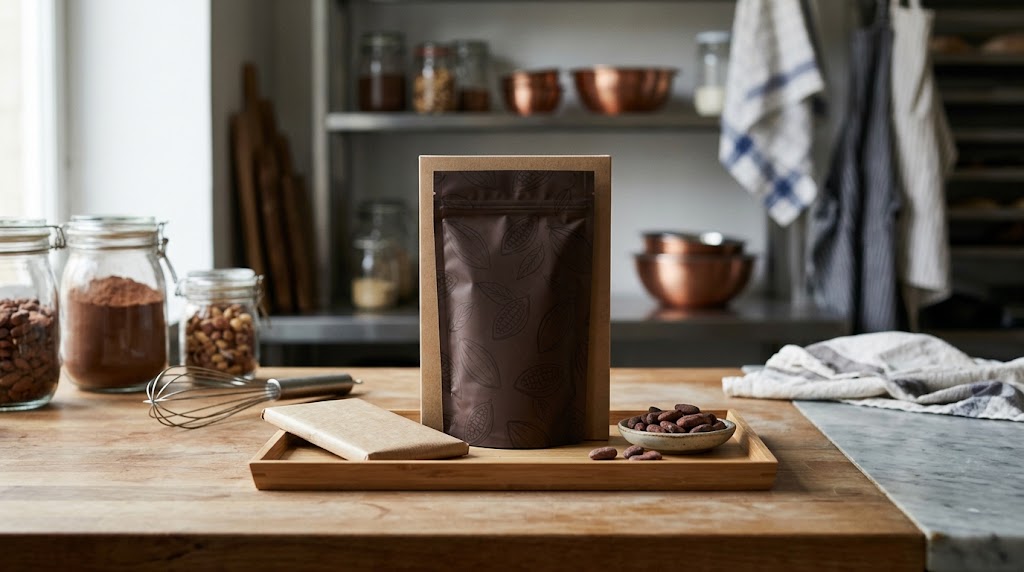
For a single-use solid piece, start by evaluating a correctly sized, properly sealed primary sachet and a readable label. For a multi-serving dry chocolate product opened repeatedly, assess a pouch with a usable reclosure and a separate initial seal, plus a tested way to fill without contaminating that seal. If the product is fragile or requires a rigid presentation, an appropriate support or carton may be needed in addition to the inner pack. For any format, ask which layer directly contacts food, how the full construction is documented, how the seal is checked and what happens after opening. A paper-look exterior or metalized layer does not settle those questions by itself.
Use a physical filled sample to observe how the bar sits, whether corners abrade the pack, whether the consumer can retain the label and whether the opening feature leaves a usable closure. Confirm artwork placement around seal land, folds, lot/date location and any instructions the maker needs to print. If the product is moisture-sensitive or odor-sensitive, request the relevant material and finished-pack data and test it under the product's intended conditions. A package description should not be converted into an untested claim that it prevents melting, stops bloom or guarantees a particular shelf life.
The custom chocolate packaging bags and pouches page is a starting point for discussing these formats. A buyer can send Mylarbag the product type and size, whether it has nuts or fillings, target market, expected storage and display conditions, initial seal and after-opening need, planned filling process, artwork status and the evidence required for its own validation. The resulting proposal should be checked against actual samples and the maker's product-specific instructions.

A five-minute storage check
Before putting a newly bought bar away, read its storage direction and date, identify the actual sealed layer, and inspect that layer for damage. Pick the dry, dark, odor-free spot that best fits those instructions. If the product arrived very cold, let its intact pack acclimate before opening in a warmer room. These steps are more useful than copying a single temperature or expiration rule from a different chocolate.
After the first opening, close the correct inner layer, keep the product's identity and instructions with it, and prevent repeated warm/cold cycling. If the pack cannot close, use a suitable clean, dry outer food container where the product directions allow. At any point, a damaged pack, unusual odor, wet chocolate or an uncertain history deserves a product-specific question to the maker. A tidy pantry does not undo earlier exposure.
Frequently asked questions
Can I leave a chocolate bar in its original wrapper after opening?
Usually yes if the remaining inner wrapper can be closed reasonably well and the maker's directions allow it. Close the material that actually surrounds the chocolate, return it to its labeled carton when useful, and add a clean, dry, odor-free closed container if the original wrap offers poor reclosure. An opened wrapper does not retain the unopened date by default.
Does a sealed pouch stop chocolate from melting?
No pouch is a substitute for suitable ambient temperature. A sealed pack may help protect against certain external exposures according to its documented construction, but heat can soften the chocolate inside it. Check the chocolate maker's storage directions; a hot car, sunny display or heater-adjacent shelf is a separate environmental problem.
Should I refrigerate chocolate in its original package?
Follow the product's label. General guidance for many solid chocolates favors cool, dry, stable storage and warns about fridge moisture; some filled products have explicit cold-storage instructions. Keep the protective pack intact where required, guard against odors and let a cold pack acclimate unopened before exposing the chocolate to warmer air.
What if the wrapper looks fine but the chocolate has white marks?
Temperature history and moisture can cause fat or sugar bloom even when the outside of a pack looks normal. White marks alone do not identify the cause or prove safety. If the product is damp, smells unusual, has a leaking filling, was held outside its directions or raises doubt, ask the maker using its lot details rather than relying on appearance.
How long does chocolate last in original packaging after the best-by date?
There is no universal extension. Date language, recipe, filling, package integrity and actual storage history matter. “Best if Used By” is generally a quality-oriented phrase in FDA guidance, but the maker's specific instructions and any safety-relevant directions still control the product. Contact the manufacturer if the label or condition is unclear.
Does putting an opened chocolate pouch in an airtight jar reset shelf life?
No. A clean, dry jar or other suitable food container can help protect an opened pack from household odors and handling, but it cannot reverse previous heat, humidity or time exposed after opening. Keep the original label information and use any after-opening instruction given by the maker.
For a new chocolate line, the storage claim and package should be designed together. Contact Mylarbag with the chocolate format, planned portion, storage and display conditions, closure and fill process, target market and the tests or documentation you need. That gives a packaging conversation a real product to solve for, without pretending that one pouch structure supplies a universal shelf life.