
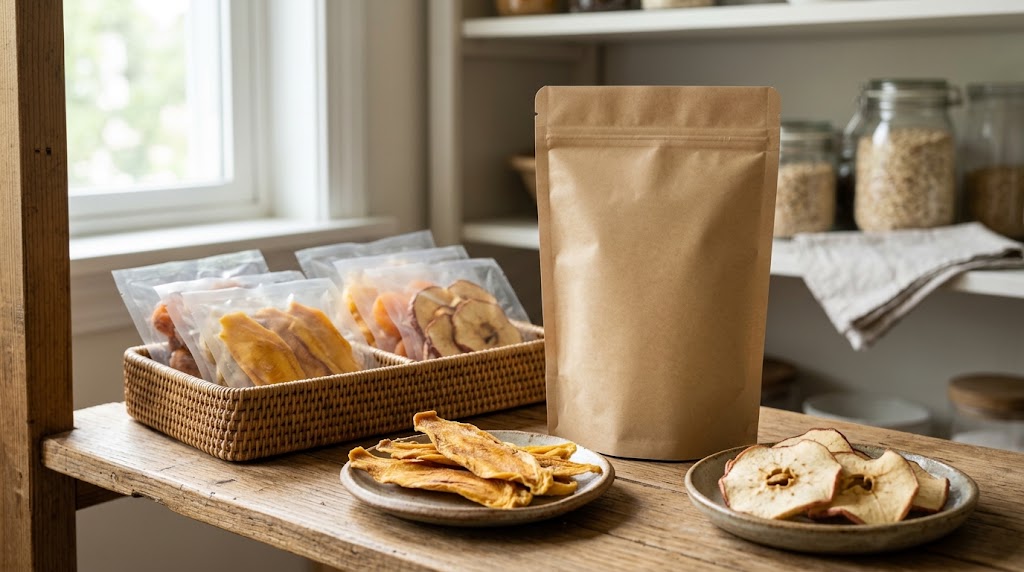
How do you store dried fruit? Start with fruit that has passed the food producer's own drying, handling and release checks. Let it reach the approved packing condition, then fill a clean, appropriate food-contact pouch without crowding the sealing area. Make a continuous initial heat seal. Store unopened packs according to the product's validated instructions, typically away from excess heat, moisture and light. Once opened, close the zipper or other closure completely, limit repeated exposure to humid air, and use the product within the producer's approved after-opening guidance. Small packs can help when a large bag would be opened many times.
The bag is one part of that answer. A good moisture barrier cannot correct fruit that entered the pouch in the wrong condition. A perfect starting product can still change if a seal is contaminated, a window is overlooked in the material specification, or a consumer leaves a multi-serving pouch open. Neither the word “Mylar” nor a zipper guarantees that fruit stays soft, crisp or safe for a stated period.
This guide concerns human-edible, conventionally dried or dehydrated fruit in retail flexible packaging: for example, chewy mango, raisins, dried apple pieces, apricots and dates. A crisp dried fruit slice may have a different texture goal from a chewy strip. Freeze-dried fruit, fruit powder, nuts and other dry foods need their own specifications. The guide is a decision method for brands and packagers, not a universal drying recipe or date claim.
Begin With the Fruit, Not an Empty Pouch
Storage begins with a product specification. Identify the fruit variety, cut size, recipe, sweetening or coating, pretreatment, drying process, finished texture and intended selling unit. Record how that product should look and feel when acceptable. A chewy mango strip should not be judged by the same snap test as a deliberately crisp apple chip. A surface that looks glossy because of a recipe may not be evidence of a leaking bag. If two SKUs have different starting surfaces, testing them in the same pouch does not make their quality outcomes interchangeable.
Water activity, written a_w, is especially useful when the food team assesses the finished state and the risk of moisture-related change. It describes water available in the food system; moisture content describes the total water in that product. The FDA's water-activity guidance explains why a product must reach an appropriate water-activity condition and remain within the range established for its stability. An a_w result is not a texture score. Two recipes can feel different at the same reading, and a pleasing piece is not proof of a safe process.
The University of Minnesota Extension's guidance for dehydrating produce in school food service describes checking a variety of pieces, cooling dehydrated produce and allowing residual moisture to redistribute under controlled handling. It also calls attention to condensation and packaging that prevents subsequent moisture exposure. That source serves a particular food-service context. A commercial fruit producer must set and approve its own process, sampling and release limits rather than copy its procedure or numbers.
Check variation before blaming the bag
One lot may contain thick and thin pieces, pieces from different dryer positions, or variable coatings. A few pieces that start unusually wet can create a local problem within an otherwise normal pouch. Conversely, a portion dried beyond the intended texture can feel hard on the first day. Before comparing candidate packaging, take representative product samples from the actual lot and record the starting range. Keep a same-batch, properly identified reference under the planned control condition. Photograph ordinary pieces, including less photogenic ones.
The National Center for Home Food Preservation's packaging guidance explains the principle behind uneven moisture in home-dried fruit and why warm food can cause sweating after packing. Its household conditioning times and storage-life estimates are not commercial operating parameters or a retail shelf-life guarantee. The transferable question is whether the fruit is sufficiently uniform and in the approved packing condition before a bag is closed.
| Before the pouch is filled | What to record | Why it matters to later storage complaints |
|---|---|---|
| Product identity | Fruit, ingredients, coating, cut, lot and approved recipe version | A change in formulation or size can change texture and water behavior |
| Release state | The producer's approved measurements and visual/sensory criteria | Establishes what the bag actually received, instead of assuming it was stable |
| Range within the lot | Sampling positions, piece thickness, clumps or tacky patches | Helps distinguish a local start-up defect from package-wide change |
| Cooling and exposure | Time and conditions between drying, cooling, staging and sealing | Warm fruit or humid staging can alter conditions before the first seal |
| Pack plan | Fill mass, bag size, contact layer, seal position and storage route | Allows the same configuration to be reproduced in a trial |
Do not use a desiccant, a more reflective pouch or a stronger sales claim to hide fruit that fails the food team's release specification. If visible moisture or condensation appears before sale, stop and investigate the product and packing history under the company's disposition procedure.
Choose a Pouch for the Fruit's Actual Storage Risk
A storage pouch needs a defined structure and a usable format. The outer surface may carry print; other layers may provide stiffness, barrier or support; the food-contact layer needs to be suitable for the intended fruit and use conditions, and it must seal on the actual equipment. A kraft-looking exterior can cover several different laminates. A shiny silver layer may be metallized film, aluminum foil or an effect that says little about performance. Ask for the full construction and relevant test conditions instead of treating color or thickness as a moisture specification.
For moisture screening, request water-vapor transmission rate (WVTR) data for the exact film structure, including the method, units, temperature and relative-humidity conditions. ASTM F1249-25 describes one method for water-vapor transmission through plastic film and sheeting. A flat-film result is helpful for comparing candidates under compatible conditions. It does not by itself test the completed top seal, gusset, zipper attachment, window joint or filled retail pack. A brand should then test the converted bag with its own fruit.
The direction of the moisture problem depends on the fruit and surrounding conditions. Some deliberately crisp products lose crispness when they take up moisture. A chewy product might become firmer, softer or sticky for different reasons depending on its original formulation, moisture movement and temperature history. Published research on dehydrated mango, apple and banana studied fruit-specific moisture sorption and texture-related transitions; it does not supply a single critical threshold for every commercial SKU. State the quality target first, then judge the actual fruit under expected conditions.

Match format, fill and use pattern
The same fruit can be sold as a one-use portion, a moderate resealable retail pack or a larger refill unit. These formats change how often the product sees room air and how easily fruit pieces reach the seal. A wide bag can be easy to fill but awkward to close after the contents settle. A very narrow opening can crowd long mango strips at the top. A large gusset may improve presentation yet create folds that deserve close inspection where seams meet.
| Candidate format | Potential fit | Question to answer with a filled sample |
|---|---|---|
| Three-side-seal single portion | One opening event and a controlled count or serving | Can the actual pieces be inserted without crumbs or syrup touching the intended seal? |
| Stand-up pouch with an initial heat seal and zipper | Multi-serving retail use and display | Is the tear line above the zipper, and can a consumer actually close it after repeated access? |
| Larger gusseted or flat-bottom bag | Larger volume and upright display | Does the real fill settle without stressing folds or leaving a hard-to-use opening? |
| Transparent-window pouch | Product visibility | What are the window film, joint, light exposure and complete-pouch test results? |
A clear window can make the contents easier to see. It may also introduce a different material, a joining area and light exposure. Ask how the specific window is built and whether the complete bag meets the agreed checks. Do not apply an opaque panel's WVTR number to an untested window. Likewise, a bag that fits “200 g” of one fruit may not fit 200 g of another: piece size, bulk density and how the fruit settles vary.
When selecting customized dried fruit packaging, send actual product samples and state whether the priority is softness, crispness, easy opening, display or a combination. The supplier can propose a pouch and construction. The food business still needs to decide the product's acceptable condition and test the filled packs.
Protect the First Heat Seal During Filling
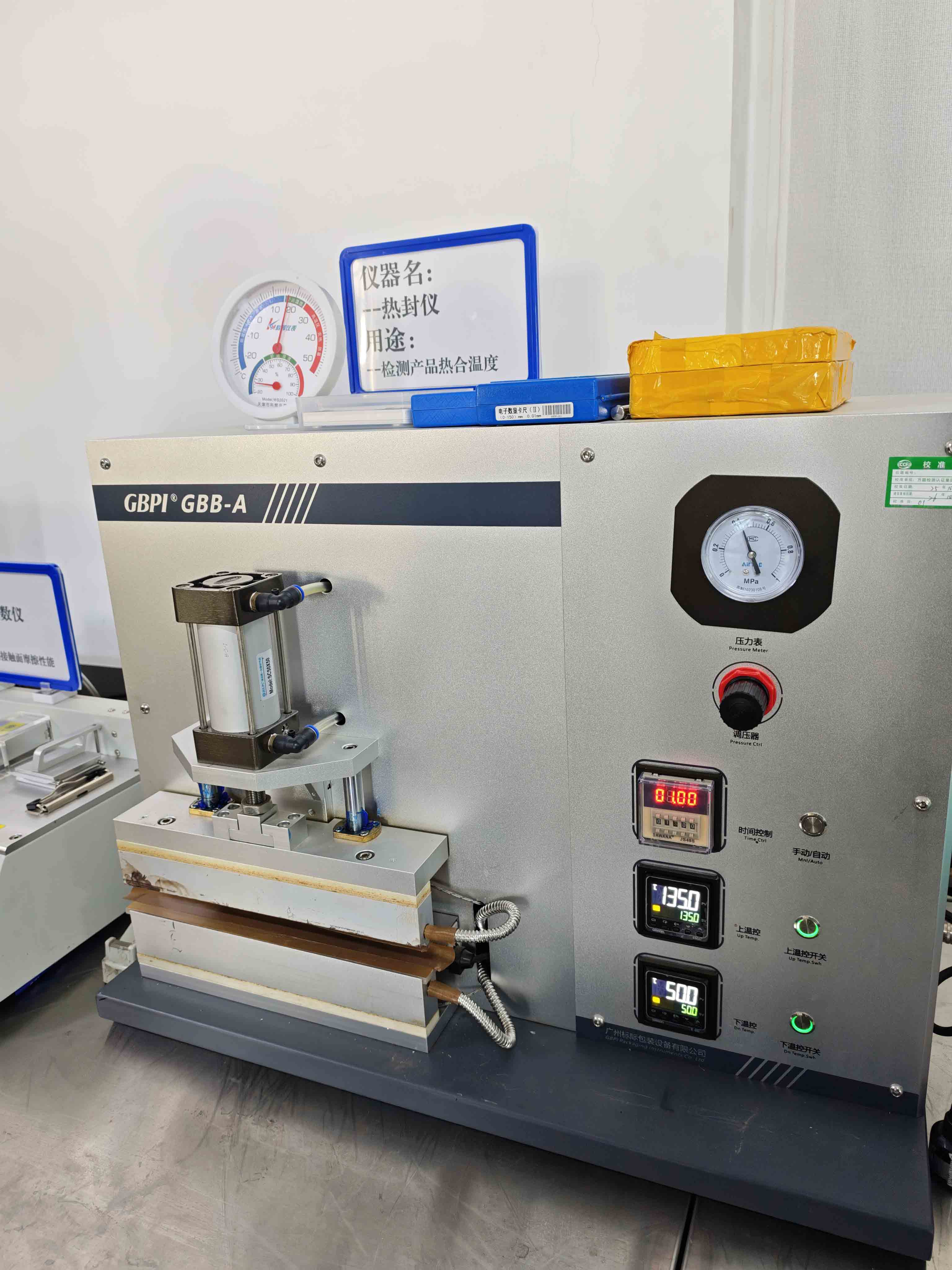
An unopened package relies on its initial heat seal and the rest of its perimeter. A zipper serves the pack after the consumer tears or cuts through that first seal. It is not the same event, location or test. Position the zipper, opening line and top seal so a person can open the pack without removing the zipper or tearing down a side seam. Test the proposed dieline using real filled samples, not only a flat mockup.
Set the fill line with enough practical space for the top seal. Long strips should stay below it; sticky coatings, fragments and fines should not be trapped between the sealing faces. Check the side-seam transitions, gusset corners and zipper ends, which can behave differently from a flat central strip. The right settings depend on the actual inner layer, equipment, speed, pressure, dwell and product; a generic time or temperature from another bag is not a validated setting for this one.

Inspect a representative filled sample at setup, after adjustments and during the run. Record rejects as well as acceptable packs. One visually smooth seam can still need a defined integrity check, while a seal-strength result from a cut strip represents its sampled location. ASTM F88/F88M-23 describes seal-strength testing for flexible barrier materials and expressly treats strength as a quantitative process measure. Choose any additional leak or whole-pack evaluation suitable for the actual design and acceptance plan; do not call a strip pull alone proof that every finished bag has no path for air or moisture.
Make the first-seal and zipper instructions unambiguous
For a resealable retail pouch, a usable package tells the consumer where to tear and how to close it again. The zipper must remain intact below the initial seal. A visibly closed zipper may still have a trapped fruit piece or a misaligned track. Open, remove a realistic serving, and reclose the prototype repeatedly during trials. Check whether sticky fingers, ordinary handling and a partly emptied bag change the experience. These observations can guide package size and instructions; they do not extend the unopened package's validated period automatically.
Store Unopened Packs on the Approved Route
The practical baseline is to follow the product's approved label and distribution specification. Keep cartons and retail packs in the environments used to justify those instructions. The National Center for Home Food Preservation advises cool, dry, dark storage for home-dried foods and notes that heat and moisture exposure affect quality. Use that as a mechanism and a general handling principle, not as a source of universal commercial temperatures or storage times. A business needs evidence for its particular product, package and route.
Think beyond the warehouse. A pack may encounter warm loading areas, a humid retail back room, direct light on a shelf or a delivery route with temperature swings. If a product has an approved chilled route, maintain it; do not replace its temperature controls with a different pouch. If a chilled bag is moved into warmer air, inspect the condition before drawing conclusions about droplets. Document whether moisture is outside the bag, on the inner surface or on the fruit, and review when the package was opened or exposed. The appearance alone does not identify a leak.
Cartons can help reduce abrasion and crush damage, but a carton is not a substitute for the food's primary barrier. Avoid placing heavy loads on packs in a way that crushes delicate fruit, drives sticky pieces together or damages the seal. Check whether the printed bag, window and top seam survive the intended stacking and shipping. If a pouch arrives punctured, swollen, visibly wet, moldy or with an unexpected odor, use the food business's hold and investigation process. Do not recommend tasting a suspect sample to decide that it is safe.
Keep a simple storage record
For a commercial trial, record the lot, pack date, packaging structure and lot, initial heat-seal setup, storage location, observed conditions and sample-opening date. Separate retain packs from sale packs. Take photos of the same named checkpoints, using similar lighting, so a later change can be judged against the original product rather than a memory. Record handling events such as a shipping trial or a move between storage areas. A realistic history is more useful than an unlabeled pouch pulled from a drawer months later.
After Opening, Manage Exposure as a New State
Every opening exposes at least part of the contents and inner pouch surface to the surrounding air and to handling. A consumer might take one piece, leave the bag open while cooking, or close it immediately. These are different routes. The home-preservation source explicitly warns that repeated opening exposes dried food to air and moisture and suggests packing quantities that can be used at once. The precise after-opening instructions for a commercial SKU must still come from its food producer's assessment. Do not simply reuse the unopened best-before date as an opened-pack promise.
For a multi-serving pack, make the zipper easy to find and reclose. Keep the closing tracks clear of fruit pieces, crumbs and coating. Return the pack to the storage conditions on its label promptly. A clip or folded top may be convenient for a household but is not a tested equivalent to an intact original seal. A clean, dry, suitable secondary container can sometimes help a consumer manage a damaged package, but it cannot reverse a safety concern or restore a lost unopened-pack barrier.
| Use pattern | Packaging question | Trial to run before writing instructions |
|---|---|---|
| One serving at a time, frequent opening | Would smaller portions reduce repeated exposure? | Compare actual use over the expected number of openings |
| Sticky or coated strips | Do residues keep the zipper from closing? | Open and reclose with the real fruit; inspect track and contents |
| Crisp slices | Does normal opening soften the desired bite? | Record sensory and relevant product measurements after defined use cycles |
| Large family pack | Can a partly empty pouch still stand, close and protect contents? | Test handling, closure and storage at several fill levels |
If the food business recommends refrigeration after opening, explain that instruction for the actual product and test how the consumer moves, opens and recloses the pack. Refrigeration should not be promised as a universal fix for dried fruit that was packed incorrectly or became wet. Changes in temperature can also make moisture observations harder to interpret, so record the route rather than relying on a generic rule.
Diagnose Hardening, Clumping and Moisture Uptake
“How to keep dried fruit from getting hard” sounds like a single packaging question, but hardness describes an observation, not a cause. The piece may have started too firm, lost moisture, undergone a recipe-related surface change, been compressed or changed under a particular temperature history. Conversely, sticky or clumped pieces may have entered the bag tacky, absorbed moisture, redistributed moisture within the pack or been pressed together. A crisp slice becoming limp is a different target failure from a soft strip becoming hard. Record the intended texture and start with a same-lot baseline.
| Symptom and pack state | Plausible paths to check | First comparison | Sensible next test or record |
|---|---|---|---|
| Hard on the day of packing | Drying endpoint, thick/thin mix, recipe, sampling | Same-lot unpacked release sample | Review approved product measurements and dryer records |
| Hard only in stored unopened packs | Starting variation, net moisture change, temperature or formulation | Same-lot control versus affected sealed packs | Test product and inspect complete pack and storage history |
| Hard mainly after repeated opening | Exposure during use, imperfect closure, long use period | Unopened pack and a defined open/reclose trial | Count opening events, check zipper and label instruction |
| Pieces stick immediately | Coating or surface condition, fill pressure, initial moisture variation | Baseline photos and separate pieces from the lot | Inspect process, surface, fill and pack geometry |
| Clumping appears later inside an unopened bag | Redistribution, moisture ingress, temperature/pressure route | Unaffected same-lot pack, seam and window positions | Measure representative product, inspect seals and review WVTR conditions |
| Crisp slices turn soft | Moisture uptake before packing, across material, through an opening or after use | Same-lot initial snap/texture reference | Compare unopened versus opened and film versus complete pouch |
| Droplets appear | Warm packing, temperature shift, moisture ingress or exposure after opening | Photograph location and record pack history | Hold affected samples and investigate before disposition |
These entries are hypotheses, not automatic diagnoses. It is tempting to claim that “air got in” when a piece becomes hard or sticky. Air exposure may be relevant, but water availability, initial condition, temperature and package history must be examined separately. An oxygen transmission number cannot answer a moisture question by itself. A moisture-barrier claim cannot determine whether the fruit was uniform when filled.
Start a complaint investigation with four questions
First, was the pack unopened when the change was noticed? Second, what did a representative sample from the same lot look and measure like at packing? Third, did the affected bags share a location, seal feature, window, fill level or route? Fourth, do retained packs under a documented control condition show the same change? These questions prevent an easy story from outrunning the evidence.
Preserve the affected bag, seal, carton and lot information if a complaint is material. Photograph it before opening. Keep the product team's safety and quality decisions separate. A visible defect can require hold or disposition under the company's program; a consumer-facing article cannot certify it as safe from a photograph. After establishing that the product can be assessed appropriately, compare affected and unaffected samples with the same methods and a clearly stated acceptance criterion.
Test the Storage Plan With the Filled Retail Pack
A useful storage trial starts with a question, not an arbitrary calendar period. For example: Will a chewy mango strip retain the brand's acceptable bite in an unopened stand-up pouch along the intended retail route? Will a crisp slice retain the specified texture in a small bag that consumers open several times? Decide what a failure looks like before samples are tested. Include representative batches and enough packs that each scheduled examination can open a separate unit where necessary.
| Trial arm | What it isolates | Typical records, selected for the actual SKU |
|---|---|---|
| Initial released fruit | Product variation at the start | Recipe, a_w or other approved measures, piece range, texture and photos |
| Unopened pack in planned storage | Food and package together | Filled-pack integrity, texture, appearance, storage observations |
| Unopened pack after distribution simulation | Mechanical and environmental route | Carton and bag damage, seams, fruit breakage or clumping |
| Defined open/reclose sequence | Consumer-use route | Number of openings, time exposed, zipper usability and product trend |
| Alternative candidate pouch | Material or format comparison | Same fruit lot, fill, sealing plan and comparable storage conditions |
Do not change fruit lots, a film structure, the zipper and the storage condition all at once, then credit a difference to one factor. When a pack performs better, check whether the result repeats with the actual filled product and production seal. A lab film report belongs beside the test record, not in place of it. The food producer owns the accepted storage instructions, product safety and date; the packaging supplier can support material selection, sample pouches and the agreed package checks.
What a related real pouch project can and cannot show
Mylarbag's published 200 g kraft-look stand-up pouch project for superfoods lists a MATOPP/kraft-paper/VMPET/PE structure and digital printing. The photographed packs show açaí berry powder, bee pollen and camu camu products. It is an adjacent dry-product pouch example, not a case of whole dried mango, raisins or fruit slices. The listing documents a format and reported construction; it does not report the fruit's water activity, a measured WVTR for a filled bag, its seal performance or an observed storage result.

The useful lesson is how to ask a supplier about the complete construction, format and fill trial. If a chewy-fruit brand likes this stand-up format, it should supply its own fruit and decide whether that structure, or a different one, meets its target. Powder flow, seal contamination and volume are not the same as long strips or sticky dates. It would be unsound to transfer the project's stated 200 g capacity or marketing barrier description to an untested fruit SKU.
Send a Storage-Focused Pouch Brief
Tell a supplier what the fruit is, how it is sold and which change you are trying to prevent. Include actual samples, ingredient and coating information relevant to contact and handling, piece dimensions, target net weight, intended package size, whether the pouch is one-use or resealable, where the first heat seal must sit, how the product will be filled, the intended storage and distribution route, and the market for food-contact documentation. Ask for the full candidate structure, appropriate WVTR data with conditions, and samples for a filled trial.
That brief is more useful than “I need a thick Mylar bag for dry fruit.” It gives the converter a starting point without claiming that packaging alone can guarantee texture or a date. The dried fruit packaging range can serve as the format discussion, while the plastic-film options provide a place to ask about the exact construction. Compare at least the initial seal, the partly emptied reseal experience and the actual fruit after the agreed storage route before approving artwork or quantity.
Frequently Asked Questions
How do you store dried fruit in a retail pouch?
Pack fruit only after it meets the producer's approved finished-product checks and packing condition. Choose a suitable food-contact structure, leave the specified fill and seal clearance, and make an intact initial heat seal. Store unopened units on the route used to justify the label; keep handling and environmental records. For a multi-serving pouch, test the opened and resealed state separately. The product's own instructions take priority over a general article.
How do you store dehydrated fruit after opening?
Follow the food producer's after-opening directions. Remove the needed portion, keep the closure clean, close it completely and return the package to the stated storage condition promptly. Repeated exposure to humid air can change quality. If the product is sold in a large pouch but used slowly, test smaller portions or a package that can be handled and closed reliably at low fill levels. Do not assume the unopened date applies to an opened bag.
How can I keep dried fruit from getting hard?
First establish whether it is too hard before packing, only after unopened storage, or mainly after repeated opening. Compare samples from the same lot and check the producer's starting measurements, recipe, storage history, complete-pouch integrity and reclosure use. A different barrier might help in one situation, while process variation or a product-specific change might dominate another. A generic thicker bag is not a diagnosis or a guaranteed fix.
Why is my dried fruit sticky or clumped inside a sealed bag?
Possible contributors include a tacky or coated starting product, uneven moisture among pieces, pressure from the fill, storage conditions and moisture movement. Keep the affected bag unopened until its exterior, seal and history are documented. Compare a retained bag from the same lot and an initial product record. Test the relevant product condition and package features; avoid concluding from stickiness alone that the pouch leaked.
Should soft dried mango and crisp apple slices use the same pouch?
They can share a candidate only if the actual filled products meet their separate quality and safety requirements. One seeks an acceptable chewy bite; the other may lose its defining crunch after moisture uptake. Piece geometry, fill pressure, windows and the consumer's opening pattern also differ. Write a target for each SKU and compare candidate packs under the intended route rather than approving a film from the general category “dried fruit.”
Is a zipper enough to store dry fruit?
The zipper is intended for use after the package has been opened. The unopened retail pack needs a qualified initial closure and sound seams. After opening, the zipper helps only when the tracks are intact, aligned and free of pieces or residue. Test repeated use with the real fruit. A zipper does not restore the original heat seal or prove that a partly emptied bag remains protected for the same period.
Can I refrigerate or freeze dried fruit to prevent hardening?
Follow the producer's approved storage directions for that product. Cooler storage may affect quality, but its benefits and handling issues must be assessed with the real formula and package. Temperature changes can complicate condensation observations, especially when a cold package enters warm, humid air. Neither refrigeration nor freezing repairs a defective seal, an unsuitable product starting state or already visible spoilage. Do not add a universal cold-storage instruction without product evidence.
Does a low WVTR number guarantee soft dried fruit?
No. WVTR for a specified film, method and conditions helps compare water-vapor barrier candidates. The filled bag adds seals, gussets and perhaps a window. The fruit adds its own starting moisture state, recipe and texture target. A lower reported film WVTR cannot tell you whether a piece entered the bag too dry, whether a top seam was contaminated, or how many times a consumer opened the package.
Does a clear window make a dried-fruit bag worse?
It can help customers see the product, but it changes what must be evaluated. Identify the window material and how it joins the opaque section; consider the intended light exposure and test the complete filled pouch. An attractive window is neither automatically unacceptable nor automatically equivalent to an opaque panel. Its suitability depends on the actual fruit, design and evidence.
Should I add a desiccant or oxygen absorber?
Do not prescribe either as a generic remedy. A desiccant changes moisture management; an oxygen absorber targets a different issue. Each requires a clear product goal, compatibility and appropriate handling and safety review. Neither should be used to conceal fruit that failed its release checks or a bag with unreliable seals. Decide from the actual formula, pack, desired texture and the food business's hazard and quality assessment.
How often should storage trial samples be opened?
Set planned checkpoints that answer the intended storage question, then open separate identified packs where destructive sampling is needed. An opened sample cannot later serve as an untouched, unopened-pack control. Include the initial condition, intermediate observations and the proposed endpoint; add a defined use sequence if the pouch is resealable. The producer chooses sample count and acceptance criteria appropriate to the product and risk.
What should I do when there is condensation or visible mold?
Do not treat either as ordinary texture loss. Preserve the pack, lot, sealing and storage details; follow the food business's hold, investigation and disposition procedure. Check where the droplets are, when the pack was opened and whether comparable sealed units are affected. Do not taste suspect fruit to settle the question. A consumer should follow the manufacturer's safety instructions, while a brand needs a documented lot-level response.
Does this advice cover freeze-dried fruit or fruit powder?
The method of specifying the product and testing a complete pouch still matters, but the detailed targets change. Freeze-dried fruit is often valued for crispness and can be especially sensitive to moisture exposure; powder has different flow, surface area and filling behavior. This article's examples and troubleshooting matrix address conventional human-edible dried fruit. Do not copy its starting texture, pack size or after-opening trial into another product class without separate evaluation.
Scope and responsibility: This article explains how to plan storage and packaging checks. It supplies no universal product release limit, seal setting, storage duration or safety approval. The food business remains responsible for its process, applicable food-contact and market requirements, label instructions and final disposition decisions.