
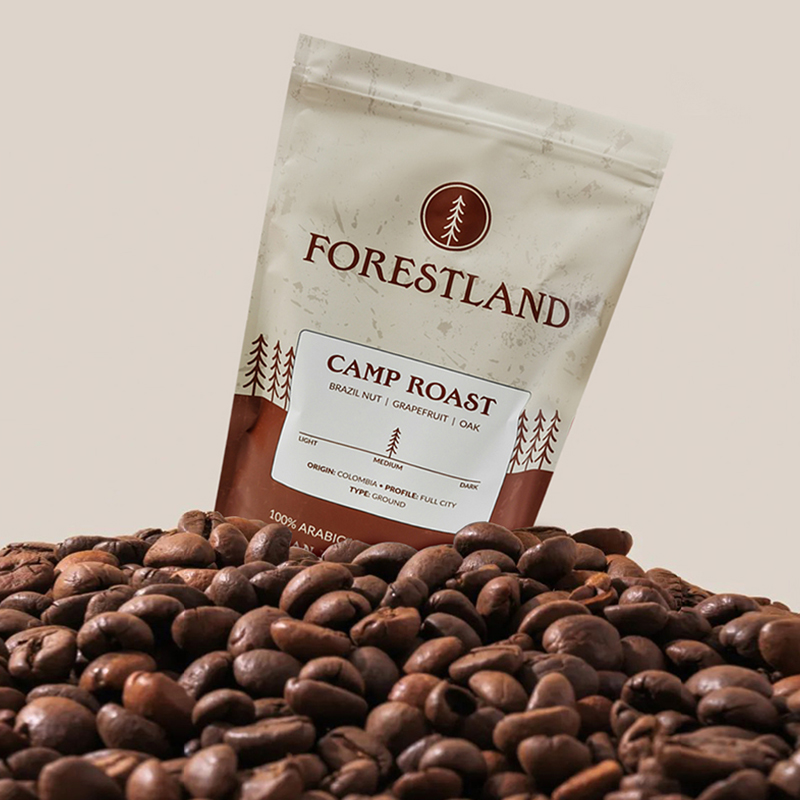
The main types of coffee bags are flat-bottom pouches, stand-up pouches, side-gusset bags, and flat pouches. None is universally the best choice. The right format depends on the coffee product, intended fill, shelf presentation, artwork, closing method, and how the pouch will be filled and handled.
For a custom project, choose the pouch format before treating material, printing, or decorative details as final. A format changes the bag’s panels, base, usable fill area, and the space available for a valve, zipper, top seal, or tin tie.
This guide explains the practical differences between common coffee pouch types, when each is worth evaluating, and what to include in a format-selection brief.
Why the Pouch Format Comes First
A coffee bag is not only a container for a stated fill weight. Its format shapes the physical pack, the visible panels, the top closure area, and the way it moves through a filling and sealing process. That is why a buyer should start with the pouch format rather than choose a material name or a surface finish in isolation.
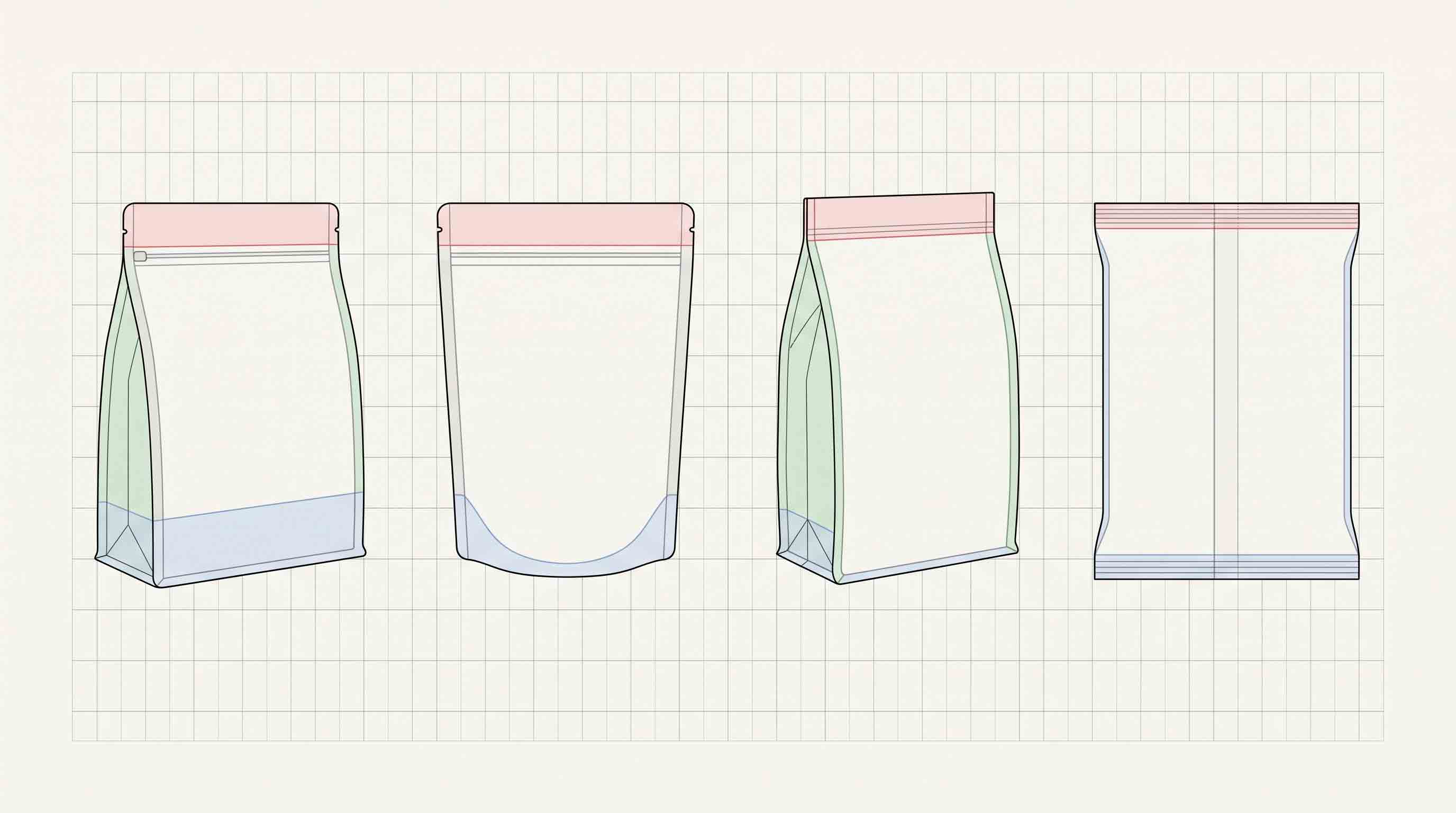
The word “coffee bag” can describe several different constructions. A flat-bottom pouch may have multiple panels and a stable base. A stand-up pouch has a bottom gusset and a different front-and-back relationship. A side-gusset bag can be taller and narrower, with expandable sides. A flat pouch can suit a compact format but does not create the same standing footprint.
The format does not establish shelf life, barrier performance, legal suitability, or customer preference. Those questions need project-specific evidence. What it does establish is the starting geometry for the rest of the packaging conversation.
Flat-Bottom Coffee Bags
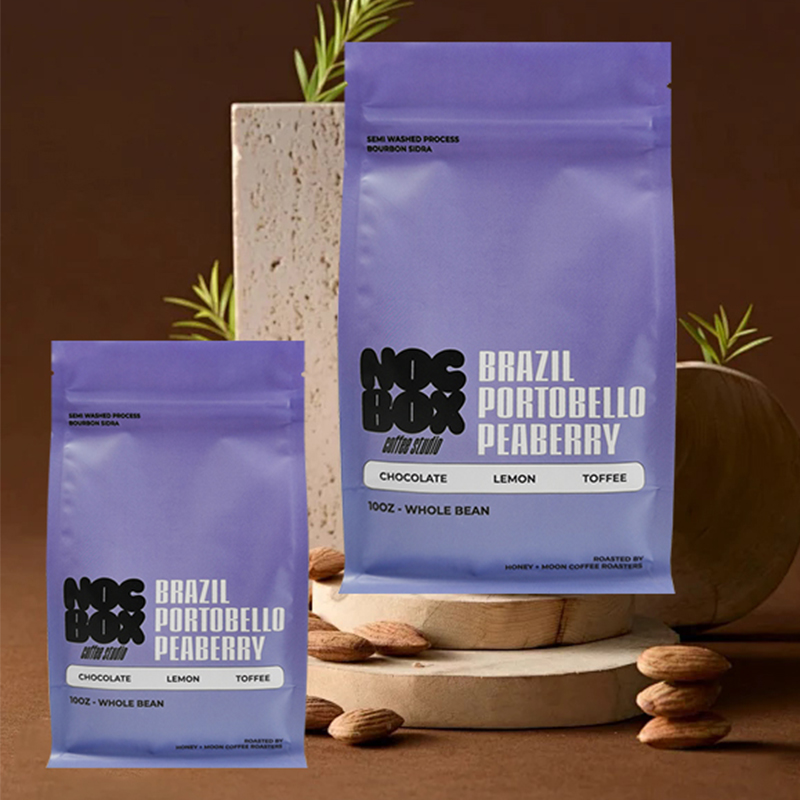
Flat-bottom coffee bags, sometimes called box-bottom pouches, use a stable base and several printable surfaces. They are often evaluated when a buyer wants a format that can present a defined front, back, side panels, and bottom area. The exact panel layout varies by project, so the artwork should be reviewed against the proposed pouch rather than copied from a generic template.
For coffee, a flat-bottom format can also accommodate feature discussions such as a valve and a zipper. That does not mean every flat-bottom bag needs those features. The buyer should specify which features are required, which are optional, and how the top area will be used for the first seal and later opening.
One published Mylarbag project records a 12oz flat-bottom pouch with MATOPP/VMPET/PE, digital printing, a side zipper, and a degassing valve. The listed size is 15 × 26 + 6 cm. It is a reference for a complete pouch configuration, not a rule for every 12oz coffee. See the published 12oz flat-bottom coffee pouch.
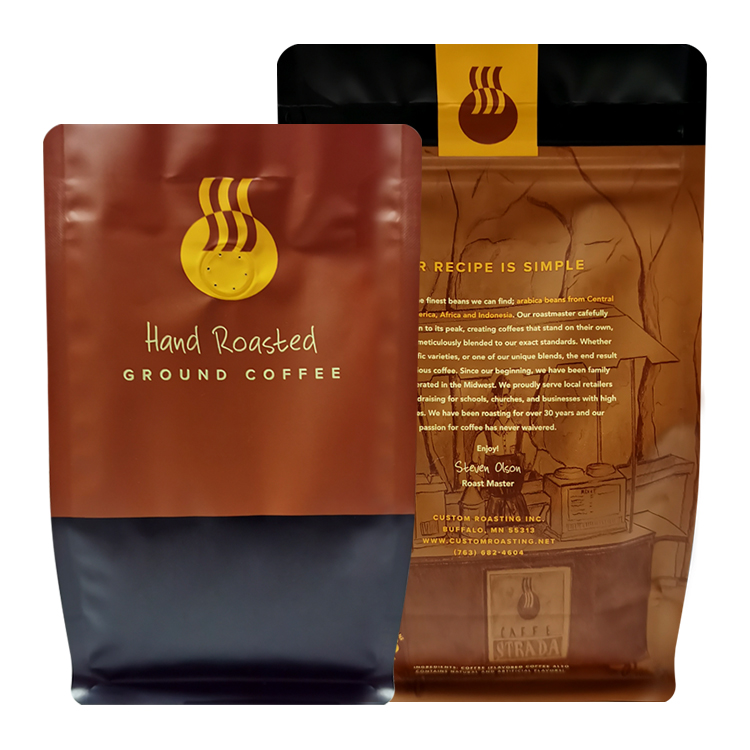
Questions to ask about a flat-bottom pouch
- Which panels will carry the main artwork, product information, and required text?
- What target fill and coffee type will be evaluated in the pouch?
- Does the project need a valve, zipper, pocket zipper, or another reclose route?
- Where will the top seal sit after the pouch is filled?
- Is the proposed size a reference, or has it been sampled with the actual product?
Stand-Up Coffee Pouches
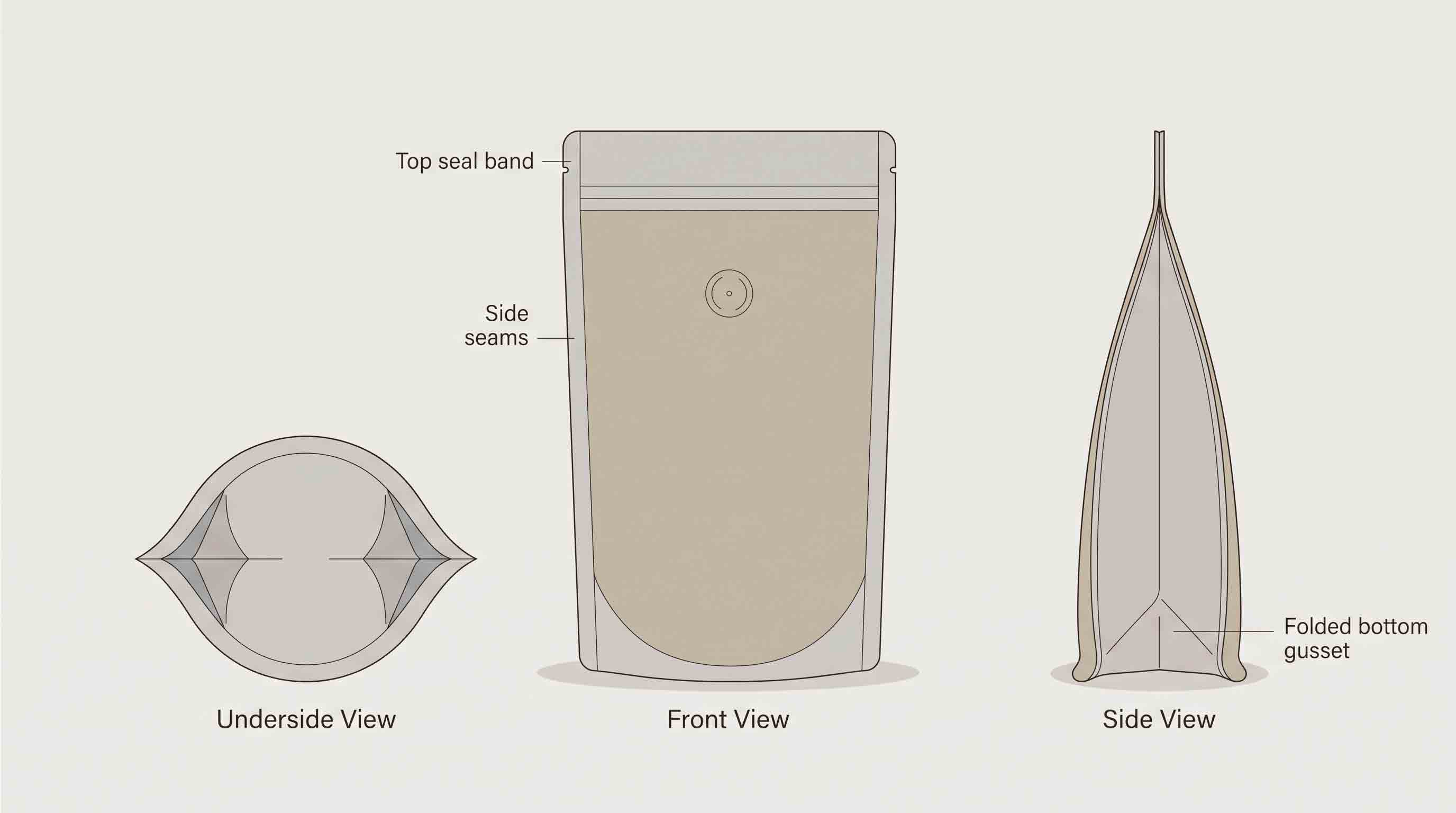
A stand-up pouch uses a bottom gusset so that the filled pack has a different base from a flat pouch. It can be a useful direction when a project needs a pouch that stands in its intended retail or storage setting, but the decision still needs to be checked with the actual fill, dimensions, and artwork layout.
The front and back panels of a stand-up pouch can be useful for artwork, but the bottom gusset and top area still need to be considered. A valve, zipper, window, or hang hole changes the layout discussion. Treat these as elements of one proposed pouch, not accessories selected after all dimensions and artwork have been approved.
Published stand-up projects can help a buyer see the type of configuration that needs to be recorded. They do not prove that a stand-up pouch will be right for every coffee weight, filling process, or shelf.
Side-Gusset Coffee Bags
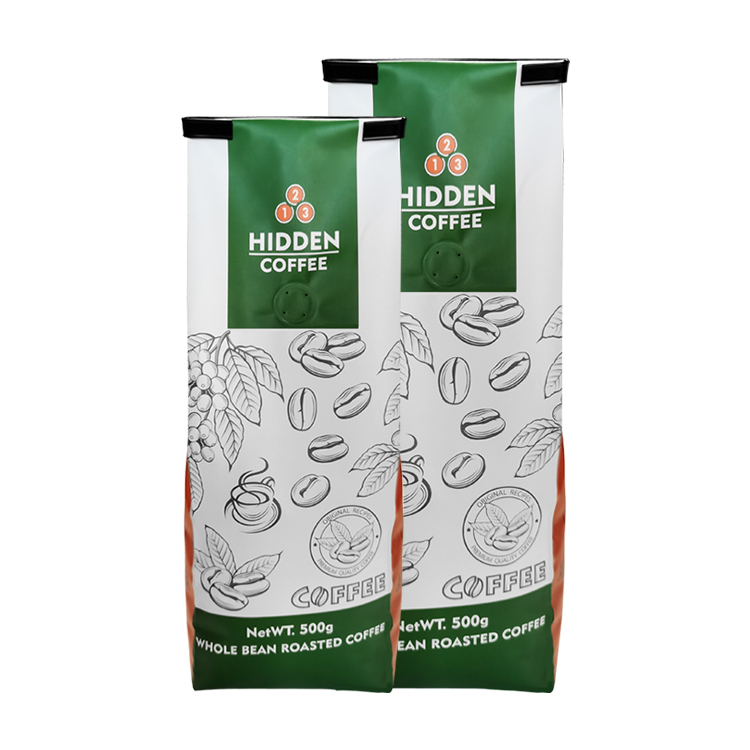
Side-gusset bags are a familiar coffee format with expandable sides and a taller profile. Their dimensions are read differently from a flat-bottom pouch because the side gusset is part of the finished form. A buyer comparing a side-gusset reference with a flat-bottom reference should not compare only one width-and-height number.
One published Mylarbag 500g coffee-pouch project lists a side-gusset format of 10 × 34 + 6 cm, MATOPP/VMPET/PE, digital printing, and a degassing valve in its title. This record is useful for asking how a tall format, material notation, printing direction, and valve belong to the same configuration. See the published 500g side-gusset coffee pouch.
The listed record does not tell us what every 500g coffee should use, what result a pouch will have after shipping, or why a customer chose it. Use it as a specific reference point, then test the proposed pouch with your own coffee and filling process.
Flat Pouches and Small Coffee Formats
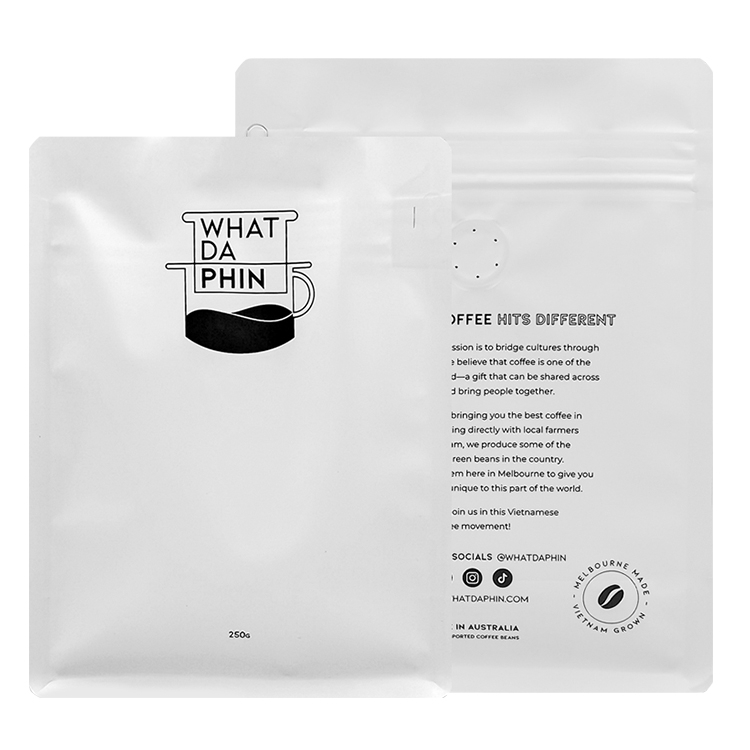
Flat pouches can be relevant for compact coffee uses such as a sample, a single-serve format, or another project that does not require the same base as a stand-up or flat-bottom bag. The pouch should still be specified in full: size, fill, material direction, closure route, artwork, and handling process.
A small flat pouch is not simply a reduced version of a larger retail bag. It may need different artwork panels, different top-seal space, and a different way of being filled or displayed. If a brand is developing both a main retail pouch and a sample format, treat them as related but separate specifications.
Compare Coffee Bag Types by the Decision You Need to Make
The table is a way to frame the conversation, not a chooser that produces a final answer. More than one format may be worth sampling before a buyer chooses a direction.
Choose Features With the Format, Not After It
Valves, zippers, pocket zippers, tin ties, tear notches, windows, and handles all use part of the pouch. They should be part of the format brief from the beginning. A valve is not a substitute for the top closure; a zipper is not the same thing as the final heat seal; and a pouch that looks similar from the front may have a very different top layout once these features are included.
For example, a published 250g flat-bottom coffee-pouch project lists a valve and pocket zipper, along with MATOPP/VMPET/PE, gravure printing, and a 14 × 18.5 + 7.5 cm format. It can help a buyer ask how a feature arrangement is documented. It does not establish an opening experience, shelf-life result, or universal configuration. See the published 250g flat-bottom pouch.
Let the Format Guide the Artwork Review
Pouch format and artwork should be reviewed together. A flat-bottom pouch can offer a front, back, side panels, and a bottom area, while a stand-up pouch and a side-gusset pouch divide their visible surfaces differently. A design that works well on a flat mock-up may need adjustment once the proposed pouch panels, folds, seals, valve area, and zipper placement are known.
Start by marking the information that cannot move: product name, required market text, nutrition or other product information if applicable, barcode position if one is used, and any design element that needs a clear front-panel position. Then ask the supplier to show the layout against the intended pouch format. This does not replace the buyer’s own market review, but it makes the physical package part of the artwork conversation.
For a multi-SKU line, keep the format and artwork version in the same project record. It is easy for a team to carry a front-panel design from one format into another while overlooking a gusset, top seal, or closure difference. A short written layout note is often more useful than relying on a visual memory of a similar pouch.
Consider the Filling and Closing Process Early
The way a pouch will be filled and closed is part of format selection. A buyer should know whether the product will be packed by hand, on an existing line, or through another workflow that needs a specific top area and handling routine. The answer does not automatically choose a bag type, but it can rule out an artwork or feature arrangement that would be hard to use in practice.
Discuss the first opening and later reclose route separately. A top heat seal may provide the initial closure, while a zipper, pocket zipper, or tin tie may be relevant after opening. These are different functions. Treating them as one feature can lead to a pouch layout that looks correct on screen but does not leave the intended working space when filled.
The table does not give a universal production instruction. It is a way to make sure the pouch conversation includes the parts of the project that can change the final format.
A Format-Selection Checklist Before Sampling
Before asking for a sample or quotation, write down what is confirmed and what is still open. The list can be brief, but it should identify the product, format question, feature question, and artwork stage.
Unknown information should stay visible rather than being guessed. If the final format is not chosen, ask suppliers to identify which format their quotation assumes. If the artwork is still evolving, mark it as a working version. This makes it easier to compare responses and to avoid approving a pouch based on details that belong to a different project.
It also gives the buyer a clear record to revisit when a sample, product fill, feature, or artwork version changes during development.
Sample the Format With the Actual Coffee
The format should be reviewed with the intended coffee before it becomes a final order specification. Whole beans and ground coffee can sit differently in a pouch. Fill weight, roast, grind, and packing process can also change the filled shape and the working area at the top of the bag.
Use the sample review to assess what it can show: overall shape, panel use, feature placement, top working area, and fit with the filling and sealing routine. Do not turn a sample into a universal claim about barrier, shelf life, food-contact status, recyclability, compostability, or market acceptance. Those are separate questions that need the right current evidence.
Recommended Packaging Configuration: Choose a Format for Evaluation
For a custom coffee line, the recommended starting point is a format direction for evaluation, not a pre-approved bag. A buyer may start with a flat-bottom pouch for a multi-panel format, a stand-up pouch for a bottom-gusset direction, or a side-gusset pouch for a tall format. The final size, material direction, closure features, and print layout should then be reviewed against the coffee and the intended packing process.
Use custom coffee bags to begin a project brief. Include the coffee type, target fill, pouch formats under consideration, a current sample or reference size, artwork stage, desired features, target market, and the questions that still need an answer. When you are ready to send the brief, use Contact. This starts a project-specific discussion without treating a public pouch record as a universal recommendation.
Frequently Asked Questions
What are the main types of coffee bags?
Common types include flat-bottom pouches, stand-up pouches, side-gusset bags, and flat pouches. The most suitable format depends on the coffee, fill, artwork, features, and packing process.
Are flat-bottom coffee bags better than stand-up pouches?
Neither is universally better. A flat-bottom pouch and a stand-up pouch create different panel and base relationships. Evaluate both against the needs of the actual project.
Are side-gusset bags only for large bags of coffee?
No universal rule applies. A side-gusset format is one direction to evaluate when its tall profile and expandable sides suit the proposed coffee product and packing plan.
Can I add a valve and zipper to any coffee bag type?
Discuss the features with the pouch format before approving dimensions or artwork. Feature placement and the top seal area must be reviewed together.
Can I use the same pouch type for whole beans and ground coffee?
Do not assume so. The products can sit differently in a pouch, so the proposed format should be reviewed with the intended coffee and fill.
Where can I compare coffee pouch formats for a custom project?
Start with custom coffee bags and provide your product, target fill, format questions, features, reference pouch, artwork status, and market.
Start With the Format, Then Build the Brief
Choosing a coffee bag type is easier when the project begins with the actual product and intended format rather than a generic “best bag” claim. Visit custom coffee bags to start a format, size, feature, and artwork discussion for your coffee line.