

If you need empty chocolate packaging quickly, begin with a stock packaging distributor and test the actual food in its actual sales unit. If you need your own size, printed artwork, material structure or repeatable supply across several flavors, send a specification to a custom packaging manufacturer. A chocolate bar may also need a separate inner wrapper and paper sleeve; a box of filled chocolates may need a tray and carton supplier. Those are different purchases, even when an online listing calls all of them “chocolate packaging.”
For wholesale orders, the useful question is not simply “Who has the lowest price per bag?” It is “Which supplier can deliver the right complete pack, with acceptable samples and a repeatable specification, at a landed cost and schedule we can actually use?” A quotation for empty pouches does not include chocolate, filling, labels, rigid boxes or temperature-controlled shipment unless the written scope expressly says so.
This guide is for chocolate brands, contract packers and purchasing teams sourcing packaging materials. It maps the supplier routes, shows how to compare quotes and gives you a sample and release checklist. Choosing the product's sales unit and packing a finished batch are separate decisions; here we focus on finding and qualifying the companies that supply the empty components.
First, name the package you are buying
“Chocolate packaging” can mean a small sachet around one piece, a printed wrapper for a bar, a resealable bag of loose bites, a paper sleeve, a rigid gift box or the shipping carton outside all of them. Ask the person filling the product to sketch the layers before requesting prices. A supplier can quote accurately only when it knows which layer it is making and which surface touches the food.
One useful way to write the requirement is: “We need an empty heat-sealable flat pouch for twelve grams of solid chocolate, printed in four artworks, delivered to our packer.” That sentence identifies a component, a fill target, a closure, an artwork count and the receiving point. “Luxury chocolate packaging, 10,000 pieces” leaves almost every pricing variable open.
| Component to source | Job it performs | Typical supplier conversation |
|---|---|---|
| Food-contact inner wrap or pouch | Contains the chocolate and meets the intended contact and filling conditions | Film/wrapper converter or custom pouch manufacturer; request the actual contact-layer specification |
| Printed sleeve or folding carton | Carries graphics, information and presentation around the inner pack | Carton printer or box specialist; check fit against the wrapped product |
| Insert or formed tray | Locates fragile pieces and limits movement within a box | Tray/insert supplier; test the actual assortment and handling route |
| Retail label or variable code | Carries approved product information and lot/date fields | Label printer and the brand's label reviewer; reserve usable space on the package |
| Shipping carton and thermal system | Protects the finished sales pack in distribution | Corrugated/insulation supplier and logistics partner; trial the route and season |
The layers are not interchangeable. A paper sleeve may look beautiful while doing little to contain a bare bar. A high-barrier pouch may be an appropriate primary pack but cannot hold fragile bonbons in individual cavities. A flexible film does not actively cool chocolate in a hot delivery vehicle. Buy each missing function from a supplier that can document and test it.
Choose a supplier route before comparing prices
There are five practical routes. A stock distributor sells existing empty bags or wraps, often with a short purchasing cycle but limited dimensions and finishes. A custom flexible-packaging factory converts and prints pouches or film to an agreed specification. A bar-wrapper specialist may supply rollstock for a horizontal line or a particular wrapping method. A carton and tray supplier handles rigid components. A co-packer fills and seals food; it may procure packaging on your behalf, but that does not mean it manufactured every component.
These routes overlap in catalogs, so ask what the company actually makes, stocks and subcontracts. A sales page that displays a pouch, a gift box and a filled bar may represent three suppliers and one packer. For a multi-component project, appoint one person on the brand side to own the approved drawing, revision, quantity and receipt date for each item.
| Buying route | Works well when | Questions to ask before ordering | Common tradeoff |
|---|---|---|---|
| Stock packaging distributor | You need a small, immediate quantity or an early product trial | Is the exact SKU available on repeat? What is the food-contact basis and closure method? | Stock dimensions and appearance may constrain the product |
| Custom pouch manufacturer | You need a specific size, artwork, material or recurring volume | What is made in-house, how are SKUs split, what proofs and samples are included? | Artwork, sampling and production planning take time |
| Wrapper or rollstock converter | A bar runs on a defined wrapping machine | What web width, unwind direction, registration and seal process does the line need? | A visually correct film can still fail on the machine |
| Carton or insert specialist | You need sleeves, cavities, rigid gift packs or printed boards | Is there a food-contact liner? How will the wrapped product be held? | The box quote does not solve the primary wrap |
| Co-packer or turnkey partner | You need filling, coding, sealing and possibly component purchasing | Who owns the pouch specification and approval records? Are materials included? | One convenient price can obscure component responsibilities |
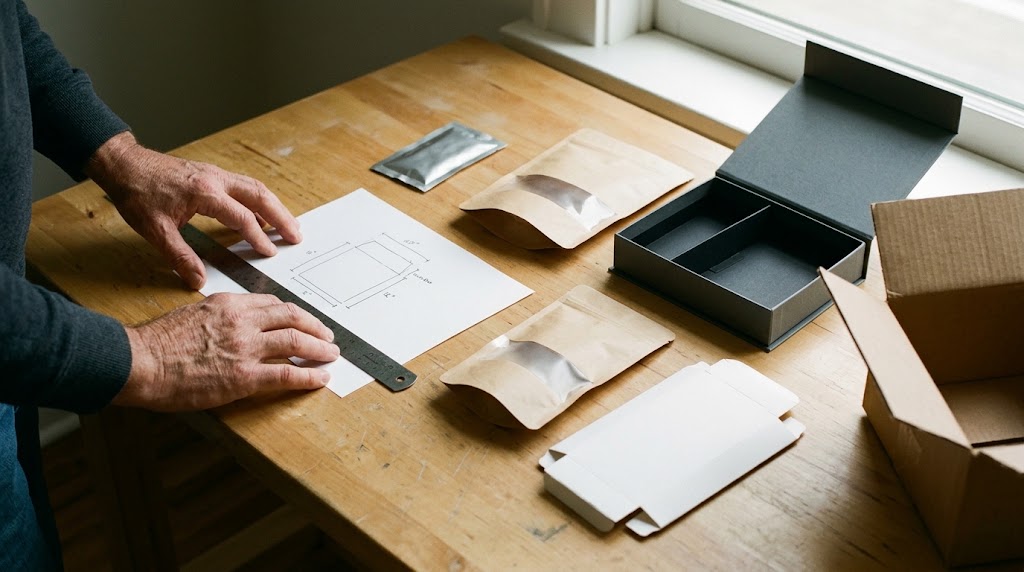
Startups often buy stock pouches with labels while they refine the bar or assortment. That can be sensible if the chosen pouch passes contact, fit and sealing checks. A brand with several stable SKUs may move to custom print so its package dimensions, artwork versions and replenishment plan are controlled. Neither route is inherently cheaper once wasted stock, labels, setup, freight and rejected packs are counted.
What “wholesale” should mean in your quote
Wholesale is a purchase arrangement, not a material grade. A quote for 5,000 stock bags and one for 50,000 custom bags may both be called wholesale, but they have different costs, proof requirements and reorder behavior. Ask for the exact quantity per SKU, not only the combined quantity. Five flavors at 2,000 bags each may be treated differently from one design at 10,000.
Separate one-time charges from recurring charges. Tooling, cylinders or setup may appear on the first order; digital printing may use a different cost structure. Add freight, duties or taxes where applicable, any inspection or test fees, and the cost of obsolete packaging if the artwork or recipe changes. A low unit price for a very large minimum order is not a bargain when half the inventory expires as artwork.
For a comparable landed estimate, use the same destination, quantity, size, number of artworks, material, closure and delivery term for every supplier. Then calculate: recurring package cost plus allocated one-time charges plus transport/import charges plus expected label or assembly costs, divided by saleable units received. Treat any assumed scrap rate as your planning assumption, not as a supplier's proven defect rate.
| Quote line | Ask the supplier to state | Why the buyer needs it |
|---|---|---|
| Quantity and tolerance | Minimum and price breaks by size/artwork; allowed overrun or underrun | Avoid comparing unlike quantities |
| Material and format | Layer construction, thickness range, finished dimensions, gusset and closure | Confirm that two prices describe the same component |
| Printing | Process, colors, finish, proof route and artwork/version setup | Understand initial and repeat-order costs |
| Sample and tooling | Physical prototype, print proof, cylinder/die costs and ownership | Know what is approved before production |
| Delivery | Production timing, shipping mode, named destination and written trade term | Compare the delivered project, not just ex-factory bag price |
| Quality and remedies | Agreed tests, inspection basis, nonconformity process and replacement terms | Define how an incorrect run will be handled |
If a supplier offers a delivered-duty-paid quote, confirm the named place and the exact written scope rather than assuming every tax, customs service or last-mile charge is included in a vague “door-to-door” number. Keep your receiving team and customs adviser involved where needed. The decision point is a comparable written landed offer.
“Near me” is a service question as much as a distance question
A search for “where to buy chocolate packaging near me” may be driven by a deadline, the wish to inspect samples or the need to meet a press operator. A local distributor can be excellent for a same-week stock trial. A local box printer may let you inspect board and fit. A remote custom factory can still send samples, share a drawing and deliver to your packer, provided the communication and schedule fit the project. None of those facts is established by the city shown in a search result.
Write down the reason for the local preference. If you need packaging tomorrow, check live stock and pickup cutoffs. If you need a food-contact document, ask for the exact SKU's paperwork whether the supplier is nearby or overseas. If you need a specific pouch on an automatic line, the line trial matters more than a short drive to a sales office. If you need to approve color, request a physical proof in the final material and agree who signs it.
Ask a purported local manufacturer for its production location, what operations it performs there and where your order will be made. A warehouse, sales address and converting plant are three different things. Likewise, a foreign factory with a U.S. contact does not become a U.S. factory. Evaluate the service you actually need without inventing a geographic advantage that has not been checked.
Empty pouches, printed bags and bar wrappers are different orders
“Empty chocolate packaging” usually means ready-to-fill stock or custom-made components. A stock pouch may be plain or labeled later. A custom pouch has an approved size, structure and artwork. A bar wrapper may be individual sheets or machine-ready rollstock. Ask the packer whether it needs preformed pouches, flat film, a sleeve or a fully printed roll; a supplier should not decide this from a photo of the finished chocolate.
For solid pieces in a flat sachet, send the maximum dimensions and the orientation used when filling, not just the weight. The published 12 g single-serve chocolate sachet project lists an 8 × 8.5 cm format, MATOPP/VMPET/PE and gravure printing. Those are project-specific data, not a standard size for every twelve-gram piece. A thicker inclusion, a different orientation or a wider sealing jaw can change the usable cavity.

For a bar, identify the inner contact layer and the outer presentation layer separately. A buyer asking for blank chocolate bar wrappers may want a small quantity of plain inner wraps; another may need printed machine film with registration marks. Ask how the bar is wrapped now, what equipment closes it, and whether the quoted material is intended for direct food contact. A printed paper sleeve wrapped around an already protected bar is a different component.
The published U.S. 3 oz artisan chocolate project lists a 13 × 21 cm package and a MATT OPP/white kraft/VMPET/PE construction. Its title describes a stand-up zipper pouch while one format field describes a three-side-seal flat pouch. Use its photograph and stated data as a discussion starter; request the current physical sample and drawing before adopting a format description. In the same way, do not apply its dimensions to every 3 oz bar.
Send a specification that a factory can quote
A procurement brief does not need to be ornate. It does need enough facts to stop five suppliers from quoting five different bags. Include the product form, whether chocolate touches the material directly, the filling process, the number of SKUs, target quantity by SKU, sales market, receiving address and the date you need approved packaging at the packer.
For a preformed pouch, record the finished width and height, gusset if any, fill opening, seal width available to the packing equipment, tear features and whether a zipper is required. For rollstock, have the packer provide machine model, web dimensions, unwind, eye mark, seal method and any trial-run constraints. If these details are unknown, request structural samples and a line discussion before fixing an artwork dieline.
The contact layer deserves its own question. The FDA's food-contact guidance explains that the regulatory status of the material depends on its constituent substances and intended use; its food-type and condition tables distinguish fat-containing foods and different filling/storage conditions. Ask the supplier for documentation applicable to your actual chocolate, contact time and temperature. “Food grade” written without a specific material and intended use is too broad for an approval file.
Chocolate with nuts, dairy, wheat-containing inclusions or other ingredients also affects the brand's label review. The FDA's food allergy information is a useful U.S. starting point. Have the responsible label reviewer approve ingredient, allergen and other mandatory content for the actual recipe and sales market; a bag printer should reserve the right space and print accurately, not invent the product declaration.
Use real projects to frame questions, not to copy specifications
Three published chocolate pouch projects show why a “chocolate bag” is not one standard item. The 12 g sachet above is compact and matte. An artisan bean-to-bar flat pouch lists BOPP/PMP822/CPP, gravure printing, spot UV and 12.7 × 15.3 cm. The 3 oz project uses a paper-look laminate and digital print. Those details support a conversation about format, print and scale. They do not prove that the materials suit a different recipe, that a bag prevents melting, or that the finished package is accepted by every local recycling system.

Ask each prospective supplier which of your proposed features it has made and how it will verify this order. For example: Can the supplier provide a flat pouch with the required filled dimensions? Can it leave a clean top-seal area for the packer's jaws? How will the artwork for four flavors be separated and approved? Can the supplier provide a current material specification and a sample of the intended structure? These are answerable questions, unlike “Is this the best chocolate packaging?”
Compare print options without treating one as automatically better
Stock packaging plus a label can keep the first trial small and flexible. Digital print can help when artwork versions or a shorter custom run drive the decision. Gravure may make sense for a larger stable run after setup and cylinder costs are understood. The useful comparison is the total quote and the approved print result at your volumes, not a blanket claim that one process is always faster, sharper or cheaper.
Mylarbag's About page shows digital and gravure equipment. Its actual product pages also show both print routes used for chocolate pouch projects. That demonstrates a relevant manufacturing conversation, not a promise that every pouch structure, material or lead time is available for every order. Ask for the current print route, sample route, setup charges, proof standard and version-control process.
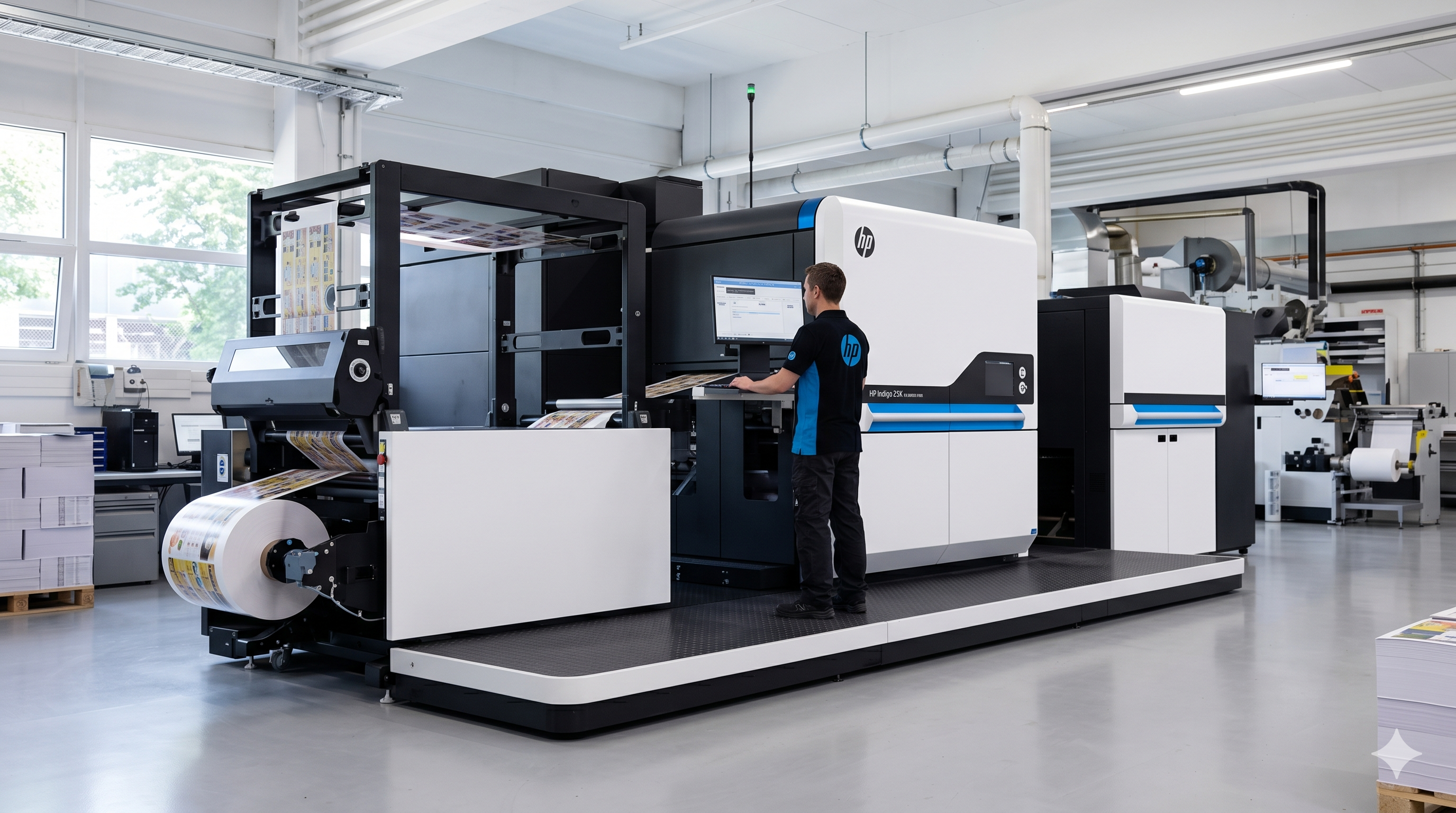
Four chocolate flavors may share bag dimensions yet need four ingredient and allergen panels. Agree on the final file names, version numbers, barcode list and approval owner. A short run of the wrong SKU is more expensive than an extra proof review. Make the producer and printer sign off on the same approved artwork rather than sending a visual mockup in one email and revised text in another.
Test empty samples and filled samples in a fixed sequence
Begin with material swatches only to judge feel and appearance. Then request an empty structural sample in the proposed finished dimensions. Fill it with the real piece count or bar, check insertion, headspace, corners, graphics and the available first-seal area. Use the packer's actual equipment to seal it. Next examine representative filled samples after the handling and storage conditions the brand expects. A photograph of an empty pouch cannot answer any of those questions.
Keep a small sample log. Record the supplier, material revision, size, date, product batch, fill method, sealer settings, observations and decision. If the package fails, name the failure: bar catches at the opening; seal is contaminated; top fold obscures the code; carton rubs a printed panel; zipper lies in the intended heat-seal zone. A supplier can revise a precise problem. “Looks bad” is harder to act on.
| Sample stage | What the buyer checks | Evidence to keep |
|---|---|---|
| Material specimen | Appearance, feel, identified structure and intended contact basis | Specification and document revision |
| Empty converted sample | Finished dimensions, opening, gusset, zipper or notch position | Approved drawing and measured sample |
| Filled bench trial | Real product fit, clean seal area and usable label/code space | Photographs, fill notes, rejects and changes |
| Packer line trial | Feed, registration, sealing, coding and stoppages on actual equipment | Run log and signed trial outcome |
| Distribution trial | Saleable packs after expected handling and temperature exposure | Route conditions, arrival inspection and decision |
Packaging and food teams should approve different things. The supplier can confirm what it made and test the pouch against agreed methods. The packer can confirm that it fills and seals on its equipment. The brand or its specialist confirms recipe, labeling and shelf-life requirements. The distribution partner confirms the shipping setup. Do not transfer all of those responsibilities to a packaging quote.
Temperature-sensitive chocolate needs its own distribution trial. A pouch may limit exposure to moisture or odors depending on its tested structure, but it does not stop heat transfer through a carton. Request a trial using the finished sales pack, outer protection, chosen service and relevant weather conditions. Keep those results separate from the pouch maker's material specification.
Check claims and supporting paperwork before artwork is locked
Supplier catalogs often use attractive shorthand: “high barrier,” “food safe,” “recyclable,” “compostable” or “keeps chocolate fresh.” Ask what the claim refers to, how it was measured and whether it applies to the finished pack you will sell. A film test result for one substrate is not a shelf-life study of your filled chocolate. A sample labeled “recyclable” is not proof of consumer access in every sales region.
For U.S. claims, the FTC's Green Guides summary explains when a recyclable claim needs qualification based on access to appropriate facilities. Your finished package may include ink, adhesive, a zipper, a label or other parts. The brand should review the final claim against the complete package and markets of sale. A project title or material family alone cannot settle that decision.
Request a written material structure, finished drawing, food-contact basis for the intended use, applicable test reports, print proof and a traceable lot or version convention. Ask who can provide updates if a film, adhesive or supplier changes. If a salesperson cannot identify the exact material used in your sample, the document packet is not yet tied to the order.
Release a production order without losing the approved sample
Place the purchase order against a revision-controlled specification. State the quantity by artwork, finished dimension tolerance, material structure, print/finish, packing method for empty bags, destination and delivery terms. Attach the approved drawing and proof. Name the person who can approve substitutions. An informal “same as last time” does not protect a reorder if the file name or substrate changed.
Before the first run, confirm that the final artwork matches the current product label, that barcodes and variable-code areas are where the packer expects them, and that the supplier has the approved sample. At goods receipt, check carton labels, bag count, print versions, dimensions, visible defects and whatever tests the agreed inspection plan requires. Set aside a retained sample of the received lot.
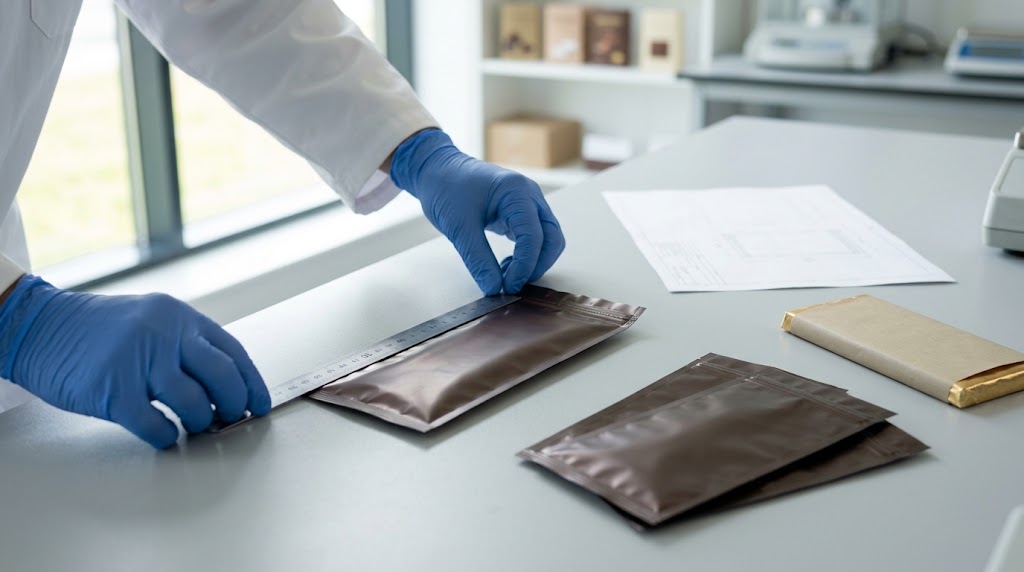
Plan replenishment before the first batch sells out. Record consumption per SKU, forecast uncertainty, production and transit windows, safety stock and any seasonal demand. Ask the supplier what changes on a repeat order: minimum quantity, price, material availability, plate charges and delivery term. A stable specification makes these questions much easier to answer.
A practical RFQ for a chocolate pouch supplier
Mylarbag publishes custom chocolate packaging bags and the chocolate pouch projects discussed above. If a flexible pouch is the component you need, send the product and packing facts below through the contact page. Ask for a candidate specification and a sample route; do not treat a similar photograph as final approval. For rigid boxes, trays, direct-contact foil sheets or a filling service, source those components from the relevant specialist and have the packer verify how they work together.
| Put this in the first inquiry | Useful level of detail |
|---|---|
| Product | Solid bar, loose pieces or baking chips; recipe features that affect food contact or handling |
| Sales unit | Weight/count, largest piece dimensions and orientation, number of flavors/SKUs |
| Packing operation | Hand fill or packer line, current equipment, seal method and required opening |
| Proposed component | Flat pouch, stand-up pouch or rollstock; whether chocolate touches it directly |
| Artwork | Number of versions, dieline/proof status, labels, code and barcode locations |
| Quantity | Initial and expected repeat volumes by artwork, not just a combined total |
| Destination | Receiving country/address, required date and desired written delivery term |
| Approval evidence | Physical sample, drawing, material/contact documentation and line-trial criteria |
If you do not yet know a material or bag dimension, say so. Send the real product size and the packing method, then compare sample options. A useful supplier answer will identify what it can make, what it needs to confirm and which parts of the wider packaging system belong elsewhere.
Frequently asked questions
Where can I buy empty chocolate packaging in bulk?
For a fast, limited trial, look for a stock packaging distributor with the exact empty SKU and applicable food-contact information. For a repeatable printed pouch or a size built around your chocolate and filling method, request samples and a quote from a custom flexible-packaging manufacturer. Buy sleeves, rigid gift boxes and trays from specialists when those components are part of the pack. Match the supplier to the component rather than treating every listing as a complete solution.
Is a local supplier better than ordering custom chocolate bags from a remote factory?
It depends on the job. Local stock can help with immediate pickup and a small trial. A remote custom factory can be suitable for a defined pouch specification if samples, proofs, documentation, delivery terms and reorder timing work for you. Verify where the order is manufactured, not just the location of the sales office. Compare the same delivered scope, trial results and response process before choosing.
What should I ask for before buying custom chocolate packaging wholesale?
Ask for the finished drawing, material structure and intended food-contact basis, physical samples, artwork proof route, quantity and price by SKU, one-time charges, delivery term, production schedule and an agreed inspection/remedy process. Your packer should trial the actual chocolate in the proposed package on the intended equipment. A catalog image alone is not a specification.
Can a pouch supplier also provide chocolate boxes or foil wrappers?
Some vendors coordinate several components; others specialize in one. Ask what the vendor makes, stocks or subcontracts and request a separate specification and sample for each component. Mylarbag's published chocolate examples establish flexible pouch work. They do not by themselves establish a supply offer for rigid gift boxes, molded trays or direct-contact foil sheets.
What minimum order quantity should I expect for printed chocolate bags?
There is no single responsible number. It depends on dimensions, structure, print method, artwork count, converting route and the supplier's current quotation. Request the minimum and price breaks per size and artwork, plus setup and repeat-order terms. Compare the cost of inventory you can actually use; a large cheap run can be expensive if flavors or regulatory text change.
Will a high-barrier chocolate pouch keep the product from melting during shipping?
No pouch should be purchased on that promise. A film's barrier properties and the temperature of a parcel are different questions. Define the chocolate's handling limits with the food team, then test the finished inner pack, cushioning, outer container, shipping service and seasonal route together. A supplier's empty-bag quotation is only one part of that system.
Sources and project references
- FDA: food types and conditions of use for food-contact substances
- FDA: determining the regulatory status of food-contact material components
- FDA: food allergies
- FTC: Environmental Claims, Summary of the Green Guides
- Mylarbag: 12 g chocolate sachet project
- Mylarbag: artisanal bean-to-bar flat pouch project
- Mylarbag: 3 oz artisan chocolate project