
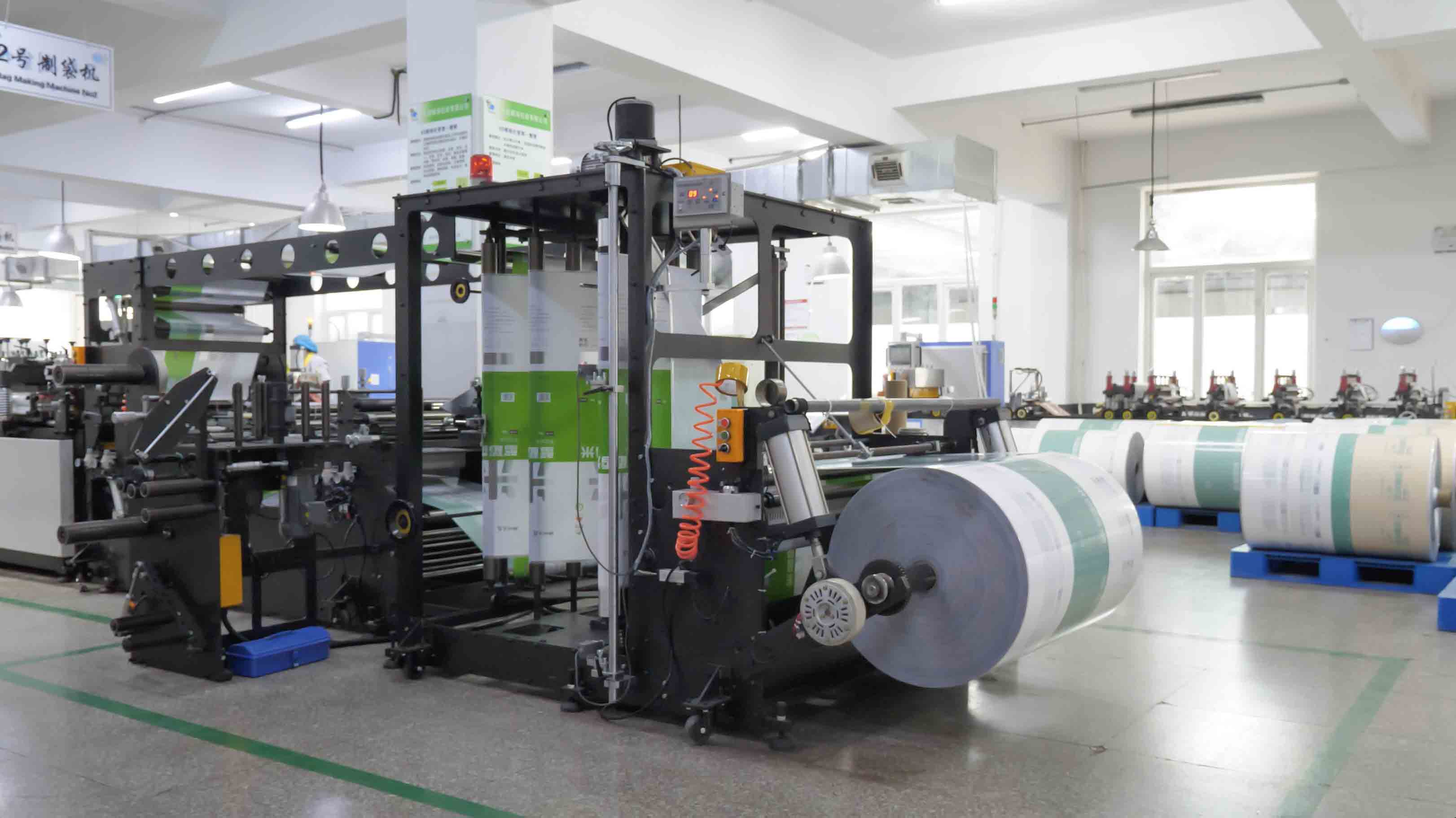
If you need printed coffee bags for a retail line, the best place to buy is usually not a general marketplace listing. Start with a supplier that can discuss the finished pouch as one project: the coffee, bag format, material direction, valve or closure, printing method, artwork, and packing requirements. That gives you a clearer basis for sampling and quotation than choosing a bag from a photograph alone.
For many roasters, sourcing custom coffee bags from China can be worth considering when the project needs custom printing, specific pouch features, or repeatable specifications across several SKUs. It is not automatically the right choice for every order. The useful question is whether the supplier can document the exact pouch you are asking for and communicate clearly enough for you to approve it before production.
This guide explains where B2B buyers commonly source coffee bags, how to compare a factory with a reseller or a stock-bag seller, and what to send in your first packaging inquiry.
Where Can You Buy Custom Coffee Bags?
There are three common routes: stock-packaging sellers, packaging distributors or resellers, and manufacturers that make custom flexible pouches. Each route can be useful, depending on how much of the specification is already settled.
Stock bags are practical when you need an unprinted pouch, a small quantity, or a quick way to test a product size. Their limitation is straightforward: they do not turn into a custom packaging system just because a label is added. The available material, valve position, zipper, dimensions, and surface finish are already decided.
Distributors can be useful when a buyer wants help comparing available packaging lines or coordinating small purchases from several sources. Ask who is responsible for confirming the actual pouch specification, because the party selling the bag may not be the party converting or printing it.
For a branded pouch with custom artwork, a coffee-bag manufacturer is usually the most relevant contact. The buyer can discuss the pouch as a complete build rather than ordering a generic bag and trying to adapt it later.
What “Custom” Should Mean in a Coffee-Bag Inquiry
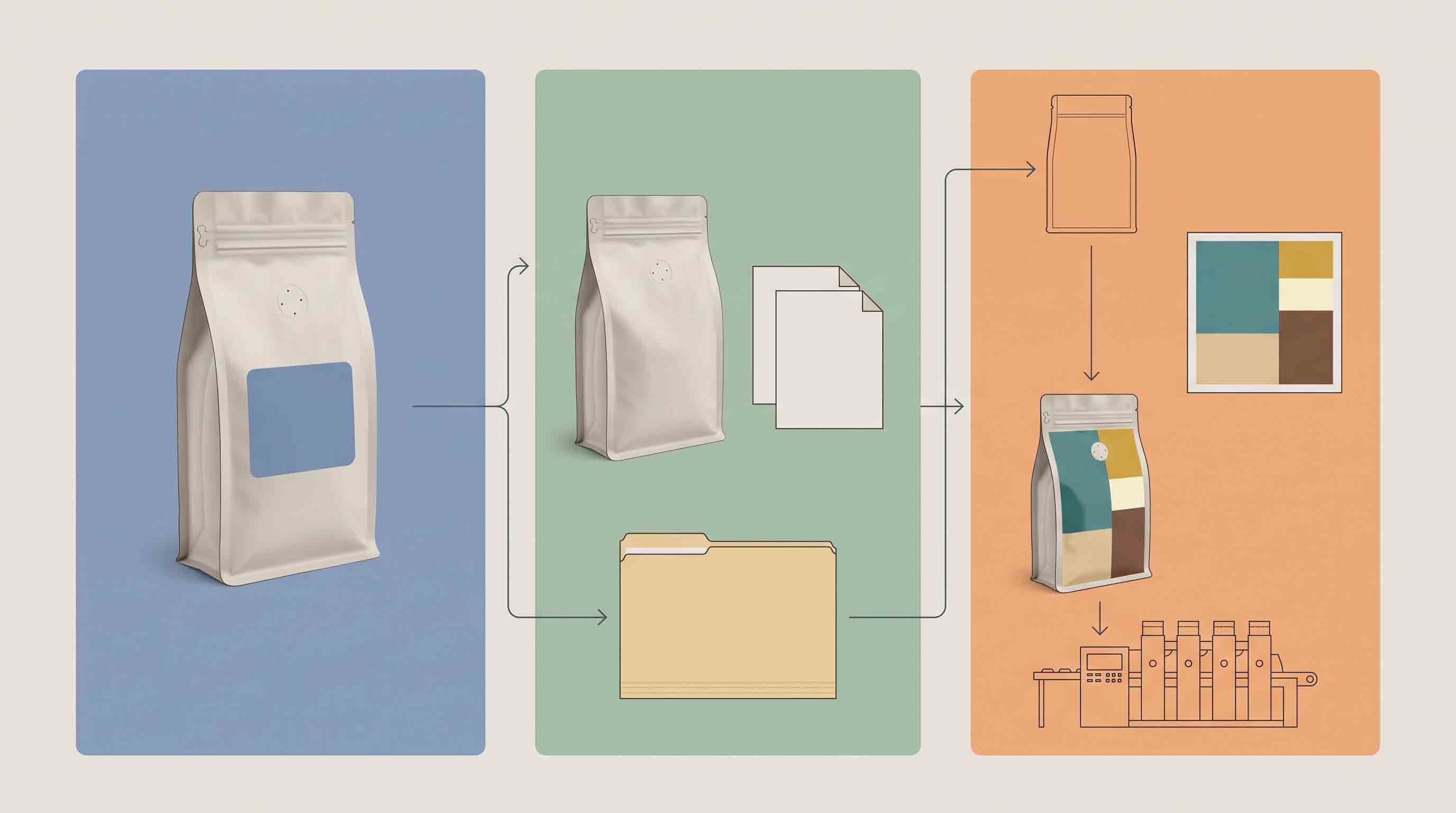
Custom does not only mean printing a logo. A coffee bag may involve decisions about format, dimensions, film structure, a degassing valve, a zipper or tin tie, finish, artwork placement, and the process used to fill and seal the pouch. These decisions affect one another.
Before asking a supplier for a quote, write down what is already known and what still needs discussion. A useful first brief can be short:
The point is not to force every decision before you contact a supplier. It is to make unknowns visible. A supplier can then respond to the same pouch brief rather than filling gaps with assumptions.
Why Some Buyers Source Custom Coffee Bags From China
China is one possible sourcing location for custom flexible packaging because many packaging projects combine several manufacturing steps: film selection, printing, pouch conversion, valves or closures, and packing. When those steps are discussed around the same approved specification, a buyer may find it easier to keep the project record together.
That does not mean every project should be sourced from China. A local stock supplier may be a better fit for an urgent test, an unprinted bag, or a purchase that does not require a custom build. International sourcing adds work: you need to establish the pouch specification, approve samples, understand how the shipment will be handled, and check requirements in the destination market.
The advantage of a factory conversation is not a vague promise of savings. It is the ability to ask direct questions about the actual bag: which format is being quoted, what material record is proposed, where the valve or zipper sits, which artwork version applies, and what sample or proof is being approved.
How to Compare a Coffee-Bag Factory, a Reseller, and an Online Listing
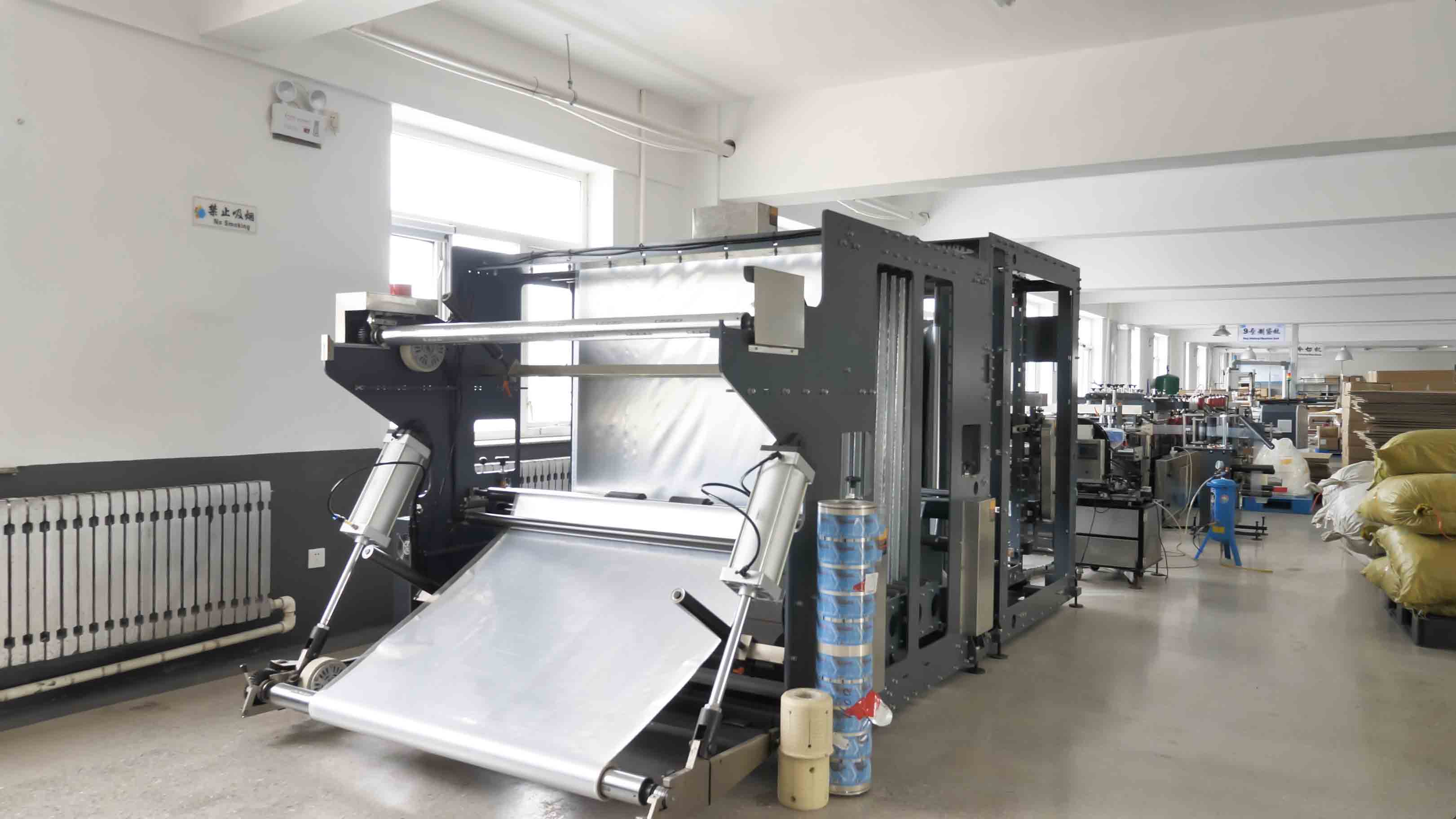
Do not judge a supplier only by a polished product photo. Ask questions that make the project traceable.
Ask for a project-specific pouch description
A good answer identifies more than “custom coffee bag.” It should distinguish the pouch format, dimensions, material description, printed surface, valve or closure, and any requested finish. If a supplier says a bag is recyclable, compostable, barrier, food-safe, or suitable for a particular shelf life, ask what documentation applies to the precise project and market. Do not transfer a claim from another bag to yours.
Ask what evidence is from a real published or completed project
Past projects can be useful evidence when they are described accurately. A published coffee-pouch record may show a format, stated material string, printing method, size, and named feature. It does not automatically prove the same result for a different coffee line, artwork, market, or filling process.
Keep the artwork version attached to the pouch brief
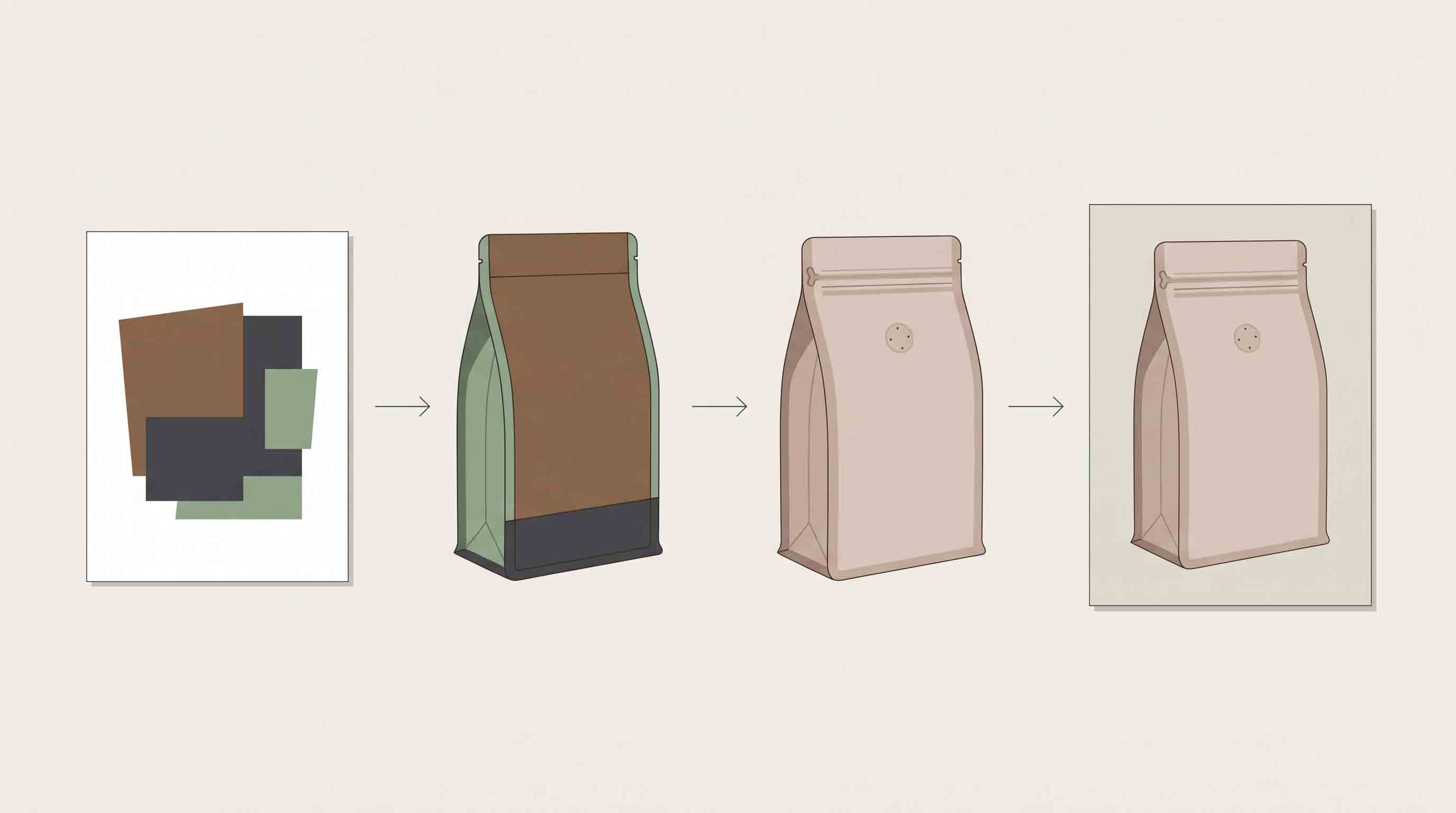
For printed bags, the artwork is part of the specification. Mark the file version, note the pouch panels, and record any finish, valve, zipper, or sealing-area considerations. If a change is made after sampling, identify what changed before treating the new version as approved.
What to Check Before Requesting a Sample or Quote
The most useful first question is often not “What is your lowest price?” It is “What do you need from me to quote this exact coffee pouch?” That changes the discussion from a generic sales exchange into a specification review.
Ask whether the supplier needs the fill weight, bag dimensions, product type, pouch format, intended closure, artwork status, destination, and requested quantity range. If you do not know every answer, say so. A clear unknown is safer than a guessed dimension or a copied material claim.
Use samples to review the things a sample can show: overall format, hand feel, printing appearance, panel layout, feature placement, and whether the bag suits your filling and sealing workflow. A sample by itself does not establish a universal barrier level, legal claim, shelf life, or destination-market acceptance.
Buying Direct From a Coffee-Bag Factory
Buying direct can be a good route when you want one technical conversation about a customized pouch. It can reduce the number of handoffs between the buyer, the party preparing artwork, and the party responsible for producing the pouch. But “direct from factory” is meaningful only when the supplier can discuss the work it actually performs and the records that belong to your project.
At Mylarbag, the most useful starting point is a coffee-bag brief rather than a promise. We can review a target pouch format, material direction, printing need, finish, valve or closure, and artwork status against relevant published coffee-pouch project records. Our published manufacturing information includes 10-color gravure printing and HP Indigo 25K digital printing. Those are production capabilities, not a guarantee that either method is the right choice for every project.
Start with the custom coffee bags page if you are assembling a new packaging brief. Include your coffee type, intended fill weight, pouch format, reference size or sample, artwork status, destination country, and the questions you still need answered. That allows the discussion to begin with an identifiable pouch rather than a generic request for “coffee bags from China.”
Questions to Ask About Printing
Printing is often where a quote becomes difficult to compare. Ask whether the proposed method is digital or gravure, what artwork stage is required for review, and how the supplier will identify the approved version. Do not assume the same visual result, setup process, or project fit across methods.
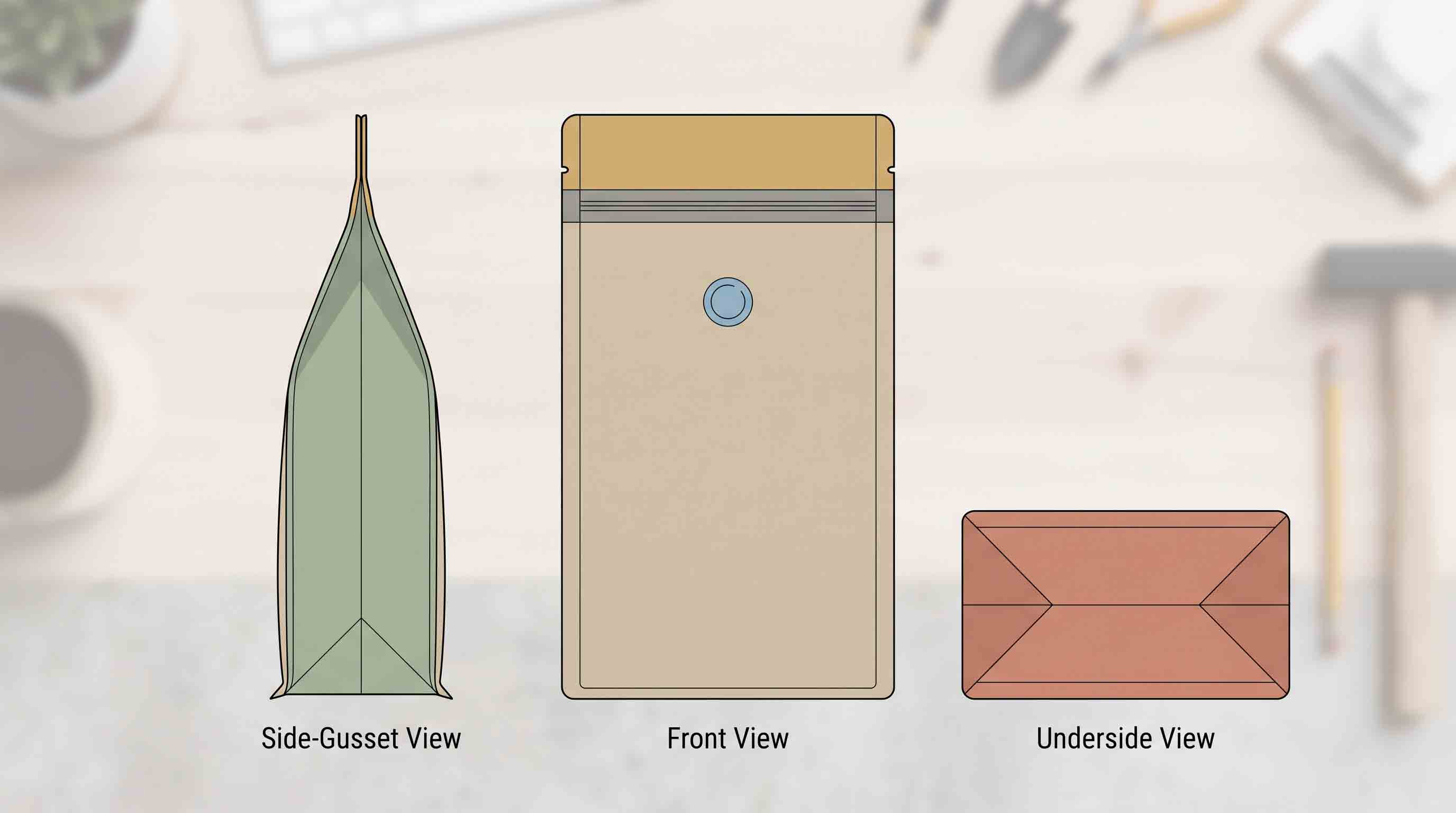
Ask how the pouch panels will be treated: front, back, side gussets, bottom, seals, valve area, zipper area, and any finishing zones. A good layout review catches practical questions before artwork is treated as final.
Compare Supplier Responses on the Same Brief
Once two or more suppliers have received the same brief, compare their replies on one sheet. The aim is not to invent a supplier ranking. It is to see whether each quotation refers to the same pouch and whether any difference has been stated clearly.
Price belongs in the comparison, but it should not be the first comparison. A lower or higher figure does not tell you whether two suppliers are quoting the same format, closure, material direction, artwork scope, or packing assumptions. First identify the proposed pouch. Then ask suppliers to clarify any difference before treating quotations as like-for-like.
Use Published Coffee-Pouch Records Carefully
Published project records can help a buyer ask better questions because they show real combinations of pouch format, dimensions, material notation, printing direction, and named features. They do not show every condition behind the project, and they should not be treated as a performance promise for a different coffee line.
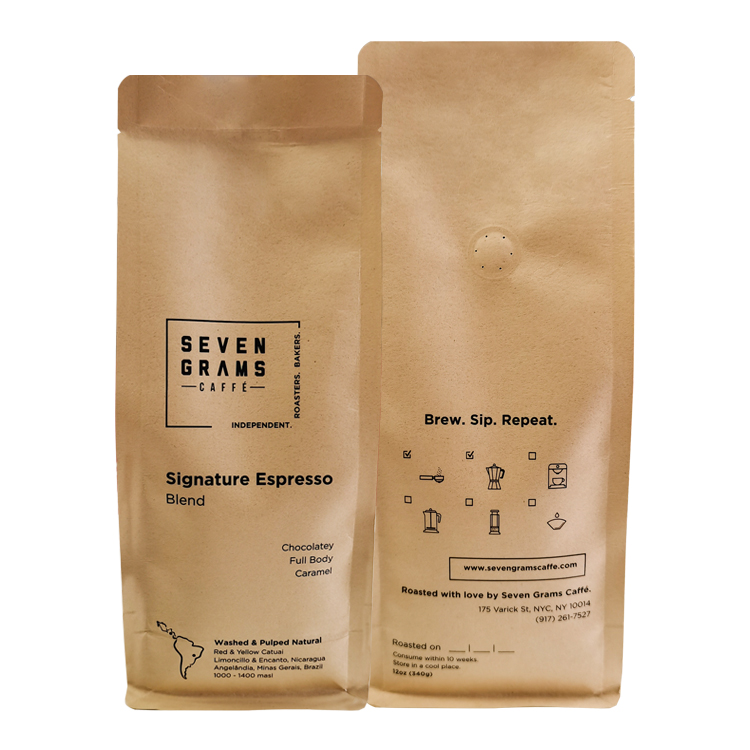
For example, a published 12oz flat-bottom pouch may list a material structure, printing method, a valve, and a zipper. That gives a buyer a useful reference for asking how a complete pouch is documented. It does not prove that the same structure, size, or feature set is suitable for another product or market.
When reviewing a reference, write down only what the public record actually states. Do not fill in the missing details with assumptions about a customer's budget, sales, testing, shipping result, or reasons for choosing a particular bag. This keeps a supplier comparison based on evidence rather than a marketing story.
Three questions to ask when a supplier shows a reference pouch
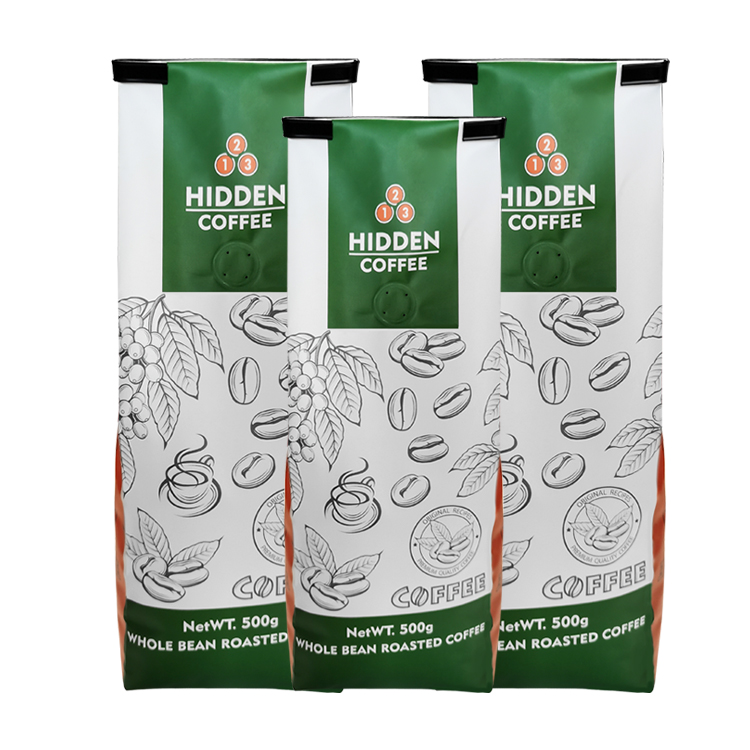
First, ask whether the reference and your project use the same pouch format. A 12oz flat-bottom bag and a 500g side-gusset bag may both be coffee packaging, but they have different panel layouts and different ways of using their dimensions.
Second, ask which visible details are part of the quoted pouch. A valve, side zipper, pocket zipper, tear feature, matte surface, or foil detail should be named in the brief if it matters to your project. Do not assume it is included because it appears in a photograph.
Third, ask what still needs evaluation. This can include the final coffee fill, the artwork version, the exact material direction, the desired packing arrangement, or market-specific documentation. A supplier that identifies an open question is not necessarily giving a weaker answer; it may be giving a more useful one.
Related Project Records for a Sourcing Discussion
These published project pages are useful for asking sharper questions about a custom coffee pouch. They are not endorsements, pricing examples, or instructions to copy a finished configuration.
The point of the table is modest: a useful supplier discussion starts with a complete record. The table does not establish product performance, food-contact status, shelf life, environmental claims, a customer outcome, or a fit for your coffee.
Recommended Packaging Configuration: Start With a Project Brief
If you are choosing custom coffee packaging for a branded retail line, the most useful configuration to request first is a pouch direction for evaluation, not a pre-approved “best bag.” A buyer may specify a flat-bottom, stand-up, or side-gusset format; a target fill; the artwork stage; and any required valve or reclose feature. The material direction and final dimensions can then be reviewed for that project.
Mylarbag's custom coffee bags page is the appropriate starting point when you need a custom pouch conversation rather than a stock-bag purchase. Use it to share the coffee type, target fill, reference pouch, artwork status, preferred format, target market, and open questions. For a direct inquiry, use Contact and include the same brief. That gives the team a basis to identify which options can be evaluated for your project without promising that a published configuration will automatically apply.
Questions to Ask About Shipping From China
International shipping should be part of the sourcing brief, not an afterthought. Provide the delivery country and ask what information is needed to quote the finished packaging shipment. Carton dimensions, carton count, pallet plan, freight method, customs treatment, delivery arrangement, and local receiving conditions are project-specific. Do not rely on a generic claim about freight cost or transit time.
Before finalizing an order, make sure the approved pouch description, artwork version, carton information, and shipping discussion refer to the same finished item. A 250g flat-bottom bag and a 1kg side-gusset bag may need different packing and freight inputs even if both are called “coffee bags.”
A Simple Supplier Comparison Checklist
Frequently Asked Questions
Where is the best place to buy custom coffee bags?
The best source depends on your project. Stock sellers suit simple or unprinted needs. A custom manufacturer is often more relevant when you need a printed pouch, specific format, closure features, and a project-specific discussion.
Is sourcing custom coffee bags from China right for every roaster?
No. It can suit a custom packaging project that needs coordinated pouch, printing, and shipping discussions. It may not suit a buyer who only needs a small quantity of stock bags or cannot yet define the product and artwork.
What should I send a coffee-bag manufacturer for a quote?
Send the coffee type, fill weight, target pouch format, dimensions or reference sample, closure or valve needs, artwork status, destination country, and the questions you still need answered.
Can a product photo prove the material or sustainability claim for a coffee bag?
No. A photo can show appearance and format, but the material structure, components, market claim, and project conditions should be checked from current project-specific information.
Should I choose digital or gravure printing before contacting a supplier?
Not necessarily. Explain your artwork status, product range, pouch requirements, and project goals. The printing discussion should relate to the actual pouch and approval process.
What should I confirm before shipping coffee bags from China?
Confirm that the approved pouch, artwork version, carton details, pallet or freight inputs, delivery arrangement, and destination requirements all refer to the same finished item.
Start With a Clear Coffee-Bag Brief
If you are comparing suppliers, begin with the information that identifies your project. Visit custom coffee bags to start a conversation about the pouch, printing, features, and questions that apply to your coffee line.