
You can buy empty rice bags from a stock-packaging distributor, a woven polypropylene sack supplier, or a custom flexible-packaging manufacturer. The right source depends on the number of bags, their intended fill weight, whether you need artwork, and how your rice will be filled, sealed, stored, and shipped. If you need a few unprinted bags for a filling trial, a stock supplier may be the quickest choice. If you need a repeatable printed pack for sale, send a specification to a manufacturer and approve filled samples before placing a full order.
The phrase “empty rice bags” hides several different products. A 5 kg sewn woven sack is not the same package as a 5 kg heat-sealed retail pouch. A generic polypropylene sack is not necessarily a moisture-barrier pack. A bag labeled “5 kg” is not guaranteed to fit five kilograms of your particular rice on your filling line. Treat the listing as a starting point, then establish the complete construction and use conditions.
This guide is for rice brands, mills, importers, private-label teams, and co-packers buying packaging in quantity. It shows where to look, what to send a seller, how to compare quotations, and when a cheap empty bag becomes an expensive filled-pack problem.
Start with the type of empty bag you actually need
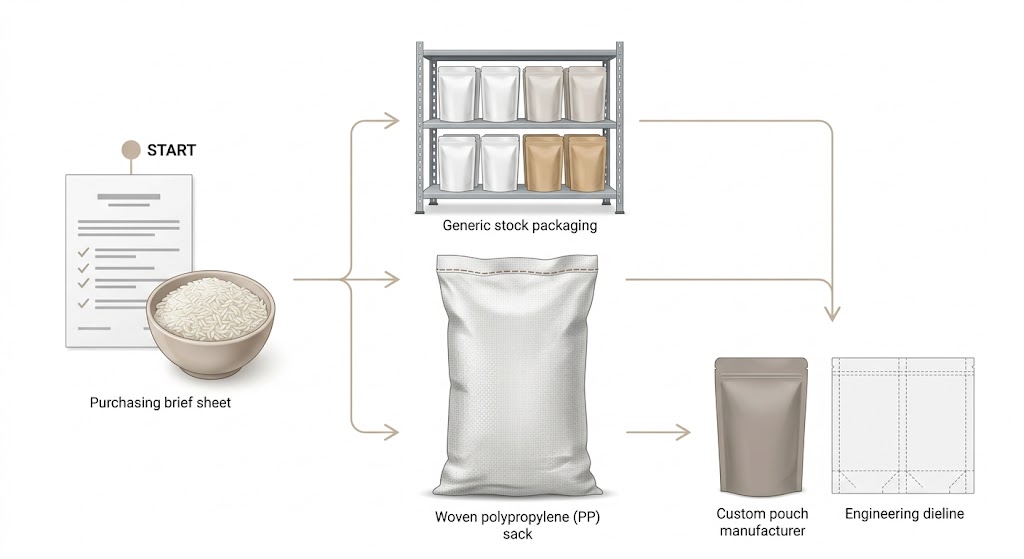
Before searching suppliers, write one sentence describing the selling unit: “We need an unprinted 5 kg woven sack for bulk distribution,” or “We need a printed 1 kg flat-bottom retail pouch with a heat-seal area above the zipper.” Those sentences lead to different sellers, price structures, samples, and lead times.
Stock bags are existing designs held by a distributor. They are useful when the specification is flexible, the quantity is small, or the team needs to run an early line trial. A stock bag can be inexpensive to obtain quickly, but the dimensions, layer structure, and closure may not match your brand or machinery. Ask whether the same stock SKU will be available for repeat orders. A one-time purchase of a generic bag is not a supply plan for a retail launch.
Woven polypropylene sacks are often bought from sack converters or agricultural-packaging suppliers. The seller may offer uncoated woven fabric, coated sacks, printed or BOPP-laminated outer surfaces, and separate inner liners. Each is a different construction. The woven base carries load and handles like a sack; a coating or liner changes how the package contains fine particles and manages exposure. The top may be sewn, folded, or closed with a liner-specific method. Ask exactly which parts of that system the price includes.
Converted flexible pouches come from a pouch manufacturer or specialist converter. These include stand-up, flat-bottom, side-gusset, and flat pouch formats. They can be supplied plain or custom printed, with a planned top seal, a zipper, a window, or other features. For a branded retail project, a converter can develop a bag around the product, artwork, target net weight, and filling method. The added design work is worthwhile only if the resulting pack can actually be filled and accepted at the shelf and in transit.
None of these routes wins for every buyer. A distributor can be exactly right for a short experiment. A manufacturer becomes important when a missed delivery, printed-code error, or weak filled-bag seal would interrupt a repeat commercial program.
Where to buy polypropylene rice bags
“Polypropylene rice bag” is an incomplete purchase description. Woven PP is made from interlaced polypropylene tapes. BOPP is an oriented polypropylene film. Some sacks combine a woven PP substrate with a printed BOPP film. Other PP-family film constructions may be made into heat-sealed pouches. Ask whether the seller means a woven sack, a printed laminate over a woven sack, or a converted film pouch.
For a woven-sack inquiry, request the bag's finished width and length, fabric specification, coating or lamination, liner if present, print coverage, bottom construction, and closure plan. Ask whether dimensions are measured flat before filling or describe the finished filled pack. If you will sew the top, identify the sewing equipment and whether an inner liner is sealed separately. If the bag will be palletized outdoors for any part of its journey, tell the supplier about the exposure; do not rely on “PP” as proof of weather protection.
For a BOPP-laminated woven sack, ask for a component map. The printed film and woven substrate may contribute different things: graphics, load handling, containment, and moisture control. The seller should tell you how the print web is joined to the sack, how the bottom and top are made, and whether a separate liner is part of the intended system. A photograph of a glossy printed sack cannot answer those questions.
For a PP-family retail pouch, ask how the sealant surface, zipper, print layer, and any barrier component fit together. Avoid the shorthand “100% PP” unless the supplier has provided a complete structure and the claim has been assessed for your market. If recyclability matters, it belongs in the design brief at the beginning. This procurement guide is about buying the right empty bag; the other article addresses how to assess material and recycling choices in depth.
There is a practical boundary here for Mylarbag buyers. The rice packaging page describes custom pouch and BOPP-related options. Use it to start a quotation, then obtain the exact proposed construction and sample for your own project. A listed product category is not a substitute for confirming that a particular size, line setup, and closure are available on your delivery schedule.
Where to buy 5 kg rice bags without guessing the dimensions
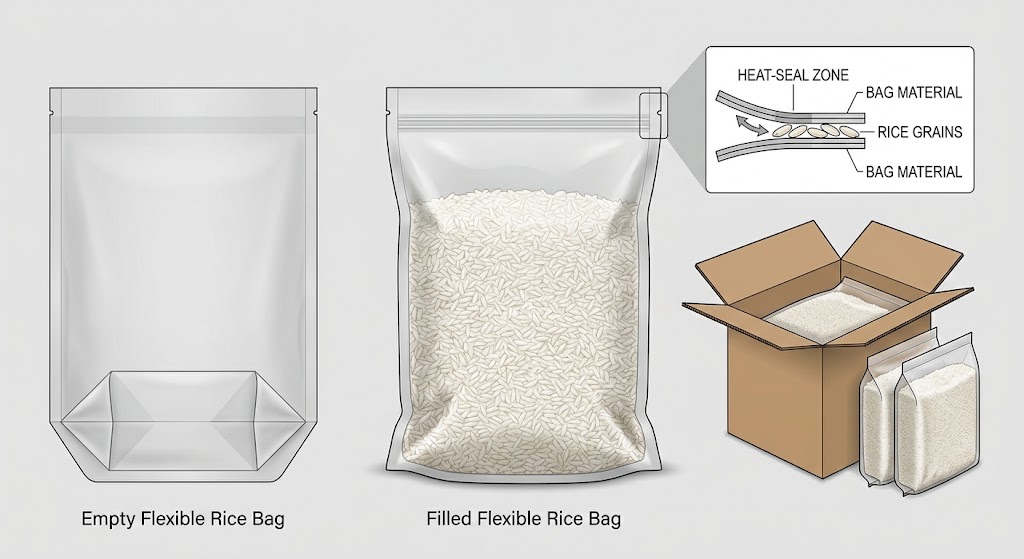
Five kilograms is a net fill target, not a universal bag size. Two varieties can settle differently after filling; a coated sack, a flat-bottom pouch, and a side-gusset bag create different usable volumes. A bag with a zipper also needs enough clear top area for the filling and final heat seal. The advertised external height is not the same as usable fill height.
Start with a representative sample of the actual rice. Include the intended mix of whole grains, broken grains, and fines. Fill candidate bags on the real line if possible, or use a controlled trial that imitates its funnel, fill rate, and handling. Measure the filled shape at the intended weight. Note headspace, gusset opening, standing stability, seal-area contamination, and how many filled units fit a carton. If the rice is sold in more than one variety, test the extremes rather than assuming the first variety represents the entire range.
When a supplier suggests a “standard 5 kg rice bag,” ask which data underlies the suggestion. Is it an existing bag that held five kilograms of a comparable rice? Was the sample heat sealed or merely folded shut? Was it tested in a carton? If the answer is only a flat width and height from a catalog, treat it as a candidate for sampling, not an approved size.
Do not copy a dimension from another rice brand and put it straight on a purchase order. Their product, fill machine, net weight tolerance, and pouch construction may be different. The money saved by skipping a filled sample can disappear in slow filling, poor seals, overstuffed cartons, or artwork that lands on a fold.
What a real rice pouch project can and cannot tell you
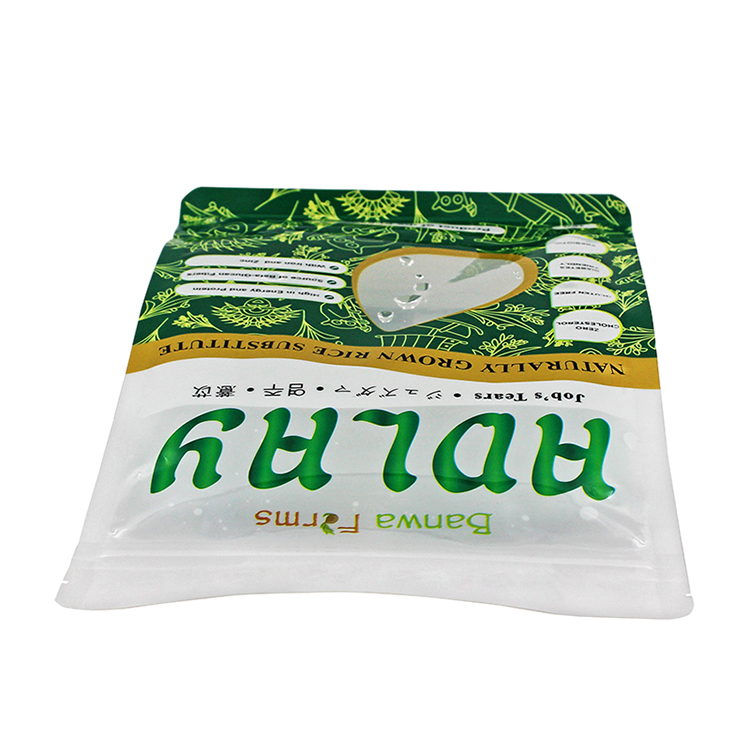
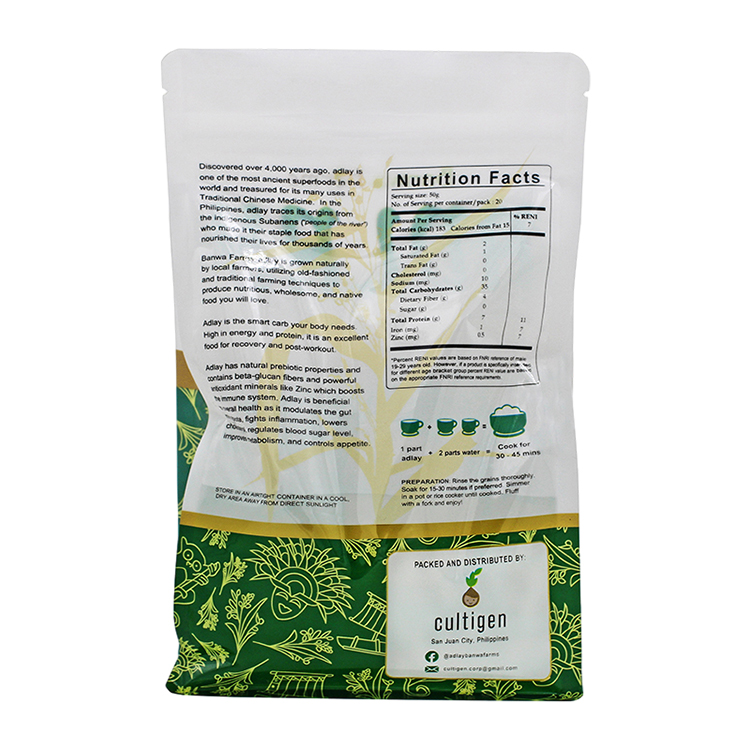
Mylarbag has a published 1 kg rice and ancient-grain flat-bottom pouch project. The record lists a Philippine market, a PET/NY/PE construction, gravure printing, a teardrop-shaped window, and dimensions of 15 × 24 + 6 cm. These are useful facts when a buyer wants to see what a custom retail rice bag can look like beyond a catalog rendering.
The case also demonstrates the limits of copying a project. It is a 1 kg pack, so it does not provide an approved 5 kg size. It does not publish a moisture-vapor transmission value, a seal-strength result, a return rate, or a customer sales outcome. The visible window does not prove that a new window location will work with a new barrier target. A different buyer should bring their own rice and route to market, then request samples made to the proposed design.
This is a more useful first-hand example than a vague claim that “our rice bags are strong.” It gives a buyer concrete questions. Will their artwork leave enough quiet space for a code? Should their product be visible through a window, or does the project need an opaque structure? Does a flat-bottom format suit their carton and store shelf? What happens to the side panels after the actual fill? The project record begins that conversation; it does not close it.
If you are sourcing a printed bag, request at least one physical mockup at the intended size. Fill it. Put it in its proposed carton. Place it on a shelf. Inspect the window, folds, readable label areas, top seal, and bottom shape. A design can look perfect on a flat PDF and still put a key claim across a side fold once rice is inside.
Send a sourcing brief that produces comparable quotes
A vague inquiry such as “Please quote 50,000 rice bags” invites quotations for different products. One seller may quote an unprinted woven sack without a liner. Another may quote a printed film pouch with a zipper. The numbers cannot be compared until the physical package and delivery terms line up.
Write the brief as a controlled document with a date and version. State your company role and the intended application, without revealing confidential details you are not ready to share. Include the rice variety or a representative sample, planned net weight, approximate annual and first-order quantities, selling markets, target bag format, fill and closure method, expected storage conditions, and any desired print or window features. If a dieline exists, send its revision identifier. If it does not, ask the supplier to propose one and explain the assumptions.
For food-contact use, ask the supplier to identify the food-contact layer and provide documentation relevant to the intended food and conditions of use. The U.S. FDA explains that food-contact substances are regulated for their specified uses. Its conditions-of-use guidance distinguishes applications by food type and temperature. A generic “FDA approved bag” slogan is not the document you need for a particular rice package. Ask for the actual declaration or supporting documentation and have the responsible buyer or compliance team review it for the destination market.
If you have performance requirements, name the requirement and ask how it will be tested. For a heat-sealed pouch, a seal-strength result may be relevant; ASTM F88/F88M describes a method for measuring seal strength of flexible barrier materials. That standard alone does not set the acceptable value for your product. Agree the method, sample position, condition, and acceptance criteria with the supplier. For woven sacks, the relevant closure and handling checks will be different.
Include the ship-to country, named delivery place, desired shipment window, and preferred Incoterms rule if your procurement team uses one. Do not ask simply for “shipping included.” A freight quote to a port and a delivered quote to your warehouse are different commercial offers. If a seller quotes DDP, specify the named place and confirm the responsibilities in writing. The ICC's Incoterms 2020 summary describes DDP as delivery cleared for import at the named destination, ready for unloading; exact commercial details belong in the parties' contract.
How to compare rice bag quotations line by line
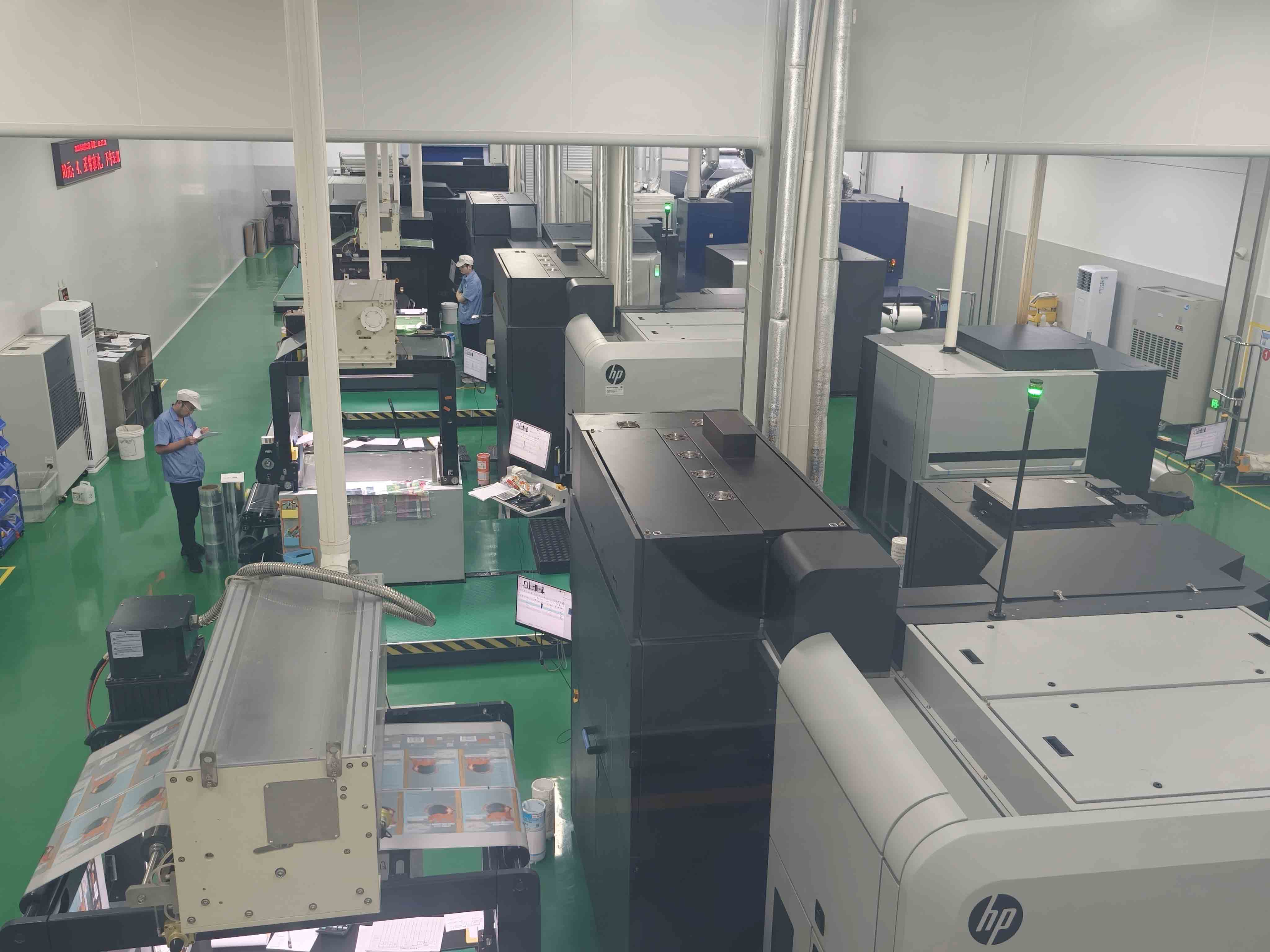
Start by confirming that every quotation describes the same finished bag. Record the structure, finished dimensions, print specification, accessories, quantity, packaging method, lead-time assumptions, payment terms, shipment term, and named destination. If any item is missing, ask for a revised quote. Do not fill blanks with assumptions from a photograph or earlier email.
Minimum order quantity is not a single universal factory number. It may differ by structure, printing process, artwork versions, and batch setup. Ask whether the MOQ is per size, per design, per colorway, or across the total order. If your range has three rice varieties, a quote for 30,000 bags may mean 30,000 of one design, not 10,000 of each. Clarify how the supplier handles overrun, underrun, and repeat orders.
Separate the first-order setup from repeat unit cost. A printing plate, artwork adjustment, sample courier, testing program, and freight may be treated differently by each seller. Some costs occur once, while others recur. Dividing an initial setup charge by a large hypothetical lifetime quantity can make a first order look artificially cheap. Calculate the first-order landed cost using the quantity you actually plan to buy, then calculate the reorder scenario separately.
The lowest unit price may still be the best offer, but only after these fields are aligned. A bag that forces a slower fill speed or more rejected seals has an operating cost that the supplier's unit price cannot show. Record what your trial found. Avoid turning a hypothetical filling speed or failure rate into a marketing claim; use observed values from your line.
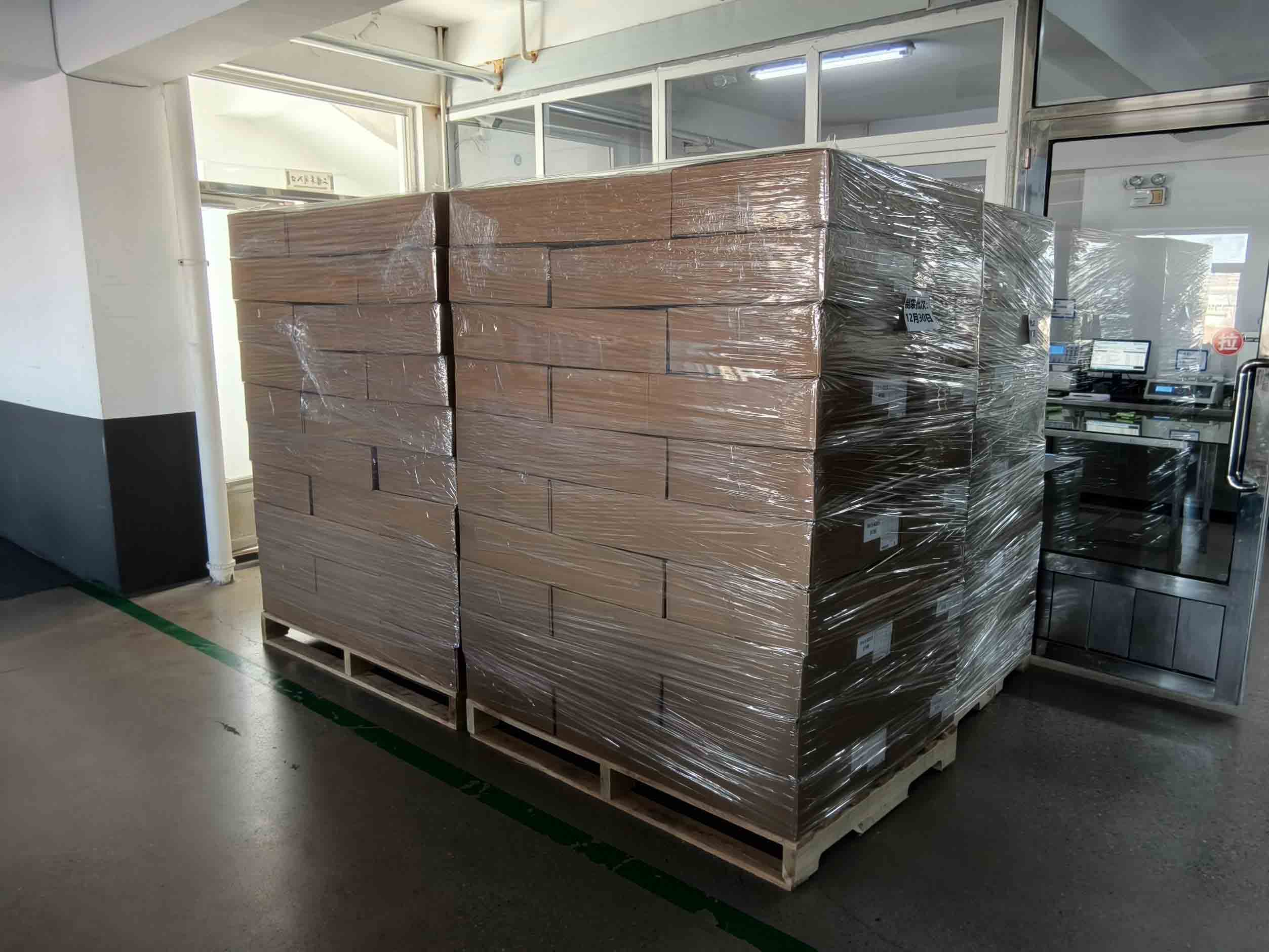
For an imported order, ask how cartons are labeled and packed, whether the packing list matches SKU and design revisions, and which party handles customs documents. Get a sample carton marking before dispatch. Receiving a pallet of visually similar bags without a usable SKU identifier can turn a routine goods receipt into a manual sorting job.
Sample the empty bag, then test the filled package
An empty sample is useful for checking construction, print, zipper operation, and apparent size. It cannot tell you how five kilograms of rice will settle against the gussets or whether grain dust will contaminate the top seal. The approval process needs both empty and filled samples.
First, inspect the empty bag against the written specification. Measure dimensions at agreed points. Check layer description, print alignment, window position, zipper and tear features, and any visible defects. Photograph the sample with its version number. Do not approve an unmarked sample and hope that a later production batch will match the correct revision.
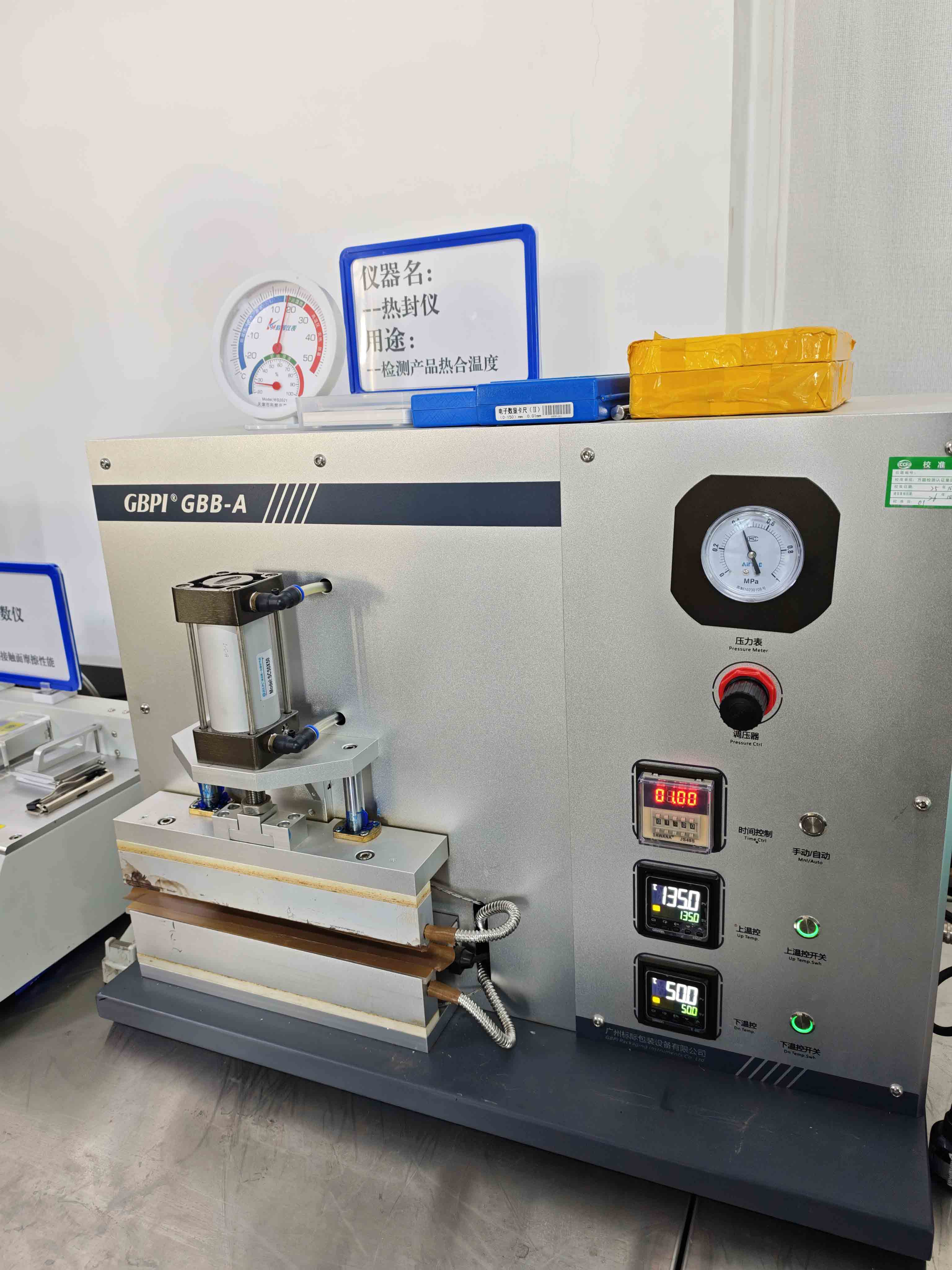
Second, fill with representative rice on the intended equipment. Observe the hopper, funnel, bag opening, and fill rate. Check whether loose grains or dust remain in the seal area. If you heat seal, set up a documented trial over a suitable operating window for the supplied sealant structure and your equipment. If you sew a sack, inspect the stitch, seam allowance, and any separate inner liner closure. A bag with a zipper still needs a defined initial commercial closure above or around that reclose feature if the package design calls for one.
Third, test distribution as a system. Filled pouches in cartons behave differently from single empty samples. Agree which conditions matter: cartoning pattern, pallet stacking, warehouse humidity, handling, and the route to your customer. ASTM D5276 describes a free-fall drop test for loaded containers; it can inform a carton test plan when relevant. Select the actual test and pass criteria for the project rather than treating the existence of a standard as proof that a bag passed it.
Fourth, write down what failed and where. A leaky top seal, split gusset, rubbed-off code, bulging carton, and abrasion mark call for different fixes. Send the supplier photographs, batch and sample identifiers, and the test conditions. That gives a converter a chance to adjust the right variable. “The bag is weak” does not locate a failure.
The artwork and approval handoff matters as much as the material
A custom printed bag is a manufacturing file, not just a front-panel image. Request a dieline for the exact size and construction. Check trim, seams, gussets, zipper placement, tear features, window shape, print direction, barcode quiet zone, code area, and required market-specific information. Give the printer a single controlled artwork revision. If several people email small corrections independently, ask the supplier to issue one consolidated proof for final sign-off.
Review a physical color or press proof when color matters to the brand. A screen preview is useful for layout but cannot reliably show every substrate, ink, or finish interaction. Record whether your approval is for layout, content, color target, material sample, or production run. Those are different decisions; one signature should not silently cover them all.
For multiple rice varieties, decide whether you need distinct printed bags, a common base design with over-labels, or a short-run digital print approach. The choice depends on the number of SKUs, regulatory information, expected reorder rhythm, and actual quote. Do not assume digital printing is always cheaper or gravure always requires a fixed enormous order. Ask for the per-design economics under your own volumes.
If the supplier offers free similar-material samples, distinguish them from a custom size and print sample. The former helps you feel a film or zipper; the latter tests your bag. Clarify any sample cost and refund arrangement in the quote. Keep the approved filled sample and the signed proof as controlled references for receiving inspection.
Plan lead time from approved artwork, not the first inquiry
When a seller quotes a production period, ask when the clock starts. Is it after artwork approval, sample sign-off, deposit, receipt of the material, or purchase order confirmation? A seven-day production estimate cannot begin while the buyer is still changing the window or label. Create a small timeline with dates for specification, sample, physical fill trial, artwork sign-off, production approval, shipment, customs clearance, and receipt.
Ask whether the quotation covers regular freight, express freight, or a door-to-door service. A buyer in the United States or Canada may compare a lower ex-factory unit cost with a delivered offer, but those numbers need a common landed-cost basis. Include duties where applicable, shipping cartons, sample freight, and possible inventory carrying cost. The precise duty and tax treatment belongs to the shipment and destination; do not copy a generic estimate from another buyer's order.
Build a contingency around the launch date. If the brand needs the bags on a fixed date, approve the critical sample and artwork early. Request a realistic dispatch milestone rather than a slogan about “fast delivery.” Ask the supplier what evidence it will provide before shipping: photographs, carton count, inspection summary, or a pre-shipment sample from the actual production batch.
A short buyer checklist before paying for the full order
You should be able to answer these questions without searching an old message thread:
- What exactly is the finished bag, including all layers, coating, liner, zipper, window, and closure?
- What actual rice and target fill weight were used to approve the dimensions?
- Which physical sample and dieline revision are the production references?
- Which food-contact documentation applies to the intended use and market?
- What does the quantity mean per size and design, and how are overruns handled?
- Which tests will be performed, by whom, under what conditions, and with what acceptance limits?
- What are the print approval, code area, packaging method, and carton markings?
- What is included in the first-order and repeat-order prices?
- What are the production-start condition, shipment term, named destination, and expected arrival window?
- Who handles a specification change or a rejected batch, and what evidence is required?
If the first three answers are missing, pause the price comparison. You may be choosing between two different bags without realizing it. If the later answers are missing, the bag itself may be fine but the commercial handoff remains incomplete.
For a branded retail program, send that brief to a custom rice packaging manufacturer and request the proposed structure, a physical sample plan, and a line-by-line quote. If the project is only a small unprinted test, a local stock supplier may get you started sooner. Let the real filled-pack trial decide whether the stock format can become a repeat commercial solution.
Frequently asked questions
Where can I buy empty rice bags in bulk?
Stock distributors, woven-sack suppliers, custom pouch manufacturers, and sourcing agents are common routes. The useful choice depends on quantity, bag format, printing, fill equipment, and the need for repeat supply. Ask each seller for the complete construction and delivery terms before comparing unit prices.
Where can I buy polypropylene rice bags?
Ask a woven PP sack supplier if you need a conventional bulk sack; ask a custom converter if you need a branded film pouch or a BOPP-laminated construction. Specify whether “polypropylene bag” means woven PP fabric, printed BOPP film laminated to woven PP, or a PP-family flexible pouch. These are different products.
Is there one standard size for a 5 kg rice bag?
No. A 5 kg label describes net weight, not finished dimensions or usable volume. Fill the proposed sack or pouch with your actual rice, close it on the intended equipment, and check headspace, panel shape, seal clearance, and carton fit before approving dimensions.
Should I buy stock bags or order custom printed bags?
Stock bags suit an urgent trial or a small unprinted purchase when you can accept the existing construction. Custom bags suit a repeat branded program that needs controlled artwork, a particular size, closure, structure, or defined supply. The decision should include sampling and delivered cost, not only the first unit price.
What is the minimum order quantity for wholesale rice bags?
There is no universal MOQ. It changes with the bag construction, print process, dimensions, number of designs, and supplier setup. Ask for the minimum per size and per artwork version, the price breaks at your realistic quantities, and the cost of a repeat order. Avoid treating a quoted total across several SKUs as an approved per-SKU quantity.
What should I request before approving a rice bag supplier?
Request a written structure and dieline, appropriate food-contact documentation, representative physical samples, filled-pack trial results, agreed acceptance criteria, an itemized quotation, production-start conditions, and a named delivery term. Keep a signed sample and artwork revision to compare with the delivered batch.
The practical next step
The fastest way to find the right empty rice bag is to describe the package you will actually fill and sell. Start with rice type, weight, number of designs, bag format, closure equipment, target country, quantity, and delivery address. Then compare sellers on the same specification and approve a filled sample. A supplier can propose options when some fields are open, but it should show its assumptions in writing.
For retail rice, Mylarbag's custom rice packaging page is the commercial starting point. Send a sample or clear project brief and ask for a structure and size proposal. For a woven bulk sack, specify the weave, coating or liner, and closure separately. In both cases, the purchase is successful when the filled bag, outer carton, artwork, and delivery terms work together—not when an empty bag looks promising in a listing.