
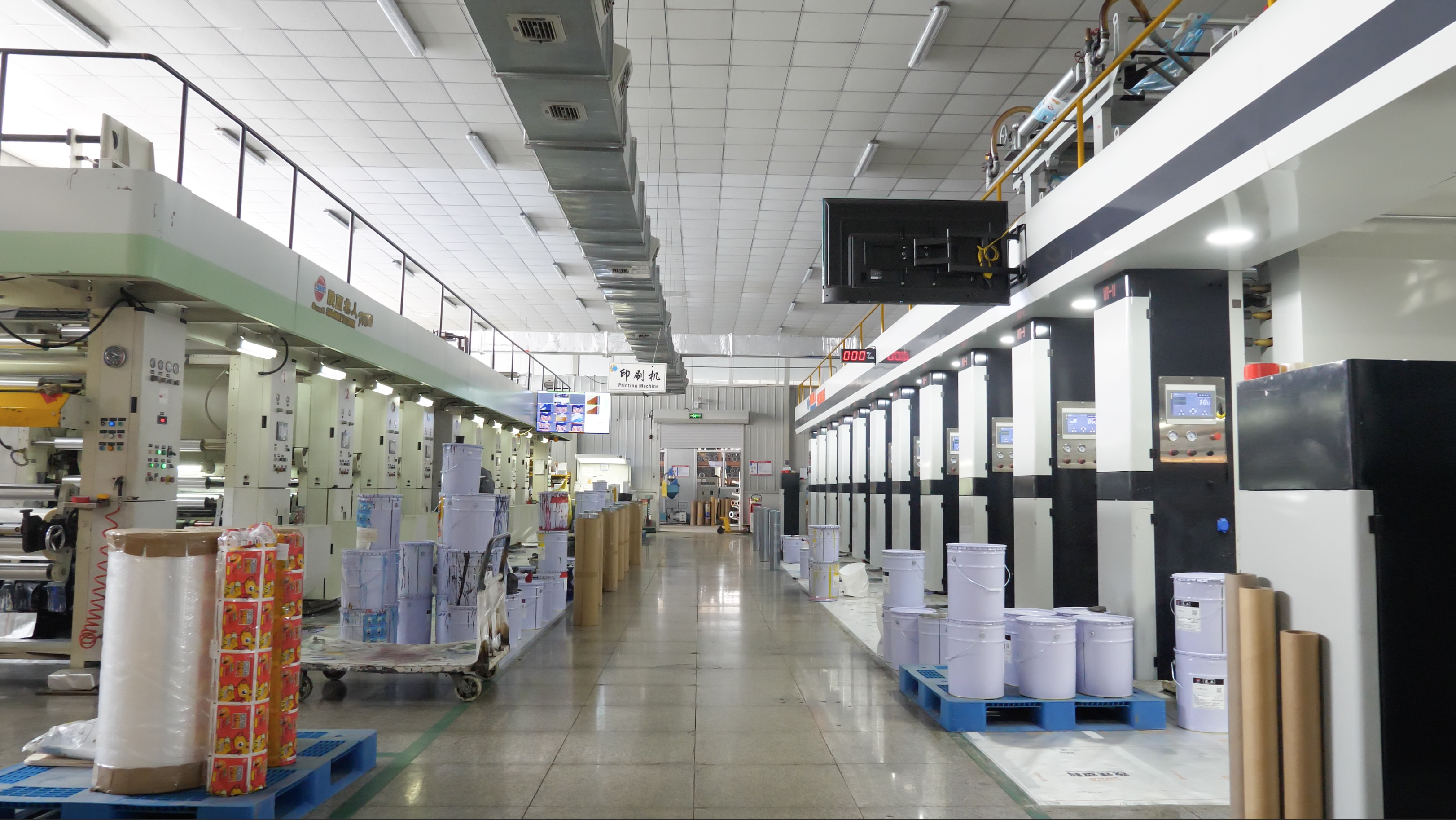
You can buy empty tea bags from retail marketplaces, packaging distributors, specialist converters, or a manufacturer that can quote a custom project. The right route depends on whether you need a small immediate order, a validated stock format, a custom filter bag, individual wrapping, printed outer packaging, or a repeatable supply program. For a tea brand, the useful comparison is not only price per bag—it is whether the supplier can document the material, deliver the required format, and support the way the product will actually be filled and sold.
The comparison below is for buying empty tea bags or related packaging for a commercial tea project. It does not treat any one filter material, supplier model, minimum order, delivery time, or compliance statement as universal.
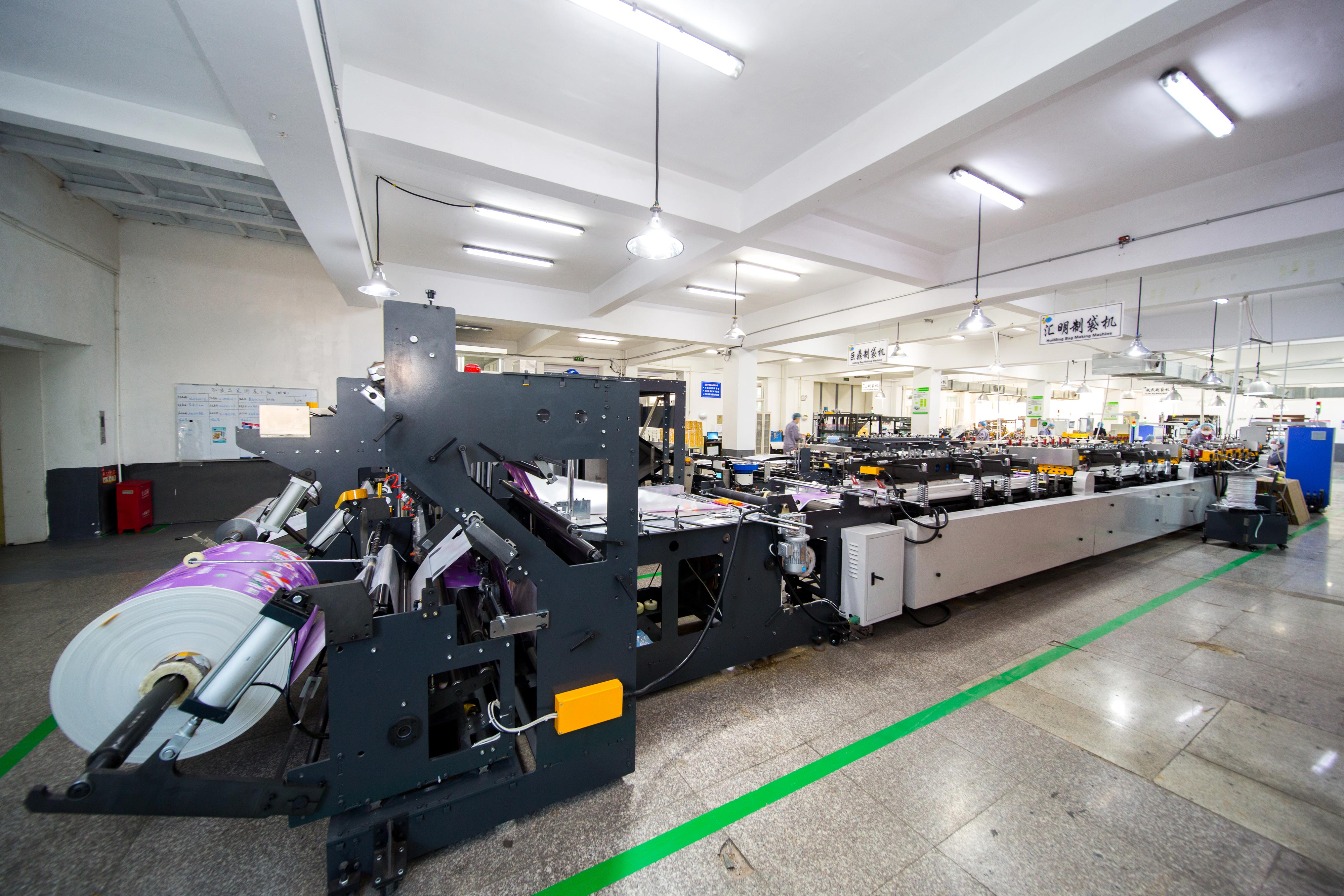
First decide what “empty tea bag” means for your product
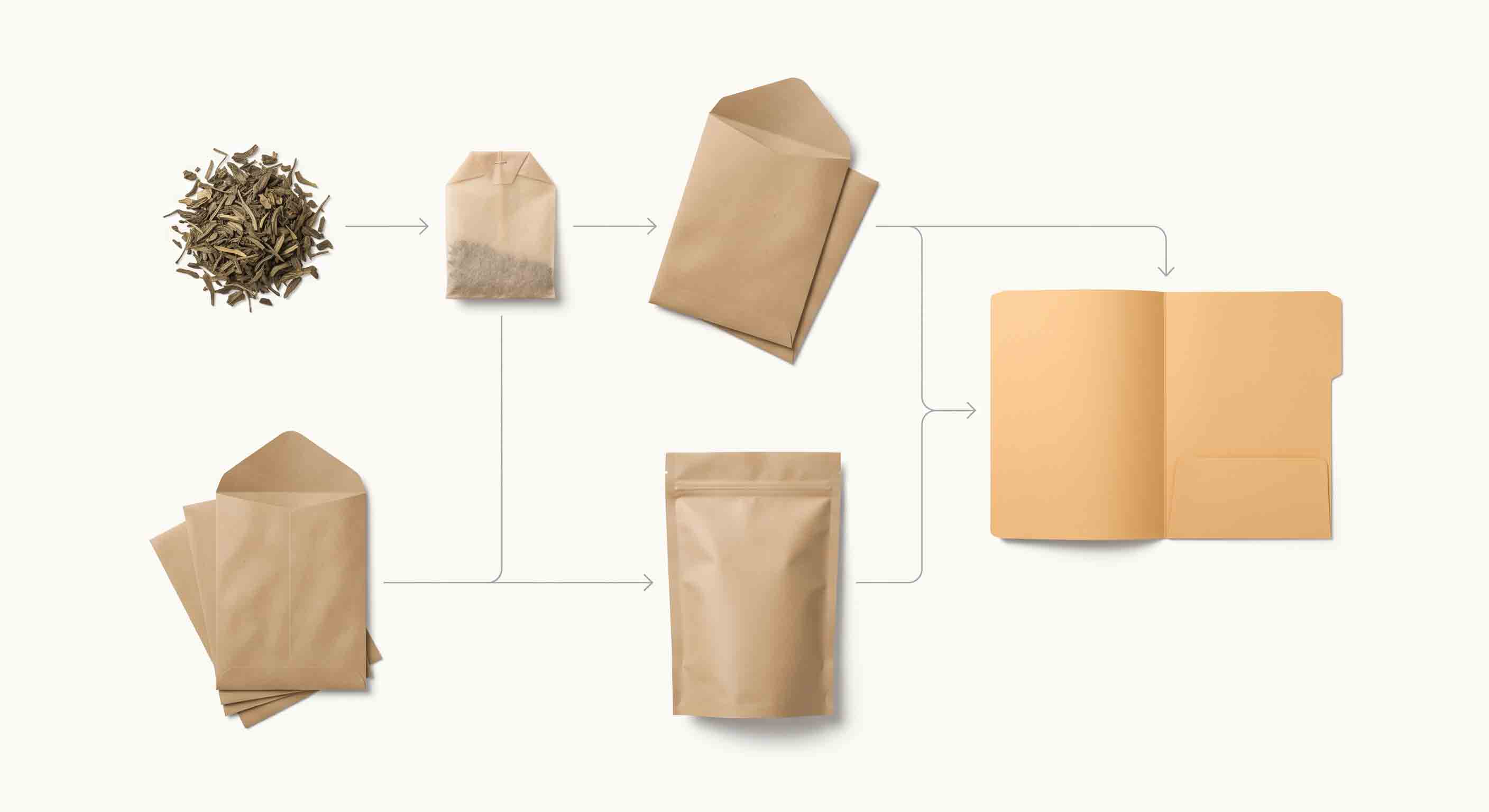
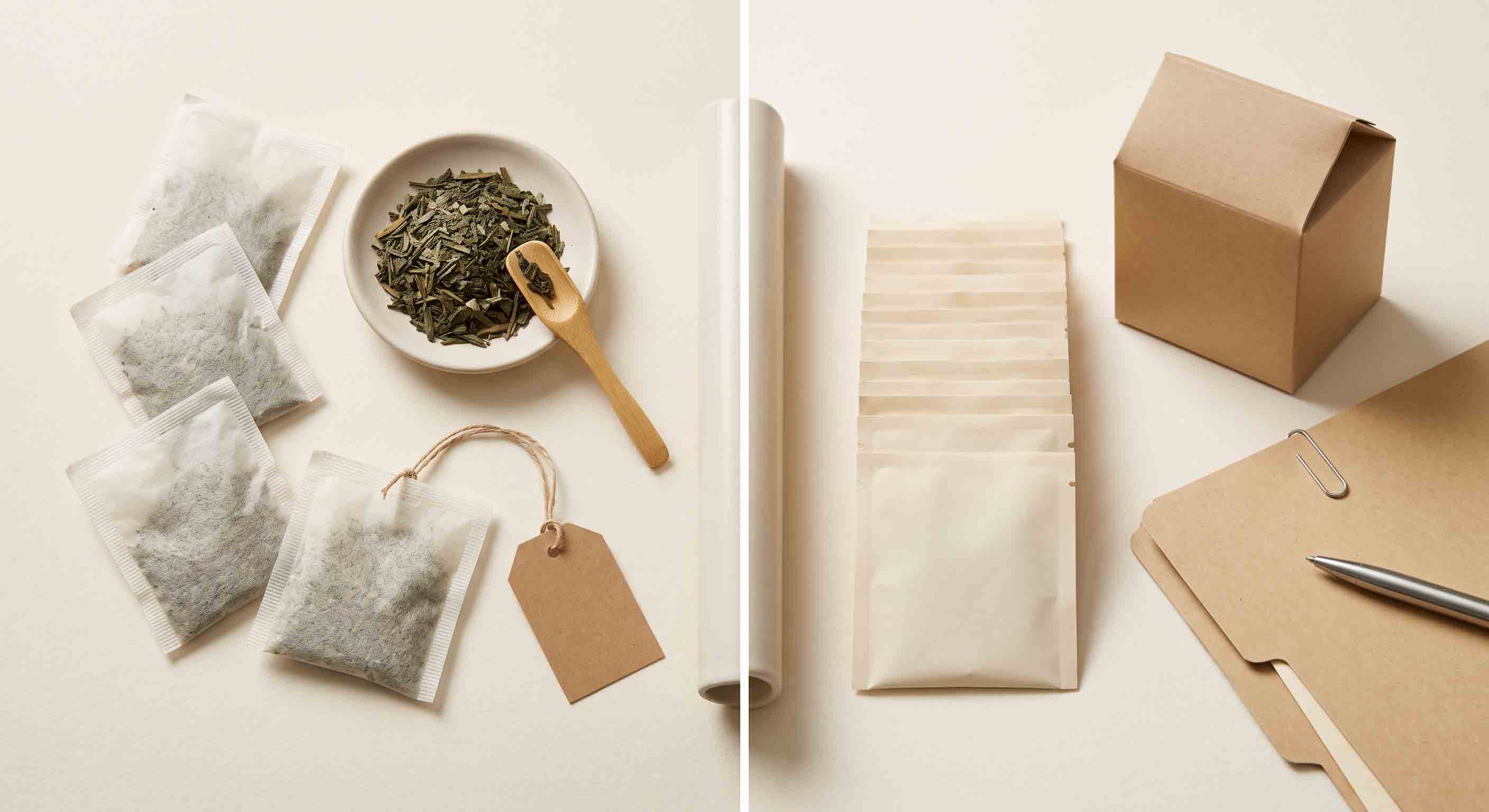
The term can refer to very different things:
- an unprinted flat filter bag for a small home or trial batch;
- a string-and-tag bag supplied ready for filling;
- a pyramid or shaped sachet for a premium whole-leaf product;
- a pre-made outer envelope that will hold one tea bag;
- rollstock or filter material for a compatible packing line;
- an outer retail pouch or carton for loose tea or a multi-pack of tea bags.
Buying the wrong category is easy when a search result groups all of these under “tea bags.” Start by writing a one-line product definition: “We need ___ empty units for ___ tea, filled by ___, sold as ___ in ___ market.” That definition tells a supplier which questions matter and filters out irrelevant stock products.
Retail stock bags versus wholesale project sourcing
Retail stock bags are useful when a team needs a small amount quickly for recipe trials, market research, samples, or early hand-filled prototypes. They are usually selected from existing sizes and formats, so the buyer has limited control over dimensions, materials, finishing, outer pack design, and supply continuity.
Wholesale sourcing becomes more relevant when the brand needs repeat orders, a specified format, a tighter fit to the tea product, a coordinated outer pack, or project documentation. It takes more planning because the buyer must define what is needed before a supplier can quote accurately. The benefit is not a promise of a lower price; it is a more controlled conversation about the finished product.
The right choice can change as a brand grows. A product-development team may use stock bags for trials and later move to a project-specific pack once the tea, fill, artwork, and sales channel are stable.
Create a buying brief before you compare suppliers
An empty-tea-bag request becomes much easier to quote when it includes the following information.
Product and fill information
Explain what will go inside the bag. Include tea type, leaf cut, herbs or inclusions, target fill, and whether the tea expands significantly when brewed. If the fill weight is not final, send a representative sample or a planned range. The supplier cannot assess bag volume from a product name alone.
Format and consumer experience
State whether you need a flat bag, a larger sachet, a string-and-tag format, a tagless format, an individual envelope, or a loose-leaf outer pouch. Add the expected consumer use: cup, pot, travel service, hospitality, retail box, or bulk brewing.
Filling and sealing method
Tell the supplier how the unit will be filled and sealed. A manual trial, a co-packer, and an automated line may require different details. If you do not yet know, say so. It is better to request evaluation than to imply that a bag will work on equipment that has not been tested.
Market and documentation
Name the destination market, any retailer requirements, and the documents your responsible team must review. Food-contact requirements and environmental claims are scope-specific. A generic “food grade” or “compostable” description is not a substitute for current evidence covering the exact material and use.
Artwork and outer packaging
If the project includes printed envelopes, cartons, or pouches, describe the artwork status and languages. Include whether you need a dieline, code area, finishing options, or a related loose-leaf tea pack. A tea-bag project can fail operationally when the inner bag and outer pack are sourced separately without matching pack count, dimensions, and handling steps.
Ask about materials in a verifiable way
Material questions are important, but the wording matters. Instead of asking “Is it safe?” or “Is it plastic-free?” in the abstract, ask for the exact material identification, the intended use, relevant documentation, sealing method, and claim limitations. This helps separate evidence from generic marketing language.
For a U.S.-facing project, FDA describes food-contact substances as including packaging and its components. The relevant review depends on the component and intended use. If your project will make environmental claims, ask how the claim applies to the complete unit, including attachments, coatings, and outer packaging. The FTC’s Green Guides emphasize substantiation and qualification of environmental marketing claims.
Useful supplier questions include:
- What is the complete material description for the bag and any sealing component?
- Which documentation is available for the intended market and food-contact conditions?
- Is the unit supplied pre-sealed, or does the buyer need compatible sealing equipment?
- What evidence supports any recyclable, compostable, recycled-content, or other environmental claim?
- Which claim limitations should appear in artwork or sales copy?
- Can the supplier provide a current sample and identify the specific lot or structure being sampled?
Sample before you commit to a production format
An empty bag can look suitable while still being wrong for the actual tea. Test the product with the final or representative blend. Check the fill volume, the room left at the seal area, how the tea moves inside the bag, the consumer’s ability to open the package, and the brew experience where relevant.
For a coordinated retail project, test the inner bag together with the envelope, carton, or pouch. A pack count that works in a spreadsheet may not fit the outer pack naturally. A tea bag may be easy to fill but difficult to load into the final retail box. Treat the sample review as a project gate, not a formality.
Compare quotations on scope, not only unit price
A quote should be compared item by item. One supplier may quote only empty bags. Another may include strings, tags, outer envelopes, printing, cartons, or secondary packing. One material request may require a different process than another. A low number cannot be compared fairly if the pack scope, documentation, finishing, destination, and quality expectations differ.
Build a comparison sheet with these columns:
This protects a brand from choosing a supplier based on an incomplete comparison. It also gives the supplier a clearer route to provide a useful quotation.
Coordinate the tea bag with the retail pack
Many tea brands require more than an empty filter bag. They need a visual retail pack for loose tea, a multi-pack, or a set of individually handled portions. The inner-bag purchase should therefore be coordinated with the outer packaging decision.
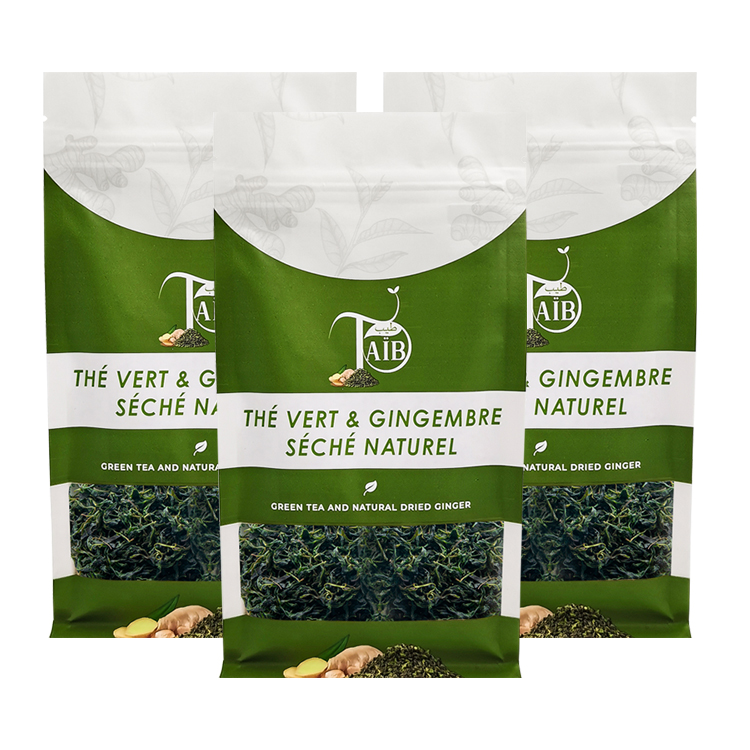
For example, a tea brand may evaluate an inner bag and individual envelope for hospitality use, while a separate loose-leaf range may need a printed retail pouch. The two ranges can share brand language while using different physical formats. The important part is that each product has a clear specification and that no performance or sustainability claim is copied from one structure to another without evidence.
If you are defining the full product system, custom tea packaging options can be discussed with the tea category, fill target, sales channel, artwork status, and packaging requirements in one brief.
A wholesale sourcing checklist for first enquiries
Send this information in the first message:
- Tea category and a sample or target fill.
- Required unit: flat bag, sachet, tag-and-string bag, envelope, pouch, carton, or combined system.
- Proposed dimensions, if known, and whether they are still to be validated.
- Filling method and expected production stage.
- Target market and documentation requirements.
- Artwork status, number of SKUs, languages, and code area needs.
- Expected quantity range and planned launch timing.
- Delivery destination and any shipping requirements.
- The questions the team needs answered before approval.
This approach gives a supplier enough context to explain what is possible, what needs a sample, and what cannot yet be promised. It is much more useful than asking only for a “best price.”
Separate a prototype purchase from a commercial supply decision
It is normal for a new tea brand to buy small quantities of stock bags to learn about product fill, brewing, and visual presentation. That initial purchase is a prototype activity. It should not quietly become the specification for a commercial launch unless the team has checked whether the format, documents, artwork, supply continuity, and packing process still fit the final product.
A useful transition checklist is:
This does not require every startup to begin with a complex custom program. It asks the team to recognize the moment when a prototype becomes a retail product and to perform the extra checks that moment requires.
Watch for unanswered questions, not just obvious red flags
Supplier selection is not only about finding a company that sounds credible. It is about getting clear answers to the project’s specific questions. An unanswered question can become more important than a polished catalogue image.
Pause and clarify if a quotation or conversation leaves any of these points unclear:
- whether the price covers the bag alone or also string, tag, envelope, carton, printing, setup, samples, or shipping;
- whether the dimensions describe an empty outline, a finished bag, a usable fill area, or a carton;
- whether a material statement applies to the exact current item or only to a general product range;
- whether a claimed format has been reviewed with the buyer’s actual tea and fill method;
- whether the supplier has supplied a current dieline and an approval process for artwork;
- whether a claim about recycling, composting, food contact, or shelf life is backed by current evidence for the final configuration;
- whether there is an identified owner for quantity/count checks, coding, packing, and change notifications;
- whether the destination, incoterm, duties, and delivery assumptions are specified rather than implied.
Do not treat a supplier’s inability to answer every question immediately as proof of a problem. Some answers need a sample, a material-data review, or a production discussion. The important thing is to label those answers as pending instead of filling the gap with a guess.
Use a sample scorecard before approving a sourcing route
When two or more sourcing options are viable, score the actual samples against the requirements you defined in the brief. The scorecard should record observations rather than a subjective “looks premium” decision alone.
Keep the scorecard with photos and the final sample identification. It records why the format was selected and supports later project reviews or repeat orders; it does not guarantee that future production will be identical.
Turn the supplier reply into an approval plan
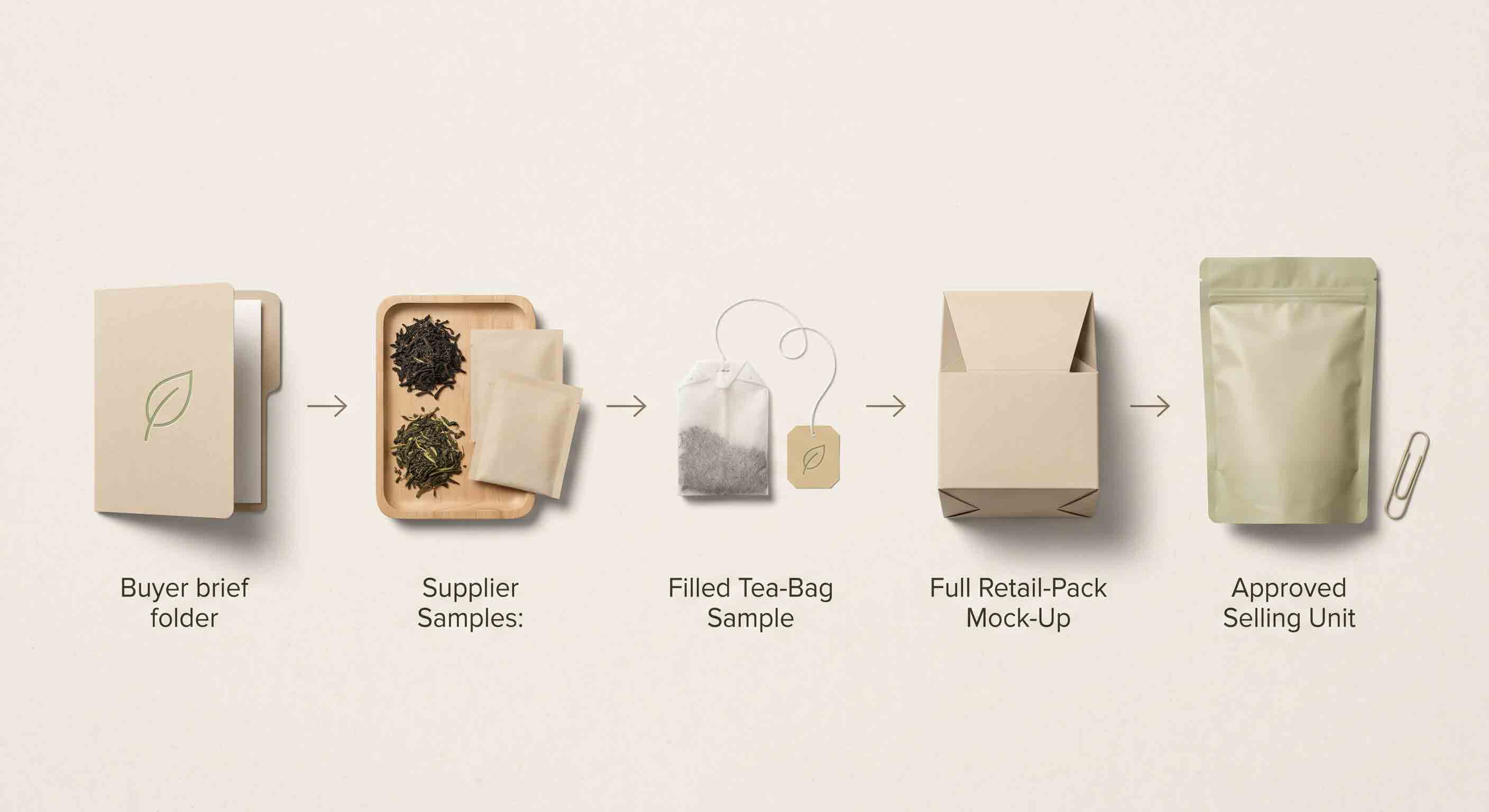
After receiving quotations and samples, do not jump directly to a purchase order. Convert the reply into an approval plan. List the questions that are confirmed, the questions that need a physical trial, the documents still required, the artwork files to be approved, and the person responsible for each action. This plan can be short, but it turns sourcing from a collection of emails into a controlled project.
For a custom tea packaging project, the final plan should result in one clear selling unit: the correct tea in the correct inner bag or pouch, with the correct outer pack, final artwork, intended market review, and recorded sample. If the components come from different suppliers, the plan should also identify the handoffs so no one assumes another party has verified the count or fit.
Frequently asked questions
Can I buy empty tea bags wholesale for a small brand?
Yes, but the suitable buying route depends on whether you need stock bags for trials or a project-specific format. Define the tea, fill, format, market, and expected quantity before comparing suppliers.
What should I ask for when buying empty tea bags?
Ask for the exact material description, dimensions, bag format, sealing method, sample availability, relevant documentation, pack count, artwork options, delivery scope, and the limitations of any environmental claim.
Do I need a supplier that makes both tea bags and outer pouches?
Not always. However, the inner tea bag and outer pack should be coordinated so that dimensions, pack count, artwork, filling steps, and documentation are compatible. A single project brief makes this easier even when more than one supplier is involved.
Are all empty tea bags suitable for every tea?
No. Tea cut, fill volume, brewing use, filling method, and target packaging system can change the appropriate format. Test the actual tea in a sample before committing to a production specification.
Should I select a supplier based on lowest price?
Compare the full scope first. A lower unit price may refer to a different material, pack count, sample process, documentation level, artwork scope, or delivery arrangement. Use a written comparison sheet.