
You can buy empty nut packaging bags from stock-pouch sellers, local packaging distributors, custom pouch manufacturers, or a co-packer that sources the bags as part of a filling job. Choose the route by what you need to approve: a small quantity of ready-made empty bags, a repeatable unprinted supply, a printed pouch built to your specification, or a finished packed product. Before any bulk purchase, fill and seal samples with the actual nuts and compare quotes on the same bag, quantity and delivery basis.
This guide is for brands, roasters, farms, snack companies and procurement teams buying empty bags for dry peanuts, tree nuts, seeds or dry mixes. “Peanut bags” can also mean paper concession bags for serving peanuts, or ready-to-eat peanut products already packed for resale. Those are different purchases. We focus on empty retail or food-service packaging that your operation, or your contracted packer, will fill. Wet boiled peanuts need their own processing and packaging specification.
If you already know you need printed flexible pouches, browse Mylarbag's nuts packaging formats as one manufacturer's project examples. If your specifications are still open, begin with the comparison below. A supplier page can show possible formats; it cannot decide your filled size, food-contact conditions, label or shelf-life claim from a photograph.
First identify what “buy nut bags” means for this order
A useful inquiry starts with the commercial unit. Are you buying a few hundred empty pouches to test a farmers-market launch, cases of unprinted bags for a stable food-service operation, a printed retail run with several flavors, or a packed and labeled finished product? The seller that is best for one job may not offer the other three.
Separate the food from the packaging on your purchase order. A company that sells five-pound bags of roasted peanuts is a nut wholesaler; it may not sell empty peanut bags. A promotional-products company might sell branded nut gift packs that already contain food. A packaging manufacturer sells the bag, often to a specification, but normally does not roast, fill or label the nuts. A co-packer may buy packaging and fill food under an agreed scope, but responsibility for choosing and approving the pouch must still be explicit. Asking “Who makes nut packaging?” without stating which of those jobs you want invites the wrong quotations.
For a small mixed-nut trial, a stock bag can be the quickest way to learn whether the portion fits and whether customers can use the opening. That trial does not commit the brand to the same pouch for its final printed launch. For a repeat retail program, request a controlled drawing, finished material construction, print proof and sample approval path. For an automated packing line, ask who owns the equipment trial and whether the offer is for premade pouches or rollstock. Those choices affect the buying route before they affect the graphic design.
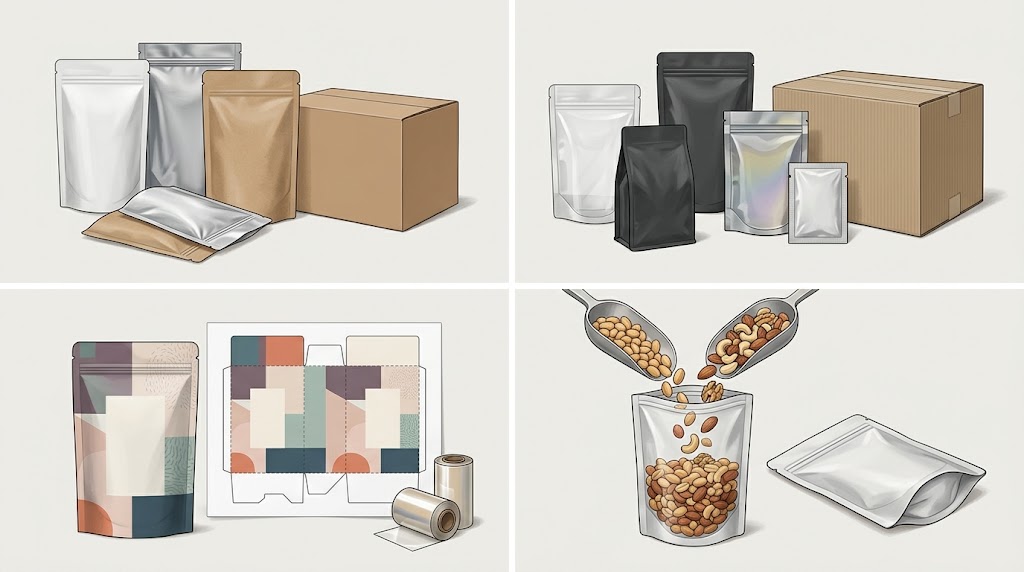
Four places to source empty nut packaging bags
Stock bag sellers: useful when the specification can stay simple
Online stock-pouch shops and local packaging stores commonly show the color, footprint, zipper and case count before you request a quotation. That makes them useful for physical mock-ups, a limited launch or urgent replenishment. Buy a small sample quantity first and check what is actually on the shelf. Search results for “where to buy small bags for mixed nuts” often mix food-service paper bags, gift bags and barrier pouches. Filter by the intended food, filling and closure method, rather than choosing the smallest-looking bag in the results.
Ask whether the item is in stock now, whether the quoted pack count is per case or per bundle, and whether future lots will use the same construction. Request the actual width, height and gusset dimensions, including where the zipper and final heat seal sit. If the listing says “8 oz,” ask whether that is a measured fill for your nut blend or merely a seller's category name. A stock pouch may be perfectly adequate for an early trial, but it still needs food-contact documentation appropriate to its intended use and a real fill-and-seal check.
An unprinted stock pouch plus a label can be a practical short-run route. Leave enough flat, readable area for the brand's approved information, and examine how the label holds on the filled bag and in the carton. A label applied over a fold, window, zipper or tear area may look fine on an empty mock-up yet fail in use. If several flavors use the same base bag, make the variant and lot identification unmistakable through packing and distribution. Those are operational checks, not reasons to claim that every startup needs custom print immediately.
Distributors: ask who controls the finished specification
A packaging distributor may carry several bag makers, keep local inventory and help buyers consolidate purchases. That can be valuable if you buy cartons, labels and pouches on the same schedule or need a nearby source for a tested stock SKU. “Wholesale” on a listing does not tell you whether the seller owns a factory, converts the film, buys finished bags from another company, or merely resells a particular stock line.
Request the converter or manufacturer identity where it is relevant to traceability, the current material specification, the producer's lot code and the process for reporting a defective lot. Ask who can approve a drawing or material change, who supplies the food-contact documentation, and who is accountable if the next shipment is a visually similar substitute. You may decide that a distributor is the best buying route; the point is to know where the technical answer comes from.
For a repeated unprinted order, compare a local distributor's available stock against a direct factory's custom production only after you have a common specification. A locally held case of bags can save time on an immediate gap. It can also have a higher unit price or a narrower choice of window, zipper and construction. A custom factory may offer more control over the finished design but needs sampling and production planning. Those are differences to quote, not a universal ranking of suppliers.
Manufacturers and converters: use them when the bag itself is a project
If you need printed artwork, a particular window placement, a different sealant, a specific filling opening or the same pack across several nut flavors, contact a flexible-packaging manufacturer. This is the relevant route for “where to get custom nut packaging” and “where to buy custom peanut bags in bulk.” Share your proposed bag drawing or existing sample and tell the supplier which details are fixed. An experienced converter should be able to discuss the material sequence, film and print direction, zipper or notch location, tolerances that matter to your equipment, and the proof-to-sample approval path.
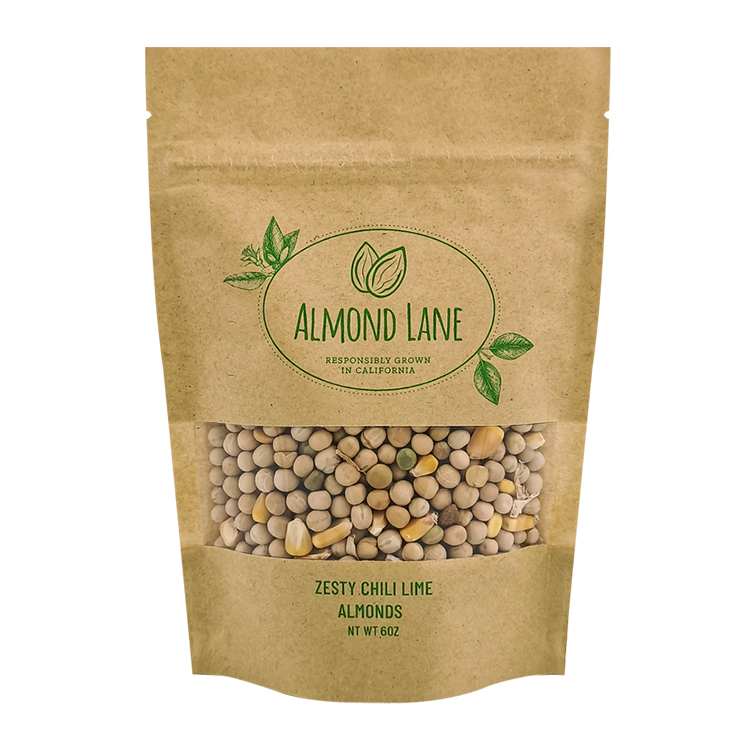
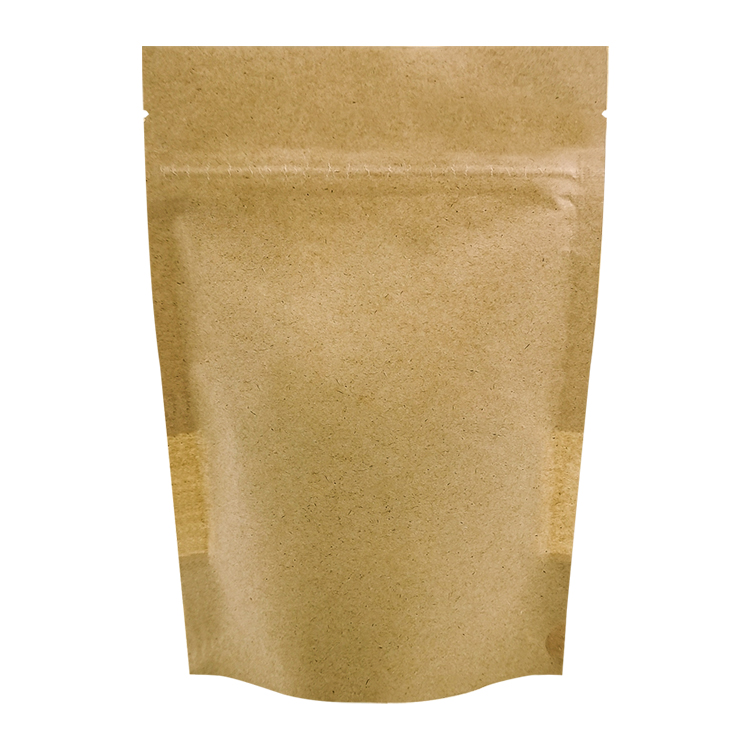
The published US nuts-and-seeds stand-up pouch project records a kraft paper/PET/PE structure, digital printing, a horizontal window and a listed 14 × 20 + 4 cm format for a 6 oz application. It shows the kind of fields a custom-pouch brief can specify. The photograph and listed dimensions are evidence of that project, not a general capacity chart for every peanut, pecan or mixed-nut recipe. Ask for samples and verify your own fill before copying any nominal weight.
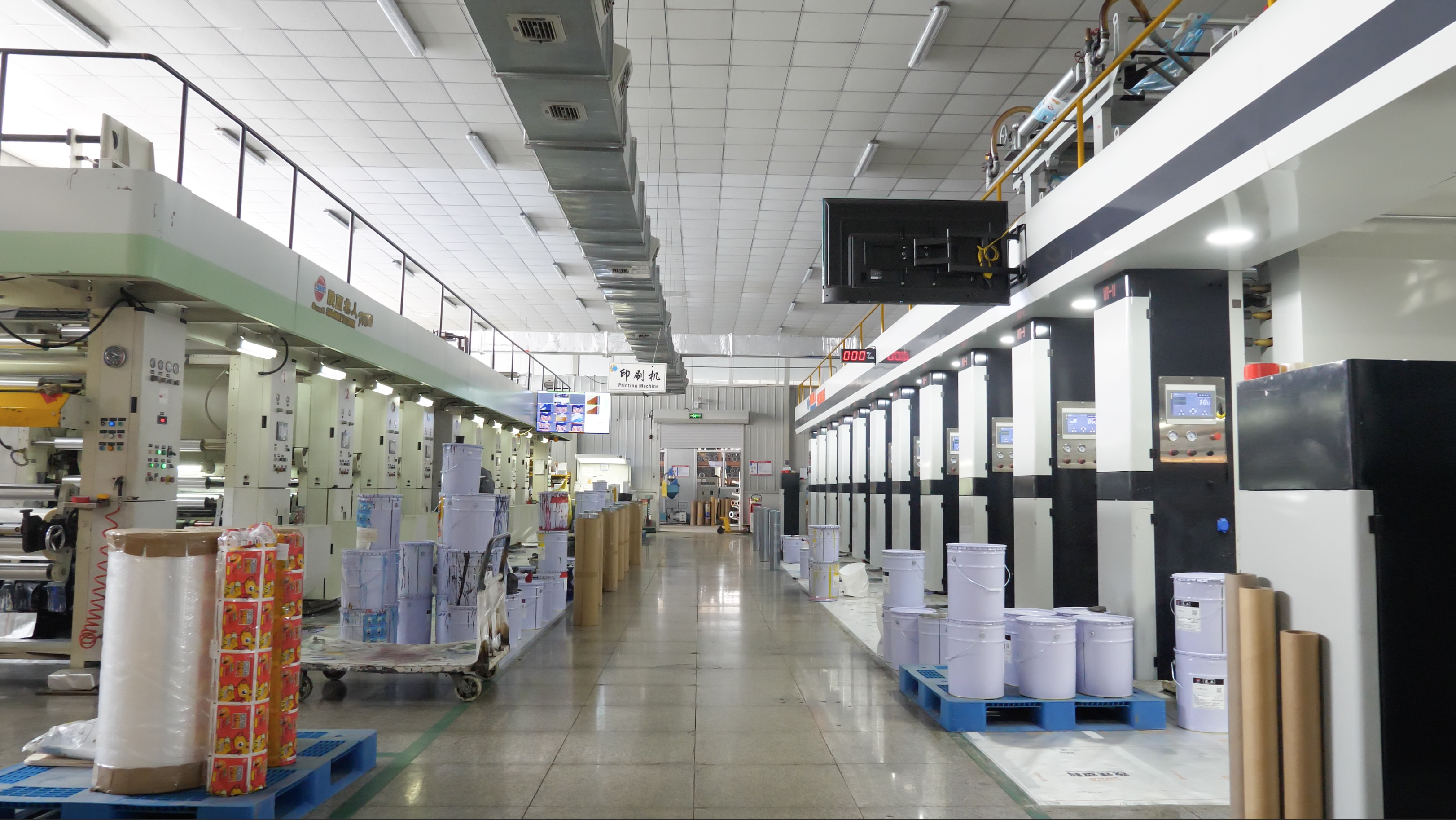
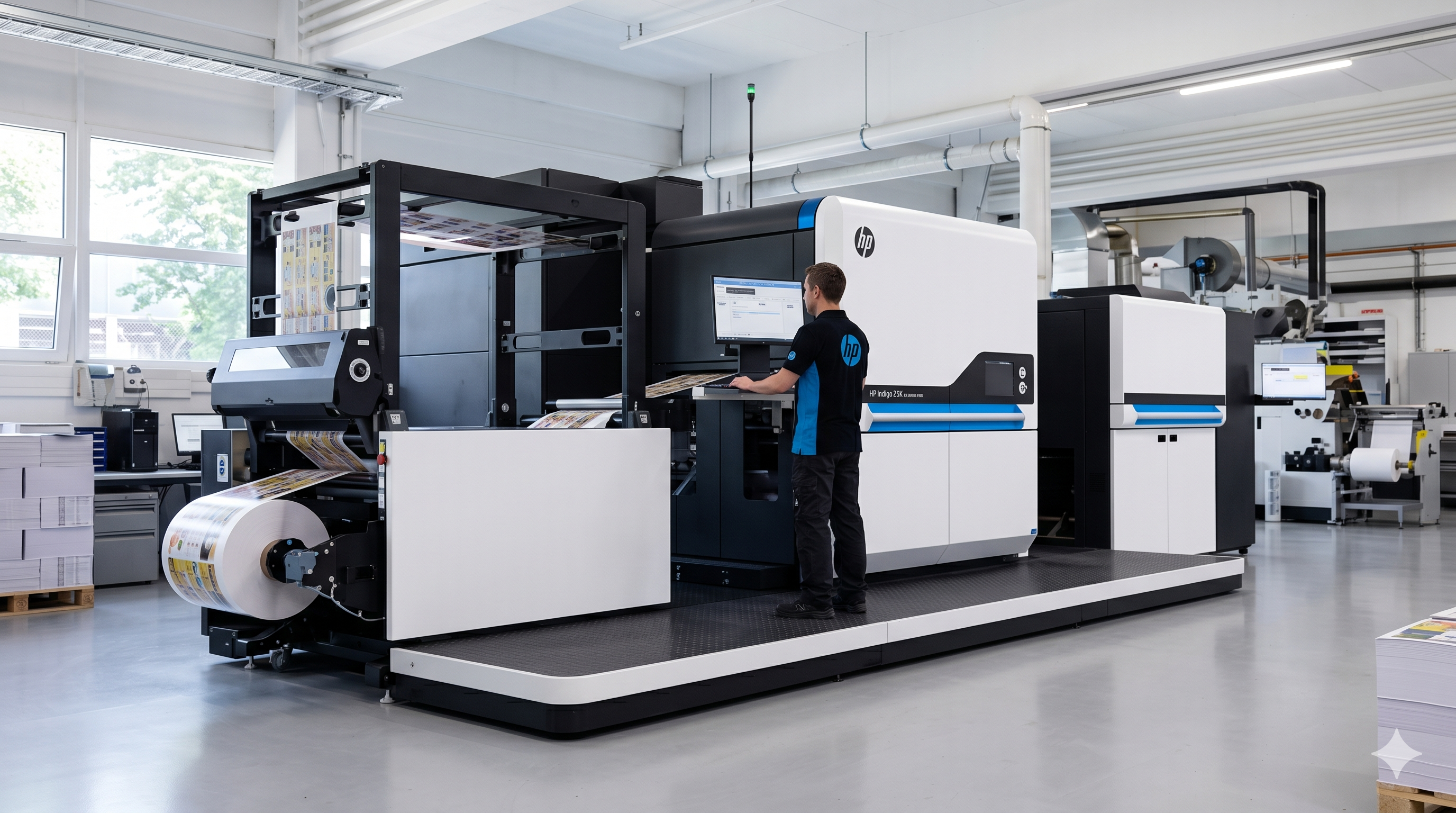
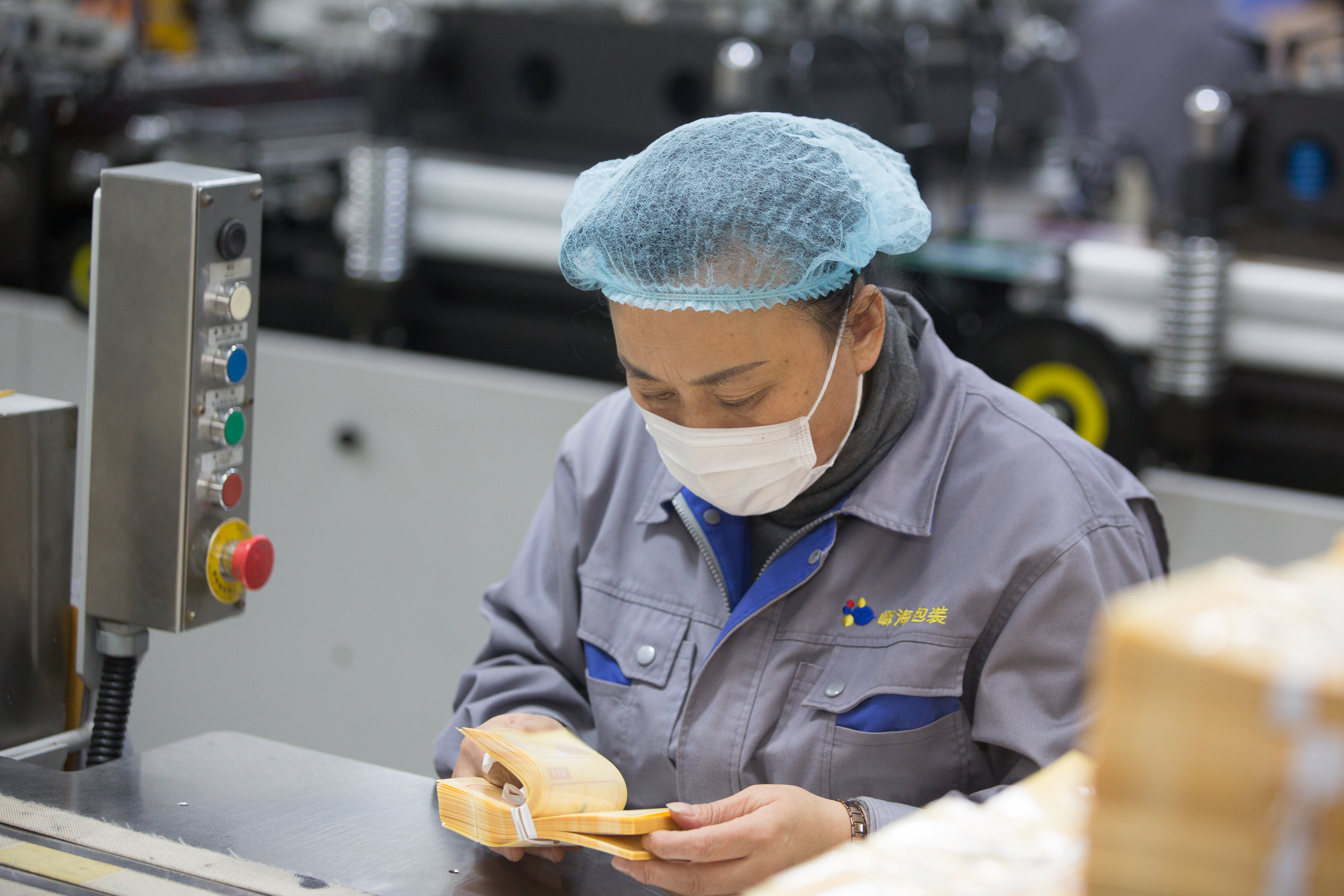
A factory photograph can demonstrate production context, while the actual order still needs a signed-off specification and proof. Mylarbag's digital-printing page describes one print route; decide between digital and another print method using the number of designs, quantities, visual requirements and quoted setup for this project. Do not assume “digital” means any quantity is economical or that a multi-SKU order has one fixed minimum. Ask the vendor to quote the proposed split by design.
Co-packers: buy a filled result with packaging responsibilities defined
If your team cannot or does not want to fill and seal nuts, a co-packer can quote a finished packing operation. Ask whether the co-packer supplies the empty bag, allows you to nominate a bag supplier, or requires a particular equipment-compatible specification. The party placing the packaging order may differ from the party approving food-contact information, artwork, label content, line setup and finished-product release. Name each responsibility before quoting.
Compare the co-packer's minimum run and changeover cost by flavor with the pouch supplier's order quantity by printed design. A low minimum for bags does not create a low minimum for the filling line, and a co-packer willing to run a stock bag may still reject a custom pouch that will not open, fill or seal reliably on its equipment. Request a joint sample trial if the fill method is new to either side. For nuts with loose salt, sugar coating or fragments, observe whether product enters the top seal area during the actual filling step.
“Nut bags near me”: compare geography with the order you need
If you search “where to buy nut bags near me,” the nearest result may be a packaging store, a distributor's warehouse, a printer, a confectionery supplier, a nut wholesaler or a co-packer. The search phrase locates businesses, but it does not establish which one makes the empty pouch. Call or email with a five-line brief: dry product type, target net weight, intended bag format, quantity and whether the bags must be plain or printed. Ask whether you can pick up sample pouches and whether the same construction can be reordered.
A local source has a clear advantage when you must hold the physical stock this week, inspect cases in person or solve a small replenishment gap. For a printed run, the deciding questions may instead be who owns the specification, how samples will be approved, and the landed cost and date to your receiving address. A supplier can be based overseas and still quote delivery to your door; that is not the same as a domestic factory, and the commercial terms must be written down. Mylarbag's nuts page describes direct manufacturing in China and a DDP option. Treat that as an option to request for an eligible destination, not a promise that all destinations, duties or schedules are identical.
Compare suppliers at the point where your staff receives usable bags. For one supplier, the quote may stop at the factory gate; another may include freight, duties and local delivery. A third may hold stock nearby but charge for labels or a second handling step. Record the delivery rule, named destination, what the seller pays, who handles import formalities where relevant, and what happens if inspection or documentation delays the goods. The International Chamber of Commerce explains DDP as a specific delivery rule with obligations at a named place. Have the parties confirm the actual commercial terms for your shipment; “DDP” on a marketing page is too broad to settle those details for your order.
The table is a request for comparable information, not a claim that any route is automatically faster or cheaper. When comparing prices, calculate landed cost per accepted empty bag: total purchase, setup, packaging and delivery charges divided by the count of usable bags received. Keep the reject or damage assumption visible rather than hiding it in the nominal unit quote. Do not treat a co-packer's price per filled unit as though it were a price per empty bag.
Build one brief before asking for wholesale quotations
The strongest first message describes the actual nut and packing line, not just the brand colors. Start with dry roasted peanuts, salted cashews, pecan halves or a specified mix. Note any coating, shell fragments, small pieces or dust that could affect filling and sealing. Give the target net weight, the number of flavors and the approximate first run and annual demand separately. If you are still estimating quantities, mark them as estimates and ask how the price changes by tier.
Send a current bag sample or a drawing if you have one. State width, height, bottom gusset or side gusset, any preferred window, zipper, tear notch, hanging hole or handle, and where the initial seal must land. Tell the supplier whether you fill a premade pouch by hand, on a semi-automatic line, or from rollstock on a form-fill-seal machine. Include any maximum machine width or required registration mark if your line engineer knows it. If those details are unknown, ask for a few appropriate samples and plan a fill trial before locking a dimension.
Request a finished construction, not a material buzzword. “Kraft,” “foil” and “Mylar” can refer to appearance or one layer rather than the entire pouch. Ask for the layer sequence and contact-side material, the window and zipper construction if used, and available test data with the conditions that produced it. For food sold in the US, the FDA explains that food packaging and its components may be food-contact substances. Ask for documentation relevant to the proposed finished pack and intended use; a broad “FDA-approved bag” label or a material sheet for a different laminate is not the approval you need. The brand remains responsible for the food and its market-specific label.
The inquiry also needs artwork status. “Custom” can mean only a printed surface, or it can mean a different pouch width, gusset, closure and material. Send the number of front/back designs, whether the back changes by flavor, available files and the date by which someone on your team can approve the proof. If no art is ready, ask for the die line and an unprinted sample first. Approving a digital mock-up without seeing the actual filled pouch leaves the physical risks unresolved.
Test samples as a buyer, not as a collector of pretty empty bags
Ask for samples that answer a question. A stock sample can show the real opening, tactile feel, gusset and zipper. A similar-material sample can help narrow a construction, but it is not proof that the final printed order has identical dimensions, film or seal behavior. A custom proof may show color and placement; it is not an acceptance record for food packaging until you check the actual finished and filled version. Write down which stage each sample represents.
Fill the pouch with the real nut SKU, not beads or a different food. Try the densest and bulkiest variants if the same bag will cover a range. Check the settled appearance, bag stability, print panel, opening and product height. Seal it with the intended equipment and settings. Look for salt, sugar, oil or nut fragments near the seam and confirm that the food stays below the clean closing area. If you plan a zipper, distinguish the consumer's reclosure from the initial factory heat seal. A zipper that clicks together on an empty sample does not establish the integrity of the first seal.
Put filled samples into the real shipping case. Examine how they stack, where corners rub, whether the window and printed surface scuff, and whether the top closure meets an adjacent bag. Record the sample code, exact construction, dimensions, artwork version, nut lot and test conditions. Retain a good sample and document what would cause a rejection. If a later production lot differs, you will have an agreed reference rather than a vague memory of “the bag we liked.”
Some buyers need a fast “yes or no” on a small peanut bag. In that case, a stock pouch can be the test vehicle. Others need repeatable custom printing for retail shelves. Then use stock or similar-material samples to shorten the option list, followed by an approved final pouch sample. Ask the supplier what changes between the free sample, custom proof and mass production. An answer that names no material version, die line or proof approval step is a reason to slow the order down.
Real projects: what a supplier's gallery can and cannot establish
Case photos are useful for discussing format and finish, but they are not substitute purchasing specifications. Mylarbag's published US 6 oz nuts-and-seeds project lists a brown kraft-look stand-up pouch, a horizontal window, digital printing and kraft paper/PET/PE. Its image shows a possible retail presentation; the recorded 14 × 20 + 4 cm dimension belongs to that project. If your product is broken peanut pieces rather than nuts and seeds, you still need to trial your own actual fill and top closure.
The published Puerto Rico candied-nut and snack pouch is another example of a printed, windowed stand-up format. The Mylarbag nuts landing page lists digital printing and a kraft paper/PET/CPP structure for this record. The product title says “2 oz/60 g,” which are not an exact conversion; do not copy both values to your own net-weight artwork without checking the intended declaration. Its candy coating also means it should not be presented as proof of how an uncoated raw nut SKU will fill or store.
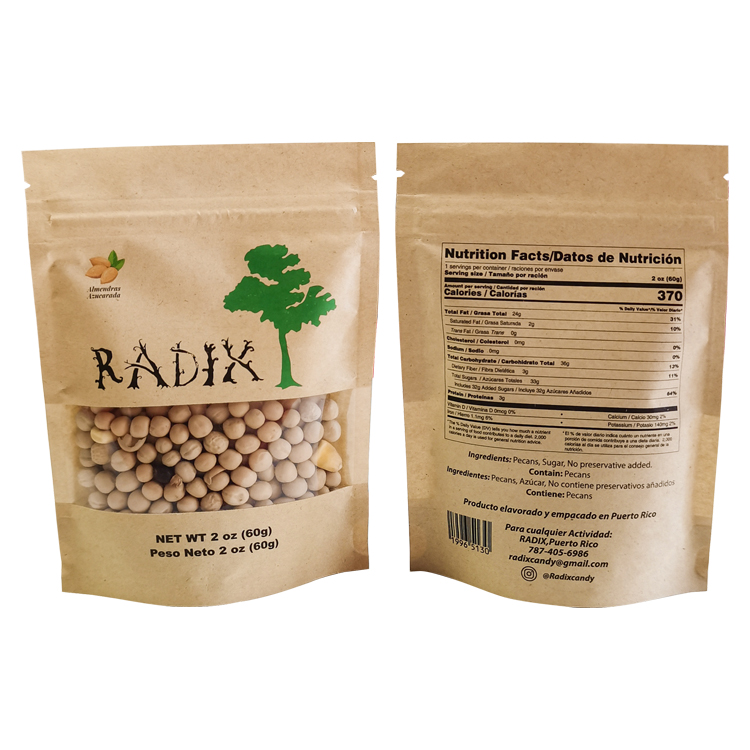
The two projects illustrate different briefs, not a ready-made product catalog with universally suitable capacities. Ask the supplier which elements can be reused, which require a new drawing or material review, and how the pricing changes. Photos can help you point to the desired window position or look. They cannot prove what a particular food-contact layer, seal test, residual oxygen level or shelf life would be for the bag you will buy.
Approve the complete quote, including who owns changes
Before placing an order, line up the quotation, drawing, material specification, artwork proof, sample reference and delivery terms. Confirm the quantity per SKU, whether overrun or underrun is allowed, carton counts, printing setup, sample charges and the acceptance method for a changed design. Ask what happens if you change the nutrition panel, allergen statement, net weight or flavor name after proof approval. A small text change can trigger a new proof, plate or production schedule; avoid assuming it is free or invisible.
For recurring programs, ask how repeat orders will identify the approved material and artwork versions. Who sends a change notice if a film, adhesive, zipper or window material changes? Who keeps the retained samples? Does the quote include preproduction proof review, and who signs it? A claim that the same pouch can be reordered next year is more useful when both parties can name the build that “same” means.
If ordering from abroad, separate production lead time from transit and receipt. Holidays, artwork delays, testing, customs and local delivery can change the calendar. A purchase order should state the destination and delivery basis and who handles shipping documents and import steps. Do not use a general website delivery claim as the dated promise for your specific order. For a domestic stock order, confirm that the quoted quantity is actually reserved and that a substitution is not automatic. Either route can fail when these details are left out.
The final approval is physical: a filled sample sealed on the intended line, with the finished appearance and shipping configuration accepted by the food brand and packing team. For a printed product, keep the approved print proof and the filled sample together. If the pouch design changes, repeat the relevant checks. This is procurement discipline, not a requirement to have every question solved before contacting a supplier. Send what you know, list what is still open, and ask the seller to quote the next meaningful sample stage.
Recommended packaging configuration for a wholesale nut-bag inquiry
For a dry, multi-use retail nut SKU, request a sampled stand-up pouch with a defined initial heat seal and, only if the user will reopen it, a zipper option. Give the supplier the real product, target net weight, current bag if available and intended filling equipment. Compare a windowed and an opaque construction if product visibility matters, while asking for the complete finished structure and test information for each candidate. The stand-up pouch format is a starting geometry, not an approved size or performance claim.
For a small single-serving mixed-nut pack, ask to sample a flat pouch and verify the opening, fill and heat seal before adding a zipper. For a larger service or replenishment unit, discuss a gusseted format and the case handling. These are three inquiry directions, not one best bag for all nuts. The supplier can quote candidate constructions; your team and co-packer must confirm the actual food, equipment, label and distribution requirements.
To start a custom quotation, send your brief to Mylarbag's nuts packaging team or the contact page. State whether you need stock-like samples, custom empty pouches, or a co-packer-compatible structure; give the destination, first and repeat quantities, artwork status and your open questions. Ask for the next sample and documentation step. You should be able to compare a response to a local stock or distributor offer on the same receiving basis without pretending that every quote buys the same thing.
Frequently asked questions
Where can I buy empty peanut bags in bulk?
For standard plain bags, ask a stock-pouch wholesaler or packaging distributor for case quantities and an exact material specification. For printed bags, custom dimensions or repeatable multi-SKU supply, request a project quote from a pouch manufacturer or converter. State that you want empty bags; food wholesalers and gift-pack companies may sell filled peanuts instead. Test samples with the actual peanuts before a bulk order.
Who makes nut packaging: the printer, distributor or co-packer?
The finished empty pouch is typically made by a flexible-packaging converter, which may also print it or buy printed film. A distributor may sell that converter's stock or coordinate an order. A co-packer fills nuts and may source the pouch. Ask each seller who makes the finished bag, who owns its drawing and material version, and who is responsible for defects or changes. The answer depends on the commercial arrangement, not the word “supplier.”
Can I find nut packaging bags near me?
Often you can find a local stock seller or distributor and collect samples quickly. Verify that the business sells empty food packaging rather than filled nut products, and check available inventory against the exact pouch you need. A nearby warehouse is helpful for an immediate stock purchase; it does not necessarily provide custom printing or control over the pouch construction. Compare a custom factory's delivered quote on the same receiving and approval terms.
Where should I buy small bags for mixed nuts?
If the volume is small or your recipe is still changing, buy a limited quantity of sample-sized stock pouches, then fill them with the actual mix. Whole cashews, almonds and broken pieces can settle differently; a bag described by a nominal weight is not a capacity guarantee. For a repeat printed line, use the selected fill trial to request a custom drawing and proof. Record the filled and settled heights before committing to a production dimension.
Is an empty nut pouch with a zipper ready to sell once I add a label?
No. Check the intended food-contact use, actual filled appearance, approved market label, initial heat seal, zipper position and carton handling. The zipper is for reclosure after opening; it does not by itself prove that the first seal was made correctly. The food business must approve the contents, labeling and any shelf-life statement for its actual product.
What should I send when asking for custom peanut bags in bulk?
Send the dry peanut type and target net weight, approximate volume by SKU, existing pouch or proposed format, filling and sealing method, destination, artwork status, desired window or closure and required sample or documents. Mark unknowns honestly. Ask for the finished construction, proof and sample stages, quantity tiers, quoted delivery basis and the process for approving a change before production.
Ready to compare options? Use the same written brief for every seller. Physical samples, a complete bag specification and a clear delivery basis will tell you far more than a “best price per bag” message sent without a product or a receiving address.