

You can buy wholesale supplement pouches from a US stock-bag distributor, commission a US converter, or order custom bags from an overseas manufacturer that delivers to the United States. Choose by the finished supplement, required bag construction, artwork, quantity, documentation and deadline. Ask each supplier to quote the same approved specification and a delivered price. A bag shipped to a US warehouse is not necessarily manufactured or stocked in the United States.
This guide is for US supplement brands and contract packers purchasing flexible retail bags, including stand-up pouches, flat pouches and outer bags for wrapped doses. It does not recommend an unverified named US supplier or claim that a particular factory holds local inventory. Supplier capabilities, lead times and trade terms change; confirm them in the current written proposal. The supplement company remains responsible for the product's contact, packaging and labeling requirements under its actual intended use. The FDA's dietary supplement CGMP guide is a useful starting point for the packer's role.
Decide whether you need stock bags or a custom production run
The first purchasing question is often missed. If a brand needs a small number of plain pouches for a fit trial, buying existing stock can be faster than specifying a printed production run. If it needs a consistent material structure, a shaped gusset, a particular zipper and approved artwork at scale, it needs a supplier that can manufacture that agreed configuration. A stock bag and a custom bag can look similar in a product photo while having different usable dimensions, contact documentation, opening method and repeatability between lots.
Write a one-page brief before calling three sellers. Name the supplement type, whether it touches the bag, target count or weight, expected variation, dimensions of the product or inner sachets, selling unit, storage program, filling equipment, required opening/reclosure, print method if already chosen, market and target order volume. Include a drawing only if it has been checked with a physical sample. If the product is a powder, send the fill-volume range, not just the label weight. If capsules are counted by machine, show the bag-mouth requirement at that count. A supplier can then answer whether it has a comparable stock sample or must design a custom pouch.
| Sourcing route | Useful starting situation | Question to ask before paying | Main trade-off to evaluate |
|---|---|---|---|
| US stock-bag distributor | Rapid physical fit trial with a standard blank bag | Is the exact structure, size and contact documentation available for this lot? | Speed and small quantities versus limited custom geometry and print |
| US-based custom converter | Project needs domestic production or hands-on local coordination | Which converting and printing stages occur in the US, and where are components sourced? | Location and service versus the total approved-project cost and schedule |
| Overseas custom factory with US delivery | Brand wants a direct custom production proposal | What is included in samples, production, freight, duties and delivery? | Custom scope and delivered cost versus transit and coordination risk |

For this question, “wholesale” should refer to a repeatable supply arrangement, not an online listing that uses the word. Clarify minimum order by bag size, structure and printed design, how repeat orders are priced, whether different supplement SKUs may share a run, and how artwork revisions are handled. Avoid accepting a low unit price until the vendor has quoted the exact bag, acceptable tolerances, proofs, shipping terms and the quantity you can actually use before a label or formula changes.
Where can a US brand source bags in the United States?
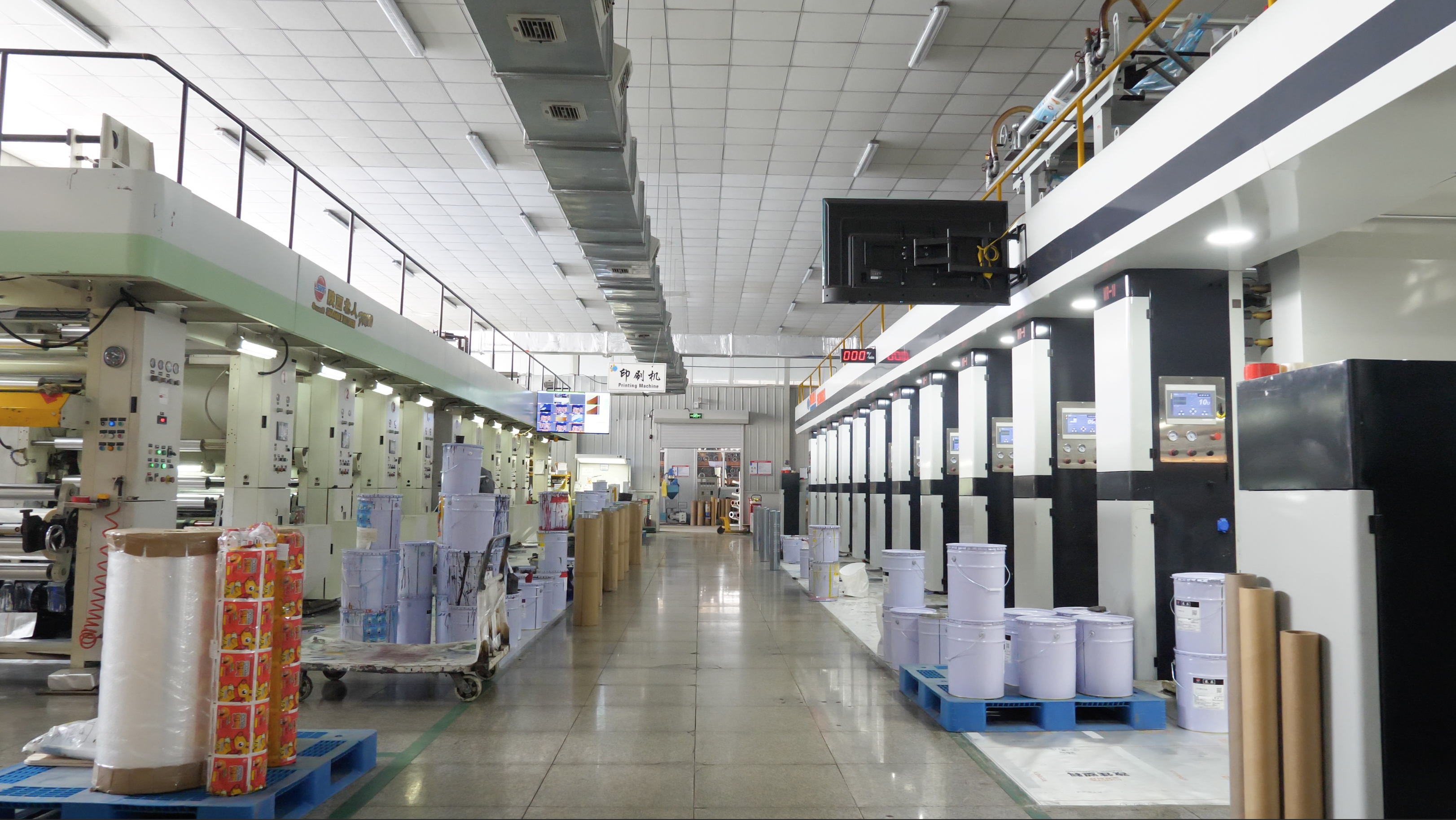
If “in the US” means that the supplier must physically produce the pouches domestically, say so in the first message. Ask for the manufacturing location of the final converting operation, the origin of film or printed components when relevant, the available formats, and a current production schedule. A US business address, warehouse or sales representative is not proof of US manufacture. Some sellers distribute imported finished bags. That can still be a perfectly useful route, but it is a different answer to a domestic-manufacturing requirement.
If “in the US” means the bags need to arrive at my US facility, overseas custom manufacturing can also be considered. Mylarbag's supplement pouch page describes factory-direct production and US-bound delivery options. Treat its stated timing, sampling and DDP description as topics to confirm in the current project quotation, not a blanket promise for every custom structure, season and destination. Request the production location, bag specification, incoterm or delivery scope, responsible importer arrangements, freight mode, customs treatment, and the point at which risk and title transfer. Never describe a China-based manufacturing route as a US local supplier merely because the quote includes door delivery.
When location is a formal procurement requirement, record it separately from cost. A lower delivered price does not satisfy a domestic-origin clause; a faster local dispatch does not satisfy a required customized seal or evidence packet. If a launch is urgent, split the need into a small set of approved pilot bags and a planned production run rather than asking a factory to rush an untested finished pouch. The brand's regulatory and artwork approvals usually have their own timeline.
Make every supplier respond to the same bag specification
The comparison only works if the input is stable. “A pouch for 100 capsules” is not a specification. Give all vendors the same usable opening, external dimensions with tolerance, bottom format, zipper or no zipper, proposed contact structure, print coverage, surface finish, top-seal requirements, intended fill, artwork version, acceptable quality criteria and delivery location. If a supplier recommends a different structure, ask it to label that response as an alternative, explain the difference and provide a physical sample. Do not average unlike quotations into a fictitious market price.
For a product-contact pouch, the brand's reviewer needs more than a generic “food grade” line in a brochure. The FDA explains food-contact substances and intended use; authorization may depend on the substance, manufacturer and use conditions. Ask for the final proposed structure, which side contacts the supplement, relevant compliance information for that use, and change-control arrangements. A distributor may need to request some documents from the original manufacturer. The brand or packer decides whether the documents meet its requirements.
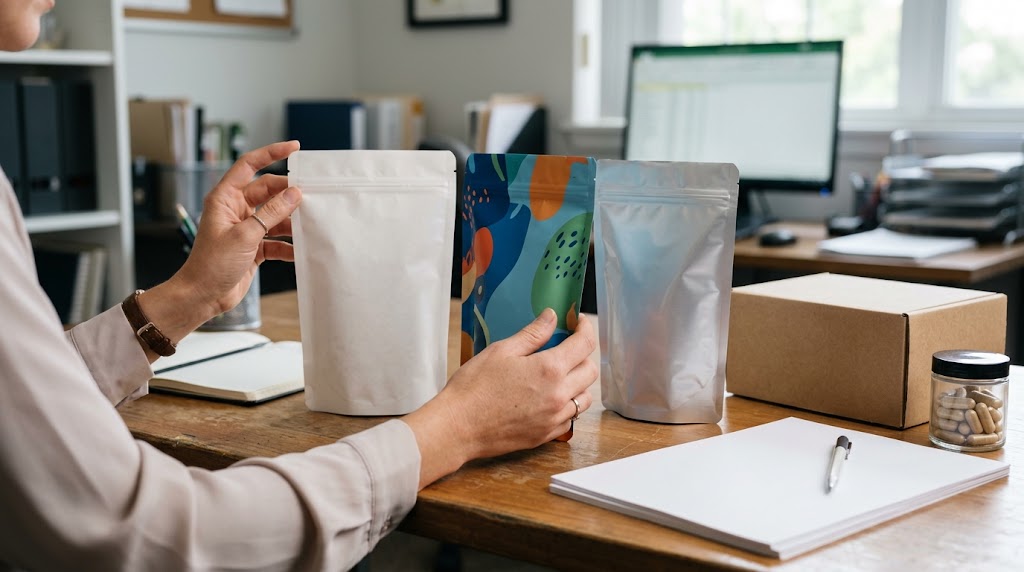
Suppliers should also explain what is actually included in a sample. A free similar-material pouch can show hand feel or a zipper style, but not necessarily the requested dimensions, print, contact layer or heat-seal response. A custom printed proof can verify colors and panel layout yet still differ from the eventual production structure or filling process. Label each sample with its purpose and version. A serious comparison includes who supplies the test bags, what quantities are available, how the material and print are identified, and which changes would require a new proof.
| Quote line | Required detail | Why it changes the decision |
|---|---|---|
| Bag scope | Final drawing, usable mouth, material layers, zipper, print and quantity by SKU | Prevents a stock pouch from being priced against a custom structure |
| Sample and proof | Blank sample, printed proof, revision count and production-equivalent sample | Separates appearance approval from filled-pack validation |
| Quality evidence | Agreed bag defects, inspection, lot traceability and change notification | Allows the brand to investigate a failure and repeat an approved order |
| Delivery | Factory completion, transit estimate, incoterm, duties and final warehouse | Turns unit pricing into a comparable delivered-project cost |
| Reorder | Artwork ownership, plates or files, lead time, minimums and changes | Exposes the cost of future flavors or label updates |
Review published projects without copying their dimensions
Public case pages can help a buyer ask better questions. Mylarbag's US capsule pouch project lists a stand-up pouch, MATOPP/VMPET/PE and 12 × 20 + 3.5 cm; its title and key-features field disagree on the printing method, so request confirmation instead of repeating a print claim. Its Philippines collagen and stick-pack project lists MATOPP/PET/PE, flat bottom and 14 × 24 + 6 cm. These are two configuration examples, not an endorsement of either structure for a buyer's supplement.
Ask the seller for the proposed sample corresponding to your contents and packing line. On the capsule bag, what is the real usable mouth below the zipper? On the outer stick-pack bag, will the specified count and wrapper edges clear the side and top seams? Which photo shows the actual reverse panel and opening geometry? A record of a printed pouch does not prove food-contact suitability for every formula, pack-line success, a set shelf life or retailer acceptance. The buyer's evaluation begins where the catalogue record ends.

Calculate the cost of the approved, delivered bag
A useful quote comparison starts with the number of acceptable bags arriving at the place of use, not the smallest printed unit price. Write down the bag price at the actual order quantity; one-time setup or proof charges; sample freight; production and ocean or air transport if applicable; duties, taxes and brokerage as assigned by the agreed terms; receiving and inspection; and the consequences of defective bags or late revisions. If the supplier offers DDP, ask precisely what its written offer covers and who is responsible for each document and charge. Do not add a second duty charge to an inclusive quote or assume that “door to door” describes every service.
Use the same denominator for alternatives: estimated delivered project cost ÷ accepted usable bags. The numerator should include the charges the buyer will actually bear under the quote, and the denominator should reflect expected usable quantity only if the parties have a defensible acceptance rule. Do not invent a supplier defect rate to make one quote appear cheaper. Keep one-time setup separate when comparing a first order with a reorder. A branded pouch with several print SKUs can have a different total cost than a single design even if the materials match.
Price is not the only delay risk. A bag may be physically finished while the brand is still reviewing an updated label. A seller may have film available but no approved artwork or packer slot. Ask for dated milestones: material choice, blank sample, printed proof, approval, production start, factory completion and freight handoff. Record who must act at each stage. On a time-critical order, obtain the consequence of a missed approval window before paying for rush freight. A promise of “fast production” is not a guarantee that the filled supplement will be ready for sale.
Use physical samples to narrow the shortlist
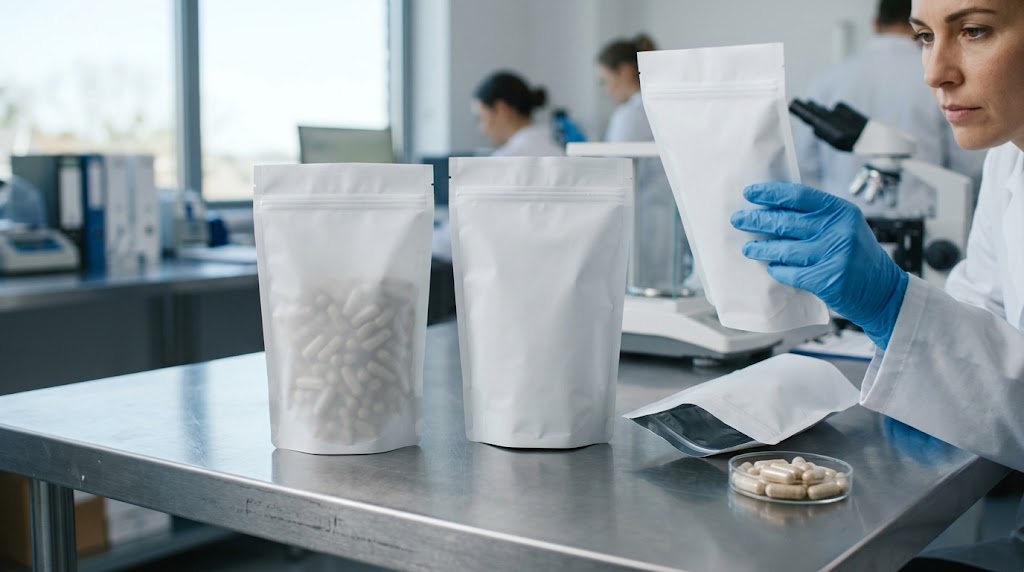
Request samples from at least the routes you genuinely can use. Give them the same fill and opening trial. Stand each pouch after filling; inspect how it behaves after the contents settle; open and reclose it if that is part of the specification; read the information panel at the intended fill; and test the top seal using the packer's approved method. Record observations instead of assigning an arbitrary winner from a product photograph. If a bag is too short, note whether the product reaches the seal, whether the display collapses or whether the shopper cannot remove the contents cleanly.
Different sample stages answer different questions. A similar stock bag may help check a rough hand fit. A custom-size blank bag can check loading and geometry. A printed proof checks artwork placement and finish. Only a production-equivalent bag with a real fill gives the packer enough context for final process validation. Label the samples visibly in the internal record so a successful trial on one structure is not mistakenly credited to another. The brand should retain the approved physical bag and its versioned drawing.
Ask each shortlisted supplier how it handles a repeat order when a label changes. Who checks that the old artwork is withdrawn? How are unused old bags segregated? Which structure and film lot will the next run use? A supplier's willingness to document changes can matter more than a small first-order discount. The product owner also needs to align its own contract packer and label approver; a bag vendor cannot take responsibility for a formula or a Supplement Facts panel it did not control. The FDA labeling guide should inform that brand review.
Send a quotation request that can be answered
Include a finished-product photo or production-equivalent sample, fill amount and variation, whether the inner surface contacts the supplement, preferred pouch shape, maximum filled dimensions, filling method, requested material functions, exact destination, estimated annual and first-run quantities, label approval stage and required delivery window. State whether you need blank trials, a custom printed proof, or both. Ask for alternatives only where you can test them. Invite the supplier to flag a missing specification instead of promising performance it cannot know.
For a new capsule product, the request might be: a stand-up candidate with room for the actual count, a clean initial top seal and consumer reclosure, a defined printed reverse panel and relevant documentation for the proposed contact side. For a line of wrapped stick packs, the request might instead prioritize loading orientation, the count's corner profile and a durable outer pouch. Neither request should specify a fixed thickness, shelf life or regulatory stamp without an approved product brief. The supplier can then quote feasible configurations and physical samples.
Ask for a usable proof packet, not a logo-covered certificate page
The buyer's quality team should ask which file describes the final bag and which files describe individual raw materials. A material declaration for a film family may not identify the adhesive, printed layer, zipper or inside sealant in the quoted structure. Similarly, a general factory certificate can describe a management system without demonstrating suitability for the supplement's intended contact and storage conditions. Request a versioned construction description, relevant contact information for the proposed use, an agreed inspection or acceptance specification, and a clear contact for changes. If the bag holds only wrapped doses, document that arrangement rather than asking for irrelevant evidence as if loose powder were in direct contact with the outer film.
Ask who retains and releases the approved artwork. A supplement brand may have one formula but several selling markets or a label update during the pouch order. The factory should identify which revision is being printed and how it prevents an obsolete file from being reused. The contract packer needs the same bag version in its own approved material list. During receipt, record the carton and bag lot, compare the incoming goods against the retained approval sample, and quarantine a discrepancy for review. These steps are especially useful when production and filling happen at different companies and in different countries.
The proof packet should also acknowledge uncertainty. If an alternative mono-material structure has not been tested on the buyer's line, call it a candidate. If the supplier has a test report for flat film, do not represent it as a finished zipper-pouch result. If a vendor cannot provide an origin or contact-layer answer immediately, give it a specific follow-up item rather than silently filling in a spreadsheet cell with an assumption. A supplier willing to distinguish documented facts from proposed trials gives the brand a more reliable basis for a purchase order.
Compare what happens when the launch changes
An initial launch rarely follows the first drawing exactly. The formula team may change serving count; marketing may add a second flavor; the label reviewer may enlarge a panel; the packer may request a wider mouth. Before choosing a supplier, ask for the decision path and price impact for these plausible changes. Can one artwork revision be made before proof approval without restarting the entire job? Which changes require new plates, new tooling or a new bag construction? Are unused printed bags owned by the brand, and how are they identified? The answers can differ among stock distributors, domestic converters and overseas factories.
Consider a simple scenario comparison. The brand orders a pilot for one capsule SKU, then wants a powder variant. A supplier with a flexible print schedule may quote both designs with the same shape if the physical fill trials support it; another may need a new material and bag mouth. Comparing only the first capsule price conceals the second launch's sampling and artwork burden. Conversely, a supplier quoting a more elaborate future-proof bag may cost more now without evidence that the second product will fit. Plan one approved format at a time and ask for written alternatives.
Delivery resilience is also a specification question. If a shipping lane is delayed, does the brand have enough approved empty bags to keep its packer operating? Can a seller hold a safety quantity of the same approved version, and who pays for it? Would a local stock backup use a different film or panel and therefore require a fresh filled trial and label review? It is safer to name the backup plan while buying than to improvise after a run is interrupted. None of this proves that one geography is universally faster; it shows which dependencies a buyer should make visible.
Finally, agree on the communication path for a disputed shipment. Identify the person who will review photos and lot numbers, the response time stated in the commercial terms, the evidence needed for a claim, and whether the brand can isolate suspect cartons without stopping every other SKU. The answer belongs in the supplier file next to the drawing and quote. It is much easier to resolve a damaged or misprinted bag when both sides agreed in advance on the acceptance sample and the records to exchange.
Recommended sourcing configuration to discuss
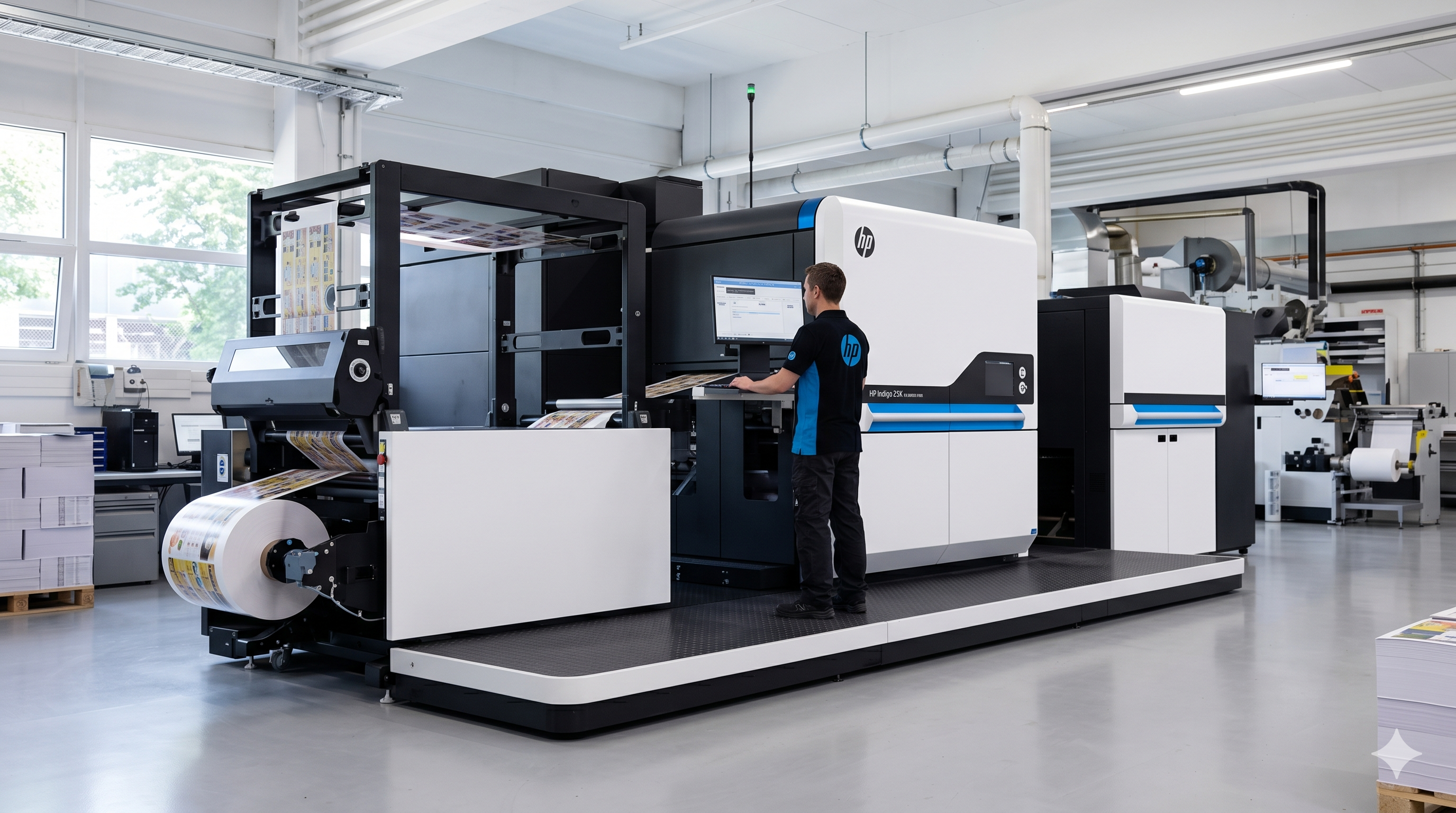
For a first custom retail pouch, compare a physically tested stand-up or flat-bottom format with a clearly documented film, usable mouth, seal and artwork plan. Seek an actual filled proof from the packer before locking the order. Use Mylarbag's custom supplement pouch range as one factory-direct quotation route when overseas production and delivered US supply meet your project's requirements; request the current scope rather than assuming a published case size or timetable applies. The selection is a supplier-and-product decision, not an endorsement of the cheapest unit-price column.
Frequently asked questions
Can I buy supplement pouches wholesale from a US supplier?
Yes, US stock distributors and domestic custom converters are possible sourcing routes. Confirm whether the bag is actually manufactured, converted or merely stocked in the US if origin matters. An overseas factory can also deliver to a US facility, but delivery location is not manufacturing origin.
What is the first thing to send a pouch supplier?
Send the finished supplement form, target fill and variation, whether the contents touch the bag, packer equipment, preferred size and opening, selling market, print plan and order range. If you already have a successful sample, send its versioned specification. Ask the seller what evidence and sample type it can provide for that exact design.
Should I choose the lowest unit price?
Compare like specifications and the full delivered project cost at usable quantity. Sample/proof charges, artwork changes, shipping terms, quality rejects and the next reorder can change the result. A lower price for a different contact layer or closure is not a direct substitute.
Is a published supplement pouch case proof that my formula will fit?
No. A case can show a bag style and published configuration, but the reader's count, powder volume, equipment, label and storage needs are different. Obtain physical samples and validate the filled product. Do not borrow another project's shelf-life or compliance language.
Does DDP mean a supplier is located in the United States?
No. DDP is a proposed delivery arrangement to be defined in the written quote. It does not state the factory's location or prove a particular product can be imported without buyer review. Confirm exactly which charges, documents and responsibilities are included for the destination.
How do I know a sample represents my production bags?
Ask for the material structure, size, closure, print, lot and production status of the sample. A similar-material sample can screen feel and format; a custom printed proof checks artwork; a production-equivalent filled bag supports final line evaluation. Keep the approved version and require a new review when a material, drawing or label changes.
Compare suppliers with one finished-pack brief
Start with the supplement you will actually sell, not a bag size copied from a catalogue. Ask each supplier to return an itemized offer for that same filled-unit brief and a clearly labeled alternative where appropriate. Confirm the manufacturing and shipping route, inspect a physical sample, agree the document and artwork version, and let the contract packer trial the bag before committing to a large printed quantity. You can send Mylarbag your supplement pouch brief for a custom proposal alongside other qualified routes. The right wholesale supplier is the one whose documented bag, delivery scope and sample process fit the brand's real operation.