
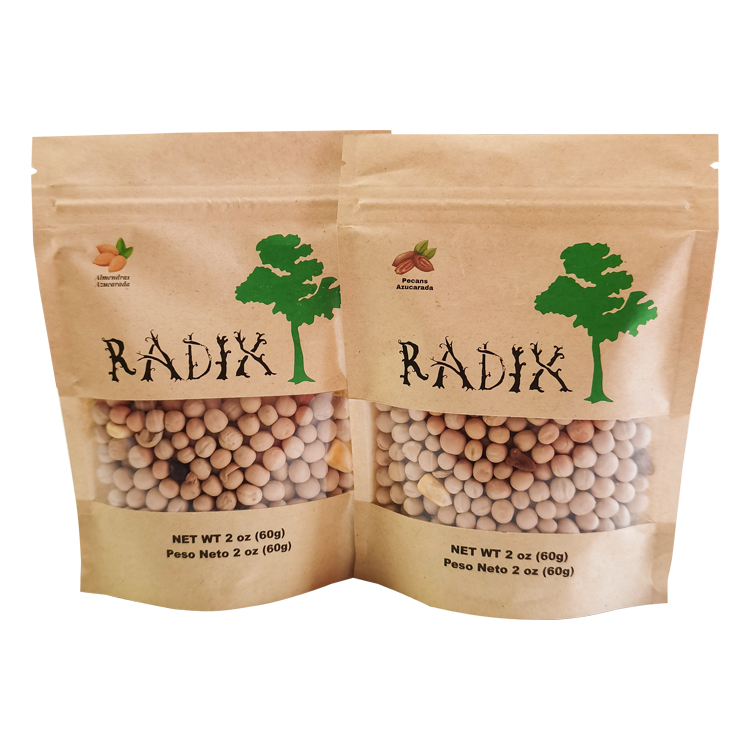
A peanut bag can have space above the nuts for several different reasons: the portion settles, the pouch needs room to seal and handle, or the packer deliberately retains a gas-filled headspace. That gas might be ordinary air or part of a controlled nitrogen-flushing process. A bag that looks “half empty” does not tell you the net weight, the gas inside, the oxygen left after packing or whether the package is sound. Those are different things to check.
For a shopper, the first sensible comparison is the declared net quantity and the product actually received, not a guess from how high the nuts reach on the printed front. For a nut brand, the question is more demanding: does the pouch protect the product without misleading appearance or wasted space, and does the actual packing process meet the brand's documented quality target? This article covers dry retail peanuts and similar nut snacks. Wet boiled peanuts need separate food-safety and packaging decisions; a gas-filled dry-nut pouch is not a preservation process for a wet product.
The three questions often asked together—“why do peanut bags have air,” “why are peanut bags half empty,” and “why is nitrogen used in packing nuts”—therefore need three kinds of evidence. Weigh the food to verify contents. Inspect filled samples before and after handling to understand the visible fill. Measure the headspace and package integrity if a nitrogen or low-oxygen claim is part of the production brief. A photograph alone cannot do all three.
What is the space inside a peanut bag?
Headspace is the region in a closed package not occupied by the bulk food. A nut pouch also has small gaps among whole peanuts and around irregular pieces; those gaps are not a separate bonus portion or proof of deliberate gas injection. The apparent space above the nuts can change when the bag is held upright, laid flat or shaken. A stand-up bottom gusset expands into a three-dimensional base, while a photograph reduces the package to a two-dimensional outline. An opaque printed panel may hide the actual product surface.
Do not equate three distinct observations: an empty-looking upper panel, a puffy pack, and an underweight pack. The first may be artwork placement or a product that has settled below a clear window. The second indicates an expanded package under those conditions but does not identify the gas. The third is a measured contents problem. A package can look sparse and meet its declared quantity, or look full and still require a net-quantity check.
The FDA's food-labeling guide explains that the net-quantity statement refers to the food in the package. In the United States, 21 CFR 100.100 as published by the U.S. Government Publishing Office addresses misleading nonfunctional slack-fill in containers whose contents cannot be fully viewed, while recognizing functional reasons such as product protection and unavoidable settling. This is a reason to document the package's functional space and evaluate applicable rules for the target market, not a universal permission for any oversized bag. The law does not turn a visible gas pocket into part of the net weight.
Why a correct portion can look “half empty”
Imagine scooping the same weighed amount of whole peanuts into two sample pouches with different widths and bottom gussets. Their product surfaces may land at different heights. A mix of whole and broken nuts can pack more closely after a case is moved, lowering the level without removing food. A flow-wrapped flat packet, a wide stand-up pouch and a box-bottom format display the same bulk volume differently. None of this means there is a standard “50% fill” allowance for peanut packaging.
The correct retail portion starts with the actual food and its measured mass. During a trial, record how the specific recipe fills a proposed pouch, not how a competitor's bag looks. Whole peanuts, chopped peanuts, coatings and any included non-nut pieces have different bulk behavior. Leave a clean band for the first seal and enough operating clearance for the filling line, but challenge extra volume that has no documented product or process purpose. This is a packaging design question as well as a compliance and consumer-expectation question.
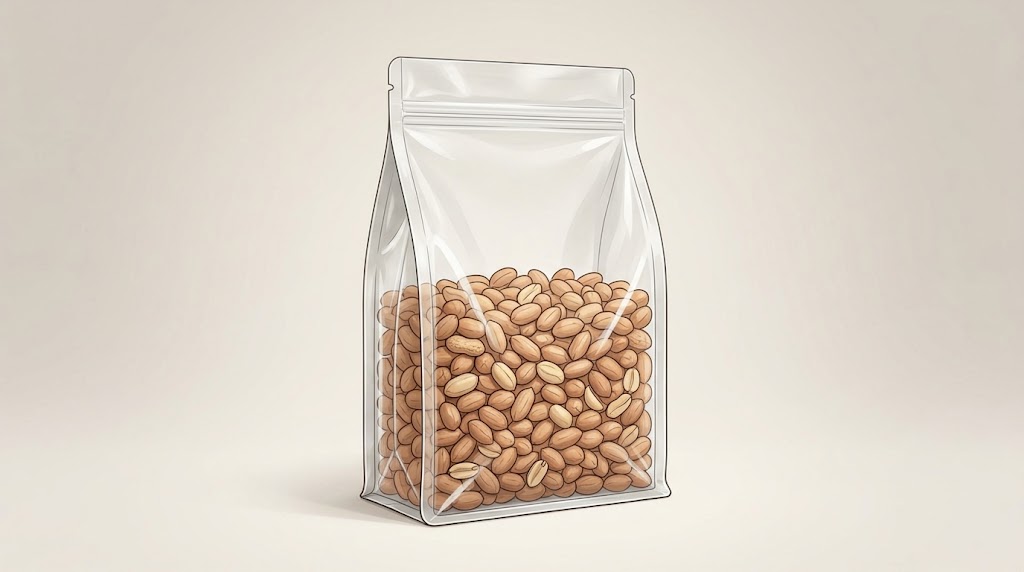
Mylarbag's published US nuts-and-seeds project lists a 6 oz stand-up pouch, digital printing, a horizontal viewing window and kraft paper/PET/PE. The photograph below shows two front-facing bags. The printed upper panel and the horizontal window affect what a customer sees. The project does not publish a gas-flush process, measured headspace, pack-by-pack net contents or an approved fill ratio. The two photographs should not be converted into a numerical void estimate.
The gusset changes how the pouch looks
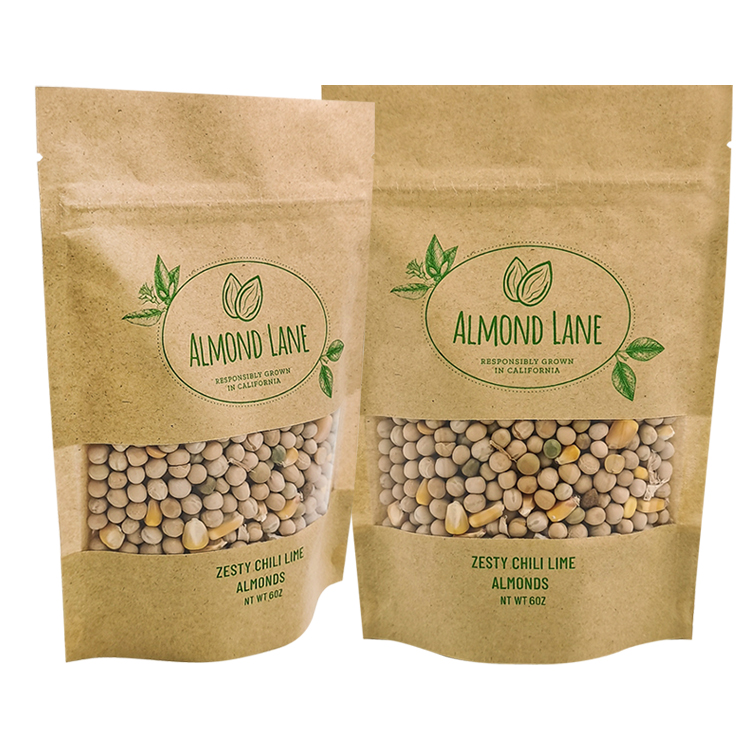
The side view of the same US project makes an overlooked point: a filled gusset gives a stand-up bag depth. An empty pouch laid flat, a pouch standing on its base, and one squeezed by an outer carton present different silhouettes. The gas volume, product volume and bag's visible height are related, but they are not interchangeable readings. Even a ruler against the front panel does not weigh the nuts.
This is why a bag size should be approved with filled, settled samples. Compare the product line immediately after filling, after normal settling and after cartoning. Photograph front, side and laid-flat views. If the product disappears below a decorative window, the design may create a poor expectation even when the net weight is correct. Move the viewing area, adjust the package geometry or choose another format before printing a production run. Do not fix a visually sparse pack by overfilling it beyond the validated specification.
Is the gas simply air, or was nitrogen added?
Ordinary air already contains mostly nitrogen, with oxygen and variable moisture. A bag sealed in ambient conditions therefore contains an air mixture in the spaces that remain. A gas-flushed pack is a different process: food-grade nitrogen is introduced under controlled conditions to displace part of the original air before a sound final seal. The Hong Kong Centre for Food Safety explains the use of nitrogen in snack packaging to lower oxygen exposure and provide some cushioning for delicate foods. It also cautions against using so much gas that the pack lacks room for pressure changes during shipping and storage. Those are mechanisms to validate for a specific peanut product, not evidence that every puffy pack contains nitrogen.
Why use nitrogen in packing nuts? Nuts contain oils that can oxidize. The Almond Board of California notes that roasting and cutting can increase almonds' susceptibility to oxidation; its technical toolkit discusses combining an oxygen-barrier package with vacuum or nitrogen-flush methods for roasted products. The general quality rationale applies to evaluating oily nuts, but an almond recommendation is not a validated shelf-life result for a peanut brand, recipe or pouch. A controlled lower-oxygen pack can be useful; how useful depends on the product, film, seal, storage and measured result.
Nitrogen does not remove oxygen by magic. The amount that remains after a flush can be affected by gas supply, fill level, turbulence, dosing position, product voids, line speed, time to sealing and leakage. The packer must decide what it intends to measure and where, set acceptance criteria for the actual product, and record results across the run. “Flushed” describes an operation; “measured residual oxygen within the approved limit” describes a verified result. A tight package seal and suitable oxygen-barrier construction are needed to help maintain that result over time.
Vacuum is often brought into the same discussion because it can also manage oxygen exposure. It does not give the same cushion, and a close-fitting film can press on delicate pieces. For machine and top-seal decisions, the dedicated sealing guide will handle that topic when published; the present article is about why a visible volume exists and how to verify the pack's atmosphere. A consumer cannot distinguish an air-filled pack from a properly nitrogen-flushed one by squeezing them.
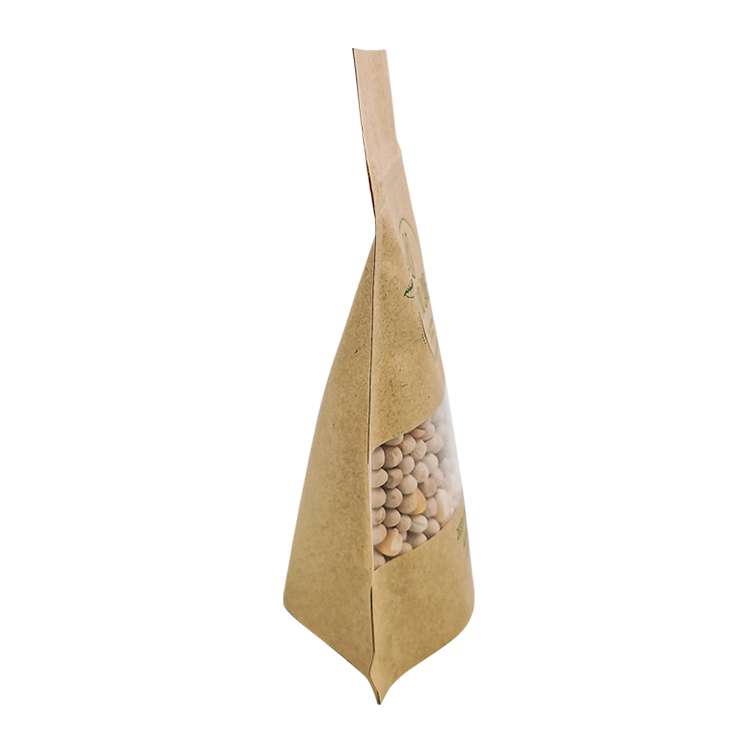
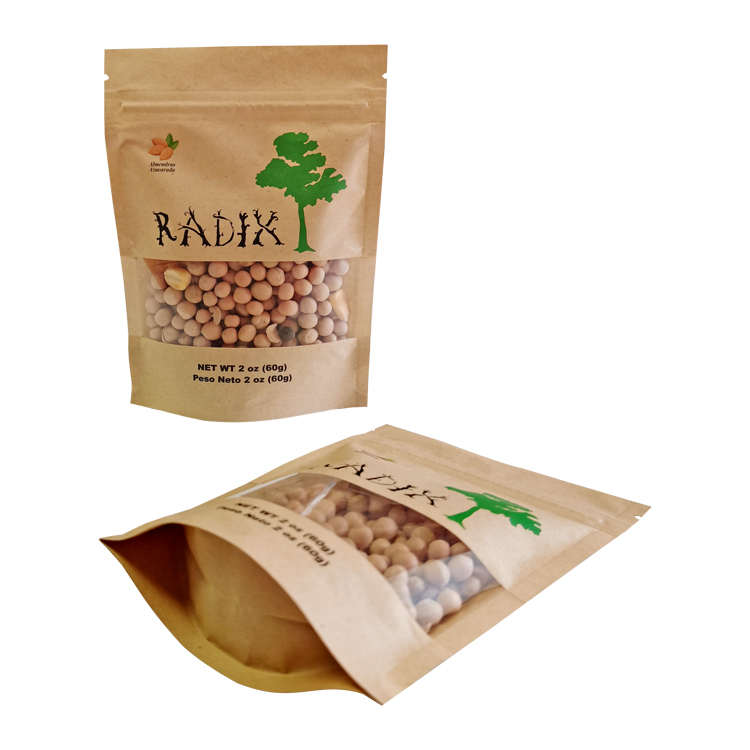
The Puerto Rico candied-nut project provides another real shape: a windowed kraft-look stand-up pouch with kraft paper/PET/CPP listed. One image shows a bag upright and another laid on its side. The project title uses “2 oz/60 g” as its own wording, not an exact conversion. The public listing does not disclose nitrogen flushing, gas composition, oxygen test data or how much pressure was in the pictured pack.
A nitrogen claim requires more than a puffy photograph
An inflated surface only shows the bag's shape at the moment of inspection. It cannot tell whether the gas came from a controlled line, whether the pouch initially had low residual oxygen, whether the top seal remained intact, or whether the food met its quality target. Conversely, a less puffy bag is not automatically defective; different pouch films, geometry, fill amounts and temperatures alter appearance. A nitrogen program should be specified and audited as a product-and-package system.
The evidence can be organized in a short trial record. A checkweigher or properly controlled scale addresses the food quantity. A headspace gas measurement, using a method appropriate for the actual pouch, addresses the atmosphere. An integrity test and seal inspection address leakage paths. Retained samples and product testing over the intended storage conditions address how the food behaves. ASTM F2714 describes oxygen headspace analysis using fluorescent decay; that particular method requires a sensing component inside the sealed package and a transparent or translucent optical path. It is one option for a purpose-built test sample, not a claim that every retail nut pouch has a built-in sensor. AMETEK MOCON's food package-testing overview distinguishes headspace gas analysis from leak and seal testing. Agree with the quality team which methods fit the chosen construction.
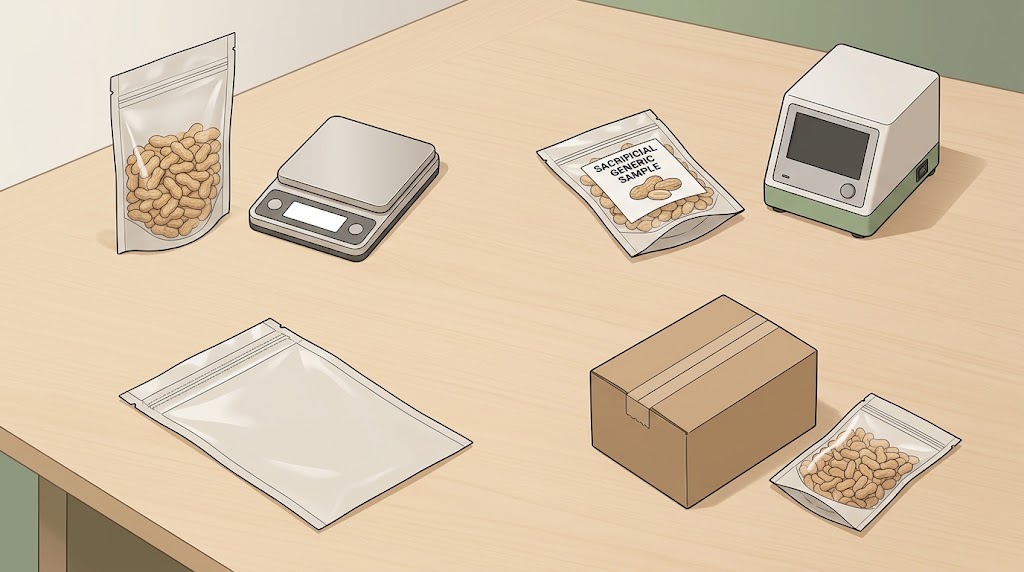
These tests should be tied to an actual question. If the first sealed samples show higher oxygen than the target, investigate the flush setup and sampling method before blaming the film. If the first samples pass but later retains change, examine seal and film damage, barrier data and storage history. If packages have the correct gas but look very sparse, revisit the pouch dimensions, product settlement and artwork. If the net weight is low, correct the fill process; extra nitrogen is not a substitute for food. A fault tree prevents “add more gas” from becoming the answer to every complaint.
How much headspace is useful?
There is no reliable universal percentage for retail peanut bags. A useful volume depends on the food's bulk shape, fragility, package geometry, final top-seal land, the equipment and distribution stress. Some space may accommodate settling and reduce crushing; too much can make the pack look misleading, increase material and carton volume, or invite greater movement of hard nuts against the film. The Centre for Food Safety's discussion of gas-filled snacks supports the idea of enough cushioning without unnecessary inflation. It does not publish a fixed ratio for a custom peanut pouch.
Use a controlled comparison, not a “half-full” rule. Fill the same target mass of the actual SKU into two or three candidate pouches. Record apparent fill height immediately and after settling, product breakage, the distance to the sealing band, upright stability, window presentation and carton fit. If considering a gas flush, run the approved atmosphere test on each candidate. If a smaller pack damages the product or cannot be sealed cleanly, that evidence supports keeping some room. If the larger pack has unused volume with no functional basis, the team should reconsider it and review the applicable market's presentation rules.
The design decision is a balance, not a contest to fit the highest number of peanuts in the smallest bag. A more compact pack that crushes the product is not necessarily the right choice. Neither is an oversized pouch justified merely by calling all the space “nitrogen.” Define the purpose of the space, document the filled trial and choose the least confusing presentation that performs under the intended route.
Investigate a puffy or slack pack in the right order
Start with lot and route information. Is this one unusual bag, every bag from the same carton, or one machine interval? Compare unopened retain samples from the same food and film lots. Check measured contents first, then appearance at a consistent orientation and temperature. If the brand specifies a gas atmosphere, sample it using the approved method and timing. Inspect top and side seals, gussets, punctures and the carton contacts. A photograph is useful evidence of where the concern appeared, but a collection of loose guesses is not a diagnosis.
Different time patterns suggest different checks. A pouch that is puffy immediately after packing may simply match its approved gas and geometry—or may have too much headspace for its design. A pouch that becomes limp later might need an integrity and storage review. A pack that looks low only when stood up may involve settling and gusset expansion. Where the gas measurement, net quantity or integrity is outside the team's limit, segregate affected lots and follow the quality program. Avoid selling a pack based on a squeeze test or dismissing a customer concern by saying “that is just nitrogen.”
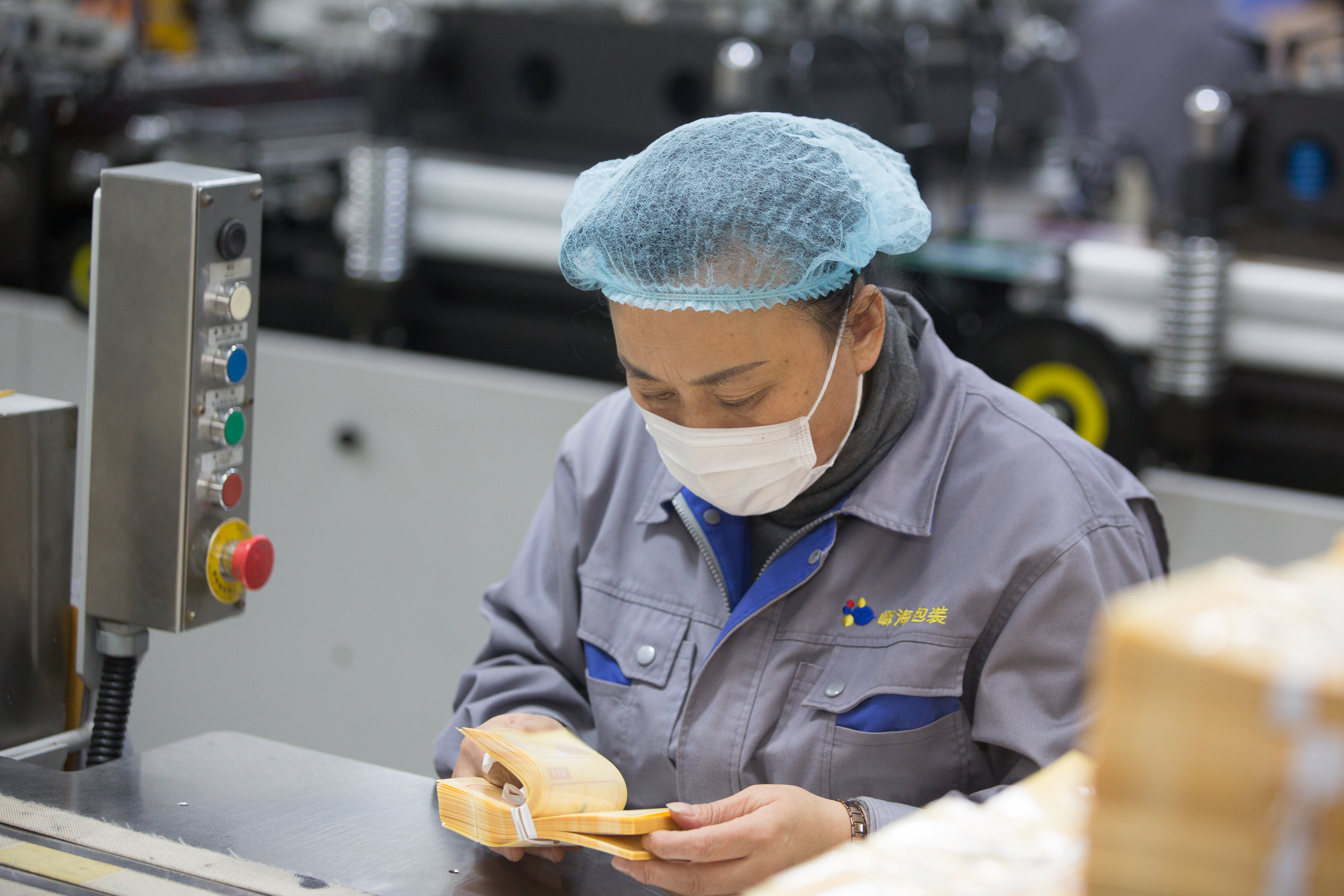
The real factory image below shows a person handling empty pouch samples. It provides context for a material and format review, not proof that the factory filled peanuts, injected gas, measured residual oxygen or released any customer food lot. Send the pouch maker a filled-sample brief and the packer’s agreed acceptance criteria; keep the roles of bag supplier, gas/line operator and food brand clear.
Recommended packaging configuration for a dry peanut product
Ask for a pouch format that fits the weighed, settled product and retains a defined clean top-seal area. Then specify the film and seal performance needed for the intended roasted or seasoned product and distribution. If a controlled lower-oxygen program is justified, coordinate a compatible pouch with the packer's nitrogen equipment, gas supply, residual-oxygen measurement and finished-package tests. A reclosable zipper can serve consumers after opening, but it does not prove the unopened pack's gas state. Make the window and printed upper panel match the real filled presentation.
The two published nut-pouch projects linked above illustrate retail formats with visible windows; the nuts packaging page shows more format options. Neither linked case documents nitrogen flushing, a specific oxygen target or a universal fill percentage. For a new pouch inquiry, send the contact team the nut type, roast and coating, proposed net weight, real fill samples or bulk dimensions, bag style and intended sales channel. State whether your packing partner can gas-flush and what test evidence it plans to collect. Ask for empty samples and an approved drawing before treating the artwork as a finished quality specification.
A concise handoff record keeps decisions aligned: food SKU and lot → measured target net content → candidate pouch and window → post-settlement appearance → gas route and residual-oxygen criterion, if any → seal and carton tests → quality approval. A customer asking “why is there air?” then receives an answer supported by measurements rather than a stock claim about freshness.
FAQs
Why do peanut bags have air if oxygen can harm nuts?
A sealed nut bag may retain ordinary air or a controlled gas-filled headspace. Some space can serve filling, sealing, settling and product protection. If oxidation control is a goal, a packer may use a qualified nitrogen-flush or vacuum process with suitable barrier and seals. A visible gas pocket does not identify the mixture or prove its quality; the packer needs appropriate measurements.
Why are peanut bags half empty?
They may look that way because a fixed weight of nuts settles into a wide or gusseted pouch, and opaque printing hides the product above a window. That does not establish that the stated weight is missing. Check the net quantity with a suitable weighing method and compare actual filled-pack samples. Functional space may be needed, but unexplained excess space should be reviewed against the product, package design and applicable market rules.
Is the gas inside a peanut bag always nitrogen?
No. A pouch sealed in normal conditions can contain ambient air; a controlled packing line may introduce food-grade nitrogen or another specified atmosphere. The bag's puffiness cannot distinguish them. For an explicit nitrogen or low-oxygen process claim, review records and measure residual headspace oxygen using a method suitable for the actual package.
Does nitrogen stop peanuts from going stale?
Replacing some oxygen can help a validated quality strategy for oily nuts, but it does not by itself stop every cause of quality loss. Starting product condition, roast, moisture, light, film transmission, seal integrity and storage conditions still matter. The food brand needs product-specific testing rather than a generic promised month count.
Is a more inflated peanut bag better protection?
No simple comparison follows. Some gas space may cushion fragile contents, while too much can strain pack and carton fit and create an unnecessarily sparse appearance. Test the actual peanuts and bag through filling, transport and storage, with the quantity, gas composition and seal evaluated separately. Do not use bag expansion as a surrogate oxygen or safety test.
What should a nut brand measure before approving a gas-filled pouch?
Record actual net quantity; fill and settled appearance; residual headspace oxygen under an agreed method and sampling plan; finished-pack seal and integrity; breakage after handling; and the product's relevant quality results over intended conditions. Link the measurements to the food lot, pouch revision, equipment settings and retain samples. A puffy photograph is useful for presentation review, not as a substitute for this evidence.