
Yes, you can store coffee beans in a clean Ziploc-style bag, especially as a short-term backup. Press out excess air, close it completely, and keep it in a cool, dark place. It is not automatically an upgrade over the original coffee pouch: an opaque resealable bag that is still clean, closes properly, and suits the amount of coffee you use may be the simpler choice.
This is a storage guide for roasted coffee at home. It does not set a universal freshness period or prove that one container is suitable for every coffee, roast, or storage routine.
Start With the Real Question: What Happened to the Original Bag?
People usually ask about a Ziploc bag after one of three things happens: the original package did not reclose, the top was cut away with the zipper, or the buyer wants to divide a larger bag into smaller portions. Those are different situations. A single answer such as “Ziploc is good” or “never use plastic” does not explain what the person needs to decide.
First look at the original pouch. If it has a working zipper, enough room to fold or press it closed, and no tear or contamination issue, keeping the beans in that pouch can be reasonable. Moving beans simply because a new container looks more polished adds another handling step without necessarily solving a problem.
If the original bag cannot be reclosed, a clean food-storage bag can be a practical substitute. Its job is modest: hold the coffee together, close as fully as possible, and keep the portion away from obvious heat and light. It should not be described as proof of a specific shelf life, a vacuum package, or a replacement for a project-specific coffee pouch.
What a Ziploc Bag Can and Cannot Do
A Ziploc-style bag is flexible, easy to find, and simple to close. That makes it useful when the choice is between a closed temporary bag and leaving coffee loosely folded in an open packet. But it does not turn every storage situation into the same one.
The useful questions are concrete:
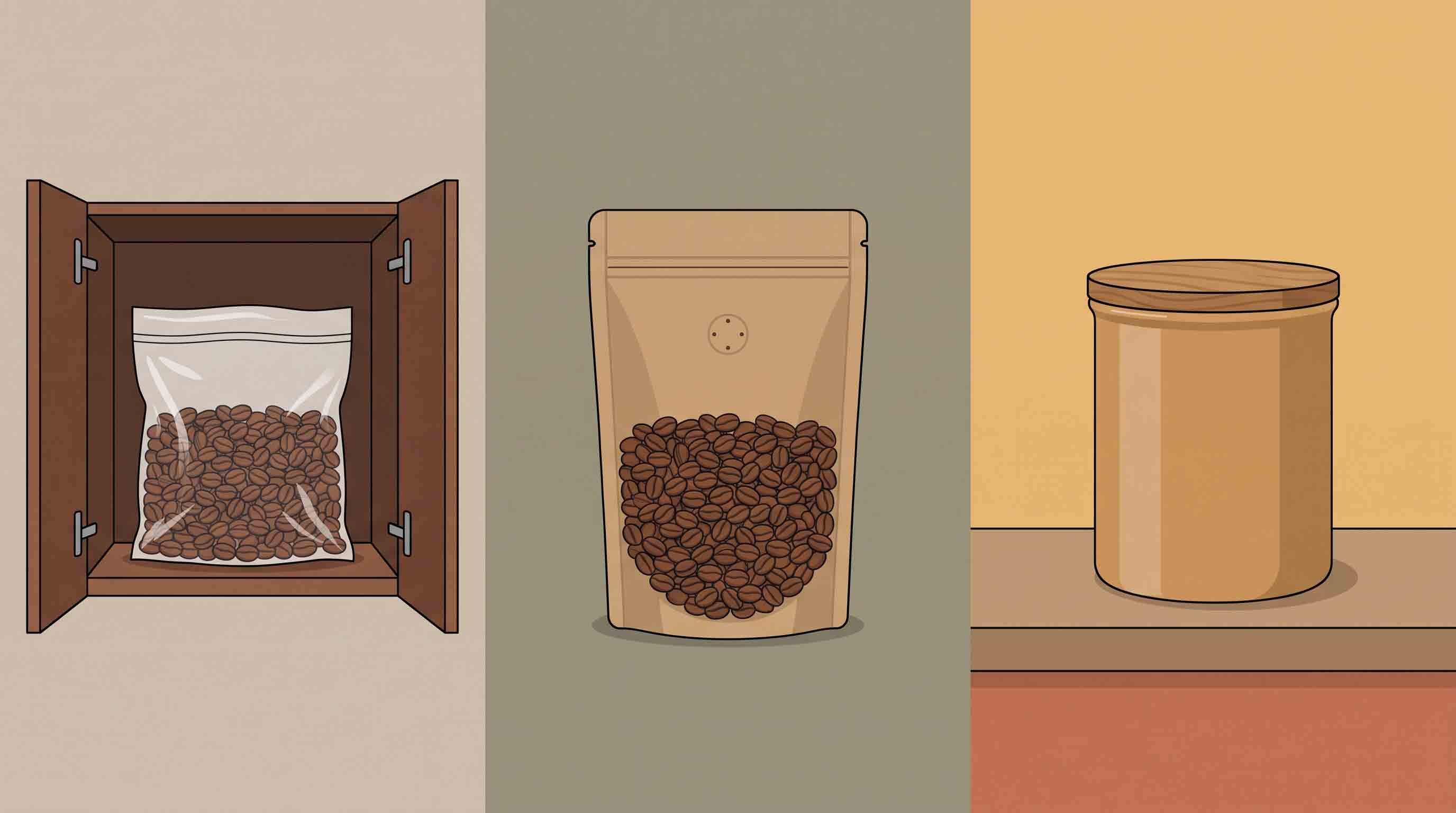
The National Coffee Association advises storing coffee in an airtight, opaque container in a cool location and away from strong light and heat. A clear storage bag can still be used inside a dark cupboard, but the fact that it is clear is part of the decision rather than a detail to ignore. See the NCA’s storage guidance.
When Keeping the Coffee in Its Original Pouch Makes More Sense
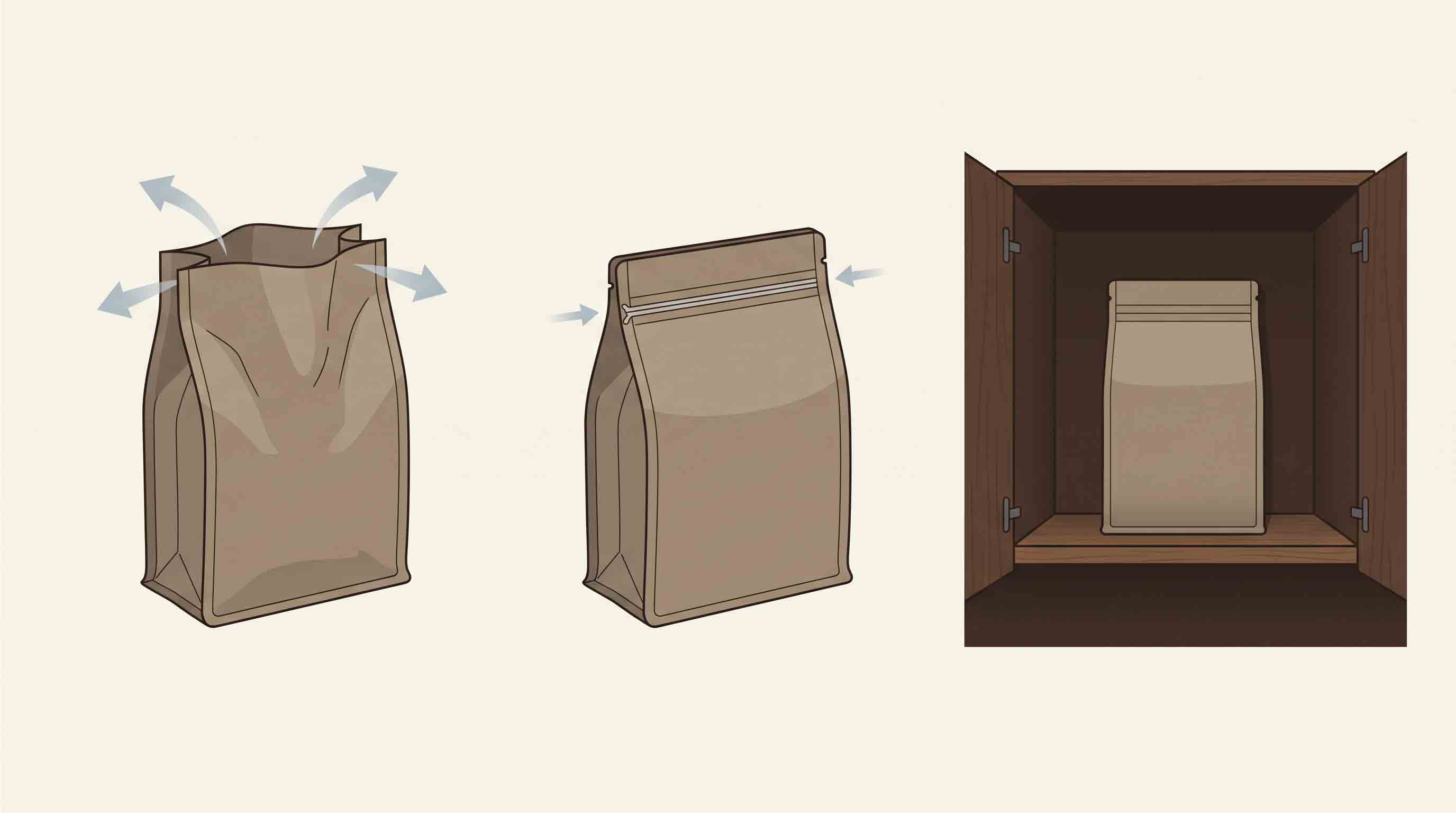
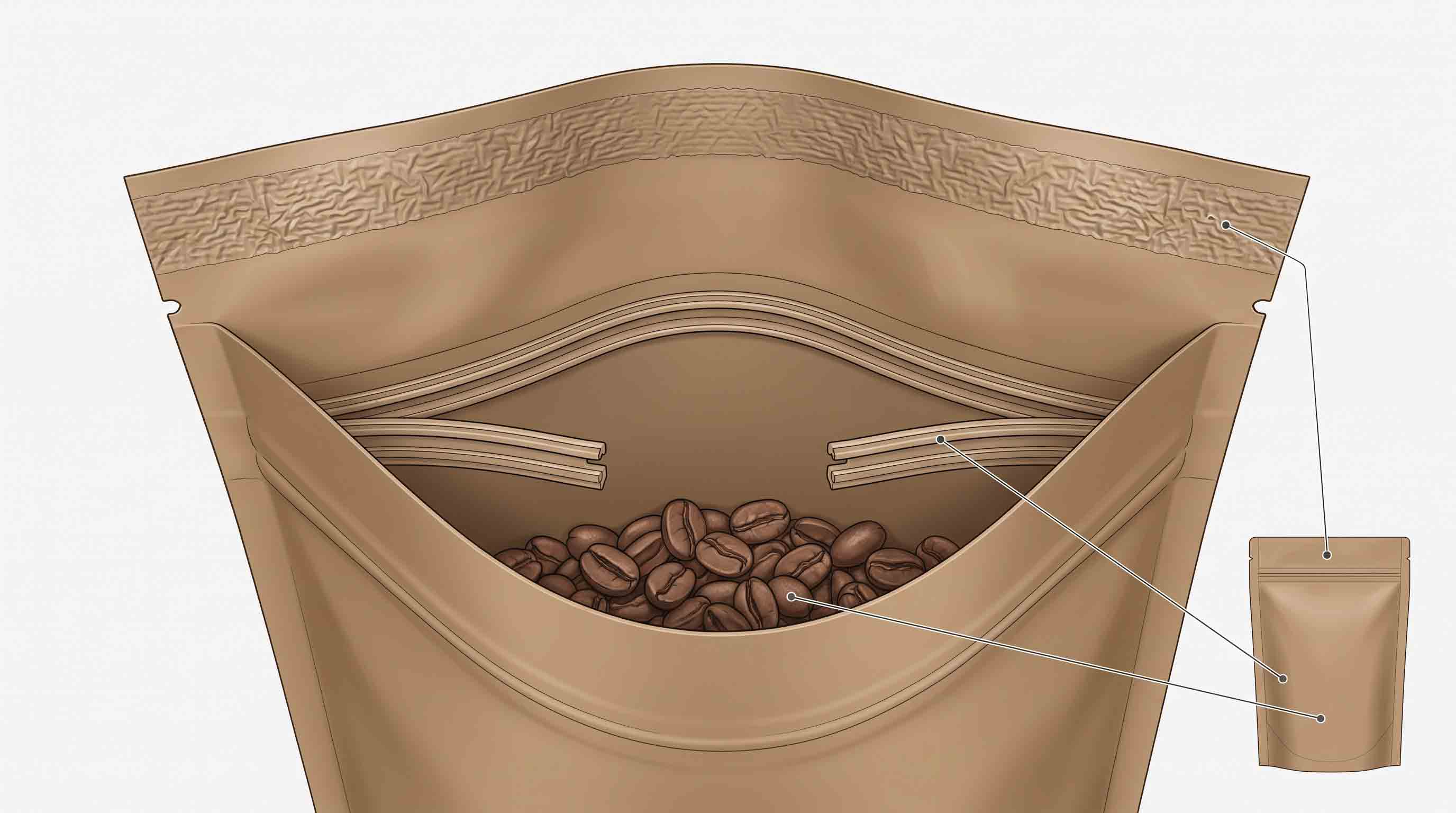
An original coffee bag is not automatically perfect, but it is designed around a particular product and pouch format. Some have a resealable zipper below the top seal. Some use a fold-and-tin-tie arrangement. Some rely on a clip after opening. The right handling method depends on the feature actually present.
If the zipper is below the initial sealed strip, open the pouch at the tear feature or cut line above that zipper rather than cutting through the reclose track. How to open and reseal a coffee bag explains the difference between the first opening and the later reclose feature.
Keeping beans in the original pouch has a few practical advantages. The coffee name, roast date, brewing notes, and any product information stay with the beans. The pouch also retains the amount of headspace and closure arrangement the roaster selected for that pack. That does not prove a performance result; it simply reduces the chance that the coffee becomes an unlabelled bag at the back of a cupboard.
Use a Ziploc bag when it solves a real handling problem. For example, it can hold a torn original pouch inside a second bag, separate an unopened portion from a larger purchase, or hold a short-term travel amount. Do not transfer beans merely because a flat plastic bag seems more airtight in theory. The condition of the closure, the storage location, and the number of times you open it matter more than the name of the bag alone.
A Simple After-Opening Routine
Good coffee storage is mostly a repeatable routine, not a single piece of packaging. The following sequence keeps the decision practical without attaching a promise to any particular bag.
- Check the original pouch first. If its zipper, tin tie, or fold-and-clip arrangement still works, use it.
- Keep the coffee dry. Do not move beans into a damp bag or container, and do not leave a wet scoop inside the pack.
- Remove only the obvious excess air. Press gently before closing; crushing the beans is not helpful.
- Close the package fully. Check the length of a zipper track or the fold before putting the bag away.
- Store it in a dark, cool, stable place. A cupboard away from heat sources is easier to manage than a counter exposed to changing light.
- Keep the product identity with the coffee. If you divide a bag, write enough information on the portion to know which coffee it is and when it was opened.
This is intentionally less dramatic than a “best container” list. The goal is to make the next cup easy to prepare while avoiding avoidable confusion about which beans are in which bag.
Clear Bags, Opaque Containers, and Double-Bagging
The practical difference between these choices is not a contest between brands of container. It is how the outer storage arrangement deals with light, closure, and routine.
Double-bagging is not a requirement. It can be a sensible damage-control choice if a coffee pouch has torn or the zipper is unreliable, but extra layers also make it easier to forget which coffee is inside. A small label with the coffee name and opening date is more useful than a complicated stack of anonymous bags.
If You Divide a Large Bag Into Portions, Keep the System Simple
Portioning is one of the more reasonable uses for a Ziploc-style bag. Someone may buy a larger coffee bag, keep one working portion near the grinder, and put the remainder away. The same idea can help when a household takes coffee on a trip or shares a bag between two locations.
The useful part is not the number of portions. It is the record that travels with them. Each portion should be cleanly separated, closed, and identifiable. Write the coffee name and the date it was opened on the outer bag or keep the original label with it. If there are several coffees in the cupboard, that small note prevents the common problem of brewing an unknown bag because it looked familiar.
Avoid building a complicated storage ritual around a small amount of coffee. Do not repeatedly pour beans from bag to bag just to remove a little more air. Do not reuse a portion bag if it is visibly worn, damp, or carrying a strong food smell. And do not split a bag so aggressively that the original product information disappears from all portions.
For most households, there are only two reasonable choices: keep the whole bag in an intact original pouch, or keep a clearly marked near-term portion in a clean storage bag while the remainder stays protected from light. Both choices can work when the closure and storage location are managed carefully.
Should You Put Coffee Beans in the Refrigerator or Freezer?
This article is about a Ziploc bag, not a universal cold-storage rule. The safer point is that a refrigerator or freezer introduces a different set of handling questions: moisture, condensation, odours, portioning, and whether the package will be opened repeatedly. A food-storage bag by itself does not answer those questions.
For everyday coffee, a cool, dark cupboard is usually the easier routine to control. The NCA’s consumer storage guidance likewise emphasizes an airtight, opaque container and a cool location, and advises avoiding temperature- and light-exposed areas such as a sunny counter or cabinets near heat sources. If a buyer is considering freezing a larger quantity, it is better to ask the roaster for product-specific handling guidance than to assume a single generic rule fits every coffee.
Avoid turning a storage article into a list of exact freshness deadlines. Roast level, grind, original packaging, storage environment, and how often the container is opened all affect the real situation. The question here is narrower: can a Ziploc bag keep an opened coffee portion contained and closed? Yes. Whether it is the best option depends on the bag, the cupboard, and the household routine.
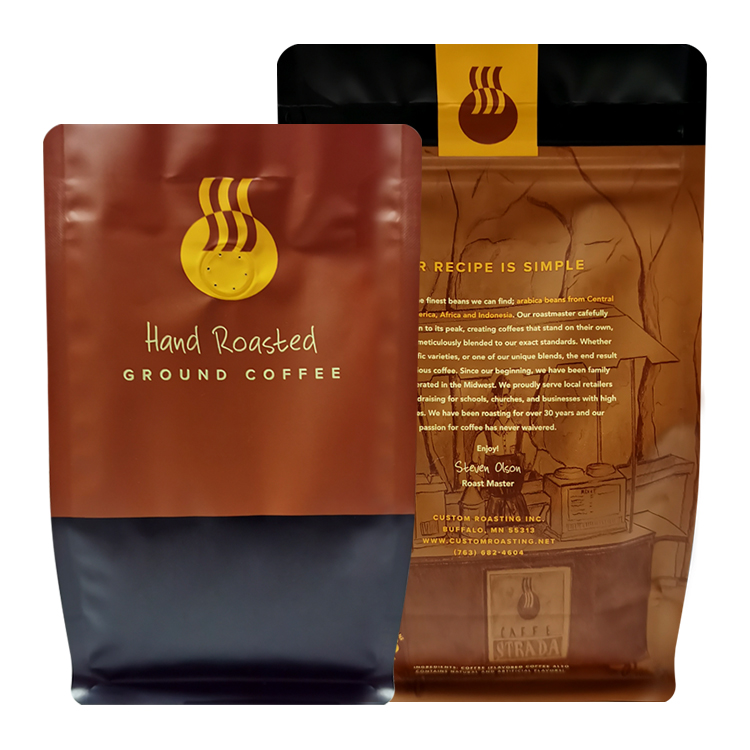
Common Mistakes That Make the Bag Choice Less Important
The bag receives most of the attention, but small handling mistakes often cause the bigger problem.
None of these points requires buying a specialty coffee container. They are simply ways to make the closure and storage place match the use pattern.
For Roasters: Design the First-Open Experience Before the Bag Is Printed
For a coffee brand, the home-storage question begins before a customer opens the bag. A pouch can be specified with a top seal and a separate reclose feature, but the artwork, tear location, zipper or tin-tie arrangement, and customer-facing instructions all need to describe the same pouch. A practical opening experience is not something to guess from a front-panel mock-up.
One published Mylarbag 250g flat-bottom coffee-pouch project lists a pocket zipper and degassing valve in a MATOPP/VMPET/PE format. It is a configuration reference, not proof that the same feature layout is right for every coffee product. See the published 250g flat-bottom coffee-pouch project.
Recommended Packaging Configuration
For a roaster that wants customers to keep using the original pouch after opening, begin with a pouch brief for evaluation: target fill, pouch format, initial seal, proposed tear route, reclose feature, valve need, artwork version, and packing routine. A zipper, pocket zipper, tin tie, or another arrangement can then be evaluated against the actual project rather than assumed from a generic storage tip.
Use custom coffee bags to start that pouch discussion. The relevant question is not “which bag guarantees freshness?” It is “which opening and reclose arrangement fits this coffee, this target fill, and this customer-use routine?”
When that brief is ready for a project discussion, send the product, target fill, pouch reference, feature questions, artwork status, target market, and packing routine through Contact. Those details give the supplier something specific to review without turning a consumer storage article into a performance promise.
Frequently Asked Questions
Can I store coffee beans in a Ziploc bag?
Yes, a clean food-storage bag can be a practical short-term option when it closes fully and is stored in a cool, dark place. It is not automatically better than an intact original coffee pouch with a working reclose feature.
Is a Ziploc bag airtight enough for coffee beans?
Do not assume a generic storage bag provides a defined packaging performance. Check that it closes fully and use it as part of a practical storage routine rather than as a promise of a specific freshness period.
Should I keep coffee beans in the original bag after opening?
Often, yes—if the original pouch is clean, intact, and can be reclosed. It also keeps the product information with the coffee.
Can I put a clear Ziploc bag in a cupboard?
Yes. A dark cupboard addresses the fact that a clear bag does not block light on its own. Keep the bag away from heat and make sure its closure is fully shut.
What should I do if I cut off the zipper on a coffee bag?
Use a clean clip, transfer the coffee to a suitable clean storage bag, or place the damaged pouch inside a second bag. For future bags, identify the zipper before opening the top seal.
Do coffee bags with zippers eliminate the need for a container?
Not necessarily. A working zipper may be enough for a household’s routine, while another household may prefer an opaque outer container. The condition of the pouch and the storage location still matter.
Keep the Storage Decision Proportionate
A Ziploc bag is not a disaster and not a magic solution. Use it when it gives you a clean, fully closed way to hold an opened coffee portion. If the original pouch can still be resealed, there is often no reason to transfer the beans. Keep the package closed, labelled, cool, and out of direct light; then make the storage routine simple enough that you will actually follow it.
If the routine starts to involve several unknown bags, return to one labelled working portion and one clearly identified reserve portion.
For custom projects, custom coffee bags can be discussed around the first-open and reclose experience rather than a generic promise about storage.