Cannabis Packaging Odor Control: Seals, Exterior Residue, and Barrier Specifications
Quick answer
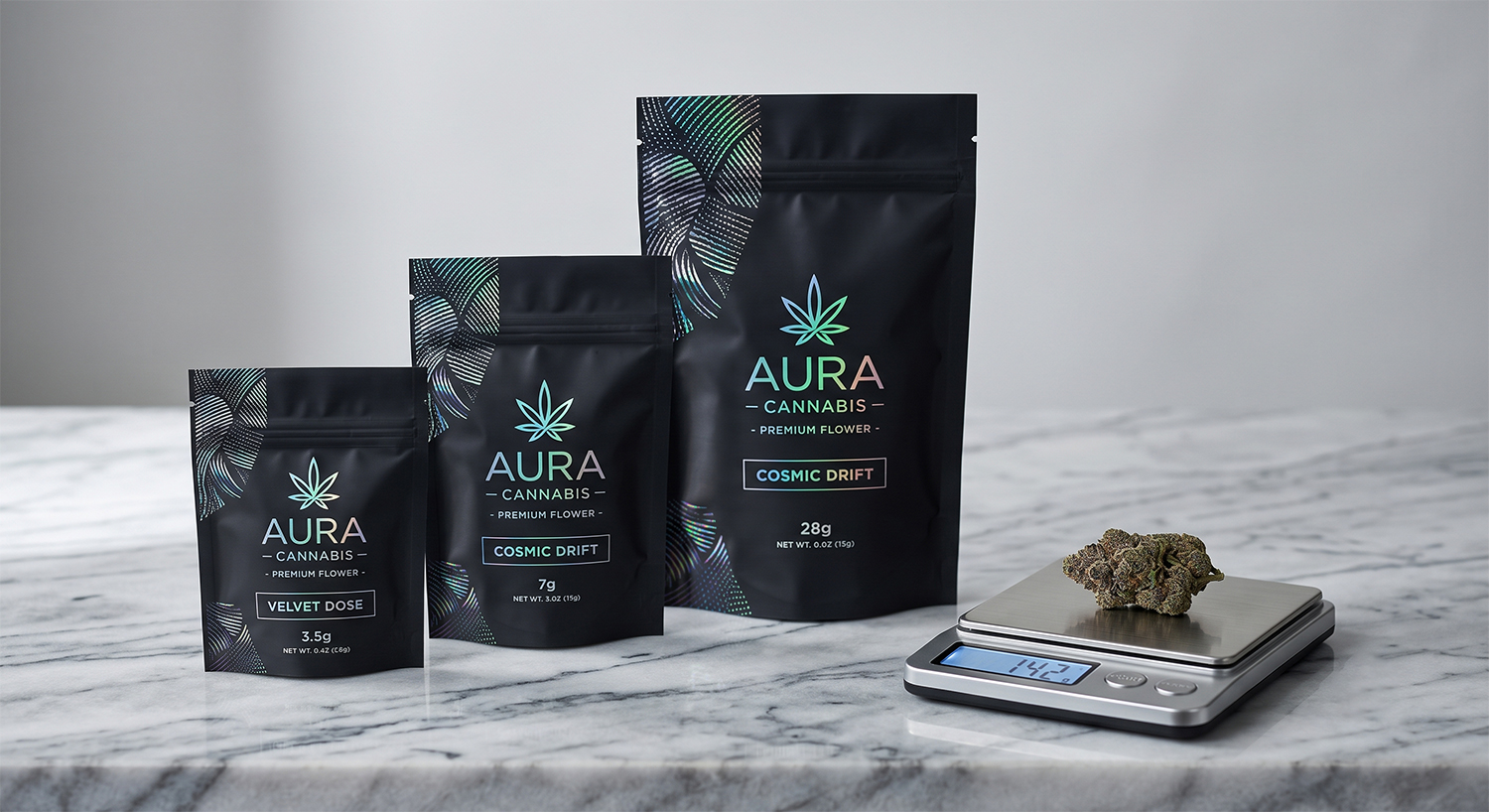
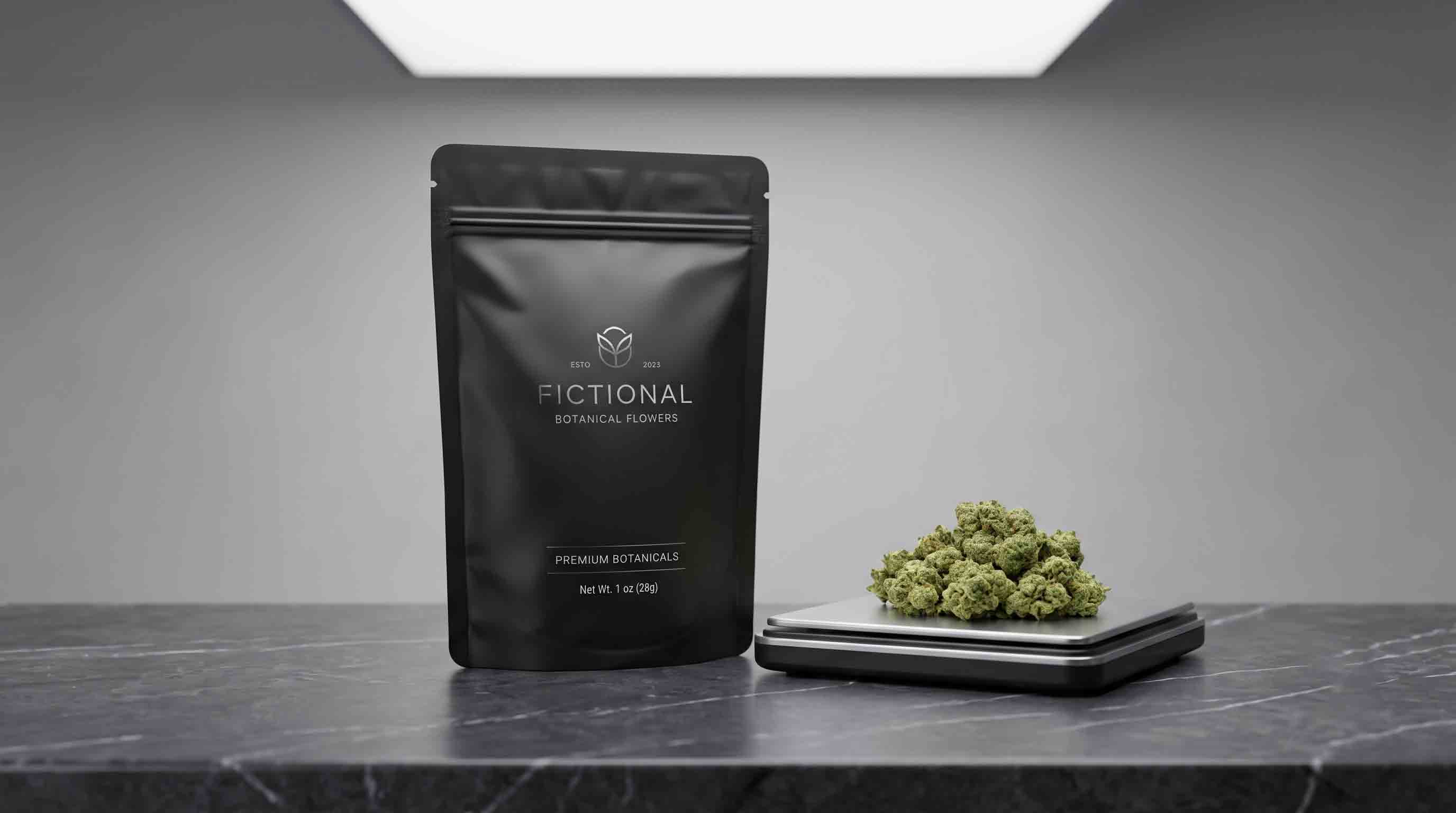
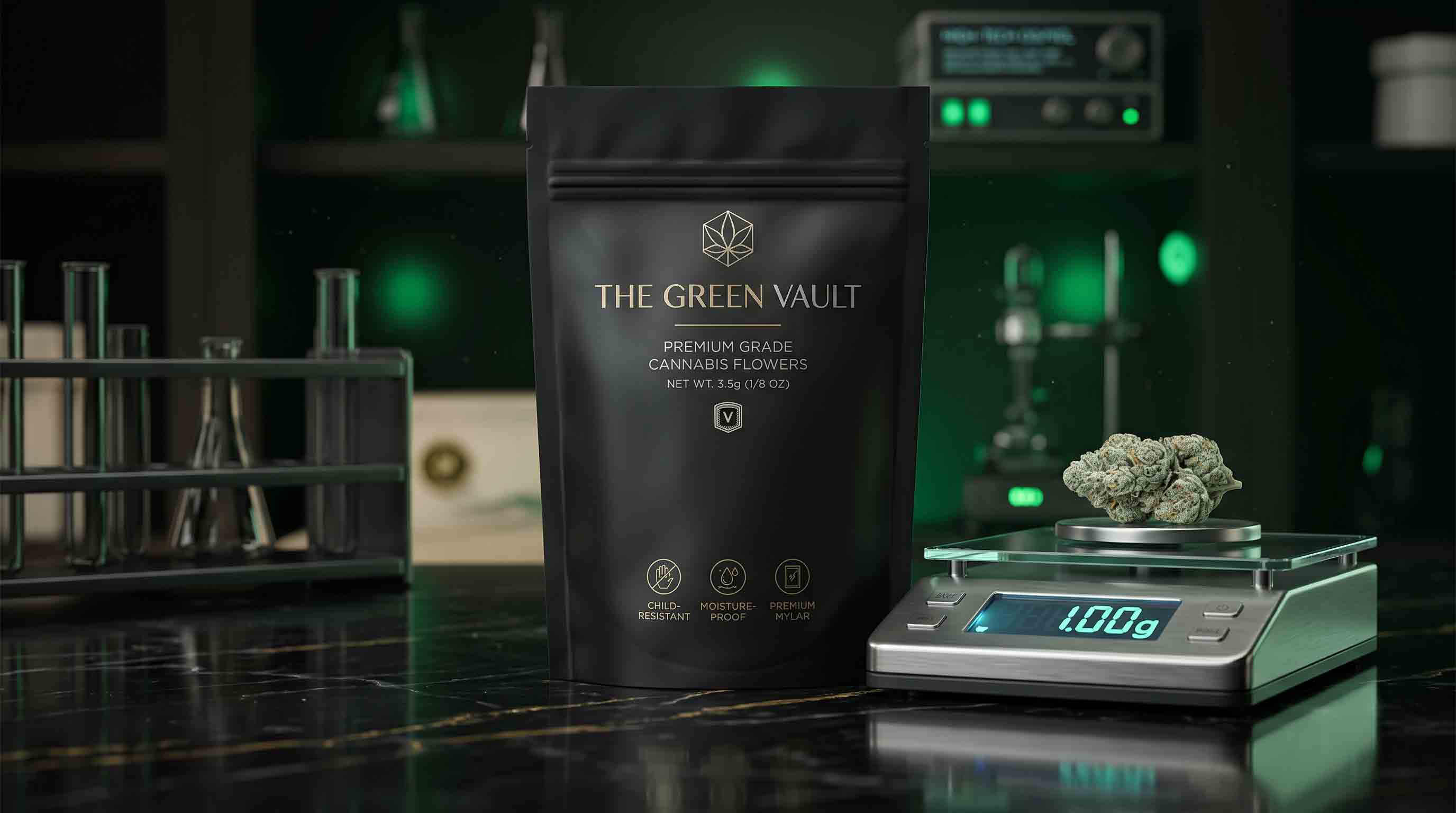
For a lawful cannabis brand, odor-control packaging should be treated as a finished-package quality question, not as a label printed on a stock pouch. Film structure, perimeter seals, closure design, filling conditions, package handling, and the evidence supplied for the intended use all matter. A buyer should specify those details, review samples with the actual product, and make only claims that the finished package can support.
This article is for lawful cannabis packaging, retail, and procurement projects. It is not legal advice. Packaging requirements vary by product category and market. Licensed brands should confirm the rules that apply to their own product before launch.
What does odor control mean in cannabis packaging?
In ordinary conversation, a buyer may ask for a "smell-proof" pouch. In a purchasing specification, that phrase is incomplete. It does not state the laminate structure, the sealant layer, the type of closure, the condition of the finished seals, the product load, the expected distribution environment, or the test method behind the claim. Two pouches can both look metallic and use the same broad product description while performing differently in use.
The more useful question is: what package system is appropriate for this product and how will the brand evaluate it? That question moves the discussion away from a slogan and toward a controlled brief. It also prevents a common procurement problem, where a buyer compares a film sample with a completed pouch even though the finished pouch has seals, corners, a zipper, printed areas, possible windows, and handling stresses that the film sample did not include.
Odor control should also be separated from every other package objective. A cannabis flower pouch may need a defined retail appearance, product protection, label space, child-resistant functionality where required, tamper-evident features where required, resealability, and a practical filling process. One feature does not automatically establish all of the others. A high-barrier layer can be relevant to a product-protection brief, but it does not by itself prove a particular aroma outcome for every product and environment.
This is why responsible packaging copy uses qualified language. A supplier can identify the material structure, pouch format, closure, and available test data. A brand can then decide whether those records and its own sample validation are appropriate for the intended application. Generic material information should not be turned into a promise beyond the evidence.
For the consumer-facing comparison between household storage bags and specified cannabis pouches, see How to Stop Weed Smelling in a Bag: Do Smell-Proof Bags Work?. This article takes the next step: how a business buyer turns the general question into a usable pouch specification and quality-control process.
Why a pouch is more than its barrier film
Barrier film matters, but a finished pouch is a system. The package has to be considered after printing, converting, filling, sealing, handling, and distribution. A material stack may have useful data, yet the buyer still needs to understand how the design will be used in the real project.
Film structure gives a starting point, not a complete answer
Flexible cannabis pouches commonly combine several layers. One layer may support printing and abrasion resistance, one may contribute to the barrier requirement, and another may be selected for heat sealing or food-contact use. The exact construction is more meaningful than a generic label such as "Mylar" because that market term can be used for several different pouch types.
Ask for the material structure in plain language. For example, a published Mylarbag cannabis pouch may list a PET, VMPET, and PE construction. Another project may list mat OPP, kraft paper, VMPET, and PE. Those descriptions tell a buyer what is actually being specified. They do not, without further project-specific evidence, establish a universal odor-control score.
Packaging data can help buyers compare structures, but the data must be read in context. Oxygen transmission rate, often called OTR, and water-vapor transmission rate, often called WVTR, describe specific transport measurements under stated conditions. They are useful for understanding why one structure should not be assumed equivalent to another. They are not a direct odor-proof rating.
A peer-reviewed study of metallized films and aluminum-foil-centered laminates found that material construction, lamination, optical density, and flexing affected measured barrier performance. The practical implication is not that every metallized or foil pouch will fail. It is that a buyer should ask what was tested, under what conditions, and whether the finished pouch will see comparable handling. Read the barrier study.
For cannabis products, the product itself also matters. Flower, pre-rolls, edibles, and concentrates can have different physical forms, fill patterns, headspace, and storage conditions. Research on stored cannabis inflorescence shows that outcomes can differ among compounds and storage conditions rather than following one simple, universal preservation pattern. Read the Journal of Cannabis Research study. A packaging brief should therefore begin with the real product and use case, not a stock answer based only on pouch appearance.
Seals and closures complete the package system
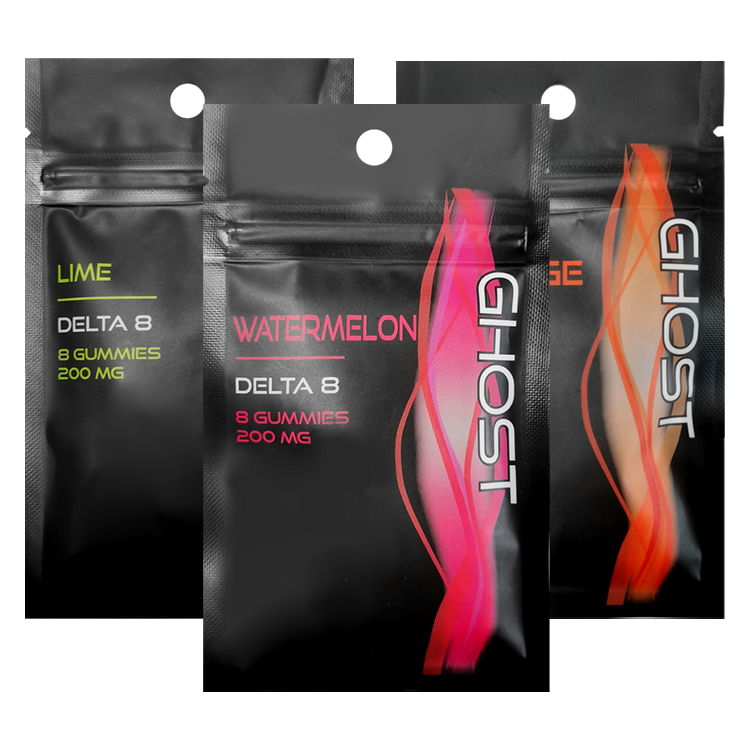
A pouch cannot rely on film performance if the seal area is inconsistent or the closure does not match the filling process. A zipper can be useful for repeated consumer access. A top heat-seal area can be appropriate for a retail pack. A child-resistant closure can be part of a market-specific package design. None of those terms, by themselves, confirms the quality of every finished pouch.
It is useful to separate seal strength from seal integrity. Seal strength concerns the force required to pull a seal apart under a defined test configuration. Seal integrity concerns whether the package has a channel, opening, pinhole, or other route that could compromise the intended barrier. ASTM publishes separate methods for these questions. ASTM F88/F88M addresses the measurement of seal strength in flexible barrier materials, while ASTM F1886/F1886M addresses channels in flexible-package seals and notes that visual seal defects can indicate process variation or a potential compromise in package integrity. ASTM F88/F88M and ASTM F1886/F1886M are useful references for a quality discussion, even when a cannabis brand uses a supplier-specific validation plan rather than running the standards itself.
For procurement, the practical questions are straightforward:
- Is the pouch intended to receive a top heat seal after filling?
- What part of the pouch must remain clear of product during sealing?
- Does the chosen zipper, gusset, window, or die-cut affect the usable seal area?
- What sealing equipment and process range will the co-packer or filling team use?
- What finished-pouch checks are appropriate before a production run is approved?
Those questions help a buyer discover mismatches early. A well-designed laminate cannot compensate for a seal area contaminated by product, a pouch that does not fit the fill volume, or a closure selected without reference to the actual filling line.
Exterior residue is a diagnosis question, not proof of a film failure
When a finished package has an odor concern on its exterior, the correct response is to investigate the whole process. Do not assume immediately that the barrier film has failed, and do not use the exterior observation as proof of a material claim. The source may involve filling, handling, transfer points, damaged packs, or a package that was never sealed as specified.
That distinction is valuable for lawful quality management. It encourages a brand to trace the issue through the process: inspect empty pouches, check the filling and sealing step, separate damaged units, review the outside surfaces, and compare completed samples with the agreed acceptance criteria. The goal is a clean, controlled retail package and a documented process.
Build the specification before choosing the pouch
A useful cannabis pouch specification starts with the product brief and turns it into clear questions for the supplier. It should be detailed enough to compare quotations and samples, but it does not need to pretend that one generic pouch fits every product.
| Specification field | Why it matters | What the buyer should document |
|---|---|---|
| Product format | Product shape, surface condition, and filling behavior affect pouch choice | Flower, pre-rolls, edibles, concentrates, or another defined format |
| Fill weight and physical volume | Weight alone does not establish the volume a pouch needs | Target fill weight, sample density, usable headspace, and any size range |
| Finished pouch format | Gussets, opening width, and seal areas affect filling and shelf presentation | Stand-up, flat-bottom, three-side-seal, or another selected format; finished dimensions |
| Material structure | The material stack is the basis for a meaningful barrier discussion | Full layer description, including the intended barrier and sealant layers |
| Closure and seal plan | A zipper and a heat seal serve different functions | Zipper type, top-seal requirement, tear notch, child-resistant feature where applicable |
| Print and label area | Artwork and mandatory information can change the usable pouch layout | Print method, finish, label panel, lot-code location, and required warnings for the destination market |
| Evidence and validation | A slogan does not explain what was tested | Available OTR/WVTR conditions, seal-related information, sample plan, and project acceptance criteria |
| Destination market | Packaging rules differ by jurisdiction and product category | Target market, product classification, and the party responsible for regulatory review |
The table is deliberately broader than barrier film. A buyer may need a zipper for a multi-use format, a top seal for the pack line, a label panel for lot information, or an opaque construction for a particular retail requirement. If those elements are not documented together, a supplier can quote a pouch that looks similar but is not operationally comparable.
For fill weight, use actual product samples whenever possible. Cannabis flower density can vary, so a nominal 3.5 g, 7 g, 14 g, or 28 g weight does not guarantee the same physical volume from one product to another. The weed bag sizes guide can help a reader understand common retail weight references, but a custom project still needs a real sample check before a final pouch size is approved.
For material, request the complete structure rather than just asking whether the pouch is foil, metallized, or Mylar. For sealing, identify whether the production process needs a top heat seal and what area must remain free of product. For validation, ask the supplier to identify exactly what information is available for the proposed structure. These steps allow the brand to compare evidence rather than compare adjectives.
Validate the finished pouch before scaling production
Sample review is where a specification becomes a decision. Empty pouches are useful for assessing print, format, and general construction. Filled and sealed samples are necessary for assessing whether the selected format works with the actual product and packing process.
Start with a defined acceptance brief
Before samples are filled, write down what the business needs to verify. The brief might include fill fit, seal appearance, zipper operation, print placement, label space, closure function, and the documentation expected from the supplier. If the project has a material-performance requirement, state the relevant metric and test conditions rather than asking for a vague guarantee.
The acceptance brief should also state what the brand will not claim. For example, a team may describe a pouch as having a listed laminate structure and a specified closure. It should not claim that every unit will preserve a fixed aroma profile or eliminate odor in every environment unless it has reliable, relevant evidence for that exact finished package and use case.
Review samples after the real filling and sealing process
Evaluate the pouch after the steps that will happen in production. Is there enough room to fill without trapping product in the seal area? Does the selected pouch sit and present as intended after filling? Are the seals visually consistent? Does the zipper function as designed after the top closure has been applied? Are labels, lot codes, and required information positioned where they remain readable?
This stage often identifies practical matters that a material data sheet cannot answer. A pouch may be technically available in a particular structure but still be a poor fit for a wide flower fill, a delicate pre-roll, a filling funnel, a heat sealer, or a retail label program. Resolving those questions on samples is less risky than discovering them after a full printed run is produced.
Match verification to the actual question
Different tests and inspections answer different questions. A visual seal review can help identify obvious process issues. A seal-strength method concerns opening force under a stated test. A seal-integrity method can focus on channels or other defects. OTR and WVTR are material measurements under stated conditions. A real project may use more than one kind of evidence, and none of them should be represented as proof of unrelated performance.
That is the core quality-control principle for this article: match the evidence to the claim. If the team wants to compare two constructions, compare their documented structures and applicable data. If it wants to assess the pack line, review finished samples from that line. If it needs market-specific regulatory guidance, verify the current requirements for the destination market instead of relying on a generic web statement.
New York offers one example of why package requirements should be checked at the market level. Its cannabis packaging guidance says retail packaging must fully enclose the product and be sealed to protect against oxygen exposure, contaminants, and product degradation; it also addresses child resistance, tamper evidence, and resealability in applicable cases. Review the New York Office of Cannabis Management guidance. Other markets can differ, so this reference is an example rather than a universal legal rule.
Published pouch configurations: use real records, not invented outcomes
Published project pages can help a buyer compare formats, material descriptions, printing methods, and listed closure features. They should not be turned into an invented customer case study. A public project record rarely establishes why a customer chose a format, what happened during distribution, what a package retained, or whether a particular claim was tested.
The following three published Mylarbag configurations are useful format examples only.
Matte-black stand-up pouch with PET / VMPET / PE
The Custom Digital Printed Matte Black Stand-Up Pouch lists a PET / VMPET / PE structure, digital printing, a stand-up pouch format, and dimensions of 10.2 × 12.7 + 3 cm. Those published fields make it a useful reference for a buyer discussing a compact stand-up format and a stated multilayer structure. They do not prove an odor test, retail outcome, or regulatory approval.
Glossy stand-up pouch with PET / VMPET / PE
The Custom Digital Printed Glossy Stand-Up Pouch lists PET / VMPET / PE, digital printing, a stand-up pouch format, dimensions of 10.2 × 12.7 + 2.5 cm, and a zipper. This record can help a buyer separate a material-stack question from a closure and process question. It is a format example, not evidence of odor-control performance, finished-package test results, or market-specific approval.
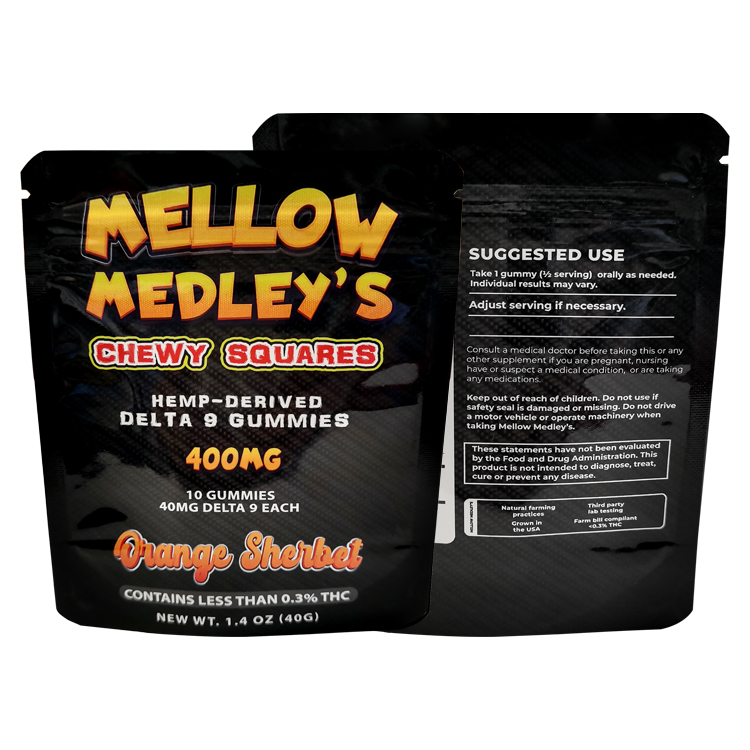
Matte-white three-side seal pouch with PET / PE
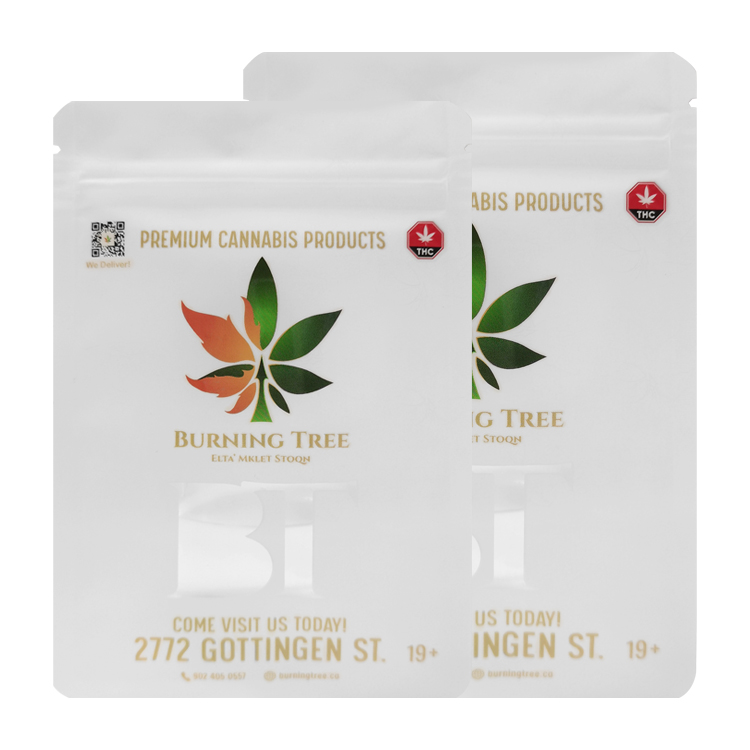
The Custom Digital Printed Matte White 3-Side Seal Cannabis Pouch lists PET / PE, digital printing, a flat pouch format with spot UV, and dimensions of 10.2 × 15.2 cm. This record illustrates why a visual finish and a full package specification should be recorded separately. A buyer should still confirm relevant barrier data, closure plan, and finished-package validation for its own product.
A practical request list for packaging suppliers
When a brand is ready to discuss custom cannabis packaging, it can make the quotation and sample process more productive by providing a concise project brief. The brief does not need to contain every technical answer on day one. It should identify the questions that still need to be resolved.
Include the following information:
- The product category and whether the product is single-use or multi-use.
- Target fill weight and a physical sample or representative volume where available.
- Desired pouch format, shelf presentation, and artwork needs.
- Destination market and any known packaging or labeling requirements that must be reviewed.
- Desired closure arrangement, including whether a top heat seal, zipper, tear notch, or child-resistant feature is being considered.
- The data or documentation the brand needs to compare structures and approve samples.
- The expected packing process, including whether filling is manual, semi-automatic, or automated.
This approach is better than asking a supplier to promise a generic result. It gives both sides a documented starting point and makes it easier to identify whether the first sample is appropriate or what needs to change. It also leaves room for a packaging team to compare material structure, format, printing, and closure options without making unsupported performance claims.
For a custom project, Custom Cannabis Packaging is the relevant service page. When requesting a quote, provide the product type, fill weight, target market, artwork requirements, and features you need to evaluate. Those inputs are more useful than a one-line request for a "smell-proof bag" because they describe the actual decision that needs to be made.
Frequently asked questions
What does odor-control packaging mean for cannabis products?
It means the brand is evaluating the finished pouch, not relying on a marketing label. The material structure, seals, closure, fill process, handling, and available validation should be considered together. A responsible claim should match the evidence available for the exact package and intended use.
Does a thicker cannabis pouch automatically provide better odor control?
No. Thickness can affect stiffness, puncture resistance, and handling, but it is not a stand-alone odor-control measurement. Compare the complete material structure, test conditions, finished seals, closure design, and the product's actual use conditions.
Is a zipper enough for a cannabis pouch?
A zipper may be appropriate for a resealable format, but it is only one part of the package design. A project may also need a top heat-seal area, a defined fill process, and finished-pouch validation. The right arrangement depends on the product, format, market, and intended consumer use.
Do OTR and WVTR values equal an odor-proof rating?
No. OTR and WVTR describe oxygen and water-vapor transmission under stated test conditions. They can be useful for comparing structures, but they do not by themselves prove a universal aroma or odor-control outcome. Ask what was measured and how that evidence relates to the finished pouch.
What should a cannabis brand request from a pouch supplier?
Request the full material structure, finished dimensions, pouch format, closure and heat-seal plan, available test information with its conditions, sample options, and any documentation relevant to the destination market. The brand should then evaluate filled and sealed samples with its own product and process before placing a bulk order.
Can a published pouch project prove a product-performance claim?
No. A published project can support factual statements about its listed pouch format, material structure, dimensions, printing, and visible appearance. It does not prove customer results, shelf life, odor performance, legal compliance, or a test outcome unless those facts are separately documented and verifiable.
Choose a documented package, not an absolute claim
The best way to approach cannabis packaging odor control is to make the package brief specific. Define the product, fill weight, pouch format, material structure, closure, process, market, and validation needs. Review finished samples instead of relying on empty-pouch appearance. Use published data for the question it actually answers. Then describe the finished package in language that matches the evidence.
That process supports better sourcing decisions and clearer conversations among brand teams, co-packers, and packaging suppliers. It also avoids turning a legitimate product-protection requirement into an unsupported promise. If you are planning a lawful cannabis packaging project, contact Mylarbag with your product type, fill weight, target market, artwork needs, and the features you want to evaluate.