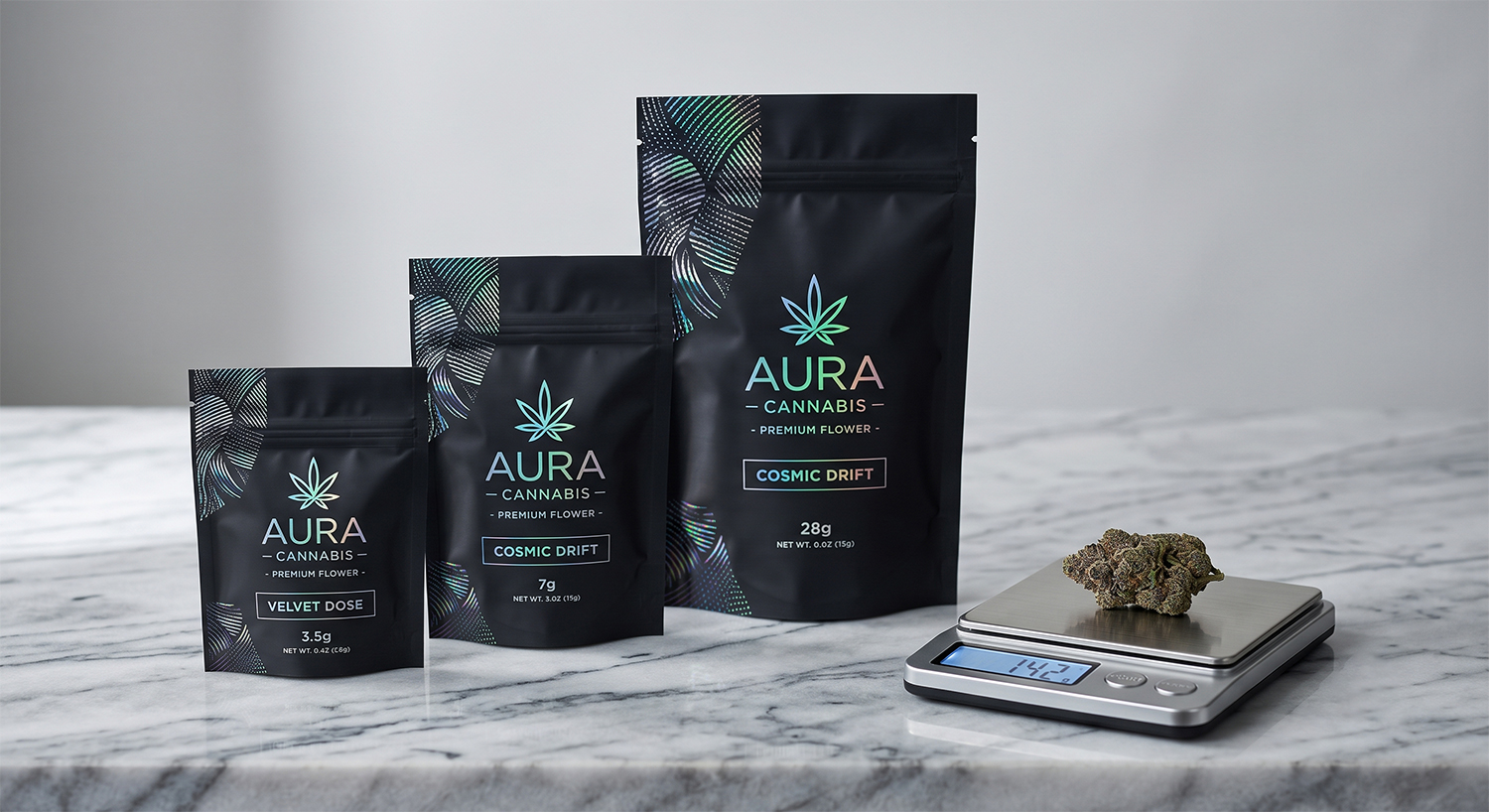
Custom Cannabis Packaging MOQ: How to Plan Your First Pouch Order
A custom cannabis pouch order does not begin with a universal MOQ. It begins with a production brief: what is going into the pouch, how it will be filled and sealed, which formats and artwork versions are needed, and what must be confirmed before production. The more of those decisions are defined, the easier it is for a packaging supplier to scope the right order path.
For a first order, the useful question is not simply “What is your MOQ?” It is: “What is the smallest practical order for the pouch specification and launch plan we actually need?” A stand-up pouch with one artwork, a set of several SKU designs, a specialty finish, a custom dimension, and a project that needs sample review are different production conversations. Treating them as one number can lead to an unhelpful quote or a pouch that does not fit the real packing process.
This guide helps cannabis brands prepare a clearer first pouch inquiry. It does not set a universal minimum, price, lead time, shelf life, or compliance outcome. Those points depend on the final project, target market, production method, and documentation requirements.
The direct answer: MOQ follows the specification
Minimum order quantities exist because a pouch is not only a bag shape. It is a set of linked production decisions. The pouch format influences the converting setup. The size and gusset affect material usage. The artwork and number of designs influence print preparation. Materials, finishes, windows, zippers, tear notches, and sealing requirements can each affect how a project is planned.
That is why two brands can ask for a “custom cannabis pouch” and receive very different commercial options. One may be launching a single flower pouch with a simple printed design. Another may need a coordinated range for several fills and strain-specific graphics. Neither project is better; they simply require different inputs.
A useful quote request separates decisions that are already fixed from decisions that remain open. If a brand is still deciding between a stand-up pouch and a flat pouch, say so. A supplier can then compare directions instead of assuming a single final configuration. If the exact material is undecided, explain the product, storage, filling process, and desired visual direction rather than selecting a structure from a generic chart.
| Project input | Why it changes the conversation | What to provide in an inquiry |
|---|---|---|
| Product and target fill | Helps determine practical pouch volume and handling context | Product category, approximate fill, and whether the pouch is sold as a single unit or a multi-unit format |
| Pouch format and size | Affects pouch construction, material use, and packing presentation | Preferred format, target dimensions if known, and alternatives worth comparing |
| Artwork and SKU count | Affects how many printed designs are being planned | Number of artwork versions, colour direction, and whether designs share one layout |
| Materials and finish | Shapes the visual, tactile, and specification discussion | Known material preference, window/finish request, or the product conditions that still need evaluation |
| Filling and closing process | Keeps the pouch design connected to the real operation | Manual or machine filling, top sealing approach, reseal need, and relevant handling constraints |
The goal is not to complete every field before speaking with a supplier. The goal is to make the unknowns visible. A transparent brief avoids the false precision of asking for a firm number before the pouch has been defined.
Start with the product and the packing process
Packaging decisions should begin with the product rather than a decorative pouch reference. A flower product, edible, pre-roll, concentrate accessory, or non-cannabis item in the same retail collection can have different space, handling, and presentation needs. A pouch that looks appropriate in a mockup may be impractical if the fill line, headspace, top-seal area, or secondary pack has not been considered.
Describe what the team knows about the product and its packing process. This does not require sharing confidential formulas. It means giving the supplier enough context to discuss a format responsibly: target fill, approximate product dimensions where relevant, whether the pack is filled manually or on equipment, and whether the pouch needs to be resealed after opening. If a market has specific packaging or labeling rules, provide them as project requirements rather than assuming a visual feature alone proves compliance.
For example, New York’s packaging guidance is a useful illustration of why market requirements belong in the brief, not as an afterthought. It is directed to New York licensees and should not be treated as universal legal advice. A brand selling elsewhere should confirm the rules that apply to its own product and market. New York OCM Part 128 guidance can be used as a market-specific reference point.
Compare pouch formats before locking the order
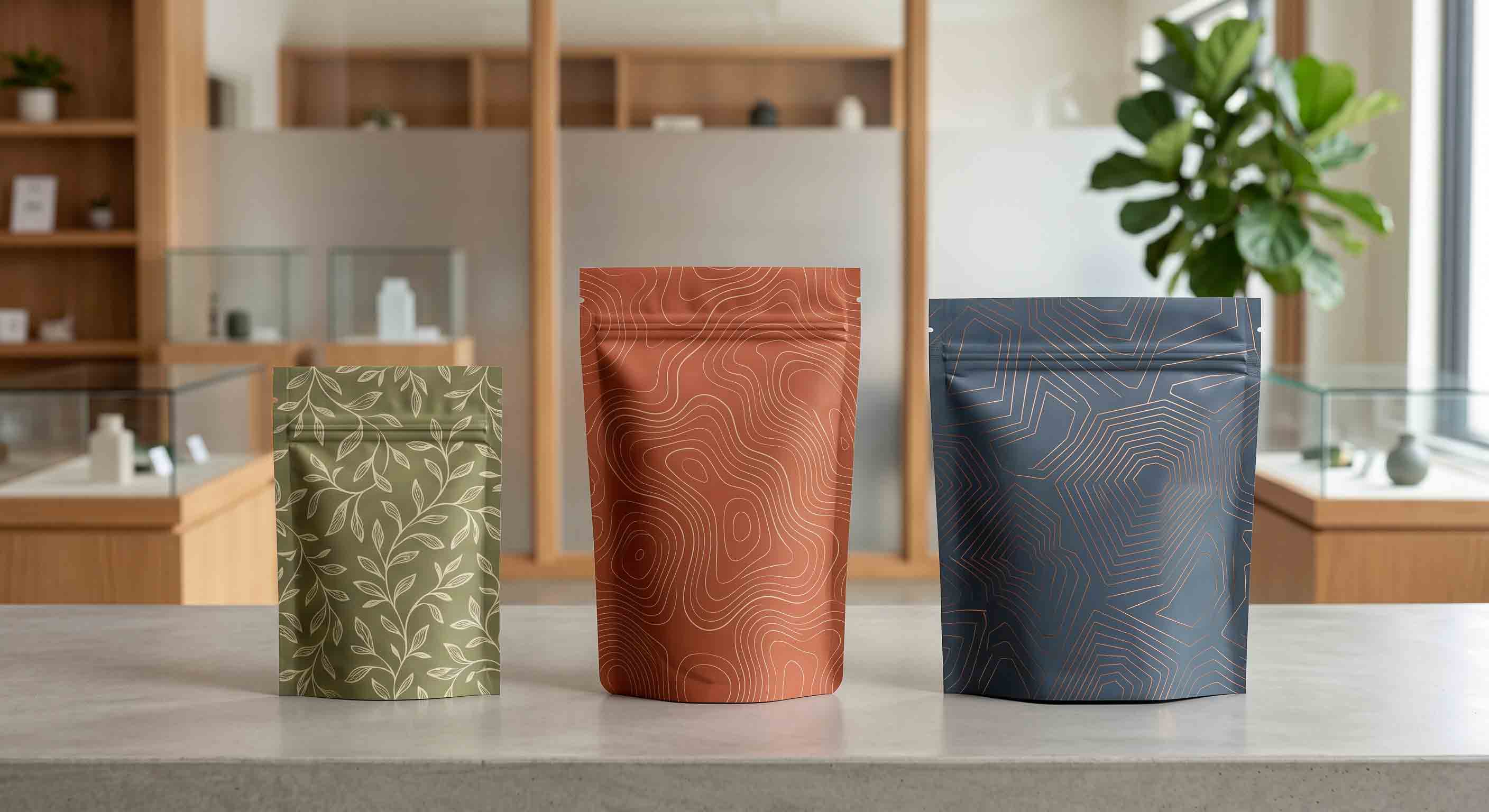
The visual identity of a cannabis brand can often be carried across more than one pouch format. That does not mean every format is interchangeable. A flat pouch, stand-up pouch, and flat-bottom pouch create different front-panel areas, filling behavior, shelf posture, and consumer handling. Comparing them before approving artwork helps prevent a design from being forced into a format that was never part of the original brief.
| Format direction | Useful early questions | Do not assume |
|---|---|---|
| Flat pouch | Does the product need a compact profile? Is hang-hole or shelf display relevant? | That a flat pouch suits every fill volume or sealing process |
| Stand-up pouch | Does stable shelf presentation matter? Is there enough room for the planned top seal and closure? | That an upright pouch automatically solves all filling or storage requirements |
| Flat-bottom or gusseted pouch | Is a larger presentation area or different shelf footprint needed? | That a larger-looking pouch is the correct choice without checking the actual product and fill |
For a first order, it is often more practical to identify one primary format and one alternative to compare. This keeps the decision focused while allowing the supplier to explain how the two directions differ. It also gives the artwork team a clearer canvas: front, back, side, and seal areas can be planned around a real pouch construction instead of a generic rectangle.
Treat artwork and SKU count as production inputs
Artwork is a commercial and production input, not the final decoration applied after everything else is decided. A single design applied to one format is different from a collection containing several sizes, colourways, and product variants. The design system can be consistent while the order plan remains realistic.
Before asking for a quote, decide whether the launch needs one pouch design, several individual designs, or a master layout that will later be adapted. If brand artwork is unfinished, a packaging brief can still include the intended mood, palette, required panels, and visual references. Avoid presenting a marketplace competitor’s pouch as a complete technical specification. Use it only to explain a visual direction or format preference.
The important distinction is between an artwork concept and a production-ready file. A concept helps begin the conversation. A production-ready file must ultimately match the selected pouch dimensions, printable areas, and agreed construction. The sooner those boundaries are known, the fewer late revisions are needed.
Material and finish choices belong in the same brief
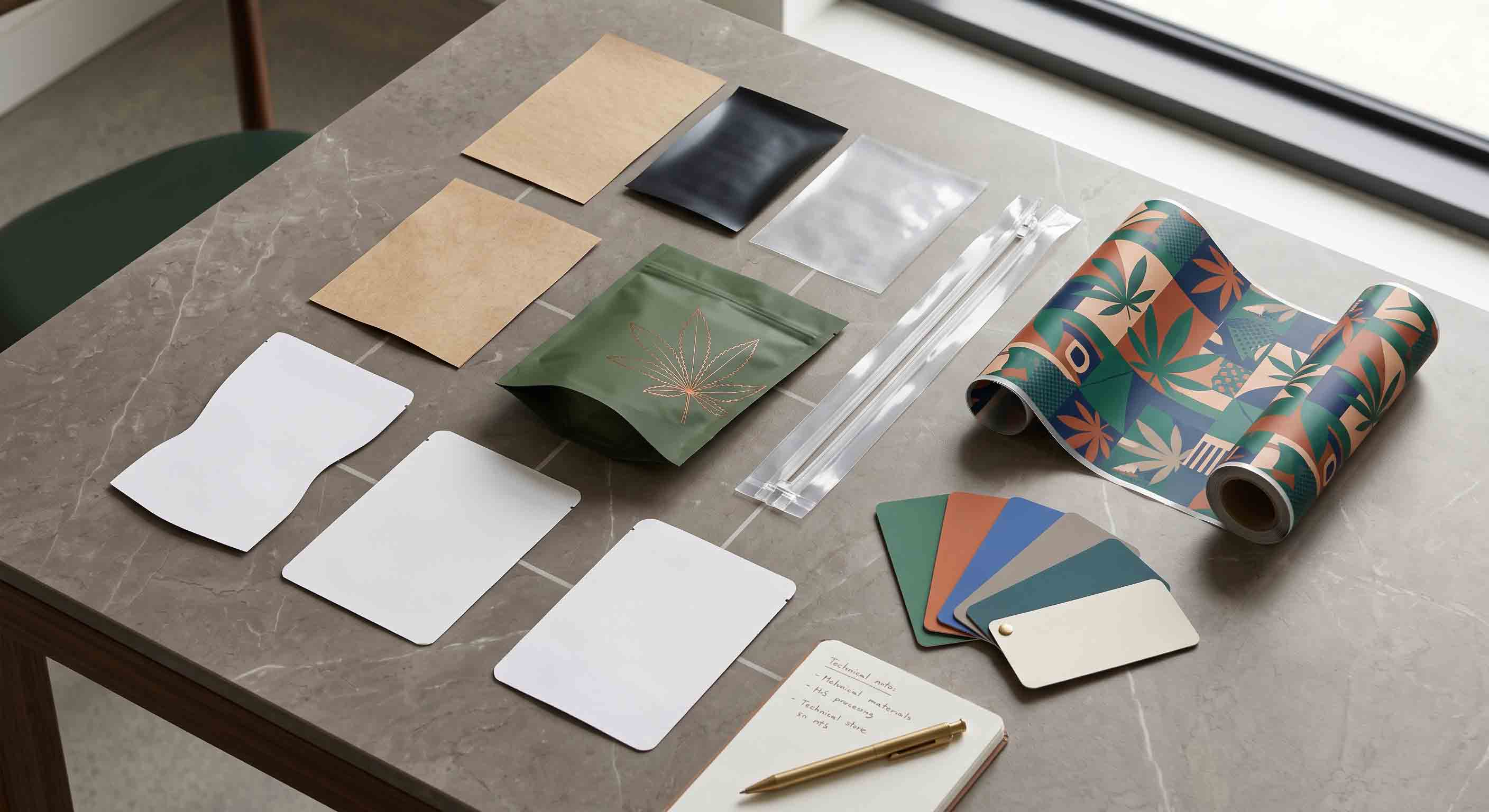
Material language can be confusing because it is easy to treat one visible finish as an entire package specification. Matte, gloss, soft-touch, holographic, transparent, metallic, paper-like, and clear-window effects describe visible or tactile directions. They do not by themselves answer every question about the pouch structure, sealing approach, or use case.
Ask the supplier to discuss material direction in relation to the actual product and packing process. If a window is important, say what it needs to show. If a premium tactile effect matters, identify that as a brand objective. If a specific structure is required by a customer, market, or internal document, provide it exactly. Do not infer performance from a photo of film or a pouch sample.
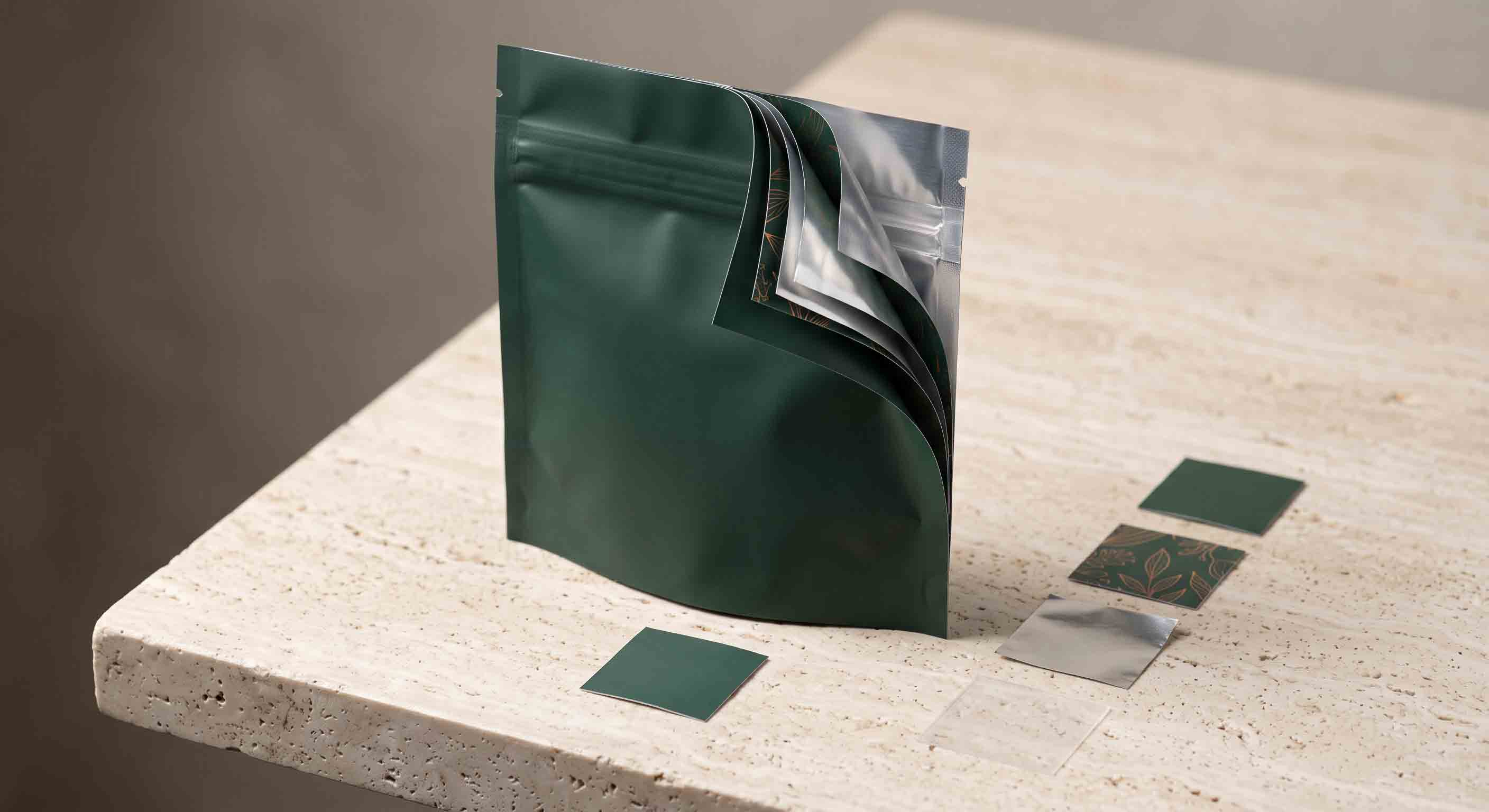
The same caution applies to technical language such as barrier, seal strength, and package integrity. Those are subjects for a defined specification and appropriate validation method, not claims that should be read from artwork. ASTM lists methods relevant to flexible packaging, including seal-strength and visual seal-integrity methods such as F88/F88M and F1886/F1886M. Whether a given method is relevant to a project depends on the package and the validation plan. ASTM packaging test-method overview is a helpful starting point for technical conversations.
Separate a resealable closure from the finished package specification
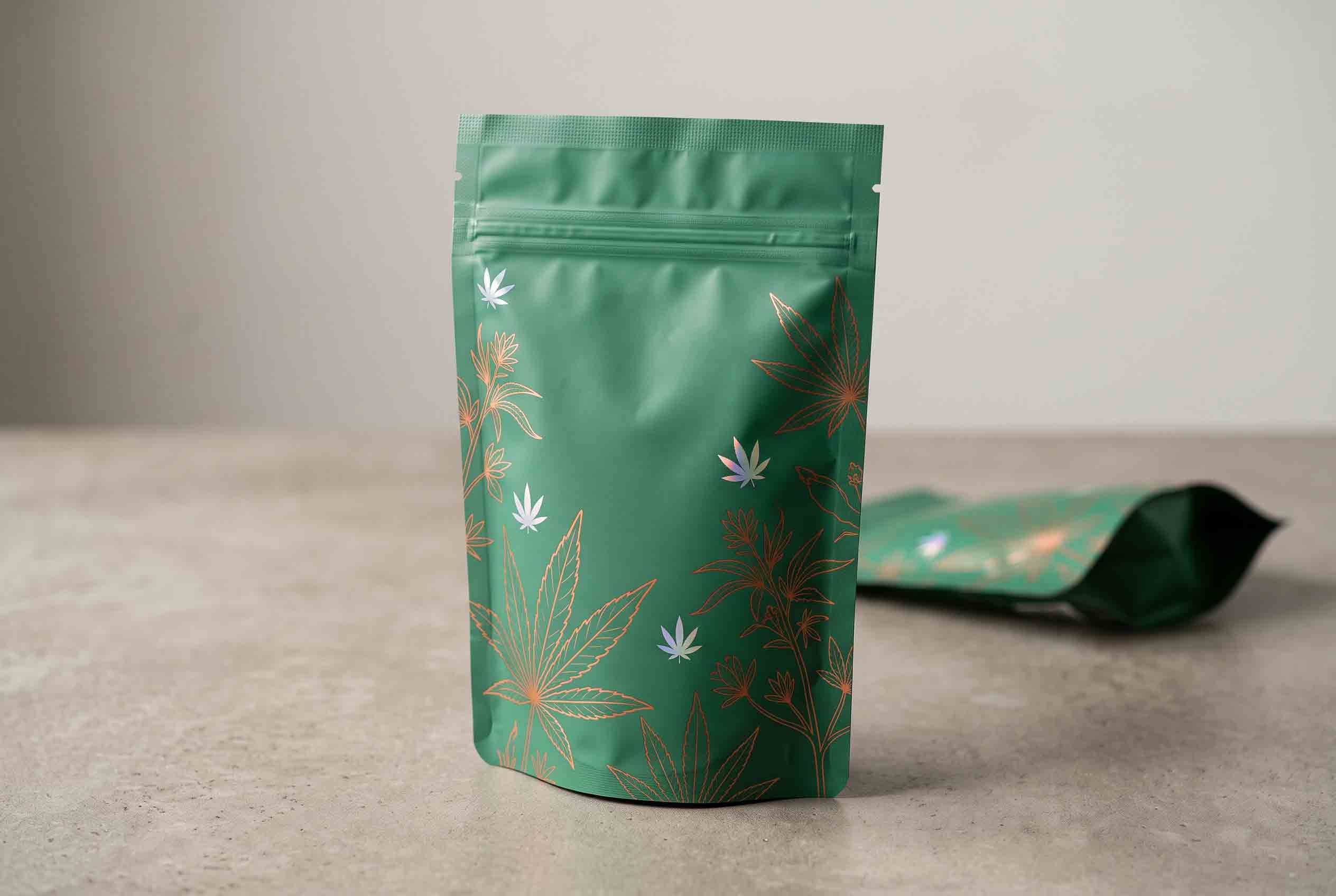
A press-to-close zipper can be a useful feature when a brand wants a pouch to be resealed after opening. It is not a substitute for choosing the pouch format, material direction, filling process, or top-seal design. Treat it as one feature inside the whole specification.
When a closure is relevant, give the supplier clear operational information: whether the pouch will be top-filled, whether a heat seal is planned above the zipper, whether the product will be packed as a single unit or a multi-unit format, and whether the closure must coexist with a particular retail or market requirement. This is more useful than simply requesting “a ziplock bag.”
For related process guidance, see our cannabis pouch sealing and QA guide. It explains why the finished pack should be evaluated as a system rather than reduced to one closure feature.
Plan the first order as an assortment, not a pile of unrelated designs
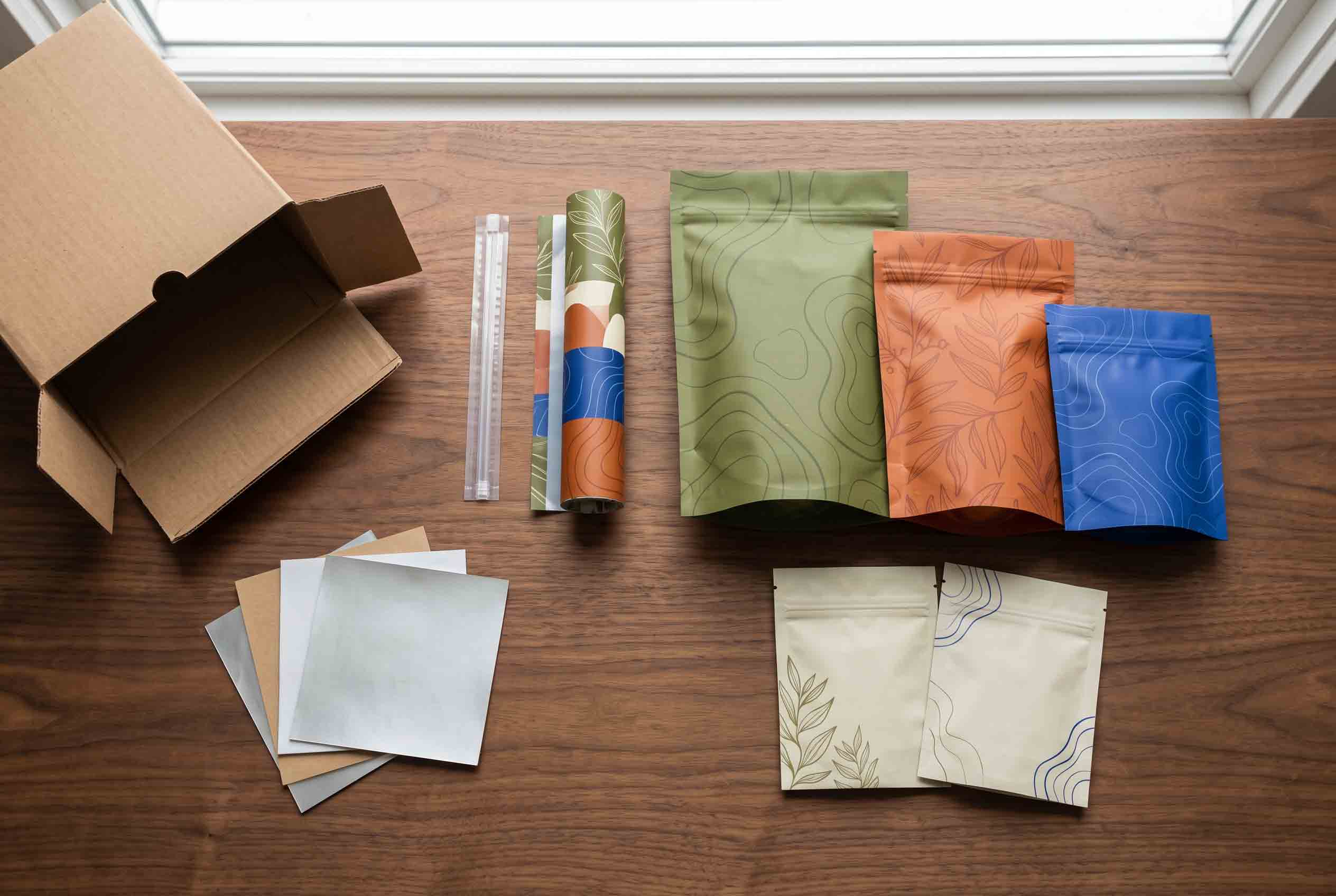
First orders often work better when the brand decides which formats, sizes, and artwork versions are truly needed for launch. The result can be a smaller, more coherent packaging family rather than a wide collection of unrelated pouch concepts. This is especially useful when a brand is testing the fit between its retail presentation and product range.
Start with the products that will actually be available at launch. Group them by compatible pouch direction where appropriate. Then identify which differences are essential: size, product category, finish, colourway, closure, or market-specific packaging requirement. A design variation that is only decorative may not need a separate production path at the beginning.
| First-order decision | Better way to frame it | Useful supplier input |
|---|---|---|
| Number of designs | Which variants must launch together? | Whether shared format or layout assumptions need to be clarified |
| Size range | Which products genuinely need separate pouch sizes? | Comparison of likely format directions based on product and filling information |
| Finish choices | Which finish is core to the brand rather than optional decoration? | Sample direction and artwork considerations |
| Future expansion | Which variants are planned later but not required now? | How to record a design system without treating every future idea as a present order |
This approach does not promise the lowest possible minimum. It gives both sides a more honest project definition. If the first order needs fewer decisions, that can be discussed openly. If the launch needs several formats or artwork versions, the supplier has enough context to scope it accurately.
Use samples to confirm the production brief, not to create unsupported promises
Samples can help a team review pouch proportions, visual finish, print direction, and the way a chosen format presents the product. They should be discussed in the context of the project: which features are being reviewed, what is already approved, and what still needs confirmation before production.
The best sample-review conversation is specific. Instead of saying “make it premium,” identify the elements to inspect: pouch dimensions, placement of essential artwork panels, visible finish direction, closure position, top-seal allowance, window location if any, and the compatibility of the proposed format with the intended filling process. This creates a clear handoff between brand, designer, packer, and packaging supplier.
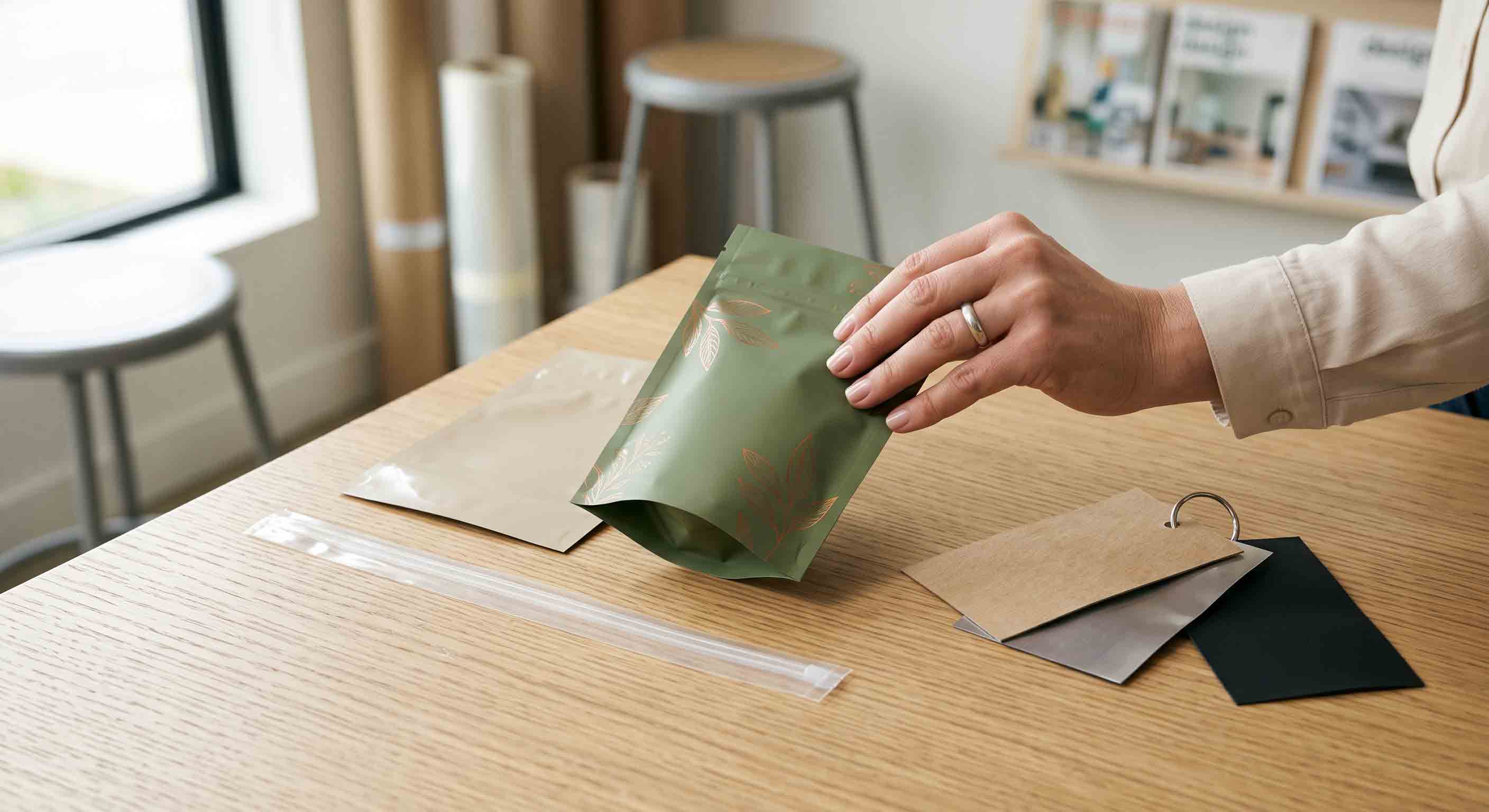
Keep the final brief concise but traceable. A good version can include the product category, target fill, chosen pouch format, target dimensions, artwork status, number of designs, preferred material or visual direction, closure and top-seal expectations, filling process, target market, and any documentation requirements. If one part remains open, mark it as open. That is better than silently substituting an assumption.
Make the quote request easy to compare
A first inquiry is most useful when it lets a brand compare like with like. If two suppliers receive different descriptions, their responses may be addressing different pouch assumptions. That can make a later comparison look like a price difference when it is really a difference in format, materials, print scope, or included project work.
Use one short reference brief for every conversation. Keep the product category, target fill, pouch format, size range, artwork count, visual direction, closure needs, filling process, and target market consistent. Then list any open questions below it. A supplier can respond to the defined scope while showing where a decision still affects the project.
It also helps to distinguish a launch need from a future possibility. For example, a brand may plan a larger seasonal range later, but only require two pouch sizes and one artwork family for the first launch. Recording the future idea is useful; treating it as part of the present order can blur the initial discussion. Conversely, if several variants must launch together, say so early rather than adding them after a preliminary quote.
This discipline improves communication without turning the brief into a contract. It gives the brand a repeatable document for internal approval and gives the supplier a practical basis for evaluating formats, samples, and production preparation. The result should be a clearer project conversation, not an unsupported promise about a particular MOQ or outcome.
Before sending the inquiry, ask one internal question: could a colleague who did not attend the design discussion understand what is being requested? If not, add a short note or reference image that clarifies the choice. This simple review often reveals missing information about pouch size, the number of versions, or the role of the closure before those omissions become production assumptions.
A practical first-inquiry checklist
Use this checklist before requesting a custom cannabis packaging discussion:
- State the product category and approximate target fill.
- Identify the primary pouch format and any format you want compared.
- Share target dimensions if known, or explain the product size and shelf goal.
- State whether the pouch is manually filled or filled on equipment.
- Explain whether a top heat seal, resealable closure, window, or specialty finish is being considered.
- Share the number of launch designs and which variants are essential now.
- Provide artwork files if ready; otherwise share the visual direction and what is still in development.
- Identify the target market and provide any confirmed packaging or label requirements.
- Explain what sample or specification questions must be answered before production.
Recommended custom pouch directions for a first order
For brands that have already defined their product and launch plan, a custom pouch discussion can start with a practical format direction rather than a generic bag request. A Custom Cannabis Packaging inquiry can cover stand-up, flat, or other flexible pouch formats; printed visual direction; material options; and visible features such as zippers, windows, or finishes. The final recommendation should follow the actual product, filling process, market requirements, and approved artwork.
To prepare a useful conversation, share your product category, target fill, target market, preferred pouch format, artwork status, closure features, packing process, and any documentation requirements. Discuss a custom cannabis packaging project when you are ready to turn the brief into a project-specific quote and sample discussion.
Frequently asked questions
What is the MOQ for custom cannabis packaging?
There is no responsible universal answer without the pouch specification. Format, size, materials, artwork count, finish direction, and the production brief all affect how an order is scoped. Provide the project details first, then request a project-specific discussion.
Can I ask for a quote before my artwork is final?
Yes. Share the available visual direction, intended number of designs, preferred format, and what remains undecided. Final artwork still needs to be matched to the agreed pouch dimensions and printable areas before production.
Does one pouch design work across every product size?
Not automatically. A shared design system may be adapted across compatible formats, but each pouch size has its own proportions, panels, seals, and usable artwork area. Review the final layout against the selected pouch construction.
Is a zipper the same as a complete packaging specification?
No. A zipper is one closure feature. The finished package still needs an appropriate format, material direction, top-seal approach, artwork layout, filling-process plan, and any applicable market requirements.
Should I choose the material before speaking with a supplier?
You can provide a required structure or a preferred visual direction, but do not guess a technical specification from a photo. Explain the product, packing process, target market, and visible finish goals so the material discussion can be tied to the project.
What should I include in my first packaging inquiry?
Include the product category, approximate fill, preferred pouch format, target dimensions if known, artwork status, number of designs, closure or finish features, filling process, target market, and documentation questions. Mark open decisions clearly.