
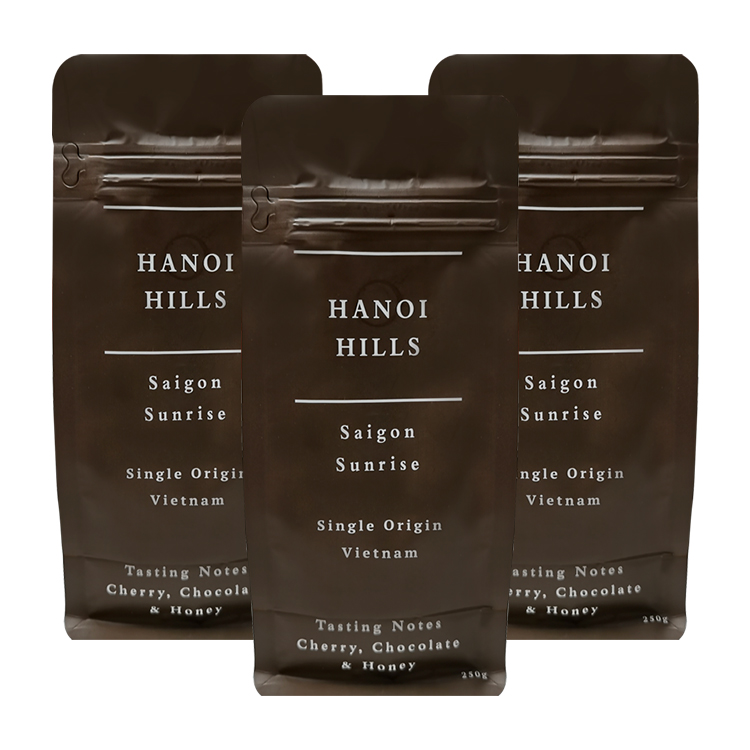
Custom coffee bag MOQ is not one universal number. It depends on the pouch format, material direction, printing route, artwork, number of SKUs, features, and how the supplier makes that specific project. Before requesting a quantity, define the coffee, target fill, pouch direction, and artwork status so the conversation is about a real bag rather than a vague “low-MOQ” promise.
This guide explains how to prepare a first custom-pouch enquiry. It does not publish a fixed MOQ, price, sample policy, or production schedule because those terms must be confirmed for the current project.
Why MOQ Is a Project Question, Not a Search-Filter Number
MOQ means minimum order quantity, but buyers use it in several different ways. A new roaster may ask whether a custom bag can be made for a limited launch. A larger company may ask whether several designs can be split across a range. Another buyer may already have an artwork file and only need to understand what details control the quotation.
Those questions cannot be answered responsibly by quoting a single number before the pouch is described. Two coffee bags can look similar from the front and still require different project discussions because they have a different size, panel layout, material notation, closure feature, print direction, or number of artwork variations.
The useful first question is not “What is your lowest MOQ?” It is “What exactly would the first pouch order include?” Once that is clear, a supplier can review what can be quoted for that project.
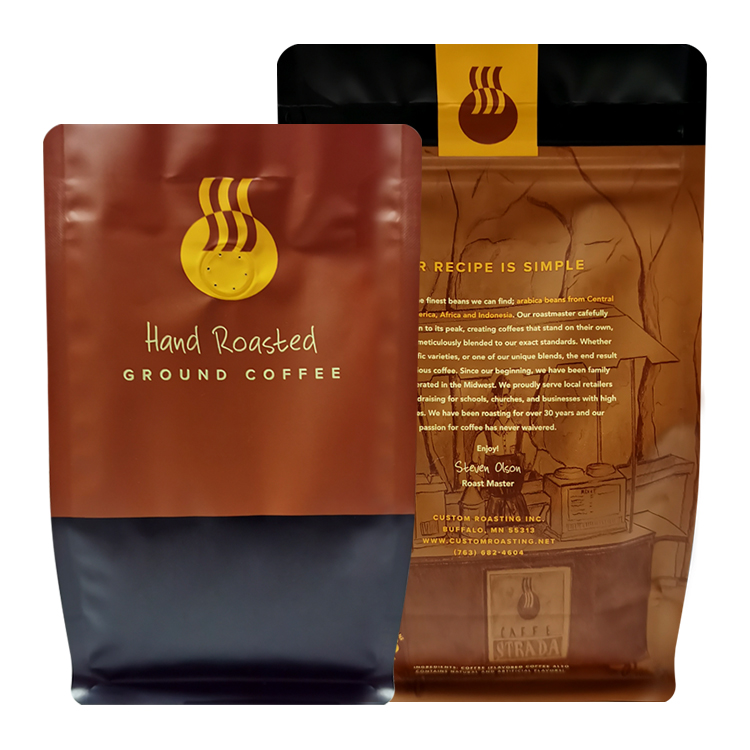
The Decisions That Usually Affect a First Custom Order
Before a quantity discussion, list the elements that define the package. You do not need a finished production file for every one of them. You do need to distinguish between what is decided and what is still under review.
This list is not a way to make an enquiry difficult. It helps prevent an unrealistic comparison in which one supplier is quoting an unprinted stock-style pouch while another is evaluating a printed, multi-SKU, feature-specific project.
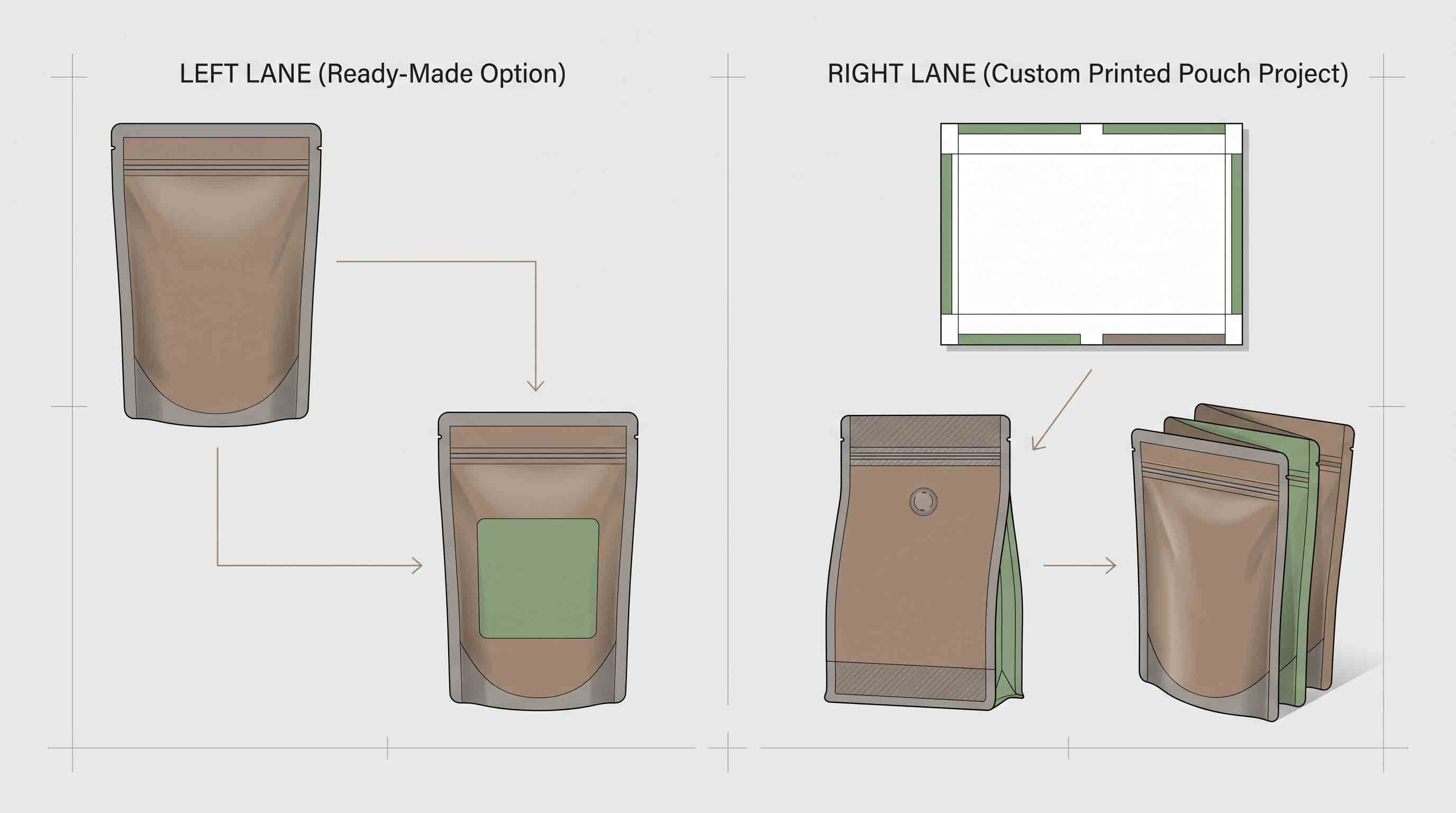
Separate Stock Pouches From a Custom Printed Pouch Project
“Small quantity” can point to more than one route. A buyer may be looking for an existing, unprinted pouch that can be labelled locally. Another may want a custom printed package with its own artwork, panels, and features. Both can be sensible business decisions, but they are not the same request.
An enquiry becomes more useful when the buyer states which path they are comparing. That allows the supplier to respond to the right problem instead of steering every request toward a generic product description.
Define the Order Scope Before You Compare Quantities
MOQ questions become harder when the project scope is still changing. A buyer may begin with “one coffee bag” and later add a second size, a new material direction, several artwork versions, a valve question, or a different pouch format for wholesale. Those may all be worthwhile changes, but they should be visible before you compare any quantity response.
Use a simple project-scope sheet. It does not forecast sales or set an order quantity. It gives each decision a place so the buyer can see whether the first order is one pouch programme or several separate projects.
This scope sheet also makes an internal conversation easier. A founder might care about the number of designs, a designer about panel layout, and a roaster about a fill or closure routine. They can all be right while still talking about different versions of the project. A written scope turns those separate views into one brief.
Do Not Confuse a Small First Run With a Small Project
A first order can be commercially small and still contain a complex packaging request. Multiple pouch formats, changing artwork, unusual feature positions, unconfirmed sizes, and several markets create a different review workload from one defined pouch with one current artwork version. That does not make either request wrong. It means a headline term such as “low MOQ” is not enough to describe the work being considered.
The practical approach is to choose what must be true for the first launch and what can wait. A brand may decide to evaluate one core pouch now and retain a gift pack or additional size as a later concept. Another buyer may need several SKUs immediately but can keep the pouch format and feature set consistent. The key is to state the decision, not to pretend that every future variation is already fixed.
This is especially helpful when comparing suppliers. If one quote assumes one artwork and another assumes five, neither price nor quantity can be interpreted without the scope. The buyer should ask each supplier to identify the pouch, artwork count, and included features behind the response.
Start With One Defined Pouch, Then Add Variations
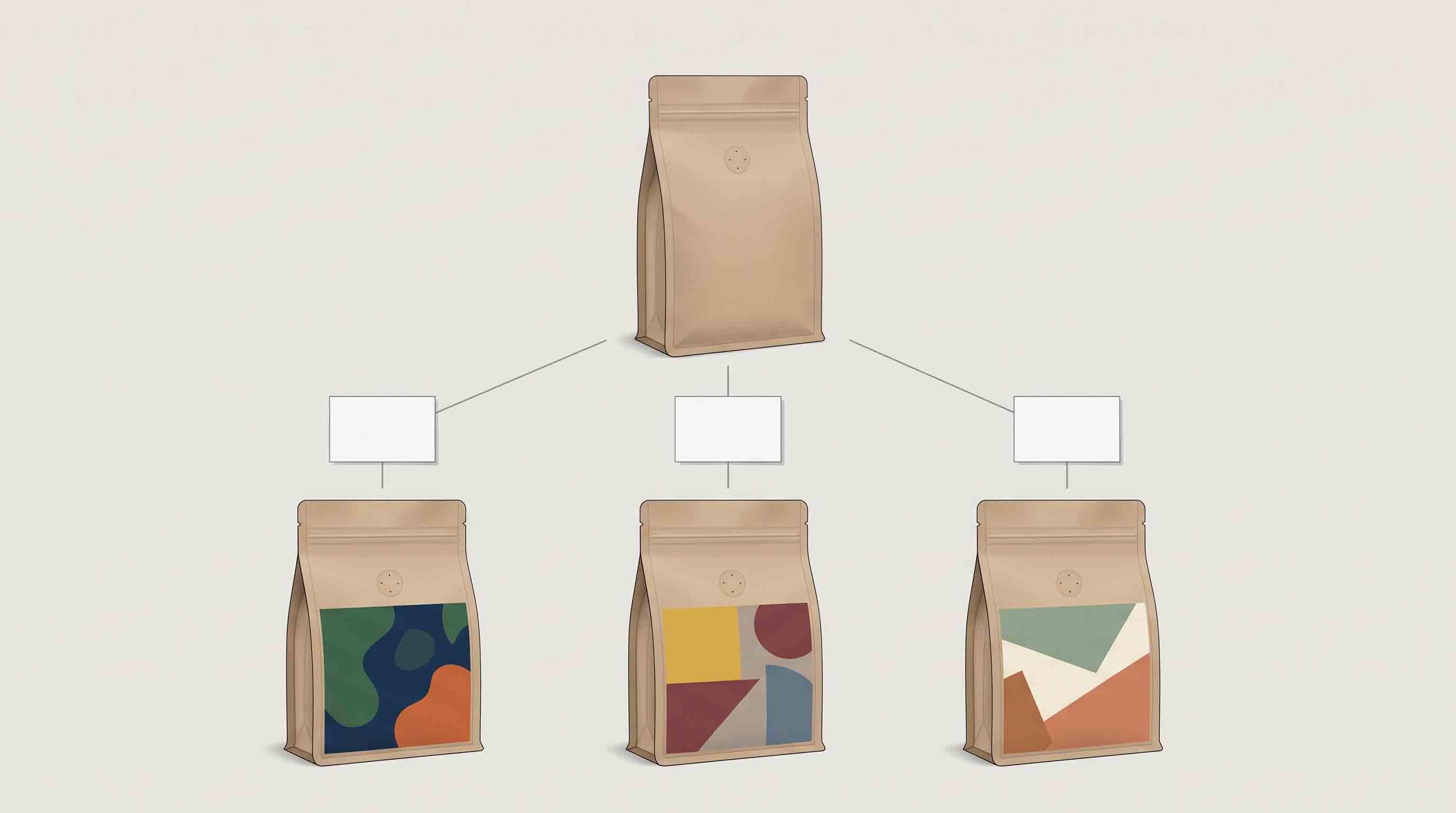
For a first custom order, it is tempting to describe an entire future coffee range at once: several roast levels, different origins, a gift pack, a wholesale format, and a seasonal release. That may be the long-term plan, but it is hard to evaluate if the first pouch itself is not defined.
Begin with a representative SKU. Specify the coffee product, target fill, pouch direction, intended artwork, and feature set. Then show how the other designs differ. Perhaps the structure remains the same while the front-panel colour and product information change. Perhaps one SKU requires a different size or closure. Perhaps a temporary campaign is still only a concept. Write those differences down.
This does not limit a brand’s range. It makes the first supplier conversation less likely to mix finished specifications with creative ideas. It also gives the buyer a clearer way to compare proposals later: the same product, pouch, artwork version, and SKU count should be in each comparison.
Use Published Projects as References, Not Price or MOQ Evidence
Published product records can show how individual coffee-pouch projects are described. They cannot prove that an unrelated buyer will receive the same MOQ, price, materials, schedule, or commercial terms.
One Mylarbag project record describes a 12oz flat-bottom pouch with a 15 × 26 + 6 cm format, MATOPP/VMPET/PE, digital printing, a side zipper, and a degassing valve. See the 12oz flat-bottom coffee-pouch project record.
Another record describes a 250g flat-bottom pouch at 14 × 18.5 + 7.5 cm with MATOPP/VMPET/PE, gravure printing, a valve, and a pocket zipper. See the 250g flat-bottom coffee-pouch project record.
The value of those records is the questions they surface: What is the exact format? What fill is being discussed? Which closure is in the brief? Is the artwork connected to the selected pouch? The records are not a published rate card.
Treat Artwork Readiness as a Separate Variable
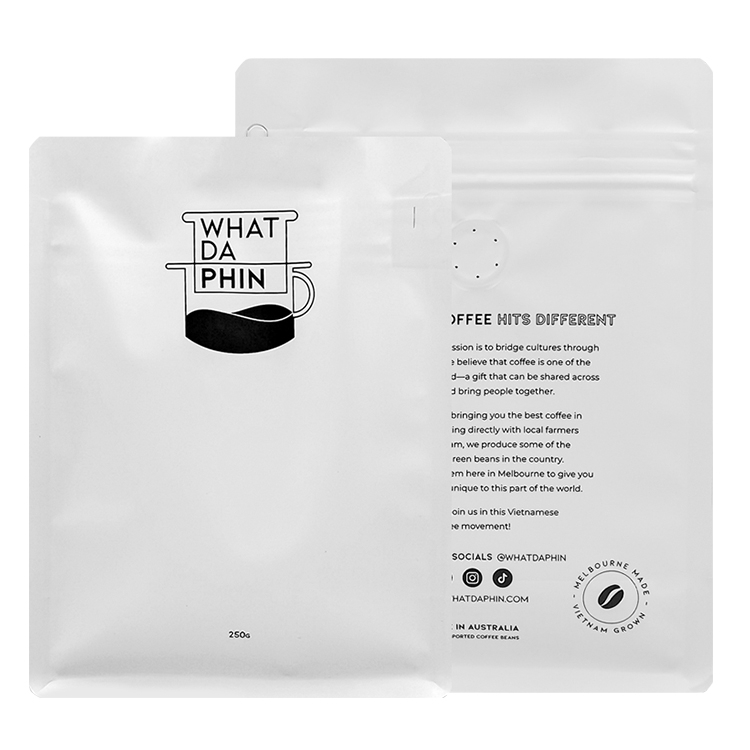
Artwork readiness affects the quality of an MOQ discussion because it affects what is actually being quoted. A file with a logo on a rectangle may be enough to start a design conversation. It is not necessarily a final layout for a selected pouch with seals, gussets, a valve, zipper, or other feature zones.
Describe the current file honestly:
- Concept: brand direction or a preliminary visual idea;
- Working artwork: a current version that still needs pouch and panel review;
- Reviewed layout: artwork mapped to a known pouch direction and its open questions;
- Final project file: a file that has moved through the supplier’s project-specific review process.
This vocabulary avoids an unhelpful situation where one person assumes “custom printed” means the artwork is ready while another assumes it is still a concept. For a fuller artwork-to-pouch handoff, see Coffee Packaging Design Guide: How to Prepare Artwork for Custom Bags.
Ask for a Quote That Can Actually Be Compared
An MOQ inquiry does not need to become a technical dossier. It needs enough information that each supplier understands the same project.
Avoid comparing a supplier’s response only by a headline quantity. Check whether each response is based on the same unit: the same pouch format, artwork count, printed or unprinted state, feature direction, and project assumptions. If those differ, the numbers may look comparable without describing comparable work.
It is also fair to ask a supplier what information would change its current view of the project. That question is more productive than asking for a promise from incomplete inputs. A supplier may need a target fill, a physical sample, a final artwork count, or a clearer feature direction before it can distinguish a tentative starting point from a quote-ready pouch brief.
Keep the answer with the version of the brief that produced it. If the pouch, artwork count, or feature list changes later, the earlier quantity discussion should not be treated as a standing commercial term.
That habit is simple, but it prevents a first exploratory answer from being mistaken for approval of a different future pouch.
It also lets the buyer return to the same scope when comparing later alternatives.
That preserves a fair basis for each commercial comparison.
What Not to Promise Before the Project Is Defined
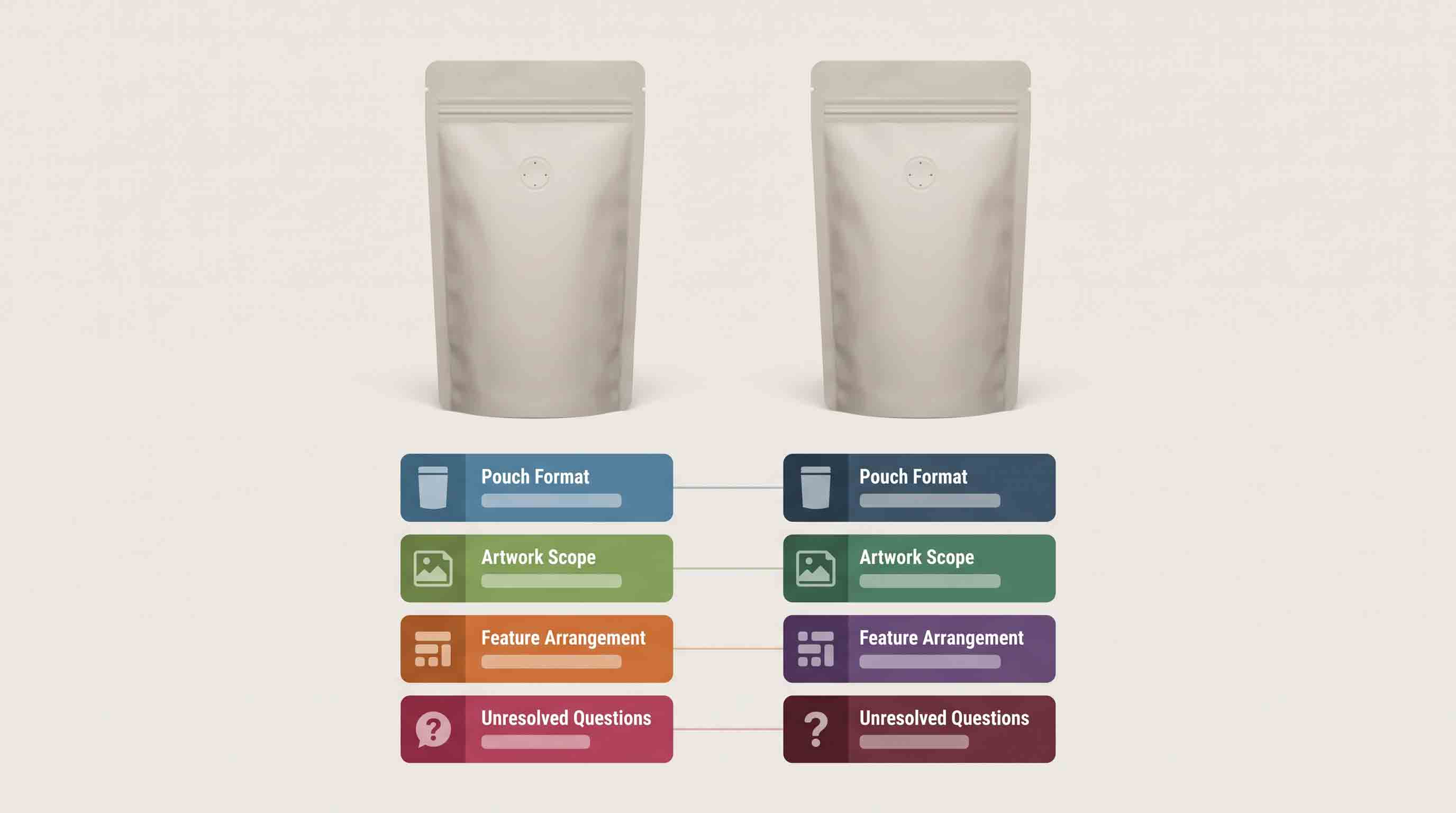
Some details are tempting to settle early because they sound simple. They should remain conditional until the exact request is reviewed.
- Do not promise a fixed minimum based on a competitor’s website or an old order.
- Do not use a published project as evidence of a current price, sample policy, or production time.
- Do not assume the same artwork will work unchanged on another pouch format or target fill.
- Do not treat a digital print discussion as a guaranteed fit for every project, or a gravure discussion as a fixed quantity threshold.
- Do not claim a valve, zipper, material, or finish will deliver a universal product result.
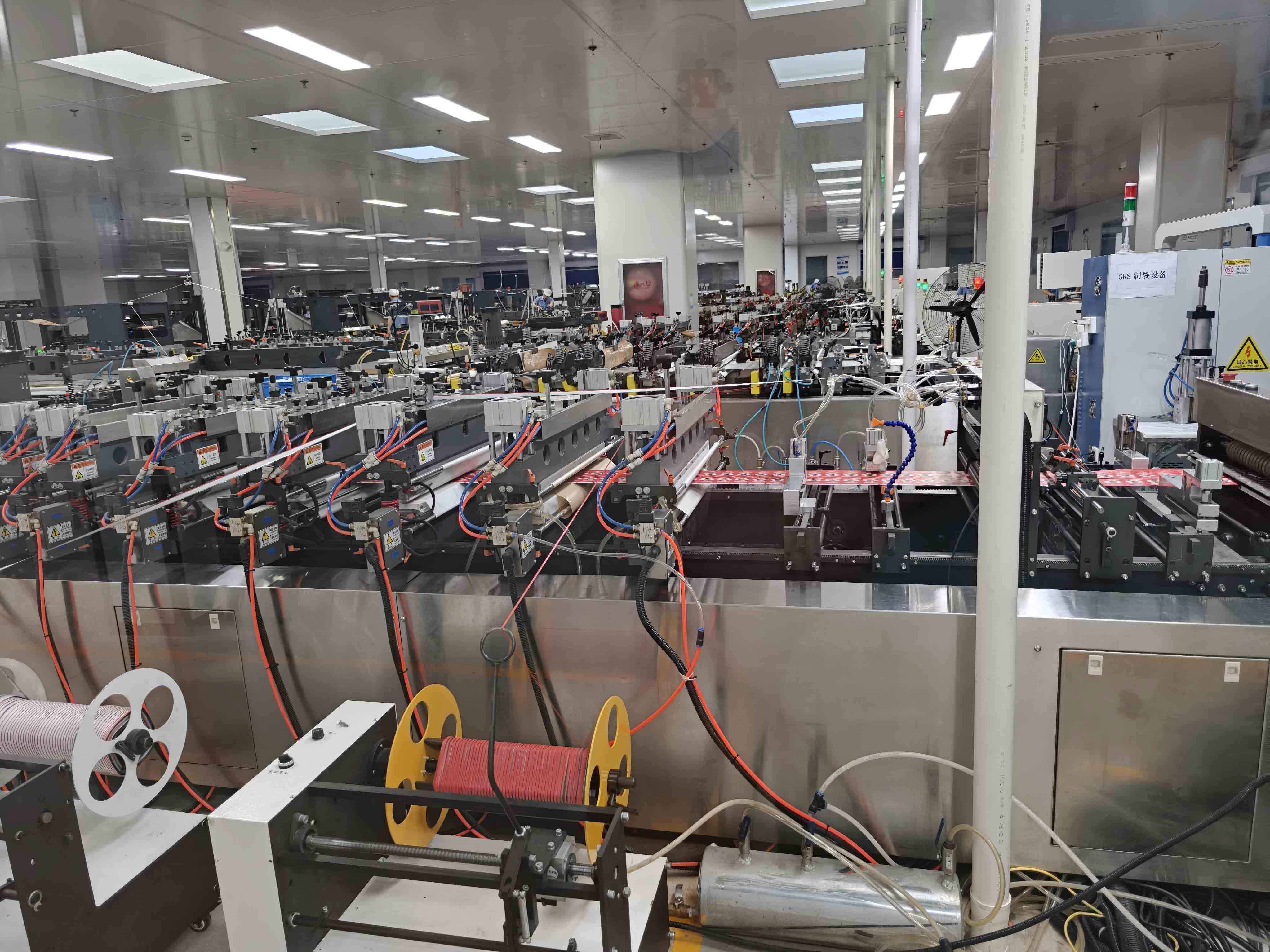
Mylarbag’s published manufacturing information identifies HP Indigo 25K digital printing and 10-color gravure as available production capabilities. Those facts do not set the commercial terms or technical outcome for a future order. The right next step is a project-specific conversation.
Recommended Packaging Configuration: Build an MOQ-Ready Brief
For a first custom coffee order, the recommended starting configuration is one evaluated pouch brief plus a clear SKU list. Include the target coffee, fill, pouch format, a size reference or sample, the current artwork version, each planned variation, proposed closure or valve, target market, and filling routine. That is enough to open a useful custom-order discussion while leaving unresolved details visible.
Visit custom coffee bags to start with the available pouch directions and project context. When you are ready, use Contact to send the brief rather than asking for an unqualified “lowest MOQ.” A supplier can then review what can be quoted for the exact project.
Frequently Asked Questions
What is the MOQ for custom coffee bags?
It depends on the exact pouch project. Format, material direction, printing route, artwork variations, features, and other project details can all affect the quantity that can be quoted.
Can I order several coffee bag designs in one custom project?
You can discuss several SKUs, but list each variation clearly. Do not assume one artwork file, size, or quantity automatically applies to every design.
Is a stock coffee bag the same as a custom printed coffee bag?
No. A stock pouch with a local label and a custom printed pouch are different project routes. State which route you are comparing before requesting a quote.
Do I need final artwork before asking about MOQ?
No. You can begin with a concept or working file, but identify its current stage and the pouch direction under discussion.
Does digital printing always mean a lower MOQ?
Do not treat printing method as a universal quantity promise. Discuss the current pouch, artwork, and project requirements with the supplier.
What should I send with a first custom coffee-bag enquiry?
Send the coffee product, target fill, pouch direction or sample, artwork status, number of SKUs, closure or valve questions, target market, and packing workflow.
Plan the First Order Around the Pouch You Actually Need
The best first-order conversation is specific enough to evaluate and flexible enough to keep open questions visible. A defined pouch brief does more for an MOQ discussion than a single headline quantity. It gives you a way to compare suppliers, samples, and alternatives without assuming commercial or technical terms that have not been confirmed.
For an evaluated custom project, custom coffee bags is the appropriate next page; use it to move from a quantity question to a pouch brief that can be reviewed.