
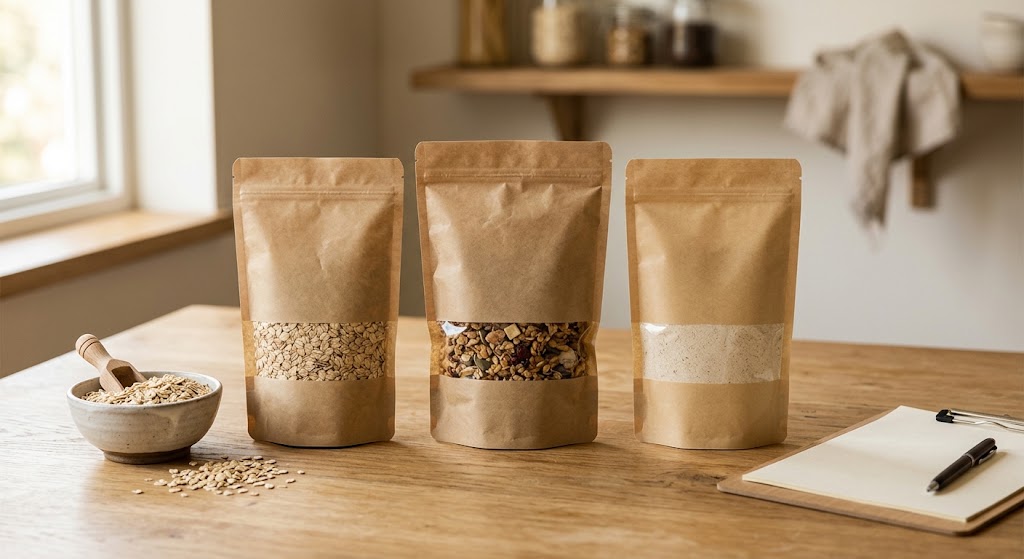
An oatmeal brand can buy an impressive barrier film and still receive complaints about stale granola, clumped oat flour or insects in a bag. Film is only one part of the protection system. The oats must enter the line in the right condition, the pack must seal reliably, and the filled bag must survive its actual distribution route.
The short answer: identify the product's likely failure first. Control raw-material and facility pests before filling. Specify the complete pouch for moisture, oxygen, aroma and handling needs. Keep the heat-seal zone clear of food. Then test the actual filled pack under the intended storage and shipping conditions. A zipper helps after opening; it cannot replace the first heat seal or prove a shelf-life date.
This guide is for food brands, co-packers and packaging buyers developing retail oats, granola, muesli and oat flour. It treats freshness as a product-and-process result, not a promise printed on an empty pouch.
Start With the Failure, Not the Bag Name
“Oatmeal went bad” can describe several different problems. A useful complaint record says what changed, when it was first noticed, which lot was involved, and whether the retail bag was intact.
| Observation | Plausible routes to investigate | First useful evidence |
|---|---|---|
| Flakes soften or granola loses crunch | Moisture in the product at filling, water-vapour ingress, humid storage, poor closure | Incoming and packed-product measurements, WVTR, seal checks, storage history |
| Stale, paint-like or rancid note | Oxidation of oil-bearing ingredients, oxygen ingress, ingredient age, heat exposure | Formula and lot history, sensory trend, appropriate oxidation markers, OTR and headspace |
| Oat flour cakes or leaks | Moisture pickup, fine powder in top seal, damaged seam | Fill-line observations, seal cross-section, moisture trend, leak inspection |
| Unwanted odour | Ingredient or warehouse exposure, permeation, contamination, damaged pack | Raw-material controls, storage segregation, full-pack condition |
| Insects or webbing | Infested ingredients, facility or warehouse source, entry through damage or openings | Retained lot samples, pest-monitoring records, traceability, seal and damage review |
| Torn gusset or pinhole | Product edges, filling impact, carton pressure, transport abuse | Filled-pack and shipping tests, inspection of failure location |
These are investigation paths, not diagnoses. A pouch maker can supply material and seal data; the food business and its co-packer must investigate product history, sanitation, storage and safety. Do not describe a visible insect as proof that it chewed through a particular film. The route has to be established.
Oats Are Dry, but “Dry” Is Not One Specification
Plain rolled oats, quick oats, steel-cut oats, oat flour and granola have different exposure and handling profiles. A fine flour may dust the sealing jaws and cake when it gains moisture. A granola with nuts, seeds or added oil can raise oxidation and aroma concerns. Dried fruit can add local moisture variation. Large clusters can puncture or stress a bag during filling and shipment.
Define the product by formula, process, net weight and physical form. Record the ingredients most likely to limit quality. Note whether the product has already been heat-treated or otherwise processed, how it is cooled, and whether it can pick up moisture before filling. A packaging test using an idealized plain oat sample cannot automatically approve a nut-rich granola SKU.
Measure both moisture content and water activity where they are relevant to the product specification. They are related but different: moisture content describes the water present; water activity describes the availability of water in the food system. The FDA's water-activity technical guide explains why a suitable water-activity range must be established at processing and maintained in storage. That does not give every oat product one safe or sensory threshold. The food team should set acceptance limits for its own recipe and applicable safety plan.
Low moisture also does not mean that food-safety controls can be skipped. FDA's draft sanitation guidance for low-moisture ready-to-eat foods names dry cereal and granola bars among relevant examples. It is explicitly a draft, not an implemented rule; it is useful context for keeping processing and sanitation responsibilities separate from pouch performance.
How Do Bugs Get Into Oatmeal?
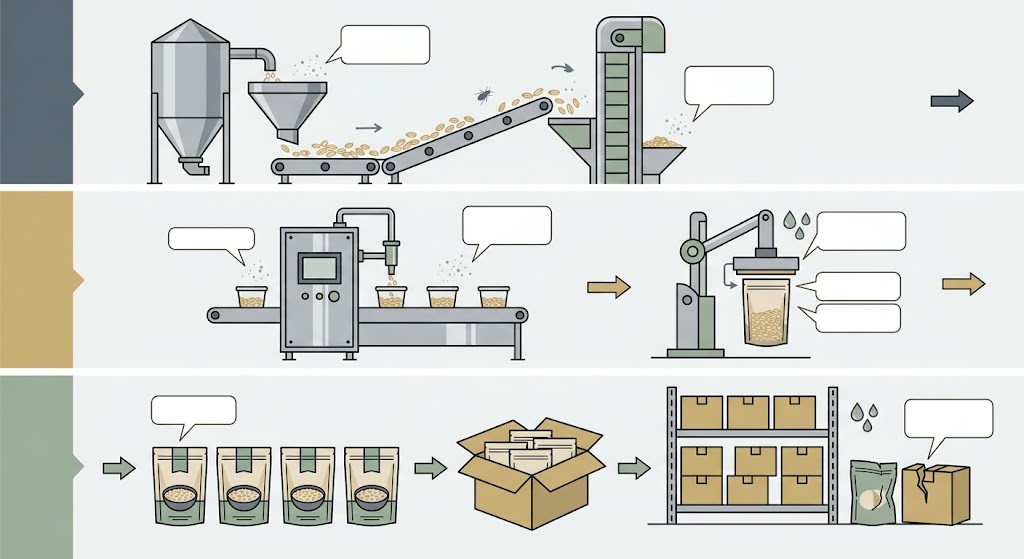
Stored-product insects can be associated with grain before packaging, with processing and storage areas, or with finished goods after a pack has been damaged or opened. The USDA Stored Grain Insect Reference describes stored-grain insect biology and prevention and control methods. That is why an “insect-proof bag” claim cannot substitute for ingredient inspection, facility pest management and traceability.
At receiving, define an inspection and hold process for suspect raw materials. Keep ingredient and finished-goods lots identifiable. At the plant, inspect transfer points, equipment, surrounding storage and housekeeping records. At the finished-pack stage, examine the actual point of entry, if one exists: top seal, zipper end, side seam, pinhole, tear notch, puncture or an opening made after purchase. Retained samples and photographs of the unopened pack can help distinguish competing explanations.
A good commercial pouch reduces opportunities for ingress when its structure and seals remain intact. No single film can make an already affected ingredient clean. Neither a thicker wall nor a resealable zipper proves that eggs or insects were absent before filling. A buyer should ask two different questions: How is the food kept free of infestation before sealing? and How is the sealed pack protected against external entry during distribution?
Translate “Fresh” Into Measurable Acceptance Limits
Before asking for a barrier pouch, write down the intended unopened life, the expected storage and transit conditions, and what a customer will reject. Include the hottest and most humid plausible distribution periods rather than relying only on an air-conditioned office sample.
The food team can define a combination of:
- Moisture content and water activity at packing and during storage
- Texture or crispness for granola and toasted oat products
- Sensory limits for stale, foreign or rancid notes
- Product-specific oxidation measures where oil-bearing ingredients warrant them
- Appearance, caking, clumping and flowability for oat flour
- Insect, foreign-material and package-damage criteria
- Seal integrity and acceptable distribution damage rates
The thresholds must come from the actual food, process, safety assessment and customer expectations. A film supplier's oxygen-transmission figure does not decide the rancidity endpoint. An accelerated storage study can help compare candidates, but a proposed date on the retail pack needs a justified relationship to real storage conditions and product behavior.
Separate unopened shelf life from after-opening use. A top heat seal protects the unopened retail pack. Once a consumer cuts it away, the zipper and storage habits influence quality. Neither phase has one universal number for all oat products.
Specify the Complete Barrier Route
A buyer may ask for “Mylar,” “foil,” “kraft” or “recyclable PE.” Those words do not identify the whole construction. Request every layer, coating, adhesive, sealant, window and closure. If the pouch has a transparent window, obtain relevant performance evidence for that version, not only for its opaque panel. If it has a zipper, ask how the zipper ends and top seal are made.
WVTR describes water-vapour transmission; OTR describes oxygen transmission. The published methods ASTM F1249 and ASTM D3985 describe measurements for flexible barrier materials and plastic film. Ask for units, temperature, relative humidity where applicable, the precise construction tested and whether the value represents flat film or the commercial package. Values obtained under different conditions are not directly comparable.
| Brief requirement | What to ask the converter | Why a film data sheet is not enough |
|---|---|---|
| Moisture control | Exact structure, WVTR method and conditions, sealant and window design | A weak seam or a changed window can bypass the nominal panel performance |
| Oxygen and aroma control | OTR, light exposure, headspace strategy, full layer sequence | Oxidation also depends on initial product quality and oxygen present at filling |
| Physical protection | Puncture, flex, drop and gusset behavior of filled packs | Empty film can pass while filled corners or carton pressure cause damage |
| Food-contact use | Documentation for the actual construction and destination | One material description does not cover every component and use condition |
| Reclosure | Zipper material, track fit, opening geometry and user trial | Consumer convenience does not validate the unopened heat seal |
Do not presume the lowest possible OTR or WVTR is always the right purchase. It may add cost or complexity without addressing the actual limit. Conversely, a low-price structure that lets the product fail in a humid export route is not economical. Compare two or three candidates against the same filled product, artwork, closure and distribution brief.
For a deeper comparison of paper, conventional laminates and mono-PE, use the separate material-selection guide. This article focuses on how to prove that the selected package works.
The First Heat Seal and the Zipper Have Different Jobs
Many retail oatmeal pouches have a heat seal above a zipper. The heat seal is the unopened closure that the filling line must make consistently. The zipper is a consumer reclosure after that top section is removed. A zipper that feels firm in a hand sample cannot compensate for a channel through the first seal.
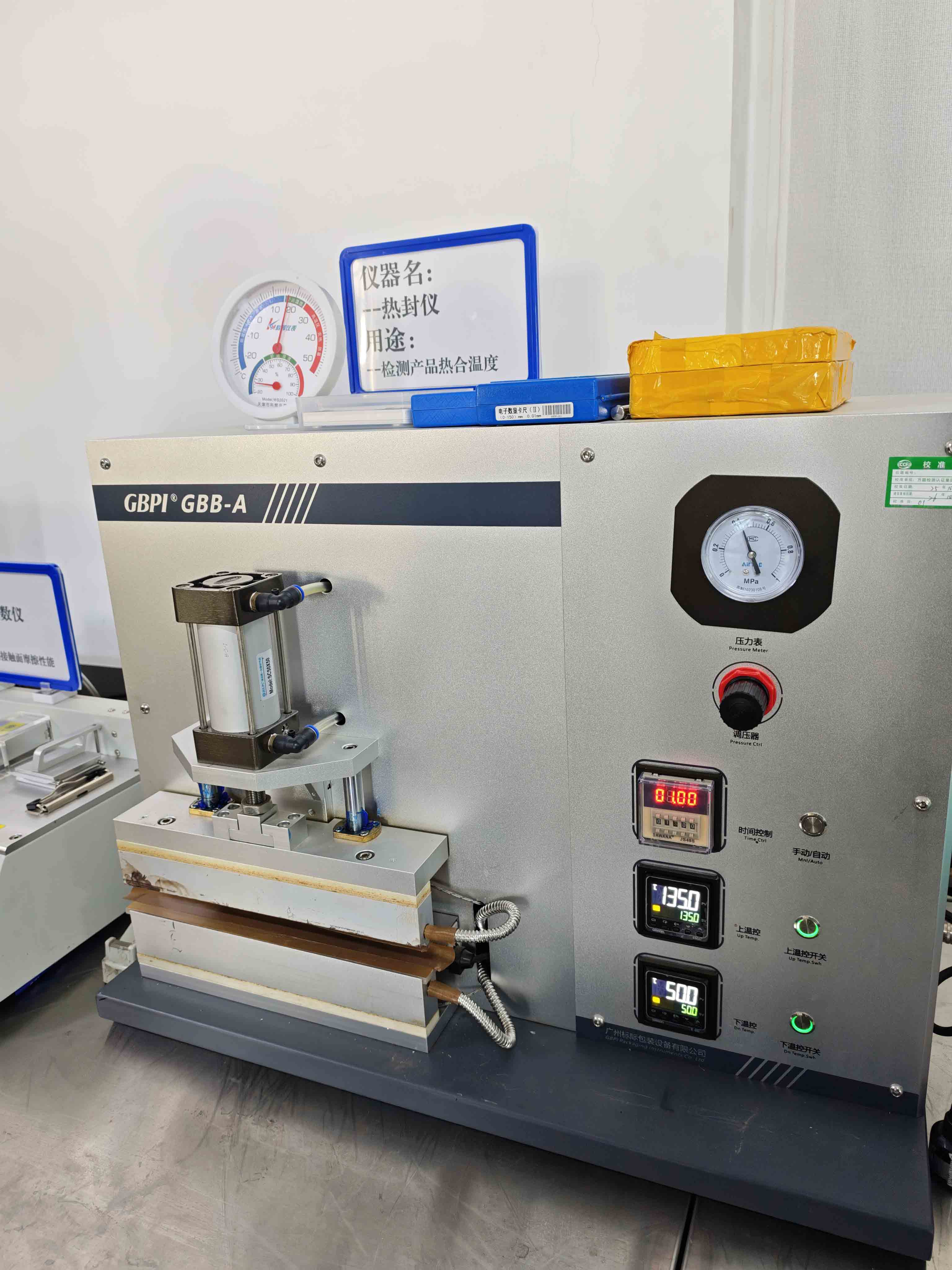
Product in the seal zone is a common practical risk. Flakes can lodge near a corner; oat flour can coat the inner film; a granola cluster can keep the jaws from fully contacting the web. On the intended machine, trial fill height, product drop, dust extraction, jaw alignment, temperature, dwell and pressure. Inspect the beginning, middle and end of a run, plus restarts and line-speed changes. Retain samples linked to settings and material lots.
Use more than one test question. ASTM F88/F88M measures seal strength of flexible barrier materials. A measured peel force can support process control, but it does not alone show the absence of a narrow leak channel. ASTM F3039 describes dye penetration for finding leaks in nonporous packages and states that the procedure is a destructive, qualitative check. Select methods and sample sizes suited to the commercial design; do not turn a successful laboratory result into a claim that every production pouch is leak-free.
After opening, test the zipper with the real product. Ask users to tear or cut the pack as the artwork instructs, pour a serving, close the track and store it in a realistic kitchen. Check whether fine particles lodge in the tracks, whether the tear line leaves enough film to grip, and whether the bag stays upright as it empties. Give customers clear storage instructions suited to the product; avoid promising that a reclosed pouch returns to its factory-sealed condition.
Factory and Warehouse Controls Still Matter
The package does not operate in isolation. Record incoming ingredient quality, processing dates, exposure between cooling and filling, facility pest-monitoring results, and the hold/release rules for suspect lots. Keep finished bags away from water leaks, unusual heat, pests and odor sources. For a co-packed SKU, agree who owns each record before the first trial.
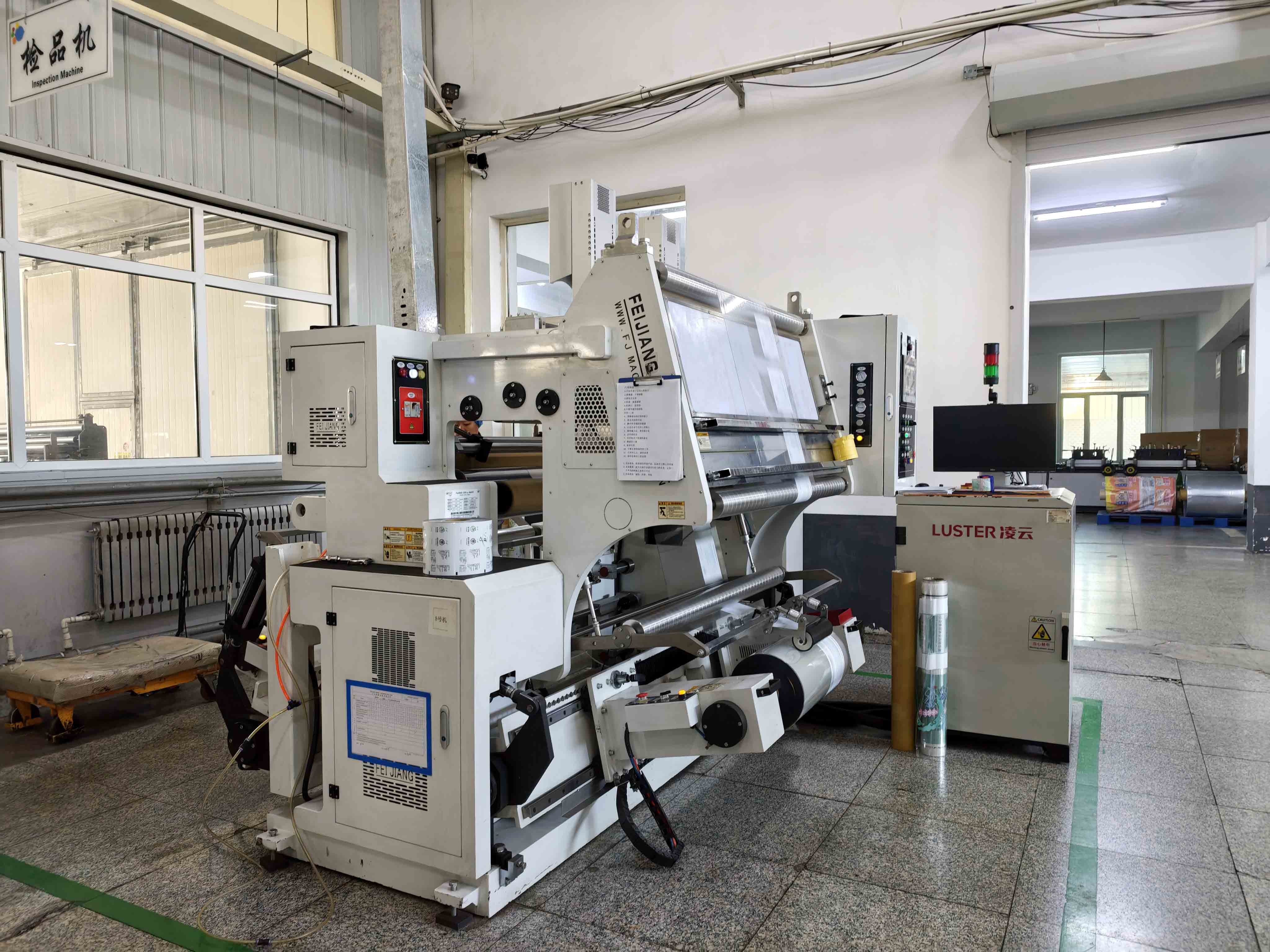
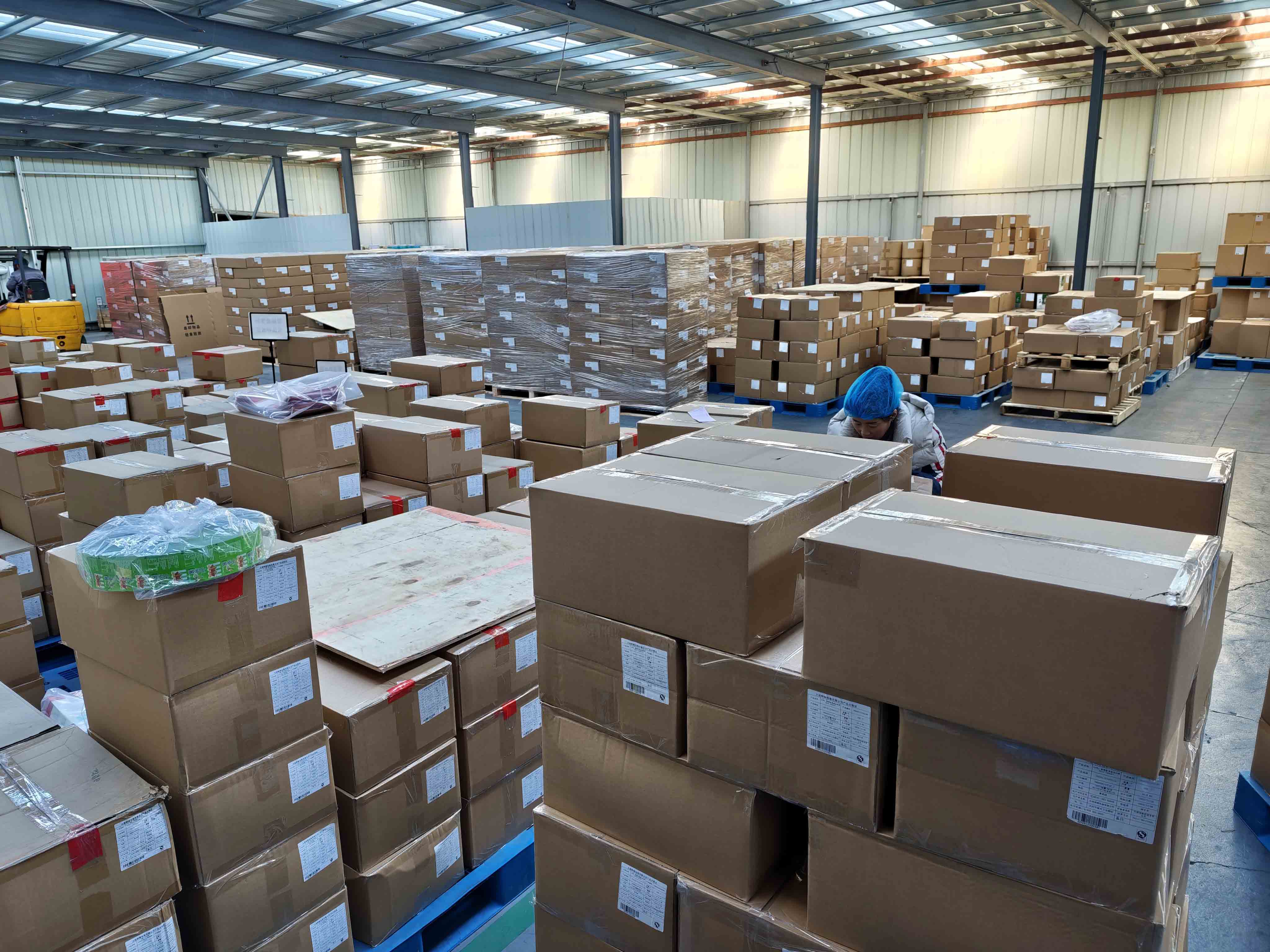
At packaging conversion, inspect the actual printed and laminated film, pouch seals, zipper application and finished dimensions. At the food filling line, control dust in the top-seal area and confirm the seal window with product inside. At distribution, assess the master carton, pallet pattern and handling route. A pristine bag in a desk drawer has not experienced the compression, abrasion or vibration of a full case shipment.
Two Published Oat Projects, and What They Do Not Prove
Mylarbag's published 500g Açaí and oatmeal project lists a Venezuela destination, a PET/NY/PE stand-up pouch, gravure printing and dimensions of 21 × 27 + 4.5 cm. Its page describes a resealable zipper. This is a real format and structure reference for a blended oat product. It does not publish a measured WVTR, OTR, insect-resistance result or confirmed shelf life for every oat formula.

The published 1kg oat-flour project lists Nigeria, an NY/PE stand-up pouch, gravure printing and dimensions of 21 × 28 + 5 cm. The page describes a resealable zipper. Oat flour makes a useful development scenario because fine powder may reach the seal zone and the larger fill tests the gusset and handling system. Those are engineering questions to trial; they are not documented failure or success outcomes for that customer.

The cases show why the RFQ should name the food. A 500g Açaí blend and a 1kg flour have different filling behavior, likely failure modes and consumer use. Their published dimensions are starting references for samples, not a size chart for all 500g or 1kg oats.
Build a Shelf-Life Validation Program Buyers Can Audit
The objective is to answer a narrow question: Will this specific food in this specific finished package remain acceptable through the proposed unopened life, under the intended conditions? Put product, packaging, process and logistics representatives around the same test brief.
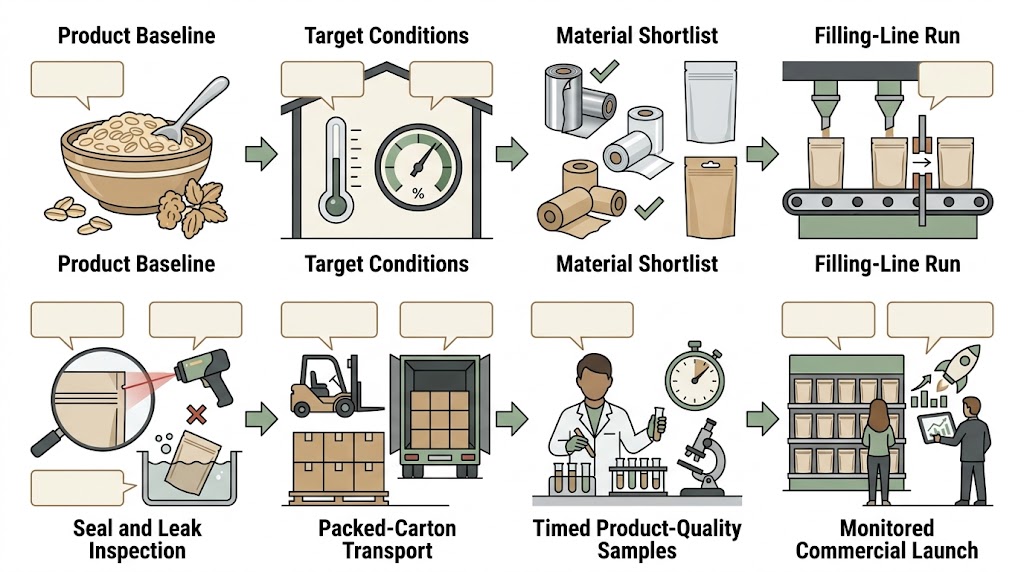
- Set the baseline. Record formulation, ingredient lots, processing history, pack date, initial moisture or water activity, sensory profile and any relevant oxidation measure. Keep an unambiguous lot code.
- State the target and conditions. Define the proposed retail life, storage range, humidity exposures, shipping route and quality or safety limits. State whether the use case includes e-commerce parcels, ocean freight or a controlled local route.
- Shortlist complete constructions. Ask for two or three feasible pouch specifications with their sealants, closures, windows, print and barrier data. Include a proven control if the team is changing materials.
- Run the actual line. Fill the real product at target net weight and intended speed. Test product dust, heat seals, zipper-end areas, gusset opening, date-code readability and reject rate.
- Check package integrity. Use agreed visual, seal-strength and leak methods with a sampling plan. Investigate recurring weak spots by location and line setting.
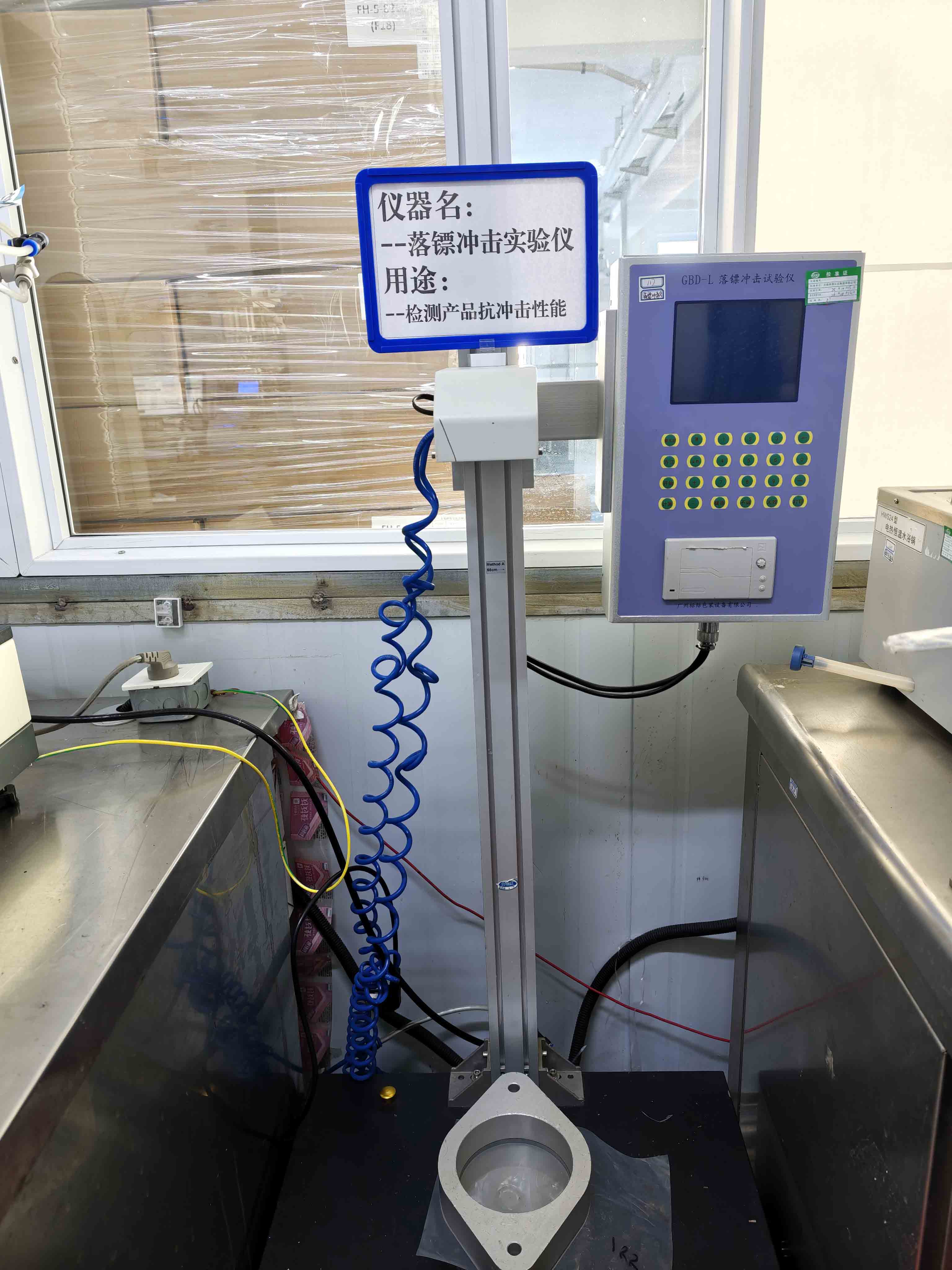
- Simulate the distribution system. Test filled pouches inside the real cartons and pallet plan. ASTM D4169 provides a framework for evaluating shipping units against distribution hazards; the selected test plan must match the route.
- Store and assess product. Include real-time conditions and a justified accelerated comparison where useful. Sample at planned intervals. Assess the food, headspace and package, not just the film.
- Approve and monitor. The food owner signs the date decision. Keep retained packs and change-control rules for material, ingredient, line or warehouse changes; trend complaints and returns by lot.
| Evidence | Who typically provides it | What it can answer | What it cannot answer alone |
|---|---|---|---|
| Material specification and WVTR/OTR | Converter and test laboratory | How the named flat construction performs under stated test conditions | The finished food's expiry date |
| Seal trial, strength and leak checks | Co-packer and quality team | Whether the intended filling process creates acceptable closures in the sampled run | Whether raw oats were pest-free |
| Ingredient and pest records | Food producer and facility | What entered the line and what was observed in the plant | Whether the pouch survives transport |
| Distribution simulation | Packaging and logistics team | How the filled case handles selected hazards | Long-term sensory quality |
| Real-time finished-food study | Food brand and qualified laboratory | Whether the product meets agreed endpoints over time | Every possible abuse condition |
If the buyer cannot identify the owner and acceptance rule for a row, the commercial decision is still incomplete. Testing can be proportionate to the product and risk, but the logic should remain traceable.
How Long Does Bagged Oatmeal Last?
There is no responsible universal answer for a commercial retail SKU. Plain rolled oats, oat flour and granola with nuts are not the same product. Initial freshness, heat treatment, oil content, fill environment, residual headspace, structure, seal quality, storage conditions and the chosen sensory endpoint all change the result.
When reviewing Mylarbag's oatmeal packaging landing page, do not treat a general packaging description or a supplier's marketing time range as a tested date to paste into a new artwork file. Request the supporting product, package, storage and study details. If they do not match the proposed product, conduct a suitable study before setting the date.
For US-facing copy, the FDA's discussion of “Best if Used By” describes that phrase as a quality indicator. The brand still needs to support the date chosen for its product and review the destination market's labeling rules. Do not equate a quality date with a broad claim that a damaged, infested or improperly stored pack is safe.
A Supplier RFQ That Leads to Testable Samples
Send the same brief to every shortlisted converter. That makes quotations and samples comparable.
| RFQ field | Information to provide or request |
|---|---|
| Product | Rolled oats, quick oats, granola, muesli or oat flour; formula, inclusions, bulk density, dust and net weight |
| Target | Proposed unopened life, after-opening use, quality endpoints and destination markets |
| Route | Temperature/humidity exposure, warehouse time, shipment type, carton and pallet needs |
| Pouch | Format, dimensions to be verified by physical fill, zipper, tear notch, window, date-code location |
| Structure | Complete layer sequence, individual gauges, coating, adhesive, food-contact sealant and full-package components |
| Data | WVTR/OTR units and test conditions, seal-window trial, integrity method, physical-handling evidence |
| Trial | Representative product and line speed, fill and seal observations, sample plan, reject criteria |
| Documentation | Food-contact support for the intended market, artwork control, change notification and retained reference sample |
For a first quotation, start with Mylarbag's custom oatmeal packaging page. If flour dust is a major sealing risk, the custom flour packaging page is a relevant adjacent route. Ask the supplier to explain how its barrier-layer options meet the written food brief, then request filled samples and supporting test data. The outcome should be a controlled specification, not merely a picture of a preferred pouch.
Troubleshoot a Failed Trial Before Changing Everything
If the trial fails, locate the failure before ordering a much thicker bag. Moisture gain in every sound pack may justify revisiting the structure and conditions. A few packs with channels at the same zipper end point toward a seal process or geometry problem. Clumping that begins before sealing points upstream. Pest findings in an intact retained pack call for a different investigation from insects entering a visibly torn retail pouch.
Document failure location, lot, sample count, time, storage condition and inspection method. Change one defined variable when possible, then compare against the control. An improvement in one metric can create another problem: a stiffer film may resist abrasion yet open poorly on the filling machine, and a lower sealing temperature may avoid distortion while weakening corner seals.
The commercial approval should name the accepted construction, line settings, inspection method, carton and storage conditions. This is how a brand turns “keep oatmeal fresh” into a repeatable supply specification.
Frequently Asked Questions
How do I keep bugs out of oatmeal sold in retail bags?
Control ingredient and facility infestation before filling, then use a pouch and first seal that remain intact through distribution. Keep lot traceability, pest-monitoring records and retained samples. A zipper alone cannot establish where an infestation originated or guarantee exclusion.
Can insects be inside an unopened oatmeal bag?
They can be found in a bag that appears unopened, but the cause must be investigated. Potential routes include affected ingredients, processing or storage conditions, an unnoticed channel or damage. Inspect the retained pack, seal, lot history and facility records before assigning responsibility.
Does oatmeal in a bag go bad?
Its quality can decline through moisture pickup, oxidation, odors or damage, and a food-safety concern requires separate assessment. The recipe, starting condition, processing, package and storage all matter. A printed date is not a substitute for inspecting a compromised pack.
How long does bagged oatmeal last?
No single period applies to every oatmeal SKU. The brand should set the unopened date from defined sensory and other product endpoints in the finished pack under intended conditions. A supplier's general range is a starting question, not a tested guarantee.
Is a Mylar bag enough to keep oatmeal fresh?
“Mylar” does not state the complete layer sequence, barrier, sealant or quality of the finished seal. Obtain the exact construction and test it with the food and filling line. Ingredient quality and storage controls remain necessary.
Is foil always required for granola?
No. A granola with oil-rich ingredients may justify a stronger oxygen and light-protection brief, but the structure should be selected against measured product behavior and cost. Test appropriate candidates rather than specifying foil by habit.
What is more important for plain oats, WVTR or OTR?
The limiting failure must decide the priority. Moisture may dominate one product and route, while odor or oxidation matters more for another. Record the food's endpoints and compare measured values for complete candidate structures under matching conditions.
Can an airtight zipper replace a heat seal?
For a typical retail zipper pouch, the first heat seal above the zipper is the unopened closure; the zipper is for reclosure after opening. Validate both functions separately on the filled pack.
Why does oat flour leak from a pouch?
Fine powder can reach a seam or top-seal area, or the finished pack may be damaged. Inspect the failure site, filling height, dust control, seal settings and package integrity. Do not assume the nominal film barrier identifies the cause of a leak.
Does a thicker pouch stop insects?
Thickness alone cannot establish pest resistance. Evaluate incoming materials and plant controls, the exact film, seals and closures, and the damage the pack sees in distribution. Investigate the observed entry route.
Should I add an oxygen absorber?
Only after the food team has defined an oxygen-related problem and assessed the absorber's suitability, dose, compatibility, labeling and safe use for the specific food and pack. It cannot repair a leaking seal or make contaminated raw materials acceptable.
Can a clear window shorten oatmeal shelf life?
It can change the light and barrier exposure of the finished design. Ask for evidence relevant to the windowed construction, then test the filled food under expected retail lighting and storage.
What is the difference between a seal-strength test and a leak test?
Seal-strength testing measures how a seal behaves under a defined pull. A leak test looks for a route through which material could enter or leave. They answer different questions and should be chosen with the intended failure mode in mind.
Can an accelerated test establish the label date by itself?
An accelerated comparison can help screen designs, but the relationship to real-time product behavior must be justified. Use finished-food evidence and realistic storage data before approving a commercial date.
What should I send a packaging supplier first?
Send the actual food description, net weight, proposed shelf life, destination, distribution conditions, filling method and suspected failure modes. Ask for complete structures, comparable barrier data, sealing samples and a plan to test filled bags on your line.